

 RU
 UA
 DE
 FR
 ES
 CN
 SA
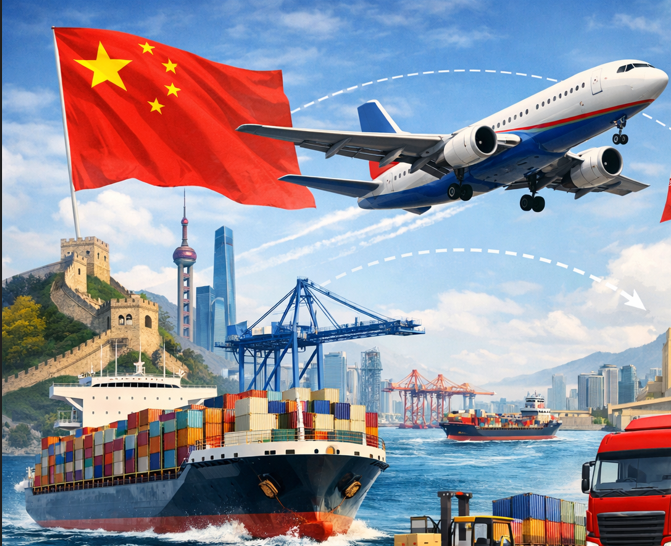
Cargo Delivery from China to Bangladesh
Shipping Goods from China to Bangladesh: Sea and Air Logistics, Costs, and Documentation
Shipping products from China to Bangladesh is in high demand among online store owners, wholesale companies, clothing manufacturers, electronics, equipment, and entrepreneurs engaged in international trade. China remains one of the largest suppliers of goods for the Bangladeshi market, while Bangladesh actively imports textile raw materials, industrial equipment, components, electronics, construction materials, and consumer goods.
Organizing transportation along the China–Bangladesh route requires careful planning. It is essential to choose the appropriate mode of transport, calculate shipping costs, prepare documentation, check customs requirements, and determine the optimal delivery scheme. In practice, sea, air, and multimodal transport are used. The choice depends on the volume of cargo, its weight, urgency, characteristics, and budget.
This article provides a detailed overview of shipping goods from China to Bangladesh, sea and air logistics, estimated shipping costs from China to Bangladesh, necessary documents, customs clearance, timelines, and recommendations for selecting a logistics company.
Features of Shipping Goods from China to Bangladesh
Trade relations between China and Bangladesh are developing rapidly. Regular shipments of textiles, fabrics, yarn, sewing equipment, spare parts, household appliances, electronics, furniture, packaging materials, and construction products are transported between the countries. Most cargo is shipped from Chinese industrial centers such as Guangzhou, Shenzhen, Yiwu, Ningbo, Shanghai, Qingdao, and other cities.
The main destinations in Bangladesh include Dhaka, Chittagong, Narayanganj, Sylhet, and other industrial and commercial centers. Typically, international transportation involves several stages: picking up the goods from the supplier in China, consolidation at the warehouse, export clearance, transportation, arrival at the port or airport in Bangladesh, customs clearance, and delivery to the final address.
Factors Influencing Transportation Organization
The logistics scheme is influenced by the following factors:
the country and city of departure in China;
the final delivery point in Bangladesh;
the total weight and volume of the shipment;
the number of packages;
the nature of the cargo;
the presence of restrictions or special permits;
required timelines;
Incoterms delivery conditions;
the need for insurance;
customs clearance method;
the possibility of consolidating the cargo with other shipments.
Particular attention should be paid to the accurate description of the goods. If the invoice contains general or inaccurate information, customs may request additional documents, suspend clearance, or reassess the value of the cargo. Certain categories of products require quality certificates, sanitary documents, permits, licenses, or confirmation of compliance with technical standards.
Main Options for the Logistics Scheme
The most common options include:
Port-to-port — the cargo is delivered from a Chinese port to a port in Bangladesh, and further clearance and delivery are organized by the recipient.
Door-to-door — the logistics company is responsible for the entire route from the supplier in China to the client's warehouse in Bangladesh.
Warehouse-to-warehouse — the sender delivers the goods to a consolidation warehouse, after which the operator transports them to the recipient's warehouse.
Multimodal transportation — two or more modes of transport are used, such as road transport, sea, and rail, or air and road delivery.
Consolidated cargo — small shipments are combined into one container or transport shipment, which helps reduce costs.
For small and medium-sized businesses, door-to-door delivery is usually the most convenient option. In this case, the carrier manages packaging, warehousing, export procedures, freight, import clearance, and delivery to the address.
Sea Shipping from China to Bangladesh
Sea transportation is considered the primary method for transporting large and heavy shipments between China and Bangladesh. It is suitable for containers, industrial equipment, furniture, construction materials, textiles, raw materials, store goods, and other products for which maximum speed is not critical.
Sea logistics allows for the transportation of large volumes at a relatively low cost per unit. The larger the shipment, the more noticeable the savings compared to air freight. For regular imports, sea transport often becomes the primary option for deliveries.
How Sea Transportation Works
The standard route includes several stages:
Receiving the order and documents from the client.
Checking the product specifications and packaging.
Picking up the cargo from the supplier in China.
Delivery to the consolidation warehouse or directly to the port.
Checking the quantity, labeling, and condition of the packaging.
Preparing export documents.
Loading into the container.
Shipping by sea vessel.
Arrival at the port of Bangladesh.
Unloading and transferring documents for customs clearance.
Payment of duties, taxes, and port fees.
Delivery of the cargo to the recipient's warehouse.
In most cases, sea shipments from China to Bangladesh arrive at the port of Chittagong. From there, the goods can be transported by road to Dhaka or another city. The specific route depends on the vessel schedule, chosen line, port congestion, and contract conditions.
FCL and LCL Shipments
Two main formats are used for sea delivery.
FCL — Full Container Load. The client rents the entire container. This option is beneficial for large volumes when the cargo can fill a significant part of the container or needs to be transported separately. Advantages include faster processing, fewer transshipments, and reduced risk of damage.
LCL — Less than Container Load. Cargo from several clients is placed in one container. Payment is calculated based on the volume or weight of the shipment. This format is suitable for small and medium-sized shipments. Its main advantage is that there is no need to pay for the entire container. However, consolidated cargo may take longer due to consolidation, sorting, and additional warehousing operations.
Sea Delivery Times
The average sea transportation time from China to Bangladesh can range from approximately 20 to 45 days. The final duration is influenced by:
the city of departure in China;
the loading port;
the availability of a direct route;
transit transshipments;
weather conditions;
port congestion;
customs clearance;
the speed of document submission;
delivery from the port to the final address.
It is important to note that the declared freight time does not always equal the "door-to-door" delivery time. Additional time is added for cargo pickup, consolidation, export clearance, unloading, import customs, and domestic transportation.
Air Delivery from China to Bangladesh
Air logistics is used for urgent, expensive, compact, and relatively light cargo. This method is suitable for electronics, product samples, medical goods, documents, components, exhibition materials, expensive items, and shipments that need to be delivered quickly to the buyer.
The main advantage of air delivery is speed. Depending on the route and chosen service, cargo can arrive from China to Bangladesh in just a few days. However, the cost of transportation is significantly higher than that of sea transport.
How Air Freight is Calculated
When calculating the cost of air freight, both actual weight and volumetric weight are taken into account. Volumetric weight is applied when boxes take up a lot of space relative to their actual mass.
Typically, the carrier compares:
actual weight;
volumetric weight;
minimum chargeable weight;
gross weight with packaging;
number of pieces;
dimensions of each box.
A special coefficient established by the airline or logistics operator is used for volumetric weight. Therefore, it is essential to provide accurate dimensions of all pieces before shipping. An error in dimensions can lead to an increase in the final cost.
Air Delivery Times
The estimated air transportation time from China to Bangladesh is from 3 to 10 days, excluding any delays at customs and during domestic transport. Express services can deliver small shipments faster, but their rates are usually higher.
Delivery times are influenced by:
the chosen airline;
the availability of a direct flight;
the departure airport;
the destination airport;
the nature of the goods;
the need for additional control;
the accuracy of accompanying documents;
airport congestion;
the speed of customs clearance.
Air delivery is especially convenient for urgent stock replenishment. For example, if a manufacturer needs a small batch of components to continue operations, waiting for a sea container may be economically unfeasible. In such situations, air freight helps avoid downtime.
How much does shipping from China to Bangladesh cost
The exact cost of shipping from China to Bangladesh is calculated individually. There is no universal rate for all shipments, as the price depends on the characteristics of the cargo, the route, the chosen mode of transport, and the set of additional services.
Main components of the price
The final cost may include:
pickup of goods from the supplier;
transportation within China;
warehouse handling;
inspection and counting of goods;
packaging or repackaging;
labeling;
consolidation;
export documentation;
ocean or air freight;
fuel and seasonal surcharges;
port and airport fees;
terminal handling;
insurance;
import customs clearance;
customs duties;
VAT and other taxes;
delivery within Bangladesh;
storage in case of delays;
broker services;
courier delivery of documents.
Sometimes the carrier only indicates the cost of international freight, and the client mistakenly takes it as the total delivery price. To avoid additional expenses, it is necessary to request a "door-to-door" rate or a detailed calculation with a breakdown of all fees in advance.
Estimated difference between sea and air transport
Sea shipping is usually more cost-effective for large and heavy shipments. The cost can be calculated per container, cubic meter, or weight of the shipment in case of consolidated transport. The air freight rate is most often determined per kilogram, with the price per unit of weight decreasing as the volume of the shipment increases.
Generally, you can rely on the following principles:
small urgent shipments are more profitable to transport by air;
large batches are better shipped by sea;
consolidated cargo allows for reduced costs when the container is not fully loaded;
regular shipments can be transported under a custom contract rate;
delivery to remote cities in Bangladesh increases the overall price;
goods with special transport conditions require additional expenses.
It is also important to consider the customs value of the goods. Duties and taxes are calculated not only from the transport rate but also from the value of the imported products, and in some cases, including delivery and insurance costs.
How to reduce shipping costs
You can reduce expenses in several ways:
Combine small batches into consolidated cargo.
Plan shipments in advance and choose sea transport.
Optimize packaging without compromising the safety of the goods.
Check for the possibility of a direct route.
Compare offers from several logistics companies.
Agree on a single rate for regular shipments.
Clarify which services are already included in the calculation.
Avoid errors in documents.
Choose the appropriate Incoterms basis.
Calculate customs and domestic delivery expenses in advance.
The lowest price does not always mean the best option. An opaque rate may hide additional charges, prolonged storage, paid document processing, or limitations on the carrier's liability.
What documents are needed for shipping from China to Bangladesh
For international transportation, it is necessary to prepare a set of commercial, transport, and customs documents. The exact list depends on the type of goods, delivery conditions, requirements of the destination country, and the chosen logistics scheme.
Main commercial documents
The basic documents include:
commercial invoice;
packing list;
sales contract or foreign trade contract;
order or delivery confirmation;
product specification;
payment confirmation;
documents of origin if necessary.
The invoice includes the seller and buyer, product description, quantity, unit price, total cost, currency, delivery terms, and country of origin. The description should be specific: it is advisable to include the model, material, purpose, brand, article number, and other identifying characteristics.
The packing list contains information about the number of boxes, gross and net weight, dimensions of the packages, type of packaging, and distribution of goods among the boxes. It helps the carrier, warehouse, and customs authorities verify the shipment.
Transport Documents
For sea transport, a bill of lading is issued. It confirms the acceptance of the cargo by the carrier and contains information about the sender, recipient, vessel, port of departure, port of destination, and cargo characteristics.
For air transport, an air waybill is used. It specifies the sender, recipient, airports, number of packages, weight, and description of the shipment.
For road transport, appropriate waybills and transport documents are used. If the cargo passes through several countries or modes of transport, a set of documents may be required for each stage.
Customs Clearance Documents
The recipient in Bangladesh may need:
importer registration documents;
tax and commercial details;
import license, if required;
permits for specific categories of products;
certificate of origin;
certificate of conformity;
sanitary or phytosanitary documents;
documents on the composition of the goods;
insurance certificate;
power of attorney to the customs broker;
bank documents;
proof of payment of duties and taxes.
For electronics, chemicals, medicines, food products, cosmetics, equipment, textiles, and goods with plant or animal elements, additional requirements may apply. Before shipping, it is important to check whether the import of a specific item is allowed in Bangladesh and if prior registration is needed.
Customs Clearance in Bangladesh
Customs clearance is one of the most important stages of delivery. Even a well-organized transport route can be delayed if the documents are incorrectly prepared or the goods are misclassified.
What Customs Checks
Customs authorities may check:
compliance of the goods with the declared description;
commodity code;
customs value;
country of origin;
quantity and weight;
availability of permits;
compliance of documents with the actual cargo;
payment of duties and taxes;
compliance with import restrictions.
If an inspector finds discrepancies, the cargo may be directed for inspection. In some cases, additional expertise may be appointed or clarifications may be requested from the importer.
Duties and Taxes
The amount of payments depends on the commodity category, classification code, value of the goods, and current regulations in Bangladesh. The main payments may include:
import duty;
VAT;
additional fees;
excise or special payments;
port and terminal charges;
customs representative services.
Before finalizing a deal, it is important to determine who will pay the import charges. This depends on the Incoterms delivery conditions. For example, under certain conditions, the seller's responsibilities are limited to handing over the goods to the carrier, while all expenses after arrival are borne by the buyer.
Incoterms Conditions for Delivery from China to Bangladesh
Incoterms conditions allocate responsibilities, costs, and risks between the seller and the buyer. The most commonly used in international trade are EXW, FOB, CIF, DAP, and DDP.
EXW
Under EXW, the buyer picks up the goods from the seller's warehouse or factory. They organize loading, delivery within China, export clearance, international freight, import clearance, and delivery to Bangladesh. This arrangement gives the buyer full control but requires experience and the involvement of a logistics operator.
FOB
Under FOB, the seller delivers the goods to a Chinese port and completes export formalities. The buyer usually organizes international transport, insurance, and import clearance. This is a common option for sea shipments.
CIF
Under CIF, the seller pays for transportation to the destination port and basic insurance. However, after the cargo arrives, there may be expenses for unloading, customs, port storage, and delivery to the warehouse. Therefore, it is essential to clarify in advance which fees are included in the price.
DAP
Under DAP, the seller or logistics operator delivers the cargo to an agreed location in Bangladesh. Import duties and taxes are usually paid by the recipient unless otherwise specified by the parties.
DDP
Under DDP, the seller assumes maximum responsibilities, including delivery and import clearance. However, this scheme is only possible if the contractor has the legal capacity to handle import procedures in Bangladesh. Before choosing DDP, it is important to check who will be listed as the importer and how taxes will be paid.
Cargo Packaging and Labeling
Quality packaging protects the product from moisture, impacts, vibrations, pressure, and temperature fluctuations. During transportation, the cargo may pass through several warehouses, terminals, and vehicles, so the packaging must be suitable for the duration of the route.
For sea delivery, the following are particularly important:
moisture-resistant cardboard;
polyethylene protection;
palletizing;
stretch film;
reinforced corners;
internal securing within boxes;
corrosion protection;
moisture absorbers;
wooden packaging with necessary treatment.
For air transport, the packaging must be compact and sturdy. Avoid using excessively large boxes with a lot of empty space, as this increases dimensional weight and shipping costs.
The packaging may indicate:
product name;
number of packages;
weight;
dimensions;
country of origin;
order number;
handling marks;
fragility information;
recipient details.
Special rules apply to hazardous, chemical, liquid, and battery goods. Such cargo should be agreed upon in advance with the carrier, as airlines and shipping lines may require a dangerous goods declaration and additional certificates.
Cargo Insurance from China to Bangladesh
Insurance is not always mandatory, but it reduces financial risks. International transportation is associated with potential damage, loss, theft, accidents, natural disasters, and delays.
Before obtaining a policy, it is necessary to determine:
insured value;
list of covered risks;
deductible amount;
exclusions from coverage;
claims submission procedure;
list of supporting documents;
notification period for damage.
It is important to understand that the carrier's liability is often limited by international regulations and contract terms. It may not cover the full value of the goods. Therefore, for expensive products, it is better to arrange separate cargo insurance with a full description of the risks.
Upon receiving the goods, it is necessary to check the integrity of the packaging. If damage is found, photographs should be taken, remarks should be recorded in the carrier's documents, and the logistics company should be notified. The absence of a report may complicate the compensation process.
How to Choose a Logistics Company for Delivery to Bangladesh
A reliable carrier should be able to work with the China-Bangladesh route, understand local customs procedures, and provide transparent pricing.
When choosing a company, pay attention to:
experience with the required type of cargo;
presence of partners in China and Bangladesh;
door-to-door delivery capability;
consolidation services;
assistance with documentation;
availability of a customs broker;
insurance conditions;
tracking system;
response times;
claims handling procedure;
real customer reviews;
availability of a contract and official details.
It is essential to clarify in advance who is responsible for each stage. The commercial offer should separately specify international freight, handling, port fees, customs clearance, taxes, storage, and delivery within Bangladesh.
Be cautious of offers with excessively low prices. Sometimes savings are achieved through unofficial arrangements, incomplete insurance, lack of guaranteed timelines, or exclusion of essential services from the calculation.
Common Mistakes When Shipping from China to Bangladesh
New importers often encounter problems due to insufficient preparation. The most common mistakes include:
choosing transportation solely based on the lowest price;
failing to conduct a preliminary supplier check;
inaccurate product descriptions;
incorrect product codes;
underreporting the value on the invoice;
lack of necessary permits;
discrepancies in weight and quantity;
poor packaging;
absence of insurance;
incorrect choice of Incoterms;
ignoring costs at the destination port;
not allowing for time buffers;
shipping prohibited or restricted goods;
operating without a written contract.
To mitigate risks, it is advisable to request a complete list of documents and requirements from the carrier in advance, verify the product classification, agree on packaging, and obtain a full cost estimate. If the shipment is large, it is wise to first send a test batch.
Step-by-Step Guide to Organizing Delivery
For convenience, the following order of actions can be used:
Determine the product characteristics: name, weight, volume, number of packages, cost, and special features.
Check export restrictions from China and import regulations in Bangladesh.
Select a delivery option: sea, air, or multimodal scheme.
Agree on Incoterms conditions with the supplier.
Obtain the invoice, packing list, and specification.
Choose a logistics company.
Calculate the cost of shipping and customs duties.
Check packaging and labeling.
Arrange for pickup of the goods from the supplier.
Transfer the cargo to a consolidation warehouse or terminal.
Prepare export documents.
Ship the cargo.
Monitor the movement via tracking.
Prepare import documents.
Complete customs clearance in Bangladesh.
Pay the necessary duties and fees.
Receive the cargo and check its condition.
This algorithm helps to allocate responsibilities in advance and avoid unexpected expenses.
Shipping goods from China to Bangladesh can be organized via sea, air, or multimodal transport. Sea freight is suitable for large and heavy shipments, as it offers a lower cost per cubic meter or container. Air logistics is optimal for urgent, high-value, and compact goods when quick receipt is critical.
The cost of shipping from China to Bangladesh depends on weight, volume, route, mode of transport, packaging, delivery terms, customs duties, and additional services. To obtain an accurate estimate, it is necessary to provide the carrier with detailed information about the cargo and the final address.
For successful import, a correct invoice, packing list, bill of lading, foreign trade contract, permits, and proof of origin are essential. Equally important are proper product classification, quality packaging, and a pre-agreed customs clearance scheme.
Before shipping, it is advisable to compare several logistics offers, clarify the tariff structure, check Bangladesh's requirements for specific goods, and consider insurance. Well-prepared transportation helps reduce timelines, control the budget, and minimize the risk of customs delays.