

 RU
 UA
 DE
 FR
 ES
 CN
 SA
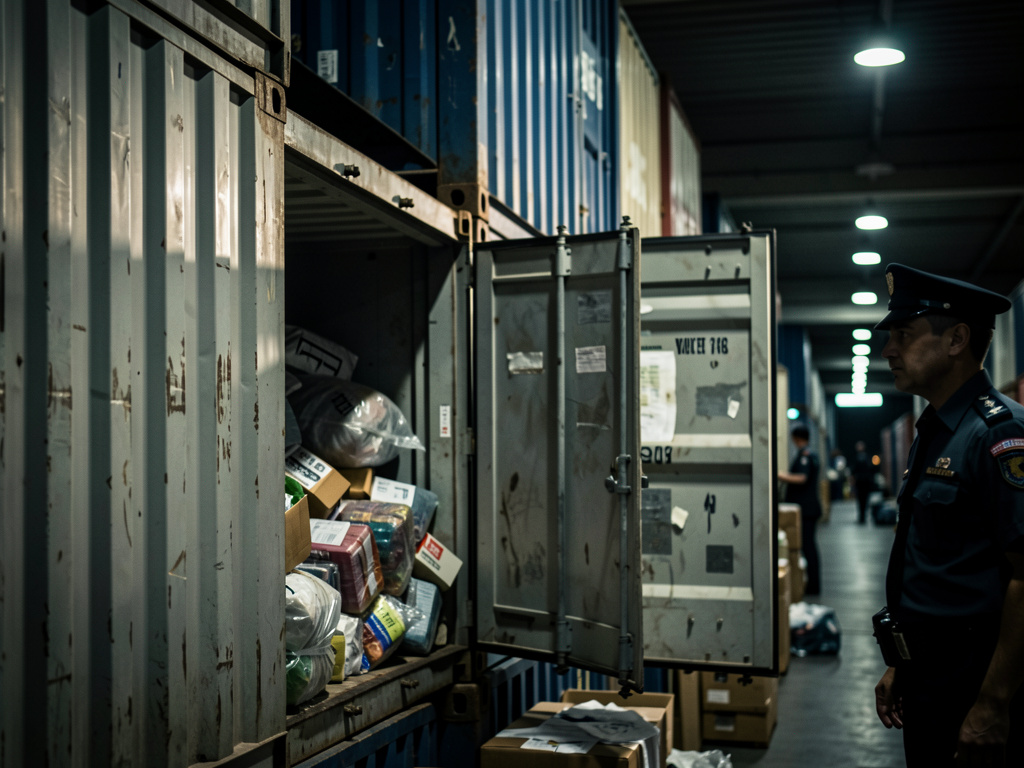
Do Not Provide Inaccurate Product Descriptions
Why You Shouldn't Provide Inaccurate Product Descriptions in Customs Documents
International shipping of goods involves more than just packaging, paying for transportation, and choosing a logistics company. One of the most crucial stages of moving cargo across borders is the preparation of customs documents. The accuracy of the information provided about the product affects the speed of customs clearance, the amount of mandatory payments, the possibility of receiving the package, and the absence of claims from customs authorities.
An inaccurate product description in the customs declaration may seem like a minor mistake. However, in practice, even a small discrepancy between the actual contents of the shipment and the stated information can lead to delays, additional inspections, fines, or the return of the shipment to the sender. Commercial shipments, high-value items, electronics, dual-use products, pharmaceuticals, cosmetics, food products, and items made from natural materials are particularly scrutinized.
To avoid problems, it is essential to understand what information is considered correct, why customs requirements differ from standard product descriptions, and what consequences arise from providing incomplete or inaccurate information.
What is a Product Description in a Customs Declaration
A product description in a customs declaration is information that allows customs officials to clearly identify what is in the package. It is not sufficient to write "things," "accessories," "gift," "parts," or "electronics." Such vague terms do not provide a complete picture of the cargo's contents and may be deemed too general.
Customs authorities use the product description to determine its category, HS code, country of origin, value, purpose, and any possible import or export restrictions. Additionally, the characteristics of the product affect the amount of customs duties, the need for permits, and the application of special control procedures.
What Information Should Be Included in the Description
Depending on the type of product, the declaration typically includes:
the exact name of the product;
its purpose and method of use;
the material of manufacture;
model, article number, or serial number;
quantity of units;
weight and value;
country of manufacture;
brand information;
technical specifications;
composition of the product;
presence of batteries, liquids, chemical components, or other special elements.
For example, instead of stating "electronics," it is better to specify "wireless headphones with a charging case, model..., designed for sound playback, with a built-in battery." Instead of "parts," it should be written specifically: "plastic components for a household device, containing no electronics, used for equipment repair."
Why General Terms Raise Questions
An overly brief product description does not allow the inspector to quickly match the information in the documents with the contents of the package. If customs officials do not understand what is being transported, they may send the shipment for additional inspection.
Questions often arise when the description does not match the nature of the package. For example, stating "personal items" when there are several identical new products may raise suspicions of commercial intent. Similarly, the description "gift" does not exempt the sender from the obligation to accurately specify the contents, quantity, and value of the items.
Why Inaccurate Product Descriptions Are Considered Violations
A customs declaration is an official document. By signing or handing it over to the carrier, the sender confirms that the information provided is accurate. If the information is distorted, missing, or intentionally replaced with more general terms, it may be considered a violation of customs requirements.
An error does not always indicate intentional concealment of the product. Sometimes the sender genuinely does not know the exact model name, incorrectly translates the description into a foreign language, or uses information from the supplier's invoice without verification. However, for customs authorities, the result is paramount: the documents must allow for the precise identification of the cargo.
The Difference Between a Technical Error and Inaccurate Information
A technical error may occur due to a typo, incorrect unit of measurement, or slight discrepancy in quantity. In some cases, such inaccuracies can be corrected without serious consequences, provided they do not affect the value, classification, or importability of the product.
A more serious issue is the intentionally understated value, indicating a different name, or concealing individual items. For example, if an expensive smartphone is declared as an "accessory" with a minimal value, customs may consider this an attempt to evade payment of duties.
It is also risky to state "sample," "souvenir," or "gift" if the item is actually intended for sale. Such information can affect the determination of the nature of the shipment and lead to additional inquiries.
How Customs Detects Discrepancies
Cargo inspection can be conducted in several ways:
document analysis and data comparison;
X-ray control;
package opening;
checking weight and quantity;
requesting invoices, contracts, or payment documents;
clarifying the purpose of the goods;
cross-referencing with information from the carrier and online store;
checking labeling and the appearance of the products.
If the contents of the package do not match the declared description, the cargo may be held until the circumstances are clarified. Even a conscientious sender will be required to provide additional explanations and documents.
How Inaccurate Descriptions Lead to Package Delays
Package delays are one of the most common consequences of incorrectly filled customs documents. Until the customs service receives accurate information, the shipment may be held at a temporary storage facility or in the carrier's sorting center.
The duration of the delay depends on the nature of the problem. If only the name of the product needs clarification, the issue can sometimes be resolved within a few days. If opening, expert evaluation, confirmation of value, or obtaining permits is required, the process may take significantly longer.
Main Causes of Delays
Package delays are often caused by the following circumstances:
too general a description of the product;
lack of information about the material or composition;
discrepancy between the quantity and the actual contents;
discrepancy in value between the declaration and the invoice;
absence of a customs code or incorrect classification;
indicating an incorrect purpose for the product;
presence of goods that require certificates;
suspicion of a commercial shipment;
discrepancy in weight and quantity;
absence of information about batteries, liquids, or chemicals.
For example, a sender may indicate "gift" but forget to list cosmetics, batteries, or food products. Even if the total value of the package is low, certain categories of goods are regulated by special rules.
How Delays Affect the Recipient and Sender
For the recipient, a delay means a postponement of the delivery date, the need to respond to inquiries from the carrier, provide passport details, pay additional fees, and sometimes visit the customs office in person.
The sender may face the return of the cargo, additional storage costs, reprocessing of documents, or compensation for losses to the recipient. If the item is being sent to a customer of an online store, the delay can lead to order cancellations, negative reviews, and reputational damage.
In commercial shipments, the consequences can be even more serious: disruption of production timelines, equipment downtime, breach of contract terms, and imposition of penalties.
What Happens During Cargo Inspection
Cargo inspection is conducted to confirm that the actual contents match the information in the customs declaration. Not every shipment is opened manually: many packages undergo automatic risk analysis and do not require additional actions. However, if discrepancies are found, customs may order an inspection.
Stages of Customs Control
Typically, the procedure includes several stages:
Declaration Analysis. The officer checks the description, value, quantity, country of origin, and sender information.
Cross-Referencing with Carrier Information. Electronic waybills, invoices, and data received from the logistics company are checked.
Instrumental Control. The package is scanned using special equipment.
Data Clarification. If the information raises questions, documents are requested from the sender or recipient.
Physical Inspection. The packaging is opened, and the contents are compared with the declaration.
Decision Making. The cargo is released, sent for additional processing, subjected to payments, or returned to the sender.
During the inspection, not only the name of the product may be clarified, but also its purpose, composition, technical parameters, cost, and the possibility of free movement across the border.
Documents That May Be Requested
Depending on the situation, customs or the carrier may request:
an invoice;
a receipt from an online store;
proof of payment;
a sales contract;
a technical description;
a certificate of conformity;
a declaration of conformity;
a safety data sheet;
an import permit;
documents proving the origin of the goods;
photographs of the product and packaging;
an explanation of the product's purpose.
If the documents are not provided within the specified time, the package may be returned or placed in long-term storage.
Customs Requirements for Describing Different Categories of Goods
Customs requirements depend on the specific goods being transported across the border. A universal description suitable for clothing will be insufficient for electronics, cosmetics, or industrial equipment.
Clothing and Footwear
For clothing, it is advisable to specify the type of item, material, gender or age category, quantity, and condition of the product. For example: “women's polyester jacket, new, 1 piece.” For footwear, indicate the type, upper and sole material, size, and number of pairs.
The terms “clothing” or “footwear” may be considered too general, especially if the shipment contains several identical new items.
Electronics and Household Appliances
For electronics, it is important to specify the name, model, purpose, manufacturer, and whether it contains a battery. Smartphones, tablets, laptops, cameras, watches, routers, and other devices should be listed separately.
If there are lithium batteries inside, this must be reflected in the carrier's documents. Such items may fall under special air transport regulations and require proper packaging.
Cosmetics, Medicines, and Chemical Products
In the description of cosmetics, specify the exact type of product, such as cream, shampoo, serum, or decorative cosmetics. For medicinal products, information about the active ingredient, dosage form, and quantity may be required.
Chemicals, aerosols, paints, solvents, and liquids require special attention. Some of them are prohibited for shipping or are allowed only with the necessary permits.
Spare Parts and Equipment
For parts, it is necessary to specify their exact purpose, type of equipment, material, and presence of electrical components. A simple label like “spare parts” does not allow for determining the product code and applicable requirements.
It is better to use a description like: “aluminum mechanical part for industrial machinery, without electronics, not a complete equipment.”
Consequences of Incorrect Product Description
The consequences depend on the nature of the violation, the value of the cargo, the country of origin and destination, as well as whether the discrepancy was accidental or intentional.
Possible Actions by Customs
In case of issues, the following measures may be taken:
request for additional documents;
suspension of cargo release;
assignment of inspection;
recalculation of customs duties;
imposition of penalties;
administrative fines;
confiscation of individual items;
return of the shipment;
denial of import;
referral of materials for further investigation.
If the item is prohibited or restricted for transport, it may be seized regardless of whether the description error was intentional.
Financial Losses
In addition to customs duties, the sender or recipient may incur additional expenses:
storage fees;
broker services;
reissuing declarations;
reshipping;
expert examination;
return of goods;
disposal of prohibited items;
correction of transport documents.
In international logistics, costs often increase due to currency operations, complex interactions among multiple parties, and the need to process documents in different jurisdictions.
Risk of Losing Trust
For companies, systematic errors in documents can lead to increased scrutiny from customs and carriers. In the future, such shipments will be checked longer, and logistics partners may request additional guarantees.
For individuals, the consequences manifest as delays in personal belongings, the inability to receive an order by the required date, and conflicts with the seller or transport company.
How to Properly Fill Out a Customs Declaration
Proper documentation begins with preparing accurate information about each item. It is not advisable to transfer a brief name from correspondence with the seller into the declaration or to use a description that is only understandable to the sender.
Practical Algorithm
Before filling out the documents, it is recommended to:
create a complete list of goods;
categorize the items;
specify exact names and models;
determine the quantity of each item;
check the value against receipts and invoices;
indicate the material and purpose;
clarify the presence of batteries, liquids, and other special components;
check import and export restrictions;
prepare supporting documents;
ensure that the information matches the invoice and receipt.
Each item should ideally be described separately. If the package contains five different products, they should not be grouped under one general term.
How to Indicate Value
The value must correspond to the actual price of the goods, taking into account the rules of the specific country. It is not permissible to arbitrarily state a minimal amount just to reduce customs duties.
If the item was purchased at a discount, it is helpful to keep proof of the promotion, receipt, or order page. If the item was a gift, it does not mean its value is zero. In such cases, the market price or the value established by customs regulations may be used.
How to Describe Gifts and Personal Items
For gifts, the actual contents should be listed: “leather wallet,” “children's cotton t-shirt,” “ceramic mug.” The word “gift” can be indicated as the nature of the shipment, but it does not replace the description of the goods.
Personal items should also be described specifically. For example, instead of “personal items,” it is better to write: “used clothing – t-shirts, pants, jacket, a total of 8 items; previously used, not for sale.”
The Role of the Carrier and Customs Representative
International logistics involves several participants: the sender, recipient, carrier, warehouse, customs representative, and government authorities. Each is responsible for their part of the process, but the initial information is usually provided by the sender.
The carrier can help choose the correct format for documents, check for mandatory fields, and inform about restrictions. However, they may not always be able to determine the actual composition of the goods without information from the client.
When You Need Specialist Help
A customs broker or foreign trade specialist may be required if:
the shipment is of a commercial nature;
the goods fall under a regulated category;
there are many different items in the shipment;
it is necessary to determine the HS code;
a certificate or permit is required;
the cargo has a high value;
complex delivery terms are used;
the goods contain batteries, chemical components, or radio electronics.
The specialist analyzes the documents, helps formulate descriptions, and reduces the risk of errors. However, even a professional representative cannot guarantee the correctness of the documentation if the sender provided incomplete or false information.
How to Avoid Problems When Shipping Internationally
Preventing a package delay is easier than addressing the consequences after the cargo has been handed over to customs authorities. Therefore, document verification should be conducted before shipping.
Sender's Checklist
Before handing over the package to the carrier, it is advisable to check:
if the description matches the actual contents;
if all items are listed;
if the quantity is correctly indicated;
if the value corresponds to the supporting documents;
if there are any prohibited items;
if batteries and liquids are reflected;
if the weight in the documents matches the actual weight;
if the sender's and recipient's details are correctly stated;
if the necessary certificates are available;
if the text of the declaration is understandable to customs officials in the other country.
The description should be specific but not overloaded with unnecessary details. The main task is to ensure clear identification of the goods.
Why You Shouldn't Copy Other Templates
A formulation that works for one package may be incorrect for another. Even seemingly identical products can have different materials, compositions, purposes, or characteristics.
You cannot automatically copy the description from a previous shipment if the model, quantity, price, or configuration has changed. It is also not recommended to use generic terms like "goods," "samples," "gifts," and "accessories" without clarifications.
Common Mistakes When Filling Out Customs Documents
One of the most common mistakes is providing a too-general name. The sender believes that the customs officer will understand the contents of the package on their own, but the documents must be self-sufficient.
Another issue is the inconsistency between the declaration, invoice, and shipping document. Even if each description looks acceptable individually, discrepancies between the documents can lead to an inspection.
Other frequent issues include:
underreporting the value;
indicating a zero value;
omitting individual items;
incorrect quantity;
absence of brand information;
incorrect unit of measurement;
incorrect translation of the name;
indicating the country of dispatch instead of the country of manufacture;
attempting to label a commercial shipment as personal items;
hiding batteries or other special components.
Any of these mistakes can increase processing time and lead to additional costs.
An inaccurate description of the goods in customs documents is not just a formality; it is a factor that directly affects the passage of cargo across the border. The accuracy of the customs declaration influences delivery time, payment amounts, the need for cargo inspection, and the possibility of receiving the package.
To avoid delays in the package, it is essential to describe each item in detail, indicating the actual value, quantity, material, purpose, and technical specifications. Special attention should be given to electronics, batteries, medicines, cosmetics, chemical products, food items, and commercial goods.
Compliance with customs requirements helps reduce risks in international logistics, avoid fines, and additional expenses. If the cargo is complex or expensive, it is better to consult the carrier, customs broker, or foreign trade specialist in advance. Well-prepared documents allow for faster control and maintain predictability throughout the supply chain.