

 RU
 UA
 DE
 FR
 ES
 CN
 SA
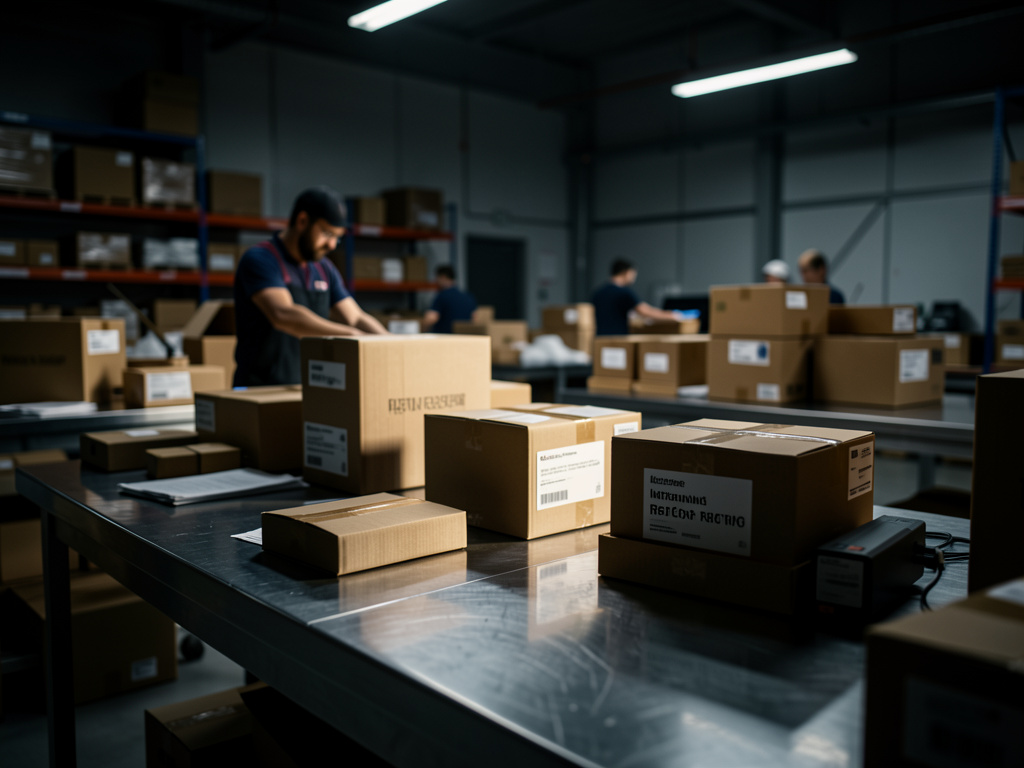
International Order Returns
How to Reduce Costs on International Order Returns
International trade opens up access for online stores to customers from different countries, but it also increases the complexity of order management. One of the most costly issues for sellers is international returns. Unlike domestic logistics, returning goods from another country involves many factors: the cost of return shipping, customs clearance, currency transactions, shipping times, differences in legislation, and the need to track the goods at multiple stages of the route.
If the return process is not well thought out in advance, the seller's expenses can significantly increase. In some cases, the cost of return shipping can be comparable to the price of the item itself or even exceed it. Additional costs arise from reprocessing documents, storing products in a warehouse, checking the condition of goods, refunding money, and reshipping the order. Therefore, international returns should be viewed not as a separate operation but as an integral part of the online store's logistics.
Effective order management not only helps reduce direct costs but also increases customer loyalty. A buyer who understands the return policy and can quickly submit a request is more likely to return to the store. In this article, we will explore in detail how to reduce the cost of returning goods, optimize return shipping, lower seller expenses, and build a sustainable international logistics system.
Why International Returns Are Expensive
International returns require the involvement of several logistical and administrative processes. In regular shipping, the seller pays for the transportation of goods from the warehouse to the customer. With returns, there is a reverse route that also needs to be paid for. As a result, one sale can lead to double transportation costs: first for sending the order, and then for its return.
The final cost of an international return is influenced by the distance between countries, the weight and dimensions of the package, the chosen carrier, the type of delivery, the need for insurance, and the specifics of customs legislation. A small package with a low-cost item may be returned at a rate calculated for commercial international shipments. If the seller has not entered into a special agreement with a logistics operator, the cost of the service will be particularly high.
Customs clearance presents a separate problem. The returned item may mistakenly be perceived as a new commercial shipment. In this case, additional fees, taxes, and delays may arise. To avoid recharging fees, it is essential to correctly indicate the reason for the shipment, the value of the goods, the return status, and details about the original shipment.
Costs also increase due to the processing of returns at the warehouse. The received package needs to be accepted, registered, checked for completeness, assessed for the condition of the goods, determined for resale potential, and updated in the order management system. If the item is damaged or used, the seller must decide on repair, markdown, or write-off.
Another source of costs is the refund process. With international payments, there may be fees from payment systems, currency exchange rate differences, and banking transaction costs. If a customer pays for an order in one currency while the store accounts in another, the refund amount may differ from the original transaction value.
How to Properly Calculate Return Shipping Costs
To manage seller expenses, it is necessary to determine the total cost of return shipping in advance. Relying solely on the carrier's rates is not enough. The actual price of an international return consists of several components, each of which should be considered in the online store's financial model.
First, it is essential to calculate the shipping rate. This depends on the actual or dimensional weight of the package, the country of origin, the destination country, and the speed of delivery. Some carriers use dimensional weight, so a light but large package may cost more than a small heavy shipment. This is particularly important for clothing, footwear, household goods, and products in bulky packaging.
The next element is the pickup fees. If a courier comes to the customer's address, the logistics operator may charge a separate fee. When using drop-off points, such expenses are sometimes lower. Additionally, it is necessary to account for packaging materials, document printing, and labeling.
Customs duties may arise in international returns. Their amount depends on the country, type of product, its value, and the accuracy of the documentation. To avoid unnecessary expenses, it is advisable to prepare instructions for the customer and document templates in advance. These should clearly state that the shipment is a return of a previously delivered product, not a new sale.
Also, include warehouse handling costs in the calculations. These include receiving, inspecting, sorting, storing, and transferring the product for resale. If the return arrives at a warehouse in another country, it is necessary to consider the services of a local operator and the subsequent consolidation of the cargo.
The following formula is convenient to use:
Total cost of international return = return shipping + customs fees + warehouse handling + bank fees + possible product depreciation + reshipping.
This approach helps to see the actual costs for the seller. Sometimes, it is cheaper to offer the customer a partial refund without the physical return of the product than to pay for international shipping of low-value items.
Segmentation of Products by Return Economics
Not all products should be returned in the same way. For effective order management, it is necessary to divide the assortment into several categories. For example, it is advisable to return expensive products to the central warehouse for detailed inspection. In some cases, it is more profitable to leave inexpensive items with the customer while providing partial compensation.
Products that are easy to resell, items with a short shelf life, bulky goods, and products requiring special certification can be highlighted separately. Each category should have its own return scheme.
The threshold of economic feasibility can be determined in advance. If the cost of return shipping exceeds a certain percentage of the product price, the system can offer an alternative option: partial refund, product replacement, or on-site disposal. This approach reduces shipping costs and avoids returning products whose transportation is not economically justified.
How to Reduce the Number of International Returns
The most effective way to cut costs on international returns is to prevent them from occurring. Even a slight reduction in the return rate yields significant results, as the seller saves not only on return shipping but also on handling, storage, and reselling the product.
The quality of information on the product page is crucial. The description should include accurate specifications, dimensions, materials, color, packaging, usage restrictions, and compatibility with other products. The less uncertainty the buyer has, the lower the likelihood that the product will not meet expectations.
For clothing and footwear, it is important to provide detailed size charts. It is advisable to indicate measurements in several systems, such as centimeters, inches, and international designations. A good result comes from visually demonstrating the fit of the product on models with different parameters.
Photos should show the product from different angles. If the color may vary depending on lighting or screen settings, this should be honestly indicated. For technical products, it is useful to publish video instructions, connection diagrams, and answers to frequently asked questions.
Quality control before shipping is equally important. Packing errors, damaged packaging, lack of instructions, or model mismatches often lead to returns. Therefore, it is essential to implement checklists, barcode scanning, and photo documentation of orders before handing them over to the carrier.
Effective communication also helps reduce the number of returns. Before completing the purchase, the customer should be informed about delivery times, potential tax obligations, return policies, and specifics of international orders. If the buyer understands the terms of the deal in advance, the likelihood of refusal after receiving the package decreases.
Transparent Return Policy as a Cost-Saving Tool
The return policy should be clear, accessible, and adapted to the requirements of different countries. Complex or contradictory rules lead to errors, delays, and conflicts, which increase the costs for the online store.
The document should specify the timeframe within which the customer can submit a request, the requirements for the condition of the product, the procedure for filing a complaint, acceptable shipping methods, compensation rules, and refund timelines. It is important to explain separately who pays for return shipping in various situations.
For example, if the product is defective or was sent incorrectly, the seller usually bears the costs. If the customer changes their mind or chooses an unsuitable size, the terms may be different—depending on legislation and the store's commercial policy. These differences should be formulated as clearly as possible.
It is useful to create separate versions of the rules for key markets. The translation of the text should be professional, as inaccurate wording can lead to misunderstandings of obligations. Additionally, the return policy should take into account local consumer protection regulations.
A good practice is to place return information not only in a separate section of the website but also on the product page, in the cart, in the order confirmation email, and in the shipping notification. Before making a purchase, the customer should see the main conditions, including any potential return shipping costs.
Automating the Return Process
Manual processing of requests is time-consuming and increases the likelihood of errors. For an online store with international sales, it is advisable to implement a personal account or a special return form. The customer will be able to select the order, specify the reason for the return, upload photos, and receive further instructions independently.
An automated system can check the submission deadlines, determine the product category, calculate available compensation options, and create a shipping label. Data is transmitted to the CRM, warehouse program, and order management system, allowing employees to see the entire history of the operation.
Automation is especially beneficial when dealing with a large number of countries and carriers. It allows for different scenarios for each region, connects local drop-off points, and selects the most cost-effective shipping rate.
Choosing a Logistics Model for International Returns
The logistics model directly affects the cost of return shipping. One common option is to send all products to the seller's central warehouse. This approach simplifies quality control and accounting but can be expensive for returns from remote countries.
Another option is to use regional warehouses or partner processing centers. The customer returns the product to the nearest country, after which the operator sorts the packages, consolidates them into larger batches, and sends them to the seller. Consolidation reduces the shipping cost per item and decreases the number of separate international shipments.
In some cases, it is advantageous to apply a local return model. The product remains in the buyer's country and is handed over to a partner for resale. This approach is suitable for in-demand products that can be quickly sold in the local market. It allows for avoiding reverse shipping while simultaneously reducing the time for re-offering the product.
Another strategy is to use a network of drop-off points. The buyer does not have to wait for a courier; they can independently drop off the package at a convenient location. For lightweight items, this method often proves cheaper than scheduled pickups.
When choosing a logistics scheme, it is important to consider not only the rate but also speed, reliability, tracking capabilities, processing quality, and availability of customs support. A cheap carrier is not always advantageous if their services lead to lost packages, delays, and additional support inquiries.
Consolidating Returns
Consolidation involves combining several returns into one shipping batch. Instead of sending each item separately, the operator collects packages at a regional warehouse and periodically sends them to the seller.
The advantage of this solution is particularly noticeable when dealing with a large number of small orders. Bulk shipping is usually cheaper than a series of individual shipments. Additionally, customs clearance is simplified, the number of transport documents is reduced, and the workload on warehouse staff is lessened.
However, consolidation increases the return time to the central warehouse. Therefore, it is necessary to determine the optimal frequency of shipments. For expensive products or items with high turnover, shipments should be sent more frequently. For inexpensive items, a longer interval can be used.
How to Reduce Return Shipping Costs
The cost of return shipping can be reduced through negotiations with carriers. An online store should analyze the volume of shipments and request special rates for international returns. For regular shipments, carriers may offer discounts, fixed rates, or specific terms for partners.
It is important to compare several logistics operators. One carrier may be advantageous for European countries, while another may be better for North America or Asia. A universal scheme does not always ensure minimal costs, so it is advisable to create a regional rate matrix.
Reducing shipping costs is aided by proper packaging. An oversized box increases dimensional weight, while insufficient protection raises the risk of damage. It is advisable to use appropriately sized packaging, standardize boxes, and pre-determine acceptable dimensions for different destinations.
It is also necessary to optimize return labels. In some cases, it is beneficial to include them in the shipment in advance, while in others, they should be generated only after the approval of the request. A pre-printed label is convenient for the customer but can lead to unnecessary costs if the return does not take place.
For inexpensive products, it is advisable to implement cost-effective delivery methods without courier pickup. The customer can drop off the item at a collection point or post office. For expensive items, on the other hand, services with tracking, insurance, and delivery confirmation are justified.
Order and Return Management through Technology
An order management system helps connect sales, warehousing, delivery, returns, and financial accounting. Without a unified platform, employees are forced to work with disparate spreadsheets, emails, and carrier portals. This increases the likelihood of duplicate requests, loss of information, and incorrect compensation calculations.
A modern OMS can automatically record an order, track its status, link returns to the original purchase, and transfer data to inventory management. If a customer reports an issue, the employee can see the payment method, country of origin, order composition, communication history, and available resolution options.
Integration with CRM allows for analyzing the reasons for returns. For example, the system can show that a specific model is frequently returned due to size discrepancies, or that a particular carrier regularly delivers damaged goods. Such data helps address issues at the order formation stage.
It is useful to implement automatic notifications. Customers should receive messages about request registration, label creation, package transfer to the carrier, arrival at the warehouse, and completion of inspection. Transparent tracking reduces the burden on customer support and decreases the number of repeat inquiries.
Analytics of Return Reasons
Each return must be classified. It is not enough to state a general reason like "customer is dissatisfied." Cases should be divided into incorrect size, mismatch with description, damage, manufacturing defect, packing error, delivery delay, change of mind, and other categories.
Based on such statistics, it is possible to identify the most costly issues. For example, returns due to inaccurate sizes can be resolved by updating the size chart and consulting customers. Damages require a review of packaging. Packing errors indicate deficiencies in warehouse control.
It is important to analyze not only the number of returns but also their cost. One region may have a low number of inquiries but generate high expenses due to costly return shipping. Therefore, metrics such as return cost per order, return rate, average processing time, and loss amounts from markdowns are crucial.
Financial Tools for Reducing Seller Expenses
International returns should be factored into product pricing and financial planning. If a store does not account for potential returns in its margins, unexpected expenses can reduce profits even with high sales volumes.
It is useful to calculate a reserve for returns for each product category and region. This involves analyzing historical return rates, average return shipping costs, damage frequency, and the likelihood of markdowns. The more statistics accumulated, the more accurate the forecast.
A differentiated shipping policy can be employed. For expensive orders, the seller can include part of the return costs in the service price. For inexpensive products, it is wiser to set a threshold for free returns or offer the customer partial compensation without requiring the item to be sent back.
Special attention should be paid to currency risks. When refunding money, the exchange rate may change, and the payment system may charge a fee. To minimize losses, it is essential to determine in advance the currency in which compensation is calculated and how bank fees are accounted for.
Insurance may be justified for expensive or fragile items. It increases shipping costs but protects the seller from significant losses in case of damage or loss of the package. The decision should be based on the probability of risk and the average order price.
Partial Refunds and Alternatives to Physical Returns
A physical international return is not always the best solution. If the item has a low value and return shipping is expensive, it is more beneficial for the seller to offer the customer a partial refund. The buyer keeps the item, and the store saves on shipping, customs, and warehouse processing.
Another option is to exchange the item. If the issue is related to size or a minor packing error, the correct item can be sent without organizing the return transport of the entire purchase. However, this scenario needs to be calculated separately, as the new delivery also incurs costs.
Sometimes, a customer can be offered a discount on their next order, a bonus, or a partial refund to their internal balance. This approach is especially effective if the buyer is interested in repeat purchases. At the same time, the compensation must be voluntary and comply with consumer protection laws.
Decisions should be made automatically or according to clear rules. For example, the system can compare the product price, the cost of return shipping, the residual value after the return, and the likelihood of resale. If a physical return is not economically viable, the employee receives a recommendation to offer an alternative.
Handling Products After International Returns
Once the product arrives at the warehouse, it is essential to quickly determine its future disposition. The longer the item remains undecided, the higher the storage costs and the lower the likelihood of resale.
Typically, products are divided into several categories. Items in perfect condition can return to the main inventory. Products with damaged packaging are sold at a discount. Items with minor defects are either repaired or sold through a special channel. Unsuitable products are written off or sent for recycling.
To expedite processing, a standard checklist should be used. The employee checks the appearance, completeness, functionality, serial number, and signs of use. The results are entered into the order management system so that the inventory on the website is updated automatically.
If a returned item is sent to another country for resale, it is important to check the labeling, certification, and taxation requirements in advance. Sometimes, transportation between warehouses can be more expensive than local sales, so decisions are made considering the overall economics of the operation.
How to Improve Customer Service Quality
Customer service directly impacts costs. If a buyer does not receive clear instructions, they may send the product back incorrectly, fill out documents improperly, or choose an expensive shipping option. This leads to delays, additional charges, and the need to reprocess the request.
The support team should have ready-made scripts for different countries. These should outline the return process, acceptable packaging, customs declaration filling rules, and application review timelines. Instructions should be clear to someone without specialized logistics knowledge.
It is important to respond quickly. The longer a customer waits for a resolution, the higher the likelihood of a complaint, chargeback, or negative review. Automated responses help confirm receipt of the inquiry, but complex cases should be handled by a staff member.
Good service does not mean unconditional coverage of all expenses. The key is to provide transparent conditions, explain the reasons for decisions, and offer several options. When a customer understands the logic of the process, they are more likely to agree to an exchange, partial refund, or use a local drop-off point.
Key Performance Indicators for International Returns
To control the system, it is necessary to regularly track key metrics. Without analytics, it is impossible to understand which measures truly reduce seller costs.
The main metrics include:
the return rate as a percentage of total orders;
the average cost of international returns;
the average cost of return shipping;
the time from application submission to product receipt;
the time taken to inspect the product at the warehouse;
the percentage of products returned to sale;
the share of products sent for markdown or write-off;
the number of returns by each reason;
return costs by country and carrier;
the percentage of applications processed automatically;
the number of repeat customer inquiries;
the amount of losses due to exchange rate differences and fees.
These metrics should be analyzed over time. If the number of damages decreased after changing packaging, the decision proved effective. If a new carrier offers a low rate but increases delivery times and inquiries, the savings may be illusory.
It is useful to calculate not only average values but also metrics for individual product categories. Expensive electronics, clothing, and inexpensive accessories will have different return economics. Universal rules for the entire assortment often lead to unnecessary expenses.
Practical Plan for Optimizing International Returns
To systematically improve the process, the following plan can be used:
Gather return statistics from the past months.
Identify countries, products, and carriers with the highest costs.
Calculate the total cost of returns, including all hidden expenses.
Update product descriptions, size charts, and photos.
Check the quality of packaging and warehouse fulfillment.
Develop a transparent return policy for different regions.
Implement an automatic application form.
Compare rates from several carriers.
Organize regional drop-off points or partner warehouses.
Implement the consolidation of return shipments.
Identify cases where partial compensation is more beneficial.
Set up analytics for the reasons and costs of returns.
Train support staff.
Regularly review policies based on data.
Optimization should be carried out in stages. It is not necessary to create a complex international infrastructure right away. First, you can improve product listings, correct fulfillment errors, and implement a unified application processing system. Then, as sales grow, connect regional warehouses and automation.
International returns are an important part of an online store's logistics and directly affect business profitability. High costs of return shipping, customs procedures, warehouse processing, currency fees, and markdowns can significantly increase seller expenses. However, most costs can be managed if a system is established in advance.
The main areas of optimization are reducing the number of returns, having a transparent policy for customers, choosing the right carriers, consolidating packages, using regional warehouses, automating order management, and continuously analyzing the reasons for inquiries. For inexpensive products, it is often more cost-effective to apply partial refunds or local disposal, while expensive items should be returned to the warehouse for inspection and resale.
An effective international return strategy should consider not only shipping rates but also the entire chain of expenses. The more accurately a seller calculates the cost of operations, the easier it is to choose the optimal scenario for each category of goods and country. As a result, the online store reduces logistics losses, speeds up application processing, improves customer service, and establishes a sustainable model for international sales.