

 RU
 UA
 DE
 FR
 ES
 CN
 SA
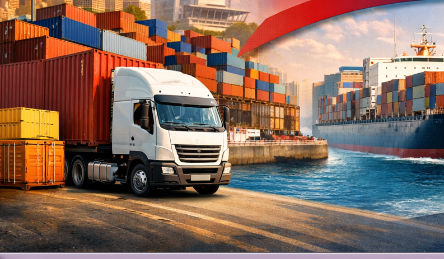
Cargo Delivery from Germany to UAE
Freight Delivery from Germany to the UAE: Companies, Prices, Timelines, and Logistics Features
Freight delivery from Germany to the UAE is a popular direction in international logistics, connecting European manufacturers, suppliers, and online stores with the markets of Dubai, Abu Dhabi, Sharjah, and other emirates. Germany is considered one of the leading trade centers in Europe, while the United Arab Emirates serves as a major distribution hub for the Middle East, the Persian Gulf countries, Africa, and Asia.
Organizing transportation along the route Germany - UAE requires careful consideration. It is necessary to choose the appropriate mode of transport, calculate the delivery cost, prepare export documents, check the customs requirements of the UAE, and determine in advance who will handle the import clearance on the recipient's side. The final price depends not only on the weight and volume of the cargo but also on its category, delivery conditions, route, method of transportation, and the need for additional services.
Germany - UAE: Features of International Logistics
Freight transportation from Germany to the UAE can be carried out in several ways: by sea, by air, by road transport with subsequent transshipment, as well as through multimodal schemes. Each option is suitable for specific categories of goods and differs in terms of timelines, costs, and documentation requirements.
Germany has a well-developed transport infrastructure. Major freight flows are formed in Berlin, Hamburg, Frankfurt am Main, Munich, Düsseldorf, Cologne, and other industrial centers. For shipments outside Europe, the seaports of Hamburg, Bremerhaven, and Wilhelmshaven are most commonly used. Air freight is routed through the airports of Frankfurt, Leipzig, Munich, and other major transport hubs.
In the UAE, the main destinations are:
Dubai;
Abu Dhabi;
Sharjah;
Jebel Ali;
Ras Al Khaimah;
Ajman;
Fujairah.
Dubai is considered the largest logistics center. It is home to the Jebel Ali port, Dubai International Airport, and Al Maktoum International Airport cargo terminal. Significant volumes of industrial equipment, electronics, auto parts, cosmetics, clothing, furniture, food products, and commercial goods pass through these hubs.
Before starting transportation, it is important to determine the nature of the cargo. Standard products are subject to one set of rules, while hazardous, medical, food, chemical, and electrical goods may require additional permits, certificates, and labeling.
Main Types of Freight Delivery from Germany to the UAE
Sea Freight Germany - Dubai
Sea transportation is the most popular option for large and heavy shipments. It is suitable for containerized cargo, industrial equipment, furniture, vehicles, construction materials, commercial goods, and products that do not require urgent delivery.
Cargo can be shipped in a full container (FCL) or as part of a consolidated shipment (LCL). In FCL, the sender rents the entire container—usually 20-foot or 40-foot. This option is convenient for large volumes, as the cargo is not mixed with goods from other clients, and the number of transshipments is usually reduced.
Consolidated delivery (LCL) is used when the shipment does not occupy an entire container. In this case, the cargo is delivered to a consolidation warehouse in Germany, combined with other shipments, and sent to the UAE. The cost is calculated based on volume, weight, or the so-called chargeable space.
The main advantages of sea delivery include:
relatively low cost;
ability to transport large and heavy shipments;
wide selection of container solutions;
convenience for regular commercial deliveries;
ability to organize "door-to-door" delivery.
The downside is the lengthy delivery time. In addition to transit time, it is necessary to consider the delivery of the cargo to the warehouse or port, consolidation, export document processing, waiting for the vessel, unloading in the UAE, and customs clearance.
On average, sea delivery from Germany to Dubai takes from 25 to 45 days. The timeline may increase due to port congestion, weather conditions, transit restrictions, holiday periods, delays at terminals, or the need for additional inspections.
Air Freight from Germany to the UAE
Air delivery is suitable for urgent, high-value, compact, and time-sensitive cargo. Samples of products, electronics, documents, medical devices, spare parts, expensive goods, exhibition materials, and small commercial shipments are often sent by air.
The main advantage of air freight is speed. Depending on the chosen service, cargo can arrive from Germany to Dubai within 2–7 business days. If door-to-door delivery with full documentation is required, the timeframe usually ranges from 5 to 10 days.
The cost of air freight depends on the actual and dimensional weight. The carrier compares both metrics and uses the greater value. Therefore, a lightweight but bulky cargo can be significantly more expensive than a compact heavy shipment.
The final price is influenced by:
the departure and destination airport;
the weight and dimensions of the packaging;
the number of pieces;
the category of the goods;
the presence of hazardous components;
urgency;
fuel and airport fees;
delivery to the terminal or final address;
customs clearance;
insurance.
Air delivery is not always cost-effective for large shipments. With significant volume, the cost can far exceed that of sea freight. However, for urgent deliveries, the difference is offset by time savings and reduced risk of production or retail downtime.
Road and Multimodal Transportation
A direct road route from Germany to the UAE is not feasible in the traditional sense without crossing several countries, maritime sections, and transit zones. Therefore, a multimodal scheme is usually applied. The cargo is transported by truck from Germany to a European port, then shipped by sea to the UAE, after which it is transported by road to the recipient's warehouse.
Another option is road delivery to Turkey or another transit country, followed by transshipment to sea or another mode of transport. This scheme requires careful verification of the route, transit documents, country restrictions, and cargo requirements.
Multimodal transportation is convenient when it is necessary to pick up goods directly from the warehouse of a German supplier and deliver them to a specific address in Dubai or Abu Dhabi. The logistics operator coordinates all stages: vehicle dispatch, loading, consolidation, port operations, sea transport, import clearance, and final delivery.
How Much Does Delivery from Germany to Dubai Cost?
Factors Affecting Shipping Costs
It is impossible to definitively state the cost of delivery from Germany to Dubai without cargo data. The logistics company calculates the rate individually, as several parameters influence the price.
The main factors include:
Cargo weight. The heavier the mass, the higher the transportation costs, especially for air freight.
Volume. For sea and air consolidated shipments, the size of the packaging is important.
Type of cargo. Hazardous, fragile, temperature-sensitive, and oversized goods require special conditions.
Number of pieces. Multiple boxes and a single pallet may have different handling costs.
Departure address. Pickup from a remote location is more expensive than shipping from a major logistics center.
Delivery address in the UAE. Delivery to Dubai, Abu Dhabi, Sharjah, or another emirate is calculated at a separate rate.
Incoterms delivery conditions. EXW, FCA, FOB, CIF, DAP, and DDP provide for different distributions of costs and responsibilities.
Customs value. This affects import payments and possible fees.
Need for insurance.
Urgency and chosen mode of transport.
Estimated Prices for Sea Freight
Consolidated sea delivery is usually calculated per cubic meter, pallet, or cargo space. The base rate may include only sea freight, while additional services are charged separately.
Approximately, the delivery of consolidated cargo from Germany to Dubai may cost:
a small shipment up to 0.5 m³ — from 250–500 euros;
cargo with a volume of about 1 m³ — from 400–800 euros;
one standard pallet — approximately from 500–1000 euros;
a 20-foot container — from 1800–3500 euros;
a 40-foot container — from 2800–5500 euros.
These are approximate ranges, not fixed prices. They may not include loading, delivery within Germany, export clearance, terminal fees, insurance, import duties, VAT, and delivery within the UAE.
For an accurate calculation, it is necessary to provide:
the exact departure address;
the recipient's address;
a description of the goods;
the number of pieces;
the weight of each package;
length, width, and height;
invoice or declared value;
information about the presence of batteries, liquids, chemicals, and other restrictions.
Estimated Air Freight Costs
Air freight from Germany to the UAE is often calculated based on a per-kilogram rate. For small shipments, the estimated rate can range from 5–12 euros per kg, while for urgent or special shipments, it may be higher.
Approximate ranges:
5–20 kg — from 150–350 euros;
50–100 kg — from 400–900 euros;
200–500 kg — from 5–10 euros per kg;
cargo over 500 kg — individual calculation based on contract rate.
Additional fees may apply for airport handling, fuel, security, documentation, courier delivery, and import declaration.
It is important to note that a very low rate does not always mean a good deal. Sometimes the advertised price includes only the freight, while terminal fees and customs expenses are charged separately. When comparing offers, it is essential to request a complete calculation based on the "door-to-door" scheme.
Delivery Times Germany — UAE
Average delivery times depend on the mode of transport and the chosen service:
| Type of Transport | Approximate Time |
|---|---:|
| Air freight to terminal | 2–5 working days |
| Air freight to door | 5–10 working days |
| LCL sea freight | 30–50 days |
| FCL full container | 25–45 days |
| Multimodal delivery | 30–60 days |
| Express document delivery | 1–4 working days |
The indicated times are approximate. They do not always include waiting for documents, obtaining permits, cargo inspection, and customs clearance.
Delays may occur for the following reasons:
incomplete set of documents;
errors in the invoice or packing list;
discrepancy in product description;
delay in container submission;
port congestion;
absence of an importer with valid registration;
need for certification;
customs inspection;
weekends and holidays in Germany or the UAE;
restrictions on certain product categories.
To shorten the delivery time, documents should be prepared in advance, and the recipient in the UAE should be registered in the relevant systems. It is also advisable to check before shipping whether the import of the goods is allowed and if special certificates are required.
Major Freight Companies from Germany to the UAE
For delivery along the route Germany — UAE, you can contact international freight forwarders, shipping lines, air cargo operators, courier services, and specialized logistics brokers.
International Logistics Operators
Large companies typically offer a full range of services:
pickup of cargo from the supplier;
consolidation at the warehouse;
export clearance in Germany;
sea or air freight;
insurance;
import declaration;
delivery within the UAE;
warehousing;
labeling and repackaging.
Some well-known international logistics brands include DHL Global Forwarding, Kuehne+Nagel, DSV, DB Schenker, CEVA Logistics, Rhenus Logistics, UPS Supply Chain Solutions, and other operators. Each company has its own rates, routes, document requirements, and specialization.
Shipping Lines
For container shipments, large shipping companies operating through European ports and Jebel Ali can be used. Among the well-known international carriers are Maersk, MSC, CMA CGM, Hapag-Lloyd, COSCO, and others.
The shipping line is usually responsible for the freight and movement of the container between ports. However, the delivery from the warehouse in Germany to the port, export clearance, import clearance, and delivery to the recipient are often organized by the freight forwarder.
Express Services
For small urgent shipments, DHL Express, FedEx, UPS, Aramex, and other courier operators may be used. They are convenient for documents, samples, and small parcels, but their rates for large commercial cargo may be higher than those of specialized forwarders.
When choosing a carrier, it is essential to check:
experience working with the UAE;
ability to deliver to the final address;
insurance conditions;
list of prohibited goods;
whether customs services are included;
who acts as the importer;
availability of Russian or English support;
procedure for settling damages and delays.
Documents for shipping cargo from Germany to the UAE
Proper document preparation is one of the key factors for successful delivery. Errors in paperwork can lead to delays, additional costs, or refusal to release the goods.
Typically required are:
commercial invoice;
packing list;
transportation bill or waybill;
export declaration from Germany;
contract or transaction confirmation;
certificate of origin if necessary;
permitting documents;
insurance policy;
technical description of the goods;
licenses and certificates of conformity;
importer documents in the UAE.
Commercial Invoice
The invoice includes the seller, buyer, description of the goods, quantity, unit price, total value, currency, country of origin, and delivery terms. The description must be specific. Terms like “goods,” “equipment,” or “spare parts” may be insufficient.
It is advisable to specify articles, models, materials, purpose, and HS codes. The value should correspond to the actual transaction or have documentary justification.
Packing List
The packing list contains information about the number of boxes, pallets, pieces, gross and net weight, dimensions of each package, and the method of placing the goods. This information is used by the carrier, warehouse, and customs authorities.
Transport Documents
For sea transport, a Bill of Lading is issued. For air transport, an Air Waybill is used. For road transport, the corresponding transport bill is applied.
How to Clear Customs in the UAE
Importer Registration
For commercial imports to the UAE, the recipient usually needs to have a valid trade license and importer registration details. Depending on the emirate and the category of goods, registration in the customs system, obtaining an import code, and connecting to electronic services may be required.
If the recipient is unable to handle the clearance independently, a customs broker can be engaged. The broker prepares the declaration, interacts with customs, calculates payments, and facilitates the release of the cargo.
Preparing the Customs Declaration
The declaration includes:
sender and recipient;
country of origin;
country of dispatch;
description of the goods;
commodity classification code;
quantity;
weight;
value;
transport data;
delivery terms;
information on permits and certificates.
The correct classification code is particularly important. It can affect the duty rate, the need for permitting documents, and the possibility of importing certain goods.
Customs Payments
When importing to the UAE, the following may apply:
customs duty;
VAT;
port and terminal fees;
processing fees;
broker services;
inspection and storage fees;
special payments for certain categories of goods.
As a general guideline, the import duty is often mentioned as around 5%, but the rate depends on the type of product, origin, import regime, and applicable regulations. The standard VAT rate in the UAE is usually 5%, but the specific calculation depends on the customs value and transaction structure.
Payments are calculated not just based on the price of the goods. The base may include the cost of the product, freight, insurance, and other expenses up to the point of entry. Therefore, the final amount should be clarified with the customs broker or logistics operator.
Customs Inspection
Customs authorities may designate a documentary or physical inspection. In this case, the release time increases, and costs may include payment for opening, repackaging, storage, and additional operations.
To reduce the likelihood of delays, it is necessary to:
use consistent descriptions of the goods in all documents;
indicate the actual value;
check the conformity of weight and quantity;
prepare certificates in advance;
not mix incompatible categories in one shipment;
correctly apply labeling;
coordinate documents with the recipient and broker.
Prohibited and Restricted Goods
Before shipping, it is essential to check whether the import of specific products is allowed in the UAE. Some items are completely prohibited, while others are permitted only with licenses and permits.
Potentially restricted categories include:
medications;
medical equipment;
cosmetics;
food products;
alcohol;
tobacco products;
chemicals;
batteries and lithium batteries;
radioelectronic equipment;
weapons and components;
plants, seeds, and animals;
dual-use goods;
branded products at risk of intellectual property rights violations.
Dangerous goods are transported under special regulations. They may require a safety data sheet, a dangerous goods declaration, special packaging, labeling, and coordination with the carrier.
Incoterms Delivery Conditions for Shipping to the UAE
Incoterms define who pays for transportation, insurance, export and import clearance, as well as when the risk of damage to the goods transfers.
In practice, the following are commonly used:
EXW — the buyer picks up the goods from the seller's warehouse and organizes almost all logistics;
FCA — the seller hands over the cargo to the carrier at an agreed location;
FOB — primarily used for sea transport, the seller delivers the cargo on board the vessel;
CIF — the seller pays for the cost, insurance, and freight to the destination port;
DAP — the cargo is delivered to an agreed location, but import payments are usually made by the buyer;
DDP — the seller assumes the maximum amount of expenses and responsibilities, including import clearance, if legally possible.
For shipments to the UAE, it is particularly important to determine in advance who the importer is and who will pay the duties and VAT. An incorrectly chosen delivery condition can lead to unexpected expenses after the cargo arrives.
Cargo Insurance from Germany to the UAE
International transport involves risks of damage, loss, theft, delays, and exposure to moisture or temperature fluctuations. Therefore, for expensive, fragile, and commercially important shipments, it is advisable to arrange for insurance.
The insurance policy may cover:
total or partial loss of cargo;
damage during loading and unloading;
vehicle accidents;
fire;
natural disasters;
theft;
specific risks during storage at the terminal.
It is important to carefully review the exclusions. Some policies do not cover improper packaging, natural properties of the goods, delivery delays, military risks, or damage to previously defective equipment.
The amount of the insurance premium depends on the value, category of the goods, route, packaging, and the chosen level of coverage. Typically, insurance is significantly cheaper than potential losses, especially when shipping expensive machinery, electronics, or industrial equipment.
How to Choose a Carrier for the Route Germany — Dubai
When selecting a logistics company, do not focus solely on the lowest rate. A low price may be quoted without terminal fees, customs clearance, delivery within Germany, or transportation from the port to the final address.
It is advisable to compare several offers and request a breakdown of costs:
cargo pickup;
warehouse handling;
packaging;
export declaration;
freight;
terminal charges;
insurance;
import clearance;
duty and VAT;
delivery within the UAE;
storage;
broker services.
It is also important to check the company's reputation, the presence of an office or partners in the UAE, experience with similar cargo, and the transparency of the contract. A reliable carrier will inform you in advance about possible restrictions, will not promise unrealistic timelines, and will provide a list of documents before the transportation begins.
Practical Tips for Successful Delivery
To ensure that the delivery of cargo from Germany to the UAE proceeds without unnecessary delays, it is advisable to follow a few rules.
First, start preparing before purchasing the goods. Check whether the import of the products is allowed, whether certificates are needed, and who will be the importer in the UAE.
Secondly, request the exact cargo parameters from the supplier in advance. For calculations, not only the total weight but also the dimensions of each box or pallet are important.
Thirdly, agree on the Incoterms conditions. This will help avoid disputes over who pays for shipping, customs, and final fees.
Fourthly, prepare documents in a uniform format. The product description, quantity, weight, value, and item numbers must match in the invoice, packing list, and shipping documents.
Fifthly, choose packaging considering the long route. Sea transport may be accompanied by humidity, temperature fluctuations, vibration, and multiple handling. For equipment and fragile goods, cushioning materials, moisture protection, and secure fastening are necessary.
Sixthly, consider additional expenses. In addition to the base rate, there may be charges for storage, inspection, container demurrage, repackaging, brokerage services, and delivery to remote areas.
How much does shipping from Germany to Dubai cost?
The cost of shipping cargo from Germany to Dubai depends on the characteristics of the shipment and the chosen logistics scheme. Generally:
air freight for a small batch can cost from several hundred euros;
sea consolidated shipping — from 250–500 euros for a small shipment;
one pallet — approximately from 500–1000 euros;
container shipping — from 1800–5500 euros and above;
customs fees, brokerage services, and delivery within the UAE are calculated additionally.
In terms of timing, air transport takes about 2–10 working days, while sea delivery takes around 25–50 days, considering processing and documentation. For regular commercial shipments, sea transport is more cost-effective, while for urgent and expensive cargo, air transport is preferred. For "door-to-door" delivery, a multimodal scheme often becomes the optimal solution.
An accurate calculation can only be obtained after providing data about the cargo, route, shipping and delivery addresses, product value, delivery terms, and customs clearance requirements. The right carrier will help combine transportation, insurance, warehousing operations, and customs support into a single logistics service.