

 RU
 UA
 DE
 FR
 ES
 CN
 SA
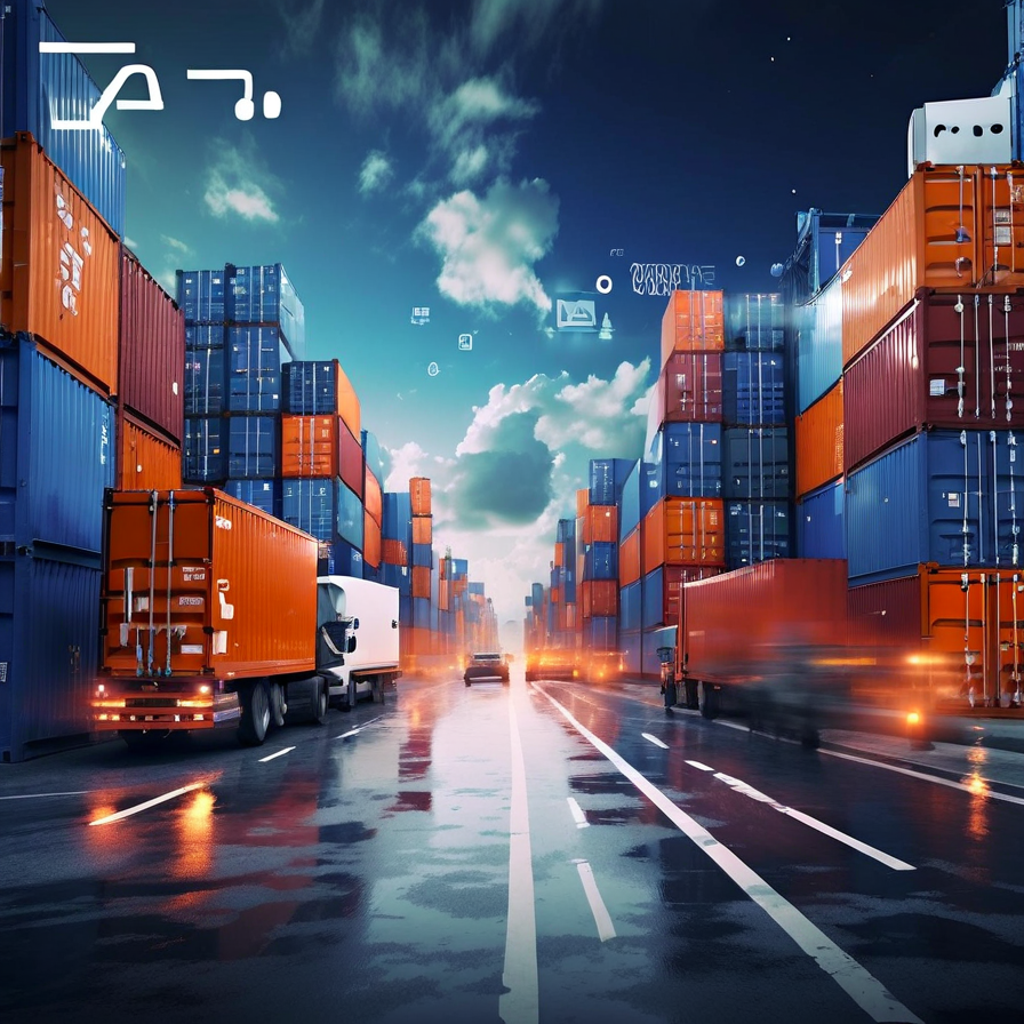
Digital Logistics and the Impact of Platforms
Digital Logistics and the Impact of Platforms on Global Supply Chains
Digital logistics is becoming one of the main factors driving global trade, e-commerce, and international shipping. Just a few decades ago, supply chain management relied primarily on phone negotiations, paper documents, scattered spreadsheets, and manual oversight. Today, companies utilize cloud platforms, artificial intelligence, the Internet of Things, robotic warehouses, automated route planning, and end-to-end analytics systems.
The shift to a Digital Supply Chain and Logistics model is changing the very principle of organizing the movement of goods. The logistics chain is no longer a set of separate operations connected by delays and limited information exchange. It is transforming into a unified digital ecosystem where manufacturers, suppliers, carriers, warehouses, marketplaces, customs representatives, courier services, and customers have access to real-time data.
The influence of digital platforms is particularly noticeable amid the growth of e-commerce. Customers expect fast delivery, precise adherence to deadlines, the ability to track orders in real-time, and the option to choose a convenient delivery method. To meet these demands, businesses must not only move goods but also manage large volumes of data, forecast demand, quickly adjust routes, and coordinate the work of numerous participants.
What is Digital Logistics
Digital logistics is the organization of transportation, warehousing, procurement, and distribution processes using digital technologies. It includes software platforms, transportation and warehouse management systems, automated document flow services, forecasting tools, monitoring sensors, and analytical solutions.
The main difference between digital logistics and traditional logistics lies in the level of transparency and speed of decision-making. In the classic model, information about orders may arrive late, and data from different companies is often stored in incompatible formats. As a result, supply chain participants see only isolated fragments of the process. A digital platform consolidates information in a single space and allows tracking the path of goods from the supplier to the end recipient.
A modern system can automatically record order processing, check product availability, select the shipping warehouse, calculate transportation costs, choose a carrier, generate documents, and provide the customer with information about the delivery status. If a delay occurs, the software can suggest an alternative route or another provider.
Key Elements of Digital Supply Chain Logistics
The key components of a digital supply chain include:
cloud logistics management platforms;
transportation management systems – TMS;
warehouse management systems – WMS;
order management platforms – OMS;
electronic document flow;
artificial intelligence and machine learning;
the Internet of Things and telematics devices;
robotic cargo handling;
digital payments and automated reconciliation;
analytical dashboards and demand forecasting.
This integration of technologies allows for a shift from reacting to problems to preventing them. For example, the system can proactively identify the likelihood of product shortages, detect overloaded routes, or forecast delays at borders. This enhances the resilience of the supply chain and reduces the business's reliance on manual oversight.
Why Digitalization is Essential for Companies
The increase in order volume, expansion of sales geography, and complexity of international trade have made manual logistics management too costly and slow. Companies must simultaneously consider dozens of factors: inventory levels, fuel costs, vehicle load, customs restrictions, seasonal demand, weather conditions, and customer requirements.
Digital tools help reduce operational costs, speed up order processing, and improve service quality. Moreover, automation decreases the number of errors related to incorrect data entry, document loss, or inconsistencies between departments.
For large businesses, digital logistics becomes a scaling tool. A company can expand its number of suppliers, warehouses, and routes without a proportional increase in administrative staff. For small and medium-sized businesses, platforms provide access to services that were previously available only to multinational corporations: route calculation, warehouse analytics, connection to courier networks, and automated shipping documentation.
The Impact of Platforms on Global Supply Chains
Global supply chains connect companies from different countries, time zones, and legal systems. Any disruption in one link can affect production, sales, and delivery in another region. Digital platforms help participants see the big picture, share data, and coordinate actions.
The influence of global delivery platforms manifests in several ways. First and foremost, platforms reduce the time spent searching for carriers and arranging international shipments. Instead of negotiating with dozens of companies, the shipper can compare offers in a single interface, select the optimal rate, and automatically transmit information for creating shipping documents.
Platforms also enhance competition among logistics operators. Carriers gain access to a larger number of customers, while clients can compare prices, delivery times, service levels, and geographical coverage. This leads to lower shipping costs and encourages companies to improve service quality.
A Unified Environment for Supply Chain Participants
The digital platform connects manufacturers, suppliers, freight forwarders, carriers, warehouses, customs brokers, marketplaces, and buyers. Each participant receives their own set of tools and access to necessary information.
The manufacturer can track the movement of raw materials and finished products. The supplier sees order plans and deadline requirements. The carrier receives the route, cargo specifications, and handling instructions. The warehouse knows in advance the volume of products that need to be received or shipped. The buyer receives notifications about the order status and estimated arrival time.
This model reduces the number of information gaps. When data is updated in real-time, participants can respond more quickly to changes. For example, in the event of a container delay, the system can automatically notify the warehouse, adjust the receiving plan, and offer the buyer a new delivery date.
Transparency and Control on International Routes
In international logistics, transparency and control are especially important. Cargo may pass through several countries, terminals, and transport companies. Without digital monitoring, it can be challenging to determine exactly where a delay occurred or who is responsible for a specific stage.
Modern platforms utilize GPS, telematics, temperature sensors, electronic seals, and automatic identification technologies. This allows for monitoring not only the location of the cargo but also the conditions of its transport. For food products, pharmaceuticals, chemicals, and other sensitive categories, such monitoring is critical.
Digital records also help resolve disputes. If a product is damaged or arrives with a temperature violation, participants can review the movement history and identify when the problem occurred. This speeds up the claims process and increases carrier accountability.
E-commerce Logistics Systems and the Development of E-commerce
E-commerce imposes logistics requirements that cannot be effectively met without automated systems. Online stores and marketplaces handle a large number of orders, often small in volume but requiring fast and accurate processing. Customers expect that the product will be picked without errors, handed over for delivery promptly, and that order status will be available in a mobile app.
E-commerce logistics systems automate the entire cycle: from order placement to product returns. Information from the online store is transmitted to the order management system, after which a warehouse is selected, picking is initiated, documents are generated, and a delivery service is assigned.
Synchronization of inventory plays a crucial role. If data is updated with a delay, the store may sell a product that is no longer available in stock. This leads to cancellations, negative reviews, and financial losses. The digital system continuously reconciles orders, inventory, reservations, and incoming shipments.
Fulfillment and Order Processing Automation
Fulfillment centers are becoming a vital part of e-commerce. They receive products from suppliers, store them, pick orders, package shipments, and hand them over to carriers.
Automated fulfillment employs barcoding, conveyors, sorting lines, robotic carts, and intelligent placement algorithms. The system can determine the best location to store a specific product to minimize the distance for employees or robots during picking.
To speed up delivery, marketplaces store inventory in several regional warehouses. The digital system selects the shipping point based on the distance to the customer, product availability, warehouse load, and available rates. As a result, orders can be delivered from the nearest center rather than a single central warehouse.
Returns Management
Returns are one of the most challenging tasks in e-commerce. They require reverse shipping, product condition checks, repackaging, restocking, or disposal.
The digital system helps create a transparent return process. The customer submits a request online, chooses a method for returning the product, receives instructions, and tracks the status. Once the shipment arrives at the warehouse, the system records the inspection result and automatically determines the next steps.
Effective returns management impacts customer loyalty and company expenses. The faster a return is processed, the less time it takes to refund money, and the higher the likelihood of repeat purchases.
Digitization of Courier Networks
The digitization of courier networks has become a necessary condition for the development of last-mile delivery. This final stage—the journey from the local warehouse or sorting center to the customer—often turns out to be the most expensive and complex. It is influenced by traffic jams, urban density, lack of parking, weather conditions, and the need to coordinate the exact time of receipt.
Digital courier networks utilize mobile applications, navigation, automatic order distribution, and route optimization algorithms. Couriers receive tasks in priority order, and the system calculates the sequence of stops based on distance, delivery time, and cargo restrictions.
Customers can choose a delivery window, pickup point, parcel locker, or doorstep delivery. After the order is handed over, the system confirms the delivery with a digital signature, photo, code, or geolocation.
Route Optimization and Courier Load Balancing
Routing algorithms analyze numerous parameters: the number of shipments, addresses, time windows, vehicle capacity, traffic conditions, and order urgency. If the situation changes, the route can be automatically recalibrated.
This helps reduce mileage, fuel consumption, and delays. At the same time, courier productivity increases: during a work shift, they can complete more deliveries without extending the workday.
For companies with a large number of orders, load balancing is also crucial. The system distributes shipments among couriers, considering their location, availability, vehicle type, and current workload. This reduces the likelihood of overloading some employees while others remain idle.
Parcel Lockers and Pickup Points
The development of digital courier networks is linked to the proliferation of parcel lockers and pickup points. These formats allow for consolidating a large number of orders in one location, reducing last-mile costs.
The customer receives a notification with an access code, and the system records the opening of the locker and the receipt of the package. Pickup points can be integrated with online store platforms, warehouse systems, and loyalty programs.
For businesses, this approach means a reduction in failed deliveries. The customer picks up their order at a convenient time, and the courier does not have to make multiple trips to an address where the recipient may not be present.
Automated Shipping Ecosystem
Automated shipping ecosystem is a complex of interconnected services where a significant portion of logistics decisions is made by software algorithms. Automation encompasses carrier selection, rate calculation, document preparation, shipment tracking, warehouse management, and customer notification.
In such an ecosystem, the seller inputs the main parameters of the cargo: weight, dimensions, addresses, product type, and desired delivery time. The platform independently selects suitable shipping options, compares costs and timelines, checks restrictions, and generates necessary documents.
Automation does not mean a complete abandonment of human involvement. Employees still monitor non-standard situations, adjust rules, analyze metrics, and make strategic decisions. However, routine operations are performed faster and with fewer errors.
Artificial Intelligence in Logistics
Artificial intelligence is used for demand forecasting, determining optimal inventory levels, identifying risks, and route planning. Machine learning helps analyze order history, seasonal fluctuations, marketing campaigns, and customer behavior.
For example, the system can predict that demand for a certain category of goods will increase before the holidays and proactively suggest increasing stock levels at regional warehouses. This reduces the risk of shortages and helps avoid urgent deliveries through expensive methods.
AI is also used to detect suspicious operations, assess carrier reliability, and predict delays. The algorithm can take into account weather warnings, terminal congestion, specific route statistics, and border situations.
Automation of Warehouse Processes
Robots are used for moving boxes, sorting shipments, inventory management, and order fulfillment. Automated systems are particularly effective in warehouses with high product turnover and standardized operations.
Automation allows for round-the-clock operations, increases processing accuracy, and reduces physical strain on staff. However, the warehouse must be adapted to new technologies: it is necessary to implement digital addressing, install sensors, and ensure equipment compatibility with WMS.
Worldwide delivery infrastructure
Worldwide delivery infrastructure includes transport corridors, seaports, airports, railway terminals, road routes, distribution centers, warehouses, pickup points, and digital coordination systems. Physical infrastructure remains the foundation of international trade, but its efficiency increasingly depends on the quality of digital management.
Global delivery requires coordination of different standards, languages, currencies, customs regulations, and documentation requirements. Digital platforms help standardize data exchange and automate document preparation.
International Shipping and Multimodal Logistics
Multimodal shipping involves the use of several modes of transport, such as sea, rail, and road. Each stage can be carried out by a different company, making a unified control system particularly important.
The platform collects data from all participants and forms a comprehensive picture of the route. The sender can see when the container arrived at the port, cleared customs, was loaded onto a train, or handed over to a road carrier. In case of a disruption, the system can suggest changing the delivery method or transfer point.
Customs Automation
Customs procedures often cause delays in international shipments. Errors in product descriptions, classification codes, invoices, or accompanying documents can lead to additional inspections.
Digital platforms help automatically generate documents based on order data and check their completeness. They can also alert users to the need for special permits, import restrictions, or discrepancies in information.
Electronic data exchange reduces the processing time for declarations and decreases the number of errors. However, the effectiveness of such solutions depends on the level of digitalization of government agencies and the consistency of international standards.
Benefits of Digital Logistics for Business
Digitalization of logistics provides companies with a comprehensive effect. It impacts not only transportation costs but also sales, service quality, business resilience, and scalability.
Cost Reduction
Automation helps reduce expenses related to manual order processing, paper documentation, excess inventory, and inefficient routes. Analytics show which directions require optimization, where downtimes occur, and which carriers perform worse than others.
Accurate planning of transport loading reduces the number of trips with incomplete loads. Optimizing warehouse inventory lowers storage costs and the risk of product write-offs.
Increased Delivery Speed
The digital system accelerates all stages of logistics: order acceptance, product reservation, picking, processing, transfer to the carrier, and informing the recipient. The fewer manual operations, the faster the order moves through the chain.
Speed is especially important for online stores, where a customer may choose a competitor if delivery takes too long. The ability to offer same-day or next-day delivery becomes a significant advantage.
Improved Customer Experience
Customers want to know where their order is and when it will arrive. Real-time tracking, notifications, interval selection, and convenient return processing enhance trust in the brand.
Transparency reduces the number of inquiries to customer support. If a customer sees the current status, they do not need to call or write to ask about the location of their shipment.
Supply Chain Resilience
Digital analytics helps to quickly identify risks: supplier delays, transportation shortages, port congestion, or increased demand. The company gains the ability to prepare backup scenarios in advance.
Resilience is especially important during crises, natural disasters, changes in trade restrictions, and instability in transportation markets. A digital model allows for quicker adaptation to risks rather than eliminating them entirely.
Challenges and Risks of Logistics Digitalization
Despite the obvious advantages, digital logistics requires significant investments and organizational changes. You can't just install a program and expect instant results.
Integration of Disparate Systems
Companies may use different data formats, software products, and accounting rules. Integrating ERP, CRM, WMS, TMS, marketplaces, and courier services requires technical preparation.
If systems do not exchange data, employees continue to manually transfer information, and some of the automation benefits are lost. Therefore, it is essential to describe processes, identify data sources, and develop a unified architecture before implementation.
Cybersecurity and Data Protection
Logistics platforms process commercial information, addresses, payment details, and data on the movement of goods. A leak of such data can lead to financial losses and reputational damage.
Companies must implement access controls, multi-factor authentication, encryption, backups, and regular security audits. It is also important to train employees on the rules for working with digital systems.
Dependence on Platforms
Delegating critical processes to an external platform creates dependence on its technical stability, pricing policies, and access rules. If the service is temporarily unavailable, order processing, document printing, or shipment transfers may come to a halt.
To mitigate risk, companies need backup processes, alternative suppliers, and the ability to export their own data. Major market players should also avoid excessive dependence on a single operator.
Shortage of Qualified Specialists
Digital logistics requires specialists who understand transportation, warehousing, analytics, and information technology simultaneously. Finding such employees can be challenging.
Organizations need to develop internal training, enhance the digital literacy of their staff, and form teams capable of working with data and automated systems.
The Future of Digital Logistics
In the coming years, digital logistics will evolve towards greater autonomy, personalization, and sustainability. Platforms will become not just accounting tools but intelligent decision-making centers.
The use of autonomous transport, warehouse robots, drones, and automated pickup points will expand. These technologies will be implemented as legislation, infrastructure, and safety standards improve.
Predictive Logistics
Predictive logistics allows for forecasting events before they occur. The system can anticipate the likelihood of delays, vehicle breakdowns, product shortages, or warehouse overloads in advance.
This approach changes the management principle: the company does not wait for a problem but prepares a solution ahead of time. For example, in anticipation of increased demand, inventory can be redistributed, additional capacities rented, or delivery schedules adjusted.
Green Logistics
Digital platforms help reduce the environmental impact of transportation. Route optimization decreases mileage and fuel consumption, while shipment consolidation reduces the number of trips.
Companies can calculate the carbon footprint of deliveries, choose more eco-friendly modes of transport, and inform customers about the impact of various order fulfillment options. Environmental metrics are gradually becoming part of commercial strategy and the requirements of major partners.
Digital Twins of Supply Chains
A digital twin is a virtual model of a logistics network that reflects the state of real processes. It allows for modeling changes in demand, route closures, supplier delays, and other scenarios.
Before implementing a solution, the company tests it in a digital environment and assesses potential consequences. This reduces the cost of errors and helps make more informed strategic decisions.
Digital logistics transforms the traditional supply system into a connected, transparent, and managed ecosystem. Platforms connect manufacturers, carriers, warehouses, marketplaces, courier services, and customers, ensuring real-time data exchange.
The impact of platforms on global supply chains is reflected in faster transportation, reduced costs, increased transparency, and improved service quality. Digital logistics of supply chains, the influence of global international shipping platforms, e-commerce logistics systems, the digitization of courier networks, automated delivery ecosystems, and global infrastructure for international shipments are becoming interconnected elements of the modern economy rather than separate technological directions.
Companies that implement digital tools gain the ability to forecast demand more accurately, utilize warehouses and transportation more efficiently, respond more quickly to disruptions, and offer customers convenient services. However, successful digitization requires not only software but also high-quality data, reliable cybersecurity, trained employees, and a willingness to change internal processes.
In the future, a business's competitiveness will increasingly depend on how effectively it manages information. A logistics network capable of quickly gathering data, analyzing it, and turning it into concrete solutions will become one of the company's main assets in the global market.