

 RU
 UA
 DE
 FR
 ES
 CN
 SA
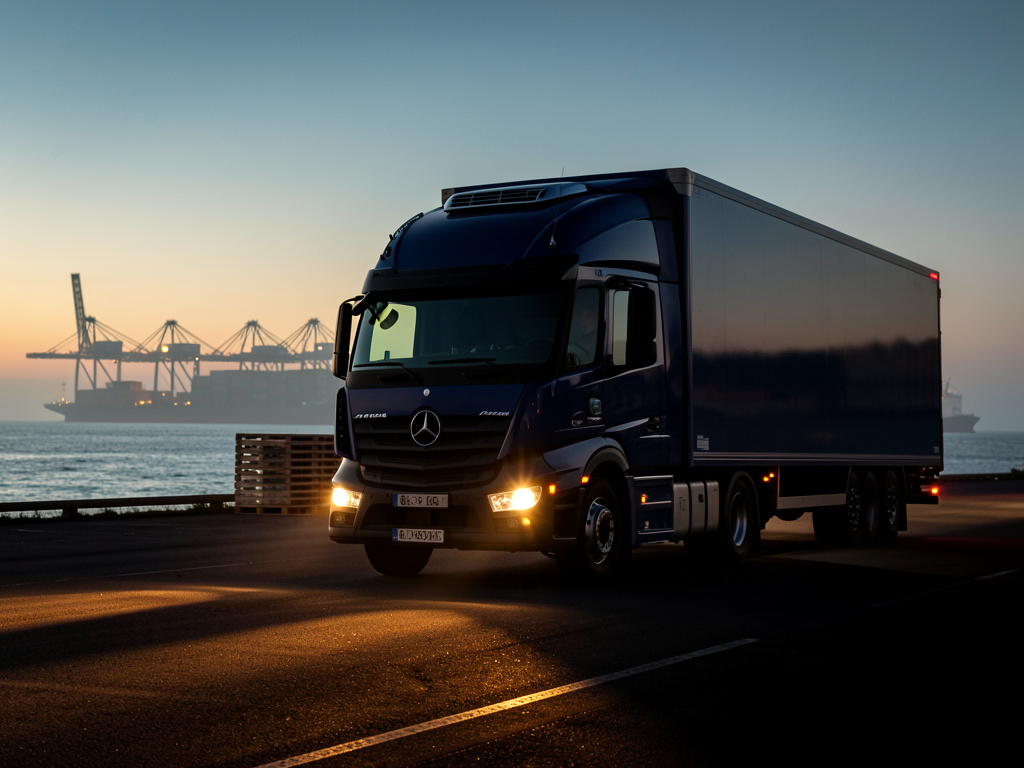
Cargo Delivery from Germany to the UK
Freight Delivery from Germany to the UK: European Logistics, Road and Sea Transport
Freight delivery from Germany to the UK is a popular route in international logistics, despite the UK's exit from the European Union. Pallets, consolidated shipments, industrial equipment, auto parts, consumer goods, and commercial cargo are regularly transported between German manufacturers, trading companies, online stores, distributors, and British recipients.
After Brexit, transportation between Germany and the UK requires more careful preparation of documents, customs procedures, and compliance with import and export requirements. However, transport links between the countries remain well-developed: road routes through France, ferry lines, the Channel Tunnel, sea container transport, and combined logistics schemes are utilized.
Methods of delivering cargo from Germany to the UK, features of road and sea transport, export and import documentation, transportation timelines, cost factors, and the estimated price for pallet delivery from Germany to the UK.
Features of Freight Delivery from Germany to the UK After Brexit
Brexit has changed the process of moving goods between Germany and the UK. Previously, freight transport between EU countries occurred without full customs clearance, but now the UK is treated as a separate customs destination. This means that when sending commercial cargo, it is necessary to prepare export and import documents in advance.
Germany is part of the European Union, while the UK maintains its own customs rules, tax system, and import requirements. Therefore, delivery from Germany to the UK involves interaction with German export authorities, British customs, and, depending on the nature of the goods, regulatory agencies.
In practice, transportation typically includes the following stages:
Obtaining information about the cargo.
Checking the feasibility of transportation.
Calculating the route and cost.
Preparing packaging and labeling.
Preparing commercial documents.
Export declaration in Germany.
Transport through the EU and the Channel.
Import clearance in the UK.
Delivery to a warehouse, store, or final recipient.
Typically, a commercial invoice, packing list, transport waybill, information about the sender and recipient, product description, its value, country of origin, and HS code are required for documentation. For certain categories of products, certificates, permits, veterinary, or phytosanitary documents may be necessary.
It is particularly important to correctly define the delivery terms according to Incoterms. For example, under EXW terms, the buyer assumes most of the transportation and export formalities. Under FCA, the seller hands over the goods to the carrier at an agreed location. DAP terms imply delivery to a specified address without including import duties and taxes, while DDP provides a comprehensive service, including import clearance and payment of mandatory fees, if permitted by law and feasible under the chosen scheme.
Errors in documentation can lead to cargo delays, additional storage costs, re-declaration, and penalties. Therefore, international freight delivery from Germany to the UK is often organized through a logistics operator who manages the entire route and interactions with customs authorities.
Main Methods of Delivering Cargo from Germany to the UK
The choice of transport depends on the weight and volume of the shipment, the nature of the goods, time requirements, budget, and delivery address. For the Germany-UK route, road, sea, and multimodal transport are most commonly used.
Road delivery is suitable for most standard cargo. It provides "door-to-door" transport, allows for the delivery of shipments of various sizes, and does not require transloading between multiple terminals along the main route. Road transport can carry pallets, consolidated cargo, equipment, furniture, packaging materials, raw materials, and trade goods.
Sea delivery is used for container shipments, oversized goods, and cargo where minimizing cost is a priority. The main options include full container transport (FCL) or shipping part of a container (LCL). With LCL, the cargo is consolidated with goods from other clients, which reduces the price for smaller shipments but may increase the delivery time due to additional operations at terminals.
A combined scheme is also used: the cargo is delivered by truck from Germany to a European port, then by sea to the UK, after which it is transported by road to the final address. This option allows for optimizing costs when transporting large batches over significant distances.
For urgent or particularly valuable cargo, air delivery may be used. However, this method is usually significantly more expensive than road and sea transport. It is justified for documents, product samples, electronics, medical goods, and other shipments where timing is critical.
When choosing a delivery method, it is important to consider not only the carrier's rates. The final logistics scheme may include the cost of cargo pickup, terminal handling, ferry crossings, customs clearance, storage, insurance, delivery within the UK, and additional services.
Road Transport from Germany to the UK
Road transport remains one of the most popular ways to deliver cargo from Germany to the UK. Its main advantage is the flexibility of the route. A truck can pick up cargo directly from the sender's warehouse in Berlin, Hamburg, Munich, Frankfurt, Cologne, or another city in Germany and deliver it to London, Birmingham, Manchester, Liverpool, Leeds, Bristol, Glasgow, or another location in the UK.
The route typically passes through Germany, Belgium, or the Netherlands, then through France and the English Channel. Ferries or the Eurotunnel rail tunnel are used to cross the strait. The choice depends on the schedule, type of transport, availability of space, weather conditions, and rates.
Road transport can be carried out in several formats:
full truckload (FTL);
less than truckload (LTL);
dedicated vehicle for a single customer;
refrigerated transport;
transport for oversized or heavy cargo;
vehicles with hydraulic lifts for pallet delivery;
vehicles with ADR approval for hazardous goods.
FTL transport is advisable if the cargo occupies a significant part of the truck or requires minimal transshipments. In this scheme, the truck primarily follows a route for one client. This reduces the risk of damage and usually ensures a more accurate delivery time.
Consolidated delivery is suitable for small batches, such as one or several pallets. In this case, goods from different customers are combined in one vehicle. The cost is calculated based on the number of pallet spaces, volume, weight, nature of the products, and loading and unloading addresses. The consolidated format can be economical; however, its timing depends on the consolidation schedule and terminal operations.
When using road delivery, it is important to clarify the dimensions and weight of each cargo unit in advance. A standard Euro pallet typically measures 1200 × 800 mm, but height and allowable load may vary. For shipments to the UK, it is also necessary to check if standard pallets are required, if additional securing is needed, and if stacking is permitted.
The advantages of road delivery include:
the ability to pick up cargo from the warehouse;
direct delivery to the address;
a wide selection of transport types;
convenience for pallet and consolidated shipments;
relatively short delivery time;
the ability to track movement;
flexibility in changing routes.
Disadvantages include dependence on road congestion, weather conditions, ferry operations, and border terminals. After Brexit, the accuracy of customs documents is particularly important. Even a small error in the invoice or export declaration can delay the truck at the terminal.
Sea Freight from Germany to the UK
Sea freight is used for large batches, container cargo, heavy equipment, and goods where cost is more important than speed. Germany does not have a direct land route to the UK, so cargo is usually delivered by road or rail to the port, after which it is shipped by sea.
For transport from Germany to the UK, ports in the North Sea and the English Channel may be used. Depending on the place of departure and the final address, ports in Germany, the Netherlands, Belgium, France, and the UK may be considered. After the vessel arrives, the container undergoes import clearance and is sent to the recipient's warehouse.
The main formats of sea transport are:
Full Container Load (FCL)
FCL is suitable when the cargo occupies the entire container or when the customer wants the container to be used solely for their goods. This option reduces the number of transshipments, increases control levels, and lowers the risk of cargo mixing. Containers can be standard, high-capacity, refrigerated, and specialized.
A full container is used for industrial products, batches of furniture, equipment, construction materials, packaging, raw materials, and other goods. The final cost depends on the container size, port of departure, port of destination, season, and additional fees.
LCL Consolidated Container
LCL is convenient when the cargo does not fill the entire container. In this case, the shipment is delivered to a consolidation warehouse in Germany, where it is combined with shipments from other clients. After that, the container is sent to the UK and unloaded at the terminal.
The main advantage of LCL is the ability to avoid paying for the entire container. The disadvantages are related to additional operations: receiving at the warehouse, consolidation, deconsolidation, sorting, and delivery to the final address. Therefore, the timeframe may be longer than with direct road transport.
Ro-Ro Transportation
For cars, special equipment, trailers, and other self-propelled machinery, the Roll-on/Roll-off technology can be applied. The cargo drives onto the vessel on its own or is moved using special equipment. This method is convenient for vehicles and large machinery that are not always practical to place in a container.
Sea freight usually requires more careful packaging preparation. The cargo must be protected from moisture, vibration, movement within the container, and potential temperature fluctuations. Pallets are secured with straps, braces, and anti-slip materials. For valuable shipments, insurance is recommended.
When calculating costs, it is important to consider not only the freight. The invoice may include port fees, container handling, documentation, customs clearance, delivery to the port, delivery from the port, warehouse operations, demurrage, inspections, and additional carrier fees.
How Much Does It Cost to Ship a Pallet from Germany to the UK
The cost of shipping a pallet from Germany to the UK does not have a fixed rate. The price is calculated individually, as it depends on specific cargo parameters and the route. Even shipments of the same weight can have different costs if the loading and unloading addresses, pallet height, delivery conditions, or documentation requirements differ.
The following factors influence the price:
the city of departure in Germany;
the city of delivery in the UK;
the weight and volume of the pallet;
the dimensions of the packaging;
the number of pallets;
the possibility of stacking;
the type of goods;
the need for temperature control;
the presence of hazardous characteristics;
the mode of transport;
the urgency of delivery;
the need for pickup from the warehouse;
customs clearance;
insurance;
delivery to the door or only to the terminal.
For a standard non-hazardous pallet that can be transported as part of a consolidated cargo, a rate is usually calculated per pallet space or by volume. If the shipment has a non-standard height, large weight, or cannot be stacked, the carrier may apply a surcharge.
When making an approximate request, the client needs to provide:
the exact sender's address in Germany;
the recipient's address in the UK;
the number of packages;
the length, width, and height of each pallet;
the total and volumetric weight;
a description of the goods;
information about the value of the products;
the readiness of the cargo for loading;
the required timelines;
the desired Incoterms conditions.
Approximately, the delivery of one standard pallet from Germany to the UK via consolidated road transport can cost from several hundred euros. The exact amount depends on the route and the current load of the transport. Transport between major logistics centers is usually cheaper than delivery from a remote industrial area to a small settlement. During peak season, before holidays, and with limited ferry availability, rates may increase.
For multiple pallets, the price per unit often decreases, as the costs for documentation, pickup, and delivery are distributed among the cargo items. However, this does not mean that the cost always increases proportionally to the number of pallets: a large quantity may require a separate vehicle or a different logistics scheme.
It is important to distinguish between the transportation tariff and additional charges. The commercial proposal should clarify whether the price includes export clearance, import declaration, terminal handling, ferry, door-to-door delivery, customs duties, VAT, and possible tariffs. If these items are not listed separately, the final amount may exceed the initial estimate.
How long does it take to ship cargo from Germany to the UK
The delivery time for cargo from Germany to the UK depends on the chosen mode of transport, the distance between cities, the format of transportation, and the speed of customs procedures.
For road transport, standard transit usually takes several working days. Deliveries between major cities can be faster, especially with direct transport. Consolidated cargo takes longer because it needs to be received at the terminal, combined with other shipments, delivered to the UK distribution center, and then sent to the recipient.
The delivery time is influenced by:
the distance of the warehouse from the main highway;
the consolidation schedule;
terminal loading;
ferry schedules;
the choice between ferry and tunnel;
customs operations;
the presence of inspections;
weather conditions;
public holidays;
road congestion;
the accuracy of documents.
Sea freight can take longer than road transport because it includes delivery to the port, container acceptance, waiting for the vessel, sea transit, port processing, import clearance, and the last mile. For LCL shipments, the time often increases due to consolidation and deconsolidation.
When planning, it is essential to differentiate between transit time and total logistics time. Transit time is the period of direct transport movement. The total time includes document preparation, waiting for loading, warehouse operations, customs procedures, and delivery from the terminal to the final address.
If the cargo is needed by a specific date, it is advisable to allow for a buffer. Even with correctly prepared documents, delays can occur due to technical issues, weather conditions, queues at terminals, or changes in ferry schedules. For urgent shipments, it is better to choose direct road transport without lengthy consolidation and to book transport in advance.
Customs clearance for exports from Germany to the UK
Exporting goods from Germany to the UK requires clearance for export from the European Union. The sender or their customs representative submits an export declaration, which includes information about the goods, their value, quantity, classification code, and country of destination.
For correct documentation, it is necessary to describe the products accurately. It is not sufficient to write a general term like "goods" or "equipment" in the documents. It is preferable to specify the exact name, purpose, material, model, quantity, and other characteristics that allow for the clear identification of the product.
Key documents may include:
commercial invoice;
packing list;
export declaration;
transportation bill;
contract or order;
certificate of origin;
permitting documents;
licenses;
compliance documents;
information about the product code;
data on transportation and insurance costs.
To obtain tariff preferences under the trade agreement between the EU and the UK, confirmation of the product's origin may be required. The mere fact of shipping from Germany does not mean that the product has German or European origin. If the product was manufactured in another country, the rules of origin must be considered.
The export declaration must match the actual data of the cargo. Discrepancies in weight, number of packages, value, or description may raise questions with customs. It is also important to check whether the product falls into the category of restricted or controlled goods.
Such categories may include:
chemical products;
medications;
food products;
plants and plant products;
animal products;
weapons and components;
batteries;
lithium batteries;
alcohol;
tobacco products;
hazardous substances;
cultural valuables.
Before shipping, it is essential to verify that all parties involved in the transaction have the necessary registration numbers and permits. For operations in the United Kingdom, importer registration is often required, as well as the correct identification of the person responsible for customs clearance.
Import Clearance of Goods in the United Kingdom
Once the goods arrive in the United Kingdom, they must undergo the import procedure. The recipient or their customs representative submits an import declaration and provides the information necessary for calculating taxes and potential duties.
The import value may be influenced by the price of the goods, transportation costs to the border, insurance, and other components of the customs value. Depending on the type of product, import duties, UK VAT, and special fees may apply.
Typically, the following are required for import clearance:
the EORI number of the UK recipient;
commercial invoice;
packing list;
transport document;
product code;
information about the origin;
value of the goods;
details about the sender and importer;
permits and certificates, if required;
information about the delivery terms.
If the recipient lacks experience with customs, it is advisable to hire a broker. The specialist will check the documents, prepare the declaration, calculate payments, and help avoid errors in product classification.
Some goods may be subject to special regulations. For example, food products, plants, meat and dairy products, pharmaceuticals, and cosmetics may require additional documents and controls. For goods containing wood, phytosanitary safety requirements may also apply.
Particular attention is needed for dual-use goods, technical equipment, chemicals, and products subject to export control. The carrier has the right to request additional information and refuse transportation if the documents do not confirm the legality of the cargo movement.
If the import declaration is not prepared in advance, the cargo may be delayed at the border or port. Additional fees for storage, transportation delays, and document processing may be incurred. Therefore, it is advisable to agree on the import part of the clearance before shipping the goods from Germany.
Packaging and Labeling of Goods for Transport Germany–UK
Quality packaging reduces the likelihood of damage to goods during road, sea, and combined transport. The cargo may be moved multiple times by loading equipment, pass through terminals, and be subjected to vibration, shocks, temperature fluctuations, and moisture exposure.
Palletized cargo must be securely placed on the pallet. Boxes should be arranged so that the center of gravity is closer to the middle of the pallet. The cargo is secured with stretch film, straps, corner protectors, and other materials. If the product is fragile, cushioning pads, foam, bubble wrap, or specialized containers are used.
For sea transport, the packaging must withstand a longer transportation period. The container should provide protection against moisture and shifting. Heavy items should be placed at the bottom, while lighter ones should be on top, if the nature of the goods allows.
It is recommended to indicate the following on each cargo unit:
sender's name;
recipient's name;
order number;
number of packages;
weight;
dimensions;
destination;
warnings;
information about fragility;
marking of the top side;
temperature requirements;
hazardous cargo labeling if necessary.
If the cargo cannot be stacked, this must be clearly indicated on the packaging and in the transport documents. Non-standard dimensions should be communicated to the carrier before calculating the tariff, as they may occupy more than one pallet space.
For wooden packaging used in international transport, ISPM 15 requirements may apply. Pallets and crates must have appropriate treatment and labeling if required by the destination country's regulations and the type of transport.
Cargo Insurance for Delivery from Germany to the United Kingdom
Insurance helps reduce financial risks during transportation. The carrier's liability is limited by international rules and the terms of the contract. In the event of loss or damage, compensation may be calculated not at the full value of the goods but according to established limits.
It is especially advisable to insure:
expensive electronics;
industrial equipment;
medical equipment;
fragile products;
high-value items per unit;
oversized cargo;
shipments transported by multiple modes of transport;
goods sensitive to moisture and temperature.
When arranging the policy, the value of the cargo, route, mode of transport, nature of the goods, packaging, and a list of potential risks must be specified. It is essential to carefully review the exclusions. Some insurance programs do not cover damages due to improper packaging, natural properties of the products, delivery delays, or violations of temperature conditions.
Insurance can be one-time or general. A one-time policy is issued for a specific shipment. A general program is suitable for companies that regularly ship goods from Germany to the UK.
Before handing over the cargo to the carrier, it is advisable to take photographs of the packaging, pallets, labeling, and condition of the goods. These materials may be useful when considering a claim. It is also necessary to keep invoices, packing lists, acceptance reports, and damage documents if the issue is discovered upon receipt.
How to choose a logistics company for shipping Germany–UK
A reliable logistics partner should have experience with the Germany–UK route, understand the nuances of Brexit, and be able to organize not only transportation but also customs clearance.
When selecting a carrier, it is recommended to pay attention to the following criteria:
experience in international shipping;
availability of regular routes;
handling of consolidated palletized cargo;
door-to-door delivery capability;
having own or verified partner carriers;
customs clearance support;
transparent cost calculation;
liability insurance;
tracking system;
clear timelines;
availability of reviews and recommendations;
willingness to work with non-standard cargo.
A good transport company requests detailed information about the cargo even before preparing a commercial offer. If the carrier quotes a price without clarifying weight, dimensions, addresses, and product description, the final rate may change after booking.
The offer should separately specify the main and additional costs. It is important for the client to understand whether the following is included in the price:
cargo pickup;
delivery to the terminal;
export clearance;
ferry or tunnel;
import clearance;
delivery within the UK;
terminal fees;
storage;
insurance;
taxes and duties.
It is also worth clarifying the procedure in case of delays at customs, packaging damage, address changes, or inability to accept the cargo. The more detailed the transportation conditions are specified, the lower the risk of disputes between the client and the logistics operator.
How to reduce shipping costs from Germany to the UK
Logistics costs can be reduced even at the stage of preparing the shipment. First of all, it is important to choose the right mode of transport. For one or several pallets, consolidated road delivery is often more cost-effective. For a large shipment, it may be more rational to order a separate truck or container.
Useful optimization methods:
Consolidation of shipments
If the deliveries are not urgent, several shipments can be combined into one batch. This helps reduce costs for pickup, clearance, and delivery. However, it is necessary to consider the storage period and shipping schedule.
Packaging optimization
Compact packaging reduces volumetric weight and the number of pallet spaces occupied. However, one should not compromise on the strength of the packaging. Damage to the cargo will lead to higher costs than using quality packaging.
Preparing documents in advance
Errors in documents cause delays, downtime, additional fees, and resubmission of declarations. Before shipping, it is advisable to check the invoice, product code, origin, value, number of units, and importer details.
Flexible shipping dates
If the client can choose a date, it is advisable to avoid peak demand periods, holiday weeks, and the end of the month. During these times, transport availability decreases, and rates increase.
Choosing the appropriate Incoterms
It is necessary to determine in advance who is responsible for export, import, tax payments, and delivery in the final leg. Incorrectly chosen delivery terms can lead to unforeseen costs and delays.
Comparing multiple offers
It's important to compare not only the shipping price but also the full scope of the service. A cheap rate without customs clearance or door-to-door delivery can end up being more expensive than a comprehensive offer.
Shipping goods from Germany to the UK requires consideration of transportation, customs, and documentation specifics. After Brexit, shipping is no longer a simple movement within a single European market: the cargo undergoes export and import procedures, and the parties involved must clearly define each party's responsibilities in advance.
For pallets and consolidated shipments, road transport is most commonly used. It allows for the organization of transportation from the sender's warehouse to the recipient's address and provides a reasonable balance of cost and delivery times. Sea freight is suitable for container shipments, heavy cargo, and deliveries where cost-effectiveness is a priority. If necessary, a combined scheme using both road and sea transport can be employed.
The cost of shipping a pallet from Germany to the UK depends on the route, weight, volume, nature of the goods, urgency, and the range of additional services. The shipping time is also calculated individually: the transit time must be supplemented with consolidation, customs clearance, terminal operations, and delivery to the final address.
To ensure that the shipment proceeds without delays, it is essential to prepare the invoice, packing list, transport documents, information about the origin and product code in advance, as well as to check the UK's requirements for the specific category of products. Engaging an experienced logistics company helps organize the delivery, select the optimal route, prepare customs documents, and calculate the total shipping budget in advance.