

 RU
 UA
 DE
 FR
 ES
 CN
 SA
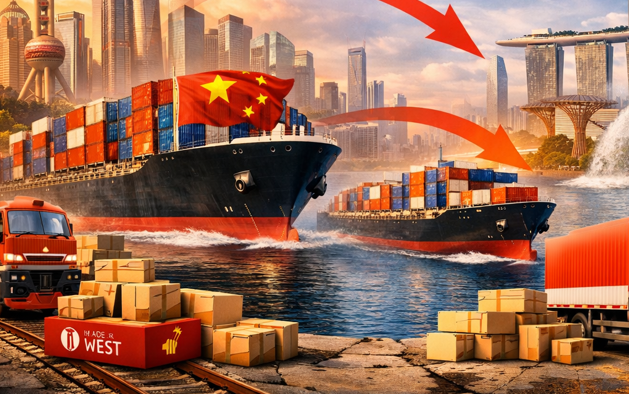
Cargo Delivery from China to the Philippines
Shipping Cargo from China to the Philippines: Sea Freight, Costs, Timelines, and Comparison of Courier Companies
Shipping cargo from China to the Philippines is in high demand among entrepreneurs, online stores, distributors, and private buyers. China remains one of the largest global manufacturing hubs, while the Philippines actively imports electronics, clothing, footwear, furniture, equipment, auto parts, construction materials, and everyday goods. Due to the geographical proximity of the countries, transportation between them usually takes less time than shipping from China to Europe or North America.
When choosing a logistics scheme, it is essential to consider not only the distance between the countries. The final price is influenced by the weight and volume of the cargo, the type of goods, the port of departure and destination, the need for customs clearance, the chosen mode of transport, delivery terms, and additional services. For large shipments, sea freight is most commonly used, while air delivery or international courier services are preferred for urgent shipments.
This article discusses the main methods of shipping cargo from China to the Philippines, estimated shipping costs, timelines, features of sea logistics, a comparison of courier companies, and recommendations for selecting the optimal option.
Main Methods of Shipping Cargo from China to the Philippines
Organizing transportation from China to the Philippines can be done in several ways. Each option is suitable for a specific category of goods and differs in speed, cost, documentation requirements, and service level. In practice, sea, air freight, courier, and multimodal delivery are most commonly used.
Sea Freight from China to the Philippines
Sea freight is considered the most cost-effective solution for large, heavy, and bulky shipments. Cargo is shipped from a Chinese port to a port in the Philippines on a container ship. Major departure ports can include Shanghai, Shenzhen, Ningbo, Guangzhou, Xiamen, Qingdao, and other logistics centers in China. In the Philippines, the most frequently used ports are Manila, Batangas, Cebu, and Davao.
Transportation can be carried out in a full container (FCL) or as part of a consolidated cargo (LCL). With FCL, the client rents an entire container: 20-foot, 40-foot, or 40-foot High Cube. This option is convenient for large shipments that require separate placement and minimal handling. LCL is suitable for shipments that do not fill an entire container. In this case, the cargo is combined with goods from other customers, and the cost is calculated based on volume or weight.
The main advantage of sea freight is its low cost per kilogram or cubic meter. Disadvantages include longer transit times, dependence on vessel schedules, potential delays at ports, and the need for careful document preparation. Sea freight is particularly advantageous for transporting furniture, machinery, equipment, construction materials, textiles, large household appliances, and wholesale goods.
Air Freight
Air freight is used when speed and regularity of deliveries are essential. Cargo is transported by airplane from airports in China to Manila, Cebu, or another international airport in the Philippines. This method is suitable for product samples, electronics, medical goods, documents, expensive components, urgent orders, and small shipments.
The cost of air freight is higher than that of sea freight; however, transit times are significantly shorter. When calculating the rate, both actual and dimensional weight are taken into account. If the package is light but takes up a lot of space, the carrier applies the dimensional weight formula. Therefore, before shipping, it is advisable to know not only the weight but also the exact dimensions of the packaging.
Air freight can be organized on an airport-to-airport or door-to-door basis. In the latter case, the logistics company picks up the cargo from the supplier in China, handles export clearance, organizes the flight, goes through import procedures in the Philippines, and delivers the shipment to the final recipient.
Courier Delivery from China to the Philippines
International courier services are suitable for small shipments, documents, samples, and packages with goods. The client receives a unified service: cargo pickup, packaging, transportation, tracking, and delivery to the address. Depending on the company, one can choose an express rate or a more economical option.
Courier delivery is usually simpler for private clients and small businesses, as the carrier independently handles a significant portion of the accompanying documents. However, the cost per kilogram can be significantly higher than using cargo or sea freight. It is also essential to consider restrictions on shipping batteries, liquids, cosmetics, medications, food products, magnetic items, and other categories of goods.
Sea Delivery China–Philippines: Features and Stages
Sea freight between China and the Philippines is one of the most popular routes in Asian logistics. Despite the relatively short distance, the actual delivery time depends on the route, port, vessel schedule, and cargo handling speed at the terminals.
How Sea Freight Works
The process begins with finding a supplier and preparing the cargo for shipment. After agreeing on the terms, the logistics company receives information about the product, its quantity, weight, volume, value, and characteristics. Then, the loading port and suitable transportation method are determined.
The main stages are as follows:
Pickup of goods from the supplier's warehouse in China.
Verification of quantity, condition, and packaging.
Consolidation of cargo at the warehouse or loading of the container.
Preparation of export documents.
Customs clearance in China.
Delivery of the container to the port.
Loading onto the vessel.
Sea transit to the Philippines.
Unloading at the destination port.
Import customs clearance.
Delivery to the warehouse or to the recipient's address.
If the cargo is shipped as part of a consolidated shipment, it is combined with shipments from other clients at the Chinese warehouse. Upon arrival in the Philippines, the container is opened, the goods are sorted, and then handed over for further delivery.
FCL and LCL: Which Option to Choose
FCL, or Full Container Load, means shipping a full container. The client pays for the entire container, even if they do not use all of its volume. This option is advantageous for large shipments, typically requiring around 10–15 cubic meters of cargo, although the exact threshold depends on the rate and route.
LCL, or Less than Container Load, represents a consolidated shipment. The cargo is paid for based on the actual space occupied. This is a convenient solution for small and medium-sized shipments, but additional costs for consolidation, handling, loading, and terminal release may apply to the base rate.
FCL usually provides more predictable cargo safety, as the goods are moved less frequently between warehouses. LCL may be cheaper for smaller shipments, but delivery times can sometimes increase due to waiting for container consolidation and additional terminal operations.
How Much Does Shipping from China to the Philippines Cost
The exact cost of shipping from China to the Philippines is calculated individually. There is no universal rate for all shipments, as the price depends on a whole range of factors. Even two shipments of the same weight can have different costs if they differ in volume, product category, or route.
Factors Affecting Shipping Costs
The final price is usually influenced by:
weight and volume of the cargo;
number of items;
type of transportation;
port of departure and port of destination;
need for pickup from the supplier;
packaging and labeling;
customs clearance;
insurance;
presence of special storage conditions;
delivery from the port to the warehouse;
seasonality and vessel congestion;
type of goods and its HS code;
need for certification or permits.
For sea freight, an important indicator is the volume in cubic meters. In consolidated shipping, the calculation may use the higher value—actual weight or volumetric measurement. For container shipments, the rate is often formed as the cost of freight plus port and service fees.
Estimated Prices for Sea Shipping
Below are approximate ranges used only for preliminary assessment:
| Shipping Option | Estimated Cost | Average Time |
|---|---:|---:|
| Consolidated Sea Cargo LCL | from $80–180 per m³ | 15–30 days |
| 20-Foot Container | approximately $900–2,000 | 12–25 days |
| 40-Foot Container | approximately $1,500–3,200 | 12–25 days |
| Delivery with Pickup and Clearance | calculated individually | 18–35 days |
The values provided are not a public offer and may change. Sometimes, only the sea freight is included in the cost, while customs fees, terminal charges, delivery within the Philippines, and insurance are paid separately. Therefore, when comparing offers, it is essential to clarify which services are included in the rate.
Cost of Air Delivery
Air freight is typically calculated per kilogram. The estimated price can range from $4–8 per kilogram for standard shipments, however, express rates from courier services often reach $10–25 per kilogram or more. The heavier the shipment, the lower the rate per kilogram can be.
The final price is influenced by the minimum chargeable weight, dimensional weight, type of goods, and delivery address. For urgent shipments, documents, and samples, air delivery can be justified even if the rate is higher than sea freight.
Delivery Times from China to the Philippines
The delivery time from China to the Philippines depends on the chosen transport and the complete route. It is important to distinguish between the net transport time and the total time from the sender's warehouse to the recipient's door. Sea transit can take about two weeks, but considering consolidation, export clearance, waiting for the vessel, and import customs, the total time increases.
Average Times for Different Delivery Methods
The estimated times are as follows:
express courier delivery — 3–7 business days;
air freight — 4–10 business days;
standard air transport — 7–14 days;
FCL sea delivery — 12–25 days;
LCL consolidated sea delivery — 18–35 days;
door-to-door delivery — approximately 20–40 days.
Delivery times may increase during the Chinese New Year, national holidays, seasonal sales, and peak demand before Christmas. Additional delays can occur due to typhoons, port congestion, container shortages, customs inspections, and improperly completed documents.
What Can Cause Delays
In practice, delays are often caused by errors in the invoice, packing list, shipping documents, or product description. If the declared information does not match the actual contents, customs may require an inspection, request additional documents, or temporarily suspend clearance.
The time also increases if the cargo needs to be delivered not to Manila, but to a remote island. In this case, additional internal transport, a ferry, or a regional flight is required after arrival at the main port.
Comparison of Courier Companies for Delivery from China to the Philippines
For international delivery between China and the Philippines, large global courier companies, Asian express carriers, and specialized logistics operators can be used. When choosing, it is important to compare not only the advertised price but also the full range of services.
DHL
DHL is known for fast international shipping and a developed tracking system. The company is suitable for documents, samples, small commercial shipments, and urgent deliveries. Advantages include a user-friendly personal account, an extensive network of service points, and the ability to deliver to the address.
The cost depends on weight, size, type of shipment, and urgency level. DHL often turns out to be more expensive than economical carriers, but the high price is compensated by speed and service reliability. When sending commercial goods, it is important to accurately specify the description, value, and purpose of the products.
FedEx
FedEx offers international express delivery, including the transportation of business documents, parcels, and cargo. The company is in demand among businesses that require a fixed timeframe and the ability to track the shipment's route. In some destinations, FedEx may provide several options for speed — from urgent delivery to a more economical rate.
When calculating the price, physical and dimensional weight, package size, sender and recipient addresses, as well as the availability of additional services are taken into account. For regular shipments, corporate clients may receive special rates.
UPS
UPS is suitable for delivering documents, goods, samples, and small cargo shipments. The company provides international tracking, customs clearance services, and various delivery options. Delivery times and prices depend on the specific route and chosen service.
Before shipping, it is necessary to check product restrictions. For commercial shipments, an invoice, packing list, product description, and recipient information may be required. If the product falls under a regulated category, additional permits will be needed.
SF Express
SF Express is a major Asian carrier and is particularly popular in trade within China and the region. The company can be advantageous for delivering small parcels, documents, and goods from Chinese online stores. Depending on the destination, express and economical solutions are available.
The advantage of SF Express is its strong network in China and Asian countries. However, for complex commercial shipments, it is advisable to clarify in advance who is responsible for import clearance in the Philippines, what fees are included in the cost, and how taxes are calculated.
Summary Comparison of Courier Services
| Company | Estimated Time | Rate Level | Suitable for Which Shipments |
|---|---:|---:|---|
| DHL | 3–6 days | high | documents, samples, urgent parcels |
| FedEx | 3–7 days | high | business cargo and express delivery |
| UPS | 4–8 days | medium/high | parcels, documents, small batches |
| SF Express | 4–10 days | medium | shipments within Asia and purchases from China |
| Logistics Company | 7–35 days | depends on the scheme | consolidated and large commercial cargo |
The prices in the table are approximate. The final rate should be requested from the carrier, specifying the weight, dimensions, addresses, and product characteristics.
Customs Clearance of Cargo in the Philippines
Customs clearance is one of the key stages of delivery. Even if the transportation is organized on a "door-to-door" basis, the recipient must provide accurate information about the goods and sometimes pay import duties.
Main Documents
For international delivery, the following documents are usually required:
commercial invoice;
packing list;
transportation waybill;
contract or transaction confirmation;
product description;
information about the manufacturer and recipient;
certificates and permits, if required;
documents confirming the origin of the products;
insurance certificate if insurance is available.
For commercial shipments, it is important to indicate the actual value of the goods. Artificially lowering the price can lead to fines, delays in clearance, additional inspections, and the imposition of fees based on the value determined by customs.
Import Duties and Taxes
In the Philippines, the amount of payments depends on the classification of the goods, their customs value, country of origin, and applicable regulations. This may include import duty, value-added tax, processing fees, and other mandatory payments.
Some goods require special permits or certification. This may apply to food products, cosmetics, pharmaceuticals, radio electronics, chemicals, plants, animals, and communication equipment. Before shipping, it is necessary to check whether the import of specific products is allowed and what documents will be required.
Common Goods Transported from China to the Philippines
The China-Philippines route is used for transporting a wide range of products. Among the most popular categories are:
clothing and footwear;
accessories and textiles;
smartphones and electronics;
computer components;
household appliances;
furniture and interior items;
building materials;
tools;
industrial equipment;
auto parts;
toys;
packaging materials;
household goods;
promotional products;
equipment for stores and restaurants.
Some categories require special handling. For example, fragile items need additional protection with foam, cardboard, or wooden framing. Electronics with lithium batteries can only be transported under special regulations. Liquids, aerosols, and chemicals are considered potentially hazardous goods and require prior approval.
How to Properly Pack Cargo for Transport
Quality packaging reduces the risk of damage during loading, sea transit, sorting, and delivery in the Philippines. This is especially important for consolidated shipments that pass through several warehouses.
For standard goods, sturdy cardboard boxes, stretch film, tape, and moisture-resistant materials are used. Fragile products are packed with cushioning filler, dividers, and individual protection. When shipping by sea, it is advisable to consider increased humidity and temperature fluctuations.
For heavy goods, wooden pallets, crates, or reinforced framing are used. The cargo must be evenly distributed to prevent deformation of the packaging during stacking. Each box should ideally be labeled with markings, the number of pieces, weight, dimensions, and special signs—such as "Fragile," "Top," "Keep Dry."
Before handing over to the carrier, it is recommended to take photographs of the packaging, labeling, and condition of the goods. This will help confirm the original state of the cargo in case of a dispute.
Shipping Insurance from China to the Philippines
Insurance is not mandatory for every shipment, but it is advisable to arrange it when transporting expensive, fragile, or commercially important goods. The risk of damage exists at all stages: during loading, consolidation, transportation, unloading, and domestic delivery.
The cost of insurance is usually calculated as a small percentage of the declared value of the cargo. Compensation terms depend on the chosen policy. Some programs cover only total loss, while others provide compensation for partial damage, wetting, theft, or accidents.
Before arranging insurance, it is important to clarify the list of exclusions. Insurance may not apply to poorly packaged goods, prohibited categories, natural product properties, and damages arising from incorrect labeling. To receive a payout, you will need to provide documents, photographs, an inspection report, and proof of the value of the goods.
How to Choose the Optimal Delivery Method
The choice of transportation method depends on the sender's priorities. If the lowest price is crucial and the cargo is large, sea freight is often the best option. If you need to receive the goods within a few days, it is better to consider air freight or a courier service. For regular shipments, online stores and wholesale companies benefit from using consolidated logistics with consolidation at a warehouse in China.
Sea Freight is Suitable If:
the cargo is heavy or bulky;
timelines are not critical;
there is a need to reduce shipping costs;
a wholesale batch is being sent;
the goods are not classified as urgent or perishable;
container delivery is required.
Air Freight and Courier Services are Preferred If:
you need to receive the goods quickly;
the shipment is small;
documents or samples are being transported;
the goods have a high value;
tracking at every stage is important;
the shipment needs to be delivered directly to the recipient.
Before ordering transportation, it is advisable to request several commercial offers and compare them based on a unified structure: pickup cost, freight, terminal fees, customs support, taxes, insurance, door-to-door delivery, and possible surcharges.
How to Reduce Shipping Costs from China to the Philippines
You can reduce logistics costs through proper preparation and choosing the right scheme. First and foremost, it is essential to optimize packaging. Oversized boxes increase volumetric weight, which raises the rate for air freight and the cost of space for sea transport.
It is also beneficial to consolidate several orders into one shipment. Consolidation reduces costs for documentation, processing, and delivery from the supplier to the terminal. For regular shipments, you can sign a contract with a logistics operator and obtain corporate rates.
The following measures can help save costs:
comparing several carriers;
choosing the nearest convenient port;
using LCL for small shipments;
switching to FCL with a constant increase in volume;
pre-prepared documents;
avoiding unnecessary additional services;
planning shipments outside peak season;
correct classification of goods;
combining orders from multiple suppliers;
agreeing on the "door-to-door" rate in advance.
It is not advisable to choose a carrier solely based on the lowest price. An excessively cheap rate may not include customs clearance, port fees, delivery within the Philippines, or cargo handling. As a result, the final cost may exceed the initial offer.
Common Mistakes in Organizing Delivery
One common mistake is the lack of accurate information about the cargo. For calculations, it is necessary to know not only the total weight but also the number of boxes, dimensions of each item, packaging material, and product characteristics. If the data is approximate, the final bill may change after acceptance at the warehouse.
Another risk is sending goods without checking restrictions. Some categories cannot be transported by regular courier service or sea service without special permission. These include hazardous materials, batteries, medical products, food, plants, and certain types of electronics.
Problems also arise when the cost of the goods is incorrectly stated or when the product is described in overly general terms. Phrases like «accessories» or «spare parts» may be insufficient for customs. It is better to use the exact name, composition, purpose, and model of the product.
Finally, senders sometimes do not account for expenses after arrival at the port. These include terminal handling, storage, delivery to the warehouse, broker services, taxes, and demurrage fees. All payments should be included in the calculation of the total cost of delivery in advance.
Frequently Asked Questions
How much does it cost to ship from China to the Philippines?
The price depends on the weight, volume, cargo category, route, and chosen mode of transport. Sea freight for consolidated cargo may be calculated per cubic meter, container shipping per container, and air freight per kilogram. To get an accurate calculation, you need to provide the carrier with the shipment parameters and addresses.
How long does it take for cargo to arrive from China to the Philippines?
Express parcels are usually delivered within 3–7 business days. Air freight takes about 4–14 days, while sea transport takes from 15 to 35 days, considering consolidation, customs, and delivery within the destination country.
Which is cheaper: sea or air?
Sea transport is generally significantly cheaper for heavy and bulky shipments. Air freight is more advantageous for urgent, lightweight, and high-value goods when timing is critical.
Can the cargo be delivered directly to the door?
Yes, many carriers offer door-to-door service. In this case, the operator organizes the pickup of the goods in China, transportation, customs clearance, and delivery to the recipient's address in the Philippines. It is advisable to confirm in advance whether taxes and import duties are included in the rate.
Is a customs broker needed?
For small standard parcels, the courier company often handles the clearance. For commercial, oversized, or regulated cargo, a customs broker may be required to prepare documents and interact with regulatory authorities.
Shipping cargo from China to the Philippines can be organized by sea, air, courier, or multimodal methods. Sea freight remains the most cost-effective option for large shipments, containers, furniture, equipment, and construction materials. Air freight and international courier services are suitable for small and urgent shipments, where speed is the main advantage.
The average cost of shipping from China to the Philippines is formed from many components: freight, warehouse handling, customs clearance, taxes, insurance, and domestic delivery. Therefore, when comparing offers, it is essential to analyze not only the base rate but also the complete set of included services.
To reduce costs and avoid delays, it is necessary to prepare documents in advance, check for product restrictions, properly package the cargo, and choose a carrier with transparent terms. The optimal logistics scheme is determined individually, taking into account volume, weight, urgency, budget, and the final delivery address.