

 RU
 UA
 DE
 FR
 ES
 CN
 SA
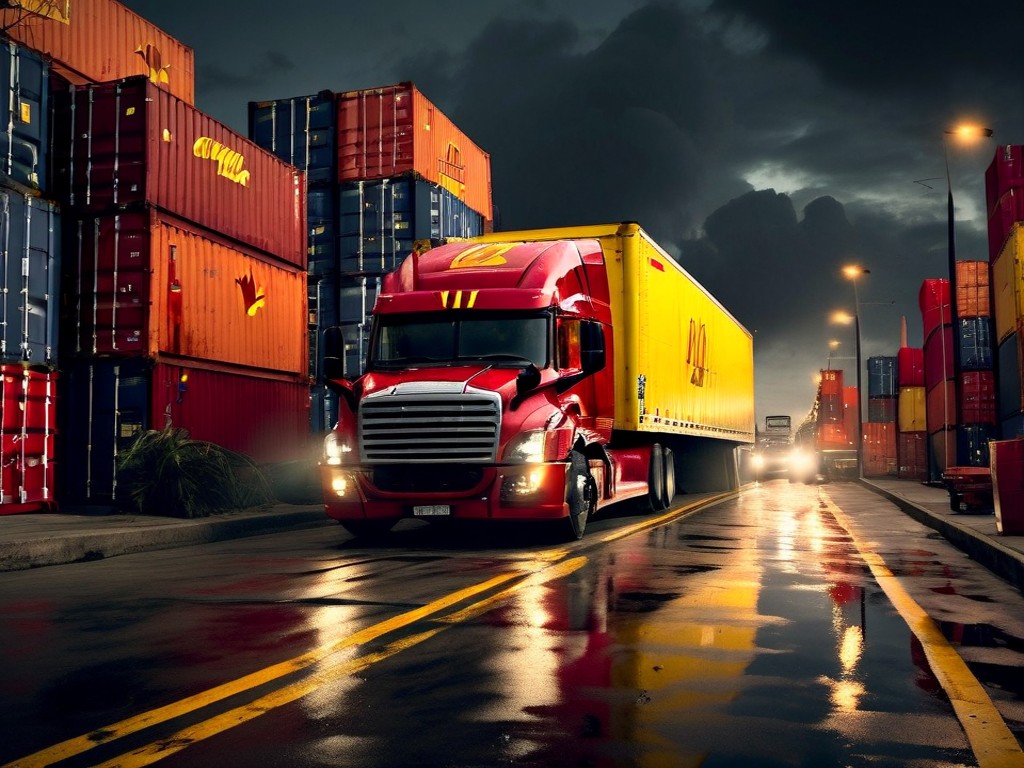
Cargo Delivery from Any Country to Anywhere in the World
Freight Delivery from Any Country to Any Point in the World: Global Logistics and International Shipping
The modern global economy is impossible without a developed system of international logistics. Manufacturers source raw materials from one country, set up production in another, and deliver finished products to customers across continents and markets located thousands of kilometers away. Freight delivery from any country to any point in the world connects transport companies, customs representatives, warehouse complexes, insurance organizations, freight forwarders, and digital tracking services.
International shipping is not just about moving goods from point A to point B. It is a comprehensive service that includes route development, transport selection, document preparation, export and import clearance, consolidation, storage, insurance, and delivery monitoring at every stage. To ensure that the cargo arrives on time, intact, and at optimal costs, it is essential to consider the specifics of legislation, infrastructure, climate, seasonality, and the particular category of goods.
What Global Logistics Includes
Global logistics is a system for planning and managing the flow of goods, documents, information, and funds between countries. Its primary task is to ensure the timely movement of cargo from the supplier to the final recipient while complying with safety, legal, and budgetary requirements.
The international logistics chain may involve:
the manufacturer or supplier;
the exporter and importer;
the freight forwarding company;
the sea, road, rail, or air carrier;
the temporary storage warehouse;
the customs broker;
the insurance company;
the departure terminal and destination point;
the distributor or end customer.
Each link affects the final result. An error in the invoice can lead to delays at customs, incorrect packaging choices can result in damage to the goods, and insufficient route planning can increase timeframes and costs.
Key Tasks of International Logistics
Key tasks include:
Analyzing cargo characteristics.
Selecting the appropriate mode of transport.
Developing the route.
Calculating costs and timelines.
Checking export and import restrictions.
Preparing accompanying documents.
Organizing loading and unloading.
Customs clearance.
Insuring the shipment.
Monitoring cargo movement.
Delivering to the warehouse or the recipient's door.
A professional logistics company integrates all processes into a single service. The client does not need to interact with multiple carriers, terminals, and government agencies independently.
Why Comprehensive Transportation Organization is Important
International delivery may pass through several countries, transport hubs, and customs zones. If coordination among participants is not sufficiently effective, it can lead to downtime, additional payments, and the risk of contract breaches.
Comprehensive management allows for the early identification of critical points along the route, contingency planning, and expense control. Digital systems are particularly significant: electronic document flow, GPS monitoring, automatic tariff calculations, and delivery status notifications.
International Shipping: Types of Transport and Their Features
The choice of transport depends on distance, urgency, volume, weight, cost, and the properties of the goods. There is no universal delivery method: for one shipment, sea transport may be optimal, while for another, air freight or road delivery may be preferable.
Sea Freight
Sea transport is used for shipping large batches, containerized cargo, equipment, raw materials, industrial products, and mass-market goods. The main advantages are high capacity and relatively low costs for large volumes.
Sea logistics is suitable for cargo that does not require the fastest delivery. Depending on the route, shipping can take from several weeks to several months. Timelines are influenced by port congestion, weather conditions, transit restrictions, and the need for transshipment.
Cargo is transported in standard containers:
20-foot;
40-foot;
High Cube containers;
refrigerated containers;
specialized containers for oversized cargo.
Consolidated sea shipments are also possible, where shipments from different clients are placed in one container. This helps reduce costs for companies that do not require a full container.
Air Freight
Air delivery is considered the fastest method of international transportation. It is in demand for shipping urgent documents, electronics, medical goods, product samples, spare parts, expensive and perishable cargo.
The advantages of air freight include:
short delivery times;
high level of control;
wide geographical reach;
ability to deliver over long distances;
reduced risk of prolonged storage in transit.
The main disadvantage is the higher cost compared to sea, rail, and road transport. The price depends on actual and volumetric weight, dimensions, product category, airport fees, and additional services.
Road Freight
Road delivery is especially convenient for shipments between neighboring countries and within large regions. A truck can pick up the goods directly from the sender's warehouse and deliver them to the recipient's warehouse with minimal handling.
Road transport is used for:
consolidated cargo;
palletized goods;
equipment;
food products;
construction materials;
household appliances;
commercial shipments;
temperature-controlled cargo.
Door-to-door delivery is possible. In this case, the carrier organizes cargo pickup, export clearance, international transit, import procedures, and delivery to the recipient.
Rail Freight
Rail transport occupies an intermediate position between sea and air delivery. It allows for the transportation of large volumes over significant distances with more predictable timelines than sea transport and lower costs than air freight.
Rail routes are suitable for container, general, bulk, and oversized cargo. They are particularly important for trade between countries connected by a developed network of rail corridors.
Courier and Express Delivery
International courier services are used for small shipments, documents, samples, and online orders. They provide quick cargo pickup, door-to-door delivery, and tracking via a tracking number.
This option is convenient for small businesses and individual clients; however, the cost per unit weight may be higher than using consolidated or container shipments.
Multimodal Delivery and Combined Routes
Multimodal delivery involves the use of multiple modes of transport within a single logistics scheme. For example, cargo may be transported by truck from the manufacturer's warehouse, then by rail, followed by sea, and finally by truck to the final address.
The main difference between multimodal transport and simple sequential delivery is unified management. Typically, one logistics operator coordinates the route, documentation, transfers, and deadline control.
Advantages of Multimodal Logistics
The main advantages include:
cost optimization;
ability to deliver to regions without direct transport links;
reduced dependence on a single mode of transport;
flexible route adaptation;
single point of contact for the client;
ability to combine speed and cost-effectiveness.
For example, an urgent segment of the route can be completed by air, while the main portion of the journey can be by sea or rail. This approach allows for a balance between timelines and budget.
How Multimodal Transport is Organized
First, specialists analyze the cargo and determine the final delivery point. Then, available transport corridors, terminal capacities, customs requirements, and timelines for each segment of the route are assessed.
After that, a logistics plan is developed:
Pickup of cargo from the sender.
Delivery to the terminal.
Consolidation or transfer.
Transportation by the main mode of transport.
Arrival in the destination country.
Import clearance.
Transfer for local delivery.
Delivery to the recipient.
Special attention is paid to coordinating schedules. If one stage is delayed, it can affect the booking of space on a ship, train, or airplane.
Export and Import: Customs Clearance of Cargo
Export-import operations require strict compliance with the legislation of the countries of departure, transit, and destination. Customs authorities check information about the goods, their value, origin, classification code, and purpose.
Documents for International Transportation
Depending on the type of cargo and route, the following may be required:
commercial invoice;
packing list;
foreign trade contract;
transportation bill;
certificate of origin;
permitting documents;
licenses;
compliance certificates;
sanitary and veterinary documents;
documents for hazardous materials;
insurance policy;
export declaration;
import declaration.
The set of documents is determined by the specifics of the goods. Food products, medicines, chemical products, equipment, plants, animals, and dual-use goods require additional control.
Customs Value and Classification of Goods
One of the most important stages is determining the product code according to the relevant commodity nomenclature. The code affects duties, taxes, the need for certification, and the list of permitting documents.
The customs value usually includes the price of the goods and expenses related to their delivery to the designated point. If the information is incorrectly stated, customs may request additional confirmations or revise the declared value.
Typical Reasons for Delays
The most common reasons for delays include:
errors in documents;
discrepancies in data across different documents;
incorrect product code;
absence of a certificate;
incorrect product description;
undervaluation;
violation of labeling requirements;
absence of import permission;
exceeding established limits.
To reduce risks, documents should be checked before shipping the cargo. Many logistics companies conduct a preliminary audit of the document package and help eliminate inaccuracies.
Supply Chains and Management of International Cargo Flows
The supply chain includes all stages through which goods pass—from the procurement of raw materials to delivery to the end consumer. An international supply chain may involve suppliers from multiple countries, manufacturing sites, distribution centers, transport hubs, warehouses, and retail networks.
Main Elements of the Supply Chain
The structure of the chain includes:
demand planning;
material procurement;
production;
packaging;
warehousing;
transportation;
customs clearance;
distribution;
sales;
return or disposal of products.
If even one element operates unstably, it affects the entire system. For example, a delay in the delivery of components can halt production, while a shortage of inventory can lead to customer loss.
Supply Chain Optimization
Optimization begins with analyzing current processes. Specialists study delivery frequency, inventory turnover, transportation costs, duration of customs procedures, and risk levels on each route.
To increase efficiency, the following are applied:
cargo consolidation;
distribution of shipments among multiple carriers;
creation of regional warehouses;
automation of document flow;
demand forecasting;
digital route monitoring;
backup transportation schemes;
insurance and risk management.
Modern logistics aims not only to reduce delivery costs but also to make deliveries sustainable. Sometimes a more expensive route proves to be more beneficial if it ensures predictable timelines and reduces the likelihood of downtime.
Types of Cargo and Requirements for Their Transportation
Each type of cargo requires a special approach to packaging, labeling, transportation, and storage. Before calculating delivery, it is necessary to determine the physical and commercial characteristics of the goods.
Consolidated Cargo
Consolidated shipping is suitable for small batches that do not fill an entire container or truck. Goods from several clients are combined into one shipment, allowing costs to be shared among participants.
Advantages of consolidated delivery include:
affordable cost;
the ability to send small batches;
regularity of trips;
delivery to different countries;
no need to rent an entire container.
A disadvantage may be additional transshipments and longer delivery times compared to direct transportation.
Oversized and Heavy Cargo
Oversized cargo is defined as goods whose dimensions or weight exceed standard parameters. An individual route is developed for their transportation, permissible loads on roads and bridges are calculated, and special permits are obtained.
Possible options include:
low-bed trailers;
modular trailers;
open platforms;
barges;
special railway cars;
cargo planes.
Before transportation begins, it is important to check the feasibility of passing through tunnels, bridges, populated areas, and border crossings.
Hazardous Cargo
Hazardous cargo includes flammable, toxic, explosive, radioactive, corrosive, and other substances. Special international regulations apply to them.
Transporting hazardous cargo requires:
proper classification;
special packaging;
labeling;
declaration processing;
training for drivers and personnel;
selection of approved transport;
compliance with loading and storage requirements.
Violating these rules can lead to fines, delays in cargo, and threats to the safety of people and the environment.
Temperature-Sensitive and Perishable Goods
Products, medicines, biological materials, and certain chemicals are transported under temperature control. Refrigerated trucks, thermal containers, special packaging materials, and monitoring systems are used.
Sensors record the temperature throughout the journey. This allows for confirmation that storage conditions were maintained and timely action can be taken if deviations occur.
Cost of Cargo Delivery from Any Country
The price of international transportation depends on a large number of factors. A preliminary calculation should take into account not only the transport tariff but also associated costs.
Factors Affecting Transportation Costs
The final price is influenced by:
country of origin and destination;
distance;
mode of transport;
weight and volume;
dimensions;
type of packaging;
urgency;
delivery format;
need for consolidation;
number of transshipments;
port and terminal fees;
customs duties;
insurance;
warehousing services;
door-to-door delivery;
seasonality;
product characteristics.
Both actual and volumetric weight are used for calculations. In air freight, for example, the tariff may be determined by the greater of these indicators.
How to Reduce Costs
You can save on international delivery by:
choosing consolidated shipping;
planning shipments in advance;
optimizing packaging;
combining multiple shipments;
choosing less urgent transport;
using regular routes;
consolidating at the warehouse;
comparing several logistics schemes;
reducing the number of transshipments;
properly preparing documents.
However, reducing the tariff should not lead to unjustified increases in risks. An overly cheap scheme may be accompanied by long delivery times, insufficient insurance coverage, or lack of transparent control.
International Delivery Times and Cargo Tracking
The delivery time is determined not only by the distance between countries. It is affected by warehouse processing, waiting for transport, border crossing, customs clearance, transshipment, and delivery on the final leg.
Stages of Time Formation
Typically, the timeframe includes:
Preparation of the goods.
Pickup from the warehouse.
Export clearance.
Delivery to the terminal.
Waiting for dispatch.
Main international transport.
Arrival in the destination country.
Import customs.
Delivery to the recipient.
For urgent cargo, the company may offer an express route, but its cost will be higher. For standard deliveries, it is important to allow extra time for unforeseen circumstances.
Tracking Systems
Modern logistics services allow you to track:
cargo acceptance;
arrival at the warehouse;
loading into the container;
dispatch;
transit point passage;
arrival at the port or airport;
customs clearance;
handover to the courier;
delivery to the recipient.
Information can be displayed in a personal account, mobile application, or sent via email. For corporate clients, integration with internal order and warehouse management systems is possible.
Insurance for International Cargo
Even with proper organization of transportation, it is impossible to completely eliminate risks. Cargo can be damaged during loading, transshipment, accidents, natural disasters, or improper storage. Insurance helps compensate for financial losses.
What an Insurance Policy Can Cover
Depending on the terms, the policy may cover:
total loss of cargo;
partial damage;
theft;
transport accidents;
fire;
flooding;
natural disasters;
damage to packaging;
consequences of overloading.
Before arranging insurance, it is essential to carefully review the exclusions. Certain types of goods, packaging methods, and circumstances may not be included in standard coverage.
How to Determine the Insurance Amount
Typically, the insurance amount is calculated based on the value of the goods, transportation costs, and potential commercial profit. For high-value products, it is advisable to choose extended coverage and agree in advance on packaging, sealing, and securing requirements.
How to Choose a Logistics Company
A reliable logistics partner should have experience with the required destination, type of cargo, and mode of transport. It is not wise to focus solely on the lowest price: it is important to evaluate the entire range of services.
What to Pay Attention To
When selecting a carrier, you should check:
experience in international transportation;
geographic coverage;
presence of partners in the countries along the route;
own transport and warehouse infrastructure;
ability to provide "door-to-door" delivery;
quality of customs support;
transparency of calculations;
availability of insurance;
tracking system;
customer reviews;
claims handling process.
A good company offers several route options and explains the differences between them. The client should understand how the cost is formed, what the estimated timelines are, and what documents will be required.
Questions to Ask the Carrier
Before signing a contract, it is helpful to clarify:
Who is responsible for customs clearance?
Does delivery to the recipient's warehouse included?
What costs are paid separately?
Is insurance provided?
How is the condition of the cargo monitored?
What happens in case of delays?
Is there an alternative route?
What documents are required?
How is the timeline calculated?
How are claims processed?
Clear answers to these questions help avoid misunderstandings and additional costs.
Transport Solutions for Businesses
Companies with regular international shipments need not just one-time transportation but a comprehensive transport strategy. It should consider volumes, seasonality, customer specifics, and development plans.
Logistics for Small and Medium Businesses
Small companies often use consolidated cargo, courier delivery, and third-party warehousing services. This allows them to avoid creating their own infrastructure and pay only for the resources actually used.
For small businesses, the following are especially important:
clear final pricing;
small minimum batches;
assistance with documentation;
regular shipments;
door-to-door delivery;
accessible tracking.
Logistics for Large Companies
Large organizations can employ a mixed model: long-term contracts with carriers, their own distribution centers, backup routes, and automated planning systems.
For them, the following are important:
stable throughput;
fixed rates;
control of key performance indicators;
integration with ERP systems;
inventory management;
route analytics;
reducing carbon footprint;
multi-level reservation system.
International Routes and Global Transportation Infrastructure
Global routes are formed around seaports, railway corridors, highways, airports, and major distribution centers. The choice of direction is influenced by trade agreements, political conditions, infrastructure capacity, and transit costs.
Direct and Transit Routes
A direct route typically reduces the number of transshipments and lowers the risk of damage. However, it may only be available for specific destinations or large shipments.
A transit route involves passing through intermediate countries or terminals. It may be more cost-effective or quicker, but requires more precise coordination and document control.
Backup Logistics Schemes
Modern supply chains must have alternative options. If the main port is congested, the border is temporarily closed, or transportation is disrupted, the cargo can be redirected through another terminal or use a different mode of transport.
Having a backup route is especially important for critically necessary supplies, industrial components, seasonal goods, and products with strict deadlines.
Eco-Friendliness and Digitalization in Global Logistics
The international transportation industry is gradually shifting towards more eco-friendly and technological solutions. Companies are reducing empty runs, optimizing vehicle loads, using electronic documents, and analyzing carbon dioxide emissions.
Digital Technologies
Logistics employs:
transport management systems;
automated route planning;
electronic waybills;
GPS and satellite monitoring;
temperature and humidity sensors;
artificial intelligence;
delay forecasting;
digital booking platforms;
automated document verification.
Digitalization enhances the transparency of transportation and allows for quicker responses to deviations.
Eco-Friendly Transportation Solutions
To reduce environmental impact, the following are used:
rail transport instead of some road transport;
sea freight for large shipments;
route optimization;
shared vehicle loading;
electric transport for the last mile;
alternative fuels;
recyclable packaging.
Eco-friendliness is becoming not only a reputational advantage but also part of the requirements of major clients and international retail chains.
Shipping cargo from any country to any point in the world is a complex multi-stage process that requires professional planning and constant monitoring. International transportation includes choosing the mode of transport, route planning, document preparation, export-import clearance, insurance, warehouse handling, and delivery to the final recipient.
The optimal transportation solution depends on the characteristics of the goods, budget, urgency, geography, and business requirements. Sea freight is suitable for large shipments, air delivery is for urgent shipments, road transport provides flexibility, rail helps transport goods over long distances, and multimodal logistics combines the advantages of different delivery methods.
Well-structured global logistics makes supply chains resilient, reduces costs, and helps companies operate confidently in international markets. When choosing a carrier, it is important to consider not only the rate but also experience, transparency, quality of customs support, tracking capabilities, insurance coverage, and availability of backup routes. It is this comprehensive approach that allows for safe, timely delivery of goods with predictable costs to any point in the world.