

 RU
 UA
 DE
 FR
 ES
 CN
 SA
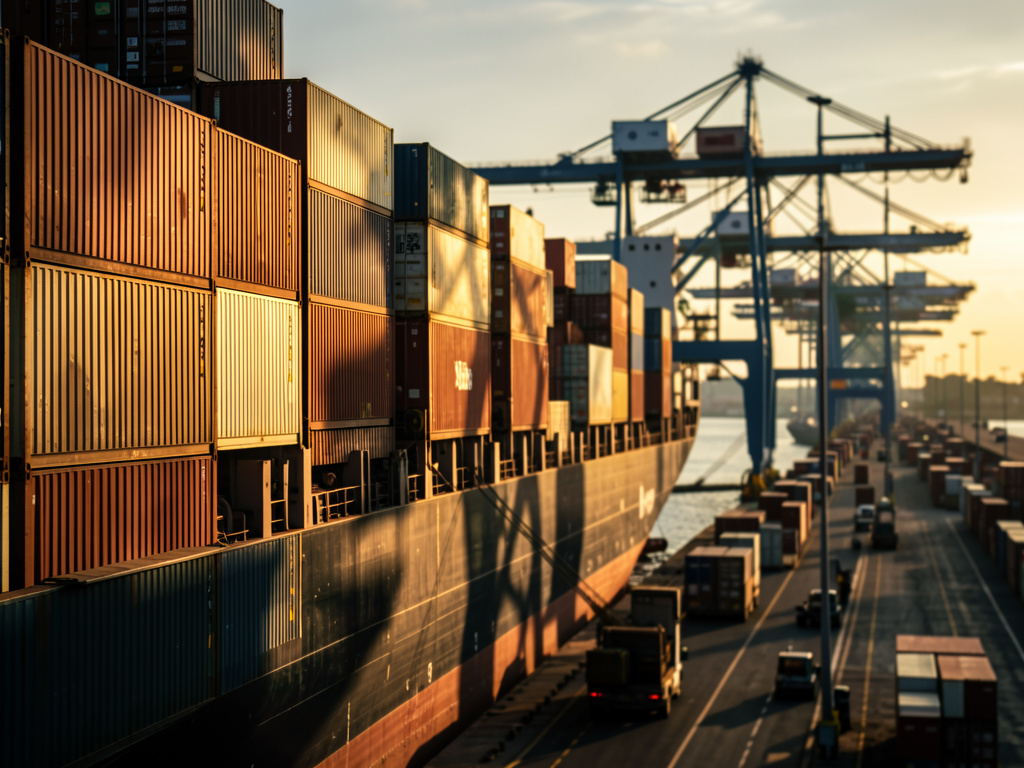
Cargo Delivery from the USA to France
Shipping Cargo from the USA to France: Sea Logistics, EU Customs Clearance, Prices, and Timelines
Shipping cargo from the USA to France is in high demand among online stores, manufacturing companies, distributors, importers, and private clients. Equipment, vehicles, spare parts, electronics, furniture, textiles, commercial goods, and personal belongings are regularly transported from the United States to France. Each cargo category requires a specific approach to packaging, transportation selection, export document preparation, and customs clearance.
The most common option for international shipping is sea freight from the USA to France. It is suitable for large, heavy, and not overly urgent shipments. If the cargo needs to be received quickly, air freight is used, although its cost is usually significantly higher. Multimodal schemes are also possible, where goods are shipped from the USA by sea to a European port and then transported by road or rail to the final address in France.
The price and duration of transportation depend on the route, type of cargo, ports of departure and destination, shipment volume, Incoterms delivery conditions, the need for consolidation, customs value, and the number of additional services. Before transportation begins, it is important to determine the product code, prepare commercial documents, and check the requirements of European Union legislation in advance.
How Cargo Delivery from the USA to France is Organized
International shipping typically consists of several sequential stages. First, the cargo is picked up from the sender's warehouse or received at a terminal in the USA. Then, the goods undergo export clearance, are delivered to the port, and loaded into a container or placed in a consolidated shipment. After the sea transit, the cargo arrives at a French or another European port, where an import declaration is processed. In the final stage, delivery is made to a warehouse, store, or another recipient address.
The shipping scheme may vary depending on the characteristics of the goods. For example, oversized equipment is often shipped in a separate container, while smaller shipments are combined with those of other clients. For expensive items, additional insurance is arranged, and for products with special shipping conditions, a suitable type of container is selected.
Main Stages of International Delivery
The typical process of shipping cargo from the USA to France includes the following steps:
Receiving the request and cargo specifications. The carrier needs to be informed about the product name, number of packages, weight, volume, value, departure address, and final destination.
Checking the possibility of transportation. Specialists determine whether the goods fall under prohibited or restricted categories and check the packaging and labeling requirements.
Selecting the route and mode of transport. Sea freight is more commonly chosen for large shipments, while air freight is used for urgent deliveries.
Pickup of cargo in the USA. Delivery can be arranged from the sender's door, warehouse, auction, store, or manufacturing facility.
Export clearance. An invoice, packing list, transport documents, and export declaration are prepared.
Loading and dispatch. The cargo is placed in a container and sent to the port of departure.
Sea transportation. The container travels to the port in France or a transit port in Europe.
Import customs clearance. A declaration is submitted, duties and VAT are calculated, and inspections are conducted if necessary.
Delivery within France. After clearance, the cargo is transported by road or rail to the recipient.
Delivery to Door or to Port
In a "port-to-port" shipping arrangement, the transport company is primarily responsible for the sea segment of the route. The recipient independently organizes delivery from the port to their warehouse, the work of a customs representative, and some accompanying procedures. This option may be cheaper but requires more involvement from the client.
The "door-to-door" service includes pickup of the goods in the USA, export clearance, sea or air transportation, import clearance, payment of agreed fees, and delivery to the address in France. This is a more convenient format for companies and private customers who want to entrust logistics to a single operator. When choosing this service, it is important to clarify which payments are included in the calculation and which are paid separately.
Sea Freight USA–France
Sea freight is the primary method for transporting commercial shipments between the USA and France. Container lines allow for the transportation of large volumes of goods at a relatively low cost per kilogram. Maritime transport is especially convenient for furniture, industrial equipment, vehicles, construction materials, clothing batches, spare parts, and goods for resale.
The most commonly used containers are standard 20 and 40-foot containers. For smaller shipments, LCL (Less than Container Load) is used, where cargo from several shippers is consolidated into one container. When the container is fully loaded, the FCL (Full Container Load) format is utilized. The choice depends on the volume of the shipment, the requirements for product safety, and the budget.
FCL and LCL: Which Shipping Option to Choose
FCL, or Full Container Load, refers to the transportation of a full container. The container is allocated to one client, and the cargo is not combined with goods from other shippers. This option is suitable for large shipments, heavy equipment, and items requiring enhanced security. Advantages of FCL include fewer transshipments, simpler organization, and reduced risk of damage to packaging.
LCL, or Less than Container Load, is used for smaller shipments. The cargo is delivered to a consolidation warehouse in the USA, where it is combined with other shipments. Upon arrival in Europe, the container is unloaded, and individual shipments are sorted and sent to the recipients. Consolidated shipping is often more cost-effective for smaller volumes; however, the delivery time may be longer due to additional operations.
When choosing between FCL and LCL, it is essential to consider not only the volume. Factors such as the fragility of the goods, the need for special temperature control, port handling costs, and the final delivery deadline are important. Sometimes, shipping a small cargo in a separate container is justified due to the high value of the goods or strict deadlines.
Popular Sea Shipping Routes
The route depends on the departure location in the USA and the destination region in France. Cargo can originate from New York, New Jersey, Savannah, Charleston, Houston, Miami, Los Angeles, or Oakland. The main arrival points in France are the ports of Le Havre, Dunkirk, Marseille, and Fos-sur-Mer.
For cargo heading to Paris and the northern regions of the country, the port of Le Havre is often chosen. Deliveries to southern areas may go through Marseille or Fos. Sometimes, containers arrive at the port of another EU country, such as the Netherlands, Germany, or Belgium, and are then transported to France by road. This scheme can be convenient if there is a suitable schedule or a more favorable rate.
How Long Does It Take for Cargo to Travel from the USA to France
The delivery time from the USA to France depends on the specific route, mode of transport, and the number of intermediate operations. The sea crossing typically takes from two to six weeks, but the total "door-to-door" time may be longer. This includes cargo pickup, consolidation, waiting for the vessel, export clearance, port handling, customs, and domestic delivery.
On average, sea freight from the eastern part of the USA to France takes less time than shipments from the west coast. However, vessel schedules, weather conditions, terminal congestion, and transit ports can affect the initial estimate.
Estimated Shipping Times
Average shipping times may look as follows:
delivery from New York or New Jersey to France – approximately 18–35 days;
shipping from Savannah or Charleston – about 20–38 days;
dispatch from Miami – approximately 22–40 days;
transport from Houston or other Gulf of Mexico ports – around 25–45 days;
delivery from the west coast of the USA – about 30–50 days;
LCL consolidated shipping – approximately 30–60 days;
air freight – on average from 3 to 10 business days, excluding complex customs clearance.
The stated values are approximate. The exact time can only be determined after receiving information about the city of departure, the destination port, the characteristics of the goods, and the chosen shipping scheme.
What Can Increase Delivery Time
The duration of the logistics chain can be affected by delays in container submission, lack of available space on the vessel, flight rescheduling, port worker strikes, adverse weather conditions, and high terminal congestion. Additional time is required for incorrect document completion, discrepancies in the invoice and packing list, lack of certificates, or incorrectly specified HS codes.
Delays may also occur at the French customs stage. If the inspector requests additional documents, proof of the product's origin, information about the product composition, or evidence of the declared value, the release may be suspended until the information is provided.
How to Prepare Export Documents in the USA
To ship goods from the USA to France, it is necessary to prepare a set of documents confirming the legality of the transaction and the characteristics of the cargo. The specific list depends on the type of product, the value of the shipment, the terms of sale, and the requirements of the importing country.
The main commercial document is the invoice. It includes the seller and buyer, a description of the goods, quantity, unit price, total value, currency, delivery terms, and country of origin. The description must be specific. It is not enough to write "goods" or "equipment" — it is necessary to specify the name, model, material, purpose, and other details that allow for the identification of the product.
Main Export Documents
Typically, the following documents are required for international shipping:
commercial invoice;
packing list;
bill of lading or other transport document;
export declaration;
proof of origin, if required;
permits and licenses for controlled products;
quality and compliance certificates;
insurance documents;
contract or purchase order;
power of attorney for the customs representative.
In the USA, electronic export information is used for many commercial shipments, submitted through the Automated Export System. If the value or nature of the goods falls under established requirements, the sender must create the appropriate record and obtain an identification number. In practice, this is handled by an export broker or logistics company.
How to Avoid Errors in Documents
A common mistake is the inconsistency of information across different documents. The product name, number of packages, weight, value, and sender's details must match in the invoice, packing list, and transport waybill. Errors can lead to delays, adjustments in value, additional inspections, or penalties.
It is also important to correctly determine the product code according to the Harmonized System and European classification. The code affects the duty rate, the need for licenses, sanitary requirements, and the possibility of applying special control measures. If the product is complex or combined, it is advisable to consult a customs specialist in advance.
Customs Clearance in France and the European Union
France is a member state of the European Union, so imports from the USA are processed according to EU customs regulations. When importing goods, it is necessary to identify the importer, prepare a declaration, specify the product code, customs value, country of origin, and delivery terms.
To participate in regular foreign economic activities, companies usually require an EORI registration number. This number is used when submitting customs declarations in the EU. If the recipient lacks experience in import clearance, they can engage a customs representative who will submit the documents and interact with customs authorities.
What Payments Are Incurred During Import
The main payments include:
Import customs duty. Its amount is determined by the product code, origin, and the terms of trade agreements.
VAT in France. The standard rate is usually 20%, but reduced rates may apply for certain categories.
Excise or special fees. These may apply to alcohol, tobacco products, fuel, and some other goods.
Port and terminal fees. These are charged for container handling, storage, processing, and use of infrastructure.
Customs broker services. The fee depends on the complexity of the declaration and the number of product items.
Domestic delivery. After release, the cargo needs to be transported from the port to a warehouse or another address.
VAT is calculated not only on the value of the goods. The tax base may include transportation costs to the destination, insurance, duties, and other components stipulated by tax regulations. Therefore, the preliminary calculation should take into account the entire cost of the logistics chain.
Customs Value and Product Code
The customs value is most often based on the transaction price stated in the commercial invoice. However, customs may request proof of payment, contracts, bank documents, or information about the relationship between the seller and the buyer. If the declared price seems unreasonable, it may be adjusted.
The product code must be selected based on its actual characteristics, not just its commercial name. For example, different classification rules apply to electronics, clothing, furniture, chemicals, and auto parts. An incorrect code can lead to underpayment of duties, administrative consequences, and delays in clearance.
EU Requirements for Goods and Labeling
Before shipping the cargo, it is important to check whether the product is allowed for sale in the European market. Many categories have safety requirements, environmental standards, labeling rules, and conformity assessment regulations. Special attention should be paid to electrical equipment, toys, medical devices, cosmetics, food products, chemicals, batteries, and personal protective equipment.
For certain products, CE marking is required. It confirms that the product meets applicable EU requirements, but it does not always replace technical documentation, declarations of conformity, or test protocols.
Special Categories of Cargo
Dangerous goods include flammable liquids, aerosols, chemicals, lithium batteries, and certain types of equipment. Their transportation requires special packaging, labeling, a dangerous goods declaration, and compliance with international maritime transport regulations.
Cars may require confirmation of environmental characteristics, origin documents, technical data, and compliance with registration requirements in France. For food and cosmetics, the composition, expiration date, sanitary documents, and packaging information requirements are additionally checked.
Shipping Costs from the USA to France
The cost of transportation is calculated individually. There is no universal rate for all shipments, as the price is influenced by dozens of parameters. The transportation of a single pallet and the delivery of a full container will have completely different cost structures.
The final amount is influenced by:
the city and address of departure in the USA;
the loading port;
the destination port;
the type of transportation FCL, LCL, or air freight;
the volume and weight of the cargo;
the number of packages;
the type of container;
the need for door-to-door pickup;
consolidation at the warehouse;
insurance;
customs clearance;
the amount of duties and VAT;
delivery within France;
storage and handling at the terminal;
seasonality and vessel loading.
Components of the Rate
In maritime transport, the calculation may include freight, port fees, documentation costs, terminal services, export clearance in the USA, delivery to the port, import clearance, and transportation within France. For LCL, warehouse handling, consolidation, and container unpacking are considered separately.
When requesting a commercial offer, it is advisable to ask the carrier for a breakdown of the calculation. It is important to clarify whether fuel surcharges, security fees, document processing, door delivery, unloading, and customs services are included in the price. A low base rate may not reflect all mandatory expenses.
How to Reduce Shipping Costs
Costs can be reduced through proper packaging and accurate volume calculation. The more compactly the goods are arranged, the lower the cost of shipping a consolidated shipment. For regular shipments, it is beneficial to enter into a contract with a logistics operator and obtain corporate rates.
Flexibility in deadlines, choosing a less busy port, consolidating multiple orders, and forgoing unnecessary additional services also help save costs. However, one should not skimp on insurance, packaging quality, and document verification. Mistakes at these stages can lead to much higher expenses.
Main Companies and Participants in Freight Transportation
International delivery involves not only the sender and the recipient. Depending on the route, maritime lines, freight forwarders, port terminals, customs representatives, consolidation warehouses, trucking companies, and insurance companies are involved in the transportation.
Major shipping lines operating on transatlantic routes may include Maersk, MSC, CMA CGM, Hapag-Lloyd, COSCO, and other international operators. Their schedules, available ports, and rates change regularly. The freight forwarder selects the appropriate line, books space, organizes documentation, and monitors the movement of the cargo.
How to Choose a Logistics Company
When choosing a carrier, it is important to evaluate:
experience with routes between the USA and France;
the presence of partners in the USA and the EU;
the ability to provide "door-to-door" delivery;
handling of FCL and LCL;
experience in processing specific goods;
transparency of tariffs;
availability of liability insurance;
quality of cargo tracking;
customer reviews;
willingness to provide a contract and detailed commercial proposal.
A reliable company does not promise impossible deadlines and does not quote a final price without examining the cargo characteristics. The specialist should clarify the product code, origin, value, dimensions, type of packaging, and delivery addresses.
Packaging, Labeling, and Insurance
Proper packaging reduces the risk of damage during transshipments, vibrations, moisture exposure, and long-term storage. Sea transport can take several weeks, so standard retail packaging is often insufficient. For heavy goods, pallets, wooden crates, reinforced cardboard, cushioning materials, and moisture-resistant film are used.
Cargo units must be labeled with the batch number, number of units, weight, recipient, and special handling conditions. For fragile items, labels such as "Fragile," "This Side Up," and other international markings are used. If wooden packaging is used, it must comply with the phytosanitary requirements of ISPM 15.
Insurance is especially important for expensive, fragile, and hard-to-replace items. The policy can cover damage, loss, theft, and other risks specified in the contract. Before arranging insurance, it is necessary to check for exclusions: improper packaging, natural wear and tear, delivery delays, and certain types of force majeure.
Cargo Tracking and Delivery Control
After shipment, the client usually receives a booking number, container number, or bill of lading. With this information, the main stages of the route can be tracked: acceptance at the terminal, loading onto the vessel, departure from the port, passing through transit points, arrival in France, and transfer to domestic delivery.
It is important to note that status updates do not occur continuously. Between port operations, information may not change for several days. If the cargo is in a waiting status, it does not always indicate a problem. However, if there is a prolonged lack of movement, it is advisable to contact the freight forwarder and request current information.
After the container arrives, it is essential to organize customs clearance and removal from the port in a timely manner. Delays can lead to storage fees or demurrage/detention charges. The exact terms of free storage depend on the line, terminal, and contract conditions.
Common Mistakes in USA–France Deliveries
Common mistakes include incorrect product descriptions, undervaluation, lack of permits, and discrepancies in document data. Some shippers believe they can declare a minimum price to reduce duties and VAT. This approach is risky: customs has the right to request proof of payment and reassess the value.
Problems also arise when shipping goods that are subject to restrictions. Before purchasing, it is necessary to check whether the product is allowed for import into France and whether the recipient has the necessary documents for its sale. Special attention is required for batteries, medicines, cosmetics, food products, plants, animal products, and used equipment.
It is not permissible to send cargo without determining the responsible party for import. Under Incoterms, it is essential to understand in advance who pays for freight, duties, VAT, clearance, and delivery within the destination country. If responsibilities are not clearly defined, disputes may arise between the seller and the buyer.
Practical Recommendations for Importers
Before placing an order, compile a complete list of expenses: product price, delivery within the USA, export clearance, sea freight, insurance, port services, customs broker, duties, VAT, and delivery within France. This will allow for an accurate calculation of the real cost of import.
Prepare product data in advance and request from the supplier a technical description, composition, model, country of origin, and compliance documents. If the product is intended for sale in France, check the labeling, packaging, and instruction requirements in French.
For the first shipment, it is advisable to use a comprehensive support service. The freight forwarder can check documents, suggest the optimal route, organize consolidation, and explain the customs clearance process. After several successful shipments, it is possible to compare individual stages and optimize costs.
Shipping cargo from the USA to France requires comprehensive planning. Sea logistics remains the most cost-effective solution for large and non-urgent shipments, while air freight is suitable for smaller or urgent batches. The average sea delivery time usually takes several weeks, but the final duration depends on the route, port, type of cargo, consolidation, and customs clearance.
To ensure the transportation goes smoothly, it is essential to properly prepare export documents in the USA, determine the product code, check the European Union requirements, calculate duties and VAT, ensure reliable packaging, and select a responsible logistics company in advance.
The cost of shipping from the USA to France is determined individually. When comparing offers, it is important to consider not only the freight but also all additional fees, terminal services, customs brokerage, insurance, and delivery to the final address. Transparent calculations, correct documentation, and a well-thought-out transportation scheme help reduce costs, minimize risks, and ensure timely receipt of cargo in France.