

 RU
 UA
 DE
 FR
 ES
 CN
 SA
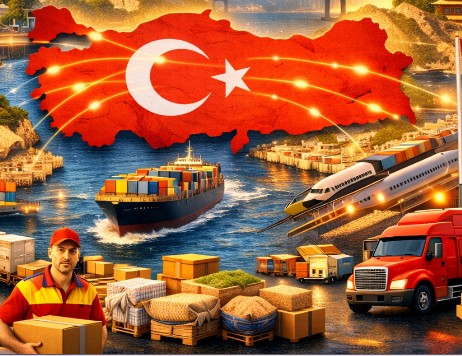
Cargo Delivery from Turkey to Germany
Freight Delivery from Turkey to Germany: Companies, Prices, Timelines, and Customs Clearance in the EU
Trade relations between Turkey and Germany have been developing for decades. Turkey is a significant supplier of textiles, furniture, auto parts, food products, construction materials, equipment, and other goods to the European market. Germany, in turn, serves not only as a final destination but also as an important logistics hub for further delivery of goods to EU countries.
Shipping freight from Turkey to Germany requires careful selection of transportation, proper documentation, cost calculation, and compliance with EU customs regulations. Mistakes at any stage can lead to delays, additional costs, fines, or the return of goods to the sender. Therefore, when organizing international transportation, it is essential to determine the characteristics of the goods, the route, the type of delivery, and the customs clearance process in advance.
This article provides a detailed overview of the main methods of transporting goods from Turkey to Germany, estimated prices and timelines, popular logistics companies, customs clearance rules in the European Union, as well as factors affecting the final delivery cost along the Turkey–Germany route.
Features of Freight Delivery from Turkey to Germany
Transportation between Turkey and Germany is carried out by road, air, sea, rail, and multimodal transport. The most popular option remains road delivery, as it allows for "door-to-door" transportation with minimal handling. A freight truck can pick up goods from a supplier's warehouse in Istanbul, Bursa, Izmir, Ankara, or another city and deliver them directly to the recipient in Germany.
The choice of transportation method depends on several parameters: the volume and weight of the shipment, the nature of the products, acceptable timelines, budget, and temperature control requirements. For example, small urgent shipments are often transported by air, while large batches of textiles, furniture, or equipment are typically moved by road or sea. For non-standard routes, combined schemes may be used, incorporating road, sea, and rail transport.
Main Routes and Logistics Centers
In Turkey, the main departure points are Istanbul, Bursa, Izmir, Mersin, Gaziantep, Konya, and Ankara. In Germany, goods most frequently arrive in Berlin, Hamburg, Munich, Frankfurt am Main, Cologne, Düsseldorf, Stuttgart, and Hanover.
The ports of Istanbul, Mersin, and Izmir, as well as the German ports of Hamburg, Bremerhaven, and Lübeck, play a significant role. In sea delivery, the container arrives at the port, after which the cargo is transported by road or rail to the recipient's warehouse.
For road transport, international routes through Bulgaria, Serbia, Hungary, Austria, or Romania are used. The specific route may change depending on border congestion, weather conditions, road situations, transport restrictions, and the chosen customs clearance point.
Types of Goods Transported from Turkey to Germany
Regular shipments between the two countries include:
clothing, footwear, and home textiles;
furniture, decor, and interior items;
food products and agricultural goods;
auto parts and components;
household appliances and electronics;
industrial equipment;
construction materials;
cosmetics and health products;
chemical products;
parcels, samples, and commercial documents.
Each category has specific requirements. Food products may need sanitary and veterinary certificates, cosmetics require compliance with European standards, electronics need CE documents and technical specifications, and hazardous goods must be packaged and documented according to ADR regulations.
Main Delivery Methods from Turkey to Germany
Road Transportation
Road delivery is the most versatile method of transporting goods from Turkey to Germany. It is suitable for consolidated shipments, pallets, boxes, equipment, and full truckloads. The main advantage lies in the direct route with minimal handling. This reduces the likelihood of damage, loss, or misplacement of goods.
For full loads, tarpaulin, refrigerated, isothermal, flatbed, and specialized vehicles are used. Consolidated shipments are combined at a consolidation warehouse with goods from other clients. This format helps reduce costs, as the customer pays only for the actual volume or weight occupied.
The average delivery time for road transport from Turkey to Germany is approximately 7–14 days. However, the final time depends on the city of departure, destination, customs procedures, border queues, and document readiness. Express delivery can be arranged faster, but its cost will be higher.
Sea Freight
Sea freight is suitable for large shipments, containers, and goods that do not require the fastest delivery. Cargo is shipped from a Turkish port to a port in Germany or another EU country, after which it is transported to the final address.
The main advantages of sea freight are relatively low prices for large volumes and the ability to transport heavy shipments. Disadvantages include longer delivery times, the need for port handling, and additional costs for terminal operations, storage, document processing, and delivery to the recipient's warehouse.
Typically, sea freight from Turkey to Germany takes between 15 to 35 days. The time may increase due to transshipment in a third country, adverse weather conditions, high port congestion, or delays in customs clearance.
Air Freight
Air freight is used for urgent, expensive, compact, and relatively light cargo. Products samples, documents, electronics, medical devices, spare parts, and high-value goods are transported by air.
The main advantage of air freight is speed. Depending on the route and chosen service, cargo can arrive from Turkey to Germany within 1–5 business days. However, the cost of air delivery is significantly higher than that of road or sea transport. When calculating, both actual and volumetric weight are taken into account.
Rail and Multimodal Transport
Rail transport is used for large shipments, containers, and cargo where a balance between time and cost is important. In a multimodal scheme, several types of transport are combined into a single logistics chain. For example, cargo is delivered by truck to a terminal, then by train to a European hub, and on the last leg, road transport is used again.
This option can be advantageous for large volumes and regular shipments. However, it requires more careful planning, as delays at one segment affect the entire route.
Shipping Costs from Turkey to Germany
The cost of transportation from Turkey to Germany cannot be determined solely by distance. The logistics company considers many parameters: weight, volume, type of cargo, addresses of departure and delivery, type of transport, need for pickup, insurance, customs escort, and additional services.
Estimated Rates
The cost of transportation depends on many factors: route, type of transport, weight and volume of cargo, number of items, nature of the goods, delivery times, season, and current load of transport lines. Therefore, the values provided below should be considered as guidelines for preliminary calculations rather than fixed rates.
Consolidated road transport is usually suitable for small shipments when there is no need to rent a separate vehicle. The estimated cost can start from approximately 100–250 euros for a small batch. The average delivery time is 7–14 days, but it may increase depending on the route, number of transshipments, and border crossings.
Pallet delivery is a convenient option for goods that need to be transported on standard or non-standard pallets. The estimated cost can range from 250–700 euros per pallet. The final price depends not only on the number of pallets but also on their sizes, height, weight, stacking capabilities, and loading conditions. The average transportation time is about 7–14 days.
Full truckload transport is used when the volume or weight of the cargo allows for efficient loading of a separate vehicle. The estimated cost for full road transport can range from 2,500–5,000 euros. The price is significantly influenced by distance, direction, type of body, temperature control requirements, availability of special equipment, and delivery times. The standard transportation time can be around 7–14 days, but shorter or longer times may be possible for specific routes.
Sea container transport is more commonly used for large shipments and international deliveries, especially over long distances. The estimated cost of a sea container can range from 1,500–4,000 euros, but this amount does not always include the full range of associated costs. Additional charges may include port fees, terminal handling, document processing, delivery to and from the port, customs procedures, storage, and other services. Depending on the route, the total delivery time can be approximately 15–35 days or more.
Air delivery is suitable for urgent, relatively compact, or expensive cargo when speed is a priority. The estimated rate can start from around 5–15 euros per kilogram, and for certain categories of cargo and destinations, it can be significantly higher. The calculation takes into account not only the actual weight but also the volumetric weight, so a large but lightweight cargo may have a higher shipping cost. The average delivery time is about 1–5 days, not accounting for possible customs clearance delays.
Express delivery of documents and small shipments is used in cases where speed is especially important. The estimated cost can range from 40–150 euros depending on the destination, weight, dimensions of the shipment, and the chosen service. In most cases, delivery takes about 1–3 days; however, the exact timeframe depends on the destination country and the specific carrier's conditions.
It should be noted that the specified ranges are approximate. They can vary significantly depending on the specific route and shipping conditions. The final cost can be influenced by seasonal fluctuations in demand, fuel prices, exchange rates, transportation availability, holiday periods, terminal and transport line congestion, as well as changes in carrier tariffs.
In addition to the base shipping rate, additional charges may apply for loading and unloading services, pickup from the address, delivery to the final address, customs clearance, insurance, warehousing, terminal and port fees, documentation preparation, and other additional services.
To obtain a more accurate calculation, it is usually necessary to provide information about the city of departure and destination, the nature of the cargo, the number of packages, weight and volume, dimensions of pallets or packages, desired delivery times, and special transportation requirements. After that, it is possible to determine the suitable mode of transport and calculate the estimated cost for the specific shipment.
What is included in the delivery price
The base cost may include:
transportation between cities;
vehicle delivery to the warehouse;
loading services;
preparation of the transport invoice;
consolidation of consolidated cargo;
delivery to the terminal or recipient's address;
basic tracking of the shipment.
Additional charges may apply for:
export and import customs clearance;
customs representative services;
storage at the warehouse or terminal;
transloading;
delivery to remote areas;
insurance;
certification;
sanitary, veterinary, or phytosanitary control;
vehicle downtime;
return of documents;
preparation of transit declarations.
To get an accurate calculation of the delivery cost from Turkey to Germany, it is necessary to provide the carrier with detailed information: city of departure, delivery address, product description, number of packages, package dimensions, total weight, volume, value, HS code, and desired timeframe.
How to calculate the delivery cost from Turkey to Germany
Main calculation formula
In simplified terms, the total cost is calculated using the formula:
Delivery cost = base rate + fuel surcharge + terminal fees + customs clearance + additional services + insurance.
For consolidated shipments, the rate may be set per kilogram, cubic meter, pallet, or cargo space. For full truckloads, a fixed rate per route is applied. In air freight, the greater value between actual and volumetric weight is used.
Volumetric weight is calculated using a formula established by the carrier. For example, for air freight, a volume-to-weight ratio of 1:167 is often used, but specific rules may vary. Therefore, the dimensions of each box or pallet must be specified accurately.
What data is needed for calculation
For a preliminary commercial proposal, you should prepare:
Product name.
Number of boxes, pallets, or packages.
Dimensions of each package.
Net and gross weight.
Total volume.
Loading address in Turkey.
Delivery address in Germany.
Product value.
HS code.
Information about the presence of hazardous, fragile, or temperature-sensitive items.
Need for "door-to-door" delivery.
Required transportation timeframe.
The more accurate the initial data, the lower the likelihood of price changes after placing an order. If the sender provides approximate dimensions or incomplete descriptions of the cargo, the carrier may recalculate the tariff after weighing or when passing through the terminal.
Major Freight Companies from Turkey to Germany
The market includes international freight forwarders, transportation companies, courier services, shipping lines, and local logistics operators. When choosing a contractor, it is important to evaluate not only the advertised price but also the actual list of services.
International Logistics Operators
Large companies typically offer a full range of services:
road, sea, and air transportation;
consolidated and general cargo;
warehouse handling;
customs clearance;
insurance;
tracking;
delivery across multiple EU countries;
preparation of export and import documents.
Such operators include DHL, DB Schenker, DSV, Kuehne+Nagel, UPS, FedEx, Rhenus, and other international providers. The terms depend on the type of cargo, volume, and contractual model.
Regional Carriers and Forwarders
Turkish and European companies specializing in the Turkey–Germany route often offer more flexible rates for consolidated road transport. They may operate with specific cities, regularly dispatch vehicles, and provide consolidation services.
The advantage of local carriers may include knowledge of border crossing specifics, the presence of their own warehouses, and the ability to negotiate individual terms. However, before signing a contract, it is essential to verify the company's registration, insurance coverage, customer reviews, liability terms, and the existence of a physical office.
Courier Services
Courier operators are suitable for small packages, documents, samples, online orders, and urgent shipments. They provide delivery on a "door-to-door" basis, but the rate per kilogram is usually higher than that of consolidated road transport.
When sending commercial goods, the courier company will also require a description of the contents, an invoice, sender and recipient information, and in some cases—proof of value and compliance documents with EU requirements.
Customs When Shipping from Turkey to Germany
Customs clearance is one of the most important stages of international delivery. Germany is part of the European Union, so the import of goods is regulated by European customs legislation. One cannot rely solely on Germany's rules: requirements may depend on the category of goods and EU legislation.
Who is Involved in the Clearance Process
The process may involve:
the sender;
the recipient;
the carrier;
the customs representative;
the temporary storage warehouse;
tax and regulatory authorities;
sanitary, veterinary, or phytosanitary control authorities.
Importers in Germany usually need to register in the relevant systems and have an EORI number. This identifier is used for customs declaration. Without correct registration data, the clearance process may be suspended.
Main Documents
The following documents are typically used for cargo clearance:
commercial invoice;
packing list;
CMR waybill, bill of lading, or air waybill;
export declaration;
import declaration;
contract or order;
certificate of origin;
permits and licenses;
compliance documents;
insurance policy;
transit documents;
documents to confirm customs value.
The list may vary depending on the product. For example, additional sanitary documents are required for food products, while veterinary certificates and compliance checks are necessary for animal products.
How Customs Value is Determined
Customs value is usually based on the price of the goods stated in the commercial invoice, possibly adding transportation, insurance, and other costs up to the EU border. Customs authorities may request proof of payment, contracts, price lists, and correspondence between parties if the price raises doubts.
Undervaluation of goods is a violation and may lead to additional payments, fines, delays in cargo, and further scrutiny of the importer.
How to Pass EU Customs Without Delays
Document Preparation Before Shipping
Documents should be prepared before loading the vehicle or container. The invoice must include a precise description of the goods, quantity, value, currency, delivery terms according to Incoterms, country of origin, and details of the parties involved in the transaction.
Avoid using overly general terms like «goods», «samples», or «spare parts». Customs authorities need to understand exactly what is being transported, what materials the products are made of, and for what purposes they are intended.
Correct HS Code
Each product is assigned a code from the EU Combined Nomenclature or the corresponding tariff system. The code affects the duty rate, the need for certificates, and applicable restrictions.
Incorrect classification can lead to a revision of the declaration and the imposition of additional charges. If the product is complex or consists of several components, it is advisable to consult a customs specialist in advance.
Checking Product Requirements
Before shipping, ensure that the product is allowed for import into the EU and meets mandatory requirements. Certain categories require CE marking, a declaration of conformity, a technical file, registration in special systems, or safety confirmation.
Special attention should be paid to:
food products;
cosmetics;
medicinal products;
children's products;
electrical equipment;
chemical substances;
dual-use products;
wooden products;
animal-derived products;
products with trademarks.
Using Incoterms
Incoterms define who pays for transportation, insurance, export and import procedures, as well as who bears the risks at different stages. In Turkey-Germany transactions, EXW, FCA, CPT, CIP, DAP, and other terms may be used.
For example, under DAP, the seller arranges delivery to the agreed location, but import clearance and tax payment usually remain the buyer's responsibility. Under DDP, the seller takes on significantly more obligations, including import payments; however, this scheme requires them to legally act as an importer in the EU.
Taxes, Duties, and Additional Charges
When importing goods into Germany, import duty and value-added tax may be charged. The duty rate depends on the product code, the origin of the goods, and applicable trade agreements.
For certain goods from Turkey, the EU-Turkey customs union regime may apply. However, its application does not automatically extend to all types of products. The possibility of applying benefits depends on the product category and the presence of the correct supporting document, such as the A.TR certificate. Separate rules may apply to agricultural products, coal, steel, and some other categories.
VAT on imports to Germany is usually calculated based on the customs value, the amount of duty, and certain expenses up to the destination. The standard German VAT rate is 19%, with a reduced rate for specific categories. The exact payment procedure depends on the status of the importer and their tax registration.
In addition to government payments, there may be costs for:
customs broker services;
terminal handling;
storage;
inspection;
laboratory testing;
processing of permit documents;
transport delays;
resubmission of declarations;
delivery after cargo release.
Delivery Times from Turkey to Germany
The average transportation duration depends on the chosen mode of transport and route. Road delivery usually takes from 7 to 14 days, sea freight from 15 to 35 days, and air freight from 1 to 5 working days. Consolidated cargo may take longer than a full truckload due to consolidation and phased processing.
Factors Affecting Delivery Times
Delivery times are influenced by:
the distance of the departure city from the border;
congestion at border crossings;
the availability and correctness of documents;
the type of goods;
the need for veterinary or sanitary control;
weather conditions;
driver working time restrictions;
queues at ports and terminals;
holiday periods;
delays in fee payments;
cargo inspections;
transport shortages;
route changes.
To reduce the risk of delays, it is recommended to allow for a time buffer. This is especially important for shipments to exhibitions, production launches, seasonal sales, or contractual obligations.
How to Track Your Cargo
After shipment, the client should be provided with a tracking number, a link to the monitoring system, or the contact information of the responsible manager. For road freight, tracking can be done using GPS data, the CMR number, or the freight forwarder's internal number. Container shipments are tracked by the container number and bill of lading.
Cargo Insurance
Even with careful transportation, cargo can be damaged due to accidents, improper loading, theft, fire, moisture, or other circumstances. The carrier's liability is limited by international conventions and the terms of the contract, so compensation may not cover the full value of the goods.
Insurance helps protect the financial interests of the cargo owner. The policy specifies the value, route, types of risks, packaging conditions, and the procedure for settling losses. Insurance is particularly advisable for expensive equipment, electronics, fragile goods, and products with high commercial value.
When arranging a policy, it is essential to check for exclusions. Some contracts do not cover damages due to poor packaging, natural product properties, temperature violations, or incorrect declarations.
Cargo Packaging and Labeling
Reliable packaging reduces the risk of damage during loading, transloading, and transportation. Boxes should match the weight of the goods, pallets must be intact and stable, and fragile products should have internal cushioning.
It is recommended to indicate the following on the packaging:
sender and recipient names;
number of packages;
weight;
order number;
destination country;
cargo handling symbols;
direction arrows;
fragility warning;
temperature regime;
pallet or box number.
For export shipments, wooden packaging may be subject to the requirements of the international standard ISPM 15. When transporting hazardous materials, ADR regulations, special signs, and safety documents apply.
How to Choose a Logistics Company
Before signing a contract, it is necessary to compare several offers. It is important to compare not only the price but also the full range of services.
What to Check with the Carrier
It is advisable to pay attention to:
experience in the Turkey–Germany route;
availability of licenses and registration data;
own or contracted transport;
liability insurance;
damage compensation conditions;
availability of warehouses and terminals;
customs escort capability;
tariff calculation procedure;
document provision timelines;
tracking system;
customer reviews;
contract transparency.
A suspiciously low price may indicate that customs services, terminal fees, delivery to the address, or insurance are not included in the offer. Therefore, it is essential to request a detailed calculation before payment.
Questions to Ask the Manager
Before shipment, it is worth clarifying:
What transport will be used?
What is the estimated delivery time?
Is cargo pickup from the warehouse included?
Is delivery to the final address included?
Who handles export and import?
What documents will be required?
Is insurance included in the rate?
Are there any additional fees?
How is volumetric weight calculated?
Who is responsible for delays at customs?
How is delivery confirmation provided?
What happens in case of damage or loss?
Practical Recommendations for Business
For regular shipments from Turkey to Germany, it is advisable to establish a contract with a permanent logistics partner. This allows for fixed rates, reserving transport, faster document processing, and obtaining more accurate information about timelines.
It is useful to create templates for invoices, packing lists, and shipping instructions in advance. For each type of product, descriptions, HS codes, origin information, and a list of required certificates should be prepared.
If deliveries are made regularly, it is essential to analyze not only the cost of a single shipment but also the overall logistics model. Sometimes, a more expensive full truckload delivery turns out to be more cost-effective than several consolidated shipments. For large volumes, a consolidation warehouse in Turkey or a distribution center in Germany can be utilized.
Shipping goods from Turkey to Germany is a complex process that includes selecting transportation, preparing documents, customs clearance, calculating taxes, organizing warehouse handling, and delivering to the final recipient. The optimal transportation method depends on the weight, volume, product category, budget, and required speed.
Road transport remains the most versatile option for "door-to-door" deliveries. Sea freight is advantageous for large and heavy shipments, air freight is suitable for urgent deliveries, and multimodal schemes allow for flexible combinations of different transport modes.
To calculate the shipping cost from Turkey to Germany, it is necessary to provide the carrier with accurate information about the cargo, route, and delivery conditions. To pass through EU customs without delays, it is important to check the HS code in advance, prepare the invoice and packing list, arrange the necessary certificates, and ensure that the importer has an EORI number.
The right choice of logistics company, transparent tariff calculation, quality packaging, and professional customs support will help reduce delivery times, avoid additional costs, and ensure a stable supply of goods from Turkey to Germany.