

 RU
 UA
 DE
 FR
 ES
 CN
 SA
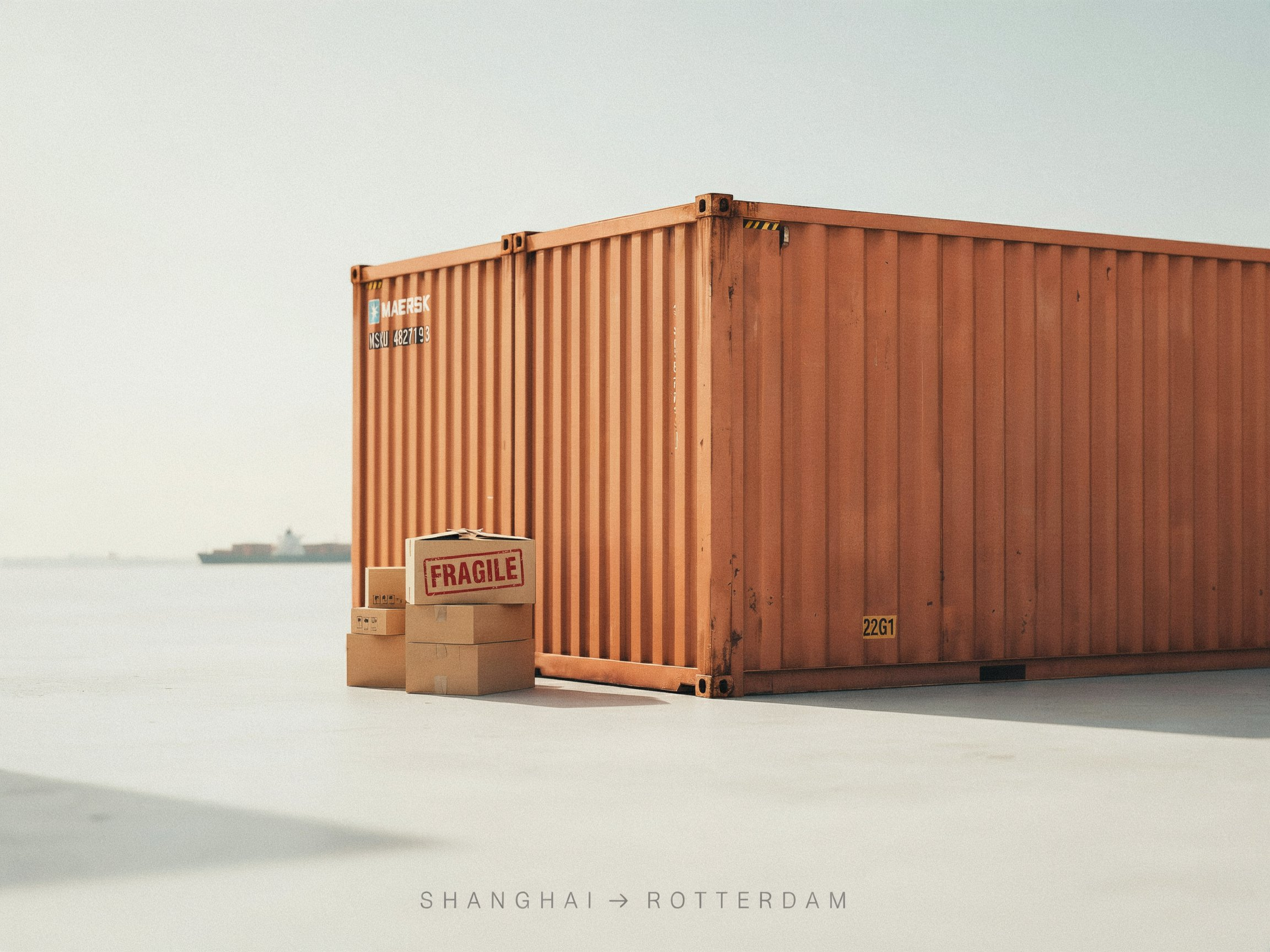
Shipping Goods from Asia
How the Maritime Shipping Crisis Affects Goods Delivery from Asia
Maritime shipping remains the backbone of global trade. A significant portion of products, components, raw materials, and consumer goods is transported between countries by sea. Maritime logistics plays a particularly crucial role in supplies from China, South Korea, Vietnam, India, Malaysia, and other Asian nations. However, in recent years, the international logistics system has faced serious disruptions: changes in routes, container shortages, rising fuel costs, port congestion, geopolitical risks, and a lack of shipping capacity.
The maritime shipping crisis directly impacts delivery times, freight costs, product availability, and business sustainability. Companies are forced to rethink their logistics schemes, build up additional inventories, seek alternative routes, and collaborate with multiple carriers simultaneously. For importers working with China and other Asian countries, understanding the ongoing processes becomes a necessary condition for effective supply planning.
What the Maritime Shipping Crisis Entails
The maritime shipping crisis is a combination of factors that disrupt the normal functioning of the global transportation system. It can be triggered by a single cause or multiple circumstances. These include armed conflicts, restrictions on passage through strategic maritime channels, pandemics, natural disasters, port worker strikes, container shortages, and sudden changes in demand.
Maritime logistics is structured as an interconnected system. If one major port or route begins to operate intermittently, the consequences quickly spread to other regions. Loading delays occur, departure schedules change, and container processing times increase. Carriers adjust their routes, and cargo owners receive their goods later than initially planned.
Why Maritime Transport is So Important for Global Trade
Maritime vessels can transport vast amounts of cargo over long distances. Compared to air freight, maritime transport offers a lower cost per unit of goods delivered. This is why household appliances, clothing, furniture, electronics, construction materials, industrial equipment, components, and raw materials are moved through seaports.
Major Asian manufacturing centers are focused on exports. China, for example, supplies goods to virtually all regions of the world. Vietnam specializes in textiles, footwear, electronics, and furniture, while South Korea focuses on automobiles, chemicals, and high-tech equipment. Disruptions in maritime routes in Asia affect not only individual companies but entire industries.
Main Causes of the Maritime Crisis
The most common causes include:
port congestion;
container shortages;
lack of vessels on certain routes;
rising fuel prices;
route changes due to security threats;
weather disasters;
port closures or operational restrictions;
sanctions and customs restrictions;
shortage of drivers and warehouse capacity;
sudden changes in import and export volumes.
Each of these factors can increase delivery times. When problems arise simultaneously, the transportation system begins to operate unstably, and logistics costs can rise dramatically.
How the Maritime Crisis Affects Delivery from China
Delivery from China depends on numerous stages: production, packaging, consolidation, transporting goods to the warehouse, document processing, transportation to the port, loading onto the vessel, sea transit, unloading, and customs clearance. A disruption at any stage can alter the final delivery timeline.
In a stable situation, an importer can estimate the approximate arrival date of the cargo in advance. During a crisis, such forecasts become less accurate. The carrier may postpone the departure date, change the port of call, or offer an alternative route. Sometimes a container arrives at a transit port but cannot timely board the next vessel due to a lack of available space.
Increased Delivery Times
One of the main consequences of the maritime crisis is cargo delays. If previously transportation from China took a certain number of days, during unstable conditions, weeks are added to the original timeline. The reasons for delays can vary:
waiting for an available vessel;
postponement of departure from the port;
prolonged container processing;
route changes;
cargo accumulation at the transit port;
document issues;
customs delays;
shortage of transportation after the vessel's arrival.
Delays become particularly serious for companies that deal with seasonal goods. If clothing, holiday products, or equipment arrive after the season has ended, the business loses part of its revenue, even if the goods are eventually delivered.
Unpredictability of timelines
Not only the duration of delivery is important, but also the inability to accurately determine the arrival date. With standard logistics, a company can plan production, marketing campaigns, sales, and warehouse operations. During a crisis, forecasts need to be regularly revised.
Importers need to consider several possible scenarios: optimistic, baseline, and pessimistic. For example, in a contract with a client, one cannot rely solely on the ideal schedule of the carrier. It is safer to allocate a buffer time for delays at the port, schedule changes, and customs procedures.
Impact on small and medium businesses
Large companies usually have more options for adaptation. They can book containers in advance, enter into long-term agreements with carriers, use multiple routes, and maintain their own logistics departments. Small businesses are more dependent on current rates and the availability of consolidated shipments.
The rise in shipping costs from China is particularly sensitive for entrepreneurs who import small batches. When freight rates increase, transportation costs can significantly raise the product's cost price. Sometimes, shipping becomes so expensive that importing specific products loses its economic sense.
Freight costs and reasons for their increase
Freight cost is the fee for transporting cargo by sea. Its size is influenced by the route, type of container, season, volume of goods, port of departure, port of destination, availability of free vessels, and current demand levels. During a maritime crisis, freight rates can increase sharply.
Factors affecting rates
The main reasons for the increase in sea freight costs include:
Container shortage. If empty containers are not returned to the required regions, carriers raise prices for available capacities.
Shortage of vessels. A limited number of vessel spaces creates competition among cargo owners.
Increased fuel costs. When routes change, vessels have to cover greater distances.
Port fees. Overloaded or alternative ports may impose higher rates.
Insurance costs. When risks increase, carriers and insurers raise service costs.
Seasonal demand. Before major holidays and peak periods, companies send goods in bulk, leading to a shortage of spaces.
Additional transshipments. Changing routes often requires container transshipment, increasing overall logistics costs.
Additional charges
In addition to the base freight, importers may encounter various surcharges. These include fuel surcharges, port fees, storage fees, demurrage and detention charges, documentation processing costs, and services of freight forwarders and customs representatives.
It is important to clarify in advance which services are included in the quoted rate. A low base rate does not always mean a minimal final cost. Sometimes, the carrier only specifies the sea freight, while delivery to the warehouse, processing, unloading, and storage are charged separately.
How freight increases affect product prices
The rise in sea transportation costs increases the cost price of imported products. Depending on the category of goods, the logistics share can be small or very significant. For expensive electronics, the increase in freight may be negligible relative to the unit price of the product. For cheaper goods, transportation costs can form a significant part of the final price.
As a result, companies are forced to choose between several options: raising retail prices, reducing margins, decreasing order volumes, or seeking another supplier. Sometimes, businesses move part of their production closer to the market to reduce dependence on long-distance sea routes.
Cargo delays and their consequences for business
A cargo delay is not just a shift in the date of receiving goods. It can trigger a whole chain of financial and operational problems. If products do not arrive on time, sales plans are disrupted, production halts, commitments to clients are broken, and storage costs increase.
Disruption of warehouse planning
Companies form warehouse inventories based on demand forecasts and delivery schedules. When cargo delays occur, the planned volumes do not arrive on time, and stock levels at the warehouse quickly diminish. If a product is in high demand, this leads to shortages and loss of customers.
At the same time, the opposite problem may arise. After a long wait, several shipments arrive almost simultaneously. The warehouse becomes overloaded, increasing the need for additional space and personnel. Such imbalances complicate inventory management and raise operational costs.
Contract Violations and Penalties
If a supplier or importer fails to meet obligations to a client, claims may be made against them. The contract stipulates penalties for deadline violations, compensation for losses, or the possibility of terminating the deal. To mitigate risks, companies should clearly outline conditions related to force majeure, carrier delays, and route changes in advance.
Impact on Production
Manufacturing enterprises depend on the timely delivery of components and raw materials. Even the absence of a single part can halt the assembly line. In some cases, a company is forced to urgently purchase similar materials from local suppliers at a higher price.
To reduce risks, manufacturers create safety stocks, use multiple suppliers, and agree on alternative product options in advance. However, increasing inventories requires freezing working capital and incurring additional warehousing costs.
Reputational Losses
Constant delays negatively impact customer trust. If an online store regularly postpones shipping deadlines, customers begin to choose competitors. For B2B companies, schedule violations can lead to the loss of long-term contracts.
Therefore, it is important not only to try to expedite delivery but also to properly inform customers. Honest communication about the reasons for delays, proposed compensation, and regular status updates help maintain loyalty.
How Asian Supplies Are Changing
The maritime crisis forces businesses to rethink traditional procurement models. Previously, a company could work with a single manufacturer and one route. Now, such dependence has become too risky. Importers are seeking additional manufacturing countries, alternative ports, and combined delivery schemes.
Diversification of Suppliers
One of the most effective ways to reduce risks is to distribute purchases among several suppliers. Some products can be sourced from China, while others can come from Vietnam, India, Turkey, or other countries. This does not always allow for the complete avoidance of problems but reduces dependence on a single direction.
When selecting new suppliers, it is essential to evaluate not only the price of the product but also quality, production capabilities, payment terms, availability of certifications, and logistics stability. A too-rapid transition to an unknown manufacturer can lead to defects and new delays.
Using Different Ports
Large Asian manufacturers often have the option to ship goods through several ports. This allows for the selection of less congested terminals. However, changing ports may increase costs for transporting goods from the factory to the shipping location.
The decision should be made considering the overall cost of the supply chain. Sometimes a more distant port can be more advantageous if containers are processed faster and more vessel spaces are available.
Switching to Consolidated Shipments
LCL shipping is used for small batches, where goods from several clients are placed in one container. This option allows for not paying for an entire container but increases the number of operations with the cargo. During transloading, the risk of damage, mis-sorting, and delays increases.
Full container shipments, or FCL, are more often chosen by companies with large volumes. They provide greater control over the cargo; however, they require a sufficient amount of product to effectively fill the container.
Container Shipping in Unstable Conditions
Container shipping is a central element of international trade. The container is standardized, suitable for different types of transport, and simplifies transloading. This allows cargo to be moved through the "sea - rail - truck" scheme without fully unloading the contents.
Container Shortages
One of the issues is the uneven distribution of container equipment. In some ports, empty containers accumulate, while others experience a shortage. Carriers have to move empty containers, which increases costs and creates additional strain on infrastructure.
Shortages are most often observed during periods of sharp increases in exports from certain regions. Producers are ready to ship goods but cannot obtain the appropriate container at the right time. As a result, the cargo remains in the warehouse, and its shipment is postponed.
Choosing the Type of Container
The type of container used affects the cost and organization of transportation. The most common are standard 20-foot and 40-foot containers. For bulky cargo, options with increased height are used, for temperature-sensitive products — refrigerated containers, and for oversized goods — special platforms and structures.
Choosing the wrong container can lead to overpayment, damage to the products, or inability to load. Therefore, the volume, weight, temperature requirements, stacking method, and allowable load are calculated in advance.
Risks of Damage and Loss of Cargo
When the route changes, the container may go through more transshipments. Each additional operation increases the risk of packaging damage, moisture exposure, deformation, or loss of part of the goods. Fragile items, equipment, and products sensitive to humidity are particularly vulnerable.
To protect against these risks, reinforced packaging, moisture absorbers, palletizing, cushioning materials, tilt indicators, and temperature sensors are used. It is also essential to properly arrange cargo insurance and document the condition of the container upon receipt.
Shipping and Digitalization of Logistics
The term shipping encompasses a wide range of operations related to the dispatch, transportation, and receipt of cargo. Modern shipping is impossible without digital tools that allow for tracking containers, exchanging documents, and analyzing route efficiency.
Cargo Tracking
Digital systems provide information about the location of the container, the status of the vessel, passage through terminals, and the estimated arrival date. Such data helps to respond in advance to deviations from the schedule.
However, it is important to understand that the estimated delivery date may change. The information in the system depends on the quality of the carrier's data, port operations, and the actual movement of the vessel. Therefore, tracking should be used as a control tool, not as an absolute guarantee.
Electronic Document Management
Errors in invoices, packing lists, bills of lading, and certificates can delay cargo for several days or even weeks. Electronic document management reduces data transfer time and lowers the likelihood of document loss.
Companies implement systems that automatically check data compliance, generate reports, and notify employees of the need to provide documents. This is especially important when working with a large number of suppliers and regular container shipments.
Analytics and Forecasting
Logistics platforms allow for the analysis of freight costs, route durations, port delays, and carrier reliability. Based on this data, a company can choose optimal routes and adjust order volumes.
Forecasting does not eliminate risks but allows for better preparation for them. For example, if the system shows regular delays on a specific route, the importer can pre-order additional time, use another port, or shift part of the shipments to rail transport.
How Businesses Can Mitigate Marine Crisis Risks
It is impossible to completely eliminate the impact of global transportation issues. However, a company can reduce damage through a systematic approach to planning.
Establishing a Safety Stock
A stock of goods or raw materials helps to endure temporary supply disruptions. Its size depends on demand stability, production cycle duration, route reliability, and storage costs.
Excessive stock should not be created without analysis. Overproduction ties up funds, occupies warehouse space, and may become obsolete. The optimal approach is to determine a minimum reserve that covers the average delay period.
Booking Shipments in Advance
During periods of high demand, containers and vessel spaces should be booked in advance. Early planning allows for choosing a more favorable rate and reduces the risk of unavailable capacity.
It is also important to check the booking conditions: the possibility of changing dates, cancellation penalties, document requirements, and container provision rules.
Working with Multiple Logistics Partners
Dependence on a single freight forwarder or carrier increases risks. If a partner faces overload, a shortage of transport, or route restrictions, the entire supply chain is at risk.
Collaborating with multiple logistics companies helps compare rates, obtain alternative solutions, and switch to different delivery channels more quickly. When choosing a partner, it is important to evaluate not only the price but also the experience, transparency of operations, quality of communication, and ability to handle non-standard situations.
Combining Modes of Transport
Multimodal transport combines sea, rail, and road transport. For example, cargo can be shipped by sea to a specific port, then transported by train, and delivered by truck to the final warehouse.
This scheme may turn out to be more expensive than direct sea delivery, but it often provides a more predictable timeframe. For urgent shipments, air freight or a combined option is used, where the most critical part of the goods is sent by plane, while the bulk is shipped by sea.
Practical Recommendations for Importers from Asia
To make deliveries more resilient, companies are advised to:
plan purchases and logistics in advance;
consider a time buffer for delays;
check the reliability of suppliers;
work with multiple ports and carriers;
compare the total cost of delivery, not just the base freight;
insure expensive and fragile cargo;
use reliable packaging;
regularly track the status of containers;
prepare customs documents in advance;
maintain an insurance reserve;
analyze alternative routes;
agree on realistic timelines with clients;
specify force majeure conditions in contracts.
Calculating the total cost of ownership of goods is particularly important. This includes the product price, domestic shipping, sea freight, port fees, insurance, customs duties, warehousing, delivery to the final address, and potential costs due to delays.
Prospects for Sea Freight and Asian Supplies
Sea trade will maintain its leading role, as alternative modes of transport cannot fully replace container shipping in terms of volume and cost. However, the logistics industry will evolve towards greater flexibility, digitalization, and risk distribution.
Carriers are investing in new vessels, port automation, monitoring systems, and eco-friendly technologies. Importing companies, in turn, will increasingly utilize multimodal schemes, regional warehouses, and diversified supply chains.
It is likely that businesses will become less focused solely on the lowest price. Reliability of routes, transparency of transport, the ability to quickly change delivery schemes, and supplier resilience will come to the forefront. The cheapest option is not always the most advantageous if it is associated with a high likelihood of delays and additional costs.
The crisis in sea freight has a complex impact on international trade and particularly affects the delivery of goods from Asia. Rising freight costs, container shortages, port congestion, route changes, and cargo delays lead to increased production costs and complicate business planning.
For companies working with China and other Asian countries, a well-prepared logistics strategy, insurance reserves, alternative suppliers, multiple transport routes, and constant monitoring of cargo movement are essential. In an unstable shipping market, it is not the companies that simply seek the lowest rate that succeed, but those that can quickly adapt and proactively manage risks.
Resilient Asian supplies are built on diversification, digital control, accurate calculation of total costs, and readiness to use different modes of transport. This approach helps mitigate the effects of the maritime crisis, maintain customer service levels, and ensure business stability even amid significant changes in global logistics.