

 RU
 UA
 DE
 FR
 ES
 CN
 SA
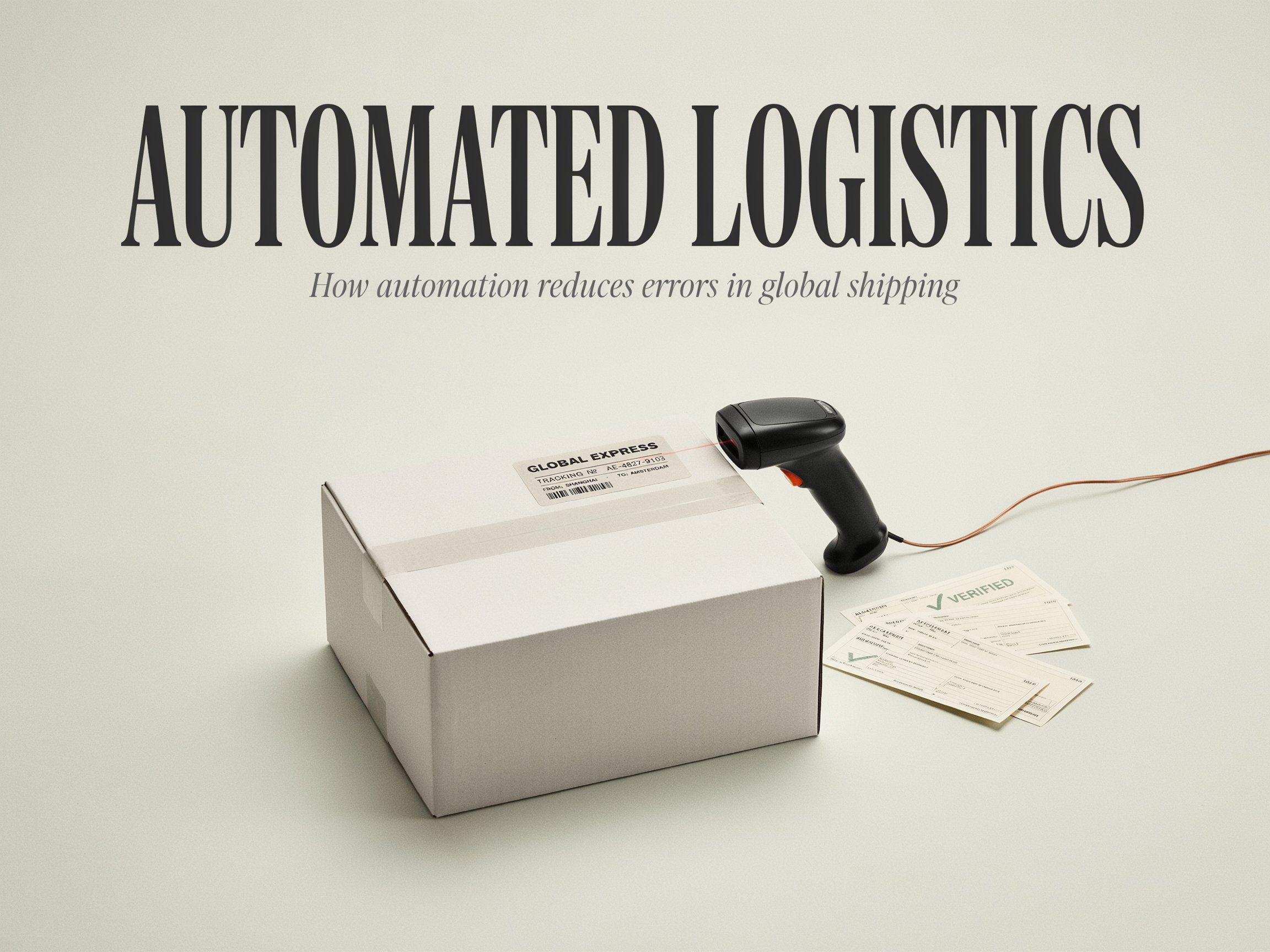
How Automation Reduces Errors in International Logistics and Delivery
How Automation Reduces Errors in International Logistics and Delivery
International logistics encompasses dozens of processes: order processing, document preparation, customs declaration, shipment sorting, transportation cost calculation, route monitoring, and interaction with courier services. At each stage, there is a risk of errors that can lead to cargo delays, additional costs, or loss of customer trust. The work becomes especially challenging with large shipment volumes, where manual processing no longer ensures the necessary speed and accuracy.
Automation in international delivery helps companies transition from fragmented operations to a unified digital system. Software platforms, artificial intelligence, robotic lines, scanning systems, and integration with carriers allow for tracking the movement of packages from the moment an order is placed until it is delivered to the recipient. This reduces inaccuracies, speeds up cargo processing, and enhances the transparency of the logistics chain.
Today, the benefits of logistics automation are particularly evident in e-commerce, international trade, warehouse distribution, and courier network operations. An automated delivery system not only replaces manual labor but also creates an environment where data is verified, operations are synchronized, and potential issues are identified before the cargo is dispatched.
Why International Logistics is Particularly Prone to Errors
International transportation is significantly more complex than domestic delivery. Cargo crosses borders, passes through several sorting centers, and may be transferred between different carriers. Each participant in the chain uses their own standards, data formats, and processing rules for shipments. When information is transmitted manually, the likelihood of discrepancies increases.
A small error in the address can affect the entire route. An incorrectly specified postal code can direct a package to another region. Inaccuracies in product descriptions lead to questions from customs. Errors in weight or dimensions change the cost of delivery. An incorrect commodity code can result in delays, additional inspections, or fines.
Common Causes of Errors in Global Delivery
The most common causes include:
manual data entry from orders into transportation systems;
duplication of information across different programs;
use of outdated address databases;
incorrect completion of customs documents;
wrong choice of tariff or carrier;
labeling errors;
discrepancies between actual weight and system data;
lack of timely status monitoring;
delays in information transfer between departments;
insufficient synchronization between warehouse, store, and courier service.
Manual processing is especially vulnerable during peak seasonal demand. During sales, holidays, and promotional campaigns, the number of orders can increase several times. Employees are forced to work faster, which means they are more likely to make typos, skip mandatory fields, or incorrectly select shipping parameters.
The Cost of a Single Logistics Error
An error in international delivery rarely results in just one problem. For example, an incorrect address first leads to a failure to deliver, then to the return of the shipment, resending, and additional costs. If the package contains commercial goods, the company may lose a customer and incur reputational damage.
For businesses, the consequences include:
increased operational costs;
higher return rates;
wasted employee time;
fines from carriers and regulatory authorities;
freezing of working capital;
decreased customer experience;
lower ratings for online stores;
increased burden on customer support.
Automation reduces the likelihood of such scenarios by standardizing operations, automatically verifying information, and continuously monitoring key performance indicators.
How an Automated International Delivery System Works
An automated delivery system integrates data from the online store, warehouse platform, CRM, ERP, carriers, and customs services. After an order is placed, the information is automatically sent to the processing system. The program checks the address, product availability, restrictions for specific countries, packaging parameters, and available shipping options.
Then the system selects the appropriate route and delivery method according to the specified rules. It can take into account cost, delivery time, carrier reliability, destination region, type of goods, and customer requirements. After the order is formed, transport documents, a barcode, and a label are automatically generated.
Key Elements of Automated Logistics
A modern platform typically includes several functional modules:
Integration with Sales Channels.
The system receives orders from online stores, marketplaces, mobile applications, and other sources.
Address Verification.
Address data is matched with current directories, typos are corrected, and missing information is clarified.
Order Management.
The program monitors the order status, product availability, readiness for picking, and transfer to the warehouse.
Automatic Carrier Selection.
The algorithm compares rates, delivery times, service areas, and restrictions of different courier companies.
Document Generation.
Invoices, bills of lading, customs declarations, and labels are created based on a single set of data.
Scanning and Sorting.
Barcodes, QR codes, and RFID tags help identify the package at each stage.
Delivery Tracking.
Statuses are automatically updated upon receiving information from the carrier.
Analytics and Deviation Control.
Managers receive data on delays, losses, returns, and reasons for errors.
The Role of a Single Data Source
One of the main reasons for errors is the presence of multiple unlinked databases. The online store may have one address, the warehouse another, and the carrier's system a third. Automation consolidates data and creates a single source of information.
If a customer changes the address before the order is handed over for delivery, the system updates the information across all related modules. This prevents situations where the warehouse prints an old label while the courier receives outdated data. A unified digital environment makes logistics consistent and manageable.
Automatic Address and Recipient Data Verification
Address information is one of the most common sources of problems in international shipping. Different countries use various formats for streets, postal codes, house numbers, and regions. Additionally, customers may make typos, provide incomplete information, or use local abbreviations that are not recognized by the carrier.
Automatic address verification allows for identifying inaccuracies before printing the shipping label. The system analyzes each field, cross-references it with directories, and determines whether the specified address exists. If necessary, the program suggests a corrected version.
What Checks Does the System Perform?
The intelligent module can verify:
the country and destination region;
the city’s compliance with the postal code;
the existence of the street and house number;
the phone number format;
the correctness of the email address;
the presence of mandatory fields;
the compatibility of the address with the carrier's service area;
restrictions for delivery to remote areas;
the compliance of the language and structure of the address with the requirements of the specific country.
If the system detects uncertainty, the order may be sent for manual verification. This is more efficient than sending every package for additional checks by an employee.
Automatic Address Normalization
Normalization means converting the address to a standard format. For example, the system can replace abbreviations, translate the name of the region into the required form, arrange elements in the correct order, and remove unnecessary characters. This approach reduces the risk that sorting equipment or courier software will not recognize the address.
When dealing with international orders, it is important to consider local standards. In some countries, the house number is listed first, while in others, the street name comes first. In some places, the postal code consists of numbers, while in others, it includes letters. The automated solution takes these features into account and formats the data according to the accepted standards in the destination country.
Reducing Undelivered Shipments
Address errors lead to returns, repeated delivery attempts, and customer service inquiries. Verifying data before shipment can significantly reduce the number of such cases. The company saves costs, and the customer receives their package on the first attempt.
The accuracy of an automated shipping system is particularly important during mass order processing. Even a small percentage of errors in tens of thousands of shipments can lead to hundreds of problematic packages. Automatic validation helps maintain quality stability regardless of the workload.
Smart Parcel Processing in Warehouses and Sorting Centers
Warehouse operations directly impact delivery accuracy. It is essential to correctly select the product, verify its quantity, package the shipment, determine the weight, and apply the appropriate label. If even one step is performed incorrectly, the issue may only be discovered after the package has been handed over to the carrier.
The smart parcel processing system combines scanners, conveyors, weighing equipment, cameras, and software. Each package receives a digital identifier, which the system uses to track its movement.
Scanning at Every Stage
When receiving an order, an employee or robot scans the product's barcode. During the picking process, the system checks the selected item against the order. After packaging, the parcel is weighed and measured. The program then compares the actual parameters with the data in the order.
If a discrepancy is found, the shipment is blocked until the cause is determined. This allows for the identification of:
the inclusion of a different product;
missing parts of the order;
an extra item in the package;
incorrect packaging;
weight discrepancies;
an incorrect label;
damage to the packaging.
This type of verification is significantly more reliable than visual inspection, especially when dealing with a large number of identical products.
Computer Vision and Cameras
Cameras equipped with computer vision can recognize packaging, labels, barcodes, and external damages. The system determines whether the labeling is applied correctly, whether the code is readable, and whether the packaging meets the carrier's standards.
In some logistics centers, cameras record the picking process. This creates a digital trail of the operation and helps resolve disputes. If a customer reports a shortage, the company can check the recordings and scanning data.
Automatic Sorting
Sorting lines distribute packages based on barcodes and shipment parameters. The program determines the appropriate container, route, or shipping zone. Robotic systems reduce the number of errors related to fatigue, inattention, and incorrect label reading.
Automatic sorting is especially beneficial for international hubs, where shipments to different countries are processed simultaneously. The system takes into account the destination, priority, type of transportation, and specific route requirements.
Artificial Intelligence in Optimizing International Logistics
AI logistics optimization allows for the analysis of vast amounts of data and the making of decisions that are difficult to execute manually. Algorithms study delivery history, warehouse congestion, weather conditions, border delays, carrier performance, and changes in demand.
Artificial intelligence not only speeds up operations but also helps prevent errors in advance. It identifies patterns that may go unnoticed by employees and suggests the most efficient course of action.
Delay Prediction
The algorithm can assess the likelihood of delays on a specific route. It takes into account:
current congestion at transport hubs;
seasonal fluctuations;
average customs clearance time;
weather conditions;
statistics for specific carriers;
political and infrastructure constraints;
history of delays on the route.
If the risk exceeds acceptable levels, the system suggests an alternative route or another carrier. The client can be informed in advance about a possible change in delivery time, without waiting for an actual delivery disruption.
Optimal Route Selection
Artificial intelligence compares dozens of parameters and selects a route with the best balance between cost, time, and reliability. For urgent orders, speed becomes the priority, while for large shipments, cost-effectiveness and route stability are key.
The system can also automatically redistribute shipments when problems arise. If one transport hub is overloaded, part of the cargo is rerouted through another center. This reduces the likelihood of package accumulation and subsequent errors during manual redistribution.
Demand Forecasting and Inventory Management
Delivery errors often occur due to inventory discrepancies. If an online store shows a product as available, but it is no longer in stock, the order has to be canceled or replaced. The AI system analyzes sales, seasonality, marketing campaigns, and geographic demand.
Based on the forecast, the company positions products closer to the main regions of customers. This reduces transportation distance, speeds up delivery, and lessens the burden on international routes.
Automation of Customs Clearance and Accompanying Documents
Customs documents are a critical part of international shipping. They contain information about the product, its value, country of origin, quantity, destination, and recipient. An error in one field can lead to additional requests, delays, or return of the shipment.
Automation helps generate documents based on order data, product catalog, and supplier information. Employees do not need to manually transfer information from one form to another.
Which Documents Can Be Automated
Depending on the type of shipment, the system can create:
commercial invoice;
packing list;
transportation waybill;
export declaration;
certificates and permits;
electronic customs declaration;
return documents;
certificate of origin.
All documents are generated according to uniform rules. This reduces the likelihood that the value in the invoice does not match the data in the transportation waybill or that the product description differs across multiple forms.
Verification of Codes and Restrictions
Some categories of goods require special permits or have import restrictions. The automated platform can match products with classification codes, check for prohibitions, and alert about the need for additional documents.
Before handing over the cargo to the carrier, the system identifies potential risks:
prohibited goods;
incorrect product category;
absence of a permit;
suspiciously low value;
discrepancy in country of origin;
weight or quantity restrictions;
absence of mandatory description.
This preliminary control helps prevent shipments that are likely to be delayed at the border.
Reducing the Risk of Fines
Automated checks do not replace foreign trade specialists, but they reduce the number of technical errors. The system reminds about missed fields, controls formats, and keeps a history of changes. If necessary, different levels of verification can be set for different countries and product categories.
Automatic Carrier and Rate Selection
In international logistics, the same order can be shipped in several ways. Options differ in price, delivery time, service level, geographic coverage, and handling rules. If an employee manually selects a carrier, the decision may depend on subjective factors or outdated information.
Shipping automation tools allow for real-time comparison of available offers. The system receives rates from carriers, analyzes order parameters, and automatically selects the optimal option.
Parameters Considered by the Algorithm
When choosing a delivery method, the following may be considered:
country and city of the recipient;
weight and dimensions of the package;
declared value;
desired delivery time;
type of product;
need for insurance;
possibility of door-to-door delivery;
likelihood of additional fees;
carrier rating;
order fulfillment history;
route restrictions.
The company can set its own rules. For example, for expensive goods, only use carriers with insurance, for urgent orders choose express delivery, and for inexpensive shipments apply the most economical rate.
Reducing Errors in Creating Waybills
After selecting a carrier, the system automatically transmits the order data to them and receives the shipment number. The waybill and label are created in the correct format. This eliminates the situation where an employee selects an incompatible template or specifies the wrong service.
If the order changes before shipment, the data is synchronized with the carrier. In case of order cancellation, the system voids the transport document to ensure the package does not get delivered based on outdated information.
Cost Optimization
Automated selection not only reduces errors but also lowers costs. The platform can analyze which carrier most frequently delivers packages to a specific region without delays and additional fees. As a result, the company chooses not just the cheapest rate, but the most advantageous one considering the total cost.
Robotics, RFID, and Cargo Movement Control Technologies
Modern logistics utilizes not only software solutions but also physical identification technologies. RFID tags, autonomous robots, automated conveyors, and sensors allow for the tracking of shipments without constant human involvement.
RFID Identification
RFID tags transmit data via radio signals and can be read without direct line of sight. This is convenient for processing containers, pallets, and large batches of goods. The system records when the cargo enters the area, is moved, or loaded onto transport.
Compared to manual checks, RFID reduces the risk of missing a shipment. The company receives more accurate information about the cargo's location and can quickly identify discrepancies.
Warehouse Robots
Warehouse robots can transport containers, deliver goods to workstations, and perform repetitive tasks. Software control sets their route and sequence of actions. This reduces the number of errors that occur from incorrect placement of goods or selecting the wrong bin.
The robotic system also helps maintain uniform standards. A robot does not tire and does not decrease accuracy by the end of a shift, which is especially important for round-the-clock processing of international orders.
Loading Control
Before dispatch, the system checks which packages should go into a specific vehicle, container, or airplane. Scanning during loading confirms that the cargo matches the flight. If a package is intended for a different destination, the program issues a warning.
This helps avoid situations where a shipment is physically at the warehouse but ends up loaded onto the wrong transport. Such errors can lead to significant delays, especially in international shipping.
Delivery Monitoring and Early Problem Detection
After handing over the cargo to the carrier, monitoring should not stop. International delivery can deviate from the original plan due to flight delays, customs issues, route changes, or delivery failures. The tracking system consolidates statuses from different sources and provides a current overview.
Unified Status System
Different carriers use their own designations. For one operator, the status "handed over to sorting center" may be referred to differently by another. The automated platform normalizes statuses and translates them into a clear unified structure.
Businesses gain the ability to see:
order created;
shipment collected;
package handed over to the carrier;
cargo has left the country of origin;
undergoing customs inspection;
located in the destination country;
handed over to the courier;
delivery attempt failed;
shipment is being returned;
delivery completed.
Deviation Alerts
The system can automatically report issues:
delivery time exceeded;
status not updated for a long time;
package delayed at customs;
address requires clarification;
carrier changed the route;
unsuccessful delivery attempt recorded;
packaging damage detected;
shipment directed for return.
Early notification allows for intervention before the problem becomes serious. An employee can contact the carrier, clarify the address, or inform the customer about the delay.
Proactive Customer Engagement
Automation makes communication more transparent. Customers receive notifications about key delivery stages, a tracking link, and instructions if additional actions are needed. This reduces the number of inquiries to customer support and increases trust in the company.
How Automation Reduces Errors in Courier Services
Global courier error reduction is achieved through the unification of processes between the sender, warehouse, and carrier. The fewer manual data transfers, the lower the likelihood of information loss.
Typical Courier Errors and How to Prevent Them
A courier service may encounter the following issues:
incorrect sorting of shipments;
delivery to the wrong address;
missing mandatory scanning procedure;
absence of recipient's signature;
incorrect recording of delivery attempts;
loss of return information;
discrepancy between status and actual events.
Automated courier applications help address these issues. The mobile device displays the route, a list of shipments, and instructions for each address. Scanning confirms receipt and transfer of the package. Geolocation records the location of the operation, while an electronic signature verifies delivery.
Dynamic Routing
The system can reconfigure the route based on traffic, canceled orders, new addresses, and delivery urgency. The courier receives an updated plan without the need to manually process changes.
Dynamic routing reduces the risk of missing an address or having to revisit a location. Additionally, it allows for more orders to be serviced during a work shift and shortens delivery times.
Electronic Delivery Confirmation
Photos, signatures, SMS codes, or marks in the mobile application create proof of delivery. If a customer disputes the fact of delivery, the company can verify the digital data. This reduces the number of disputes and helps monitor contractor performance.
Benefits of Automation for Businesses and Customers
Automating international logistics has an immediate impact in several areas. It reduces the number of errors, speeds up operations, makes costs predictable, and improves service quality.
Operational Resource Savings
Employees spend less time transferring information, correcting documents, searching for packages, and handling routine inquiries. The freed-up resources can be directed towards managing complex orders, developing services, and working with key clients.
Reduced Delivery Times
Automated order processing begins immediately after placement. The system does not wait for an employee to manually transfer data to another program. This shortens the time between purchase and handover of the package to the carrier.
Decrease in Returns
Address verification, product availability, packaging control, and proper document preparation help deliver more shipments on the first attempt. This lowers reverse logistics costs and the number of negative reviews.
Increased Transparency
Managers can see where an order is, how much time it spends at each stage, and the reasons for any delays. Analytics help make decisions based on data rather than assumptions.
Improved Customer Experience
Customers value not only speed but also predictability in delivery. An automated system provides accurate statuses, timely notifications, and clear instructions. Even in the event of a delay, transparent communication helps maintain customer loyalty.
How to Implement Automation in International Shipping
Transitioning to automated logistics requires planning. Implementing a separate tool without integration with existing systems can lead to even more fragmented data. Therefore, it is essential to start with process analysis and identifying priority issues.
Audit of Current Operations
In the first stage, it is necessary to examine:
where data is entered manually;
at which stages errors most frequently occur;
which documents are created repeatedly;
how long order processing takes;
how often returns occur;
which statuses cannot be tracked;
which systems are already in use;
how stable integrations with carriers are.
The audit helps identify which processes will yield the greatest benefits from automation.
Choosing the Right Tools
Shipping automation tools must match the scale of the business and the geography of operations. It is important to evaluate:
the number of orders;
the number of warehouses;
the list of delivery countries;
the carriers used;
customs clearance requirements;
availability of APIs;
integration capabilities with ERP, CRM, and the store;
support for multiple currencies and languages;
level of information security;
quality of analytics.
It is not always necessary to immediately implement a complex robotic infrastructure. Sometimes, the greatest results come from automated address verification, document generation, and integration with carriers.
Phased Implementation
A rational plan may include:
connecting sales channels;
automating order imports;
address verification;
setting rules for carrier selection;
generating labels and documents;
integration with the warehouse;
connecting status monitoring;
launching analytics;
implementing AI forecasting;
robotizing repetitive warehouse operations.
Each stage must be tested on a limited group of orders. This allows for identifying errors in settings before a large-scale launch.
Employee Training
Automation does not eliminate the need for specialists. Employees must understand how the system works, which warnings should not be ignored, and in which cases manual checks are required. It is important to develop instructions, action scenarios, and escalation rules for issues.
Performance Indicators of Automated Logistics
To evaluate the results, measurable indicators must be defined in advance. Simply implementing the system is not enough; it is crucial to understand whether the number of errors has truly decreased and the quality of delivery has improved.
Main KPIs
The company can track:
the percentage of orders with address errors;
the share of undelivered shipments;
the number of returns;
the average order processing time;
the time taken to prepare documents;
the percentage of successful deliveries on the first attempt;
the frequency of customs delays;
the number of damaged parcels;
the cost of processing one order;
the percentage of manual operations;
the accuracy of warehouse picking;
the average response time to deviations;
the level of customer satisfaction.
Comparison Before and After Implementation
For an objective assessment, baseline indicators must be recorded before automation is launched. Then, the data is compared over the same periods and under comparable loads. For example, seasonal sale indicators cannot be directly compared to a regular month.
It is important to consider not only the average values but also the reasons for errors. If the total number of issues has decreased but customs delays have increased, it is necessary to separately refine the document and product classification module.
Continuous Improvement
The logistics system must evolve alongside the business. New countries, carriers, products, and sales channels require adjustments to the rules. Regular data analysis helps identify bottlenecks and update algorithms.
Artificial intelligence becomes more accurate as reliable statistics accumulate. However, the quality of forecasts depends on the quality of the input data. Therefore, it is important to monitor reference books, eliminate duplicates, and promptly correct incorrect entries.
Data Security and Control in Automated Logistics
During automation, the company processes a large amount of sensitive information: addresses, phone numbers, purchase details, product costs, and international payment data. Therefore, information protection must be part of the project from the very beginning.
Main Security Measures
A reliable system must ensure:
access rights segregation;
multi-factor authentication;
data encryption;
user action logging;
data backup;
API integration protection;
control of third-party connections;
regular software updates;
detection of suspicious activity.
Employees should only see the data necessary for them to perform their duties. For example, a warehouse operator may work with the address and contents of an order but should not have access to payment information.
Change Control
The automated platform must keep a history of changes. If the address, cost, or contents of an order have been edited, the system records the time and the user who made the adjustment. This helps investigate disputed situations and prevent unauthorized actions.
Reliability and Backup Scenarios
Even a modern system can encounter communication failures, integration errors, or unavailability of external services. Therefore, backup procedures must be in place: local data storage, resending requests, emergency document printing, and manual mode for a limited period.
The Future of International Delivery Automation
The development of logistics is moving towards even greater autonomy, accuracy, and adaptability. In the future, systems will not only follow established rules but also independently find ways to improve processes.
Digital Twins of the Logistics Network
A digital twin is a virtual model of warehouses, routes, transport hubs, and order flows. This model allows for testing changes without risking real operations. For example, a company can assess what will happen when opening a new warehouse or changing carriers.
Predictive Management
Systems will forecast not only delays but also the likelihood of damage, returns, or picking errors in advance. Based on the forecast, packaging, routing, sorting methods, or processing order can be adjusted.
Drone Technologies
Autonomous warehouse robots, drones, and unmanned vehicles can enhance delivery capabilities in specific regions. Their use will depend on legislation, infrastructure, and safety requirements.
Even More Accurate Personalization
Algorithms will be able to select delivery methods based on individual customer preferences: acceptable delivery times, pickup points, costs, eco-friendliness, and the likelihood of successful receipt. This will make international delivery more flexible.
Automation reduces errors in international logistics by integrating data, standardizing operations, automatically verifying addresses, controlling documents, intelligent sorting, and continuously monitoring shipments. An automated delivery system helps the company see the entire order journey, promptly identify deviations, and quickly respond to emerging issues.
The greatest effect comes from comprehensive solutions that connect online stores, warehouses, customs services, and courier companies. In this case, not only technology is important, but also the quality of directories, the accuracy of business rules, employee training, and regular performance analysis.
The benefits of logistics automation manifest in reduced costs, faster order processing, fewer returns, and increased customer loyalty. The accuracy of automated shipping systems becomes competitive.