

 RU
 UA
 DE
 FR
 ES
 CN
 SA
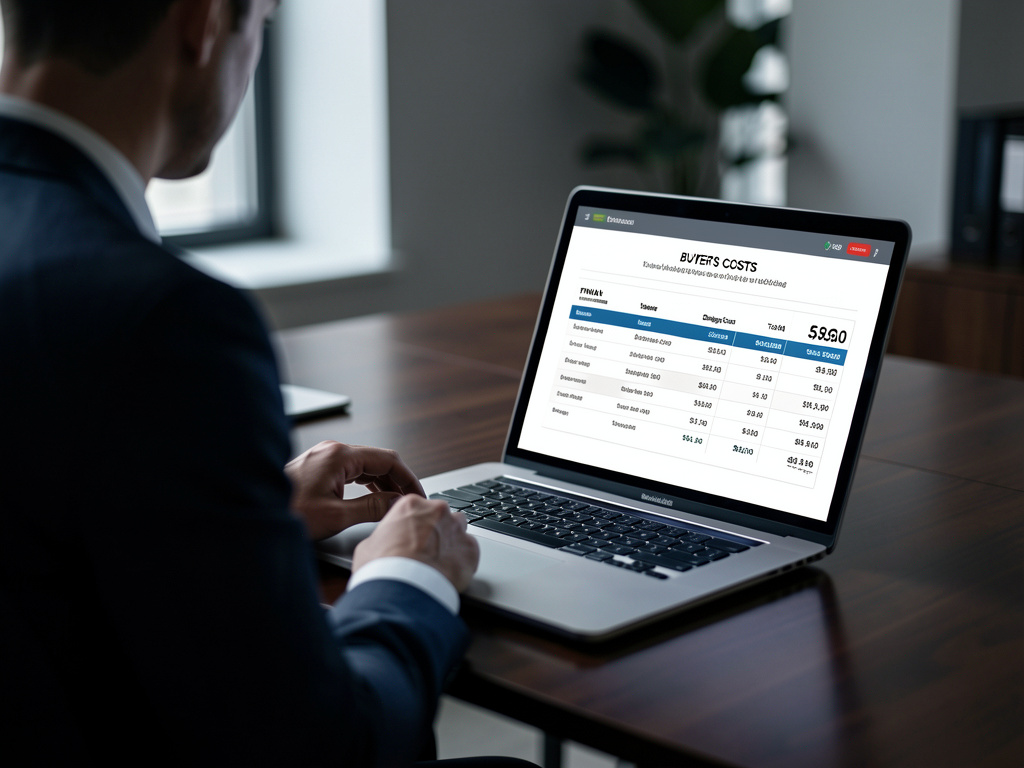
How to Communicate the Final Cost to the Buyer
How to Communicate the Final Cost of an International Order to the Buyer
International trade requires sellers to provide not only quality products and reliable logistics but also clear communication with buyers. One of the most important questions is how to formulate and convey information about the total amount the buyer will have to pay. The product price, shipping costs, payment system fees, customs duties, taxes, and additional charges can vary significantly depending on the destination country. If the seller only communicates the base price and other expenses arise after the order is placed, it often leads to distrust, order cancellations, and negative reviews.
Transparent pricing helps make international sales predictable. The buyer should understand what amounts are included in the final order cost, which payments are made to the seller, and which may be charged by the carrier, customs authority, or other intermediaries. The sooner the customer receives this information, the easier it is for them to make a purchasing decision.
Why It’s Important to Communicate the Final Order Cost in Advance
When purchasing within a single country, the customer typically sees the product price, shipping cost, and total amount on the checkout page. In international trade, the situation is more complex: the base price may be subject to import VAT, customs duties, customs clearance fees, transportation company commissions, and banking charges. If the buyer is unaware of potential payments in advance, they may mistakenly believe that the seller has intentionally hidden part of the cost.
A lack of information negatively impacts conversion rates and the store's reputation. A buyer may refuse to accept a package if they are presented with an additional bill upon delivery. As a result, the seller incurs costs for returns, reshipments, or disposal of the product. Furthermore, opaque pricing policies often lead to disputes, claims, and negative feedback.
Common Problems Arising from Incomplete Information
If the final cost of an international order is not explained in advance, several typical problems can arise:
The buyer misjudges their purchase budget;
The customer does not account for customs payments;
The order is delayed at the border due to missing documents;
The buyer refuses to pay additional fees;
The seller receives complaints due to "hidden" costs;
The number of cancellations and returns increases;
Trust in the brand and online store diminishes.
It is especially important to inform buyers about costs that are not directly controlled by the seller. For example, the amount of import duty may be determined by the legislation of the destination country, the product code, its value, origin, and method of import. The seller may not always be able to specify the exact amount in advance but must correctly explain how it is calculated.
The Principle of Full Clarity
The main rule of international trade is as follows: the buyer should see not only the product price but also all available information about additional costs. If the exact final amount cannot be determined before placing the order, this should be stated clearly, along with an explanation of the factors that influence it.
A good formulation should answer four questions:
What is the price of the product itself?
What is the shipping cost to the buyer's country?
Do taxes, duties, and customs clearance fees are included in the price?
What additional expenses might the buyer need to pay separately?
This structure helps avoid ambiguity and sets realistic expectations for the customer.
What Comprises the Final Cost of an International Order
The final cost of an order is not always a simple sum of the product price and shipping. Depending on the sales conditions, it may include several mandatory and additional components. The seller needs to determine in advance which expenses are included in the invoice and which are paid separately by the buyer.
Main Components of the Final Price
Typically, the final cost of an international order includes:
The price of one or more products;
Discounts, promo codes, and bonuses;
The cost of packaging;
The cost of international shipping;
Insurance for the shipment;
Payment processing fees;
Taxes;
Customs duties;
Customs clearance fees;
Commission for intermediaries or courier services;
Additional services from the carrier.
Not all of the listed expenses necessarily apply to every order. Their presence depends on the country of origin, destination country, type of goods, weight, dimensions, chosen carrier, and delivery conditions.
Formula for Calculating Total Cost
For internal use, the seller may apply the following basic formula:
Total order cost = product cost − discount + shipping + packaging + insurance + taxes + customs duties + additional fees.
However, in real international trade, the formula may differ. For example, if the seller operates under DDP terms, some taxes and customs duties may be included in the price upfront. If DAP or a similar scheme is used, the buyer may pay import charges themselves upon receipt of the goods.
It is important not just to show the final figure but to break it down. The buyer should understand what exactly they are paying the seller for and what charges may arise at later stages of delivery.
Example of Cost Breakdown
Let's say the buyer places an international order:
product — 120 euros;
discount — 10 euros;
packaging — 3 euros;
shipping — 25 euros;
insurance — 2 euros;
estimated taxes and customs duties — 18 euros.
In this case, the calculation may look as follows:
120 − 10 + 3 + 25 + 2 + 18 = 158 euros.
If customs duties are not included in the seller's invoice and are charged by the carrier upon delivery, the order should show two amounts:
amount payable to the seller — 140 euros;
possible charges in the destination country — approximately 18 euros.
This format is much clearer than a single price without explanations.
How to Properly Communicate Shipping Costs to the Buyer
Shipping cost is one of the main factors influencing the purchasing decision. In international shipping, the price may depend on weight, volume, destination country, urgency, shipping method, type of goods, and the need for additional services. Therefore, it is not sufficient to limit oneself to a general phrase like "shipping cost is calculated separately" if the buyer can receive more accurate information.
What Data Affects Shipping Price
When calculating international shipping, the following are taken into account:
actual weight of the package;
dimensional weight;
package dimensions;
destination country and region;
distance to the locality;
chosen shipping method;
delivery time;
need for courier delivery;
availability of insurance;
product characteristics;
packaging requirements;
possibility of delivery to the door or to a pickup point.
Sometimes the shipping cost is calculated based on the greater of the two metrics: actual or dimensional weight. If the seller does not account for this in advance, the final shipping price may turn out to be higher than expected.
How to Display Shipping in Product Card and Cart
Shipping information is an important part of the product card and the checkout process in an online store. The buyer should understand in advance what methods are available to receive the product, how much shipping will cost, the estimated delivery times, and whether they will be able to track the package. Clearly presenting this information helps build trust in the seller, reduces the number of inquiries to customer support, and lowers the likelihood of cart abandonment during checkout.
Displaying Shipping in Product Card
In the product card, it is recommended to place brief information about available shipping methods next to the product price, the "Add to Cart" button, or the feature selection block. This allows the buyer to assess not only the cost of the product itself but also any potential additional expenses before starting the checkout process.
If shipping is available to different countries, it is necessary to provide the option to select the destination country or region. After selecting a country, the system should automatically display available shipping methods, estimated times, and shipping costs whenever possible.
The buyer should be offered several shipping options:
Standard international shipping. Suitable for buyers who are willing to wait for a lower shipping cost. The estimated time may be 10–25 days.
Expedited shipping. Designed for buyers who need to receive their order faster than the standard timeframe. The estimated time is 5–10 days.
Express delivery. Implies priority processing and transportation of the shipment. The estimated time frame is 2–5 days, provided this timeframe is confirmed by the carrier's terms.
Courier delivery. Involves delivering the shipment directly to the buyer at the specified address. It is advisable to clarify whether courier delivery is included in the selected rate or charged separately.
Delivery to a pickup point. Allows the recipient to collect the package at a chosen pickup point, post office, or another accessible location.
Tracked delivery. Provides the ability to check the shipment status using a tracking number. It is necessary to confirm whether tracking is included in the base rate.
Delivery with extended insurance. Offers additional insurance coverage for the shipment up to an agreed amount. It is important to specify the insurance conditions, insured amount, possible exclusions, and the procedure for filing a claim in case of loss or damage to the goods.
The listed options do not necessarily have to be available simultaneously. The actual list depends on the destination country, product characteristics, carrier restrictions, and seller capabilities.
For each delivery method, it is necessary to specify the estimated time, cost, and availability of tracking. For example, next to the option "Standard international delivery," you could include the text: "10–25 days, from 18 euros, tracking included." For expedited delivery, you might use the wording: "5–10 days, from 35 euros, tracking included." For express delivery: "2–5 days, from 60 euros, tracking included."
These values are examples of interface formatting and not universal rates. They must be verified against the current rates of carriers and delivery geography before publication.
If the exact cost is not yet known, it is acceptable to use the wording "from 18 euros." However, the buyer should be informed about what factors influence the final amount: destination country, weight and dimensions of the package, quantity of goods, chosen shipping method, additional services, and applicable fees.
If the system has sufficient data for calculation, it is preferable to show the specific delivery cost for the selected address and order composition. This makes the final price clearer and helps avoid unexpected expenses during the purchase process.
How to display delivery in the cart
In the cart, it is necessary to provide more detailed information about delivery than on the product page. At this stage, the buyer has already selected the items and should be able to assess the total cost of the order before proceeding to payment.
It is recommended to include the following elements:
a field for selecting the delivery country and region;
a field for entering the postal code, if required for calculation;
a list of available delivery methods;
estimated delivery times;
the cost of each delivery method;
information about tracking availability;
the option to choose courier delivery or a pickup point, if such services are available;
the option to add additional insurance, if offered by the seller or carrier;
separate display of the cost of goods, delivery, discounts, taxes, and other applicable fees.
After changing the destination country, address, quantity of goods, or delivery method, the system should recalculate the order cost if the relevant parameters affect the rate.
It is important to separate the cost of goods from the cost of delivery. For example, if the goods cost 80 euros and the delivery by the selected method is 18 euros, the buyer should see the cost of goods — 80 euros, the cost of delivery — 18 euros, and the subtotal — 98 euros. If additional taxes, customs duties, or other mandatory expenses apply, they must be displayed according to the rules of sale and delivery to the respective country.
If any payments cannot be accurately calculated at the checkout stage, the buyer should be informed of this before confirming the order and, if possible, explain who will collect them and on what basis. It is essential to avoid wording that creates the impression that delivery is fully paid if additional mandatory expenses may be charged to the buyer later.
How to display estimated delivery times
The delivery time should be indicated in a clear and unambiguous format. It is preferable to specify a range of days, for example, "10–25 days," and clarify when the countdown begins.
In particular, it is important to distinguish between the seller's order processing time and the shipping time. If the seller requires two business days to prepare the shipment, and the shipping takes 10–25 days, the buyer should be informed that the total time to receive the order may exceed the shipping time itself.
It is also advisable to clarify whether the specified days are calendar days or business days. For international shipments, weekends, holidays, customs clearance, regional remoteness, and delays with the carrier may be significant.
If the timeframe is approximate, this should be clearly indicated. For example: “Estimated delivery time – 10–25 calendar days after the order is shipped. The actual time may depend on the destination country and customs procedures.”
If data from the carrier is available, a more accurate forecast for a specific address can be provided. If such data is not available, the seller should not promise the buyer a guaranteed delivery date.
What to Do When Carrier Rates Change
International rates may change depending on the cost of air transportation, seasonal load, route, weight and dimensions of the shipment, fuel surcharges, and the specific delivery service's operating conditions. Therefore, the seller must determine the method of calculating delivery costs in advance and establish it in the online store's policies.
It is recommended to use the following rule:
“The cost of international delivery is calculated at the time of order placement and depends on the destination country, weight and dimensions of the shipment, chosen shipping method, and additional services. Before confirming the order, the buyer is provided with information about the cost of the selected delivery method.”
If the carrier changes the rate after the order is placed, the seller should determine in advance who will bear the associated costs. It is advisable not to impose unexpected additional charges on the buyer without their consent.
If the initially calculated delivery cost can no longer be applied, the seller should contact the buyer, explain the reason for the change, and agree on further actions. Depending on the circumstances, this may involve maintaining the original price at the seller's expense, offering an alternative delivery method, or agreeing on a new cost with the buyer. If an agreement cannot be reached, further actions should comply with the terms of sale and applicable law.
To prevent such situations, it is recommended to use current carrier rates, regularly update the delivery cost calculations, and check the final amount before confirming the order.
Transparency of Delivery Conditions
All essential delivery conditions must be accessible to the buyer before payment is made. Information about costs, timelines, restrictions, tracking, and additional services should not be hidden in hard-to-find sections of the website.
It is advisable to create a separate “Delivery and Payment” page that details shipping methods, international delivery conditions, tracking procedures, insurance rules, potential customs fees, and actions to take in case of delays, loss, or damage to the package.
In the product card, brief information and a link to the full terms should be displayed, while the cart should show specific delivery parameters for the current order.
Thus, the product card helps the buyer to preliminarily assess available options, while the cart provides final or the most accurate information about the cost and conditions of receiving the order. This approach makes the purchasing process clearer, increases trust in the online store, and helps reduce the number of disputes related to delivery.
Customs Fees and Taxes: How to Explain Costs to the Buyer
Customs fees are one of the most complex topics in international trade. The buyer may not be aware of local legislation, the duty-free import threshold, duty rates, and the tax calculation procedure. The seller, in turn, may not be able to accurately determine the amount until customs procedures are completed.
To avoid misunderstandings, it is necessary to explain to the buyer what fees may arise, who charges them, and who is responsible for paying them.
What Fees May Arise When Importing
Depending on the destination country, the buyer may encounter the following expenses:
import customs duty;
value-added tax;
sales tax;
excise tax;
customs clearance fee;
broker's commission;
carrier's administrative fee;
storage fee at the temporary storage warehouse;
costs for additional document checks.
The amount of payments depends on the classification of the goods, their customs value, the country of origin, destination, and the applicable import regulations.
How to correctly indicate the possible amount of duties
If the seller cannot guarantee the exact amount of customs payments, it is not advisable to state them as a fixed sum. It is better to use clear wording:
Import taxes and customs duties are not included in the order total and may be charged in the destination country.
Or:
The amount of additional payments is determined by the customs authorities of the buyer's country and depends on the value, category, and quantity of goods.
If the seller has reliable calculations, they can provide an estimated range:
According to preliminary estimates, additional taxes and fees may amount to between 10% and 20% of the value of the goods. The exact amount is determined upon import.
The estimated calculation should be accompanied by a warning that the final decision is made by the customs service or authorized carrier.
What it means to include customs payments in the price
Different models of cost distribution are used in international trade. In one model, the seller arranges delivery to the destination country, while the buyer pays the import payments independently. In another model, the seller includes taxes and processing fees in the order total in advance.
It is important for the buyer to be informed:
whether customs payments are included in the displayed price;
who submits the documents;
who pays for the broker's services;
whether the carrier can request additional payment;
what will happen if the buyer refuses to pay the fees.
The phrase "all inclusive" cannot be used if some payments may still be charged to the recipient.
Transparent pricing in international trade
Transparent pricing is not just about publishing the price of the goods. It is a system where the buyer sees the structure of costs and understands the rules for forming the final price. This approach is especially important for foreign clients, as they already face currency risks, differences in taxes, and customs control specifics.
Key principles of transparent pricing
An effective pricing policy is based on the following principles:
Completeness of information. All known costs must be stated before payment.
Separation of mandatory and possible payments. The buyer should see which amounts are guaranteed to be included in the order and which depend on external factors.
Clear language. It is necessary to avoid complex terms without explanations.
Relevance of calculations. Delivery prices, taxes, and fees should be regularly updated.
Consistent display logic. Information should look the same on the website, in the cart, invoice, and confirmation email.
Warning about currency fluctuations. When paying in foreign currency, the final amount may depend on the bank's exchange rate.
No hidden fees. Mandatory payments cannot be added only at the last step of the checkout process.
How to properly structure pricing information
Information about the cost of goods should be presented as clearly, sequentially, and transparently as possible. The buyer should immediately see what makes up the final amount, which costs are already included in the price, and which may arise additionally when delivering the goods to the destination country.
It is optimal to specify the cost by individual components: the initial price of the goods, any discounts provided, the cost of packaging, delivery, and insurance, if applicable. At the end, the total amount payable to the seller should be indicated.
List all components of the price separately
Each cost element should be labeled with a clear name. This allows the buyer to verify the calculation and understand exactly what they are paying for.
For example, if the product costs 120 euros, the buyer is given a discount of 10 euros, packaging costs 3 euros, delivery is 25 euros, and insurance is 2 euros, the calculation can be presented as follows:
Cost of goods – 120 euros.
Discount – minus 10 euros.
Packaging – 3 euros.
Delivery – 25 euros.
Insurance – 2 euros.
The total amount payable to the seller is 140 euros.
The calculation must be arithmetically accurate, and all additional costs should only be included in the total amount if they are indeed charged by the seller or paid through them.
Clearly distinguish between product cost and additional charges
Special attention should be paid to expenses that are not included in the amount payable to the seller. These may include customs duties, import taxes, customs fees, and charges for processing the shipment by the carrier.
Such payments depend on the legislation of the destination country, the characteristics of the product, its cost, and the delivery conditions. Therefore, it cannot be asserted without sufficient grounds that they will necessarily arise or that their amount will be the same for all buyers.
If these expenses are not included in the price, it is essential to communicate this clearly before placing the order. The buyer should understand that the amount paid to the seller may differ from the total expenses incurred for acquiring and receiving the product.
Explain what the total amount means
The wording "Total amount due" should be accompanied by clarification on what specific expenses are covered by the stated amount.
For example, if it includes the product, packaging, delivery, and insurance, it should be stated that this is the total amount payable to the seller for the listed components. It should not be referred to as the final cost of receiving the product if the buyer may incur additional payments upon import.
This distinction is especially important in international trade, as the buyer may mistakenly assume that the price includes all expenses up to the moment of receiving the order.
Warn separately about possible charges in the destination country
After stating the total amount, it is advisable to provide a short and clear explanation. It should inform about possible additional expenses without creating the impression that these charges will necessarily be applied.
For example:
Some stores indicate a low product price, while the cost of shipping, handling, or processing is only shown at the end. This approach may temporarily increase the number of clicks, but it usually decreases conversion at the payment stage. The user feels misled and leaves the site.
Moreover, hidden charges negatively impact SEO and reputation. Buyers leave negative reviews, the number of returns increases, and customer support receives additional inquiries. Transparent pricing, on the other hand, helps attract a more motivated audience and reduces the number of disputes.
How to present order cost information on the website
Price information should be available not only in the store's policies but also directly during the checkout process. The buyer should not have to search for delivery terms in a separate section if key information is displayed next to the total amount.
What to include on the product page
On the product page, it is advisable to include:
the base price;
the currency of payment;
tax information;
available shipping countries;
estimated shipping cost;
conditions for free shipping;
possible customs charges;
restrictions on international shipping;
return information.
Example wording:
The product price is stated excluding international shipping. The shipping cost is calculated after selecting the destination country. Import taxes and customs duties may be charged separately in accordance with the legislation of the buyer's country.
What to show in the cart
In the cart, the buyer should see:
a list of products;
the quantity of each product;
the price per unit;
discount;
shipping cost;
insurance;
taxes, if calculated by the seller;
the total amount;
a separate notification about possible import charges.
If the exact shipping cost appears only after entering the address, this should be explained before filling out the form:
To calculate international shipping, please provide the country and postal code. The rate depends on the weight of the shipment and the chosen shipping method.
How to format the order confirmation
After payment, the buyer should receive an email that reiterates:
the order number;
the products;
the quantity;
the price;
the discount;
the shipping cost;
the total amount;
the payment method;
the delivery address;
the estimated delivery time;
information about customs charges;
contact details for customer support.
Reiterating the cost reduces the likelihood that the customer will forget the order terms or misunderstand the payment composition.
Communication Options for Engaging with Customers
It is essential to convey information to the client calmly, accurately, and without ambiguous promises. It is particularly important to avoid categorical statements if the seller does not control the amount of taxes or the decisions of customs authorities.
If the buyer pays customs fees
You can use the following wording:
The specified amount includes the cost of the goods and international shipping. Import duties, taxes, and fees that may be charged in the destination country are not included in this amount and are to be paid separately by the recipient.
If the seller includes additional fees
The following option is suitable:
The total cost includes the product, international shipping, calculated taxes, and customs clearance. No additional fees are expected upon receipt, except for expenses arising from the buyer providing incomplete or incorrect information.
If the amount is approximate
You can write:
> The preliminary calculation is based on current rates and provided data. The final cost may change upon clarification of weight, dimensions, delivery address, or requirements of the destination country.
If the shipping cost is calculated individually
The following phrase is appropriate:
The cost of international shipping is calculated individually after specifying the country, region, postal code, and chosen method of transportation.
If additional carrier fees may apply
It is important to warn:
The courier or postal service may charge a separate fee for customs clearance, storage, or document processing. The amount of such fees is determined by the carrier.
Buyer Expenses and Seller Responsibility
It is important for the buyer to understand not only the amount of expenses but also the distribution of responsibility. The seller is responsible for accurately describing the product, correctly stating the cost, preparing documents, and handing over the shipment to the carrier. However, they may not always control the decisions of customs authorities, changes in local taxes, or delays that occur after the package arrives in the destination country.
Seller Responsibilities
The seller must:
accurately describe the product;
state the correct cost;
properly prepare accompanying documents;
choose an agreed method of delivery;
inform about the payment conditions for taxes and duties;
provide tracking if available;
notify about possible restrictions;
not conceal mandatory expenses;
retain proof of shipment and payment.
What the Buyer Should Consider
The buyer, in turn, should:
check the import rules in their country;
provide an accurate address;
provide valid contact information;
timely pay the accrued fees;
receive the package within the specified timeframe;
consider possible bank fees;
check the currency of the charge;
familiarize themselves with the return conditions for international orders.
Store policies can outline the relevant provisions, but they must be written in clear language. Vague disclaimers do not replace proper customer information.
Common Mistakes When Communicating Final Costs
Even with detailed conditions, sellers often make mistakes that lead to disputes. Most issues are not related to the calculation itself, but to the fact that information is provided incompletely or too late.
Only Indicating the Product Price
If a low price is shown on the main screen, and shipping and taxes appear at the end of the checkout process, the buyer may perceive this as a hidden surcharge. It is better to display at least an approximate shipping cost or immediately indicate that it is calculated separately.
Using the Phrase "All Inclusive"
This wording should not be used if the buyer may additionally pay import taxes, duties, or broker fees. Instead, it is necessary to specifically list which expenses are included.
Missing Currency Indication
A price without a currency designation can be misunderstood. This is especially important for international buyers. The currency should be displayed next to each amount, not just in the general terms section.
Inaccurate Promises on Delivery Times
Delivery times may depend on customs, the carrier, and the region. Instead of guaranteeing "delivery in seven days," it is better to provide a range and possible reasons for delays.
Ignoring Bank Fees
When paying by card, the buyer's bank may apply conversion or additional fees. The seller may not always be able to include this in the final price but is required to inform about the possibility of such expenses.
Incorrect product description in documents
An incorrect product code, undervalued cost, or incomplete description can lead to delays, recalculation of payments, and fines. The documents must match the actual contents of the package.
Frequently Asked Questions
Is customs duty included in the final order cost?
This depends on the terms of sale and the chosen delivery model. If the seller pays the import costs in advance, they may be included in the final price. If a scheme is used where the recipient handles the import clearance themselves, the duty is paid separately.
Who pays for international shipping?
Typically, the buyer pays for shipping unless the store offers free shipping or includes the cost in the product price. The terms should be specified before placing the order.
Can I find out the exact amount of taxes in advance?
Not always. The exact amount depends on the legislation of the destination country, the product category, customs value, and decisions by authorized bodies. The seller can provide an estimated calculation but should not present it as a guaranteed amount.
Why does the shipping cost change after entering the address?
The price may depend on the region, postal code, distance to the locality, weight, and dimensions of the package. Therefore, the final rate is often calculated only after providing the full address.
What should I do if the buyer does not want to pay customs fees?
The conditions for refusal of receipt and returns should be specified in the store's policies in advance. If the package is returned due to the buyer's refusal to pay mandatory fees, the seller may retain costs if permitted by applicable rules and clearly communicated before the purchase.
Accurate information about the final cost of an international order is an important part of successful international trade. The buyer needs to be shown the product price, shipping cost, taxes, customs duties, and any potential additional fees in advance. If the exact amount cannot be determined before customs clearance, this should be clearly explained, outlining the factors that affect the final calculation.
Transparent pricing reduces the number of refusals, returns, and claims, helps build trust in the store, and improves the customer experience. The most effective approach is to provide a detailed breakdown of all payments, use clear wording, regularly update rates, and display costs at every stage of the checkout process.
The buyer should clearly understand how much they are paying the seller, what expenses may arise in the destination country, and who is responsible for covering them. The clearer this information is presented, the higher the likelihood of a successful purchase and long-term cooperation.