

 RU
 UA
 DE
 FR
 ES
 CN
 SA
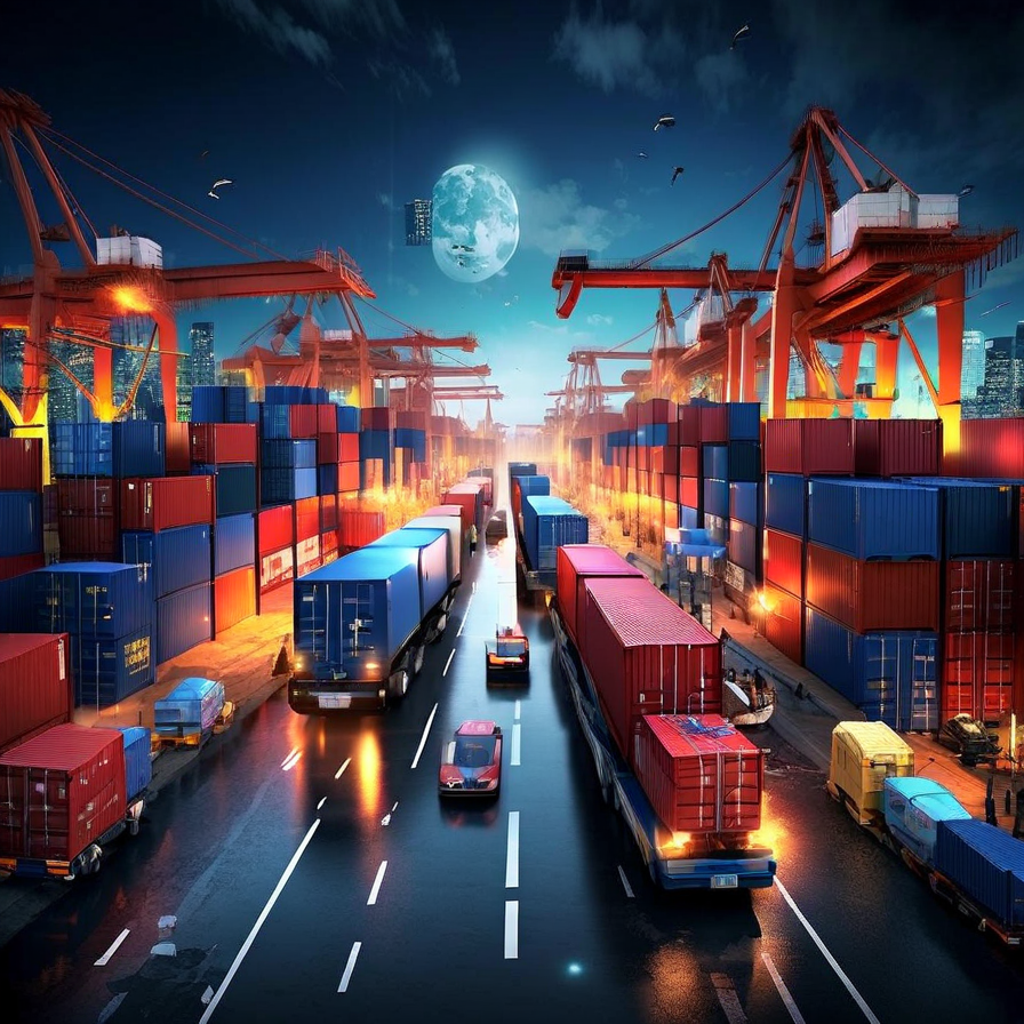
Logistics Strategy in Times of Crisis
How to Build a Resilient Logistics Strategy in Times of Crisis
Modern logistics is evolving in an environment of constant uncertainty. Economic crises, sanctions, disruptions in international trade, rising fuel prices, transportation shortages, and currency instability directly affect the movement of goods. Companies can no longer rely solely on established routes, a single carrier, or one warehouse. Even a minor external event can disrupt the usual supply chain, extend delivery times, and lead to financial losses.
Therefore, supply chain resilience is no longer an additional advantage but a necessary condition for stable business operations. A resilient logistics strategy must ensure that a company can quickly respond to changes, maintain access to critical resources, control costs, and uphold the necessary level of customer service.
This article will explore how to develop an effective logistics strategy in times of crisis, what tools to use for risk management, how to choose alternative routes, reduce dependence on fuel prices, and build reliable international logistics.
What is a Resilient Logistics Strategy
A resilient logistics strategy is a system of long-term decisions that helps a company maintain supply continuity and manage logistics processes amid changing external conditions. Unlike traditional planning, which is focused on a stable market, the modern approach involves multiple scenarios and pre-prepared action plans.
The main goal of such a strategy is not only to reduce transportation costs. It is more important to ensure a balance between price, speed, quality, safety, and flexibility. Sometimes the cheapest route turns out to be too risky, and savings on transportation can lead to significant losses due to cargo delays or production stoppages.
Supply chain resilience includes several key characteristics:
the ability to quickly detect threats;
the presence of alternative suppliers and carriers;
the ability to promptly change routes;
sufficient stock of critical goods;
digital tracking of cargo movement;
transparency of information at all stages;
financial readiness for increased expenses;
regular testing of crisis scenarios.
Particular importance is placed on the transition from reactive management to proactive management. A reactive approach means that a company starts to act only after a problem arises. A proactive model involves regular risk assessment, monitoring the external environment, and pre-prepared solutions.
For example, if a business relies on supplies through a single port, it is essential to identify other terminals in advance, assess their capacity, processing costs, and availability of ground transportation. If a particular supplier is the sole source of raw materials, it is advisable to find backup partners and verify their production capabilities.
Resilient logistics must also consider industry specifics. For perishable goods, speed and temperature control will be priorities. For industrial equipment, reliability, insurance, and proper documentation are more important. In e-commerce, delivery speed, warehouse availability, and the ability to quickly redistribute inventory are crucial.
Main Threats to Supply Chains
Economic Crisis and Decreased Demand
The economic crisis affects logistics in several ways. A decrease in consumer demand leads to a drop in order volumes, while rising borrowing costs limit investments in warehouses, transportation, and automation. At the same time, suppliers may raise prices, cut production, or tighten payment terms.
In such situations, companies often face excess inventory. Goods have already been purchased and are in warehouses, but sales are slowing down. This increases storage costs, freezes working capital, and raises the risk of product obsolescence.
On the other hand, excessive inventory reduction is also dangerous. If demand unexpectedly rebounds or supply disruptions occur, the business may not be able to fulfill orders on time. Therefore, during a crisis, it is necessary not just to reduce stock levels but to move towards more precise inventory management.
This can be achieved through:
segmentation of goods by importance;
demand forecasting based on multiple scenarios;
calculating safety stock;
regularly reviewing reorder points;
analyzing turnover;
Synchronization of purchases with actual sales.
It is useful to divide the assortment into categories. Critically important items should have an increased level of protection, even if they are not sold frequently. Products with low margins and unstable demand require more cautious planning. Conversely, the most popular items should be maintained at a level accessible to customers.
Sanctions and Trade Restrictions
Sanction restrictions can completely alter the usual scheme of international logistics. They may affect specific companies, banks, types of products, transport corridors, insurance services, and customs clearance rules. Additional complexities arise from changing document requirements and the need to verify the end recipient.
To reduce sanction risks, companies need to establish a system for regular checks of counterparties. It is important to analyze not only the direct supplier but also their owners, banks, carriers, brokers, and other participants in the transaction. A mistake at one stage can lead to cargo detention, payment blockage, or penalties.
The practice of managing sanction risks includes:
checking counterparties against current sanction lists;
controlling the origin of goods;
verifying commodity codes;
analyzing routes and transit countries;
preparing a complete set of accompanying documents;
consulting with lawyers and foreign economic activity specialists;
regularly updating contracts.
It is especially important to avoid a formal approach. Even if the supplier continues to operate, it is necessary to ensure that their bank, insurance company, and logistics partners can legally participate in the operation.
Rising Fuel Prices
Fuel prices remain one of the main factors affecting shipping costs. Increased expenses for diesel, gasoline, aviation fuel, and marine fuel are reflected in carrier rates, warehousing costs, and the final price of goods.
To reduce dependence on fuel fluctuations, companies can:
enter into long-term contracts with a rate adjustment formula;
compare several modes of transport;
consolidate shipments;
optimize the loading of trucks and containers;
reduce the number of empty runs;
use regional warehouses;
apply data-driven routing;
switch to more economical modes of transport.
In some cases, it may be more cost-effective to replace air transport with rail or sea delivery. However, such a decision requires analysis of timelines, damage risks, customs procedures, and customer requirements. Optimization should consider the total logistics cost, not just the transport price.
Risk Assessment in Logistics
Logistics Risk Map
Risk management should begin with their systematization. The company must understand which events can disrupt the supply chain, how likely they are to occur, and what consequences they may entail.
Logistics risks can be divided into several groups:
Transport Risks. Accidents, breakdowns, lack of transport, delays at borders, flight cancellations.
Supply Risks. Supplier bankruptcy, declining product quality, production deadline failures.
Financial Risks. Currency fluctuations, rising tariffs, insolvency of partners.
Regulatory Risks. Changes in legislation, customs rules, and sanction requirements.
Information Risks. IT system failures, data leaks, lack of up-to-date information about cargo.
Natural and Climate Risks. Floods, snowfalls, hurricanes, droughts, and extreme temperatures.
Reputational Risks. Delays, loss of goods, poor service quality, and customer dissatisfaction.
For each risk, it is necessary to assess the likelihood and potential damage. It is convenient to use a risk matrix, where events are categorized by levels: low, medium, high, and critical. Priority attention is given to threats that could halt production or completely block supplies.
Scenario Planning
One forecast is not enough, as crisis events develop unpredictably. Therefore, it is necessary to develop several scenarios:
baseline — the market develops without serious shocks;
negative — delivery times and costs increase;
Critical — the main route or supplier becomes unavailable;
Restorative — the company gradually returns to the standard model.
For each scenario, specific actions, responsible parties, acceptable budget, and decision-making timelines are defined. For example, if a delivery is delayed by more than seven days, a backup carrier is automatically activated. If a specific border crossing is closed, the cargo is redirected through an alternative route.
Scenario planning helps avoid chaotic decisions. In a crisis situation, employees do not waste time discussing obvious actions but follow a pre-agreed plan.
Diversification of Suppliers and Carriers
Why You Shouldn't Depend on a Single Partner
Dependence on a single supplier or carrier makes the supply chain vulnerable. Even a reliable partner may face financial difficulties, production accidents, sanctions, or resource shortages.
The optimal model involves:
a primary supplier;
a backup supplier;
a local source;
an alternative international channel.
Moreover, the backup partner should not only be specified in the contract but also be thoroughly vetted. It is advisable to conduct a test shipment in advance to assess product quality, timelines, documentation, and service level.
It is beneficial to distribute volumes among several suppliers. Complete concentration of purchases with one partner may be justified by a discount but creates significant systemic risk. A more resilient model is one where the majority of purchases remain with a verified supplier, while a portion of the volume is regularly directed to an alternative partner.
Contractual Protection Mechanisms
Contracts with suppliers and carriers should account for crisis situations. They must specify:
notification periods for delays;
responsibility for deadline violations;
procedures for changing costs;
force majeure conditions;
insurance requirements;
transport replacement rules;
document transfer procedures;
quality standards;
the possibility of temporary volume increases.
It makes sense to use performance indicators — KPIs. For example, on-time delivery percentage, number of damages, average processing time, document accuracy, and response speed to claims.
Alternative Routes and Modes of Transport
Multimodal Logistics
Multimodal transport involves using several modes of transport within a single chain. For example, cargo may be transported by truck to a railway terminal, then by rail to a port, and after maritime transport, delivered again by truck.
The main advantage of multimodal logistics is the ability to combine the strengths of different transport modes. Truck transport provides flexibility and "door-to-door" delivery. Rail transport is suitable for long distances and large volumes. Maritime transport is characterized by low costs for large shipments. Aviation offers maximum speed.
The choice of combination depends on:
the nature of the cargo;
acceptable delivery timeframe;
distance;
budget;
temperature and safety requirements;
terminal availability;
customs clearance specifics.
Multimodal schemes require a high level of coordination. It is necessary to synchronize schedules, documents, transloading, and insurance in advance. An error in one segment can affect the entire shipment.
Forming Alternative Routes
Alternative routes should be evaluated not only by distance. It is important to consider:
road or terminal capacity;
average border crossing time;
political stability of the region;
fuel availability;
quality of road infrastructure;
customs authority operations;
availability of temporary storage facilities;
repair and maintenance capabilities for transport.
Sometimes a longer route may be more advantageous if it offers stable timelines and fewer unforeseen delays. For critical cargo, parallel delivery channels can be used to avoid dependence on a single direction.
Digitalization and Transparency in Logistics
Transportation Management Systems
Digital tools help monitor cargo movement and respond more quickly to deviations. A transportation management system allows for comparing carrier offers, planning loads, tracking documents, and analyzing actual expenses.
The main technologies include:
TMS for transportation management;
WMS for warehouse management;
ERP for integrating purchasing, sales, and finance;
GPS monitoring;
electronic document flow;
demand forecasting systems;
analytical dashboards and reports;
temperature and humidity sensors.
Digitalization is especially important in international logistics, where cargo passes through multiple countries and participants. A company must see not only the location of the goods but also the customs clearance status, availability of documents, estimated arrival time, and potential deviations.
Analytics and Artificial Intelligence
Analytical systems allow for identifying patterns and predicting problematic situations. For example, based on historical data, one can determine which routes are frequently delayed, which suppliers miss deadlines, and during which periods demand increases.
Artificial intelligence is used for:
forecasting order volumes;
optimizing routes;
calculating safety stock;
detecting anomalies;
selecting carriers;
assessing the likelihood of delays;
modeling various scenarios.
However, digital tools are only effective when quality data is available. If the information in the system is incomplete, outdated, or contradictory, automated recommendations will be inaccurate. Therefore, companies need to establish unified data entry rules and regularly check their quality.
Inventory Management in Uncertainty
Safety Stock
Safety stock helps compensate for supplier delays, demand fluctuations, and unforeseen restrictions. However, excessive stock increases costs and ties up working capital.
The size of safety stock should be calculated considering:
demand fluctuations;
supplier stability;
average delivery time;
potential increases in lead time;
criticality of the product;
cost of stockouts;
storage conditions.
For expensive or perishable goods, it is advisable to use more accurate forecasting models. For inexpensive standard items, it may be acceptable to maintain a larger stock if the risk of stockouts outweighs the storage costs.
Regional Warehouses
Placing warehouses in multiple regions reduces dependence on a single transportation hub and shortens the distance to customers. A regional network allows for faster redistribution of goods and reduces the impact of route closures.
Before opening a warehouse, it is necessary to assess:
demand density;
rental costs;
transport availability;
proximity to customers;
infrastructure quality;
customs and tax specifics;
scalability potential.
Sometimes, it is more efficient to use third-party logistics for warehousing. A 3PL provider can offer space, personnel, equipment, and transportation without significant capital investment from the company.
Financial Stability in Logistics
The logistics strategy should be linked to financial planning. The company must understand how rising rates, fuel, insurance, and customs fees will affect the cost of goods.
To protect the budget, the following are used:
emergency fund for unforeseen expenses;
multiple currencies for transactions;
fixed rates for a certain period;
fuel surcharge formulas;
cargo insurance;
credit limits;
accounts receivable control;
regular review of the logistics budget.
It is important to consider the total cost of delivery. This includes not only the carrier's rate but also loading, storage, insurance, customs clearance, downtime, packaging, returns, and potential penalties.
Options should be compared based on the total cost of ownership of the logistics solution. A more expensive shipment may be more cost-effective if it reduces the risk of damage or ensures a reliable delivery time.
International Logistics and Customs Clearance
Documents and Compliance
International shipping requires special attention to documentation. Errors in the invoice, packing list, bill of lading, or certificate can lead to cargo delays.
It is necessary to monitor:
product description;
commodity code;
country of origin;
value;
weight and number of packages;
delivery terms;
information about the sender and recipient;
permitting documents;
labeling requirements.
Each country and product category may have specific rules. Therefore, it is important to work with experienced customs representatives and check for changes in legislation in advance.
Delivery Terms and Distribution of Responsibility
International Incoterms rules define who is responsible for transportation, insurance, export, and import procedures. Incorrect choice of delivery terms can increase costs and create legal disputes.
Before concluding a contract, it is necessary to determine:
who organizes the transportation;
who pays for insurance;
at what point the risk transfers;
who handles the export;
who bears the import costs;
where the cargo transfer takes place.
Clear distribution of responsibility helps avoid situations where participants have different understandings of their obligations.
Organization of Crisis Management
For sustainable logistics, it is necessary to create a special team or designate responsible employees. This team may include representatives from procurement, transportation, warehousing, finance, legal, sales, and IT.
The team should:
regularly analyze risks;
monitor market changes;
update backup scenarios;
control key performance indicators;
organize communication with partners;
make decisions in the event of incidents.
It is important to establish an escalation procedure in advance. Employees should understand who makes decisions in case of delays, whom to report issues to, and the timelines for notifying the client.
Key resilience indicators may include:
percentage of on-time deliveries;
average recovery time after a failure;
share of deliveries from a single supplier;
accuracy of demand forecasting;
level of safety stock;
number of emergency shipments;
logistics cost as a percentage of revenue;
percentage of damaged goods;
duration of downtimes.
Regular analysis of KPIs allows understanding whether the logistics strategy is indeed becoming more resilient.
Practical Plan for Building a Resilient Strategy
Supply Chain Audit
First, it is necessary to describe the current supply chain: suppliers, warehouses, carriers, routes, terminals, customers, and information systems. At this stage, critical dependencies and bottlenecks are identified.
Risk Assessment
For each element, the likelihood of failure and potential damage are determined. Special attention is paid to sole suppliers, overloaded terminals, unstable regions, and routes with high sanction burdens.
Alternative Development
The company forms backup routes, selects additional carriers, tests suppliers, and identifies locations for temporary storage of goods.
Inventory Calculation
For each product group, minimum, maximum, and safety levels are established. Parameters are regularly reviewed based on demand and delivery times.
Digital Integration
Information about orders, inventory, transportation, and documents is consolidated into a single system. This increases transparency and speeds up decision-making.
Preparation of Crisis Scenarios
Instructions are developed for cases of route stoppage, sanction restrictions, sharp fuel price increases, transport shortages, or supplier bankruptcies.
Testing
Plans need to be tested in practice. Simulation exercises, test deliveries through backup partners, and calculated budget stress tests can be conducted.
A resilient logistics strategy in times of crisis is built on flexibility, diversification, transparency, and readiness for multiple scenarios. Economic crises, sanctions, rising fuel prices, and instability in international trade make the traditional approach to supply insufficient.
Companies need to assess risks in advance, develop alternative routes, collaborate with multiple suppliers and carriers, maintain a reasonable insurance reserve, and implement digital control systems. Special attention should be paid to international logistics, customs clearance, counterparty verification, and financial protection.
The main principle of modern logistics is that the cheapest supply chain is not always the most efficient. It is much more important to create a system capable of continuing operations when external conditions change. This strategy helps reduce losses, maintain customer trust, recover more quickly from disruptions, and build a long-term competitive advantage.