

 RU
 UA
 DE
 FR
 ES
 CN
 SA
International Shipping to the Netherlands
Netherlands: International Shipping, Prices, Timelines, and Shipment Documentation
The Netherlands is considered one of the key logistics hubs in Europe. Its advantageous geographical location, developed transport infrastructure, major seaports, and Schiphol Airport make the country an important destination for businesses, online stores, manufacturers, and private shippers. International shipping to the Netherlands is in demand for transporting documents, parcels, commercial shipments, equipment, personal belongings, and goods for marketplaces.
Particularly significant is the delivery from CIS countries to the Netherlands. Shippers utilize international courier services such as DHL, DPD, and UPS, as well as specialized transport companies, express carriers, postal operators, and consolidated logistics solutions. The final cost and timelines depend on the country of origin, type of cargo, weight, dimensions, delivery method, customs clearance requirements, and the chosen service.
When shipping internationally, it is important to prepare address details, shipping labels, invoices, packing lists, and other customs documents in advance. Errors in product descriptions, HS codes, value, or contact information can lead to delays, additional inspections, and charges. Therefore, organizing delivery to the Netherlands requires a comprehensive approach: from selecting a carrier to tracking the shipment and receiving the cargo.
International Shipping to the Netherlands: Features of the Destination
International shipping to the Netherlands involves several sequential stages: order acceptance, packaging, labeling, preparation of transport documents, export clearance in the country of origin, transportation, import inspection, and handover to the recipient. Depending on the route, cargo can be delivered by road, air, rail, or combined transport.
For documents and small parcels, courier delivery is most often chosen. It allows for receipt of the shipment within a few business days and provides the ability to track the cargo throughout the entire route. For larger shipments and regular deliveries, consolidated road transport, air freight, container shipments, and logistics solutions with consolidation at warehouses are used.
The Netherlands is part of the European Union, so import control rules apply to shipments from non-EU countries. Information about the goods, their origin, value, purpose, and compliance with safety requirements may be checked at the border. For commercial cargo, an invoice and packing list are usually required, and for certain categories of goods—licenses, certificates, permits, or compliance documents.
What Goods are Shipped to the Netherlands
Regular deliveries to the Netherlands include:
business and personal documents;
product samples;
clothing, footwear, and accessories;
electronics and components;
spare parts and industrial equipment;
cosmetics and household goods;
advertising materials;
personal belongings during relocation;
commercial shipments for stores and companies.
Not all goods can be shipped via standard courier services. Restrictions may apply to batteries, liquids, medications, food products, plants, seeds, jewelry, weapons, hazardous materials, and certain types of equipment. It is essential to check the carrier's rules and the Netherlands' requirements before placing an order.
Shipping from CIS Countries to the Netherlands
Queries for CIS Netherlands delivery and shipping from CIS countries to the Netherlands cover shipments from Russia, Kazakhstan, Belarus, Armenia, Kyrgyzstan, Uzbekistan, Azerbaijan, Moldova, and other states in the region. Each country has its own conditions for international transport, a list of available routes, and requirements for export documents.
Due to changes in international trade, sanctions, and requirements for certain categories of goods, the availability of specific routes should be verified before shipping. In some cases, direct service may not be available, and transportation is carried out through transit countries or logistics hubs. This can increase delivery times, transportation costs, and the number of documents required.
Major Freight Companies for Shipping to the Netherlands
The choice of transport company depends on the sender's needs. For urgent documents, speed and reliable tracking are crucial. When sending commercial cargo, cost, the possibility of customs support, insurance, consolidation, and delivery to the recipient's warehouse become the priority.
In the international shipping market, DHL, DPD, and UPS are in high demand. Local courier services in the Netherlands, international freight forwarders, postal operators, and specialized companies handling cargo from CIS countries are also utilized. Each carrier has its own pricing structure, size restrictions, list of prohibited items, and rules for calculating dimensional weight.
DHL: International Express Delivery
DHL is considered one of the most well-known international delivery operators. The company offers services for documents, parcels, commercial shipments, and cargo of various purposes. DHL typically provides several service options: express delivery with priority processing and more economical solutions with extended transit times.
The advantages of DHL include:
a wide international network;
door-to-door delivery;
detailed tracking;
services for businesses and online stores;
customs clearance;
additional insurance options;
electronic shipment processing.
When arranging delivery through DHL, the sender specifies the exact description of the goods, quantity, value, country of origin, and destination of the cargo. A correct invoice is required for commercial shipments. If the information is incomplete, customs may request additional details.
DPD: Parcel and Goods Delivery
DPD specializes in the transportation of parcels and commercial shipments across Europe and to other regions. The service is often chosen by online stores, companies with regular deliveries, and individuals who need predictable delivery within the Netherlands.
DPD offers various options for sending shipments: courier delivery, delivery to a pickup point, address delivery, and services for corporate clients. For businesses, integration with online stores, label printing, automatic invoice creation, and notifying recipients about the status of their parcels are important.
The delivery time for DPD depends on the country of origin and the chosen route. Within Europe, transportation often takes several working days, while shipments from CIS countries may take longer due to transit and customs control.
UPS: International Shipments and Business Delivery
UPS is used for express delivery of documents, parcels, and cargo. The company offers services for private senders, online stores, manufacturers, and corporate clients. If needed, pickup from the sender's address, delivery to the recipient, insurance, and customs clearance can be arranged.
UPS is convenient for companies that require regular international logistics. The sender can connect electronic document management, create requests through a personal account, receive notifications, and track multiple shipments simultaneously.
When choosing UPS, DHL, or DPD, it is important to compare not only the base rate but also the complete set of expenses. Additional costs may include fuel surcharges, document processing, customs representation, storage, delivery to remote areas, and return of the shipment.
Shipping Costs to the Netherlands
The cost of international shipping to the Netherlands is determined individually. There is no universal rate for all shipments, as the price depends on many factors. The main parameters are actual and dimensional weight, package dimensions, country of origin, type of cargo, urgency, and chosen carrier.
For light documents and small parcels, a weight category rate is usually applied. If the box is large but light, the carrier may use dimensional weight. This is calculated using a special formula that takes into account the length, width, and height of the package. As a result, the cost may be determined by the calculated weight rather than the actual weight.
Factors Affecting Shipping Costs
The cost of delivery is influenced by:
country of origin;
pickup city;
recipient's address;
actual weight;
dimensional weight;
package dimensions;
product category;
declared value;
urgency;
shipping method;
need for courier pickup;
customs clearance;
insurance;
additional services.
In some cases, surcharges for oversized items, hazardous materials, remote areas, redelivery, or address changes may be added to the rate. If the recipient cannot accept the parcel, it may be redirected to a pickup point or a temporary storage facility.
Customs Duties and Additional Expenses
When importing goods into the Netherlands, customs duties, VAT, and processing fees may apply. The amount of these payments depends on the type of goods, their customs value, country of origin, and current regulations. Sometimes the recipient pays the fees, while other times the sender covers them in advance as part of the delivery terms.
It is important to distinguish between transportation costs and import costs. The courier service rate does not always include taxes and duties. Before placing an order, it is advisable to clarify who will pay the customs expenses and how the carrier will invoice them.
For businesses, it is also important to consider the Incoterms conditions. For example, under certain conditions, the seller pays for delivery to a specific point, but the buyer bears the import payments. Under other options, the seller organizes transportation and assumes almost all costs until the goods are handed over.
Delivery Times from CIS Countries to the Netherlands
The time for international delivery depends on the route, mode of transport, logistics network load, and customs clearance speed. Express shipments are usually delivered faster but are more expensive. Economical transportation takes longer but is suitable for goods that do not require urgent delivery.
Typically, courier delivery of documents can take from several working days to one or two weeks. Packages and small commercial shipments often take longer to deliver. Consolidated road transport can take several weeks, especially if the cargo passes through transit warehouses.
Reasons for Delays
Even with the correct route, delivery may be delayed for the following reasons:
incomplete product description;
absence of an invoice;
address error;
weight discrepancy;
need for additional inspection;
seasonal load;
weather conditions;
restrictions on certain routes;
delay in customs payment;
absence of the recipient;
incorrect phone number or email.
To reduce the likelihood of delays, it is essential to prepare documents in advance, use reliable packaging, and carefully check the recipient's details. For commercial shipments, it is advisable to involve a foreign trade specialist or customs broker.
Shipping Labels for Deliveries to the Netherlands
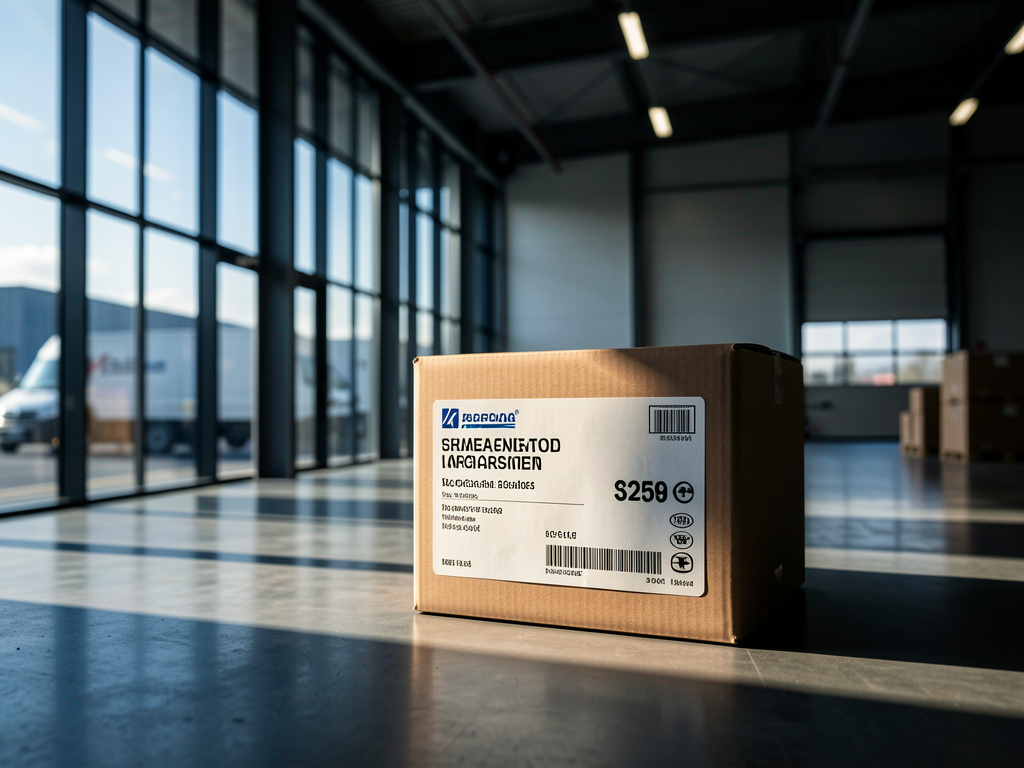
A shipping label is one of the main documents that helps the carrier identify the package and direct it along the correct route. The label includes the sender's and recipient's information, barcode, tracking number, weight, delivery service, and sometimes additional information about the contents.
The label is created through the carrier's website or personal account. After filling out the application, the document is usually generated automatically in PDF format. It must be printed on a regular printer or thermal printer and securely attached to the package.
Requirements for the Shipping Label
The label must clearly display:
the name or title of the recipient;
full address in the Netherlands;
postal code and city;
country of destination;
phone number;
email;
barcode;
tracking number;
sender information;
special markings if necessary.
The label should not be affixed to the seam of the box, a heavily curved surface, or a place where it may be covered by tape. Old stickers and barcodes should be removed to prevent erroneous scanning. If there are multiple address labels on the box, the carrier may send the shipment for additional inspection.
Packaging and Marking
The packaging must correspond to the nature of the cargo. Fragile items should be placed in protective material, voids filled with cushioning filler, and the box sealed with strong tape. Reinforced containers are used for heavy cargo. Liquids are transported in sealed containers with additional leak protection.
If the package contains multiple items, each item receives its own marking. The transport documents must indicate the total number of boxes and the distribution of contents. Incorrect marking can lead to the loss of part of the shipment or delays at the sorting center.
Customs Documents for Delivery to the Netherlands
Customs documents confirm the contents, value, and origin of the goods. Proper completion of these documents is necessary for the cargo to pass inspection without unnecessary delays. The composition of the documents depends on the type of shipment, its value, destination, and country of origin.
For a standard commercial shipment, a commercial invoice, packing list, transport waybill, and documents confirming the value are usually required. Certain goods may require certificates, declarations of conformity, permits, licenses, veterinary or phytosanitary documents.
Invoice
The invoice contains essential information about the transaction and the goods. It includes:
details of the seller and buyer;
a description of each item;
quantity;
price per unit;
total cost;
currency;
country of origin;
weight;
delivery terms;
purpose of the shipment;
product code if necessary.
The description should be specific. Phrases like "gift," "samples," or "personal items" without further explanation may raise questions with customs. It is better to specify the actual name and purpose of the goods.
Packing List
The packing list contains information on how the goods are distributed across boxes or pallets. The document specifies the number of packages, gross and net weight, packaging dimensions, a list of contents, and the number of each box.
The packing list is especially important for multi-package shipments and commercial batches. It allows the carrier and customs authorities to quickly match the documents with the actual cargo.
Additional Documents
Depending on the category of the shipment, the following may be required:
certificate of origin;
declaration of conformity;
export declaration;
license;
import permit;
sanitary conclusion;
veterinary certificate;
documents for branded goods;
proof of payment;
contract or order.
Documents must be accurate and consistent with each other. Discrepancies in weight, quantity, value, or description of the goods may lead to additional checks.
Tracking International Delivery
Tracking a shipment allows you to monitor its movement from the moment it is handed over to the carrier until it is delivered in the Netherlands. After creating the waybill, the sender receives a unique tracking number. This number can be used to check the status on the official website of DHL, DPD, UPS, or another operator.
Status updates may indicate label creation, package acceptance, arrival at the sorting terminal, export clearance, departure from the country, arrival at the transit center, import processing, and handover to the courier.
Why the Status May Not Update for a Long Time
The lack of updates does not always indicate a problem. On international routes, information may not change for several days if the package is in transit between terminals or waiting to be loaded onto the next transport. Delays in status updates can also occur when transferring the shipment between partners.
If the status does not change significantly longer than the stated timeframe, you should contact the carrier's customer service. Typically, you will need the shipment number, sender's details, recipient information, and a description of the contents for the inquiry.
Notifications for Sender and Recipient
Many services offer notifications via email or SMS. The recipient can learn the estimated delivery date, choose another day, change the address, or redirect the package to a pickup point if such an option is available.
To ensure notifications work correctly, it is essential to provide valid phone and email addresses. Errors in contact information can complicate delivery arrangements and lead to the return of the shipment.
How to Choose a Delivery Method to the Netherlands
Choosing a carrier should start with analyzing the characteristics of the cargo. An express service is suitable for documents. For standard packages, you can compare DHL, DPD, and UPS based on price, delivery time, and pickup conditions. For large commercial shipments, it is reasonable to consider consolidated shipping or working through a freight forwarder.
It is necessary to determine in advance:
what exactly is being sent;
how many packages are in the shipment;
total and dimensional weight;
how urgently delivery is needed;
who will pay the import charges;
whether insurance is needed;
whether door-to-door delivery is required;
whether additional documents are necessary.
Practical Recommendations
Before arranging a shipment, it is advisable to:
check the carrier's restrictions;
weigh and measure the packaging;
compare several rates;
clarify the complete list of charges;
prepare the invoice;
verify the recipient's address;
remove old labels;
take a photo of the packaged cargo;
save the tracking number;
notify the recipient about potential customs fees.
If deliveries are made regularly, it is beneficial for businesses to enter into a contract with a logistics company. Corporate rates, integration with online stores, automatic label printing, and centralized tracking help reduce costs and minimize errors.
International shipping to the Netherlands from CIS countries requires careful preparation and the right choice of carrier. DHL, DPD, and UPS offer courier solutions for documents, parcels, and commercial cargo, but the terms, prices, and timelines differ for each company. The final cost is influenced by weight, dimensions, country of origin, urgency, product category, customs clearance, and additional services.
For hassle-free transportation, it is essential to properly package the cargo, prepare the shipping label, create an invoice and packing list, provide an accurate description of the goods, and check the import restrictions for the Netherlands. It is important to consider that the carrier's rate may not include VAT, duties, and other import fees.
Tracking by tracking number allows you to monitor the parcel's route and respond promptly to delays. For regular shipments, it is worth considering collaboration with a professional transport company or freight forwarder. This approach helps optimize prices, reduce delivery times, simplify customs procedures, and ensure reliable international logistics for CIS Netherlands delivery.