

 RU
 UA
 DE
 FR
 ES
 CN
 SA
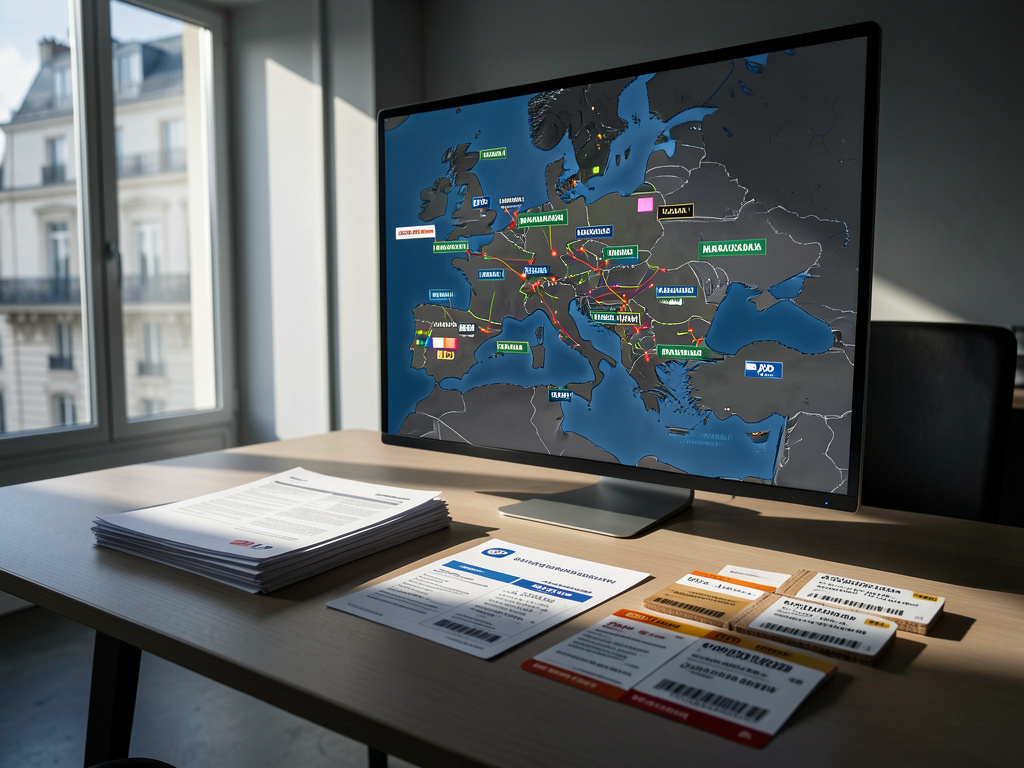
International Shipping to France from CIS Countries
France: International Shipping, Freight Transport, and Parcel Delivery from CIS Countries
France remains one of the key destinations for international trade, private shipments, and commercial logistics. The country regularly receives documents, personal belongings, online orders, product samples, equipment, spare parts, and consolidated cargo. Shipping to France is in demand among residents and companies from Kazakhstan, Uzbekistan, Armenia, and other CIS countries.
When choosing a carrier, it is important to consider not only the shipping cost but also the delivery times, mode of transport, documentation requirements, the need for customs documents, tracking options, and the list of prohibited items. For small parcels, courier services like DHL, DPD, and UPS are suitable, while larger shipments often opt for road, air, or multimodal transport.
International Shipping to France: Key Features
International shipping to France involves several sequential stages: acceptance of the shipment, content verification, packaging, preparation of accompanying documents, transfer to the carrier, passing export and import controls, and then delivery to the recipient. Even a small parcel must comply with the requirements of the country of origin, France, and the chosen transport company.
As France is part of the European Union, accurate product description, value, country of origin, and HS code are crucial for commercial shipments. If the information is inaccurate, the cargo may be delayed at customs, and the recipient may need to provide additional information or pay incurred fees.
For private shipments, the rules are usually simpler, but this does not mean a complete absence of formalities. The declaration must list all contents: clothing, footwear, books, electronics, cosmetics, gifts, and other items. General terms like “personal belongings” or “goods” cannot be used, as customs requires a clear description of each type of item.
The following transport options are used for international shipping to France:
express courier delivery;
air freight;
road delivery;
consolidated cargo;
document delivery;
transportation of commercial shipments;
multimodal logistics using several modes of transport.
The choice of option depends on the weight, size, urgency, and nature of the shipment. Documents and small parcels are usually more cost-effective to send via express services. Large shipments can be delivered by road transport or as part of consolidated cargo. If a minimal delivery time is required, air freight is used, but its cost is typically higher.
Freight Transport to France from CIS Countries
Freight transport to France from CIS countries is in demand among manufacturers, online stores, exporters, distributors, and private clients. Regular routes are established from Kazakhstan, Uzbekistan, Armenia, Kyrgyzstan, Tajikistan, and other countries in the region.
Shipping Cargo from Kazakhstan to France
Shipping cargo from Kazakhstan to France can be done by air, road, rail, or a combined scheme. Air transport is suitable for urgent and relatively light cargo. Consolidated road transport is often chosen for shipments that do not require immediate delivery.
From Kazakhstan to France, the following items are transported:
documents and contracts;
clothing and textiles;
industrial equipment;
spare parts;
product samples;
souvenirs;
goods for marketplaces;
personal belongings;
commercial shipments.
Before handing over the cargo to the carrier, it is necessary to check whether the goods fall under the category of restricted or prohibited items. Special attention is paid to batteries, liquids, pharmaceuticals, food products, cosmetics, and items made from animal materials.
Shipping Parcels from Uzbekistan to France
Shipping parcels from Uzbekistan to France usually begins with determining the actual weight and dimensions of the shipment. When calculating the rate, carriers may consider volumetric weight, so a light but large box can sometimes cost more than a heavy parcel of smaller size.
For shipments from Uzbekistan, information about the sender and recipient, the exact address in France, phone number, email, and a detailed description of the contents will be required. For commercial goods, an invoice, packing list, and documents confirming the value may be necessary.
It is especially important to securely package fragile items. Glass, ceramics, electronics, and decorative items should be wrapped in cushioning material and placed in a sturdy box with additional internal securing.
Shipping packages from Armenia to France
Armenia has stable logistics connections with European countries, so shipping packages from Armenia to France is carried out by courier and specialized transport companies. Expedited shipping can be used for documents, while consolidated cargo is available for larger shipments.
When sending from Armenia to France, it is essential to consider the requirements for products, medications, cosmetics, and handmade items. Even if the goods are intended for personal use, they must be declared. Concealing contents or undervaluing the items may lead to delays and additional inspections.
Major international shipping companies: DHL, DPD, and UPS
There are dozens of carriers in the international logistics market, but the most well-known brands for shipping to France remain DHL, DPD, and UPS. Each company has its own pricing structure, size and weight restrictions, pickup options, and delivery times.
DHL France international shipping
DHL offers a wide range of international services: express delivery of documents, packages, and commercial cargo. The company operates in many countries and provides online tracking tools.
Advantages of DHL:
extensive international network;
option for urgent air delivery;
courier pickup of shipments;
detailed tracking;
business services;
assistance with export documents;
door-to-door delivery.
The cost of DHL services depends on the country of origin, weight, dimensions, urgency, and type of contents. Additional fees may apply for certain categories of goods: for remote areas, non-standard sizes, customs clearance, or storage.
DPD France delivery
DPD specializes in the delivery of packages and cargo, particularly in the European direction. The service offers delivery to addresses, pickup points, and partner locations, if such options are available for the specific route.
DPD is often chosen by online stores and for regular shipments. For businesses, integrations with accounting systems, automatic label creation, and bulk shipment transfers may be available.
DPD delivery times depend on the route and mode of transport. In standard mode, delivery may take longer than express services, but the rates are often more affordable.
UPS international shipping to France
UPS provides international delivery of documents, packages, and commercial cargo. The company offers several levels of urgency: from expedited delivery to more economical services.
UPS is suitable for senders who value:
predictable delivery times;
courier delivery;
professional customs clearance;
shipment status tracking;
business services;
delivery of heavy and oversized cargo.
Before arranging a shipment, it is necessary to check whether the chosen service accepts the specific type of goods. Some items may only be transported under special conditions or may be completely excluded from the standard network.
Shipping costs to France
The price of international shipping to France is determined individually. There is no universal rate for all packages, as the final cost is influenced by several parameters.
Main factors for calculation:
country of origin;
weight and dimensions of the box;
volumetric weight;
type of shipment;
chosen company;
speed of transport;
recipient's address;
need for courier pickup;
availability of additional services;
customs duties and taxes.
To calculate volumetric weight, the carrier uses a formula where the length, width, and height of the packaging are multiplied together and divided by a set factor. If the volumetric weight is higher than the actual weight, the rate is calculated based on the higher value.
Economical shipping is usually suitable for non-urgent packages and consolidated cargo. Express shipping is more expensive but allows for quicker delivery. For commercial clients, contractual rates may apply, depending on the monthly volume of shipments.
In addition to the base price, there may sometimes be charges for:
fuel surcharge;
remote address fee;
payment for additional space;
customs clearance;
storage;
return of shipment;
address correction;
handling of non-standard packaging;
broker services.
To determine the exact cost, you need to provide the carrier or logistics operator with accurate cargo details. A preliminary estimate based solely on weight may be inaccurate.
Delivery Times to France
Delivery time depends on the distance, chosen mode of transport, customs processing, season, and specific route. Documents and small packages are delivered fastest by express air freight. Consolidated and economical shipments take longer.
The following approximate delivery times are typically applied:
express documents — from a few business days;
small air parcels — from a few business days to two weeks;
standard courier shipments — from a few days to several weeks;
road consolidated cargo — from one to several weeks;
large commercial shipments — on an individual schedule.
The stated times are approximate. They may be affected by public holidays, high sorting center workloads, address errors, recipient absence, document checks, and customs control.
If the shipment has a critically important delivery deadline, it is recommended to clarify the guarantees for the chosen rate with the carrier in advance. Some services indicate an estimated time but do not guarantee a specific delivery date.
Shipping Labels to France
The label is an important part of international shipments. It contains address details, a barcode, tracking number, carrier information, and sometimes information about special shipping conditions.
The label usually includes:
recipient's first and last name;
organization name;
street and house number;
apartment or office;
postal code;
city;
country;
phone;
email;
sender's details;
shipment number.
It is recommended to write the address to France in Latin letters. The country name is best indicated as France or FRANCE. Do not cover the barcode with tape that has creases, stick it on the fold of the box, or place several incompatible labels nearby.
If there are old stickers on the box, they should be removed or completely covered. Multiple different barcodes can lead to sorting errors. The label should be affixed to a flat surface, protecting it from moisture and abrasion.
For commercial cargo, additional markings may be required: "Fragile," "This side up," hazardous material designation, temperature control, or package number. However, such markings do not replace compliance with carrier requirements.
Customs Documents for Delivery to France
Customs documents confirm the contents, value, and purpose of the shipment. The set of documents depends on whether the shipment is personal, commercial, gift, or return.
For a regular parcel, the following may be required:
transportation invoice;
customs declaration;
detailed description of contents;
value of each item;
country of origin;
sender and recipient details;
contact information;
proof of value if necessary.
For commercial delivery, the following additional documents are used:
commercial invoice;
packing list;
contract or order;
certificates;
permitting documents;
export declaration;
documents of origin;
information on the HS code.
The invoice should include the seller, buyer, description of goods, quantity, price, currency, delivery terms, and total value. The description should be specific: for example, "cotton men's shirt," not just "clothing."
If the customs authority considers the value to be inaccurate, it may request proof of payment or determine the customs value independently. This can increase processing time.
Tracking International Shipments
Tracking allows you to monitor the package's journey from the moment it is handed over to the carrier until it is delivered to the recipient. After creating the invoice, a unique tracking number is assigned to the sender.
Status updates may indicate:
shipment data created;
package accepted;
The shipment has left the shipping point;
The cargo has arrived at the sorting center;
Customs clearance is in progress;
Additional information is required;
The shipment has been handed over to the courier;
An attempt to deliver has been made;
The package has been delivered;
The shipment is being returned to the sender.
It is best to check the status on the official website of DHL, DPD, UPS, or another chosen carrier. Third-party services may show information with delays.
If the status does not change for several days, it does not always mean that the package is lost. The shipment may be awaiting processing at customs, moving between terminals, or undergoing consolidation. If there are no updates for an extended period, you should contact customer support, providing the tracking number and sender's details.
What is prohibited to send to France
Before sending, it is necessary to familiarize yourself with the carrier's rules and France's requirements. The list of prohibited items may vary among different companies, so one should not rely solely on general recommendations.
Common prohibited or restricted items include:
narcotic substances;
weapons and ammunition;
explosive and flammable materials;
toxic chemicals;
radioactive materials;
counterfeit goods;
live animals without special permits;
certain plants and seeds;
perishable food products;
cash and securities;
precious stones and metals without prior approval;
medications requiring special conditions;
aerosols;
liquids in non-leak-proof packaging;
lithium batteries that violate transport regulations.
Some items may only be allowed with the presence of certificates, licenses, proper packaging, and prior approval. For example, batteries, cosmetics, perfumes, and medical devices often require special handling procedures.
Prohibited items should not be concealed among ordinary items or described inaccurately. If a violation is discovered, the cargo may be confiscated, returned to the sender, delayed, or handed over to the competent authorities.
How to properly prepare a package for shipment
Preparation begins with selecting an appropriate box. The packaging should match the weight and dimensions of the contents, be undamaged, and withstand transportation. A box that is too large increases the dimensional weight, while one that is too small raises the risk of damaging the contents.
Fragile items should be wrapped in bubble wrap, paper, or other cushioning materials. Empty spaces should be filled with filler to prevent items from moving inside. Liquids should be placed in leak-proof bags and additionally protected against leakage.
Before sealing the box, it is recommended to:
check the contents;
ensure the items comply with the carrier's rules;
include necessary documents;
take a photo of the packaging;
securely seal the box;
attach the address label;
remove old labels;
keep the tracking number and receipt.
For commercial cargo, it is important to agree on the packaging with the carrier in advance. Non-standard sizes, pallets, wooden containers, and heavy items may require additional conditions.
How to choose a carrier for delivery to France
When selecting a logistics company, do not focus solely on the lowest price. A cheap rate may not include courier pickup, customs clearance, door-to-door delivery, or compensation in case of loss.
It is advisable to compare:
the total cost;
estimated delivery time;
availability of tracking;
weight and size limits;
transport rules for the required item;
quality of support;
insurance conditions;
delivery options in France;
return procedures;
availability of customs support.
DHL or UPS are often chosen for urgent documents and small valuable packages. For standard shipments along European routes, DPD may be suitable. Large cargo is more economically transferred to specialized logistics operators who organize consolidated or multimodal transport.
Shipping packages and cargo to France from Kazakhstan, Uzbekistan, and Armenia requires careful preparation. The final result is influenced by the carrier, route, weight, dimensions, type of goods, quality of packaging, and accuracy of documents.
DHL, DPD, and UPS provide international solutions for documents, parcels, and commercial cargo. Before shipping, it's essential to calculate the cost, confirm the delivery times, prepare the label, fill out the customs declaration, and check if the contents fall under prohibited or restricted items.
An accurate description of the contents, correct address, secure packaging, and retained tracking number help reduce the risk of delays. If the shipment has a high value, complex composition, or commercial purpose, it's advisable to consult with the carrier or a customs specialist in advance.