

 RU
 UA
 DE
 FR
 ES
 CN
 SA
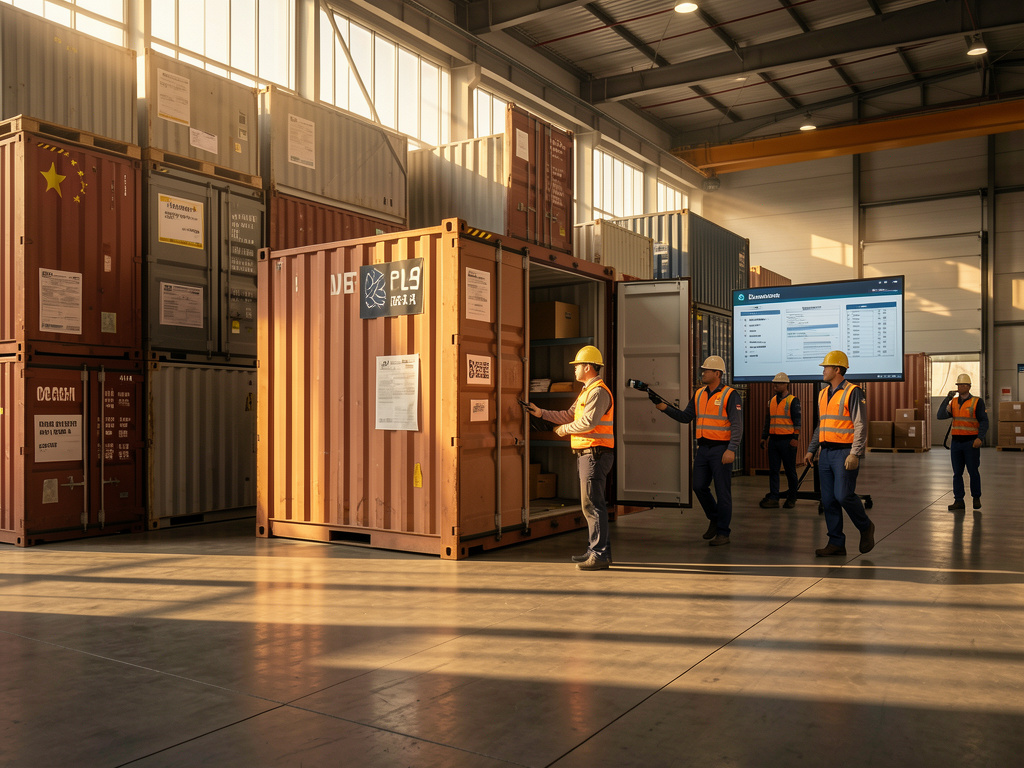
International Shipping Made Easy with Customs
International Shipping Made Easy: China — Europe — USA
International trade between China, Europe, and the USA continues to thrive, despite changes in legislation, increased regulation, and more complex logistics processes. Companies regularly import equipment, electronics, components, textiles, industrial products, furniture, auto parts, and other goods. However, the transportation of cargo is just one part of the task. It is equally important to properly prepare documents, determine the product code, choose the right route, complete customs clearance, and organize delivery to the final recipient.
Errors at any stage can lead to delays, additional costs, fines, and even seizure of cargo. This is why international logistics requires a systematic approach and the involvement of specialists who are well-versed in the nuances of shipping between China, Europe, and the USA. A customs broker, logistics company, and carrier must work in harmony, and the client needs to understand the main stages of the process.
Simplified customs clearance does not mean bypassing established rules. It involves the competent preparation of documents, correct classification of products, preliminary calculation of payments, and the use of legal procedures that allow for reduced cargo processing times. Professional support helps make international delivery predictable, and imports and exports safer for business.
Features of International Shipping Between China, Europe, and the USA
Shipping between China, Europe, and the USA is among the most sought-after routes in global logistics. They connect major manufacturing centers, distribution warehouses, seaports, airports, and land terminals. Each route has its own rules, restrictions, document requirements, and customs control features.
China is one of the world's leading manufacturers. Large shipments of goods, consolidated cargo, product samples, raw materials, and equipment are sent from this country to Europe and the USA. The European market often serves as the final delivery point, transit zone, or distribution center. The USA, in turn, has specific requirements for product safety, labeling, certification, and the processing of import operations.
Why the Standard Delivery Scheme Is Not Always Effective
In practice, it is not enough to simply order transportation from one country to another. It is necessary to determine in advance which mode of transport will be used, through which points the cargo will pass, where customs clearance will take place, and who will be responsible for preparing the declaration. Even a minor error in the invoice or packing list can delay the release of goods.
The following factors require special attention:
characteristics and purpose of the product;
country of origin;
HS code or corresponding tariff classification;
value of the goods and delivery terms;
availability of certificates and permits;
dimensions, weight, and packaging specifics;
labeling requirements;
need for temperature or special conditions;
existence of export or import restrictions.
If the cargo passes through several countries, transit rules must also be considered. Incorrect determination of the product's status can lead to the need for resubmitting documents or paying additional fees.
Main Types of International Delivery
Different transportation options are used for shipments between China, Europe, and the USA. Sea freight is suitable for large shipments and goods that do not require urgent delivery. It usually allows for lower shipping costs, but takes more time and is dependent on port schedules, weather conditions, and terminal congestion.
Air freight is chosen for urgent, expensive, light, or compact cargo. Airplanes significantly reduce delivery times, but the cost of this solution is higher. Additionally, there are strict requirements for packaging, safety, and contents.
Rail and road routes are utilized depending on the final destination, availability of transit corridors, and existing restrictions. For many companies, multimodal delivery becomes the optimal solution, using several modes of transport. For example, cargo may be shipped from China by sea, then processed at a European terminal, and delivered by road to the recipient's warehouse.
Simplified Customs Clearance for International Cargo
Customs clearance is a mandatory procedure in which government authorities verify the legality of goods moving across borders, their value, origin, composition, and compliance with legal requirements. Streamlining the process is achieved not by violating rules, but through prior preparation and professional organization of work.
The main task of a participant in foreign economic activity is to provide customs authorities with accurate and complete information. The more precisely the goods are described and the better the documents are coordinated, the lower the likelihood of delays and additional requests.
Preparing Documents for Customs
For international shipping, commercial, transport, and permit documents are usually required. The list of documents depends on the type of goods, the country of departure, the country of destination, and the chosen customs procedure.
The main documents include:
foreign trade contract;
commercial invoice;
packing list;
transportation waybill;
certificate of origin;
export declaration;
import declaration;
documents confirming payment;
specification of goods;
licenses and permits;
certificates of conformity;
product safety documents;
contract with a customs representative;
documents for packaging and labeling.
Information in all documents must match. The name of the goods, number of packages, weight, value, item numbers, and delivery terms should not differ between the invoice, packing list, and transportation waybill. Discrepancies can raise questions and lead to inspections.
Determining the Product Code
One of the most important stages is the correct classification of products. The product code affects the amount of customs duty, the need for certification, the presence of restrictions, and the procedure for clearance. The code cannot be chosen solely based on the general name of the item. It is necessary to consider the material, functional purpose, design, principle of operation, and technical specifications.
For example, an electronic device, an industrial module, and a household appliance may look similar but have different codes and import requirements. Therefore, it is advisable to prepare a technical description, photographs, catalogs, and instructions before shipping. The customs broker analyzes the product characteristics and helps select a justified code.
Preliminary Calculation of Payments
Before sending the cargo, it is important to calculate the expected expenses. These may include:
import duty;
value-added tax;
excise tax;
customs fees;
brokerage services;
storage costs;
inspection fees;
terminal services;
certification expenses;
storage fees in case of release delays.
A preliminary calculation allows for proper budget formation and helps avoid unexpected increases in the cost of goods. This is especially important for large shipments, expensive equipment, and regular deliveries.
The Customs Broker as a Key Participant in International Shipping
A customs broker is a specialist or organization that represents the interests of the importer or exporter when interacting with customs authorities. Their work helps reduce administrative burdens and minimize the risk of errors in declarations.
The broker does not replace the cargo owner but takes on a significant portion of the technical tasks. They check documents, analyze goods, prepare declarations, calculate payments, interact with inspectors, and track the status of release.
Tasks Performed by a Customs Broker
Professional support may include:
analysis of the foreign trade contract;
verification of the invoice and packing list;
determination of the product code;
assessment of customs value;
preparation of the declaration;
verification of permit documents;
consultations on labeling;
organization of inspections;
responses to customs inquiries;
control of payment of fees;
obtaining release decisions;
consultations on correcting information.
In some cases, the broker gets involved even before the deal is concluded. This allows for determining in advance whether a specific product can be imported, what documents will be required, and what restrictions apply in the destination country.
How to Choose a Reliable Broker
When choosing a customs representative, it is important to consider their experience specifically with your type of product and route. A specialist who is proficient in handling standard consumer goods may not have sufficient expertise regarding industrial equipment, medical products, chemical materials, or dual-use goods.
It is recommended to check:
the presence of official status and permits;
experience in the China — Europe — USA direction;
customer reviews;
knowledge of specific market features;
transparency of tariffs;
ability to handle disputed situations;
speed of feedback;
availability of an in-house logistics department;
willingness to work with consolidated and large cargoes.
A reliable broker does not promise the impossible and does not offer dubious methods to reduce payments. They explain legal options, warn about risks, and inform in advance about the necessary documents for processing.
International Cargo Delivery from China to Europe
The China-Europe route is widely used for the supply of goods, equipment, and components. International delivery can be carried out directly or through transit hubs. The choice of route depends on the destination country, urgency, cargo characteristics, and available budget.
Sea Freight from China to Europe
Sea transport is considered one of the most economical options for large shipments. The cargo is placed in a container and then shipped from a Chinese port to a European destination port. Further delivery can be made by road, rail, or inland water transport.
Advantages of sea freight:
relatively low cost;
ability to send large volumes;
a wide selection of containers;
an appropriate option for regular shipments;
convenience of consolidating groupage cargo.
Disadvantages include long transit times, dependence on vessel schedules, and potential delays at terminals. Therefore, when planning, it is necessary to consider not only the sailing time but also port processing, customs clearance, unloading, and the last mile.
Rail Delivery
Rail routes are often chosen as a compromise between the speed of air freight and the cost of sea delivery. They are suitable for goods that need to arrive faster but do not require air transport.
When organizing rail transport, the following are taken into account:
the route;
transshipment between rail systems;
container requirements;
transit documents;
regulations of the countries through which the cargo passes;
availability of free terminal capacities.
Multimodal Logistics
Multimodal delivery combines several modes of transport within a single logistics chain. The customer receives unified support, while the carrier coordinates the movement of cargo between terminals.
This scheme allows:
to adapt the route to the budget;
to deliver cargo to regions without direct communication;
to utilize the advantages of different transport modes;
to reduce dependence on a single logistics channel;
to organize delivery to a warehouse or production site.
It is important to clearly define responsibilities among participants in advance and determine who controls the documents at each stage.
International Delivery from China to the USA
Shipments from China to the USA require special preparation. American regulatory authorities pay close attention to product safety, accuracy of descriptions, country of origin, cost, and compliance with labeling requirements. Special permits and prior registration may be required for certain categories of products.
Features of American Imports
Before shipping cargo, it is necessary to check:
the admissibility of importing the product;
labeling requirements;
compliance with technical standards;
availability of certificates;
rules for specific product categories;
packaging requirements;
restrictions on brands and intellectual property;
the need to provide additional information;
the procedure for paying duties and taxes.
For some products, interaction with specialized agencies is required. This may apply to food products, cosmetics, medical devices, chemicals, children's goods, electronics, and safety-related products.
The Importance of Accurate Product Description
A general description like «parts», «equipment», or «electronics» may be insufficient. Customs authorities require specific information: name, model, composition, purpose, material, technical specifications, and country of origin.
The more detailed the description, the easier it is to confirm the accuracy of classification and value. In some cases, it is advisable to obtain consultation on the tariff code and product requirements in advance. This is especially relevant for products that may be subject to additional restrictions.
Export and Import: What Businesses Need to Consider
Import and export are interconnected but distinct processes. In export, the main focus is on the legality of the goods being shipped, the documentation from the country of origin, and the confirmation of product origin. In import, compliance with the destination country's requirements, value, classification, and the ability for the goods to circulate freely are checked.
Organizing Export Shipments
The exporter needs to:
check the right to export the goods;
prepare a foreign trade contract;
issue a commercial invoice;
create a packing list;
prepare an export declaration;
check licenses and permits;
organize packaging and labeling;
choose a carrier;
hand over documents to the broker;
monitor loading and dispatch.
If the export documentation is incorrectly prepared, the cargo may not leave the country of origin or may be delayed at the border.
Organizing Import Shipments
The importer should prepare in advance to:
check the requirements of the destination country;
determine the customs regime;
calculate payments;
prepare the necessary documents;
agree on delivery terms;
choose a broker;
determine the place of clearance;
organize acceptance;
check the possibility of delivery after release.
Incoterms conditions are also very important. They define who is responsible for transportation, insurance, export and import clearance, payment of expenses, and transfer of risks. Misunderstanding delivery terms often leads to conflicts and unforeseen costs.
Documents for International Transportation
Transportation documents confirm the content of the transaction, the characteristics of the cargo, and the legality of its movement. It is important not only to gather a complete set but also to ensure consistency of all information.
Commercial Documents
Commercial documentation includes the contract, invoice, specification, payment request, and proof of payment. The invoice specifies the seller, buyer, product description, quantity, price, currency, delivery terms, and total cost.
The invoice must be prepared in such a way that the customs authority can understand exactly what goods are being transported across the border. Vague wording that does not allow for product identification is unacceptable.
Transport Documents
Depending on the mode of delivery, the following are used:
bill of lading;
air waybill;
railway waybill;
road waybill;
multimodal transport document;
warehouse receipt;
cargo acceptance document.
The transport document contains information about the sender, recipient, carrier, route, number of packages, weight, and nature of the cargo.
Permitting Documents
For certain categories of products, certificates of conformity, declarations, sanitary conclusions, phytosanitary documents, licenses, and permits from relevant authorities are required. Their absence can lead to refusal of release or the need to return the goods.
Even before concluding a deal, it is essential to check what documents are required specifically for your products. Obtaining a certificate after the cargo arrives is not always possible and often leads to additional costs.
Seamless Logistics: Cargo Support at All Stages
Comprehensive support allows for the integration of transportation, customs clearance, warehouse processing, and delivery into a single system. The client receives one coordinator who oversees the entire process and timely informs about the cargo status.
Main Stages of Support
A professional logistics company typically performs the following actions:
studies the characteristics of the cargo;
checks the documents;
offers the optimal route;
calculates the cost;
negotiates the terms of transportation;
organizes the pickup of goods;
controls packaging and labeling;
ensures transportation;
tracks the passage through terminals;
provides documents to the customs broker;
assists with the documentation process;
organizes delivery after release;
confirms the transfer of cargo to the recipient.
This approach is especially beneficial for companies that do not have their own foreign economic activity department or regularly deal with shipments from different countries.
Tracking and Notification
Monitoring the status of cargo helps respond promptly to changes. The customer should receive information about arrival at the terminal, customs clearance, the need for additional documents, delays, and route changes.
Modern logistics operators use electronic tracking systems, personal accounts, and automated notifications. This makes international delivery more transparent and allows for better planning of warehouse, production, or store operations.
How to Reduce Risks and Costs in International Shipping
Cost savings in logistics should not be based on skipping documents or choosing dubious schemes. The main reserve for reducing costs is competent planning, consolidation, proper transport selection, and avoiding mistakes.
Practical Ways to Optimize
Cost reduction can be achieved through:
combining small batches into consolidated cargo;
pre-booking containers;
choosing suitable delivery conditions;
accurate calculation of weight and volume;
proper packaging;
route optimization;
using consolidation warehouses;
regular deliveries according to an agreed schedule;
preparation of permit documents;
checking customs classification;
cargo insurance;
working with a single responsible logistics operator.
It is important not to focus solely on the lowest shipping cost. A cheap route may turn out to be longer, involve additional transshipments, or increase the risk of damage to the goods. It is essential to assess the total cost of the logistics chain.
Cargo Insurance in International Shipping
Insurance helps protect businesses from the financial consequences of damage, loss, or destruction of goods. It is especially relevant for expensive equipment, fragile products, electronics, and large commercial shipments.
Before concluding an insurance contract, it is necessary to review the list of risks, exclusions, deductible amounts, the procedure for filing claims, and documents confirming the value of the cargo. The insured amount should correspond to the actual price of the goods and related shipping costs.
Common Mistakes in Import and Export
Errors in foreign economic activity often arise from insufficient preparation and misjudgment of responsibilities. Even experienced companies can face problems if requirements, routes, or characteristics of the shipped goods change.
Common mistakes include:
shipping cargo without a complete set of documents;
incorrect product code;
understated or unverified value;
discrepancies between the invoice and packing list;
lack of certificates;
incorrect labeling;
unagreed Incoterms conditions;
choosing an unsuitable mode of transport;
lack of insurance;
unverified carrier;
ignoring import restrictions;
lack of buffer time;
not accounting for storage and terminal handling costs.
To reduce the likelihood of problems, it is essential to check documents before shipment, not after the cargo arrives. The sooner an error is detected, the cheaper and faster it can be corrected.
International shipments between China, Europe, and the USA require not only the selection of transport but also comprehensive organization of all foreign trade procedures. Successful delivery depends on the accuracy of documents, proper classification of goods, compliance with the requirements of the countries of origin and destination, smart route selection, and constant monitoring.
A customs broker helps prepare the declaration, determine the product code, verify permits, and interact with regulatory authorities. The logistics company coordinates transportation, warehousing, transit, and delivery to the final recipient. The collaboration of these specialists allows for the organization of import and export without unnecessary delays and unforeseen expenses.
Simplified processing becomes possible when all stages are planned in advance: documents are prepared, the route is agreed upon, payments are calculated, and the responsibilities of the participants are distributed. Comprehensive cargo support makes international delivery more transparent, predictable, and safe for business.