

 RU
 UA
 DE
 FR
 ES
 CN
 SA
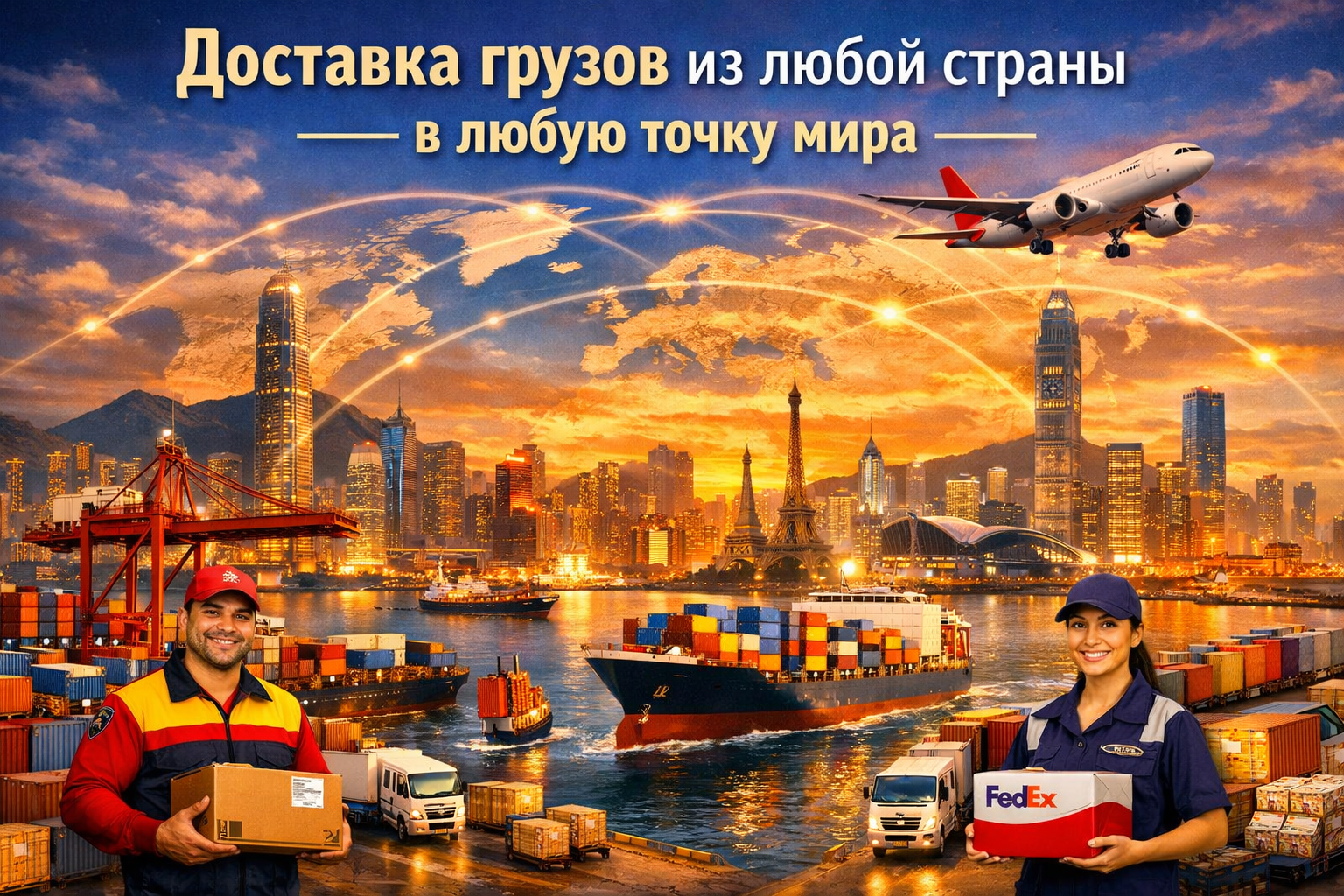
Reliable Worldwide Freight Delivery with Full Support
Reliable Cargo Delivery Worldwide with Full Support
International cargo transportation is a complex process that requires precise coordination, professional planning, and constant monitoring. It is essential for the shipper not only to choose the appropriate mode of transport but also to ensure the safety of the goods, adherence to deadlines, proper documentation, and transparency at all stages of delivery. This is why modern companies turn to comprehensive logistics with full support.
Reliable cargo delivery worldwide includes route development, carrier selection, preparation of accompanying documents, customs support, cargo insurance, loading and unloading control, transport tracking, and keeping the client informed about the progress of the shipment. This approach helps reduce risks, avoid delays, and ensure predictable results regardless of the destination, type of cargo, and chosen transport.
Professional international service is especially important when transporting expensive, fragile, oversized, temperature-sensitive, or urgent goods. In such cases, it is not enough to simply hand over the cargo to a transport company. It is necessary to analyze the specifics of the transportation in advance, anticipate potential challenges, and organize safe logistics at every segment of the route.
International Cargo Delivery with Full Support
The complete logistics cycle begins long before the actual shipment of the goods. Specialists study the characteristics of the cargo, packaging requirements, deadlines, specifics of the destination country, and possible restrictions. Based on this information, an optimal transportation scheme is developed that combines safety, speed, and cost-effectiveness.
When organizing international delivery, the following factors are taken into account:
type, weight, and volume of the cargo;
temperature control requirements;
the need for special packaging;
route specifics;
delivery deadlines;
transit country regulations;
customs legislation requirements;
restrictions on the transportation of certain categories of goods;
the need for insurance;
loading and unloading specifics.
Comprehensive service allows the client to interact with one responsible operator rather than coordinating the work of several contractors independently. The logistics company oversees the transportation from the moment the cargo is accepted until it is handed over to the recipient. Meanwhile, the client receives up-to-date information about the shipment's location and can make prompt decisions in case of changing circumstances.
Route Planning and Transport Selection
A well-chosen route directly affects the safety, speed, and cost of transportation. For international delivery, road, air, sea, rail, or multimodal transport can be used. Each option has its advantages and limitations.
Road transportation is suitable for "door-to-door" delivery, regional routes, and transporting goods between neighboring countries. Air delivery is in demand for sending urgent, expensive, or relatively compact cargo. Sea transport allows for the transportation of large batches at an optimal price, but requires more time. Rail transport is characterized by stability and is suitable for significant distances, especially when moving containers.
Multimodal logistics combines several modes of transport within one route. For example, cargo may be delivered by truck to a terminal, then transported by rail or sea, and on the final segment, again moved by road transport. This format allows for the selection of the most efficient scheme and ensures delivery even to remote regions.
Document Preparation for International Transportation
Document preparation is one of the key stages of logistics. Errors in invoices, packing lists, transport waybills, or permits can lead to cargo delays at the border, additional costs, and violations of delivery deadlines.
Depending on the type of goods and the direction of transportation, the following may be required:
commercial invoice;
packing list;
delivery contract;
transport waybill;
certificate of origin;
compliance declarations;
sanitary and veterinary documents;
import or export permits;
hazardous cargo documents;
powers of attorney and additional accompanying forms.
Specialists check the completeness of documents, compare information about the goods, and assist in preparing data for customs clearance. This reduces the likelihood of discrepancies and speeds up the control procedures.
Cargo Insurance as a Guarantee of Financial Protection
Even when all transportation rules are followed, it is impossible to completely eliminate external risks. Weather conditions, accidents, packaging damage, unlawful actions by third parties, loading errors, or unforeseen circumstances along the route can all affect the cargo. Cargo insurance helps protect the financial interests of the goods owner and compensates for losses in the event of an insured incident.
The insurance policy is formed taking into account the nature of the cargo, its value, the route, and the chosen method of transportation. The higher the potential risks, the more important it is to correctly determine the coverage conditions. Additionally, the insurance should be clear: the client is familiar with the list of insured events, exclusions, liability limits, and the procedure for receiving compensation in advance.
What Cargo Insurance Covers
The specific conditions depend on the insurance program; however, the policy may provide protection against the following risks:
damage to the goods during transportation;
total or partial loss of cargo;
road traffic accidents;
accidents involving a vessel or other means of transport;
fire or explosion;
natural disasters;
flooding;
theft and unlawful actions;
damage during loading and unloading operations;
temperature regime violations, if stipulated in the contract.
Before arranging insurance, specialists analyze the characteristics of the goods. For fragile items, packaging and handling conditions are crucial; for perishable products, temperature control is essential; for expensive electronics, protection against moisture, shocks, and unauthorized access is necessary. This individualized approach makes the insurance coverage more effective.
How Insurance Claims Are Settled
If the cargo is damaged or lost, it is important to quickly document the circumstances of the incident. The recipient or the carrier's representative prepares a report, takes photographs, collects the necessary documents, and sends the information to the insurer. The more detailed the event is documented, the easier it is to confirm the extent of the damage.
The logistics company can assist the client in preparing documents and interacting with the insurance organization. This is especially important in international transportation, where foreign carriers, terminals, and regulatory authorities are involved. Professional support helps avoid delays and properly file a claim.
Transportation Support at Every Stage
Transportation support is not just about tracking a truck, container, or flight. It is a comprehensive effort that includes monitoring timelines, interacting with supply chain participants, checking documents, organizing loading, and promptly resolving emerging issues.
After the route is agreed upon, a responsible specialist is assigned to the cargo. They oversee the preparation of the shipment, the departure of the transport, the passage through intermediate points, and arrival at the final destination. The client receives information in an agreed format: via email, personal account, messenger, or phone.
Delivery Control and Route Monitoring
Modern delivery control is carried out using GPS monitoring, electronic accounting systems, and data from transport operators. This allows for determining the location of the cargo, assessing adherence to the schedule, and timely identifying deviations.
Control may include:
confirmation of loading;
photo report on the condition of the packaging;
seal verification;
recording the time of departure;
tracking movement;
monitoring passage through terminals;
verification of arrival at the destination;
confirmation of unloading;
obtaining the recipient's signature.
If there is a delay on the route, a change in road conditions, a problem at the border, or any other non-standard situation, the client receives a notification. Specialists assess the consequences and suggest solutions: route adjustment, transport replacement, schedule changes, or organizing additional handling of the cargo.
Communication with Carriers and Terminals
In international logistics, several companies are often involved. These can include the manufacturer, warehouse, freight forwarder, carrier, port, airport, customs representative, and recipient. Without a single coordinator, interaction between parties can lead to errors and delays.
The logistics operator handles communication with all participants. They coordinate the timing of transport arrival, monitor the readiness of documents, clarify terminal rules, organize pass issuance, and ensure compliance with cargo handling instructions. The client does not need to independently find out where the goods are and who is responsible for the current stage of transportation.
Safe logistics for different types of cargo
Each cargo requires an individual approach. There is no universal scheme that is equally suitable for industrial equipment, food products, furniture, medical products, and fragile items. Safe logistics begins with analyzing the characteristics of the goods and potential risks.
When developing a solution, the following factors are considered:
the strength and sensitivity of the cargo;
permissible loads;
the impact of temperature and humidity;
ventilation requirements;
the need for securing;
stacking features;
labeling rules;
height and weight restrictions;
storage periods;
insurance conditions.
Packaging and labeling
Quality packaging protects the cargo from mechanical damage, moisture, dust, temperature fluctuations, and vibration. Depending on the category of goods, cardboard boxes, wooden crates, pallets, metal containers, cushioning materials, thermal packaging, or special protective covers may be used.
Particular attention is paid to securing the contents inside the packaging. Even a sturdy outer box will not ensure safety if the goods move inside it. For heavy equipment, fastening elements, spacers, and anti-slip materials are used. Fragile items are additionally protected with foam, air cushions, and shock-resistant structures.
Labeling must include information about the nature of the cargo and handling instructions. The packaging indicates the destination, number of packages, weight, dimensions, shipment number, and special markings: “Fragile,” “This Side Up,” “Keep Dry,” “Do Not Handle Roughly.” For hazardous materials, international symbols and special documents are used.
Transportation of oversized and special cargo
Oversized cargo requires prior route calculation. Specialists check road widths, bridge heights, any restrictions, the condition of access roads, and the feasibility of loading and unloading operations. If necessary, special permits are obtained, and transport escort is organized.
For temperature-sensitive cargo, refrigerated trucks, isothermal containers, and continuous monitoring systems are used. When transporting medical products, it is especially important to maintain the established temperature range and record readings throughout the route.
Hazardous materials are transported only in accordance with international regulations and safety requirements. The transport must have the appropriate equipment, the driver must have the necessary training, and the documents and labeling must fully comply with established standards.
Customs support for international shipments
Customs procedures play a crucial role in international delivery. An incorrectly defined product code, inaccurate description, error in value, or lack of a permit document can lead to delays in processing and additional fees.
Customs support includes preliminary verification of cargo information, preparation of declarations, determination of the commodity nomenclature code, calculation of payments, and interaction with regulatory authorities. Specialists analyze the requirements of the country of origin, transit countries, and the destination country.
Verification of goods and documents
Before shipment, the information about the goods is verified. The name, quantity, weight, value, and country of origin must match in all documents. If contradictory information is provided in different forms, it may raise additional questions from customs.
For certain categories of products, certificates, licenses, sanitary conclusions, or permits are required. Identifying requirements in advance allows for the preparation of documents without haste and reduces the likelihood of cargo being stopped.
Reducing the risk of delays
A professional logistics company assesses potential difficulties along the route in advance. They check for import restrictions, classification specifics, labeling requirements, and transit processing rules. This analysis helps avoid situations where the cargo is already at the border but cannot proceed due to a lack of documents.
If a request arises from customs authorities, specialists prepare explanations and provide the necessary information. The client receives updates on the status of processing and potential consequences for delivery timelines.
Complete Logistics Cycle from Sender to Recipient
The complete logistics cycle encompasses all operations necessary for the safe movement of goods. The client receives a unified service that includes planning, packaging, transportation, insurance, customs clearance, warehousing, and delivery to the final address.
The main stages may include:
task analysis and cargo characteristics;
cost and time estimation;
route development;
transport selection;
document preparation;
packaging and labeling;
loading;
insurance;
international transportation;
customs procedures;
intermediate storage or transloading;
delivery to the recipient;
unloading and condition check;
preparation of closing documents.
Warehousing Services and Consolidation
If the cargo is shipped in small batches, consolidation may be used. Several shipments are combined into one transport unit, which helps reduce the cost of international delivery. At the warehouse, acceptance, quantity verification, labeling, repackaging, and preparation for further transportation are carried out.
For large shipments, temporary storage, sorting, order fulfillment, palletizing, or distribution of goods to multiple addresses may be required. Such services are particularly in demand by online stores, manufacturing companies, and distributors.
Door-to-Door Delivery
Door-to-door delivery relieves the client from the need to organize transportation between the terminal and the final recipient independently. The logistics operator is responsible for the final leg of the route, coordinating the arrival time of the transport and ensuring the transfer of the cargo to an authorized person.
Upon receipt, the quantity of packages, the condition of the packaging, and the presence of visible damages are checked. If necessary, a transfer act, photo documentation, and other documents confirming the completion of transportation are prepared.
International Service for Businesses
For companies, international logistics is part of the overall supply chain. The reliability of delivery affects production schedules, inventory levels, fulfillment of obligations to customers, and financial results. Therefore, it is important for businesses not just to find a carrier but to build a stable logistics system.
Professional international service allows for:
planning regular deliveries;
receiving unified rates;
controlling expenses;
reducing transport downtime;
minimizing errors;
tracking delivery metrics;
quickly responding to changes;
generating transportation reports.
Customized Solutions for Companies
Personalized logistics schemes are developed for regular clients. Factors such as shipment volumes, frequency, geography, seasonality, deadline requirements, and product characteristics are taken into account. For some companies, regular road delivery becomes the optimal solution, while for others, container transportation or a combination of several transport modes is preferred.
Fixed routes, backup options, inventory reserves, and pre-agreed procedures in case of delays may also be provided. This enhances the resilience of the supply chain and helps businesses plan operations without constantly revising logistics.
Transparent Pricing
The cost of international transportation depends on many factors: distance, mode of transport, weight and volume of cargo, nature of the goods, route, need for insurance, customs clearance, warehousing operations, and door-to-door delivery.
A reliable operator provides a detailed estimate in advance. The commercial proposal outlines the main services, possible additional costs, and timelines. A transparent approach helps compare options and choose a scheme without the risk of unexpected charges.
Guarantee of Safety and Responsibility of the Logistics Operator
The guarantee of cargo safety is not based on a single action but on the continuous monitoring of the entire transportation process. Proper packaging, secure fastening, a verified carrier, adherence to transportation conditions, insurance, route monitoring, and correct documentation are all crucial.
A responsible logistics operator identifies potential risks in advance and develops protective measures. For high-value goods, enhanced packaging, sealing, restricted access, escorting, and additional checks at terminals may be used. For urgent cargo, backup routes and alternative transport options are provided.
Responsibility at Different Stages
At each stage of transportation, responsible individuals must be identified. This includes cargo acceptance, loading, storage, documentation, transportation, transshipment, and delivery to the recipient. A clear distribution of responsibilities allows for quicker identification of the problem's cause and the implementation of necessary measures.
Acceptance reports, photo documentation, transport documents, and monitoring data play an important role. They confirm the condition of the cargo and the sequence of operations performed.
Handling Claims
If damage is discovered upon receipt, it must be documented before signing the acceptance documents or a corresponding note should be made in the waybill. Representatives of the logistics company assist in filing a claim, gathering evidence, and forwarding materials to the carrier or insurer.
A systematic approach to claims management helps protect the client's interests and improve the quality of subsequent shipments. Analyzing the causes of damage helps adjust packaging, routing, loading methods, or requirements for the carrier.
How to Choose a Reliable Logistics Company
The choice of a logistics partner directly affects the safety and predictability of delivery. Before signing a contract, it is advisable to assess the company's experience, geographical reach, range of services, availability of insurance, monitoring capabilities, and quality of communication.
It is recommended to pay attention to the following criteria:
experience in international transportation;
handling the required type of cargo;
availability of a partner network;
door-to-door delivery capability;
customs support;
insurance;
transparency in pricing;
tracking system;
availability of a responsible manager;
willingness to provide documents and contract terms.
It is important to clarify in advance who is responsible for the cargo at each segment of the route, what actions are taken in case of delays, and how claims are processed. The more detailed the description of services and responsibilities of the parties, the lower the risk of disputes.
Why a Single Coordinator is Important
A single coordinator significantly simplifies international logistics. The client does not waste time communicating with multiple carriers, terminals, and intermediaries. All inquiries are directed to a responsible manager who monitors the situation and provides up-to-date information.
This format is especially convenient for complex multimodal shipments, where cargo passes through several countries and transport hubs. One operator is responsible for the coherence of the entire chain and helps maintain control over the delivery.
Reliable cargo delivery worldwide requires a comprehensive approach. It is not enough to simply choose a mode of transport and hand over the goods. It is necessary to develop a route, verify documents, ensure proper packaging, arrange cargo insurance, organize customs support, monitor movement, and confirm safe transfer to the recipient.
A complete logistics cycle allows for the integration of all stages into a unified system. The client receives international service with clear timelines, transparent costs, constant communication, and delivery control. This format reduces operational risks, helps preserve cargo, and makes international shipments more predictable.
Professional support is especially important for companies that regularly work with foreign suppliers and buyers. Well-organized safe logistics helps maintain schedules, control costs, and ensure business stability. When choosing a reliable partner, it is essential to consider not only the price but also experience, responsibility, insurance coverage, monitoring capabilities, and quality of work at each stage of transportation.