

 RU
 UA
 DE
 FR
 ES
 CN
 SA
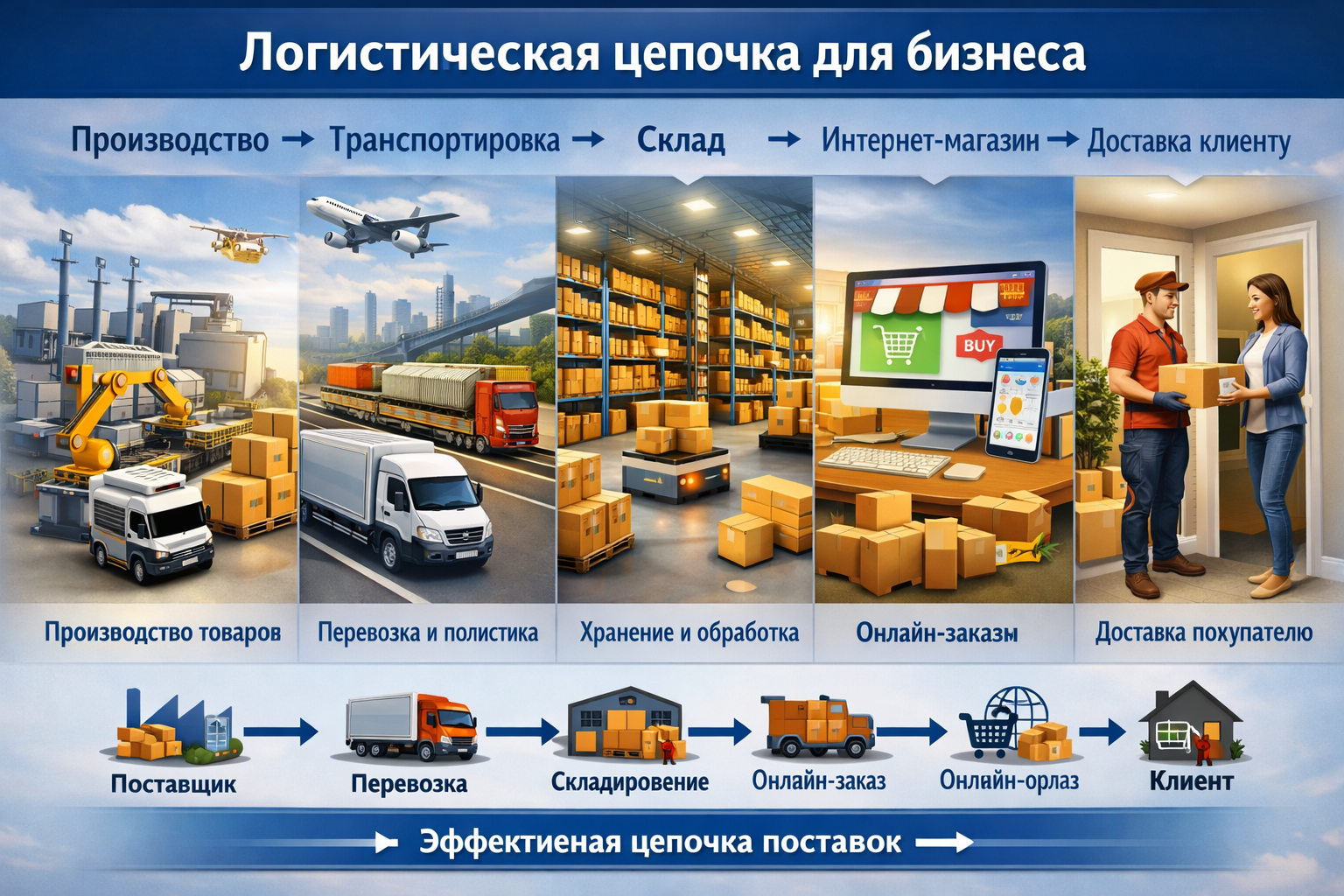
The Role of Digital Logistics Platforms
The Role of Digital Logistics Platforms in Global Trade
Digital transformation has changed not only the ways of communication and doing business but also the very architecture of global trade. Today, organizing international deliveries efficiently is impossible without software solutions that connect manufacturers, carriers, warehouses, customs representatives, marketplaces, courier services, and end customers. These systems are known as digital logistics platforms. They facilitate data exchange, automate operations, control the movement of goods, and coordinate the actions of all participants in the supply chain.
The development of e-commerce, the growth of cross-border sales, and the complexity of international routes have made logistics one of the key factors in the competitiveness of companies. While businesses could previously gain an advantage through price or assortment, speed of delivery, accuracy of forecasts, transparency of tracking, and the ability to quickly adapt to changes have now become crucial. This is why digital logistics in global trade is becoming an important direction for the development of the world economy.
Digital platforms help companies manage international shipments, find optimal routes, compare rates, prepare documents, and reduce the impact of human error. As a result, a more cohesive and flexible system is formed, where data becomes the primary resource for management.
What Are Digital Logistics Platforms
A digital logistics platform is a software environment that connects supply chain participants and provides them with a unified set of tools for planning, coordinating, and controlling operations. Such a system can operate in the cloud, integrate with corporate programs, and connect to external services of carriers, ports, customs authorities, warehouses, and marketplaces.
Unlike the traditional approach, where each company uses its own spreadsheets, emails, and disparate programs, a digital platform creates a unified information space. In this space, one can see the current status of an order, the location of the cargo, the availability of transport, warehouse load, shipping costs, and the estimated delivery date.
The main value of such solutions lies in the synchronization of processes. The manufacturer receives information about the order, the carrier gets data about the cargo and route, the warehouse is informed about the arrival time, and the buyer has the ability to track the shipment. All participants work with updated data, which reduces the number of errors and delays.
Main Functions of Digital Logistics Platforms
Modern platforms typically include several groups of functions:
automatic creation and processing of orders;
selection of carriers and optimal routes;
calculation of international shipping costs;
management of warehouse operations;
generation of transport and customs documents;
real-time cargo tracking;
notification of clients about the status of shipments;
cost and route efficiency analysis;
demand forecasting and infrastructure load;
integration with ERP, CRM, WMS, and TMS systems.
Some solutions also utilize artificial intelligence, machine learning, the Internet of Things, and blockchain. Sensors can transmit information about temperature, humidity, vibration, and the location of the cargo. Algorithms analyze historical data and suggest more advantageous delivery scenarios.
The Difference Between the Platform Approach and Traditional Logistics
Traditional logistics often revolves around individual contractors and local information systems. As a result, data may arrive with delays, be duplicated, or get lost. The platform model assumes collaborative work within a digital ecosystem. Participants gain access to the necessary information based on their roles and permissions.
This approach is especially important for international operations, where a single shipment may involve companies from several countries, carriers of different transport modes, customs authorities, and distribution centers. A unified platform allows for the integration of maritime, rail, road, and air logistics into one managed process.
The Impact of Digital Logistics on Global Trade
Digital logistics directly affects the volume and speed of international trade. The easier it is to organize cross-border delivery, the more companies can access foreign markets. Previously, international sales required significant administrative resources, complex negotiations with carriers, and in-depth knowledge of local infrastructure. Now, many operations can be performed through a single online platform.
Digital logistics in global trade creates conditions for greater accessibility for small and medium-sized businesses to participate in the world economy. A small company can sell goods to customers in other countries, utilize international warehousing services, and connect to global courier networks without having to build its own logistics infrastructure.
Digital solutions also enhance the predictability of deliveries. Businesses can foresee potential restrictions, tariff changes, port congestion, and delay risks in advance. This allows them to adjust routes before problems arise, rather than reacting to them after the fact.
Reducing barriers to international sales
One of the key advantages of digital platforms is the simplification of access to international shipping. Users can select a destination, specify cargo parameters, and receive delivery options from various operators. The system compares delivery times, costs, transport types, and insurance conditions.
This is particularly relevant for online stores. Sellers do not need to independently negotiate dozens of contracts with local courier companies. The platform can provide a ready-made network of partners, automatic order transmission, and a unified interface for tracking.
This format promotes the development of cross-border e-commerce. Buyers gain the opportunity to purchase goods from foreign sellers, while companies can test new markets without significant investments in physical presence.
Increasing transparency of deliveries
Transparency is one of the main factors of trust in international trade. The digital platform shows where the cargo is located, what stage the documentation is at, when the shipment arrived at the warehouse, and when delivery is expected.
For businesses, this means more accurate inventory and sales planning. For customers, it means understanding the timelines for receiving orders. For carriers, it provides the ability to respond quickly to changes in routes or loads.
Tracking also helps investigate disputed situations. With a digital event log, it is easier to determine where a delay occurred, who was responsible for the cargo at a specific moment, and what actions were taken.
Optimizing international routes
The platform's algorithms can analyze a large number of parameters: fuel costs, congestion at transport hubs, weather conditions, border restrictions, schedules of ships and planes, availability of warehouses, and requirements for specific types of goods. Based on this data, the system suggests a route with the optimal combination of price, speed, and reliability.
This is especially important for complex multimodal shipments. For example, cargo may first be transported by truck to a railway terminal, then travel by train to a port, after which it is shipped by sea and delivered to the final customer by a courier service. The digital platform integrates all stages and allows them to be managed as a single chain.
International shipping platforms and the economy of transportation
International shipping platforms have become an essential part of the modern transportation economy. They are changing the traditional model of interaction between cargo owners and transport companies, making the market more open and competitive. Through such services, users can receive offers from various carriers, book spaces, monitor compliance with conditions, and analyze final costs.
Previously, many international shipments were organized based on lengthy negotiations, phone calls, and paper documentation. This increased approval times and created a risk of errors. Platforms automate a significant portion of operations.
Determining shipping costs
Digital systems help calculate delivery costs considering numerous factors. The calculation may include:
weight and volume of the cargo;
category of the product;
country of origin and destination;
type of transport;
seasonal load;
customs duties;
warehousing costs;
insurance;
fuel surcharges;
additional services;
the need for express delivery.
Automatic calculations make pricing more transparent for customers. Companies can assess the profitability of international sales in advance and choose the appropriate delivery method.
More efficient use of transport capacities
Platforms help reduce the number of empty trips and make better use of available transport. The system can match transport requests with available routes and the free capacities of carriers.
For the market, this means increased efficiency without necessarily increasing the number of vehicles, wagons, ships, or airplanes. More accurate planning allows for reduced downtime, lower costs, and decreased environmental impact.
Impact on Competition
Digitalization makes the transportation market more competitive. Customers can compare offers based on several parameters, while carriers gain access to a broader range of clients. This encourages companies to improve service, enhance accuracy, and implement additional technologies.
At the same time, the importance of data quality is growing. A carrier that fails to update statuses or violates information transfer deadlines may lose positions in platform rankings. Thus, digital reputation becomes an economic asset.
Global ecommerce logistics systems
The development of e-commerce has become one of the main factors driving the growth of global logistics systems. Buyers have become accustomed to ordering products from online stores and expecting fast, convenient, and predictable delivery. This forces sellers to restructure supply chains, utilize distributed warehouses, and integrate stores with international carriers.
Global ecommerce logistics systems combine the online store, warehouse, payment service, delivery service, customs tools, and customer support system. As a result, the order goes through all stages with minimal manual operations.
Order Processing Automation
After a purchase is made, the data is automatically transmitted to the warehouse system. The program determines which warehouse is more advantageous for shipping the product, reserves the item, generates a task for the picker, and creates transport documents.
If the product is located in several countries, the algorithm can select the warehouse that ensures the shortest delivery time or the lowest cost. This helps the seller balance between speed and expenses.
Development of the International Fulfillment Model
Fulfillment platforms allow for storing products closer to potential buyers. The seller pre-positions products in overseas warehouses, and orders are processed locally. This approach reduces delivery times and lessens the burden on international shipping.
In addition to storage and assembly, fulfillment operators can handle packaging, labeling, returns, and transferring shipments to courier services. For small brands, this is an opportunity to utilize professional infrastructure without building their own warehouses.
Return Management
International returns remain a complex challenge for e-commerce. It is necessary to determine where to send the product, who pays for transportation, whether the item can be resold, and how to process refunds.
Digital platforms enable the automation of return label creation, cost calculation, and product condition registration. This enhances the customer experience and helps sellers control losses.
Globalization of the Courier Network
Courier networks have become one of the main elements of global trade. Their development allows for delivering purchases to almost any location, connecting national operators, international express services, local courier companies, and pickup points.
Courier network globalization means not just an increase in the number of routes. It involves creating a coordinated infrastructure where different operators can exchange data, transfer shipments, and use common processing standards.
Integration of Local and International Operators
International delivery often involves several stages. One operator is responsible for exporting the product from the country of origin, another for the main transport, and a third for delivery within the destination country. Without digital coordination, such a chain can be opaque for both the seller and the buyer.
Platforms transmit information between participants, generate a single tracking number, and synchronize statuses. As a result, the customer sees a complete movement history, even if the order was transferred between several companies.
Pickup Points and Lockers
The development of pickup points and lockers helps reduce last-mile costs. The courier does not need to visit the address multiple times if the recipient is unavailable. The customer can choose a convenient location and pick up the order at a suitable time.
Digital platforms manage the capacity of lockers, storage times, access codes, and notifications. Additionally, data about the pickup point is integrated with the online store at the order placement stage.
The Last Mile in Major Cities
The last mile is often the most expensive and complex stage of delivery. It is influenced by traffic jams, movement restrictions, building density, weather conditions, and recipient availability.
To address these challenges, routing algorithms, dynamic order distribution, electric vehicles, cargo bicycles, micro-warehouses, and autonomous devices are utilized. The digital platform helps to select the optimal combination of resources based on the current situation.
Smart supply chain platforms and intelligent supply chain management
Smart supply chain platforms leverage data analytics, artificial intelligence, and the Internet of Things to shift from reactive to predictive approaches. Such a system not only shows what has already happened but also helps to assess the likelihood of future events in advance.
An intelligent supply chain can forecast demand, identify the risk of shortages, determine the probability of delays, and suggest alternative routes. This is especially important in unstable markets, fluctuating tariffs, and disruptions in infrastructure.
Demand forecasting
Based on sales data, seasonality, marketing campaigns, prices, and customer behavior, the system predicts future product needs. This helps to place inventory closer to the target market and reduces the risk of overproduction.
For global trade, forecasting is particularly significant. It is essential to consider differences between countries, holidays, climate, currency fluctuations, and local consumer habits.
Risk management
The system can monitor external factors: changes in legislation, strikes, port closures, natural disasters, political restrictions, and fluctuations in transport tariffs. If a risk becomes significant, the platform suggests action options.
For example, a company may proactively reroute cargo through another port, increase insurance coverage, use an additional warehouse, or switch modes of transport. This flexibility reduces the likelihood of large-scale disruptions.
Digital twins of supply chains
A digital twin is a virtual model of a real logistics system. It allows for simulating various scenarios: increased demand, closure of a transport corridor, changes in fuel costs, or supplier delays.
The results of the simulations help make decisions before changes are made to the actual infrastructure. This is especially useful for large companies, where a planning error can lead to significant financial losses.
Worldwide delivery infrastructure
Worldwide delivery infrastructure includes transport corridors, warehouses, sorting centers, ports, airports, pickup points, courier networks, and digital systems that connect these elements. The development of infrastructure cannot be viewed separately from information technology.
Physical logistics and the digital environment complement each other. Even a modern warehouse cannot operate efficiently without accurate data exchange, and a powerful software platform cannot eliminate limitations related to the lack of roads, terminals, or transport capacities.
The role of distribution centers
Distribution centers are becoming crucial hubs in international trade. Goods are received, sorted, assembled, labeled, and dispatched to customers or regional warehouses.
The digital system determines processing priorities, allocates tasks among employees, and monitors the movement of goods within the facility. Robotic complexes can automatically move boxes, scan barcodes, and prepare orders for shipment.
Multimodal transport
Global trade increasingly utilizes a combination of several modes of transport. Sea transport is suitable for large volumes, rail for stable land routes, road for flexible delivery, and air for urgent shipments.
The digital platform integrates schedules, rates, and statuses from different carriers. This allows for selecting not just a single mode of transport but the most efficient combination for a specific cargo.
Sustainable infrastructure development
Environmental requirements are becoming an important part of logistics planning. Companies assess carbon emissions, fuel consumption, packaging use, and the environmental impact of routes.
Digital tools allow for calculating the carbon footprint, comparing delivery options, and choosing more environmentally friendly solutions. For example, multiple orders can be consolidated, air transport can be replaced with rail, or a pickup point can be used instead of home delivery by courier.
Technologies underlying digital logistics
The effectiveness of digital logistics platforms is ensured by a combination of several technologies. Each of them addresses a specific task, but the greatest effect arises from their combined use.
Artificial intelligence and machine learning
Artificial intelligence is used for demand forecasting, route selection, anomaly detection, and automating customer support. Machine learning enables the system to identify patterns in large datasets.
For example, an algorithm may detect that a specific route is consistently delayed on certain days and proactively suggest an alternative. Over time, the accuracy of forecasts improves as the system incorporates new data.
Internet of Things
Internet of Things sensors are installed on vehicles, containers, pallets, and warehouse equipment. They transmit information about location, temperature, humidity, impacts, and package tampering.
Such solutions are particularly important for pharmaceuticals, food products, chemicals, and other sensitive goods. When parameters deviate, the system automatically sends notifications to responsible personnel.
Cloud Platforms
Cloud architecture allows access to data from any country and quickly connects new participants. Companies are not required to purchase and maintain large local IT infrastructure.
Software updates also occur centrally. This simplifies business scaling and reduces technical support costs.
Blockchain and Digital Documents
Blockchain can be used to confirm the sequence of operations and enhance trust among participants. Digital documents reduce processing time and minimize the risk of forgery or loss of paper forms.
Electronic bills of lading, digital certificates of origin, smart contracts, and automatic verification of contract conditions are particularly promising.
Benefits of Digital Logistics Platforms for Business
Implementing digital platforms provides companies with a comprehensive effect. This is reflected not only in reduced costs but also in improved management quality, service speed, and business resilience.
Reduction of Operational Costs
Automation reduces the amount of manual work, document errors, and data re-entry. The company spends less time processing orders, coordinating shipments, and preparing reports.
Route optimization and vehicle loading also help lower direct expenses. With large volumes, even a small saving on a single shipment yields significant results.
Faster Delivery
The system processes orders more quickly, selects carriers, and transmits data between participants. This shortens the time from purchase completion to product delivery to the customer.
Fast delivery becomes a competitive advantage, especially in segments where buyers compare multiple sellers.
Improved Customer Experience
Customers expect accurate information about timelines and tracking capabilities. The digital platform provides automatic notifications, route links, and delivery change options.
Transparency reduces the number of inquiries to customer support and increases trust in the brand.
Scaling International Operations
The company can connect new countries, warehouses, and carriers without completely restructuring the IT system. This allows for quicker entry into foreign markets and testing of new directions.
The platform ensures unified order processing rules while accommodating local requirements and specific regional features.
Challenges and Limitations of Logistics Digitalization
Despite the advantages, digital logistics platforms face a number of challenges. These need to be considered at the selection and implementation stage of the solution.
Cybersecurity
Logistics systems handle information about customers, products, routes, payments, and commercial terms. Data breaches can lead to financial losses and reputational damage.
Companies must employ encryption, multi-factor authentication, access control, backups, and regular security audits.
Integration of Different Systems
Participants in international trade often use different data formats and software products. Integration may require significant costs and modifications.
To address this issue, APIs, standardized exchange protocols, and intermediate integration modules are used. However, fully automating the process can be challenging without agreed-upon requirements.
Differences in Legislation
Each country may establish its own rules for customs clearance, personal data protection, electronic signatures, and information storage. The platform must account for regional requirements and be regularly updated.
Errors in legally significant documents can lead to delays, fines, and shipment blockages.
Dependence on Data Quality
Algorithms cannot provide accurate recommendations if the initial information is incomplete or erroneous. Incorrect product dimensions, outdated status updates, or incorrect addresses can disrupt the entire chain.
Therefore, digitalization requires not only the purchase of software solutions but also the establishment of a data-driven work culture.
The Future of Digital Platforms in Global Logistics
In the coming years, digital logistics platforms will become more autonomous, intelligent, and interconnected. Their development will be linked to decision-making automation, warehouse robotics, expanded delivery networks, and active use of analytics.
One of the key directions will be the creation of a unified digital environment where order data is transmitted between all participants with minimal delay. This will help reduce paper documentation and speed up international procedures.
Predictive logistics will gain significant importance. Platforms will not only forecast delays but also automatically change routes, redistribute inventory, and select alternative carriers. However, the final decision can remain with the specialist if the operation involves increased risk.
Autonomous Transport and Robotics
Self-driving trucks, drones, warehouse robots, and automated terminals are gradually becoming part of the global infrastructure. Their use will reduce dependence on labor shortages and enhance the stability of cargo handling.
However, large-scale implementation will require the development of legislation, safety standards, and digital management channels.
Hyper-Personalized Delivery
Customers will receive more delivery options: precise time slots, address changes en route, selection of pickup points, order consolidation, and dynamic cost calculations.
Platforms will be able to consider individual customer preferences and automatically suggest the most convenient delivery scenario.
More Sustainable Global Trade
Digital analytics will enable better control over emissions, transport load, and packaging use. Companies will choose routes not only based on cost and speed but also on environmental metrics.
This will stimulate the development of electric transport, alternative fuels, packaging reuse, and regional warehousing networks.
Digital logistics platforms have become the foundation of modern global trade. They connect participants in international supply chains, automate operations, enhance transparency, and help companies manage complex chains more effectively.
Digital logistics global trade, international shipping platforms economy, global ecommerce logistics systems, courier network globalization, smart supply chain platforms, and worldwide delivery infrastructure — these are interconnected areas that are shaping a new model of the global economy. They are united by a common principle: decisions are made based on data, and logistics processes become faster, more predictable, and flexible.
For businesses, digitalization means reduced costs, accelerated international sales, improved customer service, and the ability to scale. For consumers — a wider selection of goods, transparent timelines, and convenient delivery methods. For the global economy — strengthened trade ties and increased resilience of cross-border supply chains.
In the future, the competitiveness of companies will increasingly depend on how effectively they utilize digital tools. Success will not only belong to those who produce quality goods but also to those who can deliver them quickly, reliably, and transparently to customers worldwide.