

 RU
 UA
 DE
 FR
 ES
 CN
 SA
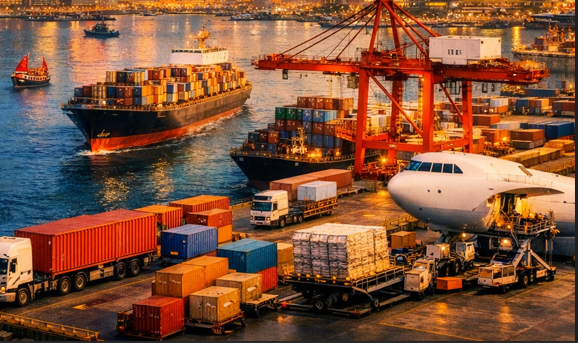
How Route Changes Affect International Package Tracking
How Route Changes Affect International Package Tracking
International shipping rarely follows a strictly pre-planned route. Even if the sender and recipient see the expected route in the system, the actual movement of the shipment may differ from the original plan. The package may go through a different sorting center, be delayed at customs, be placed on an alternative flight, or be handed over to a new logistics operator. As a result, unusual statuses appear in the system, the sequence of events changes, and the expected delivery date is postponed.
Route change of a package — is an adjustment of the path that the shipment takes from the sender to the recipient. This adjustment can be temporary or permanent. It does not always indicate a problem or loss of the shipment. In most cases, route changes are related to the specifics of international logistics, the load on transport hubs, weather conditions, air transport restrictions, customs procedures, and the need to optimize the shipping process.
Tracking an international package is based on data exchange between postal services, courier companies, sorting centers, customs authorities, and local delivery operators. If the shipment is transferred between several participants, updates may be delayed. Therefore, the actual location of the package and the information on the tracking page may not always match in real-time.
What Does Route Change of an International Package Mean?
A route change means that the package is moving not along the originally planned chain of logistics points. For example, the shipment was supposed to go through one international hub, but due to a lack of available transport, it was redirected to another airport or sorting center. Sometimes this situation arises even before the shipment leaves the country of origin, and sometimes — after passing through several transit points.
The route of an international package can change for technical, commercial, or organizational reasons. The logistics company analyzes the current warehouse load, flight availability, border crossing capacity, and the state of transport infrastructure. If the original route becomes less efficient, the operator chooses an alternative direction.
It is important to understand that the data in the tracking system usually reflects not every physical movement of the package, but registered scans. If the shipment was moved from one terminal to another without intermediate registration, there may be a sudden jump in the history between cities or countries. The user may feel that the package has "skipped" several points, although in reality, it continued to move in the usual manner.
Main Reasons for Redirecting Shipments
One of the most common reasons is a change in flight schedules. International packages are often transported in the cargo holds of passenger planes. If a flight is canceled, overbooked, or weather conditions change, the shipment is directed to another flight. This can lead to the emergence of a new transit point and an increase in overall delivery time.
Another factor is the overload of the sorting center. During sales periods, holidays, and seasonal order surges, logistics hubs operate at full capacity. To avoid a backlog of shipments, some packages are distributed among other centers. In the tracking history, a status related to movement to an alternative region may appear.
Sometimes the route changes due to customs restrictions. If additional documents, declarations, or permits are required for a certain category of goods, the shipment may be directed to a specialized terminal. In this case, the delay is not due to a delivery error, but rather the need to complete the inspection.
Is Route Change a Problem?
A route change does not, by itself, indicate the loss of a package or a delivery violation. In many cases, an alternative route is chosen specifically to expedite the processing of the shipment. For example, a package may be directed through a less congested airport, after which it continues to move with minimal delay.
However, route changes can sometimes lead to increased delivery times. This is possible if the new route involves additional sorting, re-customs checks, or transferring the package to another transport company. Therefore, it is important to assess not just a single status, but the overall dynamics of the shipment's movement.
How Route Changes Affect Package Tracking
Tracking an international package depends on how quickly logistics participants share information with each other. Different information systems are used at various stages of transportation, and there is not always instant synchronization between them. Therefore, after a route change, updates may appear irregularly.
Sometimes a new status is displayed several hours after the actual movement. In other cases, information is updated only when the package arrives at the next major sorting center. This is especially common for shipments that pass through transit countries or are handed over to local postal services.
Due to the peculiarities of data exchange in the system, there may be statuses that seem contradictory at first glance. For example, a package may have already left a transit point, but after some time, it appears there again. This is usually not due to a physical return but rather a re-registration, data correction, or an update from another carrier.
Why delivery statuses may change unexpectedly
The delivery status is generated based on scanning a barcode, waybill, or another identifier of the shipment. If the package passes through a new terminal, the system adds the corresponding record. However, when integrating multiple platforms, the same stage may be described in different terms.
For example, the statuses "departed from transit point," "left sorting center," and "handed over for international transport" may indicate similar actions. The differences are related to the internal rules of a specific operator. Therefore, it is not advisable to interpret each new phrasing as a separate event.
It is also possible for the system to display an old status for some time. This happens if the package is already in transit, but the new operator has not yet uploaded the information to the shared database. The lack of updates does not mean that the shipment has stopped. Sometimes data only appears after arriving at the next processing point.
What statuses are more likely to appear after a route change
After rerouting, the following messages may be displayed:
"Route changed";
"Shipment directed to another sorting center";
"Package is in transit";
"Arrived at intermediate point";
"Awaiting dispatch";
"Handed over to air carrier";
"Left the country of origin";
"Arrived in destination country";
"Sent for customs clearance";
"Handed over to local operator".
Each status should be considered in the context of previous records. If new scans appear after the message about the route change, it means the package continues to move. However, if there are no updates for an extended period, it is advisable to check the delivery timeframe and contact the carrier if necessary.
The role of transit points in international logistics
Transit points are intermediate facilities through which international shipments pass. These include airports, seaports, railway terminals, sorting centers, customs warehouses, and regional distribution hubs. They are necessary for consolidating cargo, redistributing flows, and forming optimal transport batches.
An international package may pass through several transit countries. For example, a shipment from Asia may first arrive at a major air hub, then move to a European sorting center, and finally head to the destination country. This scheme allows for the use of developed transport infrastructure and reduces shipping costs.
Each transit point performs specific operations. A package may be unloaded, sorted, checked against documents, consolidated with other shipments, and handed over to the next carrier. The more such stages there are, the higher the likelihood of temporary pauses between tracking updates.
Why a package may stay at a transit point for a long time
A delay at a transit center does not always mean there is a problem with the shipment. Sometimes a package is waiting for a full transport batch to be formed or for available space on the next flight. In international transport, operators strive to use transport as efficiently as possible, so a shipment may remain in storage for several days.
The reason for the delay may also be the high workload at the terminal. During peak shopping periods, seasonal sales, and holidays, the volume of international correspondence significantly increases. Employees at sorting centers process shipments in the established order, which leads to longer transit times.
Customs procedures also play a significant role. Even if the package has already arrived in the destination country, it may remain at the international logistics center until the verification of documents, product value, category of contents, and compliance with restrictions is completed. If necessary, the operator may request additional information from the sender or recipient.
Can a transit point be located in another country?
Yes, an international package often passes through a country that is neither the country of origin nor the destination country. This is normal practice if a major transport hub or a favorable logistics route is located in a third country.
The appearance of an unknown city in tracking does not mean that the package has been mistakenly sent to the wrong place. It may have been routed through a regional center where transshipment, customs control, or transfer to another service takes place. The correctness of the route should be assessed based on the further movement of the shipment.
How does route change affect delivery times?
Delivery time depends on the distance, mode of transport, number of transit points, speed of customs clearance, and the efficiency of postal operators. If the route has changed, the estimated delivery date may be automatically recalculated. Sometimes the system shows the new date immediately, but in some cases, the information is updated only after the shipment arrives at the next center.
A change in route can either increase or decrease the transportation time. If the package is routed through a busier hub, delivery will slow down. If the operator chooses a less congested terminal or a direct flight, the shipment may arrive even earlier than the initial estimate.
It is not possible to determine a delay based solely on one status. It is necessary to consider how much time the package spent at each stage, whether it has cleared customs, left the country of origin, and whether it has been handed over to the local service. International logistics is subject to many external factors, so the initial estimate is only a guideline.
Main factors causing delays in international shipments
The most common reasons include:
cancellation or rescheduling of transport flights;
adverse weather conditions;
overload at the airport or sorting center;
technical failures in transport infrastructure;
customs clearance delays;
lack of necessary documents;
errors in address or contact information;
changes in import regulations;
transfer of the shipment between multiple operators;
seasonal increase in the volume of international orders.
In some cases, delays occur due to incorrect description of the contents. If the information in the declaration does not match the contents, customs may suspend processing until the circumstances are clarified. A similar situation can arise if the declared value of the goods is understated or if supporting documents are missing.
When is a delay considered significant?
There is no universal timeframe for all shipments. Express delivery, standard mail, and economical shipping have different standards. For one service, a lack of updates for three days is normal, while for another, it is a reason to conduct an inquiry.
It is advisable to rely on the declared delivery timeframe and type of shipment. If the package does not exceed the established period, it is usually sufficient to continue monitoring. However, if the timeframe is exceeded and no new statuses appear, it is recommended to contact the carrier's support service or the seller.
How to properly track a package after a route change
After receiving a message about a route change, it is important to save the tracking number and check it on the official website of the carrier. Universal tracking services are convenient for general monitoring, but the official system sometimes contains more detailed information. Additionally, after the shipment is handed over to the local postal service, a new local identifier may appear.
Checking the status too frequently is not useful. Information is updated only after new scanning, so repeatedly opening the page will not speed up the movement of the package. It is optimal to check the shipment once a day or after the expected stage of transportation is completed.
Which resources to use for tracking an international package
You can use:
the official website of the postal operator;
the courier company's page;
the seller's service or online store;
the national postal service portal of the destination country;
international tracking aggregators.
If the data on different resources differs, priority is usually given to the official operator currently responsible for the shipment. Aggregators may update information with a delay or combine statuses from several carriers into one feed.
How to understand that the package is indeed in transit
Movement is indicated by new entries with dates, changes in city or country, messages about handover to the next operator, and passing through the sorting center. Sometimes two consecutive statuses may appear with a gap of several days, but this still means that the shipment is not forgotten and is being processed.
If the status does not change for a long time, consider the type of delivery and the location of the last point. In transit between countries, the package may not be scanned for several days. This is especially common for inexpensive shipments without expedited tracking.
Worrying signs include messages about damage, inability to deliver the shipment, incorrect address, return to sender, or the need to provide documents. In these cases, it is better not to wait for automatic updates but to contact the carrier directly.
What to do if the route has changed and the package is delayed
The first step is to check the accuracy of the tracking number and ensure that the information is obtained from a reliable source. Then, it is necessary to look at the entire movement history, not just the last status. The date of the last scan, the country of location, customs clearance, and the indicated delivery forecast are important.
If the package is in transit, usually, it is enough to wait a few business days. International shipments may include periods when new data is not transmitted. One should not immediately consider the shipment lost due to the absence of status.
If the declared time is exceeded, you should contact the carrier's support service. In the request, provide the tracking number, shipping date, destination address, and a brief description of the problem. The more accurate the information provided, the faster the operator can check internal records.
When to contact the seller
If the shipment was purchased from an online store, the seller can also initiate a delivery check. This is especially important if the carrier is unresponsive, the tracking number is not recognized, or the order protection period is nearing its end.
The seller often has access to the logistics company's contractual cabinet and can obtain more information than an ordinary recipient. Additionally, the seller is usually responsible for filing a claim in case of loss or significant delay of the shipment.
Do not close the dispute or confirm receipt of the goods until actual delivery. If the order is delayed, keep correspondence with the seller, screenshots of statuses, and documents confirming payment.
What to do if the status is "return to sender"
A return may be caused by an address error, recipient refusal, inability to clear customs, violation of transport rules, or lack of necessary documents. In such a situation, it is important to determine the exact reason for the return.
If the shipment is still in the destination country, it may sometimes be possible to request redelivery or correction of address details. However, the possibility depends on the specific service's rules. After the actual return shipment, changing the route is usually more complicated.
The impact of customs on route changes
Customs plays one of the key roles in international logistics. Any package crossing a border may be checked for compliance with import and export regulations. If the documents are correctly prepared, the procedure goes quickly. In case of discrepancies, the shipment is sent for additional inspection.
Customs control can change the package's route. For example, a shipment may be moved from a regular sorting center to a specialized terminal. A new city or status related to customs clearance will appear in the tracking system. This does not necessarily mean a violation or confiscation of the goods.
The duration of the inspection is influenced by the type of contents, value, country of origin, product category, and legal requirements of the destination country. Some items require certificates, licenses, or sanitary control. If such documents are missing, delivery may be halted.
Which goods are more likely to cause delays
Additional attention may be given to electronics, pharmaceuticals, cosmetics, food products, batteries, seeds, items made from natural materials, and goods containing liquids. Restrictions vary by country, so it is essential to study the rules of the specific destination before shipping.
Delays can also occur when there is a large number of identical items. Customs may assume a commercial nature of the shipment and request additional information. Errors in item descriptions also increase the risk of inspection.
How to Reduce the Likelihood of Customs Delays
To minimize the chances of issues, the sender should:
accurately describe the contents;
provide a truthful value;
use correct product categories;
attach necessary documents;
check the restrictions of the destination country;
avoid stating prohibited or ambiguous phrases;
correctly fill out the address and contact details.
The recipient should respond promptly to requests from customs or the carrier. If the system indicates that documents or payment of duties are required, without these actions, the package may remain in the warehouse.
Changing Routes and Transferring Packages Between Carriers
International shipping is often carried out by more than one company. The sender hands over the package to the national postal service, which is then accepted by an international operator, after which the shipment is delivered to a local courier service in the destination country. Each participant is responsible only for their segment of the route.
When transferring between carriers, there may be gaps without updates. The new operator receives information about the package but does not register it in their own system immediately. Sometimes a different number is used for internal delivery, which needs to be obtained from the sender or support service.
Differences in data formats also affect the tracking history. One operator may provide detailed information about each movement, while another only shares key milestones. Therefore, after the package is transferred, the status updates may become less informative.
Why the Tracking Number Changes
Some carriers use a single international number throughout the delivery process. Others assign a local identifier upon arrival in the destination country. This does not mean that the package is new or lost. The two numbers may be linked within a unified logistics system.
If the new number does not appear automatically, it can be requested from the seller or carrier. For this, the original tracking number and recipient information will be needed. Sometimes the local identifier is also listed on the official tracking page after customs clearance is completed.
How Businesses Should Account for Route Changes in International Shipments
For online stores, exporters, and marketplaces, route changes are particularly significant. Package delays affect order fulfillment timelines, seller reputation, customer support inquiries, and financial performance. Therefore, it is important for businesses not only to track individual shipments but also to analyze the logistics chain's performance.
Companies use monitoring systems that consolidate data from different carriers. Such platforms allow for notifications about route changes, customs delays, arrival in the destination country, and transfer to a local operator. Automation reduces the workload on employees and helps inform customers more quickly.
When choosing a shipping method, it is essential to consider not only the cost but also the reliability of the route. A cheap rate may involve more transit points, infrequent flights, and limited tracking. Express shipping is more expensive but usually provides a clearer movement history and shorter timelines.
How to Inform Customers About Delays
Customers should be informed not only about the fact of a delay but also about its reason, if known. The wording should be calm and specific: “The shipment has been redirected to an alternative transit center due to a change in the shipping schedule. The package is still in transit, and an update is expected after arrival at the next point.”
It is not advisable to promise an exact date if the carrier has not officially confirmed it. It is better to provide an estimated range and indicate when a status check will be performed again.
The customer should also be provided with the tracking number, a link to the official tracking service, and contact information for customer support. Transparent communication reduces anxiety and helps avoid repeat inquiries.
Common Mistakes When Tracking International Packages
One of the main mistakes is concluding that a shipment is lost immediately after an unknown city or country appears. An international route may include several transit countries, so unfamiliar geography is not a problem in itself.
Another mistake is to rely solely on the date provided by the online store. The seller may show a preliminary estimate that does not take into account customs, seasonal load, and the work of the local operator. It is more reliable to compare the forecast with the official timelines of the chosen service.
Some users constantly refresh the tracking page and expect new data to appear immediately. However, the status only changes after an event is registered. If the package is in transit between terminals, new records may not appear for several days.
Additionally, one should not demand a refund or file a claim before the established deadline if the package is still in transit. Premature inquiries can complicate the interaction between the seller and the carrier.
How to Read the Movement History Correctly
The history should be analyzed sequentially:
determine the last confirmed point;
check the date and time of scanning;
understand whether the package has left that point;
check for customs status;
compare the waiting period with the delivery standard;
find out if the package has been transferred to another operator.
It is important to distinguish between an actual event and a predicted one. The record "arrival expected" does not mean that the package is already in the specified city. This could be an automatic calculation by the system.
Prospects for the Development of International Shipment Tracking
Modern international logistics is gradually moving towards more accurate and automated control. Carriers use electronic waybills, location sensors, automatic sorting, artificial intelligence, and predictive models. These technologies help to quickly identify deviations from the route and choose alternative shipping options.
In the future, tracking a package will take into account not only the last scan but also data about the vehicle, terminal congestion, weather, border conditions, and the likelihood of delays. Users will be able to receive more accurate forecasts, and the system will be able to warn in advance about route changes.
However, it is impossible to completely eliminate delays. International delivery depends on a large number of independent factors: the legislation of different countries, the operation of airports, customs services, carriers, and local infrastructure. Even the most modern system cannot guarantee the constancy of the route.
Why Digitalization Does Not Eliminate the Human Factor
Despite automation, many operations are performed by employees of warehouses, customs terminals, and postal services. Errors in scanning, incorrect data entry, or delays in document transmission can affect the status display.
For this reason, in the case of a serious delay, it is important to contact not only the automated service but also a support specialist. A person can check internal records, clarify the whereabouts of the shipment, and inform about actions that are not available in the public system.
Changing the route of an international package is a common situation related to the peculiarities of modern international logistics. A shipment may be redirected through another airport, sorting center, or transit country due to schedule changes, terminal overload, weather conditions, customs procedures, or optimization of the shipping route.
This change does not always indicate a problem. In many cases, the package continues to move, and information in the tracking system appears with a delay. To correctly assess the situation, it is necessary to analyze the entire history of statuses, consider the type of delivery, check the official resources of the carrier, and compare the actual time with the declared standard.
If updates are absent for too long, the delivery time is exceeded, or an alarming status appears, one should contact the carrier and the seller. The more accurately the data about the tracking number, route, and scanning dates are collected, the faster clarification can be obtained.
The main rule is not to make hasty conclusions based on a single message. An international package may pass through several transit points, change carriers, and temporarily disappear from the information system while still being in transit. Proper tracking and timely communication allow for monitoring delivery and minimizing the consequences of possible delays.