

 RU
 UA
 DE
 FR
 ES
 CN
 SA
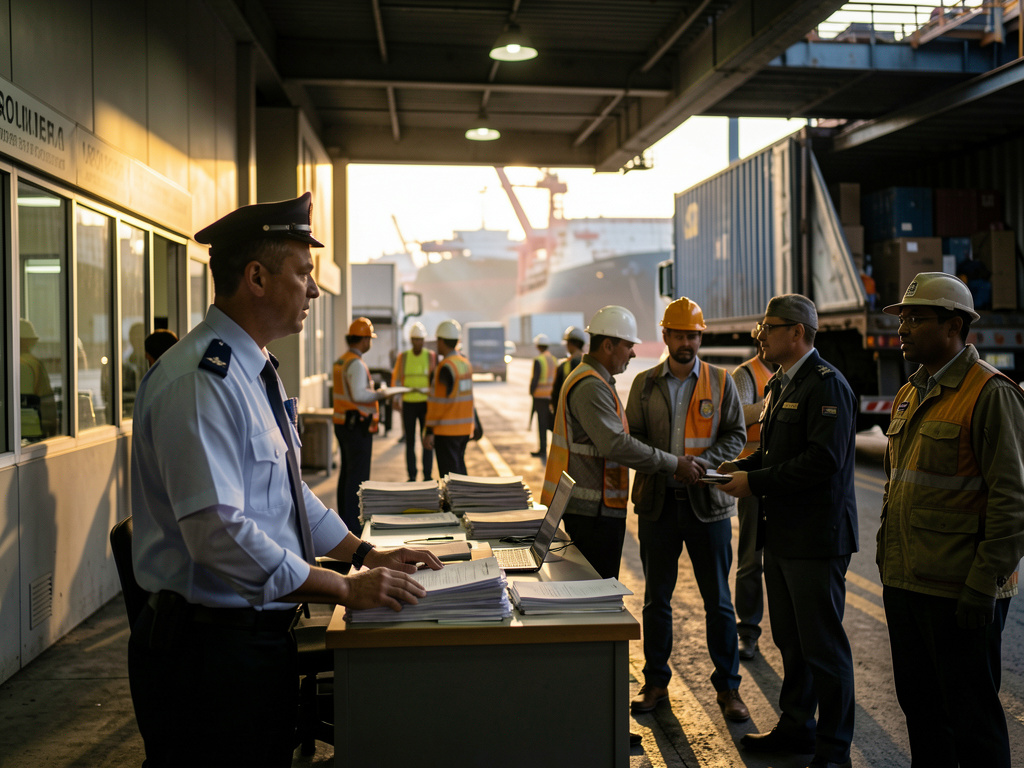
Changes in Customs Regulations Complicate International Trade
How Changes in Customs Regulations Complicate International Trade
International trade has long ceased to be solely about delivering goods from one country to another. Today, it is a complex system involving manufacturers, exporters, importers, carriers, customs representatives, warehouse operators, banks, insurance companies, and government regulatory bodies. Each participant is responsible for a specific stage, and any change in legislation can impact the entire supply chain.
Customs regulations are regularly updated due to changes in economic policy, the imposition of sanctions, increased product safety controls, efforts to combat smuggling, and the protection of the domestic market. For businesses, this means the need to constantly monitor new requirements, adjust export documents, revise international shipping routes, and account for additional costs. Even a small inaccuracy in a declaration or incorrect classification of goods can lead to cargo delays, fines, and financial losses.
Changes particularly affect companies that operate across multiple countries. Each country has its own import restrictions, labeling requirements, customs valuation rules, and list of required documents. Therefore, there is no universal algorithm for all directions of international trade. Entrepreneurs must adapt processes to specific jurisdictions, product categories, and types of transportation.
Why Customs Regulations Are Constantly Changing
Customs regulations are part of the state’s economic and foreign trade policy. They do not exist separately from the political and financial situation in the world. When a government seeks to support domestic producers, it may raise import duties, impose quotas, or complicate the procedure for allowing foreign goods into the market. If it is necessary to restrict the export of certain resources, authorities introduce new export bans and licenses.
Another reason for changes is technological development. The expansion of e-commerce, automation of logistics, and the increase in international shipments require updates to control mechanisms. Customs authorities are implementing electronic declarations, pre-notification systems, automatic risk assessments, and digital data exchange. Such solutions speed up the processing of standard shipments but simultaneously raise the quality requirements for information.
Changes may also be related to international agreements. Countries enter into free trade agreements, alter the conditions for applying preferential tariffs, introduce unified safety standards, or revise rules regarding the origin of goods. For businesses, this creates both advantages and new obligations. For example, a reduced duty rate may only apply if a certificate of origin is provided in the established format.
Economic and Political Factors
International trade is directly influenced by sanctions, trade conflicts, currency restrictions, and foreign policy decisions. The same product may be allowed for import for several years and then fall under a ban or special control. Sometimes restrictions are imposed quickly, leaving companies unable to complete already prepared shipments.
Political changes also affect transportation routes. Border closures, transit restrictions, bans on using certain ports, or changes in airspace crossing rules lead to a restructuring of logistics. International shipments become longer and more expensive, and standard delivery times cease to be reliable.
Increased Security Controls
Customs services are paying more attention to the safety of goods. This is especially relevant for products that may pose a risk to human health, the environment, or critical infrastructure. Chemicals, medical devices, electronics, dual-use equipment, food products, and battery-powered goods often fall under additional scrutiny.
Such products may require conformity declarations, sanitary conclusions, licenses, safety certificates, and technical documentation. If even one document is missing or contains contradictory information, customs clearance may be suspended until violations are resolved.
How Changes in Import Restrictions Affect Business
Import restrictions can take various forms. They are not just direct bans on imports. Governments use increased duties, quotas, licensing, special permits, sanitary requirements, mandatory certification, and country of origin restrictions. Sometimes goods are allowed for import, but only under additional conditions.
For a company, changes in requirements mean the need to quickly review the current assortment and supply chain. It is necessary to determine whether the HS code has changed, if a new duty rate has been introduced, or if there are restrictions on the manufacturer or country of origin. At the same time, it is required to assess whether the supplier can provide updated documents.
Additional Permits and Licenses
Some categories of goods cannot be cleared solely based on a commercial invoice and a transport bill of lading. Licenses, certificates, conclusions from government bodies, or import permits are needed for their movement. Such categories may include pharmaceutical products, communication equipment, animal products, plants, chemicals, and certain types of electronics.
The problem is that permits are often issued in advance and have a limited validity period. If international transportation is delayed, the document may expire before the cargo arrives. As a result, the importer has to go through the administrative procedure again, pay additional fees, and incur storage costs.
Quotas and Tariff Restrictions
A quota limits the volume of products that can be imported or exported within a certain period. Once the quota is exhausted, the shipment may become economically unfeasible due to increased duties or may be completely prohibited. This creates a planning problem for companies: it is necessary to reserve quota volumes in advance and monitor their remaining amounts.
Tariff restrictions also affect the cost price. Even a slight increase in the customs rate can change the final price of the product, reduce profitability, and make the shipment unprofitable. Mass-market goods with low unit costs are particularly sensitive to such changes.
Labeling and Packaging Requirements
Import restrictions are often related to the mandatory information that must be placed on the packaging. This may include details about the composition, manufacturer, expiration date, country of origin, usage instructions, disposal, and safety measures. Information may be required in the official language of the destination country.
If labeling is absent or does not conform to the established format, customs may delay the cargo. Sometimes, products are only allowed to be released after re-labeling at a special warehouse. This increases the cost of delivery and disrupts the timelines for bringing the product to market.
Export Documents and Reasons for Their Complexity
Export documents confirm the legality of the goods' export, their characteristics, value, origin, and compliance with the requirements of the destination country. The traditional set usually includes a commercial invoice, packing list, transport bill of lading, export declaration, and contract between the parties. However, for many categories of products, this is not sufficient.
Depending on the product and route, a certificate of origin, phytosanitary or veterinary certificate, export license, conformity declaration, safety passport, transit permit, and documents confirming the final recipient may be required. The more participants and countries involved in the chain, the higher the likelihood of discrepancies between documents.
Errors in Commercial Documents
One of the common causes of delays is discrepancies in data across different documents. For example, the invoice states one quantity of goods, the packing list shows another, and the transport bill of lading uses an abbreviated description. Even a technical error in units of measurement can raise additional questions from the customs inspector.
Information about value is particularly important. Customs authorities check whether the price of the goods has been understated to reduce payments. If there are suspicions of inaccurate pricing, inspectors may request contracts, payment orders, price lists, specifications, and correspondence with the supplier.
Certificate of Origin
The origin of the goods affects the application of duties, trade preferences, and restrictions. If a company wants to take advantage of a preferential rate, it must confirm that the products are indeed produced in the corresponding country. Certificates of origin and documents about the production process are used for this purpose.
Complications arise when the product is assembled from components produced in different countries. In such cases, it is necessary to determine where sufficient processing occurred, whether the product code has changed, and whether the product complies with the rules of a specific trade agreement.
Electronic Document Management
Many countries are transitioning to electronic customs systems. This speeds up data exchange but raises requirements for file formats, electronic signatures, and the accuracy of field completion. If the system does not accept a document due to a technical error, the release of the cargo may be delayed.
Companies must not only store paper originals but also ensure access to a digital archive. Electronic documents may be required for subsequent verification, refunding overpayments, confirming exports, or conducting audits.
Customs Clearance and Its Impact on Delivery Times
Customs clearance involves a set of procedures necessary for the legal movement of goods across borders. Depending on the mode of transport, procedures for import, export, transit, temporary import, processing on customs territory, or re-export are carried out. Each procedure has its own requirements.
In practice, the clearance process begins even before the transport arrives. The importer or their representative prepares information about the goods, calculates payments, checks the necessary documents, and submits preliminary information. Upon the arrival of the cargo, customs analyzes the declaration and makes a decision regarding release, inspection, or requests for additional documents.
Product Classification
The HS code determines the duty rate, the need for permits, and the application of restrictive measures. An error in classification can lead to additional payments, fines, or the declaration being deemed inaccurate. Therefore, it is not enough to rely solely on the commercial name of the product.
For accurate classification, factors such as material, purpose, technical specifications, operating principle, configuration, and method of use are taken into account. In complex cases, companies obtain a preliminary decision from the customs authority or engage a classification specialist.
Determining Customs Value
Customs value is used to calculate duties, taxes, and fees. Typically, the transaction price is used as the basis, but additional costs such as packaging, transportation to the border, insurance, royalties, and other payments stipulated by law may be added.
If the customs authority considers the declared value unreasonably low, it has the right to request supporting documents or apply another method of assessment. The adjustment procedure can take a significant amount of time and affect the financial planning of the importer.
Customs Inspection
Inspections are conducted selectively or when risk factors are present. Inspectors may check the number of packages, labeling, actual product names, packaging, and document compliance. Sometimes experts or laboratories are involved for verification.
Inspections increase the clearance time and create additional costs. The company may incur expenses for storage at the terminal, labor for unloading, opening packaging, repackaging, and transport downtime. If the goods fall into the perishable category, the consequences can be even more severe.
International Shipping and Cargo Delays
Customs changes directly affect international shipping. Carriers must consider new requirements for transit documents, routes, types of transport, seals, and advance notifications. Failure to comply with regulations can result in cargo being stopped not only in the destination country but also at intermediate points along the route.
Cargo delays can occur for various reasons: incomplete documentation, discrepancies in information, lack of permits, technical failures in the electronic system, inspections, changes in transit rules, or high traffic at border crossings. Sometimes a delay occurs due to the actions of one participant, but the costs are borne by the entire supply chain.
The Impact of Delays on Business
Disruptions in delivery schedules can lead to production halts, inventory shortages, breaches of customer commitments, and penalties. For retail chains, a delay in one shipment can result in empty shelves and lost sales. For manufacturing companies, the absence of a single component can halt the entire production process.
In addition to direct losses, companies face indirect costs. These include storage fees, container downtime, route changes, expedited shipping, re-documentation, and hiring additional personnel. If the cargo is returned to the sender, costs increase even further.
Sea, Road, and Air Transport
In sea transport, the timing of document submission and the accuracy of data in the bill of lading are particularly important. A container may arrive at the port before customs clearance is completed, leading to storage and demurrage charges.
Road transport is sensitive to changes in transit regulations, queues at borders, and permit requirements. An error in the driver's or transport company's documents can halt cargo for several days.
Air transport is usually faster but more expensive. For air shipments, requirements for hazardous materials, batteries, liquids, and special equipment are especially critical. If documents are improperly prepared, the cargo may be removed from the flight.
Shipping and New Requirements in Global Logistics
The term shipping is often used to refer to maritime transport, but in modern business practice, it also encompasses the entire range of operations involved in sending goods. International shipping involves shipping lines, freight forwarders, port terminals, customs representatives, warehouses, and insurance companies.
Changes in customs regulations require participants in the shipping process to exchange more detailed information in advance. It is not enough to provide a general description of the cargo. Accurate information about the composition, product code, quantity, weight, value, country of origin, and recipient is required.
Pre-Notification
Many customs authorities require data to be submitted before the arrival of a ship, vehicle, or aircraft. Preliminary information is used to assess risks and select shipments for additional inspection. If the information is not submitted on time, the carrier may incur a fine, and the cargo may be delayed.
For businesses, this means the need to prepare documents before the actual shipment. Any changes after dispatch may require adjustments in the carrier's and customs authority's systems.
Container Shipping
Container logistics depend on the coordinated work of several organizations. The container passes through the terminal, port, carrier, warehouse, and customs. If even one stage is delayed, additional costs arise.
The deadlines for free storage and use of the container are particularly important. After these deadlines expire, fees are charged, which can significantly increase the cost of international shipping. To mitigate risks, companies agree in advance on the documentation process and monitor the status of the cargo at each stage.
How Companies Can Mitigate Risks
It is impossible to completely eliminate the impact of changes in customs regulations, but businesses can significantly reduce the likelihood of problems. To do this, it is necessary to establish a systematic process for managing foreign trade operations rather than addressing issues only after delays occur.
The first step is regular monitoring of legislation. It is essential to keep an eye not only on the rules of the importing country but also on the requirements of the exporting country, transit countries, and transport operators. It is important to consider publications from customs authorities, clarifications from relevant agencies, and updates to electronic systems.
Counterparty Verification
The reliability of the supplier and buyer directly affects the quality of documents. Before starting cooperation, it is advisable to check whether the partner can provide technical descriptions, certificates, origin information, and proof of value. The contract should stipulate the obligation of the parties to timely provide up-to-date documents.
It is also important to determine who is responsible for errors and additional costs. The contract can specify the procedure for distributing costs for storage, inspection, re-labeling, and route changes.
Using a Customs Representative
A customs representative helps prepare the declaration, verify the HS code, calculate payments, and interact with regulatory authorities. Such support is especially useful when working with new markets, complex goods, and non-standard regimes.
However, outsourcing the documentation process does not absolve the importer of responsibility. The company must verify the provided information and keep documents that confirm the legality of the transaction.
Creating Time and Budget Reserves
When planning international shipments, it is essential not to rely solely on the ideal delivery timeframe. The schedule should allow time for inspections, document requests, declaration adjustments, and potential queues at the border.
The financial reserve should account for additional costs for storage, downtime, insurance, expedited shipping, and specialist services. This helps avoid supply stoppages in the event of unforeseen circumstances.
Changes in customs regulations make international trade more complex, costly, and demanding in terms of preparation quality. Import restrictions, new requirements for export documents, increased control over the origin of goods, and the digitalization of documentation compel companies to constantly adapt their processes.
The main risks are associated with incorrect product classification, inaccurate customs value, lack of permits, labeling discrepancies, and errors in transport documents. Such issues lead to cargo delays, additional payments, transport downtime, and breaches of obligations to customers.
To ensure that international shipments remain stable, businesses must analyze the requirements of each country in advance, control documents, verify counterparties, and use modern tracking tools. Customs representatives, foreign trade specialists, and automated document management systems play a crucial role.
Proper preparation not only allows for customs clearance without significant delays but also enables the assessment of delivery costs in advance, the selection of the optimal route, and the reduction of dependence on sudden changes in legislation. In the context of unstable global trade, the quality of customs planning becomes one of the key factors in a company's competitiveness.