

 RU
 UA
 DE
 FR
 ES
 CN
 SA
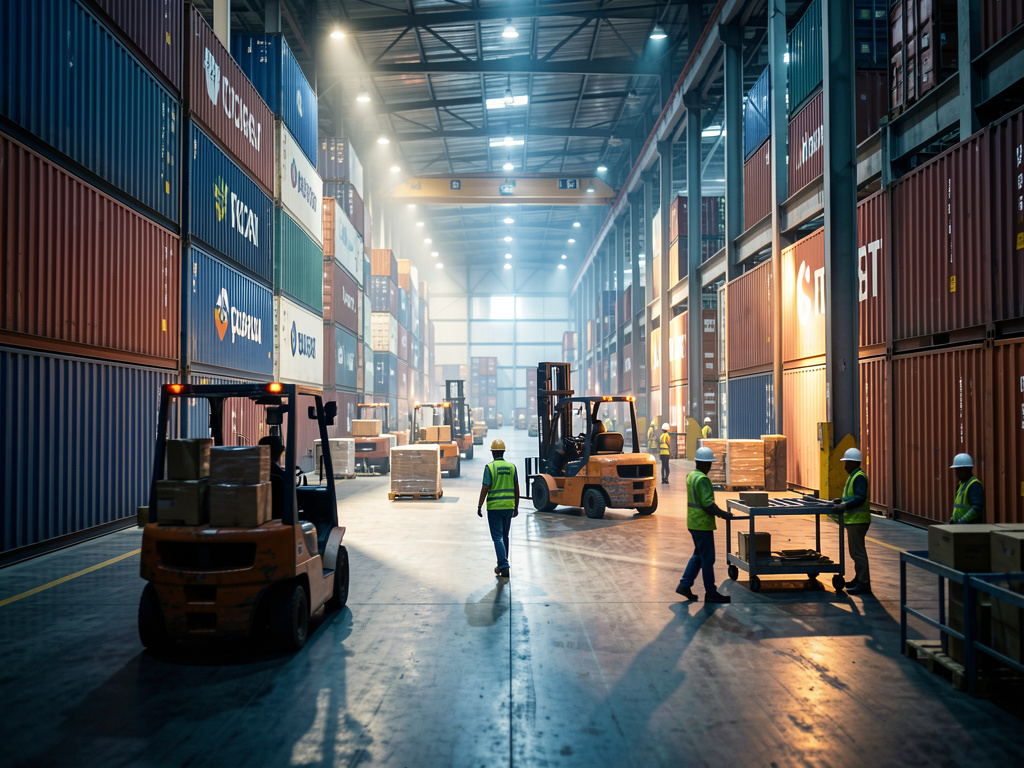
Why Delivery from China is Getting More Expensive and How to Cut Costs
Why Delivery from China is Getting More Expensive and How to Reduce Costs: A Practical Guide for Businesses
Delivery from China remains one of the main components of product cost for Russian companies. Manufacturers, wholesalers, and online stores regularly face rising tariffs on international shipping, changes in customs regulations, fluctuations in currency exchange rates, and increased transportation times. As a result, the cost of delivery from China can significantly impact the final product price, business margins, and competitiveness.
The problem is particularly acute when dealing with small batches, urgent deliveries, non-standard cargo, and goods that require special transportation conditions. It is crucial for entrepreneurs to understand not only the fact of rising logistics costs but also the reasons behind tariff changes. This allows for better budget planning, choosing the right delivery scheme from China, and reducing expenses without compromising service quality.
In this article, we will explore why the cost of international shipping is rising, what makes up the delivery price, how customs fees and currency exchange rates affect it, how to choose a reliable carrier, and what tools can help businesses optimize logistics. We will pay special attention to practical solutions that can be used when organizing shipments through partners, including ship247.world.
Why Delivery from China is Getting More Expensive
The cost of delivery from China is influenced by a multitude of factors. It is affected not only by the tariffs of the transport company but also by fuel prices, the load on transport corridors, border situations, currency exchange rates, seasonality, the type of cargo, and the specifics of its customs clearance. Therefore, even with a constant shipment volume, the cost of transportation can increase within just a few weeks.
One of the main reasons for rising prices is the increased demand for international shipping. China is the largest global manufacturing hub, which means that transport routes from this country are constantly busy. During peak seasons—before the New Year, major sales, holidays, and the start of business activity—the volume of shipments sharply increases. Carriers raise tariffs as transport capacities become limited.
The cost of fuel also has an additional impact. Road, rail, sea, and air transport are directly dependent on the prices of diesel, gasoline, and aviation kerosene. When fuel prices rise, logistics companies revise their base rates or add fuel surcharges. Even a small increase in expenses at each stage can significantly raise the final delivery price of a shipment.
Another factor is the change in routes. If the standard route becomes less accessible due to restrictions, congestion at checkpoints, or political situations, the cargo must be redirected along an alternative route. This increases the distance, number of transshipments, and duration of transportation. Sometimes not only the cost of delivery from China changes, but also the composition of associated expenses: additional warehousing services, fees for delays, document reprocessing, and rehandling of cargo may arise.
Rising Costs of International Shipping
International shipping includes several sequential operations: receiving the goods from the supplier, consolidation, packaging, export clearance, transportation to the border, customs procedures, delivery within the destination country, and handing over the cargo to the recipient. Each operation has its own cost.
When using consolidated cargo, the price depends on the actual volume or weight of the goods. Carriers may apply calculations based on the greater indicator: volumetric weight or physical mass. This is especially important for lightweight but bulky products—furniture, textiles, packaging, plastic products, and household items. If the cargo is improperly packed, it takes up more space, and the cost of transportation increases.
The price is also influenced by the balance of cargo flow between countries. If significantly more goods are sent in one direction than in the opposite, the carrier has to compensate for the costs of returning the transport. As a result, tariffs in the overloaded direction may increase even without a significant rise in the cost of the transportation itself.
Timeliness is of serious importance. Air delivery from China is more expensive but allows for quick restocking. Rail transport often represents a compromise between speed and cost. Sea delivery is advantageous for large batches, but it takes more time and requires careful planning. Road routes allow for flexible delivery organization, but their cost depends on road conditions, queues at the border, and transport availability.
The Impact of Currency Fluctuations
Most calculations in international logistics are related to foreign currency. Transportation companies can pay for services from partners, terminals, warehouses, and carriers in yuan, dollars, or euros. Therefore, fluctuations in exchange rates directly affect the rates for customers.
Even if the carrier's rate remains unchanged in currency, the cost of shipping from China may increase in ruble terms. Additional expenses arise when paying the supplier for the goods, processing documents, insurance, purchasing packaging, and conducting banking operations.
It is important for businesses to consider currency risks at the stage of forming the procurement budget. If the cost price is calculated based on the current exchange rate without a buffer, the final margin may turn out to be lower than expected. A practical solution is to use several calculation scenarios: optimistic, baseline, and stress. Each scenario should take into account possible changes in exchange rates and tariffs for international transportation.
How customs duties affect shipping costs
Customs duties are one of the most significant elements of expenses when importing goods from China. Many entrepreneurs mistakenly believe that the shipping price fully reflects all costs. However, after the cargo arrives, there may be expenses for duties, value-added tax, customs fees, broker services, storage, and additional control procedures.
The amount of duties depends on the HS code, customs value, country of origin, product characteristics, and applicable rates. If the product is misclassified, customs may request additional documents, adjust the declared value, or initiate an inspection. This increases processing times and leads to additional expenses.
The customs value usually includes not only the price of the goods on the invoice but also the costs associated with their delivery to the point of import. If the documents are incorrectly prepared, customs authorities may have questions about the declared price. In some cases, this leads to an increase in the base for calculating duties.
Main types of customs expenses
When importing from China, businesses may encounter several types of payments:
import customs duty;
VAT;
customs fee for performing operations;
customs representative services;
storage fees at the terminal;
inspection and reprocessing costs;
certification, labeling, and laboratory testing;
payments for transport downtime.
The duty rate is determined by the product group. For some categories, it is minimal, while for others, it can significantly impact the final cost price. VAT is calculated based on the customs value, duty, and some additional fees. Therefore, an error in product classification can change the total expenses by a significant amount.
To reduce risks, it is necessary to determine the HS code in advance, check certification requirements, and prepare a complete set of documents. This may include the contract, invoice, packing list, transport documents, product description, technical documentation, and permits.
How to legally reduce customs expenses
Reducing customs payments does not mean undervaluing the goods or providing false information. Such actions can lead to fines, cargo delays, and administrative liability. Optimization should be based on correct documentation and smart planning.
Before shipping, it is essential to verify that the HS code is correctly selected. Sometimes similar products belong to different product groups, so it is important to consider the material, purpose, design, and technical specifications of the products. If necessary, a preliminary ruling can be obtained or a consultation with a qualified customs specialist can be arranged.
It is also advisable to find out in advance whether mandatory certification, declaration of conformity, labeling, or registration in special systems is required. If the required documents are missing, the cargo may be delayed at the border, and the entrepreneur will have to pay for storage and additional services.
Another way to control expenses is to consolidate shipments and plan deliveries. With regular shipments, it is possible to reduce the number of individual clearances, lower document processing costs, and utilize transport space more efficiently. However, consolidation must be organized correctly: different goods may have different documentation and import requirements.
How to choose a carrier for shipping from China
The choice of carrier directly affects the cost, timing, and safety of international shipping. It is not advisable to rely solely on the lowest rate. An overly cheap offer may not include some mandatory expenses: customs clearance, delivery to the warehouse, packaging, insurance, terminal services, or transfer fees.
A reliable logistics partner should clearly explain the tariff structure. In a commercial proposal, it is important to see which services are included in the price and which are charged separately. The more transparent the calculation, the lower the risk of unexpected charges.
When choosing a carrier, it is essential to assess their experience with specific categories of goods. Different rules may apply for electronics, equipment, clothing, cosmetics, food products, and hazardous materials. Companies that regularly handle a particular type of product have a better understanding of packaging, documentation, and labeling requirements.
What to pay attention to when comparing offers
Before signing a contract, it is helpful to request identical quotes from several companies. The request should include:
the name and characteristics of the product;
the number of packages;
weight and volume;
the supplier's address in China;
the final delivery address;
the desired timeframe;
the need for consolidation;
packaging requirements;
the need for insurance;
the necessity of customs clearance.
It is important to compare not only the total amount but also the composition of the service. One carrier may offer delivery to the terminal, while another provides door-to-door service. One tariff may include transloading, while in another it is charged separately. Sometimes a low rate is offset by long storage times or additional fees.
It is crucial to clarify how dimensional weight is calculated, whether there is a minimum chargeable quantity, and what happens if the actual parameters of the cargo change. It is also necessary to determine who is responsible for damage to the goods, delays, loss of documents, and transportation downtime.
Why transparency in logistics is important
Carrier transparency means the ability to track shipments, receive documents, and understand the current status of the shipment. If a company does not provide information about the route, timelines, and status of clearance, it becomes difficult for a business owner to manage inventory and inform clients about potential delays.
Modern logistics services offer personal accounts, notifications, photo reports from consolidation warehouses, packaging control, and online cost calculations. Such tools help reduce errors and make quicker decisions.
When choosing a company, consider solutions available on ship247.world, provided they meet business requirements regarding routes, timelines, types of cargo, and levels of support. However, before starting work, it is advisable to review the contract, insurance procedures, compensation rules, and the list of included services.
How to reduce shipping costs from China
Reducing logistics costs starts not with finding the cheapest rate, but with optimizing the entire supply chain. Even small changes in packaging, purchasing schedules, and transportation methods can yield significant financial results.
The first direction is cargo consolidation. If suppliers are located in the same region or are willing to ship goods within agreed timelines, multiple orders can be combined at a warehouse in China. This reduces the shipping cost of each individual batch, as transport space is used more efficiently.
However, consolidation requires oversight. It is necessary to check the packaging, labeling of each package, compliance of the quantity of goods with the documents, and separation of products from different suppliers. If the goods have different HS codes or regulatory requirements, a consolidated shipment may complicate customs clearance.
The second direction is proper packaging. Excessive packaging increases volume, while inadequate packaging leads to damage. It is essential to find a balance between protecting the goods and efficiently using space. For certain categories, palletizing, vacuum packaging, reinforced boxes, or moisture protection may be used. It is helpful to agree in advance with the supplier on box sizes and allowable stacking height.
The third direction is planning timelines. Urgent delivery from China almost always costs more. If purchases are planned in advance, a more economical route can be chosen, avoiding air transport. For regular business, it is advisable to create a delivery schedule considering the production cycle, seasonality, and customs processing time.
Choosing the right mode of transport
The optimal mode of transport depends on the volume, value, and urgency of the cargo.
Air freight is suitable for small, expensive items, samples, components, and urgent orders. Its main advantage is speed, but the rate per kilogram is usually the highest.
Rail freight provides a compromise between delivery times and cost. It is convenient for regular medium-sized shipments when the sea route is too slow and air freight is too expensive.
Sea transportation is advantageous for large volumes and low cost per unit weight. Its downside is long delivery times and dependence on port schedules, transshipments, and further domestic delivery.
Road routes allow for the delivery of consolidated cargo and the use of flexible "door-to-door" schemes. It is essential to consider the situation at border crossings and possible transport restrictions.
How to Negotiate with Carriers
Regular clients can often expect personalized terms. If a business regularly ships goods from China, it is worth discussing fixed rates, volume discounts, priority processing, and free storage for a certain period.
For negotiations, it is important to prepare statistics: average shipment volumes, frequency of shipments, seasonal fluctuations, and deadline requirements. It is easier for the carrier to offer a favorable rate if they understand the future volume of cooperation.
It is also useful to discuss not only discounts but also the service structure. Sometimes, including packaging, consolidation, or standard insurance in the overall rate proves to be more beneficial. This reduces the number of separate payments and simplifies financial control.
Logistics Optimization for Business
Business logistics should be manageable, predictable, and tailored to the specifics of the product. When deliveries are organized without a single plan, the company faces constant overspending: urgent shipments, downtime, stock shortages, and unforeseen customs fees.
The first step is to analyze the total cost of delivery. It is necessary to consider the product price, transportation within China, consolidation, packaging, international shipping, insurance, customs fees, broker services, warehousing, and delivery to the final address. Such calculations allow for a clear view of the actual cost per unit of product.
The second step is product segmentation. Products can be divided by margin, turnover, dimensions, and urgency. For fast-selling items, it is advisable to maintain a safety stock. For rare and oversized items, it is essential to plan sea or rail transportation in advance.
The third step is to develop several logistics scenarios. For example, the main volume can be shipped by rail, a small urgent batch by air, and large seasonal stocks by sea. This model reduces the business's dependence on a single route.
Digital Supply Chain Control
Using digital tools allows for monitoring all stages of transportation. The system can store data about suppliers, orders, documents, rates, deadlines, and actual expenses. This is especially important when working with multiple manufacturers and regular shipments.
Automation helps compare planned and actual costs. If expenses on a specific route regularly exceed projections, the business can change the delivery scheme or revise contract terms.
Tracking allows for monitoring the location of cargo and responding to delays in advance. If delivery is needed by a specific date, timely notifications provide the opportunity to modify the order, inform clients, or use an alternative source for the product.
Inventory Management
One reason for expensive logistics is poor warehouse management. When there is a shortage of goods, the entrepreneur is forced to order urgent delivery. Excess inventory increases storage costs, ties up working capital, and raises the risk of product obsolescence.
To calculate safety stock, average sales, delivery time, seasonality, and potential border delays should be considered. Regular sales analysis helps determine the optimal order size and reduce the number of unplanned shipments.
Insurance and Protection Against Unexpected Expenses
International transportation is associated with risks of damage, loss, shortage, and delays. Fragile, expensive, technically complex, and temperature-sensitive goods are particularly vulnerable. Insurance does not reduce the rate itself but helps avoid significant financial losses.
Before arranging insurance, it is necessary to clarify the list of insured events. Some policies cover only total loss of cargo but do not compensate for packaging damage, partial loss, or consequences of improper loading. There may also be exclusions for certain categories of products.
In the contract, it is important to check the deductible amount, the procedure for filing a claim, the list of documents, and the timeframes for claim review. If the value of the goods is incorrectly stated, the compensation may be lower than the actual losses.
It is crucial to document the condition of the cargo at each stage: upon receipt from the supplier, at the consolidation warehouse, before loading, and upon delivery. Photographs, videos, packing lists, and reports help prove the circumstances of damage.
How to Reduce Risks Without Extra Costs
Cost savings on insurance can be achieved through proper risk assessment rather than complete abandonment of protection. For inexpensive and easily replaceable goods, full insurance may be unnecessary. For expensive equipment, electronics, and large shipments, it is often justified.
The likelihood of losses can be reduced by:
checking the supplier;
controlling packaging;
using reliable transportation;
marking locations;
sealing;
providing accurate cargo descriptions;
photo documentation;
choosing a verified carrier;
tracking the route.
It is also important to determine in advance who is responsible for the goods at each segment of the journey. In international trade, this depends on the delivery terms specified in the contract. If the boundaries of responsibility are unclear, parties may shift blame onto each other when a problem arises.
Common Mistakes When Organizing Deliveries from China
Many additional costs arise from mistakes made before the goods are shipped. Entrepreneurs may choose a carrier solely based on price, fail to check documents, ignore labeling requirements, or underestimate customs clearance times.
One of the most common mistakes is the lack of accurate data on weight and volume. Preliminary calculations may differ from actual parameters, and the carrier will recalculate the cost after acceptance. To avoid disputes, it is advisable to use control weighing and photo documentation.
Another issue is ordering goods without checking restrictions. Some product categories require certification, permits, or special labeling. If this is discovered after the cargo arrives, storage fees and additional procedures will need to be paid.
Seasonality cannot be ignored. Before Chinese holidays, factories and warehouses operate under increased loads, and after the holiday period, there are queues at production and terminals. If time buffers are not accounted for, the business may have to switch to more expensive express delivery.
Why Relying Solely on Low Prices is Dangerous
A low rate sometimes means simplified service, lack of insurance, limited liability, or numerous additional fees. As a result, the final amount may be higher than that of a carrier with a higher but transparent rate.
Before making a choice, it is advisable to request a complete calculation to the final address and clarify possible surcharges. The contract should specify deadlines, acceptance procedures, party responsibilities, storage conditions, claims handling rules, and grounds for rate changes.
It is also wise to check the reputation of the logistics company, customer reviews, and the availability of real communication channels. If a partner refuses to provide legal documents or operates solely on verbal agreements, the risks significantly increase.
Practical Plan for Reducing Costs
To lower the cost of shipping from China, businesses can use a step-by-step plan.
First, it is necessary to gather actual data from several recent shipments: weight, volume, route, time, rate, customs fees, storage costs, and final cost price. Without such statistics, it is impossible to understand where overspending occurs.
Next, expenses should be divided into mandatory and controllable. Mandatory expenses include established fees and the basic transportation component. Controllable costs can be reduced through consolidation, route selection, packaging changes, planning, and negotiations with the carrier.
After that, it is important to compare several delivery options: air, rail, sea, road, or combined. It is essential to compare not only the rate but also the time, likelihood of delays, document requirements, and storage costs.
The next step is to check suppliers and shipping conditions. The manufacturer must comply with packaging, labeling, and delivery time requirements. If the supplier regularly makes mistakes, a cheap product may become unprofitable due to additional logistics costs.
Checklist for Entrepreneurs
Before sending a shipment, it is recommended to check:
The exact weight and volume of each package.
The accuracy of the invoice and packing list.
The HS code and certification requirements.
Delivery terms under the contract.
Carrier's tariff composition.
Possible additional fees.
Consolidation and storage conditions.
Possibility of cargo tracking.
Insurance conditions.
Liability of the parties in case of delays or damage.
Transit time.
Necessary time buffer for insurance.
This control helps to detect most problems in advance and avoid costs that arise after shipment.
The rise in shipping costs from China is linked to a combination of factors: increased demand for international transportation, rising fuel prices, currency fluctuations, route congestion, changes in customs requirements, and increased costs of related services. While it is impossible to completely eliminate the influence of these factors, businesses can significantly reduce expenses through effective planning.
The most effective measures include consolidation of shipments, optimization of packaging, proper choice of transport, preliminary calculation of customs duties, document verification, inventory management, and working with a transparent carrier. It is important to assess not only the base rate but also the total logistics cost to the final warehouse.
The choice of carrier should be based on reliability, experience, a clear pricing structure, the availability of tracking, and willingness to take responsibility for the cargo. When considering partners, including ship247.world, it is advisable to study the terms of cooperation, the list of included services, and insurance rules in advance.
Well-structured logistics for a business not only helps to reduce the cost of shipping from China but also makes deliveries stable, predictable, and manageable. This directly affects the cost price of goods, the speed of warehouse replenishment, customer service quality, and the company's overall profit.