

 RU
 UA
 DE
 FR
 ES
 CN
 SA
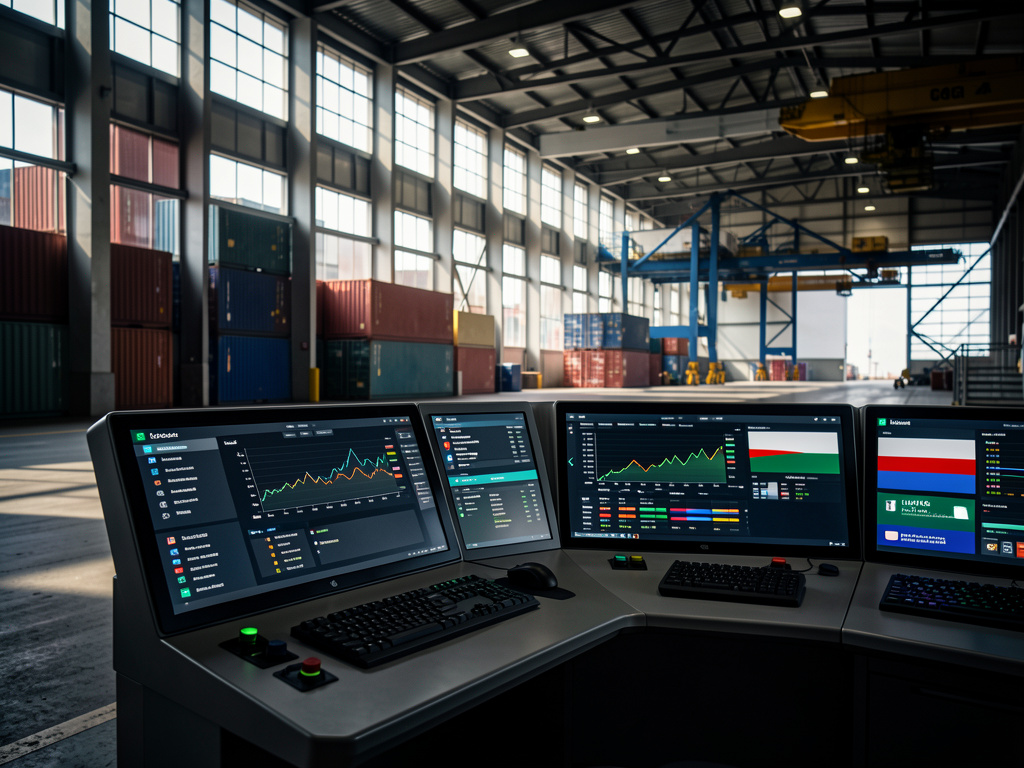
Baltic States as Digital Logistics Hubs
The Baltic States as Digital Logistics Hubs: Shipping from Lithuania, Latvia, and Estonia
The Baltic region — Lithuania, Latvia, and Estonia — has transformed in recent years into one of the most prominent logistics centers in Northeastern Europe. Its advantageous geographical location, developed transportation infrastructure, access to the ports of the Baltic Sea, the digitization of government and commercial services, and participation in the single European market create favorable conditions for international trade and cargo delivery.
Today, shipping goods from the Baltics is in demand among both online stores and marketplaces, as well as private clients. A package from Lithuania, Latvia, or Estonia can be sent to European Union countries, the United Kingdom, Scandinavia, Central Asia, and other regions. In this process, electronic logistics, automated shipment processing, online tracking, and the integration of transport operators with digital platforms play a crucial role.
The international logistics company Baltic Logistics Shipping offers services for organizing transportation, delivering packages, consolidating shipments, cargo escorting, and route monitoring. Thanks to digital tools, clients can obtain information about the status of their shipment, transportation timelines, and the progress of key delivery stages.
Why the Baltic States Have Become Important Logistics Centers in Europe
Lithuania, Latvia, and Estonia are located at the crossroads of trade routes between Northern Europe, Central Europe, and Eastern countries. The territory of the Baltic states is traversed by road, rail, sea, and air transport corridors. This makes the region convenient for organizing international deliveries, cargo distribution, and transit logistics.
Sea ports hold particular significance. Klaipeda in Lithuania, Riga and Ventspils in Latvia, and Tallinn in Estonia facilitate the handling of containers, general cargo, consolidated shipments, and commercial batches. The port infrastructure is connected to road and rail routes, allowing for the establishment of multimodal delivery schemes.
Another important advantage is the membership of the Baltic countries in the European Union. For many routes within the EU, unified transportation rules, clear customs procedures, and standardized requirements for commercial documentation apply. This reduces the number of administrative barriers and enables carriers to organize deliveries more quickly.
Geographical Location and Transportation Accessibility
The Baltic region connects Scandinavia with continental Europe. From Lithuania, it is convenient to organize shipments to Poland, Germany, the Czech Republic, and other Central European countries. Latvia has a developed port and warehouse infrastructure, while Estonia actively utilizes digital technologies and transport links with Northern European countries.
Road delivery remains one of the most common methods of transportation. It is suitable for packages, consolidated cargo, commercial batches, and urgent shipments. Rail transport is used for large volumes, container shipments, and long-distance routes. Sea delivery is employed for international cargo that requires economical transportation over significant distances.
Digital Maturity of Lithuania, Latvia, and Estonia
One of the main distinctions of the Baltic states is their high level of digitization. Electronic waybills, online declarations, automated order processing, electronic document flow, and shipment tracking systems are widely used here.
Digital logistics is viewed in Europe as an important direction for the development of the entire industry. Specialized platforms can consolidate data about the order, carrier, warehouse, customs documents, and recipient. This allows clients to receive up-to-date information without the need to contact support at every stage of the route.
Shipping from Lithuania: Features and Opportunities
Lithuania plays a significant role in European logistics due to the port of Klaipeda, a developed road network, and proximity to Poland. Shipping from Lithuania is in demand for sending goods from online stores, clothing, electronics, components, documents, product samples, and consolidated cargo.
A package from Lithuania can be sent by both individuals and legal entities. Depending on the characteristics of the cargo, an appropriate transportation format is selected: courier delivery, delivery to a pickup point, transportation to a warehouse, or shipment through a consolidation center.
How to Organize the Shipment of a Package from Lithuania
The process usually begins with submitting a request. The client provides information about the sender, recipient, contents, weight, dimensions, and value of the package. After that, the logistics operator calculates the route, tariff, and estimated timelines.
If the shipment is small, it can be transported as a standard package. For multiple orders, consolidation is used: the cargoes of different clients are combined into a single transport batch. This approach helps reduce costs and makes delivery from Lithuania more profitable.
After the shipment is accepted, it is assigned a unique identifier. This number can be used to track the movement of the package, obtain information about the sorting centers it passes through, and monitor the transfer to the local operator.
Klaipeda as a Maritime and Multimodal Hub
Klaipeda Port plays a significant role in handling container and consolidated cargo. It organizes transport to Scandinavia, Germany, the Netherlands, the UK, and other destinations. The maritime route can be combined with road delivery: the cargo arrives at the port and is then directed to a warehouse or directly to the recipient.
The multimodal scheme allows for the advantages of different types of transport to be utilized. The maritime segment reduces transportation costs, while the road transport ensures flexible delivery to the final address.
Delivery from Latvia and the Role of Riga in International Logistics
Latvia is considered one of the key transport centers in the Baltic region. The central location of the country, the presence of major ports, developed warehouse complexes, and transport links with Estonia, Lithuania, Poland, and Scandinavia make delivery from Latvia in demand for businesses and private shippers.
Riga is the main logistics hub of the country. The city and its surroundings are home to sorting centers, distribution warehouses, terminals for consolidated cargo, and international shipment processing points. Packages directed to EU countries and beyond pass through the Latvian capital.
Parcel from Latvia: Key Stages
The shipment process includes verifying the recipient's details, packaging, preparing accompanying documents, and handing over the cargo to the carrier. Depending on the destination, additional information about the product, its origin, and purpose may be required.
For online stores, the integration of logistics with the order system is crucial. Information about the purchase can be automatically transmitted to the carrier, after which a transport invoice and tracking number are generated. This reduces errors and speeds up the processing of shipments.
When delivering outside the EU, special attention is paid to customs requirements. Incorrect product descriptions or undervalued costs can lead to delays. Therefore, an international logistics company helps prepare documents and verify data before shipment.
Latvian Ports and Warehouse Infrastructure
In addition to Riga, the ports of Ventspils and Liepaja play an important role. They are used for handling various categories of cargo, including container batches, industrial products, raw materials, and consolidated shipments.
Warehouse complexes in Latvia allow for temporary storage of goods, order assembly, repackaging, labeling, and distribution by direction. This enables delivery from Latvia to be integrated into a complete e-commerce chain.
Estonia as an Example of Digital Logistics
Estonia is known for its high level of development in electronic government and commercial services. Digital solutions are actively applied in trade, transport, warehousing, and international shipping. This makes the country a convenient platform for processing parcels, electronic orders, and export shipments.
Tallinn serves as an important transport and distribution center. It is a hub for road, sea, and air routes. Connections with Finland and other Scandinavian countries are particularly significant.
Advantages of Shipping from Estonia
Delivery from Estonia can be convenient for companies operating in Northern Europe. Shipments easily integrate with online stores, warehouse management systems, and automatic customer notification services.
Key advantages include:
electronic processing of transport documents;
automatic assignment of tracking numbers;
developed network of pickup points;
convenient routes to Finland and Sweden;
transparent tracking of shipment statuses;
ability to consolidate multiple orders.
A parcel from Estonia undergoes sorting, transportation, and transfer to the final operator. At each stage, information can be recorded in a digital system.
Tallinn Port and Northern European Routes
Tallinn Port provides maritime communication with Finland, Sweden, and other Baltic Sea countries. This is particularly important for businesses, as maritime routes allow for regular transportation of commercial batches and consolidated cargo.
The combination of sea freight with road delivery helps organize "door-to-door" shipping. Digital platforms facilitate the coordination of carriers, terminals, warehouses, and courier services.
Baltic Logistics Shipping: International Logistics Company
Baltic Logistics Shipping is an international logistics company focused on organizing shipments from Lithuania, Latvia, Estonia, and other European countries. The company can act as a link between the sender, warehouse, transport operator, customs representative, and recipient.
The main task of the logistics operator is to establish a clear and manageable delivery chain. This involves analyzing cargo characteristics, direction, deadlines, budget, and client requirements. After selecting the route, the appropriate mode of transport and necessary documentation are determined.
What services can a logistics company provide?
The logistics service package typically includes:
acceptance and registration of shipments;
delivery from Lithuania, Latvia, and Estonia;
transportation of parcels and consolidated cargo;
consolidation of goods in the warehouse;
packaging, labeling, and repackaging;
preparation of transport documents;
organization of road, sea, and air transport;
customs clearance;
cargo insurance;
route tracking;
delivery to the door or pickup point.
For corporate clients, additional fulfillment services may be provided. These include receiving goods from suppliers, storage, order picking, handover to the delivery service, and handling returns.
Why businesses turn to international carriers
Organizing international delivery independently requires time and expertise. Companies need to choose a carrier, check the destination rules, prepare documents, calculate costs, arrange packaging, and monitor deadlines.
The logistics operator takes on a significant portion of these tasks. The client receives a single communication channel and the ability to track the cargo through an online service. This is especially convenient for online stores that need to ship a large number of orders daily.
Tracking Baltic Post: How to Track Your Parcel
Tracking Baltic Post is a tracking system that allows you to find out the current status of a parcel sent through the postal or logistics network of the Baltic region. To check, a unique tracking number is usually used, which is assigned to the shipment after its registration.
The status may indicate the acceptance of the parcel, processing at the sorting center, transfer to the international route, arrival in the destination country, customs clearance, and delivery to the local operator.
How to Properly Check the Shipment Status
To perform tracking Baltic Post, you need to:
find the tracking number in the email, personal account, or shipping invoice;
open the official service of the carrier or the logistics operator's platform;
enter the number in the designated field;
check the date and description of the last event;
if necessary, contact customer support.
If the shipment has just been accepted, information may appear with a delay. This is usually due to the time required for the parcel to be registered in the sorting system.
What the Main Statuses Mean
The status "accepted" means that the shipment has been registered by the carrier. "Processing at the sorting center" indicates preparation for further transport. "Transferred to the international carrier" means the beginning of movement between countries.
With the status "under customs clearance," the cargo is being checked by the relevant authorities. If additional documents are required, the carrier may contact the sender or recipient.
The status "transferred to the local operator" usually means that the international stage is complete, and further delivery is handled by the postal or courier service of the destination country.
Electronic Logistics in Europe: Technologies and Prospects
Europe is Transforming Transport into a Unified Digital System
European logistics is undergoing a profound technological transformation. Previously, organizing international shipping heavily relied on phone calls, emails, paper invoices, and manual document approvals. Today, cargo is gradually becoming a digital entity, with its movement trackable at nearly every stage of the journey. For businesses, this means not just the emergence of convenient applications or online services. The entire transportation management model is changing: information about the cargo, vehicle, route, documents, temperature, deadlines, and costs is being integrated into a unified digital environment.
Changes are particularly noticeable in road transport, which remains one of the most crucial elements of the European economy. Every day, thousands of tons of products are transported between industrial centers in Germany, France, Italy, the Netherlands, Belgium, Poland, Spain, and other countries. Modern electronic logistics allows for pre-calculating routes, selecting carriers, determining estimated delivery dates, preparing documents, tracking vehicle locations, and automatically notifying recipients of cargo arrivals.
One of the key directions is the transition from paper documentation to electronic data. The European Union is developing the eFTI system, designed for the use of electronic data in freight transport. The fully operational eFTI regime is scheduled for July 9, 2027. Its purpose is to enable carriers to provide standardized information in digital form to authorized bodies through certified platforms, instead of constantly relying on paper documents.
Digitalization is especially important for international transport. A single shipment may pass through several countries, interacting with the sender, carrier, warehouse, freight forwarder, customs representative, and recipient. In the traditional scheme, each party has its own set of documents and systems. Electronic logistics is gradually unifying these processes.
Transportation platforms, TMS (Transportation Management Systems), WMS (Warehouse Management Systems), electronic invoices, GPS navigation, telematics, and API integrations play a crucial role. They not only allow for tracking vehicles on a map but also analyze deviations from routes, predict delays, automatically calculate arrival times, and select optimal delivery options.
The next stage is the use of artificial intelligence. Algorithms analyze fuel costs, road congestion, route history, seasonality, weather conditions, and transport availability. Based on this data, the system can suggest a route that may be more cost-effective or faster than traditional options.
As a result, European logistics is gradually transforming from an industry primarily focused on the physical movement of goods into an information-transport ecosystem. Vehicles still need to travel thousands of kilometers, but the efficiency of these journeys is increasingly determined by the quality of digital solutions that accompany them from the moment of order to the electronic confirmation of delivery.
Electronic Documents, Artificial Intelligence, and Smart Routing
The main advantage of digital logistics is that it connects the physical movement of cargo with the flow of information. For an international company, it is not enough to know that a truck is somewhere between Munich and Milan. It is essential to understand when it will arrive, whether the actual movement aligns with the plan, what documents are associated with the transport, if there has been a delay at the terminal, and whether the further route needs to be adjusted.
This task is addressed by transportation management systems. TMS receives orders, cargo specifications, pickup and delivery addresses, time constraints, and additional requirements. The system can then match the order with available transport, calculate the route, and generate instructions for the carrier. After dispatch, the information begins to update in real-time.
GPS and telematics devices have become the eyes of modern logistics. They transmit vehicle coordinates, speed, stops, and other parameters. For the transport of food, pharmaceuticals, and chemical products, temperature control is particularly important. Sensors can automatically report when parameters exceed established limits.
Another important technology is the electronic invoice. It reduces the number of paper operations and facilitates information exchange between the sender, carrier, and recipient. In the future, standardized electronic documentation should make cross-border transport more transparent.
The European approach to digitalization involves not only the implementation of technologies but also the standardization of data. This is fundamentally important. If one system records an address in one format, another uses a different standard, and a third cannot read the data automatically, digitalization loses a significant part of its advantage.
Artificial intelligence opens the next level. For example, a logistics system can see that a vehicle is delayed due to traffic conditions and can recalculate the estimated time of arrival in advance. If the delay becomes critical, the program can suggest changing the delivery sequence or switching to another carrier at the next stage.
Demand forecasting is of great importance. A manufacturer can determine in advance how much transport will be needed in a week or a month. A retailer can match sales with future deliveries. A warehouse has the opportunity to prepare staff and unloading space before the arrival of the vehicle.
The digital system also helps combat empty runs. If a vehicle has to return without cargo after delivery, the platform can find a backload. This reduces the carrier's costs while simultaneously increasing the efficiency of transport use.
Modern electronic logistics is increasingly built on the principle of «see — predict — act». GPS shows the location, analytics explain the situation, artificial intelligence predicts developments, and the automated system offers solutions. This sequence becomes one of the main factors of competitiveness in European freight transport.
Major Carriers in Europe and Their Digital Capabilities
The European freight market brings together a large number of international logistics groups. Among the most notable players are DHL Freight, DSV, Kuehne+Nagel, DB Schenker, and other large transport and forwarding companies. Their business has long gone beyond simple transportation from one city to another: clients are offered a comprehensive service that includes booking, tracking, electronic document flow, and supply chain management.
DHL Freight occupies a significant place in European road transport. The company offers LTL transportation, which means the transport of consolidated cargo, as well as PTL and FTL for partial and full loads. For its European network, DHL claims the ability to deliver priority consolidated shipments between major economic regions in approximately 24–48 hours, depending on the direction. Clients have access to online tracking, electronic delivery confirmation, and additional time options.
Kuehne+Nagel is also actively developing digital management of road transport. Through the myKN platform, clients can receive cost estimates, book transport, and monitor shipments. The company's European road network includes thousands of specialists and a large number of operational sites.
DSV works with full and partial loads, direct transport, and comprehensive logistics solutions. The company emphasizes the use of GPS tracking and specific delivery times, and its transport network includes tens of thousands of trucks in various regions of the world.
DB Schenker is traditionally one of the well-known European operators of ground logistics, integrating road, rail, air, and sea transport. For large companies, the ability to combine different modes of transport in one chain is particularly important.
At the same time, comparing carriers solely based on price is incorrect. The cost depends on weight, volume, number of pallets, type of cargo, distance, exact addresses, need for pickup and delivery, deadlines, additional services, seasonality, and the current load of the transport network.
In European consolidated transport, the estimated price for one standard pallet on relatively short international routes can range from approximately 100–250 euros. On longer routes, it often amounts to 180–400 euros and above. For multiple pallets, the cost per unit may decrease due to more efficient use of transport space.
The transportation of a full truckload is usually calculated differently. An international FTL route within Western and Central Europe is often estimated at around 1,000–2,500 euros; however, on long routes, for urgent requests, or special requirements, the amount can be significantly higher. These are market benchmarks, not fixed rates of a specific company.
For example, transporting a single pallet from Germany to a neighboring country may take about 1–3 business days, while delivery from Germany to Spain or from the Netherlands to Italy often requires approximately 3–6 business days. Priority products may be faster. DHL calculates actual time based on specific departure and destination indexes, and the company explicitly states that standard delivery times may vary depending on the season and capacity constraints.
Therefore, the modern shipping price is not just about kilometers. It reflects the cost of a certain level of service, speed, digital transparency, accountability, and available transport capacity.
How much does delivery cost and why does the price constantly change
The cost of freight transportation in Europe is determined in a significantly more complex manner than the standard price for parcel delivery. The carrier must consider the distance, weight and volume of the cargo, type of vehicle, loading specifics, direction of travel, fuel costs, road tolls, driver salaries, toll roads, seasonal demand, and the need for backhauls.
The difference between LTL and FTL is particularly noticeable. In the case of LTL, the customer pays for a portion of the transport space. Several companies place their cargo in one vehicle, which lowers the cost for each individual shipment. However, the route becomes more complicated: the vehicle stops at terminals, the cargo is reloaded, and the delivery time increases.
FTL means a virtually fully dedicated vehicle. This is more expensive for a single customer, but this option provides a direct route without a lot of intermediate operations. Therefore, full truckloads are often chosen by manufacturers, distributors, and large trading companies that value stable delivery times.
The estimated cost of international LTL delivery of one Euro pallet within Central Europe can be around 100–250 euros. For distances of about 1,000–1,500 kilometers, a reasonable benchmark might be in the range of approximately 180–350 euros for a standard pallet, although specific commercial offers can vary significantly.
For FTL, transporting a standard tarpaulin truck over a distance of about 500–800 kilometers may cost approximately 800–1,500 euros. On routes of 1,000–1,500 kilometers, the estimated price may be around 1,300–2,500 euros. For longer distances, it can exceed 2,500–3,500 euros.
However, these values should not be perceived as a single European rate. For example, the route from Germany to the Netherlands may be cheaper than the route from Germany to Italy of the same approximate length if there is a high volume of backhaul cargo on the first route. Where it is difficult for the carrier to find a load for the returning vehicle, the rate increases.
Urgency also plays a role. Standard consolidated freight can take several days, while priority transport with strict delivery times requires additional capacity. Major operators have special urgent products. DHL, for example, offers Road Freight Priority, connecting major economic regions of Europe within a priority network with stated delivery times of about 24–48 hours for relevant destinations.
Additional services also increase costs. These include delivery at a specific time, temperature control, transportation of hazardous materials, liftgate service, delivery to restricted access areas, insurance options, and special packaging requirements.
Digital logistics helps make pricing more predictable. Online calculators and instant quote systems take into account shipment parameters and allow for preliminary rates without lengthy correspondence. At the same time, the final price for a large corporate client may be determined by an individual contract and the volume of shipments.
Delivery time should also not be considered separately from price. Express delivery almost always requires additional payment. Conversely, economical transport may utilize consolidation and several terminal operations. Thus, modern logistics effectively offers the client a choice between cost, speed, flexibility, and level of control.
From smart warehouses to autonomous trucks
The future of European logistics will be defined not by a single technology, but by the interaction of a whole range of solutions. Even today, warehouses are transforming into highly automated centers where software manages the placement of goods, robotic systems move boxes, and sensors monitor the condition of equipment and the surrounding environment.
One of the most important trends is the automation of warehouses. Automated trolleys and mobile robots can deliver goods to the picking location, while computer vision systems help recognize packages and monitor errors. This is especially crucial for large e-commerce distribution centers.
The next level is the digital twin of the supply chain. A virtual model can display the movement of goods, warehouse conditions, transportation availability, and anticipated demand. If the system detects a potential shortage of transportation or a delivery delay, the manager receives a warning before the problem arises.
There are great prospects associated with artificial intelligence. It can analyze a vast number of parameters that are difficult for a human to consider simultaneously. This is particularly valuable for logistics, as transportation processes are constantly changing.
For example, an algorithm can match dozens of orders, hundreds of available vehicles, and thousands of kilometers of routes. The goal is not just the shortest path, but the optimal combination of price, time, vehicle load, and the likelihood of delays.
An important direction is ecological digitization. European companies must consider emissions, fuel efficiency, and the transition to alternative modes of transport. Digital systems allow for the calculation of the carbon footprint of a specific shipment and comparison of road routes with rail or multimodal options.
Electric vehicles are gradually becoming part of urban logistics. They are particularly appealing for deliveries to major city centers due to restrictions on emissions and noise. However, questions remain regarding range, charging time, equipment costs, and infrastructure availability for long-distance international transport.
In the future, hydrogen trucks, electric long-haul vehicles, and automated traffic systems may play a significant role. However, the widespread adoption of such technologies will depend not only on technical specifications but also on ownership costs, infrastructure, and regulatory requirements.
Autonomous freight vehicles remain a transitional technology for now. Fully autonomous transport must be able to operate safely in challenging weather conditions, interact with other road users, and respond appropriately to unusual situations. Therefore, the near future will likely be characterized by a gradual increase in automation rather than an immediate disappearance of drivers.
At the same time, digital infrastructure is already becoming as important a part of logistics as vehicles, warehouses, or terminals. The winner is not the carrier with simply more trucks, but the one who can more effectively integrate physical resources and data.
New European Logistics: Faster, More Transparent, and More Accurate
The main result of the digital transformation of European freight transportation lies in the changing perception of delivery itself. Customers are increasingly less interested in simply handing over their cargo to a carrier and waiting for a call. They need to see the order status, vehicle location, estimated arrival time, documents, costs, and potential deviations.
This approach turns logistics into a managed process. While previously a problem became apparent only after a delay, modern systems strive to warn about it in advance. If a vehicle is delayed by several hours, the digital platform can automatically adjust the forecast and notify the recipient.
For businesses, this means reducing uncertainty. A manufacturing company can plan production more accurately, a warehouse can prepare unloading space, a store can calculate product availability, and a carrier can utilize their fleet more efficiently.
European integration is of particular importance. Cargo can start its journey in Portugal, pass through Spain and France, arrive in Germany, and then proceed to Poland. The more borders and participants involved, the greater the importance of a unified digital standard.
That is why the transition to electronic data is becoming a strategic direction. The European Commission states that eFTI must ensure the use of certified digital platforms and standardized information about freight transportation. Full implementation of the system is scheduled for July 2027.
Along with advantages, new risks arise. The more logistics relies on software, the greater the importance of cybersecurity. An attack on a transportation platform has the potential to disrupt a large number of shipments. Therefore, data protection becomes just as important as the physical security of the cargo.
There is also the issue of compatibility. The European market consists of numerous companies, national systems, and software solutions. For digital logistics to function effectively, data must be transferred between different platforms without constant manual input.
For small carriers, digitalization can be both an opportunity and a challenge. On one hand, electronic platforms allow for more orders and competition in the international market. On the other hand, they require investments in software, equipment, training, and information security.
Large international operators are already building comprehensive services around digital technologies. DHL is developing online tracking, electronic delivery confirmations, and tools for calculating delivery times. Kuehne+Nagel provides clients with digital capabilities for calculating, booking, and monitoring shipments. DSV utilizes GPS tracking and digital management of direct shipments.
In the coming years, European freight transport will become increasingly predictable. Prices will be calculated more accurately, routes will be optimized automatically, documents will transition to electronic formats, and clients will receive a nearly continuous view of their cargo's movement.
At the same time, trucks, trains, ships, and planes will not disappear. What will change is that they will be integrated into a single digital system. Data will become the connecting element of European logistics.
Electronic logistics has already ceased to be an additional convenience for large companies. It is gradually transforming into the basic infrastructure of European trade. Delivery speed, transportation costs, environmental friendliness, safety, and service quality increasingly depend on a business's ability to work with real-time information.
The European market is moving towards a model where cargo receives a digital route almost from the moment of ordering, is accompanied by electronic documents, tracked by sensors, monitored by algorithms, and concluded with a digital delivery confirmation. The closer transportation, artificial intelligence, automation, and unified European standards connect, the closer the industry gets to logistics, where the main competitive advantage is no longer just having transportation, but the ability to accurately manage the entire supply chain.
Errors in the address, insufficient packaging, or incomplete product descriptions can lead to delays. Therefore, before handing over the package to the carrier, it is important to verify all information.
The Baltic countries have become important digital logistics hubs in Europe due to their advantageous location, developed ports, transport corridors, and active implementation of modern technologies. Deliveries from Lithuania, Latvia, and Estonia are suitable for both private parcels and regular commercial shipments.
Baltic Logistics Shipping helps organize international transportation, consolidation, warehousing, documentation support, and route monitoring. Tracking services like Baltic Post and other online tracking systems make the movement of shipments more transparent.
The development of electronic logistics in Europe will continue to accelerate: companies will increasingly utilize automation, digital documents, intelligent route planning, and eco-friendly modes of transport. For businesses, this means reduced costs and improved service quality, while for private clients, it means a clearer, more convenient, and controllable delivery from the Baltics.