

 RU
 UA
 DE
 FR
 ES
 CN
 SA
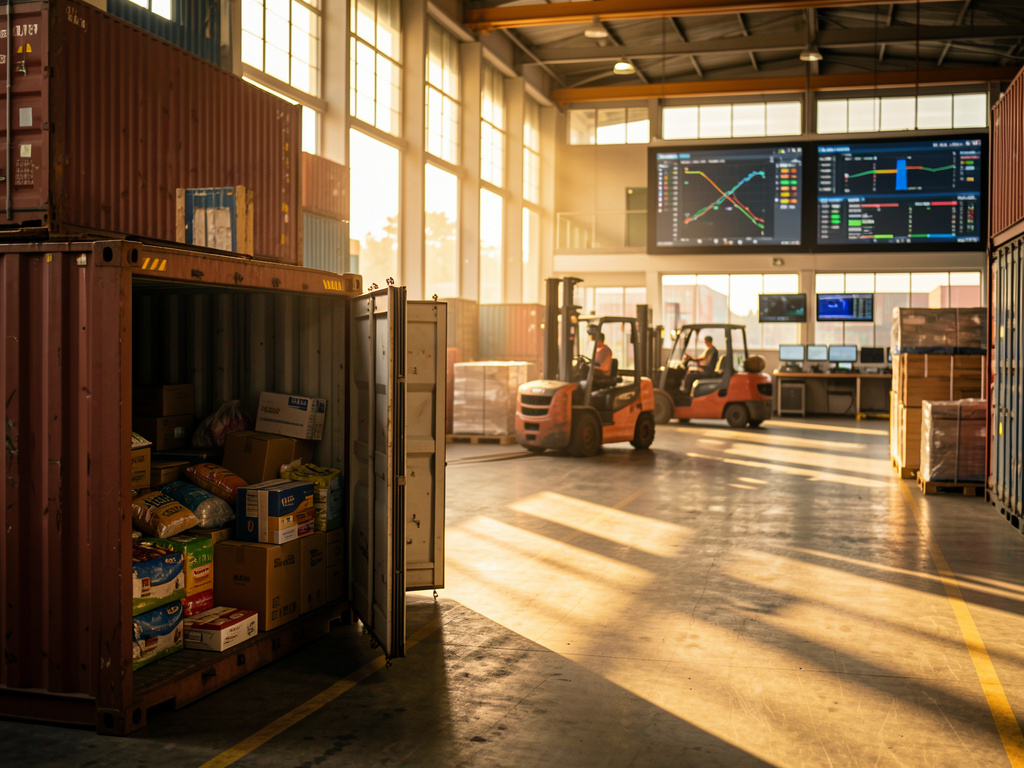
Cargo Delivery from the Philippines to the USA
Shipping Cargo from the Philippines to the USA: Export from Asia, Costs, Timelines, and Customs Clearance
International shipping of cargo from the Philippines to the USA is in high demand among online stores, manufacturers, wholesalers, and individual shippers. Electronics, clothing, footwear, furniture, components, souvenirs, non-perishable food, industrial equipment, and commercial samples are regularly transported between the countries. The Philippines holds a significant position in Asian logistics: the country has a developed port infrastructure, access to key maritime routes, and strong trade ties with the USA.
Organizing transportation requires consideration of many factors: the weight and dimensions of the shipment, the type of cargo, the chosen mode of transport, urgency, Incoterms conditions, American customs requirements, and the need for additional insurance. Incorrect documentation or inaccurate product descriptions can lead to delays, additional fees, and return of the shipment.
How does shipping cargo from the Philippines to the USA work, what are the available transportation methods, how much can it cost, how do the main courier companies differ, what are realistic timelines, and what documents are needed for customs clearance?
Features of Shipping Cargo from the Philippines to the USA
Transportation from the Philippines to the United States can be carried out by air, sea, or multimodal transport. The choice depends on the characteristics of the goods, budget, and required speed. Air shipping is more commonly used for small packages and urgent commercial shipments. Large batches, pallets, containers, and low-value goods are primarily transported by sea.
The logistics process typically begins with picking up the cargo from the sender in the Philippines. The goods are then delivered to a consolidation warehouse, where they are checked, weighed, labeled, and prepared for shipment. After that, the cargo is sent to the airport or seaport, undergoes export clearance, and is dispatched to the USA. Upon arrival in America, import procedures are completed, after which the carrier delivers the cargo to the recipient.
The final cost is influenced not only by the carrier's rates but also by additional services. These include:
pickup of cargo at the address;
packaging and repackaging;
palletizing;
consolidation of multiple shipments;
warehouse storage;
preparation of export documents;
customs brokerage support;
insurance;
delivery from the port or airport to the final address;
fuel and seasonal surcharges;
fees for special categories of goods.
It is important to understand the difference between actual weight and dimensional weight. Courier companies calculate costs based on the higher figure. Dimensional weight is usually determined by the formula:
Length × Width × Height in centimeters / carrier's factor.
The factor may vary depending on the company and mode of delivery. Therefore, a light but bulky shipment can sometimes cost more than a heavy compact box.
Geographical Features of the Philippines–USA Route
The main international hubs in the Philippines are concentrated around Manila and major industrial centers. In the USA, cargo can arrive through Los Angeles, Long Beach, San Francisco, Seattle, New York, Newark, Chicago, Miami, and other logistics centers.
The timeline and cost depend on the specific destination of the shipment. Delivery to California is usually faster and cheaper than transportation to remote states in the central or eastern parts of the country. Additional time is required for delivery to Hawaii, Alaska, and remote territories.
It is also important to consider the differences between delivery "to door," "to airport," "to port," and "to warehouse." In the airport or port option, the recipient organizes further movement of the cargo independently. The "to door" service is more convenient but typically comes with a higher price.
What Can and Cannot Be Shipped
Before arranging transportation, it is necessary to check whether the goods are allowed for import into the USA. Restrictions may apply to:
food products;
medications and medical devices;
cosmetics;
plants and seeds;
wood products;
batteries and lithium batteries;
chemicals;
liquids;
perfumes;
tobacco and alcoholic products;
weapons and components;
goods containing animal-derived materials.
Some goods are only allowed with special licenses, certificates, or permits from U.S. government authorities. If the sender conceals the contents or provides inaccurate descriptions, the shipment may be delayed, confiscated, or returned.
Shipping Methods from the Philippines to the USA
Air Freight
Air freight is considered the fastest way to send cargo from the Philippines to the USA. It is suitable for documents, product samples, expensive items, urgent orders, and small commercial shipments. The average international air delivery time ranges from 3 to 10 business days; however, in some cases, it may be extended due to customs, weekends, weather conditions, and airport congestion.
The main advantages of air freight are:
high speed;
regular flight schedules;
door-to-door delivery options;
convenient tracking;
lower risk of prolonged storage in transit;
an ideal choice for high-value and small-volume goods.
The downside is the higher cost compared to sea freight. The price significantly increases when sending large boxes, as the calculation is often based on dimensional weight.
Air freight can be organized through an international courier service, a specialized freight forwarder, or a logistics broker. Courier companies usually offer standard and express delivery options. The express option is more expensive but ensures priority processing and a shorter transit time.
Sea Freight from the Philippines to the USA
Sea freight is used for large, heavy, and bulky cargo. It is the optimal choice for containers, pallets, furniture, equipment, building materials, manufacturing components, and wholesale shipments.
Shipping can be done in a full container (FCL) or as part of a consolidated cargo (LCL). In FCL, the sender rents the entire container. This option is convenient for large shipments, reduces the risk of mixing with other goods, and usually ensures more predictable handling.
LCL is suitable for smaller shipments that do not fill an entire container. The cargo is placed in a shared container with goods from other clients. The cost is calculated based on volume or weight, but terminal, storage, and documentation fees may be added to the base rate.
The average sea delivery time from the Philippines to the USA can be approximately 20 to 45 days. In reality, the total time may sometimes extend to 50–70 days considering:
delivery to the port;
consolidation;
export clearance;
waiting for the vessel;
transshipment;
port processing;
customs release;
delivery within the USA.
The advantage of sea freight is its low cost per unit of goods. The main downsides are the long transit times, dependence on vessel schedules, and more complex process organization.
Multimodal Transport
Multimodal shipping combines several modes of transport. For example, the cargo is picked up by truck from the sender, then transported by sea to the USA, and after customs clearance, delivered by truck to the recipient's warehouse.
This format allows for route adaptation based on budget and product characteristics. The freight forwarder coordinates different stages and can offer a service under a single contract. This is convenient for companies that do not want to interact directly with ports, terminals, brokers, and local carriers.
Shipping Costs from the Philippines to the USA
The exact price is calculated individually. There is no universal rate for all shipments, as carriers consider many parameters. Even two shipments of the same weight can have different costs due to differences in size, addresses, type of goods, urgency, and method of processing.
When estimating in advance, the following factors are usually considered:
the country and exact address of the sender;
the city and ZIP code of the recipient in the USA;
the number of packages;
actual weight;
dimensions of each box;
dimensional weight;
description and category of the goods;
declared value;
method of transport;
delivery conditions;
insurance requirements;
presence of hazardous or regulated components.
Estimated Rates
Below are approximate ranges used only for preliminary assessment. The final cost depends on the specific carrier, shipping date, and contract conditions.
| Shipment Type | Estimated Time | Approximate Cost |
|---|---:|---:|
| Documents up to 0.5 kg | 2–6 business days | 40–100 USD |
| Package 1–5 kg | 3–8 business days | 70–220 USD |
| Cargo 10–20 kg | 4–10 business days | 180–500 USD |
| Cargo 50–100 kg | 5–12 business days | 500–1,500 USD |
| Consolidated Sea Freight LCL | 25–55 days | from 150–300 USD plus fees |
| Container FCL | 25–60 days | from 1,500–4,500 USD and up |
The values provided are not a public offer. Sea rates can vary significantly depending on the season, port of departure and destination, container availability, fuel costs, and terminal congestion.
Additional Costs
When budgeting, it's important not to limit yourself to the base rate. Additional charges may apply:
customs duties;
U.S. import tax;
entry processing fee;
customs broker services;
terminal fees;
port charges;
domestic delivery in the U.S.;
storage;
inspection;
repackaging;
insurance;
remote address fee;
fuel surcharge;
oversized item fee;
hazardous materials fee.
If a carrier offers a price that seems too low, it's advisable to clarify what services are included in the rate. Sometimes, an attractive rate only applies to the international segment of the route and does not include door-to-door delivery, import processing, or port charges.
Comparison of Major Courier Companies
For shipping from the Philippines to the U.S., DHL Express, FedEx, UPS, and the Philippine Postal Service (PhilPost) are commonly used. There are also local freight forwarders, aggregators, and specialized companies that combine offers from several carriers.
DHL Express
DHL Express is known for its extensive international network, good tracking, and a wide range of express services. The company is suitable for documents, small packages, commercial samples, and urgent shipments.
Advantages:
fast international transit;
convenient online tracking;
developed customs support;
delivery to many regions in the U.S.;
option for pickup from the address.
Disadvantages:
cost may be higher than standard postal solutions;
large and bulky shipments can be expensive;
additional fees may apply for certain categories of goods.
FedEx
FedEx offers international express delivery, standard solutions, and freight services. The company is popular with businesses that require regular shipments of goods, samples, and documents to the U.S.
Strengths of FedEx:
multiple levels of urgency;
convenient tracking system;
solutions for commercial freight;
availability of services for heavy shipments;
integration options with corporate logistics.
When placing an order, it's important to carefully check the rules for calculating dimensional weight and additional charges for remote areas.
UPS
UPS is suitable for sending packages, boxes, commercial freight, and pallets. The company has an extensive network in the U.S., allowing for convenient delivery to the final address.
Advantages include:
developed domestic network in the U.S.;
services for businesses;
various speed options;
ability to deliver pallets and heavier freight;
digital tracking of shipments.
The final price depends on the size of the box, ZIP code, selected service, and nature of the goods.
PhilPost
The Philippine Postal Service may be more affordable for small and non-urgent shipments. However, delivery times are often less predictable than with international express carriers. Tracking may be limited, and delivery on the U.S. side is sometimes handed over to a partner postal service.
PhilPost is worth considering if:
the shipment is not urgent;
there is a need to minimize costs;
the item is not of high value;
the recipient is willing to wait a longer time;
there is no need for complex brokerage support.
How to Choose a Carrier
When comparing companies, it's important to consider not only the cost. You should evaluate the entire range of parameters:
delivery time;
weight and size limits;
insurance conditions;
tracking quality;
customs regulations;
door-to-door delivery option;
availability of support in the Philippines and the USA;
number of additional fees;
packaging requirements;
responsibility for damage or loss.
For an accurate comparison, it is better to request several quotes under the same conditions: the same weight, dimensions, addresses, product value, and cargo description.
Delivery Times Philippines–USA
The transportation time consists of several stages. Promotional offers often only indicate the transit time between airports or ports. However, for the recipient, the total period from pickup to delivery is important.
The overall time may include:
preparation and packaging;
pickup of the shipment;
delivery to the warehouse;
consolidation;
export clearance;
waiting for the flight or vessel;
international transit;
import customs inspection;
delivery within the USA;
handing over to the recipient.
Average Delivery Times by Delivery Type
Express document delivery: approximately 2–5 business days.
Express parcels: about 3–7 business days.
Standard air delivery: approximately 5–12 business days.
Air delivery of commercial cargo: around 7–15 business days.
Consolidated sea freight: approximately 25–55 days.
Container sea freight: about 25–60 days.
Delivery to remote areas: an additional 2 to 7 business days.
Delivery times may increase during sales periods, before holidays, during port congestion, in bad weather, and in cases of intensified customs inspections.
Reasons for Delays
The most common reasons for delays include:
invoice errors;
lack of required documents;
incomplete product description;
discrepancy in declared value;
incorrect HS code;
incorrect recipient information;
absence of EIN or other importer information;
unpaid duties;
damaged packaging;
suspicion of prohibited goods;
need for additional inspection.
To reduce the risk of delays, documents should be prepared in advance, and the product description should be specific. For example, the term “accessories” is too general. It is better to specify the exact name, material, purpose, quantity, and value.
Customs Documents for Export from the Philippines to the USA
Proper document preparation is one of the key factors for successful delivery. The set of documents depends on the nature of the cargo, its value, commercial or personal purpose, and the requirements of the specific carrier.
Main Documents
For most shipments, the following may be required:
commercial invoice;
packing list;
bill of lading;
export declaration;
certificate of origin;
permits and licenses;
compliance certificates;
documents for hazardous materials;
insurance certificate;
contract or invoice;
sender and recipient information.
The commercial invoice must contain information about the seller, buyer, addresses, product descriptions, quantity, unit price, total value, currency, country of origin, weight, delivery terms, and product classification codes.
The packing list describes the actual placement of the goods: number of boxes, dimensions, weight of each item, and contents of the packaging. It facilitates the work of the carrier, warehouse, and customs.
Importer Information in the USA
For commercial imports, the following may be required:
full legal name of the company;
physical address;
contact person;
phone and email;
EIN or other importer identifier;
import account number if using a broker;
information about the final recipient;
licenses for regulated goods.
If the cargo is registered to an individual, customs may request additional identity verification, delivery address, and product purpose.
HS Code and Classification
Every item must be assigned to the appropriate Harmonized System code. The HS code is used to determine applicable duties, restrictions, and documentation requirements.
An incorrect code can lead to:
incorrect duty calculation;
additional document requests;
release delays;
fines;
the need to amend the declaration.
For complex classifications, it is advisable to involve a customs broker. This is especially important for electronics, equipment, chemical products, textiles, spare parts, food products, and items made from multiple materials.
Customs Duties and Taxes in the USA
When importing goods into the USA, customs duties, special fees, and other payments may apply. The amount depends on the classification of the goods, their origin, value, and current trade rules.
It is essential to distinguish between transportation costs and import payments. The price of courier delivery does not always include duties and taxes. Some carriers pay the charges on behalf of the customer and then bill the recipient. Others require prepayment before the cargo is released.
The amount of payments can be influenced by:
customs value of the goods;
HS code;
country of origin;
type of cargo;
availability of trade preferences;
destination of the shipment;
recipient's status;
cost of delivery and insurance, if included in the base for a specific clearance scheme.
It is not permissible to artificially lower the value of goods on the invoice. Customs authorities may request price verification: contract, payment receipt, webpage of the online store, or bank statement. If the declared value is found to be inaccurate, the cargo will be held for inspection.
How to Calculate Shipping Costs from the Philippines to the USA
For preliminary calculations, it is necessary to gather accurate data about the shipment. The more complete the information, the lower the likelihood of price changes after handing over the cargo to the carrier.
Preliminary Calculation Formula
Conditionally, the total cost can be represented as:
Total Amount = shipping rate + pickup + packaging + export fees + import clearance + duties and taxes + delivery within the USA + additional services.
For an accurate request to the carrier, provide:
city of departure in the Philippines;
recipient's ZIP code in the USA;
number of packages;
dimensions of each box;
actual weight;
description of the goods;
value of the goods;
required timeframe;
need for door-to-door delivery;
presence of batteries, liquids, or other special components.
Example of Air Freight Calculation
Suppose one box is being sent from Manila to Los Angeles:
actual weight – 12 kg;
dimensions – 50 × 40 × 35 cm;
goods – textile products;
value of the goods – 600 USD;
delivery – standard air freight;
recipient – commercial company.
The volumetric weight is calculated according to the carrier's formula. If it is higher than the actual weight, the rate will be based on the volumetric figure. Additional charges may apply to the base rate:
cargo pickup;
fuel surcharge;
document processing;
customs broker;
delivery to the US address;
import payments.
Therefore, the offer "12 kg at the per-kilogram rate" does not always reflect the total amount.
Example of Sea Freight Calculation
For a shipment volume of 4–8 cubic meters, LCL shipping may be more cost-effective. In this case, the cost is formed from:
rate per cubic meter;
delivery to the port;
consolidation;
port fees;
export document processing;
ocean freight;
fees at the US port;
customs clearance;
delivery to the recipient's warehouse.
If the volume of goods is large enough, it is advisable to compare LCL with FCL. Sometimes renting a separate container becomes economically justified due to reduced terminal fees and simpler handling.
Packaging and Labeling of Cargo
Reliable packaging protects the goods during handling, vibration, long-term storage, and temperature fluctuations. For international shipping, damaged boxes or packaging not designed for the weight of the contents cannot be used.
It is recommended:
choose a sturdy corrugated cardboard box;
use internal cushioning material;
fill empty spaces;
separately protect fragile parts;
seal liquids securely;
secure the goods inside the box;
use a pallet for heavy cargo;
apply shipping labels;
attach a packing list;
do not mix incompatible goods.
Special phytosanitary requirements may apply to wooden packaging. Pallets and boxes may need to have appropriate treatment and labeling.
On the outside of the packaging, indicate:
the sender's name and address;
recipient's details;
phone number;
number of packages;
weight;
tracking number;
special markings such as "Fragile," "This Side Up," "Keep Dry," if necessary.
Labeling does not replace a proper invoice and other customs documents, but it helps reduce the risk of errors during processing.
Insurance for International Cargo
Insurance is especially advisable for expensive electronics, equipment, collectibles, jewelry, fragile items, and high-value commercial shipments.
The standard liability of the carrier may be limited by the terms of the contract. It does not always cover the full value of the goods and may not apply to specific causes of damage. The insurance policy should be arranged before the transportation begins.
Before purchasing insurance, it is important to check:
the list of insured risks;
exclusions;
deductible amount;
claims submission procedure;
packaging requirements;
maximum insured amount;
notification deadlines for damage;
documents confirming the value of the goods.
Upon receiving the cargo, it is necessary to inspect the packaging. If there are visible damages, they should be documented with photos and noted in the carrier's report before signing the acceptance documents.
Popular Incoterms Delivery Conditions
In international trade, parties use Incoterms rules that allocate costs, risks, and responsibilities.
In practice, the following may apply:
EXW — the buyer picks up the goods from the seller and organizes almost the entire transportation;
FCA — the seller hands over the cargo to the carrier at an agreed location;
FOB — the seller is responsible for delivery to the ship's side, mainly used for sea transport;
CIF — the seller pays for freight and insurance to the specified port;
DAP — the seller delivers the cargo to the destination, but import payments are usually paid by the buyer;
DDP — the seller assumes the maximum responsibilities, including import clearance and payments, if permitted by law.
It is important for the sender and recipient to determine in advance who is responsible for the broker, duties, delivery from the port, insurance, and obtaining permits. Unclear terms can lead to disputes and unexpected costs.
How to Reduce Shipping Costs from the Philippines to the USA
You can save on international shipping without violating customs regulations. To do this, it is advisable to compare several logistics schemes in advance.
Effective optimization methods include:
Comparing air freight and sea transport.
Consolidating several small shipments into one batch.
Reducing packaging volume without compromising protection.
Using consolidation at the warehouse.
Comparing rates from DHL, FedEx, UPS, PhilPost, and freight forwarders.
Checking shipping costs to different airports or ports.
Planning shipments in advance.
Choosing standard rather than express service.
Checking dimensional weight before placing an order.
Using palletization for heavy shipments.
Preparing documents in advance.
Coordinating HS code and import conditions with the broker.
Do not skimp on the accuracy of documents and the safety of packaging. An error in the invoice or damage to the goods can cost significantly more than professional handling.
Common Mistakes in Shipping
New shippers often encounter problems due to a lack of information. The most common mistakes include:
providing too general a description of the goods;
absence of exact box dimensions;
underreporting of value;
incorrect HS code;
absence of recipient's phone number;
shipping of prohibited goods;
ignoring dimensional weight;
choosing a carrier based solely on base price;
absence of insurance;
incorrect packaging;
unagreed Incoterms conditions;
absence of permits;
misunderstanding of who pays the duties.
Before handing over the cargo, it is advisable to request written confirmation of the tariff structure from the carrier. The document should specify international freight, handling, brokerage services, delivery within the USA, and any possible surcharges.
Practical Checklist for Shippers
Before arranging delivery from the Philippines to the USA, check:
the goods are allowed for export and import;
packaging matches the weight and nature of the cargo;
exact dimensions and weight are known;
a commercial invoice is prepared;
a packing list is compiled;
an HS code is selected;
sender and recipient details are provided;
the ZIP code is verified;
the method of transportation is determined;
dimensional weight is calculated;
duties and taxes are clarified;
the delivery format is chosen, either door-to-door or terminal-to-terminal;
insurance is arranged if necessary;
Incoterms conditions are agreed upon;
a tracking number is obtained;
documents and cost confirmations are saved.
Shipping cargo from the Philippines to the USA can be organized quickly and economically if the appropriate method of transportation is chosen in advance, weight and volume are calculated correctly, customs documents are prepared, and all additional expenses are taken into account. For small and urgent shipments, air freight via DHL, FedEx, or UPS is usually more suitable. For larger batches and containerized cargo, sea freight FCL or LCL consolidated service is generally more cost-effective.
When comparing courier companies, it is essential to analyze not only the advertised rate but also the full range of services: cargo pickup, export processing, customs support, delivery within the USA, insurance, and possible fees. The final cost is calculated based on specific shipment parameters and can significantly differ from the preliminary estimate.
To obtain an accurate shipping cost calculation for the Philippines–USA route, prepare information about the route, weight, dimensions, contents, value of the goods, and desired delivery timeframe. The more accurate the initial data and the better the documents are prepared, the higher the likelihood of timely cargo release and delivery without unexpected expenses.