

 RU
 UA
 DE
 FR
 ES
 CN
 SA
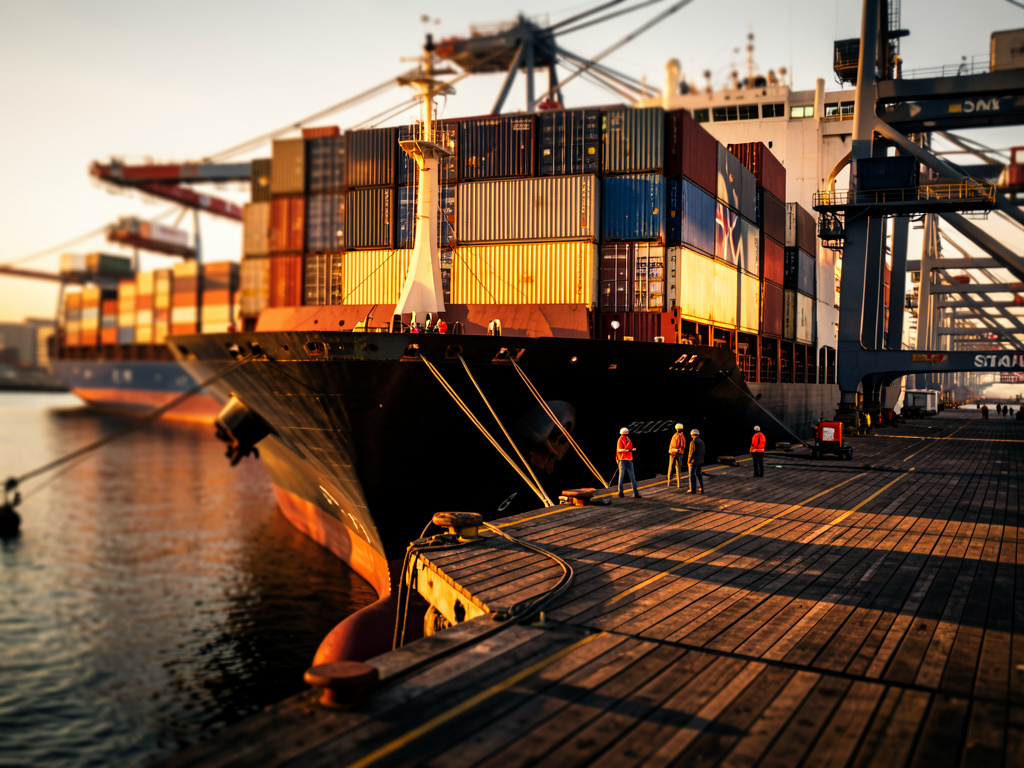
Cargo Delivery from France to Australia
Shipping Cargo from France to Australia: Companies, Prices, Timelines, and Transportation Methods
Transporting goods from France to Australia is a popular route in international logistics, used for delivering commercial shipments, equipment, vehicles, personal belongings, furniture, product samples, and consolidated cargo. The significant distance between the countries means that choosing the right transportation scheme directly affects the final cost, speed of transit, and safety of the shipment.
Two main types of international shipping are used for sending cargo from France to Australia: sea and air freight. Sea shipping is suitable for large, heavy, and non-urgent shipments. Air freight is used when minimizing transit time, preserving high-value items, and quickly replenishing stock are priorities.
This article provides a detailed overview of the main delivery methods, approximate prices and timelines, leading logistics companies, cost calculation procedures, customs clearance, features of sea and air transport, and recommendations for selecting the optimal route from France to Australia.
How to Choose a Delivery Method for Cargo from France to Australia
The choice of transport depends on several factors: the weight and volume of the cargo, its category, urgency, budget, temperature control requirements, and the need for "door-to-door" delivery. There is no universal solution for all shipments. The same product may be more cost-effective to ship by sea for large quantities and by air for smaller weights or higher urgency.
Sea transport is traditionally considered the most economical option for international delivery over long distances. Container lines connect French ports with Australian ports through transshipment hubs in Asia, the Middle East, and other regions. This route allows for the transportation of virtually any type of cargo, including equipment, furniture, vehicles, construction materials, industrial products, and commercial shipments.
Air freight is characterized by high speed. Cargo can be delivered from France to Australia in just a few days; however, the cost of air delivery is significantly higher than that of sea shipping. The price is influenced not only by the actual weight but also by the dimensional weight, type of packaging, special transport conditions, and the need for expedited handling at airports.
When Sea Shipping is Beneficial
Sea logistics is suitable in the following cases:
the cargo has a large volume or significant weight;
the shipment does not require delivery within a few days;
there is a need to transport a container shipment;
the product is not perishable;
minimizing the cost per kilogram is important;
the cargo is sent regularly according to a pre-agreed schedule.
Sea transport is especially convenient for consolidated cargo. In this case, the sender pays not for the entire container but only for the space occupied. This format is called LCL shipping. If the shipment is large enough, a full container is used — FCL.
When to Choose Air Freight
Air delivery is justified if the cargo needs to be received as quickly as possible. This option is often used for high-value items, documents, product samples, electronic components, medical devices, spare parts, and urgent orders.
Air transport is also convenient for small shipments. Despite the high rate per kilogram, the final price may be acceptable if the cargo is compact and has a high value. For products whose downtime leads to financial losses, the speed of air freight can offset the increased transportation costs.
Sea Shipping from France to Australia
Sea freight between France and Australia is one of the most popular solutions for delivering large shipments. The shipment is usually accepted at a French port, after which the container is sent to Australia via one or more transit ports.
In France, ports such as Marseille, Le Havre, Dunkirk, and other logistics hubs are often used for international container shipments. In Australia, the main arrival points are Sydney, Melbourne, Brisbane, Fremantle, and Adelaide. The choice of port depends on the final recipient's address, the availability of shipping lines, and the current schedule.
Sea transport can be carried out in a standard dry container, refrigerated container, high-capacity container, or special equipment for oversized cargo. For vehicles, container schemes, Ro-Ro shipping, and specialized solutions are used.
FCL and LCL Shipping
FCL stands for Full Container Load. The shipper receives the container for their use, loads the cargo either independently or with the help of a logistics company, after which the container is sealed and sent to the port. This format provides a higher level of control and reduces the number of transshipments.
LCL is the delivery of Less than Container Load. Shipments from several clients are combined into one container. At the consolidation warehouse, the goods are sorted, placed in the container, and sent as a single batch. Upon arrival in Australia, the container is unloaded, and individual cargos go through customs clearance and are delivered to the recipients.
FCL is usually cost-effective for large shipments when the cargo occupies a significant portion of the container. LCL is convenient for smaller volumes; however, the cost is calculated considering terminal handling, consolidation, deconsolidation, and warehousing operations.
Sea Freight Timelines
The average sea freight time from France to Australia is approximately 35 to 60 days. In some cases, delivery may take longer. The duration of the route is influenced by:
the port of departure and the port of destination;
the availability of a direct route;
the number of transshipments;
terminal congestion;
weather conditions;
seasonal restrictions;
customs clearance;
delays from the shipping line;
the need for delivery from the port to the final address.
It is important to consider that the declared sea freight time does not always include document preparation, cargo acceptance at the warehouse, export clearance in France, import procedures in Australia, and the last mile. Therefore, when planning, it is advisable to allow for additional time reserves.
Aerial Freight from France to Australia
Aerial transportation from France to Australia is the fastest method of international delivery. The main departure airports in France include Paris - Charles de Gaulle, Lyon, Marseille, and other major airports with developed cargo infrastructure. In Australia, international cargo operations are conducted through the airports of Sydney, Melbourne, Brisbane, Perth, and Adelaide.
Depending on the chosen scheme, the cargo can be transported on a regular passenger flight with a cargo hold or a specialized cargo plane. Most standard shipments use the regular air network. Charter flights are used for non-standard, oversized, urgent, or particularly valuable shipments.
Air Freight Rate Calculation
Airlines and freight forwarders calculate the cost based on the greater of two metrics: actual weight or volumetric weight. Volumetric weight is determined by the formula:
Length × Width × Height in centimeters / 6000
The coefficient may vary depending on the carrier and tariff conditions. If the volumetric weight exceeds the actual weight, payment is made based on the volumetric figure.
For example, a box measuring 100 × 80 × 60 cm has a volumetric weight of:
100 × 80 × 60 / 6000 = 80 kg.
If the actual weight is 55 kg, the calculation will be based on 80 kg.
The final price is also influenced by the minimum rate, fuel surcharge, currency adjustment, terminal fees, hazardous cargo handling, insurance, and door-to-door delivery.
Air Delivery Timelines
Standard air freight from France to Australia takes an average of 3 to 10 business days. Express delivery can be faster but is more expensive. If the shipment requires customs inspection, special packaging, or transit through an airport, the overall time increases.
The term "delivery time" should include not only the time the cargo is in the air. The complete logistics cycle consists of acceptance of the shipment, packaging inspection, document preparation, export control, loading, flight, arrival at the airport in Australia, customs clearance, and delivery to the recipient.
Which is Faster: Air or Sea Delivery
When comparing speed alone, air freight is significantly faster than sea transport. Cargo can arrive by plane from France to Australia in just a few days, while the sea route typically takes several weeks.
However, the comparison must consider the entire process. Sea freight requires advance booking of the container, delivery to the terminal, waiting for the vessel, transshipment, port processing, and subsequent cargo release. Even under favorable conditions, the total time can be one and a half to two months.
Air transport provides a shorter transit period but requires strict adherence to packaging, size, weight, and content requirements. Additionally, some categories of cargo have restrictions on transportation on passenger planes.
Comparison of Sea Freight and Air Freight
Sea freight and air freight are two common methods of international cargo transportation. Each has its own features, advantages, and limitations. The choice of the appropriate method depends on the budget, delivery timelines, cargo characteristics, volume, and transportation conditions requirements.
Sea freight is considered one of the most economical ways to transport large quantities of goods over long distances. It is particularly advantageous for transporting heavy, oversized, and bulky cargo, as the cost per unit is usually lower than that of air transport. Sea freight is often used for shipping industrial equipment, furniture, cars, construction materials, raw materials, and mass consumer products. Additionally, sea transport allows for shipping both small batches as part of consolidated cargo and large batches in separate containers.
The main drawback of sea freight is the duration of transportation. Depending on the route, distance, vessel schedules, port procedures, and customs clearance, delivery can take from 35 to 60 days, and in some cases even longer. Additional time may be required for loading, unloading, transshipment at intermediate ports, and delivering the cargo from the port to the final recipient. Therefore, sea freight is not always suitable for goods that need to be received urgently. It is also important to consider the impact of humidity, salty air, and possible adverse weather conditions on the condition of the cargo, which requires appropriate packaging and protection.
Air freight is characterized by high speed and allows for significantly reduced delivery times. On average, transportation takes from 3 to 10 business days, although the actual time depends on the route, availability of direct flights, airline schedules, and the duration of customs procedures. Air transport is particularly in demand for urgent orders, expensive electronics, medical equipment, product samples, spare parts, and other goods, where delays in delivery can lead to financial losses.
The main advantage of air freight is the ability to quickly deliver goods between remote regions, as well as relatively high predictability of timelines when regular flights are available. Generally, air transport involves fewer intermediate transshipments than some sea routes, although this depends on the chosen logistics scheme. However, air freight has a higher cost, especially for transporting heavy and bulky cargo. Additionally, airlines impose restrictions on weight, dimensions, type of packaging, and contents of shipments. For example, the transportation of batteries, flammable substances, and certain chemical materials requires compliance with special regulations or may be prohibited on certain flights.
The environmental factor is also significant. Sea transport generally produces lower greenhouse gas emissions per ton-kilometer compared to air transport. Therefore, when transporting large volumes of products, sea freight is often a more environmentally friendly solution. In contrast, air freight is characterized by higher carbon intensity, which is particularly important for companies aiming to reduce the environmental impact of their logistics.
Thus, the choice between sea freight and air freight is primarily determined by the balance between cost and speed. Sea transport is advisable when the main priority is to reduce expenses and delivery timelines are not critical. Air freight is preferable in situations where it is necessary to quickly deliver valuable, urgent, or relatively compact cargo.
For companies that regularly engage in international shipments, a combined transportation scheme can be an effective solution. In this case, the main batch of goods is sent by sea to reduce transportation costs, while a small portion of the most in-demand or urgent products is delivered by air. This approach allows for maintaining the necessary level of inventory, reducing the risk of product shortages, and simultaneously controlling logistics costs.
How Much Does Shipping from France to Australia Cost
The exact cost of transportation is calculated individually. There is no universal rate for the France to Australia route, as the price depends on a large number of variables.
Sea freight costs are influenced by the volume and type of container, delivery conditions, port of departure, port of destination, season, vessel load, presence of hazardous characteristics, terminal expenses, and the need for subsequent delivery within Australia.
The cost of air freight is influenced by weight, dimensional weight, product category, departure airport, destination airport, urgency, type of service, and handling charges.
Estimated Costs
Approximate figures may look as follows:
air delivery of small commercial shipments — from several euros per kilogram and up;
express courier air freight — more expensive than standard cargo shipping;
sea LCL delivery — calculated per cubic meter or actual space;
full container FCL — paid at a rate per container;
car delivery — depends on dimensions, placement method, port, and export documents;
door-to-door delivery includes additional charges for pickup and delivery of the cargo.
The values provided are approximate. Before ordering transportation, it is necessary to request a personalized calculation, as international freight rates change regularly.
What is Included in the Transportation Cost
The final price may include:
Pickup of cargo in France.
Packaging or repackaging.
Delivery to the consolidation warehouse or port.
Export documentation.
Sea or air freight.
Terminal fees.
Documentary support.
Insurance.
Customs clearance in Australia.
Delivery to the recipient's address.
Warehouse storage if necessary.
Unloading and lifting work.
When comparing offers, it is important to clarify which services are included in the rate. A low base rate may turn out to be less advantageous if additional charges are billed separately.
Major Freight Companies from France to Australia
To organize international transportation, you can turn to global logistics operators, shipping lines, airlines, courier services, or French freight forwarders that combine various modes of transport.
International Shipping Lines
In the Europe — Australia route, major container carriers operate, including:
Maersk;
MSC;
CMA CGM;
Hapag-Lloyd;
COSCO Shipping;
ONE;
Evergreen;
Yang Ming.
Schedules, transit ports, and available container types depend on the specific shipping line. Some companies offer only sea freight, while others additionally arrange delivery to the warehouse, customs clearance, and multimodal logistics.
International Freight Forwarders
Freight forwarding companies select the route, book space on a ship or plane, prepare documents, organize consolidation, insurance, and delivery to the recipient. Among international logistics groups working with global shipments, you can find:
DHL Global Forwarding;
Kuehne+Nagel;
DB Schenker;
DSV;
CEVA Logistics;
Expeditors;
Geodis;
Bolloré Logistics.
A freight forwarder is not always the direct carrier. They may combine services from several transport companies and select the most convenient scheme based on the order parameters.
Courier and Express Services
For small urgent shipments, international courier operators are used:
DHL Express;
FedEx;
UPS;
TNT;
Chronopost and other regional services.
Such companies are convenient for documents, samples, small boxes, and urgent orders. They usually offer door-to-door delivery, tracking, and standardized documentation, but the rate per kilogram may be higher than when working with a freight forwarder.
Customs Clearance in France and Australia
Customs procedures are a mandatory part of international delivery. Before handing over the cargo to the carrier, it is necessary to prepare documents and ensure that the goods are permitted for import into Australia.
In France, the export part of the shipment is processed. In Australia, the cargo undergoes import control, after which duties, goods and services tax, processing fees, and other payments may be charged.
Main Documents
The most commonly required documents include:
commercial invoice;
packing list;
transportation bill;
contract or transaction confirmation;
export declaration;
certificate of origin;
permits and licenses;
insurance policy;
documents for the vehicle or equipment;
certificates of conformity;
documents regarding the composition of the goods.
The list depends on the type of cargo, its value, country of origin, and the requirements of Australian regulatory authorities.
Features of Australian Control
Australia has strict biosecurity requirements. Special attention is paid to wooden packaging, plants, food products, animal materials, soil, agricultural products, and goods that may carry pests.
Wooden packaging must comply with international phytosanitary standards. If the requirements are violated, the cargo may be delayed, treated at the recipient's expense, or returned to the sender. Therefore, it is advisable to check the import rules specifically for the particular category of goods before shipping.
Packaging Cargo for Delivery from France to Australia
Proper packaging protects the goods from vibrations, impacts, moisture, temperature fluctuations, and multiple handling. For sea transport, the packaging must withstand prolonged exposure in a container and possible exposure to humid air.
Standard boxes use dense five-layer cardboard, cushioning materials, stretch film, tape, and labeling. Fragile items are additionally secured with foam, bubble wrap, corrugated cardboard, or special inserts.
Heavy cargo is placed on pallets. Equipment may require crating, reinforced fastenings, and moisture protection. For expensive items, individual wooden boxes, internal cushioning elements, and impact or tilt sensors are used.
The packaging should indicate:
the name of the sender and recipient;
the number of packages;
weight and dimensions;
order or waybill number;
labels such as "Fragile," "This Side Up," "Keep Dry";
special information about the temperature regime;
hazard symbols if the cargo falls under a regulated category.
The labeling must match the transport and customs documents. Any discrepancies may lead to delays in processing.
Cargo Insurance for Transport from France to Australia
Insurance is not mandatory for every shipment, but it is recommended for expensive, fragile, and complex cargo. The carrier's liability is usually limited by international rules and the specific terms of the contract. Compensation may not cover the full value of the goods, especially if damage occurred due to improper packaging.
The insurance policy can protect against:
damage during loading and unloading;
vehicle accidents;
flooding;
fire;
theft;
loss of part of the shipment;
natural disasters;
specific risks during transit.
Before arranging insurance, it is necessary to check for exclusions. Some policies do not cover the natural properties of the goods, packaging defects, delivery delays, confiscation, or violations of hazardous materials transport regulations.
Door-to-Door Delivery from France to Australia
The door-to-door format implies that the logistics company organizes the entire route: picks up the shipment from the French sender, delivers it to the terminal, carries out export procedures, organizes international transport, assists with import clearance, and hands over the cargo to the recipient in Australia.
The advantage of this scheme is convenience. The client does not need to coordinate transport, port, warehouse, customs broker, and courier delivery independently. One operator controls all stages.
However, it is important to clarify the delivery terms. Door-to-door delivery may not include import duties, taxes, broker fees, storage, lifting to the floor, or additional work with oversized cargo. These costs are sometimes paid separately by the recipient.
For international shipments, Incoterms bases may be used: EXW, FCA, FOB, CIF, DAP, DDP, and others. They determine which party is responsible for transportation, insurance, export, import, and payment of fees.
How to Calculate the Cost of Delivery from France to Australia
For a preliminary calculation, it is necessary to prepare the most accurate data about the cargo. The more detailed the information, the lower the risk of tariff changes after handing over the shipment to the carrier.
You will need:
the exact address of the sender;
the delivery address in Australia;
description of the goods;
the number of packages;
dimensions of each box or pallet;
actual weight;
total cost;
information about the presence of batteries, liquids, or chemical components;
the need for pickup from the address;
desired timeframe;
method of transportation;
the need for insurance;
recipient and importer details.
After this, the logistics company compares options: air delivery, sea LCL shipping, full container, multimodal scheme, or express service.
Example of Calculation Logic
If the cargo is small, light, and urgent, the rates for actual and volumetric weight are compared first. If the shipment occupies several cubic meters, LCL delivery is calculated. For volumes close to container capacity, it is more advantageous to request an FCL rate.
For heavy equipment, additional requirements may include:
special transport to the port;
loader or crane;
securing inside the container;
permit for oversized cargo;
reinforced packaging;
insurance;
delivery from the port to the site.
This is why calculating based solely on the freight rate does not reflect the full cost of logistics.
How to Reduce Delivery Costs and Times
Costs can be reduced through proper cargo preparation and choosing the right service. The lowest rate does not always yield the best results, but a number of practical measures can help avoid overpayments.
It is recommended to:
Compare offers from several freight forwarders.
Request a complete calculation with a breakdown of additional fees.
Reduce packaging volume without compromising safety.
Consolidate multiple shipments into one batch.
Use consolidated sea shipping for small volumes.
Book a container or air space in advance.
Prepare documents before shipping.
Check import regulations for Australia.
Choose the nearest suitable port or airport.
Avoid sending prohibited or incorrectly classified goods.
Agree on Incoterms conditions before signing the contract.
Check the possibility of door-to-door delivery at a single rate.
Delivery times are shortened if the cargo is ready for shipment, documents are filled out correctly, packaging meets requirements, and the recipient has prepared import clearance data in advance.
Common Mistakes in International Shipping
One common mistake is indicating net weight or dimensions incorrectly. If discrepancies are found after the cargo is accepted, the rate may be recalculated. This often happens with air freight, where volumetric weight is important.
Another issue is insufficient product description on the invoice. It is not enough to write a general term like "parts" or "equipment." The exact name, purpose, material, quantity, and value must be specified.
Additionally, senders sometimes overlook Australia's biosecurity restrictions. Wooden packaging without confirmed treatment, food products, plants, and animal products may trigger additional inspections.
It is undesirable to choose a carrier solely based on the lowest price. It is important to evaluate their experience with Australia, insurance coverage, tracking quality, contract transparency, claims settlement procedures, and the actual list of included services.
Which Delivery Scheme to Choose
To make the right choice, it is necessary to compare four main parameters: cost, time, volume, and nature of the goods.
Sea delivery is suitable for equipment, furniture, cars, construction materials, large commercial shipments, and cargo that does not require urgent receipt.
Air freight will be optimal for documents, samples, small parcels, medical goods, electronic components, expensive products, and urgent spare parts.
LCL consolidated delivery is convenient for shipments that do not fill an entire container. It allows for cost reduction but requires consideration of terminal operations and may take longer due to consolidation.
Full container FCL is advantageous for large volumes, regular shipments, and the need to control the placement of goods.
Door-to-door delivery is suitable for clients who want to delegate all logistics tasks to one company. It is essential to clarify in advance whether customs duties, import taxes, storage, and additional work are included in the rate.
Shipping cargo from France to Australia can be done via sea, air, or multimodal transport. Sea freight is usually more cost-effective and suitable for heavy, bulky, and non-urgent shipments. Air freight is more expensive but allows you to receive your cargo within a few days and reduces losses from prolonged waiting times.
The average duration for sea logistics is about 35–60 days, while air transport takes approximately 3–10 business days. The final cost depends on weight, volume, route, type of cargo, packaging, port and terminal fees, customs clearance, and delivery to the final address.
To calculate the exact shipping price from France to Australia, you need to provide the logistics company with the dimensions, weight, description, value of the cargo, sender and recipient addresses, desired timeframe, and preferred method of transportation. After that, a specialist will be able to compare options, select suitable shipping companies, and prepare a detailed commercial proposal outlining timelines, rates, and additional services.