

 RU
 UA
 DE
 FR
 ES
 CN
 SA
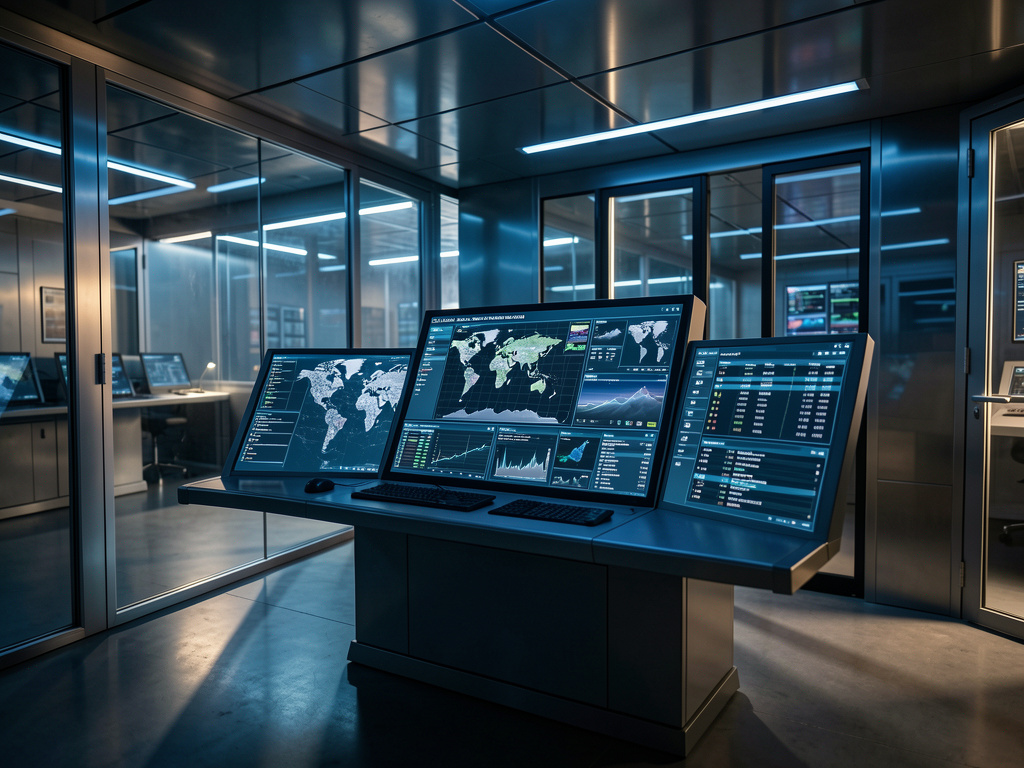
Global Cargo Tracking System
Global Cargo Movement Control System: Technology, Logistics, and Supply Chain Transparency
International trade is impossible without a reliable cargo movement control system. Every day, millions of tons of products are transported via road, rail, sea, and air routes: raw materials, equipment, electronics, food, pharmaceuticals, construction materials, and finished goods. As the supply chain becomes more complex, the demands for logistics control, data accuracy, and decision-making speed increase.
The modern cargo control system integrates transport monitoring, delivery management, international tracking, electronic document management, and analytics. It allows you to see where the cargo is located, who is responsible for its movement, whether deadlines are being met, if storage conditions are being violated, and what risks may arise along the route.
Digital transport control enables companies to shift from manual management to a unified information environment. This environment consolidates data on orders, warehouses, transport, drivers, carriers, customs operations, and recipients. As a result, supply chain participants gain a transparent view of the cargo movement from the sender to the final destination.
What is a Global Cargo Control System
A global cargo transportation control system is a set of software, hardware, and organizational solutions designed to track and manage the movement of goods at all stages of the logistics chain. It can be applied to both domestic transport and international delivery involving multiple countries, transport companies, warehouse operators, and customs representatives.
The main task of such a system is not only to display the location of transport on a map. Modern monitoring should show the complete status of the delivery: when the order was created, where the batch was formed, what documents were processed, when the cargo was loaded, crossed the border, arrived at the temporary storage warehouse, or was handed over to the recipient.
Integration with GPS and GLONASS trackers, temperature, humidity, shock, door opening, and tilt sensors is of great importance. For perishable goods, the system can monitor the temperature regime throughout the entire route. If the indicators exceed acceptable limits, responsible employees are automatically notified.
Main Elements of Digital Delivery Control
A global system typically includes several interconnected components:
transport planning module;
map displaying transport and cargo;
order and accompanying documents database;
warehouse operations management system;
electronic data exchange between participants;
deadline and checkpoint monitoring;
transport conditions monitoring;
cost and efficiency analytics;
automatic notifications and alerts;
reports for managers, logisticians, and clients.
Each element performs a specific function, but maximum efficiency is achieved only when they are integrated into a single digital platform. For example, GPS data alone shows the vehicle's location but does not explain which order it is transporting, whether the schedule is being followed, and what documents are needed for crossing the border.
Difference Between Monitoring and Full Delivery Management
Monitoring allows you to observe the transportation process. Delivery management implies active intervention in the logistics chain. The system not only records deviations but also helps to eliminate them: change the route, assign different transport, notify the warehouse, reschedule unloading, or inform the client about delays.
Thus, international tracking is one part of a larger system. A comprehensive solution should provide planning, control, analytics, and coordination for all supply chain participants.
Why Businesses Need Control Over International Shipments
International shipments are associated with a significant number of risks. Cargo can be delayed at the border, caught in traffic, face adverse weather conditions, undergo additional inspections, or end up in temporary storage longer than planned. Without a unified system, employees learn about problems too late, when it is already difficult or costly to rectify the situation.
Global supply control allows for receiving up-to-date information in near real-time. The logistician sees not only the current geographical point but also the estimated time of arrival, movement history, duration of stops, and deviations from the planned route.
For company management, such a system becomes a source of objective analytics. Based on the accumulated data, it is possible to assess the reliability of carriers, compare routes, calculate average delivery times, and identify reasons for budget overruns.
Reducing Logistics Costs
Digital control helps reduce the number of unproductive operations. The company can identify long downtimes, empty runs, inefficient routes, repeated transshipments, and unjustified use of expensive modes of transport.
Route optimization allows for fuel savings, reduces the load on transport, and decreases the likelihood of deadline violations. When dealing with a large number of shipments, even a small saving on each delivery translates into significant financial results.
Reducing Delays
The system proactively shows when transport deviates from the schedule. The logistics manager can quickly contact the carrier, change the sequence of stops, or notify the warehouse and recipient. This is especially important for perishable goods, production components, and urgent commercial cargo.
Predictability in delivery enhances customer service quality. The customer receives not approximate information, but a specific arrival forecast and notifications about key events.
Increasing Cargo Safety
Monitoring cargo movement includes not only tracking coordinates but also checking transport conditions. Sensors detect unauthorized access attempts, sudden impacts, dangerous tilts, overloads, and temperature deviations.
In the event of a problem, the system records the incident and sends notifications to responsible parties. This allows for quicker inspections, prompt actions, and the formation of a proof base for insurance companies or claims processing.
Enhancing Transparency for Customers
Customers want to know where their cargo is and when it will be delivered. Providing access to order status reduces the number of calls to customer support and increases trust in the carrier or trading company.
The customer tracking portal can display delivery status, route, checkpoints, estimated arrival time, and document information. Access rights are configured so that each user sees only the permitted information.
How the International Tracking System Works
International tracking is based on the sequential recording of events occurring with the cargo. Each shipment is assigned a unique identifier. This can be an order number, waybill, barcode, QR code, RFID tag, or a combination of several identifiers.
At the order formation stage, the system receives information about the product, number of packages, weight, volume, sender, recipient, and planned route. After packaging, the cargo is labeled, and the information is entered into a digital database. Then, loading, dispatch, passing through intermediate warehouses, crossing borders, transshipment, and delivery are recorded.
Data Sources for Tracking
Various sources of information are used for transport control:
GPS and GLONASS;
mobile driver applications;
barcode scanners;
RFID tags;
warehouse terminal data;
electronic waybills;
carrier APIs;
customs information systems;
temperature and humidity sensors;
photo and video materials;
manual input by responsible employees.
In practice, a reliable system combines automated and manual recording methods. For example, transport coordinates come from a tracker, while the fact of cargo receipt at the warehouse is confirmed by scanning a code or an electronic signature.
Route Checkpoints
Checkpoints help determine at what stage the delivery is. These can include the sender's warehouse, consolidation terminal, border crossing, port, airport, distribution center, and recipient's warehouse.
Planned timelines are set for each point. If the cargo arrives too early, is delayed, or misses a control operation, the system records the deviation. The logistics manager can assess the impact of the event on the entire route and proactively inform chain participants.
Estimating Arrival Time
Modern platforms use Estimated Time of Arrival (ETA). It is formed based on the current location, speed, traffic conditions, route length, border load, weather conditions, and historical data.
The ETA forecast is not a fixed value. It is recalculated as new data comes in. This allows the recipient to see a more realistic delivery timeframe, while the warehouse can plan personnel, equipment, and unloading areas more accurately.
Transport Monitoring for Different Types of Shipments
The global system must take into account the characteristics of each mode of transport. Road, rail, sea, and air shipments differ in speed, route duration, number of participants, and types of control events.
Road Transport
For road transport, the main tools are GPS/GLONASS monitoring, mobile applications, electronic waybills, and body condition sensors. The system monitors the route, stops, speed, fuel consumption, and adherence to schedule.
For international routes, additional factors include border crossing points, time taken to pass through customs, driver changes, and the preparation of transit documents. In case of a deviation from the route, the responsible person receives a notification and can contact the carrier.
Rail Logistics
Rail shipments require monitoring of trains, containers, cars, and processing stations. Tracking the formation and disbanding of trains, rearranging cars, and passing through key stations is particularly important.
A digital platform can integrate information from the rail operator with data from the cargo owner. This helps to understand where the container is, at what stage the train is delayed, and when arrival at the terminal is expected.
Sea Transport
In sea logistics, international tracking is often related to monitoring containers and vessels. Users need to know the port of departure, transit port, loading date, vessel departure time, estimated arrival date, and unloading confirmation.
Sea routes can take weeks, so forecasting plays a crucial role. The system must account for schedule changes, port congestion, weather conditions, and delays in container processing.
Air Transport
Air delivery is characterized by high speed and strict documentation requirements. Accurate cargo identification, flight monitoring, air waybill processing, terminal transfers, and delivery confirmation are essential.
For urgent, high-value, and temperature-sensitive cargo, the system can connect with sensors and promptly report changes in transport conditions.
Multimodal Delivery
Multimodal transport involves several modes of transport. For example, cargo may travel by truck, then by rail, by sea, and again by truck. At each stage, carriers, documents, and control operations change.
A unified digital system connects individual segments into one route. The user sees a cohesive delivery history instead of fragmented statuses. This significantly simplifies the management of complex international shipments.
Transparency in Shipments and Information Exchange
Transparency in shipments means that reliable information is available to all authorized participants. The sender should see the order status, the carrier should have up-to-date instructions, the warehouse should know the expected deliveries, and the recipient should have the arrival forecast.
Without a unified information space, the same shipment can have different statuses in the systems of the sender, carrier, and recipient. This leads to errors, conflicts, and delays. An integrated platform eliminates discrepancies and creates a single source of data.
Client Personal Account
In the personal account, the client can:
create transport requests;
track cargo by number;
receive notifications;
view documents;
see movement history;
download reports;
get information on estimated delivery time;
send inquiries to support.
This format reduces the workload on managers and makes service more convenient. The client does not need to manually request data each time, as the main information is available online.
Role-Based Access Model
Transparency does not mean unrestricted access to all information. To protect commercial data, roles and permissions are applied. One user may see only their orders, another may see all shipments of the department, while a manager may see consolidated analytics for the company.
The role-based model helps to separate rights for viewing, modifying, confirming, and unloading information. For critically important operations, two-factor authentication and electronic signatures are additionally used.
Event Notifications
The system can send notifications via email, SMS, through a mobile app, or corporate messengers. Notifications are triggered by events such as cargo shipment, arrival at a checkpoint, delays, route changes, temperature violations, or delivery completion.
Flexible notification settings help avoid overwhelming employees with unnecessary messages. Users select only those events that pertain to their area of responsibility.
Logistics Management with a Digital System
The digital control system transforms logistics from a set of separate operations into a managed process. It assists in planning shipments, allocating transport, monitoring execution, and analyzing results.
Planning begins with the formation of a request. The system specifies cargo characteristics, deadlines, addresses, transport requirements, and special conditions. The program can then select an appropriate route, carrier, and type of vehicle.
Route Planning
When calculating a route, factors such as distance, road restrictions, terminal capacity, border crossings, warehouse operating hours, and cargo characteristics are taken into account. Special traffic rules may apply for hazardous or oversized goods.
The optimal route is not always the shortest. Sometimes a longer route poses a lower risk of delays, allows avoiding congested borders, or ensures better cargo preservation.
Resource Allocation
The system helps allocate vehicles, containers, drivers, warehouse space, and loading equipment. This is especially important for companies with a high volume of orders and a limited fleet.
Automation reduces the number of scheduling conflicts. For example, one vehicle cannot be assigned to two trips simultaneously, and a warehouse cannot receive more shipments than it can handle in a shift.
Deviation Management
In real logistics, it is impossible to completely eliminate unforeseen circumstances. Therefore, it is important not only to create a plan but also to respond quickly to its changes.
The system classifies deviations by their level of criticality. A minor delay may not require intervention, while a temperature violation or a stop in a suspicious area should trigger immediate action.
Standard Scenarios for Automatic Response
Upon detecting a problem, the system can:
send a notification to the logistics manager;
suggest an alternative route;
create a task for the carrier;
notify the warehouse of a change in arrival time;
change the order status;
initiate a documentation check;
record the incident;
prepare a report for the client or manager.
The better the scenarios are configured, the fewer operations are performed manually, and the faster the company responds to risks.
Document and Customs Operations Control
International shipping is accompanied by a large number of documents. These include commercial invoices, packing lists, transport waybills, certificates, permits, insurance documents, and customs declarations. An error in one document can lead to cargo delays and additional costs.
The digital system allows linking documents to a specific order, batch, container, or vehicle. Employees have access to the current version of the file, and the history of changes is automatically saved.
Electronic Document Management
Electronic document management speeds up approvals and reduces the likelihood of document loss. Participants can sign files with an electronic signature, send them to counterparties, and monitor submission deadlines.
The system can be configured to send automatic reminders about documents that have not yet been uploaded or require updates. This helps avoid situations where cargo arrives at the border but the necessary information is missing.
Customs Control
In international transportation, the connection between the physical movement of cargo and customs procedures is crucial. The system should show which declarations have been submitted, which documents have been confirmed, whether the release has been completed, and if there are additional requirements from regulatory authorities.
Automation does not eliminate the need for specialist involvement but reduces the volume of manual work and increases data exchange accuracy. Responsible employees can see which operations have been completed and which are pending.
Chain of Responsibility Control
Each transfer of cargo must be recorded: who transferred it, who received it, at what time, in what condition, and with how many items. Electronic confirmation of transfer reduces the risk of disputes and helps establish accountability in case of damage or loss.
Data Security and Protection
The global supply chain monitoring system operates with commercially sensitive information. It stores details about customers, routes, volumes, product costs, carriers, and documents. Therefore, security must be ensured at the architectural, software, and organizational process levels.
Data encryption, secure communication channels, access control, backup, and user activity logging are utilized. Important operations are confirmed with additional authentication.
Protection Against Unauthorized Access
Each employee should receive only the level of access necessary to perform their duties. Accounts of former employees must be promptly disabled, and passwords should be regularly updated.
For remote access, VPNs, multi-factor authentication, and restrictions on trusted devices may be used. Additional measures are especially important for international companies with distributed offices and a large number of contractors.
Backup
Hardware or software failures should not lead to the loss of shipping history. Backups are created on a set schedule and stored in a secure location. Critical data is backed up with infrastructure redundancy.
Restoration must be periodically tested. Having a copy does not guarantee that data can be quickly restored to the operational system.
Protection of Monitoring Devices
Trackers and sensors also require monitoring. It is important to prevent equipment tampering, unauthorized disconnection, and transmission of incorrect readings. In the event of a communication failure, the system must determine whether the cause is a technical malfunction, lack of coverage, or intentional interference.
Integration with Corporate Systems
Effective logistics control is impossible in isolation from other business systems. The platform must exchange data with ERP, CRM, WMS, TMS, accounting software, online stores, and external carrier services.
Integration allows for the automatic transfer of orders, inventory, customer information, delivery statuses, and financial data. This way, employees do not have to enter the same information multiple times.
Integration with ERP
The ERP system stores information about purchases, sales, inventory, and financial transactions. The cargo control system receives order information from it and sends back data on actual delivery, expenses, and closing documents.
Integration with WMS
Connection with the warehouse management system helps synchronize the arrival of transport, preparation of unloading areas, placement of goods, and shipment. The warehouse knows in advance what cargo will arrive, in what quantity, and what operations need to be performed.
Integration with Carriers
API integration with transport companies allows for status updates without manual requests. If the carrier does not provide a full software interface, data exchange can occur via files, email, mobile applications, or specialized portals.
Integration with Customer Services
Delivery information can be automatically transmitted to personal accounts, mobile applications, or support systems. The manager sees the current order status directly in the customer card and can respond to inquiries more quickly.
Analytics of International Logistics Efficiency
The data accumulated by the system serves as the basis for analytics. The company can assess not only individual shipments but also the performance of the entire logistics network.
Key performance indicators help understand how consistently deliveries are executed, which routes are the most costly, and where systemic issues arise.
Key Logistics Indicators
Important KPIs include:
the percentage of on-time deliveries;
average transit time;
deviation from the planned deadline;
percentage of damages and shortages;
number of downtimes;
delivery cost;
fuel consumption;
transport load factor;
warehouse processing time;
percentage of successful first-time deliveries;
number of incidents on the route.
Indicators need to be analyzed over time. A single value rarely provides a complete picture. For example, an increase in delivery time may be related not to the carrier's performance but to seasonal congestion at a specific border crossing.
Carrier Analysis
The system allows for comparing carriers based on delivery times, costs, cargo safety, and communication quality. Based on this data, the company can create a partner ranking and make decisions about order distribution.
It is important to consider the specifics of the route and the type of cargo. A carrier that performs best on domestic routes may not necessarily be the optimal partner for multimodal international shipping.
Predictive Analytics
Historical data is used to forecast delays, transportation demand, and the likelihood of issues arising. Algorithms can identify patterns, such as a regular increase in the time taken to pass through a specific point during certain periods.
Predictive analytics helps to proactively change routes, increase time buffers, and inform clients about potential changes.
Temperature and Special Cargo Control
Some goods require special transportation conditions. These include medications, food products, chemicals, biological materials, cosmetics, and sensitive electronics.
For such shipments, standard GPS monitoring is insufficient. Continuous monitoring of temperature, humidity, light, pressure, vibration, and other parameters is necessary.
Temperature Monitoring
Sensors are installed inside the body, container, or packaging. They regularly transmit values to the system. If the temperature exceeds the allowable range, an alert event is triggered.
It is important to record not only the fact of the exceedance but also its duration. A short-term deviation and a prolonged violation of the regime can have different impacts on the quality of the goods.
Cold Chain Control
For medical products and perishable goods, control must be maintained at all stages: during assembly, loading, transportation, transloading, and acceptance. If even one stage is not monitored, there is a risk of quality loss.
The digital system generates a complete log of temperature readings. This can be used to confirm compliance with conditions to clients, regulatory authorities, or insurance companies.
Special Transportation Modes
Hazardous, fragile, oversized, and valuable cargo requires specific rules. The system can store handling instructions, transport requirements, route restrictions, and emergency procedures.
How to Choose a Cargo Movement Control System
The choice of a digital platform depends on the scale of the business, the geography of shipments, the number of orders, and integration requirements. It is not enough to focus solely on the availability of a map and tracking features. It is important to evaluate the entire supply lifecycle.
What to Pay Attention To
When selecting a solution, it is essential to check:
supported modes of transport;
operation in different countries;
availability of international tracking;
integration with ERP, WMS, and TMS;
support for GPS, GLONASS, and sensors;
API capabilities;
mobile application;
role-based access;
electronic document management;
reports and analytics;
scalability;
information security;
technical support;
cost of implementation and maintenance.
Cloud or On-Premises System
A cloud solution is quicker to launch and does not require self-maintenance of servers. Users access it via the internet, and updates are installed centrally.
An on-premises system may be preferable for organizations with strict data placement requirements and internal infrastructure. However, its implementation and support usually require more resources.
Ready-Made Platform or Custom Development
A ready-made system is suitable for companies that need to quickly launch basic control functions. Custom development offers more opportunities to accommodate non-standard processes but requires significant time and budget.
In practice, a combined approach is often chosen: a basic platform is supplemented with integrations, modules, and configurations tailored to specific logistics models.
Stages of Implementing a Digital System
Implementing cargo transportation control should be done in stages. Attempting to automate all processes at once can lead to employee overload and data quality issues.
Audit of Current Processes
First, it is necessary to describe how requests are currently formed, transport is assigned, documents are transferred, cargo is tracked, and incidents are processed. At this stage, duplications of operations, manual errors, and areas lacking responsible personnel are identified.
Requirement Formation
After the audit, a list of functional and technical requirements is compiled. This includes routes, types of cargo, number of users, integrations, reports, notifications, safety rules, and legal requirements.
Pilot Launch
Before scaling, it is recommended to test the system on a single route, division, or group of carriers. A pilot helps identify issues in settings, verify data quality, and gather feedback from users.
Employee Training
Even a user-friendly system will not yield results if employees do not understand how to use it. It is essential to prepare instructions, conduct training, and appoint responsible individuals for support.
Scaling
After a successful pilot, the solution expands to new routes, warehouses, modes of transport, and cargo categories. Performance metrics are compared with results prior to implementation.
Errors in Organizing Delivery Control
Some companies perceive digital monitoring solely as the installation of trackers. However, equipment is just one element of the system. Without processes, responsible parties, and quality analytics, coordinates do not translate into managerial value.
Another common mistake is the lack of unified directories. If different divisions use various names for routes, warehouses, and statuses, the data becomes incomparable.
Problems also arise from an excessive number of notifications. If employees receive messages for every minor event, important alerts get lost among the trivial ones.
Finally, personnel training cannot be overlooked. Employees must understand what data to input, how to respond to deviations, and who is responsible for resolving incidents.
The Future of Global Cargo Control
The development of logistics is linked to further automation and the use of artificial intelligence. Systems will not only display the current status but also independently analyze risks, propose solutions, and forecast the consequences of changes.
A promising direction is the application of digital twins of supply chains. This model allows for the calculation of different scenarios: route changes, transport delays, warehouse capacity shortages, or increased demand.
IoT devices will play an important role by transmitting data about cargo, packaging, and vehicles. The expansion of satellite coverage and the development of communication networks will enhance monitoring stability even on remote routes.
Blockchain and distributed ledgers can be used to confirm the origin of goods, transfer responsibility, and ensure the immutability of key records. These technologies are particularly interesting for pharmaceuticals, food, high-value products, and international trade.
A global cargo movement control system is a crucial part of modern logistics. It integrates international tracking, transport monitoring, delivery management, document control, route analysis, and transparency in transportation.
For businesses, such a system means not just the ability to see cargo on a map. Its main value lies in manageability: the company can foresee risks, respond more quickly to deviations, control the accountability of participants, and make decisions based on reliable data.
Digital delivery control helps reduce costs, minimize delays, enhance product safety, and improve customer service. When implemented correctly, it becomes a unified platform for shippers, carriers, warehouses, customs representatives, and recipients.
In the context of growing international trade, global logistics requires not disparate tools but a coordinated digital system. It is this system that ensures transparency in transportation, predictability of timelines, and resilience of supply chains—from the moment an order is placed to the confirmation of delivery to the final recipient.