

 RU
 UA
 DE
 FR
 ES
 CN
 SA
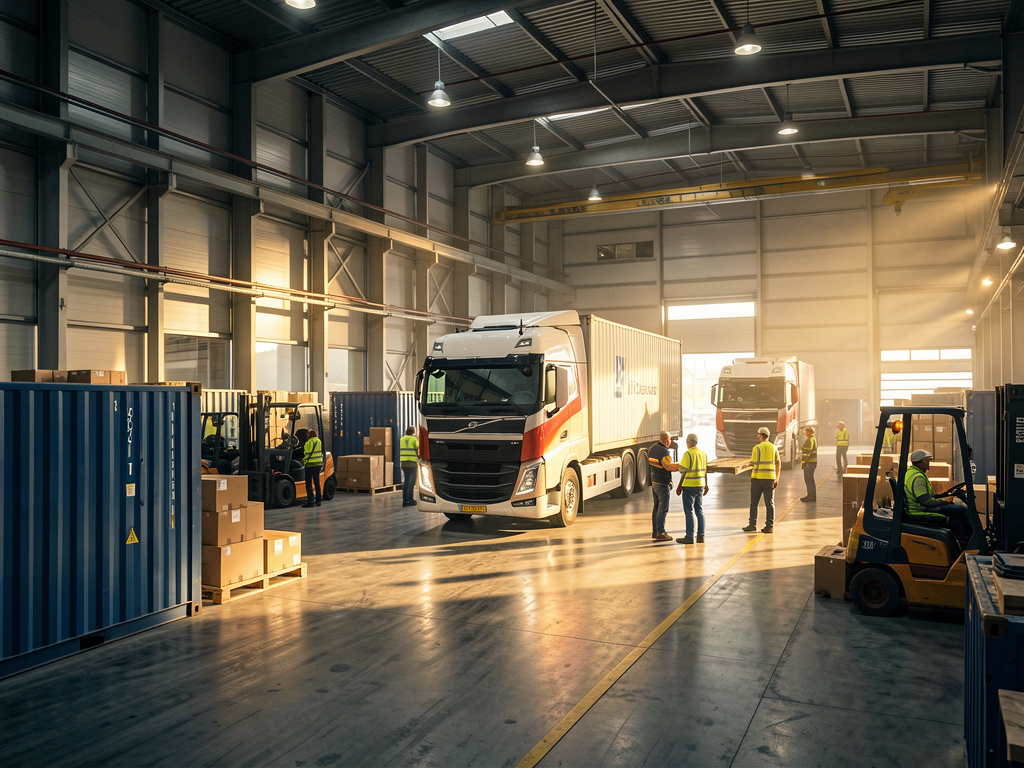
The Netherlands as a Global Shipping Hub
The Netherlands as a Global Shipping Transit Hub: Europe's Logistics Center
The Netherlands holds a unique position on the map of international logistics. Despite its relatively small size, the country has become one of the most important centers for global trade, warehousing, processing, and distribution of goods. Its advantageous geographical location, developed transport infrastructure, proximity to the largest markets in Europe, and high level of digitalization have made the Netherlands a sought-after transit hub for online stores, marketplaces, freight forwarding companies, and individual shippers.
Millions of international shipments pass through the Netherlands: documents, commercial cargo, online orders, parcels from Asia, North America, and other regions. Many shipments destined for European Union countries first arrive in the Netherlands, where they undergo sorting, customs procedures, and are handed over to national operators of the destination country. This is why tracking systems may show that a package is in the Netherlands, even though the final recipient is a customer in another European country.
PostNL plays a particularly important role in this system. It handles both domestic and international deliveries, accepts correspondence and goods from foreign partners, organizes sorting, and ensures the transfer of shipments to other countries. The PostNL international delivery service is utilized by both individuals and commercial shippers.
This article provides a detailed overview of the specifics of shipping from the Netherlands, the operation of the Dutch logistics hub, shipping Netherlands Europe, parcel routes through the Netherlands, the PostNL tracking system, customs procedures, and the advantages of European logistics.
Why the Netherlands Became a Center of European Logistics
The Netherlands is located in a strategically advantageous part of Western Europe. The country has direct access to the North Sea and is situated near the largest economic centers on the continent. Germany, Belgium, France, Luxembourg, and the United Kingdom are relatively close, allowing for quick delivery of goods from the Netherlands to almost all directions in Europe.
A key advantage is the combination of sea, air, rail, road, and river routes. This allows shippers to choose the most suitable transportation option based on cost, urgency, size, and characteristics of the goods. International cargo can arrive by sea at the Port of Rotterdam, by air at Schiphol Airport, and then be transported by road, rail, or river vessel to the destination country.
The Netherlands boasts one of the densest and highest-quality transport networks in Europe. Highways enable rapid connections between sorting centers and neighboring countries. Rail routes are used for transporting containers and large batches of goods. Inland waterways link port terminals with industrial areas in the Netherlands, Germany, Belgium, and other countries.
The high level of digitalization is also significant. Logistics operators utilize automated sorting lines, electronic data interchange, warehouse management systems, and digital tracking of shipments. This allows for monitoring the movement of a package at most stages: from acceptance by the seller to delivery to the final recipient.
Another factor is the developed warehousing infrastructure. The Netherlands hosts distribution centers for major international companies, fulfillment operators, and marketplaces. Goods can be stored in warehouses, assembled, repackaged, labeled, and shipped to customers in various countries across Europe.
Thus, the Dutch logistics hub represents not just a single entity but a whole interconnected system. It includes ports, airports, sorting complexes, customs terminals, warehouses, transport companies, courier services, and digital platforms.
Geographical Location and Transport Advantages
The main logistics center of the country is the Port of Rotterdam. It is one of the largest ports in Europe, through which containers, raw materials, industrial equipment, cars, and consumer goods pass. The port is connected to the inland areas of Europe by road and rail routes, as well as a network of canals and rivers.
Equally important is Amsterdam Schiphol Airport. It is used for urgent deliveries, transportation of high-value goods, pharmaceuticals, electronics, documents, and time-sensitive cargo. Air shipments often reach sorting centers faster, after which they are distributed to various European destinations.
The Netherlands also has a well-developed network of road terminals. Trucks depart daily from the country to Germany, France, Belgium, Denmark, Italy, Spain, and other states. Road delivery is often used for the final movement of packages after sorting.
The Role of the Netherlands in International Trade
The country is an important transit point for goods arriving in Europe from Asia, the USA, the Middle East, and other regions. Shipments of clothing, household appliances, spare parts, cosmetics, furniture, food products, and industrial equipment can pass through the Netherlands.
For online stores, the Netherlands is convenient as it allows for delivery to several countries at once. The seller places the products in a warehouse, and after receiving an order, the system automatically generates the shipment and selects the optimal route. This reduces delivery time and lowers international logistics costs.
Shipping from the Netherlands: Main Options and Stages
Shipping from the Netherlands can be done in various ways. The choice depends on the type of shipment, its weight, dimensions, value, destination country, and desired delivery times. For small items, postal or courier delivery is usually used. For commercial shipments, road transport, consolidated cargo, container logistics, and fulfillment services are applied.
Private senders most often use postal operators, international courier companies, or platforms that combine several delivery services. Online stores can utilize warehouse complexes in the Netherlands and send orders directly to customers in Europe.
Typically, the process looks like this: the sender hands over the package to the carrier, which then goes to a local sorting center. After registration and weighing, the shipment is directed to an international distribution hub. If necessary, customs checks are conducted there. The package is then sent to the destination country, where it is received by the local postal or courier operator.
It is important to understand that the label "Netherlands" in tracking does not always mean that the shipment was sent from this country. Sometimes the seller uses a transit warehouse, an international fulfillment center, or a consolidation terminal. In such cases, the product may have been produced and shipped from another country but entered the delivery system through the Netherlands.
Sending Private Packages
For individuals, shipping from the Netherlands can be used for sending personal belongings, gifts, documents, or purchases. Before sending, it is necessary to check the carrier's restrictions. Some categories of goods are prohibited from being shipped or require special packaging and declaration.
Particular attention should be paid to the address. It must be fully specified: recipient's name, street, house number, apartment, postal code, city, and country. For international shipments, it is recommended to provide a phone number and email address if such an option is available.
When sending goods, a description of the contents and its value may be required. Inaccurate information can lead to delays, additional checks, or the return of the package. If the shipment is commercial in nature, an invoice, proof of purchase, or other documents may be required.
Delivery of Goods from Online Stores
Online stores often choose the Netherlands as a center for European distribution. Goods arrive at the warehouse, where they are received, checked, stored in bins, and entered into the accounting system. After an order is placed, staff or automated equipment assemble the package and hand it over to the carrier.
This approach allows the seller not to ship each purchase from the country of manufacture. Instead, a stock of goods is created within Europe, and orders are delivered to customers within the European region. This reduces transit time and makes cost calculations more predictable.
Fulfillment in the Netherlands is particularly convenient for companies that sell goods in several countries at once. One warehouse can serve orders from Germany, France, Belgium, Italy, Spain, and other destinations. Additionally, the operator can handle returns, repackaging, labeling, and exchanges of goods.
PostNL International Delivery: Features of the Operator's Work
PostNL is one of the most well-known postal and logistics operators in the Netherlands. The company handles the acceptance, sorting, and delivery of letters, packages, and commercial shipments both domestically and internationally. In the international chain, PostNL can act as the initial carrier, transit operator, or partner transferring the shipment to the national postal service of another country.
PostNL international delivery is used for shipments of various categories. These can include standard packages, registered mail, documents, goods from online stores, and international commercial shipments. The specific set of services depends on the destination country, tariff, weight, and chosen delivery method.
Once the package is handed over to the operator, it is assigned an identifier. This number can be used to check the status on the official PostNL website or on universal tracking services. However, information updates may not occur continuously. Some statuses appear only when the package is scanned at the sorting center, at the border, or by the national operator of the destination country.
In international logistics, PostNL often collaborates with other postal services. After leaving the Netherlands, the shipment may come under the control of the recipient country's operator. Therefore, further statuses may sometimes appear on the local postal service's website.
How the shipment route is formed
The route depends on the destination country, type of service, and agreements between carriers. The package may pass through several sorting centers before reaching the international terminal. Movement does not always occur directly.
For example, a shipment may be accepted in one city in the Netherlands, processed at a central sorting complex, sent to an export center, and then handed over to a transport company for delivery to Germany or France. Upon arrival in the destination country, the package undergoes internal sorting and is handed over to a courier.
If the delivery is outside the European Union, additional export and import customs clearance may be required. The processing time depends on the accuracy of the documents, the category of the goods, their value, and the workload of customs authorities.
Advantages of PostNL
The main advantages of PostNL include:
a well-developed delivery network across the Netherlands and Europe;
the ability to track international shipments;
integration with online stores and marketplaces;
multiple options for delivery times and tariffs;
collaboration with national postal operators;
automated sorting;
services for individuals and businesses.
However, the timelines for international delivery are not absolutely fixed. They can be affected by weather conditions, strikes, overloads at sorting centers, customs checks, address errors, and seasonal volume increases, such as before holidays.
Tracking PostNL: how to track your package
Tracking PostNL is a system for monitoring the movement of shipments using the identification number. After the package is registered in the system, the first status appears. Information is then updated as the package passes key stages.
To check the status, you need to enter the tracking number on the official PostNL website or in the app, if the corresponding function is available in your region. Some shipments can also be tracked through the website of the destination country's postal service or universal aggregators.
The tracking number can have different formats. It depends on the category of the shipment and agreements between carriers. It is important to enter the number without extra spaces and characters, strictly following the specified format.
Main statuses of PostNL
The system may include statuses indicating the following stages:
Shipment received — the shipment has been accepted by the carrier;
The item is pre-advised — information about the package has been provided, but physical scanning has not yet been completed;
Item is at sorting center — the shipment is at the sorting center;
Item is ready for transport — the package is prepared for transport;
Item has left the country of origin — the shipment has left the country of origin;
Item has arrived in the destination country — the package has arrived in the destination country;
Customs clearance — customs clearance is being conducted;
Out for delivery — the shipment has been handed over to the courier;
Delivered — the package has been delivered;
Delivery attempted — a delivery attempt was made.
The wording may vary depending on the language of the interface and the specific service displaying the data.
Why tracking is not updated for a long time
The absence of new data does not always indicate a problem. Sometimes the package moves between sorting centers without intermediate scanning. Delays may also occur in the transfer of information between PostNL and the destination country's operator.
If the shipment has already left the Netherlands, updates may only appear after it arrives in another country. In some cases, the national postal service uses its own internal tracking number or displays information with a delay.
Reasons to contact customer support may include the following situations:
the status has not changed significantly longer than the declared timeframe;
the package is marked as delivered, but the recipient has not received it;
an incorrect address is provided;
the shipment has been returned to the sender;
customs duties need to be paid or documents provided;
the status indicates damage to the packaging.
When contacting support, it is advisable to prepare the tracking number, shipping date, recipient's address, and purchase or payment documents.
Package through the Netherlands: why it is in transit
A package through the Netherlands may be directed to a country that is not its final destination. This scheme is called transit. It is used for economic, infrastructural, and organizational reasons.
The Netherlands has a large number of international terminals and warehouses. It is often more profitable for carriers to deliver a large shipment to one European hub and then distribute it to individual countries. This allows for consolidating shipments, reducing the number of routes, and using transport more efficiently.
For example, goods from Asia may arrive in the Netherlands as one container shipment. After unloading, they are sorted by destination: part goes to Germany, part to Belgium, France, Italy, and other countries. For the end customer, this looks like delivery from the Netherlands, although the country is actually an intermediary.
What operations are performed at the transit hub
The logistics center may perform the following operations:
receiving the transport shipment;
unloading the container or vehicle;
scanning and registering shipments;
dividing goods by country;
document verification;
customs clearance;
repackaging and additional labeling;
consolidating packages into new transport shipments;
handing over to the national operator;
sending to the destination country.
Not every shipment goes through all the listed stages. The composition of operations depends on the contract, type of cargo, and legal requirements.
Does transit through the Netherlands affect delivery times
The transit route can either speed up or extend the delivery time. If the operator has a well-organized network, processing through the Netherlands allows for quickly directing the package to the required country. However, delays may occur during high terminal loads, additional checks, or document discrepancies.
For urgent shipments, it is advisable to clarify the estimated time and tariff conditions in advance. Cheap international services usually allow for longer processing times and do not always provide detailed scanning at every stage.
Shipping Netherlands Europe: delivery to European countries
The term shipping Netherlands Europe is commonly used to refer to shipments from the Netherlands to European countries. This direction includes postal delivery, courier services, freight transportation, fulfillment, and cross-border trade.
Within the European Union, the movement of goods often occurs more smoothly than when delivering to non-EU countries. However, the absence of classic checks at internal borders does not eliminate the requirements for goods, documents, taxes, and regulations for specific product categories.
For delivery between EU countries, the following are important:
correct address formatting;
compliance of goods with legal requirements;
accurate declaration of value;
availability of commercial documents;
adherence to packaging rules;
choosing the right carrier;
considering restrictions for specific goods.
For businesses, tax issues, distance selling regulations, returns, and sales processing through marketplaces are also significant.
Delivery to Germany and Belgium
Germany and Belgium are among the most accessible destinations from the Netherlands due to their shared land border and developed road network. Many packages are delivered quickly, especially if the sender uses a warehouse in the southern or eastern part of the Netherlands.
In Belgium, shipments can arrive via road routes, regional sorting centers, and partner networks. In Germany, packages are often handed over to the national operator for further delivery to the recipient's address.
Delivery to France, Spain, and Italy
The further the destination country is, the more the chosen mode of transport affects the delivery time. Express courier delivery can use air transport or expedited road routes. Economical options usually move in consolidated shipments.
In France, Spain, and Italy, shipments may undergo additional sorting at the regional level after arrival. In major cities, delivery is typically organized faster than in remote rural areas.
Shipping to Non-EU Countries
When shipping from the Netherlands to the UK, Switzerland, Norway, and other non-EU countries, additional customs procedures may apply. The recipient may sometimes need to provide documents, pay taxes, or duties.
Before preparing the shipment, it is important to clarify who is responsible for the payments: the sender, the recipient, or the carrier. Some rates include prepayment of fees, while others require payment upon import.
Customs Clearance and Possible Delays
Customs plays a crucial role in international shipping. Even if a package passes through a major European logistics center, it may be delayed for document or content checks.
The main reason for issues is incomplete or incorrect product descriptions. The declaration should include a clear name, quantity, value, and purpose of the goods. Phrases like “gift” or “accessories” may not be precise enough if the item has commercial value.
The following reasons for delays are possible:
absence of an invoice;
discrepancy between declared and actual value;
suspicion of counterfeit;
prohibited category of goods;
need for proof of origin;
absence of permit documents;
unpaid taxes or duties;
incorrect recipient information.
If customs requests additional information, it is important to provide it within the specified timeframe. Ignoring the request may lead to the return of the shipment to the sender or disposal of the goods according to the carrier's rules.
Which Goods Require Special Attention
Additional requirements may apply to:
medications;
food products;
cosmetics;
batteries and lithium batteries;
electronic devices;
plants and seeds;
alcohol and tobacco products;
precious metals;
dual-use goods.
Before shipping, it is advisable to check the regulations of the destination country and the specific carrier's restrictions. One operator may accept a certain category of goods while another may completely prohibit it.
Advantages and Limitations of the Netherlands as a Logistics Hub
The Netherlands has a number of advantages for international shipping. The main one is the combination of a favorable location and developed infrastructure. Goods can be quickly moved from the port or airport to a warehouse complex and then distributed across European destinations.
Advantages include:
proximity to the largest markets in Europe;
the Port of Rotterdam and Schiphol Airport;
developed road and rail routes;
a large number of warehouses and fulfillment centers;
high level of automation;
transparent tracking;
an extensive network of partner operators;
the possibility of cargo consolidation;
convenience for e-commerce.
For online stores, the ability to organize storage of goods within Europe is especially important. This allows for faster delivery, improved customer service, and simplified return processing.
However, there are also limitations. During sales periods, holidays, and seasonal order surges, sorting centers may become overloaded. The cost of warehousing services and rentals in the Netherlands may be higher than in some other European countries. Additionally, complex international supply chains require careful monitoring of documents and contracts.
Another factor is environmental requirements. European carriers are gradually reducing emissions, implementing electric transport, and optimizing packaging. This positively impacts the sustainability of the industry but can sometimes increase the cost of logistics services and impose additional requirements on businesses.
How to Choose Shipping from the Netherlands
When choosing a delivery method, it is essential to evaluate not only the price but also the entire set of conditions. The cheapest rate is not always the most advantageous, especially if the shipment contains expensive goods or needs to arrive by a specific date.
Pay attention to:
maximum weight and dimensions;
estimated delivery time;
tracking options;
availability of insurance;
compensation procedures in case of loss;
packaging requirements;
return policies;
customs clearance conditions;
additional fees;
method of delivery to the recipient.
Postal rates are suitable for small packages. If timing and control are important, it is better to consider courier express delivery. For regular commercial shipments, it is more advantageous to enter into a contract with a logistics operator or use fulfillment in the Netherlands.
Practical Recommendations for the Sender
Before handing over the package to the carrier, it is recommended to:
check the accuracy of the address;
take photographs of the contents and packaging;
use a sturdy box and protective material;
provide an accurate description of the goods;
keep the receipt and tracking number;
check the restrictions of the destination country;
clarify whether taxes are included in the cost;
inform the recipient about possible customs fees;
check the status immediately after registration;
contact support if there is a prolonged lack of movement.
Do not seal the package until the inspection is complete if the carrier requires a content check. It is also undesirable to use old labels and barcodes, as this may lead to incorrect sorting.
The Future of European Logistics and the Role of the Netherlands
European logistics continues to evolve under the influence of e-commerce, automation, and sustainability requirements. Buyers expect faster delivery, accurate tracking, and convenient pickup options. Companies, in turn, strive to reduce costs and enhance the resilience of supply chains.
The Netherlands maintains a strong position due to investments in infrastructure and digital technologies. Automated warehouses, robotic picking, artificial intelligence for route planning, and electronic document exchange are becoming standard components of logistics.
Significant attention is given to last-mile delivery. In cities, pickup points, parcel lockers, micro-warehouses, and eco-friendly transport are developing. This helps reduce the number of failed deliveries and lessen the burden on urban streets.
The importance of transparency is also growing. Customers want to see not only the overall status but also the estimated time of arrival, location information, the ability to change the address, or select a pickup point. The integration of PostNL with online stores and international platforms meets this trend.
In the future, the Netherlands is likely to strengthen its role as a distribution center for all of Europe. The country already integrates sea, air, road, rail, and inland logistics. With further development of digital services and eco-friendly technologies, its significance in international trade will remain.
The Netherlands is one of the key transit hubs for global and European delivery. Thanks to the Port of Rotterdam, Schiphol Airport, developed transport routes, warehousing infrastructure, and digital systems, the country has become a convenient center for processing international shipments.
Shipping from the Netherlands is in demand among both individuals and online stores. PostNL international delivery ensures the receipt, sorting, and transfer of packages to various countries, while tracking PostNL allows monitoring the shipment's movement at key stages.
A package through the Netherlands does not necessarily mean that the goods were sent from Holland. Often, the country serves as a transit center where the cargo is sorted, undergoes necessary procedures, and is directed further. This is why a Dutch address may appear in tracking even when delivering to Germany, France, Spain, Italy, or another country.
Shipping Netherlands Europe combines many formats of transportation: postal delivery, courier shipments, commercial cargo, warehousing fulfillment, and comprehensive supply chain management. For successful delivery, it is important to properly prepare documents, comply with packaging requirements, track status, and anticipate possible customs fees in advance.
Thanks to its location and technological base, the Netherlands continues to be one of the main logistics hubs in Europe, facilitating the movement of goods between continents, countries, and end customers.