

 RU
 UA
 DE
 FR
 ES
 CN
 SA
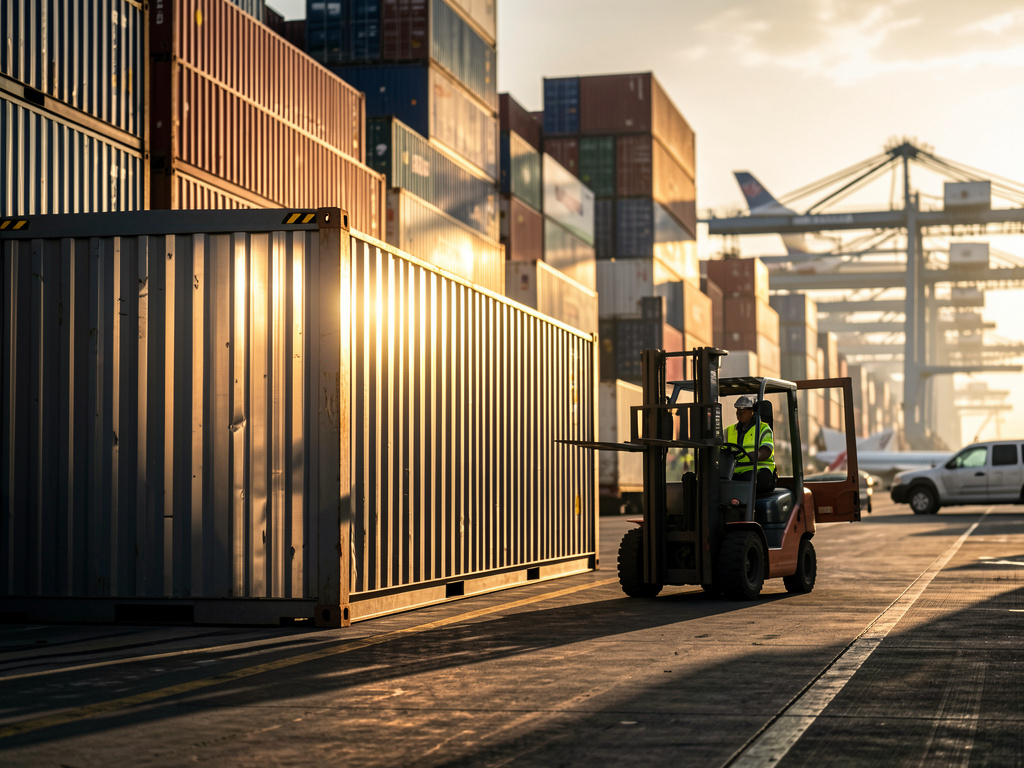
Cargo Delivery from China to the UK
Shipping Goods from China to the UK: Logistics China — UK, Sea and Air Freight
Shipping products from China to the UK is a comprehensive logistics service that includes route selection, cargo consolidation, international transportation, customs clearance, and delivery of the shipment to the recipient. The China — UK route is in high demand among manufacturers, online stores, distributors, wholesale companies, and entrepreneurs who purchase products from Chinese factories and sell them in the British market.
Well-organized imports from China to the UK help reduce transportation costs, minimize the risk of delays, and accurately calculate the cost price of goods in advance. To achieve this, it is necessary to consider the type of cargo, its weight and volume, the requirements of British legislation, Incoterms delivery conditions, the availability of certificates, the specifics of port and airport infrastructure, as well as the procedure for paying customs duties.
International logistics between China and the UK can be structured in several ways. The most common options are container sea freight, air delivery, rail-multimodal routes, and combined shipping. Each method differs in terms of timelines, costs, packaging requirements, and tracking capabilities.
Features of Logistics China — UK
Logistics between China and the UK involves not only the physical movement of cargo but also the organization of a large number of accompanying processes. The supply chain includes negotiations with the supplier, checking the readiness of the goods, preparing export documentation, delivery to the terminal, loading, international transportation, customs clearance, and delivery to the recipient's warehouse in the UK.
After the UK's exit from the European Union, import rules have changed. Cargo arriving in the UK from China is processed according to British customs requirements, even if it previously passed through European ports or logistics centers. Therefore, a route through the Netherlands, Germany, Belgium, or other EU countries does not eliminate the need to comply with UK regulations.
When organizing a shipment, it is important to determine in advance:
who is the importer in the UK;
who is responsible for customs clearance;
what documents the Chinese supplier provides;
how delivery, duties, and VAT are paid;
whether a license or special permission is required;
where customs clearance will take place;
who delivers the goods from the port or airport to the final address.
Main Participants in International Shipping
The transportation usually involves the Chinese supplier, freight forwarder, carrier, port or airport of departure, British customs representative, temporary storage warehouse, importer, and final recipient. Depending on the terms of the contract, responsibility among the parties is distributed differently.
If the EXW term is used, the buyer essentially takes on almost all logistics: picking up the goods from the factory, organizing export from China, and international transportation. Under FOB terms, the seller delivers the cargo to the Chinese port and handles export, while the buyer pays the main freight. Under CIF, the seller additionally pays for sea transportation and insurance to the specified port; however, the import clearance in the UK usually remains the buyer's responsibility.
For many companies, DAP or DDP terms become convenient. Under DAP, the carrier delivers the cargo to the agreed address, but import payments are most often paid by the recipient. Under DDP, the seller or logistics operator takes on the maximum volume of obligations, including import clearance and tax payments. However, using DDP requires special attention to the status of the importer, British registration, and compliance with tax regulations.
Documents for Shipping from China to the UK
The basic package usually includes a commercial invoice, packing list, transport document, export declaration, and product information. For sea freight, a bill of lading is used, while for air freight, an air waybill is required. Depending on the product category, certificates of origin, compliance documents, licenses, sanitary conclusions, phytosanitary documents, safety declarations, and composition confirmations may be required.
The invoice must contain an accurate description of the goods, quantity, value, currency of the transaction, details of the seller and buyer, delivery terms, and HS code. It is not enough to write "accessories" or "electronics": customs needs to understand exactly what is in the shipment, what materials the product is made of, and for what purposes it is used.
Errors in documents often lead to delays, additional inspections, and penalties. Therefore, the information in the invoice, packing list, bill of lading, and customs declaration must match.
Sea Freight from China to the UK
Sea freight from China to the UK is the primary option for large shipments, heavy goods, and regular container deliveries. Maritime transport allows for the transportation of significant volumes at relatively low costs, especially if the sender is shipping a full container.
China has a large number of ports through which exports to the UK are carried out. Among the most well-known destinations are Shanghai, Ningbo, Shenzhen, Guangzhou, Qingdao, Tianjin, and Xiamen. In the UK, goods are received at the ports of Felixstowe, Southampton, London Gateway, Liverpool, Immingham, and other terminals.
Sea freight typically includes cargo pickup from the factory, delivery to the Chinese terminal, export clearance, loading onto the vessel, sea transit, unloading at the UK port, customs clearance, container release, and delivery to the warehouse.
Container Shipping China – UK
For container shipping, standard 20-foot and 40-foot containers, as well as larger 40-foot High Cube containers, are used. The choice depends on the volume and nature of the cargo. A 20-foot container is suitable for heavy goods with a relatively small volume, while a 40-foot container is more efficient for light but bulky products.
If there is not enough cargo to fill a container, LCL shipping is used – the transportation of consolidated cargo. In this case, shipments from multiple clients are combined in one container. The cost is calculated based on volume, weight, or space, and the cargo undergoes consolidation at a warehouse in China and subsequent deconsolidation in the UK.
A full container is designated as FCL. Its advantages include a lower risk of damage due to the absence of transshipment between different batches, clearer organization of transportation, and convenience for regular imports. LCL is suitable for small companies and entrepreneurs who do not require a full container, but the delivery time for consolidated cargo may be longer due to additional operations.
Shipping Times and Costs
The shipping time from China to the UK depends on the port of departure, port of destination, chosen shipping line, vessel schedules, transshipments, and terminal operations. On average, international sea transit takes several weeks; however, the total time from factory to warehouse can be significantly longer. This includes production, cargo preparation, delivery to the port, export clearance, waiting for the vessel, port operations, customs, and the last mile.
The final price is influenced by:
container type;
cargo volume and weight;
port of departure and destination;
seasonality;
cost of sea freight;
terminal fees;
delivery within China and the UK;
customs clearance;
insurance;
storage and possible delays;
additional carrier fees.
When budgeting, it is essential to request not only the sea freight rate but also the total tariff. Sometimes a low base price is offset by a large number of local fees, document processing charges, port services, or delivery of the container to the warehouse.
Advantages and Limitations of Sea Freight
The main advantage of sea logistics is cost-effectiveness for large volumes. Sea transport can be used to ship equipment, furniture, construction materials, textiles, household goods, industrial products, and many other categories.
Limitations include longer delivery times, dependence on vessel schedules, potential port congestion, and the need to plan shipments in advance. Sea freight is not always suitable for urgent orders, perishable goods, and products with high storage costs.
Air Freight from China to the UK
Air freight from China to the UK is used for urgent, expensive, compact, or time-sensitive cargo. This method allows for significantly faster movement of goods between countries compared to sea freight. Air logistics is in demand for shipments of electronics, samples, components, medical products, documents, spare parts, and e-commerce goods.
Major departure airports in China are located in Shanghai, Shenzhen, Guangzhou, Beijing, and Hong Kong. In the UK, international cargo most often arrives at airports in London, Manchester, Birmingham, and other major cities.
Air delivery can be organized either as a direct flight or with a layover at a transit airport. A direct route is usually faster but may cost more. The transit option allows for tariff optimization, but it increases the number of stages and potential risks.
How the air freight tariff is calculated
In air logistics, not only the actual weight but also the dimensional weight is taken into account. If the boxes take up a lot of space but weigh little, the carrier applies a calculated figure based on the dimensions.
To determine the dimensional weight, the length, width, and height of the packaging are used, along with a special coefficient set by the airline or express carrier. The higher value—either actual or dimensional weight—is used for billing.
Therefore, before shipping, it is important to:
use sturdy but not excessively heavy packaging;
minimize empty space inside the boxes;
accurately measure each item;
consider size and weight restrictions;
clarify the rules for transporting batteries, liquids, and hazardous materials in advance.
Air delivery times from China to the UK
The international flight itself may take relatively little time, but the total duration includes pickup, sorting, export clearance, airport processing, transit, import inspection, and delivery within the UK. Depending on the service, air delivery can be express, standard, or economical.
Express delivery is convenient for small shipments and documents. Standard air freight is suitable for commercial shipments when a balance between speed and cost is required. The economical option may involve transit and a longer processing time.
Restrictions for air freight
Not all goods can be shipped by air without special conditions. Restrictions may apply to lithium batteries, accumulators, aerosols, chemicals, liquids, magnetic items, flammable substances, and products classified as hazardous materials.
Some categories require special declarations, labeling, certified packaging, and coordination with the airline. If the sender incorrectly specifies the contents, the shipment may be delayed, returned, or sent for additional inspection.
Multimodal routes and alternative delivery methods
In addition to direct sea and air transport, logistics from China to the UK can include multimodal schemes. In this case, a single shipment is transported using multiple modes of transport: for example, by truck within China, then by sea to a European port, and by rail or road through Europe and onwards to the UK.
Multimodal delivery allows for the advantages of different transport modes. The sea segment reduces costs, while the road or rail segment ensures delivery from the terminal to the warehouse. This scheme requires more precise planning, as crossing multiple borders increases the importance of correct documentation.
After arriving at the European port, the cargo can proceed to the UK via the Channel Tunnel, by ferry, or through a combined route. It is essential to consider British import procedures and possible transit clearance.
Rail delivery
Rail routes between China and Europe are sometimes used as an intermediate solution between sea and air in terms of timing and cost. However, delivery to the UK usually requires additional road, ferry, or rail segments after arriving in continental Europe.
The advantages of rail transport can include shorter times compared to sea and lower costs compared to air delivery. Limitations include dependence on transit infrastructure, route changes, border procedures, and possible restrictions on specific routes.
Door-to-door delivery
The door-to-door service involves organizing transportation from the supplier's address in China to a warehouse, store, or another address in the UK. In this case, the client does not need to separately coordinate Chinese transport, international freight, port operations, and UK delivery.
However, the term "door-to-door" does not always mean that all taxes, duties, and fees are included in the tariff. Before concluding the contract, it is necessary to clarify whether customs clearance, import VAT, delivery within the UK, warehousing services, and insurance are included in the cost.
Importing from China to the UK and customs clearance
Customs clearance is one of the most critical stages in the delivery of goods from China to the United Kingdom. The product must be correctly classified, declared, and matched with the documents. Mistakes at this stage can lead to delays, adjustments in costs, additional charges, and administrative consequences.
For importing, a British company or entrepreneur may need to register as an importer and obtain the appropriate EORI number. This number is used when submitting declarations and interacting with customs authorities.
Product Classification and HS Code
A code from the commodity nomenclature is assigned to each product. The UK uses British classification tariffs based on the international system of commodity codes. The code determines the duty rate, the need for permits, possible restrictions, and the control procedures.
You cannot choose a code solely based on the product name. It is necessary to analyze:
the material of manufacture;
the functional purpose;
the composition;
the degree of processing;
technical specifications;
the method of application;
completeness;
the form of delivery.
For example, the same item may be classified differently depending on whether it is a finished product, a part of equipment, a set, or a component. In case of doubts, it is advisable to obtain a professional classification opinion.
Customs Value and Taxes
The customs value is usually formed based on the price of the goods, taking into account expenses that must be included according to calculation rules. Depending on the delivery terms, transportation, insurance, packaging, royalties, and other components may be considered.
When importing into the UK, import duty and VAT may be charged. The amounts depend on the classification of the goods, their origin, declared value, and current regulations. Some categories have a zero or reduced rate, but this does not mean automatic exemption from all procedures.
Import VAT may be calculated based on the value of the goods, delivery, insurance, and duty. To avoid mistakes, it is important to prepare a calculation of the total cost in advance.
Document Verification at Customs
Customs authorities may request additional information about the goods, their value, origin, manufacturer, and purpose. A physical inspection of the cargo may also be possible. If the description in the invoice is too general, the packaging does not match the documents, or the value raises doubts, the clearance process may be delayed.
To expedite the procedure, documents should be prepared before the cargo arrives. The freight forwarder or customs broker can check the invoice, packing list, product code, transportation data, and permits in advance.
Product Requirements and Certification in the UK
Before importing, it is necessary to check whether the product is permitted for sale in the UK and whether it meets established standards. Special requirements apply to electronics, toys, children's products, medical devices, cosmetics, food products, personal protective equipment, chemicals, and machinery.
For a number of products, confirmation of compliance with British standards, technical documentation, labeling, and information in English is required. In some cases, UKCA marking is used; however, specific requirements depend on the product category and current legislation.
Supplier Verification in China
Import risks are often related not to transportation but to product quality and supplier reliability. Before paying for a large batch, it is advisable to verify the legal details of the factory, production capacity, export experience, reviews, and the presence of necessary certificates.
Useful measures include:
ordering samples;
conducting a production inspection;
checking the batch before shipment;
photo and video reports;
quantity control;
product testing;
agreeing on packaging and labeling;
documenting requirements in the contract.
If the product is to be sold in the UK market, certificates must be checked not only for their existence but also for their validity, compliance with the specific model, and the credibility of the issuing organization.
Packaging and Labeling
Packaging must withstand prolonged transportation, handling, moisture exposure, temperature fluctuations, and stacking. For sea freight, protection against condensation and secure fastening of the cargo inside the container are especially important.
Boxes indicate the number of packages, gross and net weight, dimensions, country of origin, handling marks, and other necessary information. For certain goods, serial numbers, composition, instructions, warnings, and information about the importer are mandatory.
How to Choose a Delivery Method from China to the UK
The optimal transportation method depends on the characteristics of the cargo and business objectives. You cannot choose between sea and air solely based on the price per kilogram. It is essential to consider the total cost of the supply chain, including timelines, warehousing costs, capital turnover, risk of shortages, and customer requirements.
Sea freight is usually suitable if:
the shipment is large;
the goods are not urgent;
minimizing transportation costs is important;
the cargo is not perishable;
container shipping is required;
shipments are planned regularly.
Air freight is preferable if:
you need to quickly replenish stock;
the goods are high-value and lightweight;
you need to send samples or components;
delays result in significant losses;
the volume of cargo is small.
Consolidated cargo is suitable for small shipments when it doesn't make sense to pay for a full container. In this case, consolidation operations and potential increases in overall timelines should be considered.
What to Inform the Logistics Company
For accurate calculations, you need to provide:
the supplier's address in China;
the delivery address in the UK;
description of the goods;
the number of boxes or pallets;
dimensions of each package;
gross and net weight;
value of the cargo;
readiness of the goods;
presence of hazardous components;
required delivery time;
Incoterms conditions;
need for insurance;
information about permits.
The more accurate the initial data, the lower the likelihood of tariff changes after the cargo is handed over to the carrier.
Insurance, Tracking, and Risk Management
International transportation is associated with risks of damage, loss, delays, incorrect loading, moisture exposure, and force majeure circumstances. The carrier's liability is often limited by contract terms and international conventions, so standard compensation may not cover the actual value of the goods.
Cargo insurance helps protect the financial interests of the importer. Before obtaining a policy, it is essential to check which risks are included in the coverage, whether the insurance applies during the delivery stages in China and the UK, what exclusions are provided, and what documents will be required in the event of a claim.
Tracking is used to monitor the shipment. Sea containers are tracked by container number or bill of lading, while air shipments are tracked by air waybill number. Tracking helps understand where the cargo is, when it will arrive at the port, and if there are any delays.
Possible Risks in Logistics from China to the UK
Common risks include:
production delays;
quality discrepancies;
incorrect documentation;
errors in product codes;
customs delays;
shortage of container equipment;
port congestion;
changes in vessel schedules;
increased freight rates;
damage to packaging;
additional warehousing fees;
delivery delays within the UK.
Risks can be mitigated through buffer time, product inspections, insurance, accurate product descriptions, working with a reliable freight forwarder, and preparing documents before the cargo arrives.
Cost of Shipping Goods from China to the UK
The logistics cost from China to the UK is calculated individually. There is no universal rate, as many factors influence the price. The inquiry "how much does it cost to ship from China to the UK" requires clarification of the route, product characteristics, and chosen transportation method.
The total cost may include:
delivery from the factory to the Chinese warehouse or port;
consolidation and processing of cargo;
export documentation;
sea or air freight;
port or airport fees;
preparation of transport documents;
insurance;
delivery within the UK;
customs clearance;
import duties;
VAT;
warehouse storage;
inspection or additional checks.
It is important to distinguish between the shipping rate and the total delivery cost. A low rate that does not account for local fees may turn out to be less advantageous than a higher, but transparent comprehensive rate.
How to Reduce Logistics Costs
Costs can be reduced in several ways:
book space on the vessel in advance;
consolidate small shipments;
choose the appropriate port;
optimize packaging;
avoid shipping air;
plan deliveries based on sales forecasts;
use FCL when there is sufficient volume;
compare multiple routes;
agree on the rate before shipping;
check all additional fees.
However, savings should not come at the expense of insurance, document checks, or quality control. Mistakes at these stages can lead to significantly higher costs.
Practical Algorithm for Organizing Imports from China to the UK
A well-organized shipment begins with preparation even before the product is manufactured. First, it is necessary to determine the product specifications, batch volume, target timeline, delivery address, and requirements of the British market.
Delivery Stages
Verification of the supplier and the product.
Agreement on price, packaging, and delivery terms.
Verification of classification codes and regulatory requirements.
Selection of sea, air, or multimodal route.
Calculation of total delivery cost.
Preparation of the invoice and packing list.
Organization of cargo pickup in China.
Export clearance.
International transportation.
Preparation of the import declaration in the UK.
Payment of duties and taxes.
Release of the cargo.
Delivery to the warehouse or final address.
Verification of quantity and condition of the goods.
Each stage must be agreed upon between the participants in the logistics chain. It is especially important to clearly define in writing who pays for additional expenses, who is responsible for the documents, and who acts as the importer.
Why It Is Important to Work with a Professional Freight Forwarder
A freight forwarder helps to select the route, organize transportation, control documents, and interact with terminals. An experienced specialist can identify potential issues with packaging, product codes, permits, or delivery conditions in advance.
When choosing a logistics company, it is important to consider their experience with the China to UK route, the presence of partners in both countries, transparency of rates, insurance procedures, support during customs clearance, and the ability to deliver to the door.
Shipping goods from China to the UK is a multi-stage international operation where not only transport rates matter, but also the proper organization of the entire supply chain. Sea freight is suitable for large and planned shipments, air delivery is for urgent and compact cargo, while multimodal schemes allow for route adaptation based on budget and timelines.
Successful imports from China to the UK require supplier verification, accurate product description, correct classification code, document preparation, compliance with British customs requirements, and the selection of a reliable logistics partner. Before transportation begins, it is necessary to calculate not only the freight but also all associated costs: terminal fees, delivery across countries, insurance, duties, VAT, storage, and possible inspections.
Thoughtful logistics from China to the UK helps to reduce costs, avoid delays, and ensure a stable supply to the British market. The more accurately the route, packaging, documents, and responsibilities of the parties are planned, the more predictable the international container or air transportation will be.