

 RU
 UA
 DE
 FR
 ES
 CN
 SA
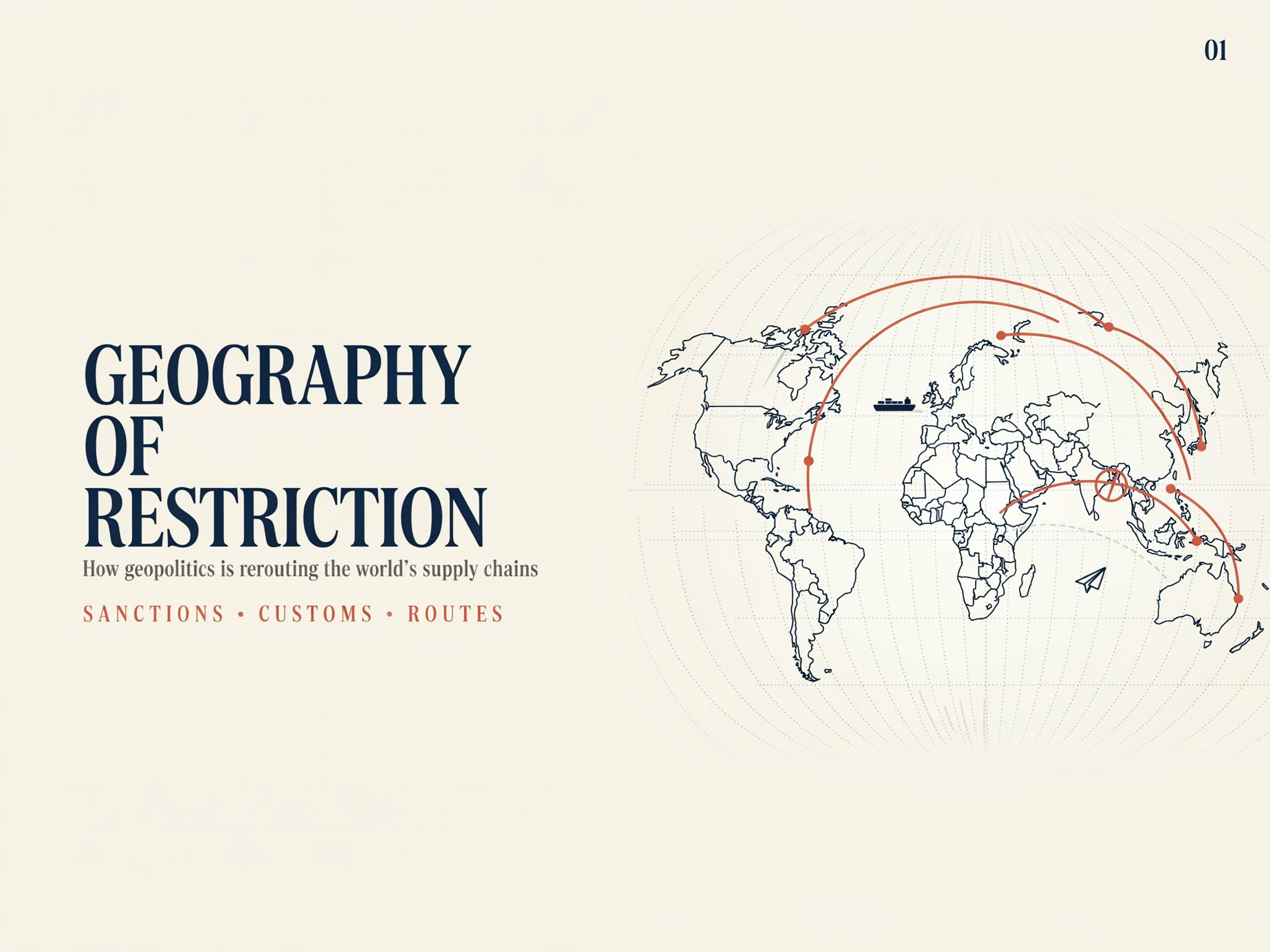
The Impact of Geopolitics on International Logistics
The Impact of Geopolitics on International Logistics and Delivery Routes
Geopolitics has long ceased to be solely the domain of diplomacy and international relations. Today, political decisions directly affect the operations of transportation companies, online stores, manufacturers, and ordinary package recipients. Changes in trade regulations, the imposition of sanctions, border closures, military conflicts, and increased customs control can quickly alter established delivery routes and significantly raise transportation costs.
International logistics operates as a complex interconnected system. It involves seaports, airports, railway hubs, road crossings, warehouses, customs authorities, courier services, and digital platforms. Disruption of even one critical link can lead to delays throughout the supply chain. This is why modern businesses must consider not only distance and tariffs but also political risks, export and import restrictions, changes in legislation, currency fluctuations, and potential disruptions in transportation infrastructure.
In recent years, global trade has faced numerous challenges. Restrictions on international shipments, trade sanctions, the blocking of certain routes, an increase in inspections, and changes in product clearance rules have made global logistics less predictable. Companies are reassessing their procurement strategies, seeking alternative suppliers, and building additional inventory. Consumers, in turn, are experiencing longer delivery times, limited product choices, and rising costs of international shipping.
How Geopolitics Affects the Global Supply Chain
The global supply chain connects numerous countries and regions. A single product may be made from components sourced from several countries, assembled in another jurisdiction, and then shipped to the buyer through a third or fourth transport hub. This model allows for reduced production costs, but at the same time makes businesses vulnerable to international crises.
Geopolitical decisions impact logistics in several ways. Governments may impose export controls, restrict supplies of certain categories of products, raise tariffs, close airspace, or tighten controls at land borders. Even if a specific product is not officially banned, its transportation may become significantly more complicated due to additional inspections, the need for permits, or the use of new documentation.
One of the key consequences is the alteration of logistics routes. If a sea route becomes unsafe or inaccessible, carriers opt for longer routes. When airspace is closed, airlines change flight paths, increasing delivery times and fuel consumption. Restrictions on rail transit force companies to switch to road or sea transport, which may not have sufficient capacity.
Main Mechanisms of Geopolitical Influence
The main mechanisms of influence include:
trade sanctions and embargoes;
border closures and specific crossing points;
restrictions on the use of airspace;
increased export and import controls;
rising customs duties;
bans on cooperation with certain carriers and banks;
currency restrictions and difficulties with international payments;
increased documentation and product origin requirements;
longer inspection and customs clearance times.
Each of these factors can affect the final price of a product. Carriers have to spend more on fuel, insurance, storage, and cargo handling. These additional costs are then passed on to shippers and buyers in the form of higher rates.
Vulnerability of International Logistics
Industries that rely on timely deliveries are particularly vulnerable. These include electronics manufacturing, automotive production, pharmaceuticals, energy, retail, and food production. The absence of a single component can halt the production of an entire batch of goods.
The problem is exacerbated by the fact that many companies have long operated on a just-in-time inventory basis. This model allowed for reduced storage costs but left insufficient reserves in case of a crisis. Therefore, after transportation restrictions arise, businesses are forced to urgently seek new partners, pay extra for expedited shipping, and build additional inventory.
Sanctions and Their Impact on International Delivery
Sanctions are one of the most prominent tools of geopolitical pressure. They can be applied to states, individual companies, banks, transport operators, ports, airlines, and specific categories of goods. Sanction restrictions can completely prohibit supplies or complicate them through multi-level checks and special permitting procedures.
For international logistics, sanctions mean the necessity to constantly verify all participants in a transaction. Companies analyze not only the sender and recipient but also the manufacturer, carrier, freight forwarder, bank, insurance organization, and the final destination of the cargo. Even accidental cooperation with a prohibited entity can lead to the detention of goods, fines, or payment blocks.
How Sanctions Change Delivery Routes
When sanctions are imposed, the usual logistics scheme may become unavailable. For example, a carrier may cease service to a specific destination, a bank may refuse to process a payment, and a transit country may tighten control over cargo. As a result, companies have to build indirect routes through other states and use additional logistics hubs.
The following changes occur:
an increase in the number of intermediate warehouses;
the use of transit countries;
the replacement of direct delivery with multimodal transport;
the engagement of new freight forwarders;
the transition to alternative payment instruments;
the modification of commodity codes with proper legal grounds;
an increase in the verification of certificates and documents of origin.
It is important to understand that using a transit country should not turn into a circumvention of existing restrictions. Legal logistics requires transparency, proper declaration, and confirmation of the actual destination of the goods. Attempting to conceal the origin of the product or the final recipient can lead to cargo confiscation and serious legal consequences.
Sanction Compliance in Logistics
Sanction compliance represents a set of procedures aimed at verifying the legality of international transactions. This includes checking counterparties, analyzing commodity codes, assessing routes, studying export licenses, and controlling payments.
Large companies create special departments that monitor changes in the legislation of different countries. Small businesses often delegate this work to customs representatives, brokers, or international freight forwarders. However, the responsibility for the correctness of the transaction usually remains with the sender or importer.
To reduce risks, it is recommended to check in advance:
whether the transportation of a specific product is permitted;
whether the product is classified as dual-use;
whether there are restrictions in the country of origin, transit, or destination;
whether the participants in the transaction are included in sanction lists;
whether the invoice, packing list, and transport documents are correctly issued;
whether the declared value corresponds to the market level;
whether a special license or certificate is required.
International Restrictions on Shipping Packages
International shipping restrictions apply not only to large commercial cargo but also to ordinary packages. International postal and courier operators establish lists of prohibited and restricted items for shipment. Additional requirements may be in effect at the level of the state, carrier, airline, and customs service.
Prohibited categories often include explosives, weapons, narcotics, toxic chemicals, radioactive materials, certain types of medications, and flammable liquids. In some cases, restrictions extend to batteries, aerosols, perfumes, food products, plants, seeds, cosmetics, and electronic devices.
Even if a product is permitted for shipment, it may require special documents. For example, when sending medications, confirmations of composition and purpose are necessary, and for animal or plant products, veterinary or phytosanitary certificates are required.
Why a Package May Be Delayed
The most common reasons for delays in international shipments include:
incomplete or inaccurate description of contents;
absence of an invoice;
incorrect product code;
underreporting of customs value;
discrepancy in sender and recipient information;
suspicion of a commercial shipment;
absence of required documents;
the product falling under export restrictions;
the need for additional inspection;
overloading of the customs terminal.
The quality of the product description plays a crucial role. Phrases like «gift», «samples», or «accessories» may be insufficient. Customs authorities need to understand what exactly is inside the package, what material the item is made of, its value, and what purposes it serves.
How to Reduce the Risk of Package Issues
Before shipping, it is essential to study the regulations of the destination country and the requirements of the specific delivery service. It is advisable to prepare an accurate product description in advance, indicate the actual value, and attach the necessary documents. If the package contains several identical items, customs may classify it as a commercial shipment, even if the sender considers it a personal transfer.
Do not attempt to hide prohibited items, use fake documents, or intentionally undervalue the goods. Such actions increase the likelihood of the shipment being detained and may lead to administrative or criminal liability.
Restructuring International Delivery Routes
Geopolitical crises force carriers to reconsider traditional transport corridors. A route that was once considered fast and economical may become too expensive, risky, or legally inaccessible. Therefore, companies create multiple delivery scenarios and identify backup routes in advance.
Modern logistics increasingly utilizes multimodal schemes. Within a single order, cargo can be transported by sea, rail, road, and air. This combination allows for flexible adaptation to restrictions but requires coordination among a large number of participants.
Sea Freight
Maritime transport remains the backbone of global trade. It facilitates the transportation of large shipments at relatively low costs. However, sea routes are sensitive to political instability in strait, port, and coastal areas.
As threats increase, carriers may change course, avoid dangerous zones, or temporarily halt calls to certain ports. An increase in route length leads to higher expenses for fuel, crew payment, insurance, and vessel chartering. At the same time, the load on alternative ports increases, leading to queues and a shortage of warehouse capacities.
Rail Freight
Rail logistics occupies an intermediate position between sea and air transport. It is faster than sea delivery and often cheaper than air freight. However, rail corridors depend on international agreements, infrastructure conditions, and the consistency of customs procedures.
Problems may arise with changes in transit rules, the closure of specific sections, or changes in gauge. In such cases, cargo must be transferred to another rolling stock, which increases delivery time and costs.
Road Freight
Road transport is convenient for regional routes and «door-to-door» delivery. However, it is particularly sensitive to the capacity of border crossings. Increased controls, longer queues, changes in visa requirements for drivers, and entry bans can disrupt the transportation schedule.
To mitigate risks, companies use multiple crossing points, enter into contracts with different carriers, and plan additional time for border crossing.
Air Delivery
Air freight remains the fastest option for urgent shipments but is also the most expensive. Restrictions on airspace usage, flight cancellations, and rising fuel costs significantly impact rates.
Additionally, airlines impose strict requirements on packaging and the contents of cargo. Special attention is given to batteries, chemicals, and other goods that may pose a danger during transportation.
Customs Geopolitics and Control of International Trade
Customs policy is closely linked to the geopolitical interests of states. Customs authorities not only collect payments but also control the movement of goods, protect the domestic market, and prevent illegal exports or imports.
During periods of international tension, customs control is usually intensified. The number of inspections, document checks, and requests for product origin increases. Special attention is paid to goods that may have military, technological, or strategic significance.
The Importance of Country of Origin
The country of origin determines what tariffs, quotas, and restrictions apply to the product. In complex production chains, determining the origin can be challenging. If the product consists of components from different countries, it is necessary to consider the rules of substantial transformation and the requirements of the specific jurisdiction.
Incorrect indication of origin can lead to recalculation of payments, cargo delays, and fines. Therefore, it is important for companies to keep documents from manufacturers, certificates, and information about production operations.
Product Classification
Every international shipment must be assigned to the appropriate commodity code. This affects the duty amount, the need for certification, and the presence of prohibitions.
An error in the code may be accidental, but its consequences remain serious. Customs authorities may require additional documents or conduct an examination of the goods. For complex products, it is advisable to consult a specialist in advance and verify the code before shipping.
Digitalization of Customs Procedures
Digital systems are gradually simplifying international trade. Electronic declarations, pre-notifications, and automatic data exchange allow for faster processing of shipments. However, digitalization simultaneously makes control more precise.
Information systems compare the value, route, transaction participants, product description, and history of previous operations. Discrepancies can be automatically flagged for further verification. Therefore, the accuracy of data and consistency of information across all documents are crucial.
Economic Consequences of Geopolitical Restrictions
Geopolitical changes affect not only the speed of transportation but also the economy of companies. Rising logistics costs are reflected in the cost of goods, retail prices, and business profits. This is particularly noticeable in industries where transportation constitutes a significant part of the final cost.
The main additional expenses include:
increased freight rates;
payment for alternative routes;
insurance for political and military risks;
additional warehousing operations;
payment for downtime and storage;
processing new permits;
customs broker services;
costs for changing packaging or labeling;
losses due to damage and spoilage of goods.
In times of transportation capacity shortages, carriers may impose surcharges and limit the acceptance of new orders. Companies without long-term contracts face particularly strong fluctuations in rates.
Inflationary Pressure
The rise in shipping costs affects the prices of nearly all categories of goods. If a manufacturer cannot offset additional expenses through internal efficiency, they pass them on to distributors and consumers.
As a result, a geopolitical crisis in one region can lead to increased product prices in other countries. This is especially true for goods with long international supply chains: electronics, equipment, clothing, auto parts, and household appliances.
Changing Warehouse Strategy
Companies are shifting from a just-in-time inventory model to more flexible reserve management. Important goods are stored closer to the end market, and inventory distribution occurs across multiple warehouses.
This strategy reduces the risk of a complete sales halt but requires additional investments. Businesses must cover rent, personnel, insurance, and inventory management. Moreover, excessively large reserves can lead to the freezing of working capital and product obsolescence.
How Businesses Can Adapt to Changes in International Logistics
There is no universal solution to protect against geopolitical risks. However, companies can enhance supply chain resilience by analyzing potential scenarios in advance and avoiding dependence on a single route or supplier.
The first step is to conduct an audit of international logistics. It is necessary to identify which regions, carriers, ports, banks, and suppliers are critical. Then, assess what would happen if each of these elements ceased to operate.
Diversification of Suppliers
Dependence on a single supplier increases the risk of shortages. Whenever possible, companies work with manufacturers from different countries and pre-arrange alternative sourcing options.
Diversification does not always mean completely abandoning the current partner. Sometimes, having a backup supplier capable of quickly ramping up volumes in case of disruptions is sufficient.
Development of Alternative Routes
The logistics plan should include both primary and backup routes. For each direction, it is necessary to check costs, timelines, transit restrictions, document requirements, and carrier availability in advance.
It is useful to model several scenarios:
standard delivery;
delivery via an alternative transit country;
expedited air freight;
combined multimodal scheme;
temporary delivery to the regional warehouse.
Digital Monitoring
Modern transportation management systems help track the location of cargo, forecast delays, and manage documentation. Integration with customs platforms and sanction databases allows for quicker identification of potential issues.
Analytical tools also assist in comparing routes based on cost, timelines, and risks. This is especially important in the context of frequently changing tariffs and requirements.
Insurance and Contractual Protection
Contracts with carriers should clearly define the responsibilities of the parties, conditions for route changes, procedures for delays, and rules for compensation. Special attention should be given to insurance against political risks, military actions, confiscation, and force majeure.
Not all standard insurance policies cover geopolitical events. Therefore, the terms must be carefully reviewed before the start of transportation.
The Future of International Logistics and Global Trade
Global logistics will become more regional, digital, and resilient to crises. While it is impossible to completely abandon global trade, companies will strive to reduce excessive dependence on individual states and transport corridors.
One of the main directions will be the development of regional manufacturing clusters. Production and warehousing will be located closer to markets. This will help shorten delivery times and reduce dependence on long-distance routes.
At the same time, the significance of major international hubs will remain. Ports, rail terminals, and distribution centers will compete for the status of reliable transit sites. States will continue to invest in infrastructure, digital customs systems, and alternative transport corridors.
Forecasting Technologies
Artificial intelligence and big data analytics will be used to assess political and transportation risks. Systems will be able to analyze news, legislative changes, weather conditions, port congestion, and carrier behavior.
Based on this data, businesses will be able to proactively change routes, redistribute inventories, and inform clients about potential delays. This will make international delivery more transparent and manageable.
Sustainability Over Minimum Cost
Previously, companies often chose the cheapest route. In the future, reliability, transparency, and the ability to adapt quickly will become increasingly important. A low-cost route that can be blocked at the first crisis ceases to be advantageous in the long term.
Companies will evaluate not only the transportation price but also the total cost of risk. This includes the likelihood of delays, potential fines, storage costs, loss of customers, and reputational damage.
Geopolitics has a direct and multi-layered impact on international logistics. Sanctions, trade restrictions, border closures, changes in customs regulations, and disruptions in transportation infrastructure can completely reshape established delivery routes.
For businesses, this means the need for constant monitoring of the international situation, verifying counterparties, accurate documentation, and preparing backup logistics scenarios. For individual shippers, compliance with carrier rules, correct description of package contents, and consideration of destination country restrictions become crucial.
The future of the global supply chain is tied to diversification, digitalization, and regionalization. International delivery will not disappear but will become more complex, multi-layered, and demanding in planning. Companies that can quickly adapt to geopolitical changes, utilize alternative routes, and manage risks will achieve a more sustainable position in the global market.