

 RU
 UA
 DE
 FR
 ES
 CN
 SA
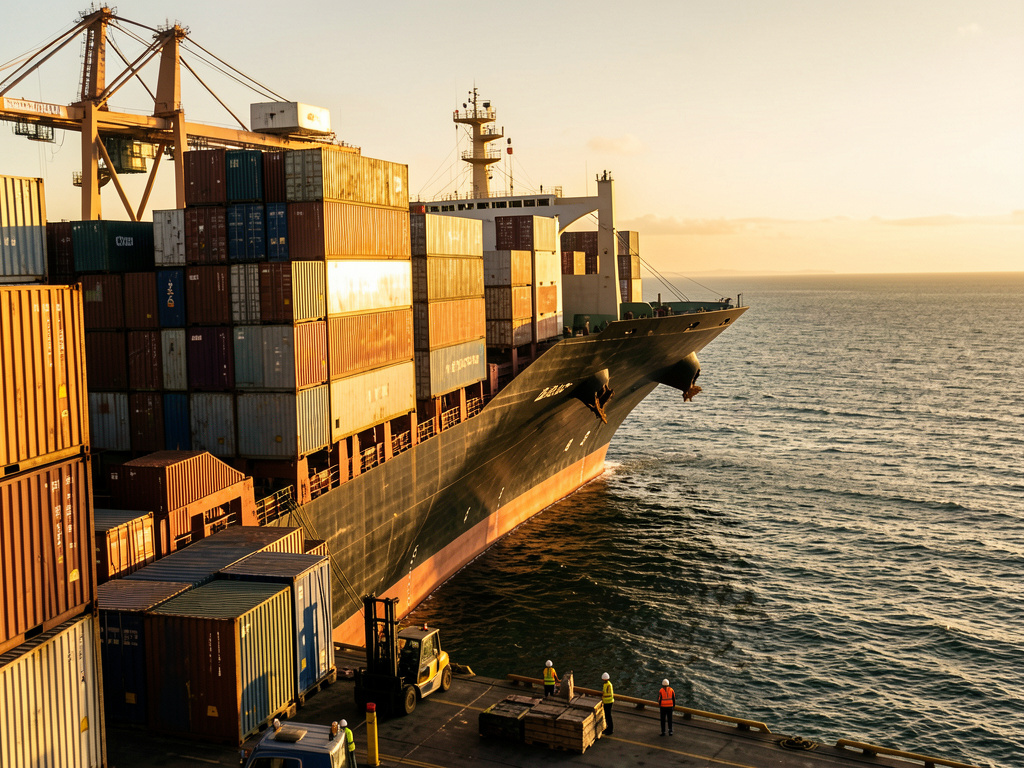
Cargo Delivery from the Netherlands to India
Freight Shipping from the Netherlands to India: Port Logistics, Container Costs, and Transit Times
Sea freight from the Netherlands to India is a popular route for European exports, including equipment, industrial raw materials, food products, spare parts, textiles, chemicals, and consumer goods. Thanks to the developed port infrastructure of the Netherlands and major Indian maritime terminals, container transportation between the countries can be organized on regular routes with transit through key hub ports in Europe, the Mediterranean, the Middle East, and South Asia.
The final cost and duration of delivery are influenced by the ports of departure and destination, the type of container, the weight and volume of the cargo, the chosen shipping line, Incoterms conditions, the need for customs clearance, insurance, door-to-door delivery, and the presence of transit transshipments. Therefore, the question "how much does a container from the Netherlands to India cost" does not have a single answer: the calculation is performed individually after receiving the cargo and route specifications.
Features of Freight Transportation from the Netherlands to India
The Netherlands is one of the main logistics centers in Europe. The country has modern ports, a well-developed network of roads and railways, warehouse complexes, and a large number of freight forwarding companies. The majority of international container cargo passes through the Port of Rotterdam, which is considered the largest seaport in Europe.
From the Netherlands to India, both full container loads and consolidated cargo are transported. FCL shipping is suitable for companies that require a separate container for goods from a single sender. LCL delivery is used for smaller volumes, where the cargo is placed in a shared container along with goods from other clients.
What Goods Are Most Often Shipped from the Netherlands
Exports from the Netherlands to India include a wide range of products:
industrial equipment and components;
machines, production lines, and engineering systems;
electrical equipment and electronic components;
chemical raw materials and industrial goods;
pharmaceutical products;
automotive parts and special equipment;
food products and agricultural goods;
textiles, footwear, and consumer goods;
construction materials;
packaging, plastics, and polymer products.
Each type of cargo has its own requirements for packaging, labeling, and documentation. For example, hazardous goods can only be transported with correct classification according to the IMDG Code, special packaging, and appropriate declarations. Food products may require sanitary, phytosanitary, and veterinary certificates.
Why Choose Sea Freight
Sea transport remains the most cost-effective way to deliver large shipments between Europe and India. Air freight provides a shorter transit time, but its cost is significantly higher, especially for heavy or bulky goods. Road transport over such distances is not feasible as a standalone option, and rail routes require complex multimodal schemes and depend on transit restrictions.
The main advantages of sea delivery include:
low cost per unit for large shipments;
the ability to transport standard and specialized containers;
regular services between major ports;
the possibility to organize "door-to-door" delivery;
suitable conditions for heavy, oversized, and non-standard cargo;
relatively stable budget planning.
Disadvantages include longer transit times, dependence on vessel schedules, potential delays in ports, and the need for careful preparation of export documents.
Port Logistics in the Netherlands
Port logistics in the Netherlands is built around major maritime terminals, distribution warehouses, rail hubs, and highways. Cargo can arrive at the port directly from the supplier, from a consolidation warehouse, or after passing through the export terminal.
Port of Rotterdam
Rotterdam is the main port for shipping containers from the Netherlands to India. It has deep-water terminals, a developed infrastructure for handling container ships, and regular lines to Asia. Shipments of both full containers and consolidated loads can be organized through Rotterdam.
The following operations are performed at the port:
acceptance of the container from the shipper;
weighing and checking the weight;
preparation of the export declaration;
placement of the container at the terminal;
loading onto the vessel;
bill of lading processing;
data transfer to the shipping line;
shipment status monitoring.
The Port of Rotterdam is also convenient for consolidating cargo from Germany, Belgium, France, and other European countries. If the goods are not in the Netherlands, they are first delivered to a consolidation warehouse, after which an export batch is formed.
Other logistics hubs
Depending on the characteristics of the cargo and the carrier's schedule, the ports of Antwerp-Bruges in Belgium, Hamburg in Germany, and other European terminals may be used. Sometimes shipping through a neighboring country proves to be more cost-effective due to available space on the vessel, lower sea rates, or a convenient delivery scheme to the supplier's warehouse.
However, when choosing an alternative port, it is necessary to consider additional costs:
road or rail delivery to the terminal;
terminal fees;
overloading charges;
transit document processing;
possible additional transportation time.
Therefore, it is essential to compare not only the freight rate but also the total cost of the logistics chain.
In-port expenses
Sea freight is only part of the total transportation cost. The final calculation may include:
THC — terminal handling of the container;
documentation fee;
export declaration processing;
container sealing;
weighing;
storage at the terminal;
inspection;
freight forwarding services;
delivery of the container to the port;
insurance;
fees for bill of lading processing;
additional charges for truck delays.
If the container is not submitted to the vessel on time or the documents are processed incorrectly, there may be costs for storage, demurrage, and equipment delays. Therefore, it is advisable to start preparing documents in advance.
How to organize export from Europe to India
Export transportation begins not with loading the goods into the container, but with checking the possibility of export and import. It is necessary to ensure that the products do not fall into prohibited categories, comply with Indian legislation, and can be processed on the recipient's side.
Main preparation steps
Typically, the logistics scheme includes the following steps:
Obtaining information about the cargo.
Checking the HS code.
Determining restrictions and required documents.
Selecting the type of container.
Calculating the route and cost.
Booking space on the vessel.
Submitting an empty container.
Loading, securing, and sealing the cargo.
Processing the export declaration.
Delivering the container to the port.
Loading onto the vessel.
Sea transit.
Arrival in India.
Import processing.
Delivery to the recipient's warehouse.
A set of commercial and transport documents is prepared for each shipment.
What documents are required
The most commonly used documents include:
commercial invoice;
packing list;
contract or purchase order;
bill of lading;
export declaration;
certificate of origin;
insurance policy;
permits and licenses;
quality certificates;
sanitary, phytosanitary, or veterinary documents;
documents for hazardous cargo, if necessary.
For importing into India, the recipient may need importer registration, tax and customs data, as well as permits from relevant authorities. The specific list depends on the product, its code, country of origin, and delivery terms.
How much does a container from the Netherlands to India cost
The cost of container transportation from the Netherlands to India depends on many factors. Even for the same route, the rate may vary depending on the season, port congestion, equipment availability, fuel prices, and shipping line policies.
Estimated sea freight prices
The cost of sea freight depends on numerous factors, including the shipping route, type and size of the container, port of departure and destination, seasonality, port congestion, and the current situation in the international freight market. For preliminary planning of logistics expenses, estimated rate ranges for basic sea transportation can be used.
Transportation of a 20-foot container (20 ft). The estimated cost of sea freight ranges from 1,500 to 3,500 euros. This container is suitable for transporting small and medium-sized batches of goods, equipment, industrial products, construction materials, and other cargo. The final rate depends on the shipping direction, availability of free containers, and the schedules of shipping lines.
Transportation of a 40-foot container (40 ft). The cost of sea freight typically ranges from 2,500 to 5,500 euros. The larger container allows for the transportation of larger batches of goods and is often used for organizing regular international shipments. Despite its greater capacity, the transportation cost does not always increase proportionally to the container's volume, making this option potentially more economical during high demand.
Transportation of a 40-foot High Cube container (40 ft HC). The estimated cost ranges from 2,800 to 6,000 euros. The High Cube container has an increased internal height compared to a standard 40-foot container. It is suitable for transporting bulky cargo, goods in lightweight packaging, furniture, textile products, and other items where internal volume is particularly important. When choosing this type of container, it is essential to consider not only the freight rate but also the dimensions, weight, and placement specifics of the cargo.
Transportation of consolidated cargo (LCL). If the volume of the shipment is insufficient to fill an entire container, you can use the consolidated sea freight service. In this case, the cargo is placed in one container along with shipments from other clients, and costs are shared among the participants in the transportation. The estimated cost of basic sea freight is from 80 to 250 euros per cubic meter. When calculating the cost, it is necessary to consider the volume and weight of the cargo, the minimum rates of the freight forwarder, packaging requirements, and the rules for calculating the payable volume.
What expenses are not included in the base rate
The provided ranges refer to the estimated cost of sea freight and do not necessarily reflect the total cost of delivery from the sender to the recipient. In addition to the base rate, additional expenses may arise when organizing international transportation:
port fees and terminal handling at the ports of departure and destination;
preparation of transport documents and freight forwarding services;
fees for container handling, loading, and unloading;
customs clearance and possible inspection costs;
delivery of the container or consolidated cargo by road or rail;
cargo insurance;
storage at the port, container demurrage, and additional fees for exceeding established deadlines;
fuel, seasonal, and other surcharges as stipulated by the carrier's tariffs.
The composition of additional expenses depends on the route, contract conditions, and the distribution of responsibilities between the sender and recipient. Therefore, when comparing offers, it is important to clarify which services are already included in the rate and which are charged separately.
Factors affecting the cost of sea freight
The most significant influences on price are the distance and direction of transportation, availability of vessels and containers, the presence of direct connections between ports, and the need for transshipment at intermediate ports. Seasonal fluctuations in demand, congestion at sea terminals, changes in fuel prices, and the overall situation on international transport routes also play a role.
During periods of high demand, container equipment shortages, or port disruptions, rates can significantly exceed the indicated benchmarks. Conversely, when there is available capacity and reduced demand, carriers may offer more favorable conditions.
The indicated ranges can be used for preliminary budget assessment of sea transportation; however, they are not fixed or guaranteed rates. To obtain a commercial offer, it is necessary to specify the exact ports of departure and destination, type of container or volume of consolidated cargo, product characteristics, weight, dimensions, and the expected shipping date.
When planning international logistics, it is advisable to request a complete cost calculation from the freight forwarder, breaking down the basic sea freight, port charges, additional services, and delivery to the final destination. This will allow for a more accurate assessment of the total shipping cost and help avoid unforeseen expenses.
What Makes Up the Final Price
The total cost of shipping a container from the Netherlands to India may include:
pickup of the cargo from the supplier;
delivery to the port of Rotterdam;
rental or provision of the container;
sea freight;
terminal charges in the Netherlands;
export customs clearance;
preparation of transport documents;
insurance;
charges at the Indian port;
import customs clearance;
payment of taxes and duties;
delivery from the port to the recipient's warehouse;
unloading and return of the container;
additional expenses in case of delays.
For example, a low sea freight rate may be accompanied by high local charges at the destination port. Therefore, when comparing offers, it is essential to request not only the price "per container" but also a detailed breakdown of all included and excluded services.
Which is Cheaper: FCL or LCL
FCL is usually more cost-effective for loads of 12–15 m³ or more, especially if the goods are heavy or require separate placement. LCL is more convenient for smaller shipments, but the price is calculated based on volume, weight, handling, and consolidation. With consolidated shipping, the number of operations with the cargo increases, so transit may take longer.
To choose the scheme, it is necessary to compare:
total volume;
weight;
number of packages;
requirements for safety;
cost of delivery to the warehouse;
urgency;
risks of overloading.
Delivery Times by Sea from the Netherlands to India
The average sea transport time from the Netherlands to India is approximately 25–45 days from port to port. In multimodal "door-to-door" delivery, the total time can reach 35–60 days. Exact times depend on the destination port, the chosen shipping line, and the number of transit transfers.
Approximate Duration of Stages
The estimated schedule may look as follows:
document preparation — 2–7 working days;
container booking — 2–10 days;
submission of the empty container — 1–5 days;
loading and delivery to the port — 1–3 days;
export clearance — 1–5 working days;
waiting for the vessel — 3–14 days;
sea transit — 25–40 days;
import clearance in India — 3–10 working days;
delivery to the warehouse — 1–7 days.
If the cargo passes through several ports, the time increases. Additional delays may occur due to document checks, inspections, weather conditions, terminal overloads, or changes in the vessel's schedule.
Direct and Transit Routes
A direct route usually provides a shorter transit time and reduces the risk of packaging damage. However, such shipments are not available for all destinations and may be more expensive. Transit routes often turn out to be more economical, but the container may be transshipped at one of the European, Mediterranean, or Middle Eastern ports.
When choosing a route, it is important to consider not only the number of days at sea but also:
waiting time for transshipment;
reliability of the terminal;
likelihood of missing the connecting vessel;
frequency of sailings;
history of delays for a specific line;
storage conditions for the container.
Main Ports of India for Receiving Cargo
India has several major ports through which container shipments from Europe pass. The choice depends on the final delivery region, port infrastructure, and availability of regular lines.
Mundra Port
Mundra is one of the largest container ports in India. It is convenient for delivering cargo to the western and northwestern regions of the country. The port has a developed terminal infrastructure and handles significant volumes of international trade.
Nhava Sheva Port
Nhava Sheva Port, also known as Jawaharlal Nehru Port, is located near Mumbai and is an important container processing center. It is suitable for deliveries to western and central India, as well as to areas around Mumbai, Pune, and other industrial centers.
Chennai Port
Chennai is used for shipping cargo to the south and southeast of India. It conveniently serves recipients in the states of Tamil Nadu, Andhra Pradesh, and neighboring regions.
Kolkata Port and Other Terminals
For cargo heading to the eastern part of the country, the infrastructure of Kolkata and other ports in the Bay of Bengal can be utilized. It is necessary to check the vessel schedule in advance and the possibility of direct or transit calls.
The choice of destination port should take into account not only the distance to the client's warehouse but also the total costs. Sometimes, shipping to a more distant port can be more economical due to lower rates and better frequency of vessel calls.
Customs Clearance in India
Import clearance in India requires careful preparation. Errors in the invoice, packing list, product code, or shipping documents can lead to container delays and additional costs.
What Indian Customs Checks
During the clearance process, the following may be checked:
compliance of the product with the declared code;
product value;
country of origin;
quantity and weight of packages;
availability of licenses and certificates;
compliance of labeling;
accuracy of importer data;
existence of restrictions on a specific category of goods.
Some types of products are subject to additional control by sanitary, veterinary, environmental, pharmaceutical, or technical authorities.
Taxes and Duties
The amount of payments depends on the product code, customs value, origin of the goods, and applicable trade conditions. Typically, the following may be charged:
basic import duty;
goods and services tax;
special fees;
excise duties for certain categories;
port and brokerage fees.
It is important to obtain a calculation from an Indian customs representative in advance. Ocean freight does not include import payments unless otherwise stated in the commercial offer or terms of delivery.
Incoterms Conditions for Shipping from the Netherlands
Incoterms rules are used to allocate responsibilities between the seller and the buyer. The most common terms for shipments from the Netherlands include:
EXW — the buyer organizes almost all logistics from the seller's warehouse;
FCA — the seller hands over the cargo to the carrier at an agreed point;
FOB — mainly used for sea shipments, the seller is responsible for the cargo until it is loaded onto the vessel;
CFR — the seller pays freight to the destination port, but risks transfer earlier;
CIF — additionally includes insurance;
DAP — the seller delivers the cargo to the specified location without paying import taxes;
DDP — the seller assumes the maximum responsibilities, including import clearance and payments.
When choosing terms, it is important to consider who has the right to work with the carrier, who pays port fees, who handles export and import, and at what stage the risks of cargo damage transfer.
How to Choose a Freight Forwarding Company
A reliable logistics operator should provide a transparent calculation, document the list of services, and monitor transportation at all stages. It is not advisable to choose an offer solely based on the lowest price: a very low rate may not include terminal charges, delivery to the port, or payments in India.
Criteria for Choosing a Carrier
When comparing transport companies, it is recommended to check:
experience on the Netherlands–India route;
presence of partners in India;
access to multiple shipping lines;
possibility of FCL and LCL delivery;
own or partner warehouses;
customs clearance services;
cargo insurance;
container tracking;
existence of a contract and liability;
tariff structure;
customer reviews and business reputation.
A good freight forwarder informs about potential risks in advance, offers alternative ports, and explains what documents will be required. The commercial offer should specify the validity period of the rate, estimated transit time, payment terms, and a list of exclusions.
Main Categories of Companies
Several types of carriers operate in the market:
International shipping lines. They provide ocean freight and container equipment.
Freight forwarding companies. They organize the entire route, including ground transportation and documentation.
NVOCC operators. They purchase space from shipping lines and sell it to clients.
Customs brokers. They assist with export and import documentation.
Local carriers. They deliver containers from the port to the warehouse.
For complex projects, it is more convenient to work with a single coordinator who is responsible for the entire chain. For large regular shipments, direct contracts can be made with shipping lines.
Packaging and securing cargo in the container
Proper packaging reduces the likelihood of damage during sea transit, transshipments, and road delivery. The container may be subjected to vibrations, temperature fluctuations, high humidity, and mechanical stresses.
Basic packaging requirements
When preparing, it is necessary to:
choose sturdy packaging;
protect the cargo from moisture;
use pallets and spacers;
distribute weight evenly;
prevent movement of boxes;
secure heavy items;
leave access to labeling;
follow stacking rules;
consider the center of gravity.
For equipment, wooden crates, metal frames, moisture-resistant films, and cushioning materials are used. Wooden packaging sent abroad must often comply with the ISPM 15 standard.
Specialized containers
In addition to standard 20- and 40-foot containers, the following are used:
High Cube for bulky cargo;
Reefer for temperature-sensitive goods;
Open Top for tall items;
Flat Rack for oversized equipment;
Tank Container for liquids;
containers for hazardous materials.
The use of specialized equipment increases shipping costs, and for some categories of goods, prior approval from the shipping line is required.
Marine cargo insurance
Marine shipping is associated with risks of damage, soaking, loss of part of the cargo, accidents, improper transloading, and delays. The carrier's liability is limited by the terms of the contract and international regulations, so relying solely on the standard liability of the shipping line is not always wise.
An insurance policy can cover:
total loss of cargo;
damage during loading and unloading;
water exposure;
fire;
collision;
theft;
natural disasters;
accidents during transportation.
For expensive products, it is recommended to insure the cargo for its full commercial value, including potential delivery costs. Before purchasing, it is important to review exclusions: some policies do not cover poor packaging, natural properties of the product, or delays without physical damage.
How to reduce container shipping costs
Logistics costs can be reduced not only by choosing a cheaper carrier. Planning, consolidation, and proper documentation are also significant.
Practical ways to save
book space in advance;
compare several shipping lines;
consider alternative ports;
combine small shipments;
choose the appropriate container size;
minimize empty space inside the packaging;
optimize packaging;
prepare documents in advance;
avoid delays at the port;
coordinate the free time of the container;
choose optimal Incoterms conditions;
plan deliveries outside peak season.
However, savings should not compromise the safety of the cargo. For example, overly tight loading can lead to packaging damage, and forgoing insurance can result in significant losses in case of an accident.
Common mistakes in organizing transportation
Most problems arise due to a lack of information at the initial stage. The sender indicates an approximate weight or volume, and after actual weighing, the carrier recalculates the rate.
Common mistakes include:
incorrect HS code;
incomplete product description;
absence of a certificate;
incorrect labeling;
exceeding the allowable weight;
discrepancy between the invoice and packing list;
absence of a permit for hazardous cargo;
incorrect recipient information;
ignoring Indian customs requirements;
absence of an insurance contract;
Choosing a port without assessing ground delivery.
To minimize risks, it is essential to provide the logistics manager with accurate information in advance: product name, code, number of packages, dimensions, gross and net weight, value, loading address, destination port, and recipient's contact details.
Cost and Time Calculation: Example
Let's assume a company is shipping a standard 40-foot container of industrial components from the Netherlands to India. The cargo is picked up from a warehouse in the Amsterdam area, delivered to Rotterdam, cleared for export, and sent to the Mundra port.
The preliminary calculation may include:
delivery of an empty container;
loading and securing the cargo;
road transport to Rotterdam;
export clearance;
terminal handling;
ocean freight;
documentation fee;
insurance;
import costs in India;
delivery from Mundra to the recipient's warehouse.
The sea leg may take about 28–40 days, while the entire route from warehouse to warehouse may take approximately 40–55 days. The final price will depend on the season, actual dimensions and weight of the cargo, contract terms, destination port, and chosen shipping line.
This example illustrates why one cannot rely solely on the advertised rate of "container from the Netherlands to India from a certain amount." A real budget requires a complete calculation considering local fees and delivery in both countries.
Frequently Asked Questions
How long does it take for a container to ship from the Netherlands to India?
On average, sea transport from port to port takes 25–45 days. "Door-to-door" delivery usually takes 35–60 days, as it includes cargo pickup, export clearance, waiting for the vessel, import customs, and ground delivery.
What is the cost of a container from the Netherlands to India?
The estimated ocean freight can range from 1,500–3,500 euros for a 20-foot container and 2,500–5,500 euros for a 40-foot container. The total cost will be higher due to terminal fees, delivery, clearance, and possible taxes.
Which is more advantageous — Rotterdam or another European port?
Rotterdam often offers a wide selection of lines and regular services. However, in some cases, it may be more beneficial to use Antwerp, Hamburg, or another port if it reduces the ground leg or allows for more attractive freight rates.
Can I send a small shipment?
Yes, small shipments are transported in LCL format. The cargo is consolidated with goods from other shippers, allowing you not to pay for a full container.
Is cargo insurance necessary?
Insurance is not always mandatory, but it is highly recommended for expensive, fragile, or complex products. Standard carrier liability may not cover actual damages.
Shipping goods from the Netherlands to India requires a comprehensive approach: selecting a port, checking documents, choosing a container, calculating ocean freight, considering port fees, and organizing import clearance. Rotterdam usually serves as the main European hub, while Mundra, Nhava Sheva, and Chennai are commonly used in India.
The average sea transport time is 25–45 days, and the complete route from the sender's warehouse to the recipient's warehouse can take up to 60 days. The estimated price of a container depends on the type of equipment, season, route, and service package. For an accurate calculation, it is necessary to provide data about the cargo, loading and unloading addresses, volume, weight, value, and desired Incoterms conditions.
The optimal solution is to contact a freight forwarder who will organize the international transport comprehensively: from cargo pickup in the Netherlands to delivery at the warehouse in India, including ocean freight, customs procedures, insurance, and container tracking throughout the entire route.