

 RU
 UA
 DE
 FR
 ES
 CN
 SA
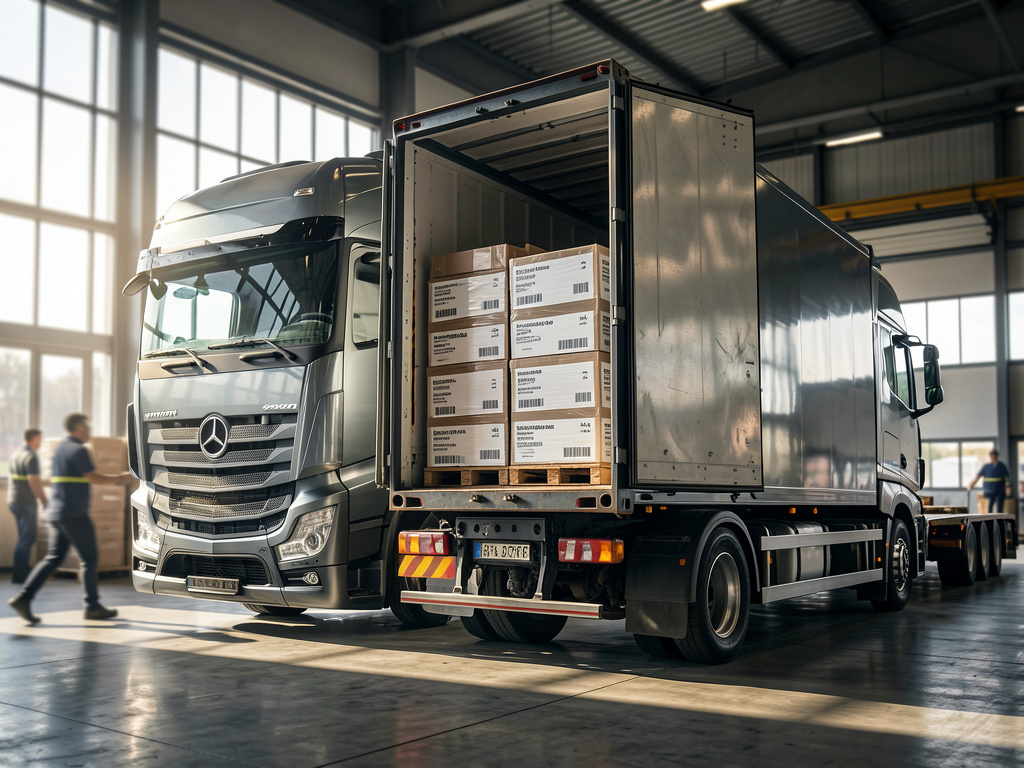
Cargo Delivery from France to Germany
Freight Delivery from France to Germany: Road Transport, Air Freight, Warehouse Logistics, and Timelines
Freight delivery from France to Germany is one of the most sought-after routes in intra-European logistics. Industrial components, equipment, food products, clothing, electronics, building materials, furniture, and goods for online stores are actively transported between the two countries. Thanks to the absence of customs borders within the European Union, freight transport between France and Germany is usually faster and simpler than international shipping between EU countries and third countries.
Despite the relatively short distance, organizing transportation requires a professional approach. It is necessary to choose the appropriate transport, determine the optimal route, prepare documents, agree on loading and unloading conditions, and ensure warehouse support. The final cost is influenced by the weight and volume of the shipment, the type of cargo, urgency, pickup and delivery addresses, the need for temperature control, insurance, and additional logistics services.
This article provides a detailed overview of intra-European transport between France and Germany, road and air delivery, warehouse logistics, export-import features in the EU, timelines, and freight costs. Special attention is given to the question of what is more beneficial for business: transporting goods from France to Germany by road or by air.
Features of Freight Transport between France and Germany
France and Germany are the largest economies in the European Union and each other's key trading partners. Stable transport links have been established between the countries, with numerous road, rail, air, and multimodal routes in operation. The majority of commercial cargo is transported by road, as the road network allows for direct delivery from the sender to the recipient.
For businesses, freight transport from France to Germany can be organized in various formats:
a dedicated vehicle for a single client;
consolidated delivery of small batches;
express delivery;
transportation of hazardous or temperature-sensitive cargo;
transport of oversized equipment;
multimodal logistics using several types of transport;
delivery to a temporary storage warehouse or distribution center.
Within the EU, the principle of free movement of goods applies, so standard commercial cargo between France and Germany usually does not undergo full customs clearance at the border. However, this does not mean the absence of documents and control. Companies must correctly prepare invoices, bills of lading, product origin documents, VAT information, and confirmation of delivery terms.
In practice, most shipments use a CMR waybill, commercial invoice, packing list, supply contract, and documents confirming the characteristics of the goods. For certain categories of products, certificates of conformity, veterinary documents, phytosanitary certificates, or transport permits may be required.
Proper classification of the cargo is of great importance. For example, regular industrial products are transported under one set of rules, while batteries, chemicals, aerosols, medical goods, and perishable products require compliance with special requirements. If the specifics of the cargo are not considered in advance, delays, additional costs, and issues during acceptance may occur.
Main Delivery Routes from France to Germany
The choice of route depends on the city of departure and destination, cargo characteristics, road congestion, weather conditions, and client requirements. The most popular routes are between major industrial and logistics centers.
Transport can be carried out, for example, from Paris, Lyon, Marseille, Strasbourg, Lille, Toulouse, Bordeaux, or Nantes to Berlin, Hamburg, Munich, Frankfurt am Main, Cologne, Düsseldorf, Stuttgart, or Leipzig.
Particularly convenient is the route through border regions and areas close to Germany. Delivery from Strasbourg to German cities often takes less time than shipping from the southern or western parts of France. At the same time, the distance from Paris to Frankfurt, Cologne, or Berlin also allows for regular direct road services.
Depending on the destination, the carrier may use the following transport corridors:
northeast direction through Lille and border areas;
eastern route through Strasbourg and Metz;
southeast route through Lyon towards Stuttgart and Munich;
central European highways connecting Paris, Frankfurt, and Berlin;
routes through logistics hubs and distribution terminals.
Before starting the transportation, specialists assess not only the mileage but also the actual transport situation. Factors such as road works, restrictions on freight traffic, seasonal traffic jams, weather conditions, and local entry bans into city centers can affect delivery times.
For deliveries to major cities, the last mile may sometimes require the use of light-duty vehicles. This is particularly relevant when transporting to historical districts, restricted areas of enterprises, stores, or residential neighborhoods. In such cases, the route is planned considering permits, entry times, and access possibilities to the destination.
Road Freight from France to Germany
Road transport is the primary method for delivering goods between France and Germany. Its popularity is attributed to versatility, affordability, and the ability to deliver cargo directly from the sender's door to the recipient's door.
Road transport is suitable for most categories of goods:
palletized cargo;
boxed products;
industrial equipment;
furniture;
components;
construction materials;
clothing and footwear;
household appliances;
e-commerce goods;
food products;
advertising and exhibition materials.
The main advantage of road delivery is flexibility. The carrier can pick up the cargo from virtually any point in France and deliver it to a warehouse, store, office, or manufacturing facility in Germany. This eliminates the need for multiple transfers between terminals, which often occurs with air or rail transport.
Different types of vehicles are used for shipments. Tarpaulin-covered eurotrucks are suitable for standard pallets and boxes. Refrigerated trucks are used for transporting temperature-sensitive products. Light-duty vehicles are convenient for small batches and urban deliveries. Low-bed trailers, heavy-duty trucks, and specialized hauliers are used for heavy or oversized items.
Road delivery can be full or consolidated. In full load, the entire vehicle is allocated to one customer. This option is convenient for large shipments, urgent deliveries, and cargo requiring special security measures. Consolidated transport involves combining several customers' shipments in one vehicle. This significantly reduces delivery costs but increases the number of operations at terminals and may affect delivery times.
When submitting a request, it is important to provide accurate information about the cargo: number of packages, dimensions of each package, total weight, volume, type of packaging, stacking features, loading and unloading addresses. Errors in this data can lead to the inability to load the cargo onto the vehicle or result in additional charges.
Consolidated Shipments between France and Germany
Consolidated delivery is an optimal solution for companies that do not require a full truckload. Cargo from several senders heading in the same direction or through a common logistics terminal is combined into one vehicle. Each client pays only for the space occupied, not the entire transport.
This option is particularly popular among small and medium-sized businesses, online stores, distributors, and companies that regularly send small batches of goods. Consolidated transport helps reduce logistics costs and avoids tying up funds in inventory to form a full load.
Typically, the process includes several stages:
Pickup of cargo from the sender in France.
Delivery to the consolidation warehouse.
Verification of quantity and condition of packaging.
Sorting by destinations.
Formation of a consolidated batch.
Transport to Germany.
Arrival at the terminal or delivery to the recipient.
Confirmation of receipt and closure of transport documents.
The advantages of consolidated shipments include cost-effectiveness, regularity of trips, and the ability to send small batches without long waiting times. However, there are also limitations. Cargo may pass through an intermediate terminal, which increases the number of transfers. For fragile products, high-quality packaging must be used, and conditions for joint transport should be clarified in advance.
Consolidated delivery is not always suitable for expensive, urgent, temperature-sensitive, or particularly delicate cargo. If the product cannot be placed next to other goods, requires constant temperature control, or guaranteed delivery at a specific time, it is better to consider a dedicated vehicle or specialized service.
Aerial Freight Delivery Across Europe
Air transportation from France to Germany is primarily used for urgent, expensive, compact, and critically important cargo. An aircraft allows for quick movement of shipments between major airports; however, the overall logistics chain includes more than just flight time.
Air delivery is often utilized for transporting:
medications;
high-value electronics;
product samples;
documents and contracts;
spare parts for production;
exhibition materials;
high-value goods per kilogram;
urgent orders, the delay of which can lead to downtime.
Air transportation typically begins with the pickup of the cargo from the sender. The goods are then delivered to the airport, undergo acceptance and inspection, an air waybill is issued, the cargo is loaded onto the flight, arrives at the destination airport, and is handed over to a courier or trucking service for delivery to the final recipient.
Therefore, comparing air transport solely based on flight duration is incorrect. It is important to consider the time for pickup, terminal processing, security checks, waiting for the flight, receiving the cargo, and the last mile.
The main advantage of air delivery is speed. Depending on the route and chosen service, the cargo can be delivered within one to two business days. However, the cost of air transportation is significantly higher than that of road transport, especially if the cargo has a large volumetric weight.
To calculate the tariff, airlines use either the actual or volumetric weight, depending on which is greater. Volumetric weight is calculated based on the dimensions of the packaging. Therefore, a light but bulky cargo can be expensive to transport by air.
Which is cheaper: road or air delivery in Europe
In most cases, transporting goods from France to Germany by road is cheaper than air transportation. This is especially noticeable for shipments weighing several dozen kilograms and for transporting pallets, boxes, equipment, or bulky items.
The cost of road delivery is determined by:
distance;
weight and volume;
type of transport;
format of transportation;
number of places;
the need for pickup and delivery to addresses;
toll roads;
additional loading and unloading operations;
insurance;
temperature control;
urgency.
In consolidated transportation, the client pays only for the actual space occupied. This makes road transport the most cost-effective option for regular and planned deliveries.
Air transport becomes justified when speed or high costs of downtime are critical. For example, if the absence of a part halts a production line, more expensive air delivery may be more economically viable than waiting for a standard truck. Additionally, an aircraft may be preferred for shipments with high value and low weight.
One can use the following logic for selection:
up to 1–5 kg with high urgency — courier or air delivery;
small batches without strict deadlines — consolidated road transport;
pallets and large shipments — road transport;
perishable or particularly valuable cargo — air transport or specialized vehicles;
regular deliveries — scheduled road logistics;
critically urgent spare parts — express air delivery.
For an accurate comparison, it is necessary to request two quotes under the same conditions: identical addresses, timelines, insured value, delivery format, and list of additional services. Only in this case can one objectively determine which option is more advantageous.
Delivery times for cargo from France to Germany
The transportation time depends on the distance, type of transport, delivery format, and characteristics of the cargo. The average delivery time by road between major cities ranges from one to four business days. However, this is an approximate figure and not a universal guarantee.
Approximate delivery times may look as follows:
border areas — about one business day;
Strasbourg — southern Germany — one to two days;
Paris — western and central Germany — two to three days;
Paris — Munich or Berlin — three to four days;
consolidated transport with terminal processing — from three to seven business days;
air delivery — usually one to two business days;
Express courier delivery — from a few hours to two days.
In practice, the delivery time includes several components: application processing, vehicle dispatch, loading, transit, possible transshipments, document processing, delivery to the final address, and unloading.
A full truckload is usually delivered faster than consolidated cargo, as it moves directly and does not pass through multiple terminals. However, it is necessary to consider the working hours of drivers, mandatory breaks, and restrictions on freight transport in certain regions.
Delivery times are also affected by weekends and holidays. In France and Germany, there are periods of increased demand before Christmas, Easter, the start of the school year, and major sales. During these times, it is advisable to book transportation in advance and allow for extra time.
For urgent shipments, you can order a guaranteed delivery service by a specific date or within a certain time frame. However, such conditions require separate agreement and usually cost more than standard transportation.
Documents for transporting goods between EU countries
Although France and Germany are part of the European Union, transporting goods between them requires documentation. The main set of documents depends on the nature of the transaction, type of product, and carrier requirements.
The most commonly used documents include:
CMR waybill;
commercial invoice;
packing list;
delivery contract;
order or specification;
documents of origin;
VAT payer information;
confirmation of delivery terms according to Incoterms;
quality and compliance certificates;
permits for special categories of goods.
The CMR is the main transport document for road transport. It specifies the sender, carrier, recipient, loading place, delivery point, product description, number of packages, weight, and special instructions.
The invoice contains commercial information: product name, quantity, price, currency, seller and buyer details. The packing list helps verify the contents of the shipment and compare the actual number of packages with the declared data.
For intra-EU supplies, VAT rules are of great importance. If the seller and buyer are registered in different EU countries and the established conditions are met, the intra-community supply mechanism may apply. However, the tax regime depends on the status of the parties, type of goods, and specific transaction, so accounting issues should be coordinated with a specialist.
Some goods have special circulation regimes. These include alcohol, tobacco products, pharmaceuticals, animal products, chemicals, weapons, hazardous goods, and dual-use items. Additional permits, labeling, and control documents may be required for them.
Export and import within the European Union
The terms "export" and "import" are often used in relation to any international transportation; however, within the EU, trade between member states has its peculiarities. In most cases, the movement of goods from France to Germany is considered an intra-community supply rather than a classic export operation involving customs clearance.
This means that standard transportation usually does not require a full export declaration or payment of import duties at the German border. Nevertheless, companies are required to keep records of the movement of goods and comply with tax, statistical, and industry legislation.
Special rules may apply to certain categories of products. For example, food products must comply with sanitary standards, medical devices must meet safety and registration requirements, chemical products must adhere to hazardous substances regulations, and alcohol and tobacco products are subject to excise regulations.
If the sender or recipient is outside the EU, the scheme becomes more complex. In such cases, export clearance in France, transit through EU territory, import declaration in Germany, and payment of taxes or duties may be required. Therefore, it is important to determine the actual origin of the goods, the status of the seller and buyer, as well as the route before shipping.
Incoterms conditions are also of particular importance. They allocate responsibilities for transportation, insurance, risks, loading, unloading, and documentation between the parties. An incorrectly chosen delivery term can lead to disputes over who should pay for shipping or be responsible for damage to the goods.
Warehouse logistics in France and Germany
Warehouse logistics is a crucial part of international shipping. It allows for the receipt, storage, sorting, packing, and dispatch of goods at the right moment. For companies operating in multiple EU markets, a warehouse in France or Germany can serve as the foundation for efficient distribution.
The following services may be provided at the warehouse:
receiving goods;
counting and checking packaging;
labeling;
repackaging;
palletizing;
consolidation of batches;
cross-docking;
order fulfillment;
storage;
inventory;
returns processing;
preparation for shipment;
delivery to stores or end customers.
Cross-docking reduces storage time. Cargo arrives at the warehouse, is sorted, and is almost immediately directed to the next recipient. This format is suitable for retail, marketplaces, and regular deliveries.
Fulfillment is especially relevant for online stores. The logistics operator receives the goods, stores them, processes orders, packs parcels, hands them over to the courier, and manages returns. This allows the seller to focus on marketing and sales without creating their own warehouse infrastructure in Germany.
When choosing a warehouse, it is essential to consider location, area, storage costs, availability of loading equipment, pallet handling capabilities, temperature zones, IT systems, and accounting quality. It is important to determine in advance whether short-term storage or long-term placement of goods is required.
Temperature-sensitive, hazardous, and oversized cargo
Some cargo cannot be transported using standard methods. Food products, pharmaceuticals, cosmetics, and chemicals require special conditions to be met.
Temperature-controlled transport is carried out using refrigerated or isothermal vehicles. The condition of the body and the temperature regime are checked before loading. During transit, temperature readings may be recorded. For pharmaceuticals, additional requirements for packaging, safety, and compliance with transport conditions are established.
Hazardous cargo is transported according to ADR regulations. Depending on the class of danger, special packaging, labeling, documentation, a trained driver, and an equipped vehicle are required. Hazardous cargo includes flammable liquids, gases, batteries, certain chemicals, and aerosols.
Oversized and heavy cargo requires preliminary engineering calculations. It is necessary to check the dimensions of the object, weight, loading possibilities, bridge heights, road restrictions, and the availability of special permits. Sometimes, escort, route coordination, and transportation during specific hours are required.
Errors in describing special cargo can lead to loading refusals or vehicle stops. Therefore, the customer must provide accurate technical specifications and inform about all potentially hazardous properties of the goods.
Insurance and cargo security control
The carrier is responsible for the safety of the cargo within the terms of the contract and applicable legislation; however, standard liability may be limited. For expensive products, it is advisable to arrange additional insurance.
Insurance may cover:
total or partial loss;
damage to packaging or goods;
road traffic accidents;
fire;
theft;
impact of external factors;
specific risks during loading and unloading.
Before obtaining a policy, it is necessary to check the list of exclusions. Some insurance programs do not cover improper packaging, natural loss, delivery delays, hidden defects, or specific categories of goods.
For transport monitoring, GPS tracking, notifications about passing checkpoints, photo documentation of loading, electronic document flow, and delivery confirmation are used. When transporting expensive goods, body sealing and restricted access to route information may be employed.
Special attention should be paid to packaging. Pallets should be stable, boxes should be moisture and impact-resistant, and fragile items should be equipped with cushioning materials. Proper packaging reduces the risk of damage and facilitates loading.
How the cost of delivery from France to Germany is calculated
The price of transportation is determined individually. There is no universal rate without information about the cargo and route. Even two shipments between the same cities can have different costs due to variations in weight, volume, urgency, and type of transport.
Main calculation factors:
The distance between the loading and unloading points.
The weight and volume of the shipment.
The number of pallets and cargo spaces.
The type of vehicle.
Consolidated or dedicated transport.
The need for pickup and delivery at addresses.
Temperature control.
The presence of hazardous characteristics.
Insured value.
Urgency and guaranteed delivery time.
Additional loading work.
Warehouse storage and terminal handling.
For consolidated transport, the rate is often calculated per pallet space, cubic meter, or kilogram. For a full truck, a rate per trip is used. In air logistics, the calculation is based on actual or volumetric weight.
To receive an accurate commercial offer, it is essential to provide the carrier with as much initial data as possible. It is advisable to specify addresses, readiness dates, warehouse operating hours, packaging dimensions, loading requirements, product specifics, and desired delivery time.
When comparing offers, it is important to consider more than just the price. Clarify whether the rate includes vehicle dispatch, loading, unloading, terminal fees, insurance, door-to-door delivery, document return, and status notifications.
How to choose a logistics company
A reliable logistics partner should have experience with routes between France and Germany and understand the specifics of the European transport market. When selecting a contractor, it is recommended to check the company's documents, liability insurance, fleet or network of carriers, customer reviews, and transparency of calculations.
It is useful to clarify:
whether direct and consolidated trips are performed;
what types of transport are available;
whether there are warehouse facilities;
whether the company handles hazardous and temperature-sensitive cargo;
whether GPS tracking is provided;
how documents are processed;
who is responsible for loading and unloading;
whether compensation is provided in case of damage;
whether urgent delivery can be ordered;
whether there is support available in Russian, French, German, or English.
A good carrier will inform in advance about possible restrictions and will not promise unrealistic timelines. Before starting work, it is necessary to agree on the application, rate, payment terms, document exchange procedures, and responsibilities of the parties.
For regular shipments, it is beneficial to conclude a logistics service contract. This allows for fixed rates, a schedule of trips, transport dispatch procedures, and claims handling conditions. For larger volumes, an individual scheme can be agreed upon with a dedicated manager and reporting for each shipment.
How to prepare cargo for shipment
Preparation begins with checking packaging and labeling. Each item must be labeled in a way that allows it to be identified at the warehouse and upon receipt. The label usually includes the item number, total number of items in the shipment, weight, recipient's address, and special handling symbols.
For pallets, it is important to maintain stacking stability. Boxes should not extend beyond the edges of the pallet, and the top must be protected from pressure. The pallet is secured with stretch film, tape, or other materials.
Before handing over the cargo to the carrier, it is necessary to:
check the number of items;
measure dimensions and weight;
prepare documents;
ensure labeling compliance;
report any fragility or special conditions;
take photos of the packaging;
agree on loading time;
confirm the availability of loading equipment.
If there is no ramp or loader at the site, this should be communicated in advance. Otherwise, the vehicle may arrive, but loading could be impossible or require additional costs.
The recipient should also be prepared for acceptance. It is important to clarify working hours, the possibility of truck access, pass requirements, ramp availability, and document signing procedures in advance. Such details often affect the actual delivery time as much as the distance.
Practical tips for reducing costs
The cost of delivery from France to Germany can be reduced without compromising quality by planning shipments in advance and choosing the right logistics format.
The most effective measures include:
combining small shipments into one batch;
using consolidated transport;
booking vehicles in advance;
avoiding urgent orders;
choosing a warehouse close to the main market;
accurately calculating packaging dimensions;
use standard pallets;
reduce the number of intermediate transshipments;
coordinate a fixed schedule of trips;
compare several commercial offers;
regularly analyze returns and downtimes;
enter into a long-term contract with the carrier.
Consolidation is of great importance. If a company sends several small batches throughout the week, it is sometimes more cost-effective to combine them at the warehouse and send them in one consolidated or full truckload. This reduces the number of individual transport operations and lowers the average cost of delivery per unit of goods.
It is also necessary to monitor the accuracy of the data. Incorrectly specified dimensions can lead to tariff recalculations, additional charges, or the need to change the transport. Accurate information at the application stage helps avoid unforeseen expenses.
Shipping goods from France to Germany is a well-developed area of intra-European logistics that suits both large manufacturers and small online stores. Thanks to the convenient transport infrastructure, the absence of traditional customs barriers between EU countries, and a wide selection of carriers, regular deliveries of almost any category of goods can be organized.
Road delivery remains the most versatile and cost-effective solution for pallets, boxes, equipment, and planned commercial cargo. Consolidated shipments allow for savings with small volumes, while a dedicated truck ensures a direct route and a higher level of control. Air delivery is more expensive but justified for urgent shipments, high costs of downtime, and the need to move goods as quickly as possible.
The average road transport time ranges from one to several working days, while air delivery usually takes one to two days, considering terminal processing. The exact cost depends on the route, weight, volume, type of transport, deadlines, packaging, and additional services.
To ensure that the transport proceeds without delays, it is necessary to prepare documents in advance, properly package the goods, inform the carrier of all the specifics of the cargo, and agree on the loading and unloading conditions. A professional logistics company will help choose the optimal transport, organize warehouse support, monitor the route, and ensure delivery from the sender in France to the recipient in Germany.