

 RU
 UA
 DE
 FR
 ES
 CN
 SA
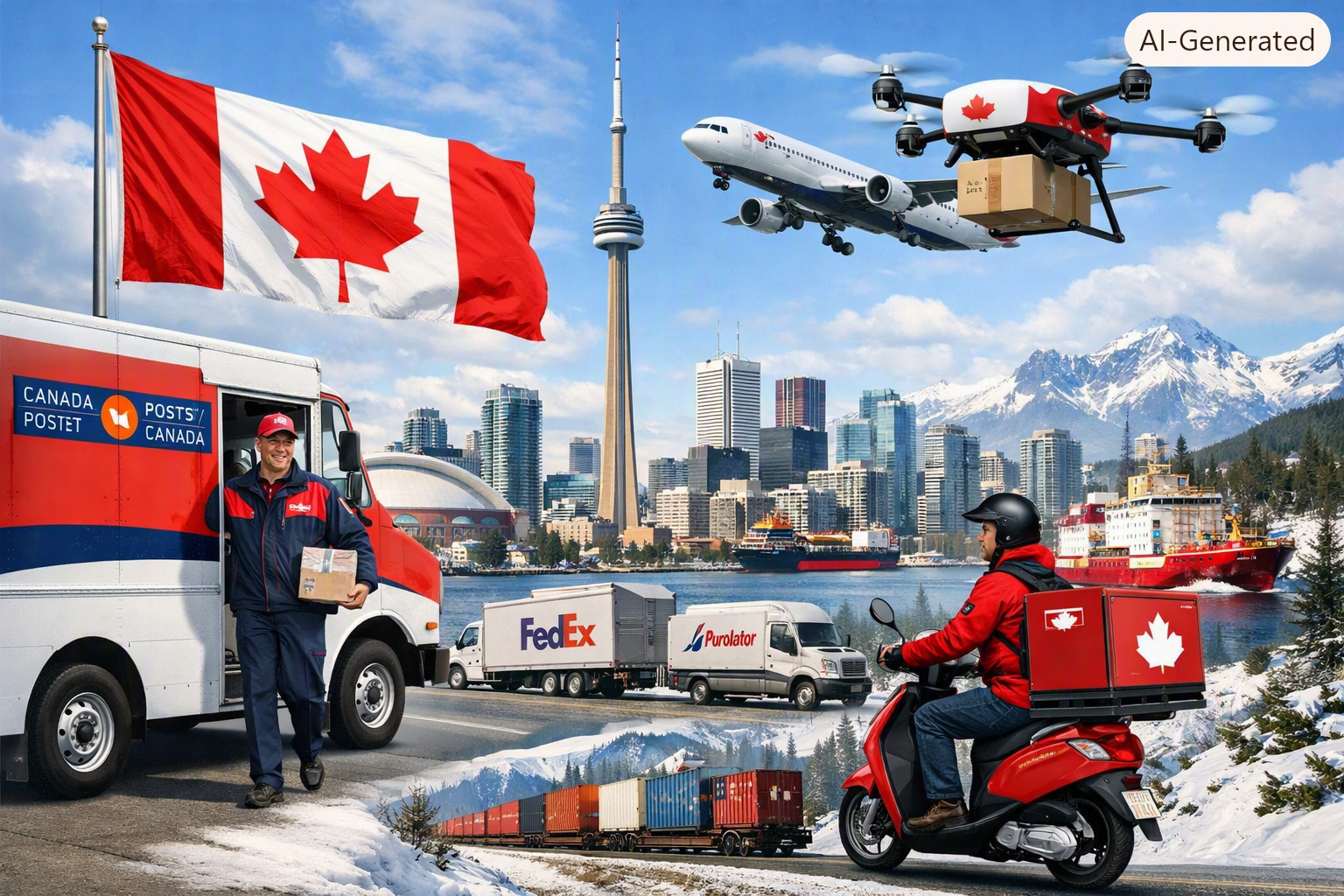
Freight Shipping from Canada to the USA
Shipping Goods from Canada to the USA: Companies, Prices, Timelines, and Import Regulations
Trade relations between Canada and the United States are considered among the most active in North America. Daily, industrial goods, equipment, spare parts, food products, clothing, construction materials, electronics, and commercial shipments of various purposes are transported between the two countries. The geographical proximity, developed network of highways, rail routes, airports, and seaports allow for relatively quick delivery of goods from Canada to the USA.
However, international transportation between neighboring countries still requires proper documentation, the selection of an appropriate carrier, calculation of customs duties, and compliance with U.S. legislation. An error in the product code, incorrect description of contents, or lack of necessary permits can lead to delays at the border, additional costs, and return of the shipment.
This article will detail how to organize shipping from Canada to the USA, the available transportation methods, the time required for transportation, what affects the price, which companies operate in this direction, and how to arrange imports into the United States.
Shipping Goods from Canada to the USA: Features of the Route
Shipping goods between Canada and the USA differs from shipments to other countries due to relatively short distances and high frequency of transport routes. There are numerous road border crossings between the countries, and many regions are connected by direct rail and air routes. This allows for the shipment of both small packages and large commercial consignments.
The most popular mode of transport remains road transportation. Trucks provide direct "door-to-door" delivery, do not require complex transloading, and are suitable for most types of goods. A truck can pick up cargo from a supplier's warehouse in Toronto, Montreal, Vancouver, or Calgary and deliver it directly to a recipient's warehouse in New York, Chicago, Detroit, Los Angeles, or another city in the USA.
Rail transport is more commonly used for large shipments, containers, raw materials, industrial products, and goods where cost is more important than maximum speed. Rail delivery usually falls short of road transport in flexibility, but allows for significant volumes to be transported at moderate costs.
Air freight is in demand for urgent, expensive, compact, or perishable goods. Electronics, medical equipment, documents, product samples, components, and cargo whose delay could lead to financial losses are typically shipped by air. The main disadvantage of air transport is the high cost, especially for large volumetric weights.
Sea freight is used for container shipments that are sent from the western or eastern provinces of Canada to U.S. ports. This option can be cost-effective for large volumes, but usually requires more time and additional operations: delivery to the port, loading, unloading, customs clearance, and subsequent transportation within the USA.
What Goods are Shipped from Canada to the USA
Regular shipments across the Canada-U.S. border include:
industrial equipment;
automotive parts;
construction materials;
furniture;
household appliances;
electronics;
clothing and footwear;
cosmetics;
food products;
pharmaceutical goods;
agricultural products;
chemicals;
samples and promotional materials;
raw materials and semi-finished products.
Each category has its own requirements. For example, food products may be inspected by the U.S. Food and Drug Administration (FDA). Plant products may fall under the control of the U.S. Department of Agriculture (USDA) and phytosanitary services. Medical devices, medications, alcohol, weapons, chemicals, and dual-use goods require particularly thorough checks.
Before shipping, it is essential to determine whether the specific product is allowed for import into the USA, whether licenses, certificates, labeling, and prior registration of the importer are needed.
Main Shipping Methods from Canada to the USA
The choice of transportation method depends on the weight, volume, value, nature of the goods, required timelines, and the addresses of departure and arrival. There is no universal option for all shipments. Sending a small box by a dedicated freight truck is not cost-effective, while transporting a large industrial shipment by air is impractical unless absolutely necessary.
Car Delivery Canada–USA
Car transportation is considered the most convenient method of delivery between Canada and the USA. Its main advantage is the ability to organize a direct route without intermediate storage at terminals. The transport company picks up the cargo from the sender, prepares the necessary documents, goes through customs control, and delivers the goods to the recipient's warehouse.
For car transportation, the following are used:
light-duty vans;
trucks;
tarp-covered vehicles;
refrigerated trucks;
container carriers;
platforms for oversized cargo;
trailers and tractors for heavy loads.
When transporting consolidated cargo, several shipments are combined into one vehicle. This reduces delivery costs, as the customer pays only for the volume or weight occupied. This option is suitable for shipments that do not require urgent delivery and do not fill the entire vehicle.
Full truckload (FTL) is used when one customer rents the entire truck. This format ensures a shorter route, fewer transshipments, and a high level of control. It is especially convenient for expensive, fragile, temperature-sensitive, and urgent goods.
Rail Transportation
Rail delivery is in demand for transporting containers, raw materials, machinery, vehicles, lumber, and other large products. The main advantage is the ability to transport large volumes over long distances at a lower cost than using road transport.
At the same time, railways rarely provide delivery directly to the final address. Usually, the cargo is first delivered by truck to a terminal, then transported by train, and after arrival, it is reloaded onto a truck. Therefore, the final delivery time depends not only on the distance but also on train schedules, container availability, terminal congestion, and cargo processing time.
Air Transportation
Air delivery from Canada to the USA is the fastest method of transportation. Depending on the chosen service, the shipment can be delivered within one to three business days, and sometimes even faster.
The cost is influenced not only by the actual weight but also by the dimensional weight. If the box is light but takes up a lot of space, the carrier calculates the rate based on the dimensional measurement. Therefore, it is important to optimize packaging and eliminate unnecessary voids before shipping.
Air transportation is suitable for:
urgent documents;
product samples;
expensive goods;
small batches of electronics;
medical devices;
spare parts;
goods with a short shelf life.
Restrictions may arise from aviation safety regulations. Some types of batteries, chemicals, aerosols, liquids, and other goods require special packaging or are not accepted for transportation by standard courier services.
Sea Container Delivery
Sea transport is chosen by companies that need to transport a significant volume of goods at the lowest price per unit. Standard 20 and 40-foot containers are used, and for special cargo, refrigerated, open, and specialized containers are available.
Sea transportation between Canada and the USA can be justified when moving heavy shipments, equipment, building materials, furniture, vehicles, and raw materials. However, it is necessary to consider expenses for port fees, terminal handling, delivery of the container to the port, and removal after arrival.
How Long Does Cargo Take from Canada to the USA
The exact delivery time depends on the city of departure and destination, the chosen transport, the type of service, border congestion, and the quality of document preparation. The distance between neighboring cities may be small, but delivery to remote states will take longer.
Estimated delivery times are as follows:
express delivery of documents – from 1 business day;
air transportation of small cargo – from 1 to 3 business days;
car delivery of consolidated cargo – approximately from 3 to 10 business days;
full truckload transportation – about 2–7 business days;
rail delivery – from 5 to 14 business days;
sea transportation – from 10 days to several weeks;
oversized and special cargo – on an individual schedule.
It is important to understand that the indicated times are usually counted from the moment the cargo is actually handed over to the carrier. The time for preparing the goods, packaging, pickup from the warehouse, preparing export documents, and waiting for permits may be calculated separately.
What Affects Delivery Time
The duration of transportation is influenced by the following factors:
Route. Delivery from Toronto to Detroit will be significantly faster than transportation from Vancouver to Miami.
Season. Delays may occur in winter due to snowfall, ice, and difficult road conditions.
Border load. During holidays, sales, and seasonal increases in trade, queues form at the border.
Nature of the goods. Controlled categories may undergo additional inspections.
Completeness of documents. Errors in the invoice, packing list, or cargo description lead to delays.
Transportation format. Consolidated cargo may wait for consolidation, while a full truck departs faster.
Customs broker. An experienced specialist helps prepare the declaration in advance and reduces the risk of cargo being stopped.
When planning a shipment, it is advisable to allow for extra time. Even with standard road delivery, it is recommended to add a few business days for unforeseen circumstances.
Cost of Shipping Cargo from Canada to the USA
The shipping price is calculated individually. Carriers take into account not only the distance but also dozens of additional parameters. Therefore, shipments of the same weight can have different costs.
Typically, the calculation includes:
the country, city, and address of departure;
the final address in the USA;
the weight and dimensions of the cargo;
actual or volumetric weight;
type of transportation;
the need for temperature control;
type of packaging;
number of packages;
loading and unloading costs;
customs clearance;
insurance;
urgency;
availability of special permits;
fuel and port fees.
For road transport, the price may be indicated per kilometer, pallet, package, cubic meter, or for the entire truck. For air transport, the calculation is often based on dimensional weight. For rail and sea shipments, the type of container, route, batch volume, and terminal costs are important.
Approximate Price Categories
Exact rates vary depending on the market and current transportation load, so the final cost should be requested from the carrier. Services can be conditionally divided into several categories:
document and small parcel delivery — minimum fixed rate;
consolidated road transport — payment per package, pallet, or volume;
express air delivery — higher price per kilogram;
full truck — fixed rate per route;
container transport — separate rate for the container plus port and terminal services;
oversized cargo transport — individual calculation considering permits and escort.
A low base rate does not always mean cheap transportation. Some companies charge separately for cargo pickup, document processing, storage, delivery to the terminal, customs clearance, truck downtime, and "last mile" delivery. Therefore, when comparing offers, it is essential to request a complete calculation with a list of all included and additional services.
How to Reduce Shipping Costs
You can save on delivery in several ways:
plan shipments in advance;
choose consolidated cargo instead of a full truck;
optimize packaging;
combine several batches;
avoid express service unless necessary;
prepare documents in advance;
choose a consolidation warehouse;
compare offers from several carriers;
insure only truly valuable cargo;
use standard pallets and containers.
However, do not skimp on packaging, customs clearance, and the accuracy of documents. Improper packaging can lead to product damage, while errors in the declaration can result in fines and delays at the border.
Main Freight Companies Between Canada and the USA
International courier services, transport and logistics companies, rail operators, freight forwarders, and customs brokers operate in the Canada–USA direction. Each category of carriers has its own characteristics.
International Courier Services
Major courier companies are suitable for documents, parcels, and small commercial shipments. They typically offer pickup services, tracking, door-to-door delivery, and basic customs support.
Well-known operators include:
FedEx;
UPS;
DHL;
Purolator;
Canada Post and USPS as part of postal cooperation.
Courier services are convenient due to standard rates and a clear tracking system. However, they may have limitations regarding size, weight, product categories, and delivery conditions. For large pallet shipments or industrial equipment, it's better to choose a specialized freight forwarder.
Freight Forwarding Companies
Freight forwarders organize transportation comprehensively. They can arrange transportation, pick up goods from the supplier, consolidate multiple shipments, prepare documents, handle customs clearance, and deliver the cargo to the recipient's warehouse.
A freight forwarder is especially useful if:
the sender is unfamiliar with the export procedure;
the recipient requires delivery to a specific warehouse;
the cargo consists of multiple items;
different modes of transport are used;
there is a need to transport oversized or temperature-sensitive goods;
insurance and monitoring of all stages of the route are required.
When choosing a freight forwarder, it's important to check their experience in North American routes, liability insurance, own licenses, and partner networks in Canada and the USA.
Rail and Multimodal Operators
Rail operators are used for containerized and large industrial cargo, with CN and CPKC operating in North America. They provide transportation between terminals, while delivery from the warehouse to the railway and from the terminal to the recipient is usually organized by trucking partners.
A multimodal operator can combine road transport, rail, sea, and air delivery into a single logistics scheme. This approach is convenient for complex routes and large international shipments.
How to Arrange Cargo Import to the USA
Importing to the USA requires compliance with customs regulations and providing accurate information about the goods. The importer is usually responsible for the accuracy of the declaration, even if a hired customs broker handles the paperwork.
Before shipping, it is essential to determine:
who the importer is;
who will submit the declaration;
what HS code applies to the goods;
whether a license is required;
whether there are import restrictions;
what duties and fees need to be paid;
whether certificates and permits are needed;
who will pay for shipping and customs expenses.
Main Documents
The following documents are typically used for import clearance:
commercial invoice;
packing list;
bill of lading;
certificate of origin;
export declaration if necessary;
contract or purchase order;
information about the sender and recipient;
description of the goods;
product classification code;
documents regarding the value;
certificates and licenses for specific categories.
The invoice must contain the exact name of the product, quantity, price for each item, currency, delivery terms, country of origin, and details of the sender and recipient. General descriptions like "parts," "samples," or "goods" may be insufficient for customs control.
Customs Broker in the USA
A customs broker helps prepare documents, classify goods, calculate payments, submit declarations, and interact with customs authorities. For companies importing products to the USA for the first time, their services are almost essential.
The broker does not replace the importer and does not relieve them of responsibility for the information provided. Therefore, the client must provide complete information about the goods, including their composition, purpose, manufacturer, and value.
When choosing a broker, it is advisable to clarify:
the presence of a license;
experience with the required product category;
service costs;
whether the declaration submission is included in the fee;
who is responsible for additional requests;
how corrections are handled;
whether a report is provided after the cargo is released.
Customs Duties, Taxes, and Fees
The amount of payments depends on the classification code, country of origin, value of the goods, trade regime, and product characteristics. Agreements between Canada and the USA allow for preferential conditions in certain cases, but the right to preferences does not arise automatically.
To utilize these preferences, it is necessary to confirm that the goods comply with the rules of origin. Simply shipping goods from Canada does not mean they are produced in Canada. If the products were manufactured in another country and only routed through a Canadian warehouse, the origin will be determined according to the relevant rules.
Possible expenses include:
import duties;
federal and other taxes;
processing fees;
brokerage fees;
inspection fees;
storage fees;
port and terminal charges;
demurrage fees;
post-release delivery services.
The exact amount should be calculated before shipping. This helps determine the actual cost of the goods and avoid situations where the cargo arrives in the USA but its release is delayed due to unpaid fees.
Packaging and Labeling Requirements
Proper packaging protects the cargo during loading, transportation, transloading, and storage. It also facilitates the work of the carrier and reduces the likelihood of product damage.
For most shipments, the following are used:
cardboard boxes;
wooden crates;
pallets;
plastic containers;
metal containers;
thermal packaging;
moisture-resistant materials;
cushioning inserts.
Wooden packaging moved across international borders may be subject to phytosanitary requirements. Crates and pallets must meet established treatment standards and have the necessary labeling.
It is recommended to indicate on the packaging:
the name or title of the recipient;
delivery address;
shipment number;
number of packages;
weight;
fragility markings;
direction of the top side;
special storage conditions.
The labeling must match the information in the invoice and packing list. Discrepancies in the number of packages, weight, or product description can raise additional questions during inspection.
Cargo Insurance from Canada to the USA
Insurance is not always included in the carrier's base rate. Sometimes the company compensates for damages only up to a limited liability, which may be insufficient for expensive equipment, electronics, or commercial shipments.
The insurance policy may cover:
total or partial loss;
damage to the goods;
accident consequences;
fire;
natural disasters;
theft;
damage during loading and unloading.
Before signing a contract, it is essential to review the list of exclusions. Some policies do not cover improper packaging, natural shrinkage, delivery delays, hidden defects, and certain categories of goods.
The insured value is usually calculated based on the price of the goods, transportation costs, and anticipated risks. For expensive or fragile cargo, obtaining a separate policy is a prudent protective measure.
How to Choose a Carrier for Canada–USA Delivery
When selecting a company, do not focus solely on the lowest price. Reliability, contract transparency, experience, and the carrier's ability to resolve issues at the border are important.
Check whether:
The company handles the required type of cargo.
It has experience in international shipping between Canada and the USA.
Route tracking is provided.
Customs clearance is included in the cost.
Liability insurance is available.
What timelines are specified in the contract.
Who is responsible for delays and damages.
Are there any additional fees.
How claims are processed.
Is door-to-door delivery provided.
It is advisable to send a request for a quote to several companies at once. It should include the cities of departure and destination, dimensions and weight of each package, type of goods, value of the cargo, required timeframe, packaging specifics, and the need for customs clearance.
The more accurate the initial data, the lower the likelihood of price changes after handing over the cargo to the carrier.
Common Mistakes When Importing from Canada to the USA
The most common issues are not related to transportation, but to document preparation and incorrect assessment of requirements.
Frequent mistakes include:
too general a description of the goods;
incorrect HS code;
lack of proof of origin;
undervaluation of cost;
discrepancy between the invoice and the actual cargo;
absence of permits;
incorrect labeling;
use of inappropriate packaging;
absence of an importer in the USA;
ignoring FDA, USDA, or other agency requirements;
underestimating customs clearance times;
refusal to insure expensive goods.
Some shippers believe that a small commercial shipment does not require serious documentation. In practice, even inexpensive goods can be delayed if their description raises doubts or if documents are filled out incorrectly.
To reduce risks, it is recommended to engage a customs broker before shipping the cargo, rather than after it arrives at the border.
Step-by-step scheme for shipping cargo from Canada to the USA
Organizing transportation usually includes the following stages:
Information preparation
The sender gathers information about the goods: name, destination, composition, quantity, value, dimensions, weight, and country of origin. At this stage, it is determined whether any permits are needed.
Carrier selection
The company compares options for road, rail, air transport, or multimodal schemes. Commercial offers are obtained indicating timelines, rates, and additional costs.
Document preparation
Invoices, packing lists, transport documents, and permits are prepared. For regulated categories, certificates and notifications are arranged in advance.
Pickup and packaging
The carrier accepts the cargo from the sender, checks the number of packages, labeling, and the condition of the packaging. If necessary, the goods are delivered to a consolidation warehouse.
Export clearance
On the Canadian side, the necessary export procedures are carried out. Depending on the characteristics of the shipment, additional information and registration data may be required.
Crossing the border
The cargo undergoes U.S. border and customs control. The broker submits the declaration, and the importer pays the assessed fees.
Delivery within the USA
After clearance, the cargo is directed to the recipient's warehouse. The customer receives delivery confirmation, transport documents, and a final calculation.
Shipping goods from Canada to the USA can be organized quickly and efficiently if the appropriate mode of transport is determined in advance, documents are prepared, and U.S. import requirements are taken into account. Courier services are convenient for small packages, while trucking companies and freight forwarders are suitable for pallets and commercial shipments, and rail and maritime operators are ideal for large volumes.
The average delivery time from Canada to the USA ranges from one business day for express shipments to several weeks for containerized and special cargo. The price depends on the route, weight, volume, type of transport, urgency, customs services, and additional fees.
The main conditions for successful transportation are an accurate description of the goods, correct classification code, quality packaging, proof of origin, presence of an importer, and timely involvement of a customs broker. When comparing carrier offers, it is important to evaluate not only the rate but also the full range of services, transparency of calculations, insurance, and the company's responsibility for the safety of the cargo.