

 RU
 UA
 DE
 FR
 ES
 CN
 SA
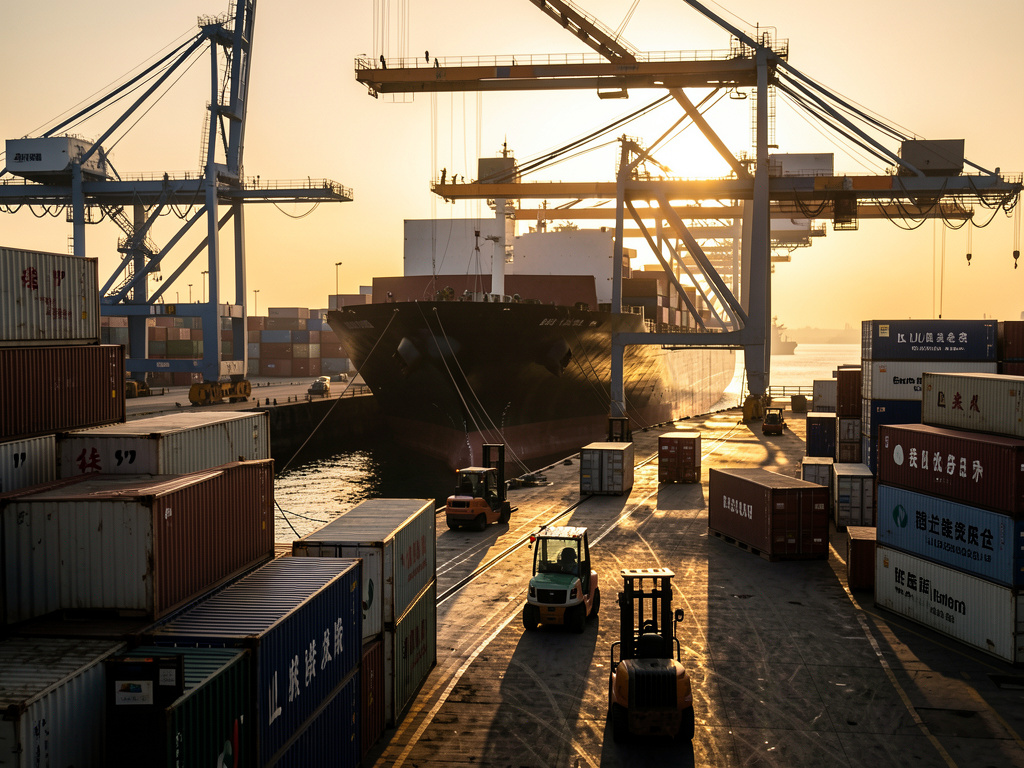
Cargo Delivery from China to Germany
Shipping Cargo from China to Germany: Prices, Timelines, Routes, and Customs Clearance
Shipping cargo from China to Germany is one of the most sought-after routes in international logistics. China remains the world's largest manufacturing hub, while Germany is considered a key trading and industrial center in Europe. Regular shipments between the countries include industrial equipment, electronics, clothing, auto parts, furniture, components, construction materials, raw materials, and consumer goods.
Organizing transportation along the China-Germany route requires a comprehensive approach. It is essential to choose the appropriate mode of transport, calculate shipping costs, prepare export and import documents, undergo customs clearance, verify requirements for specific product categories, and arrange delivery to the final address. Mistakes at any stage can lead to delays, additional costs, fines, or cargo returns.
Main Features of Shipping Cargo from China to Germany
International transportation between China and Germany involves several sequential stages: receiving goods at the supplier's warehouse, consolidation, export clearance, transportation, passing through transit countries, import customs clearance, and delivery to the recipient. Depending on the chosen scheme, the cargo may move directly or pass through distribution terminals.
The final cost and timelines are influenced by weight, volume, type of product, hazard category, special storage conditions, the country of departure in China, and the destination city in Germany. For example, shipping from Shanghai to Hamburg is usually organized more easily than transporting from a small industrial area in China to a remote city in Germany. Additional costs may arise from picking up goods from the factory, warehouse handling, labeling, packaging, and certification processing.
The international delivery basis, Incoterms, plays a significant role. Terms such as EXW, FOB, FCA, CIF, DAP, and DDP determine who pays for transportation, insurance, export and import clearance, as well as where the responsibility for the cargo transfers. If the contract terms are not defined in advance, disputes may arise between the seller and buyer regarding logistics and customs payment responsibilities.
What Goods Are Most Commonly Shipped from China to Germany
Almost all legal categories of commercial cargo are transported along this route. The most common include:
electronics and household appliances;
telecommunication equipment;
clothing, footwear, and textiles;
furniture and interior goods;
auto parts;
industrial equipment;
electrical components;
construction materials;
toys and children's products;
cosmetics and packaging products;
batteries and components;
raw materials and semi-finished products.
Each group has its own regulations. Electronics may require compliance confirmation with European standards. Food products undergo sanitary control. Cosmetics require composition and documentation checks. Lithium batteries fall into the category of goods with special transportation and packaging conditions. Therefore, before concluding a logistics contract, it is important to determine the product code according to the HS Code and check for restrictions.
Main Companies Organizing Cargo Transportation China-Germany
The market includes international freight forwarding companies, shipping lines, air carriers, rail operators, courier services, and specialized customs brokers. The choice of a specific contractor depends on the shipment volume, budget, timeline requirements, and the need for "door-to-door" delivery.
Large logistics companies typically offer comprehensive services. This may include transportation sourcing, picking up products from the manufacturer, consolidating multiple shipments, document preparation, insurance, customs clearance, storage, and delivery to the recipient's warehouse. Contractual rates and customized routes are convenient for regular businesses.
Among international logistics operators and forwarders working with European routes, you can find DHL Global Forwarding, DB Schenker, Kuehne+Nagel, DSV, CEVA Logistics, Sinotrans, Expeditors, Nippon Express, and other market participants. Additionally, major shipping lines, including Maersk, MSC, CMA CGM, COSCO, Hapag-Lloyd, and ONE, carry out shipments. However, it is necessary to clarify the routes, rates, and service conditions directly before shipping.
How to Choose a Transport and Logistics Company
Before signing a contract, it is advisable to check:
the company's experience on the China-Germany route;
the presence of licenses and contracts with carriers;
the possibility of delivery to a specific city;
the list of included services;
the tariff calculation procedure;
availability of liability insurance;
compensation conditions in case of damage or loss;
document submission timelines;
reviews from corporate clients;
transparency of additional charges.
It is essential to carefully review the commercial offer. A low price may not include port fees, terminal handling, customs representation, delivery within Germany, storage, or container demurrage fees. To ensure a fair comparison, it is necessary to request calculations under the same conditions: identical weight, volume, Incoterms basis, route, and list of services.
Sea Freight from China to Germany
Sea transportation is one of the most popular options for large and non-urgent shipments. This method is suitable for containerized cargo, industrial equipment, furniture, raw materials, and goods that do not require fast delivery. The main advantage of sea logistics is the relatively low cost for large volumes.
The main Chinese ports of departure are Shanghai, Ningbo, Shenzhen, Guangzhou, Qingdao, Tianjin, and Xiamen. In Germany, cargo most often arrives in Hamburg, Bremerhaven, or Wilhelmshaven. After unloading, the container is sent to the terminal, undergoes import clearance, and is delivered to the recipient by road or rail transport.
Container Shipping by Sea
Standard containers are used for sea delivery:
20-foot;
40-foot;
40-foot High Cube;
refrigerated;
open top;
flat rack;
special containers for oversized equipment.
If the shipment does not fill the entire container, the LCL format is used — consolidated shipping. In this case, goods from several shippers are placed in one container. A fully loaded container is referred to as FCL. It is more cost-effective for large volumes and allows for better control over the placement of goods.
Sea Freight Timelines
The average sea delivery time from China to Germany is approximately 30–50 days. This period may include:
delivery of goods to the warehouse or port;
waiting for the vessel to depart;
sea transit;
port processing;
customs clearance;
delivery to the final address.
In adverse weather conditions, port congestion, route changes, container shortages, or increased inspections, the timeline may extend. Therefore, for contracts with strict deadlines, it is advisable to allow for a time buffer.
Air Freight from China to Germany
Air transportation is suitable for urgent, expensive, compact, and lightweight cargo. Airplanes significantly reduce transportation time; however, the cost of air delivery is usually higher than that of sea or rail transport.
Goods can be shipped from airports in Shanghai, Beijing, Shenzhen, Guangzhou, Hong Kong, Chengdu, and other major cities. In Germany, airports in Frankfurt, Leipzig, Munich, Cologne, and Berlin are frequently used. Upon arrival, the products are transferred to a customs terminal and then delivered by road transport.
Air Logistics Timelines and Features
The standard air delivery time is approximately 3–10 business days for direct or well-organized combined transport. Express delivery can take 1–4 days, but its cost will be higher.
The price is calculated not only based on actual weight. The carrier compares actual and volumetric weight. Volumetric weight is determined considering the dimensions of the packaging. If the boxes take up a lot of space but are lightweight, the calculation may be based on the volumetric figure.
Air transportation requires strict checks on the cargo composition. Restrictions may apply to batteries, aerosols, liquids, magnets, chemicals, flammable materials, and other hazardous categories. Special declarations, packaging, labeling, and coordination with the airline are required for such goods.
Rail Freight between China and Germany
Rail transportation occupies an intermediate position between sea and air transport. It is usually faster than sea delivery and cheaper than air transport. This option can be used for regular commercial shipments, electronics, auto parts, equipment, and goods with moderate time requirements.
Shipments may pass through several transit countries. The route and feasibility of transportation depend on the current international situation, terminal availability, transport restrictions, and agreed logistics corridors. For this reason, delivery times and schemes must be confirmed before shipping.
The average rail delivery time can be around 18–35 days; however, it varies depending on the place of departure, destination city, type of service, and the need for container transshipment. In some cases, a combined scheme is used: rail to a European terminal, followed by road delivery to the recipient's warehouse.
How much does it cost to ship cargo from China to Germany
It is impossible to determine a single price for shipping from China to Germany without detailed cargo specifications. The exact calculation depends on weight, volume, packaging dimensions, route, mode of transport, type of goods, delivery terms, and a set of additional services.
Approximately:
sea freight for consolidated cargo can be calculated by volume or weight;
a full 20-foot container usually costs less per unit of goods;
air freight is calculated by kilograms or volumetric weight;
rail rates depend on the container, route, and terminal fees;
door-to-door delivery includes more services than transport between ports.
The final amount may be influenced by:
pickup of cargo from the factory;
export declaration;
consolidation;
packaging and labeling;
port fees;
terminal handling;
freight;
insurance;
customs broker;
import duty;
VAT;
storage;
delivery within Germany;
unloading and lifting to the floor;
processing of permit documents.
How to reduce shipping costs
You can save by proper packaging, consolidating several batches, choosing a consolidated container, planning in advance, and correctly preparing documents. It is important to agree in advance with the supplier on the dimensions of the boxes and the method of stacking. Sometimes a slight reduction in volume allows you to move to a more favorable tariff category.
It is not recommended to choose a carrier solely based on the lowest rate. It is much more important to understand what costs are included in the offer, what additional charges may arise, and who is responsible for customs risks. A correct comparison should take into account the total logistics cost to the buyer's warehouse.
Customs clearance for imports to Germany
Importing goods from China to Germany is carried out in accordance with the rules of the European Union and national requirements of Germany. The customs procedure begins with determining the product code, its customs value, and country of origin.
For clearance, the importer usually needs to register as a participant in foreign economic activity and obtain an EORI number. This identifier is used when interacting with EU customs authorities. Depending on the product, licenses, certificates, conformity declarations, sanitary documents, phytosanitary certificates, or permits from regulatory authorities may be required.
What documents are needed for shipping from China to Germany
The main document package may include:
foreign trade contract;
commercial invoice;
packing list;
transportation bill;
bill of lading for sea transport;
air waybill for air delivery;
railway bill;
export declaration;
documents of origin;
insurance policy;
certificates and conformity declarations;
import permits;
technical description of the product;
documents on materials and composition of the goods.
The exact list depends on the category of cargo. For example, equipment may require technical documentation and confirmation of compliance with EU requirements, food products require sanitary and veterinary documents, and goods with batteries require safety and hazardous materials classification documents.
Customs payments
When importing to Germany, the following may be charged:
import duty;
import VAT;
excise tax if the goods fall under the excise category;
fees for customs representative services;
expenses for inspection, storage, and handling.
The duty amount is determined by the HS code and the origin of the goods. VAT is calculated based on the customs value, duty, and some related expenses. To accurately determine the payments, it is necessary to check the tariff rate and requirements for the specific goods in advance.
Export Documentation in China
Before shipping goods from China, it is essential to prepare export documents. Typically, the seller or their representative completes the export declaration, provides an invoice, packing list, and information about the goods. In some cases, confirmation of the exporter's license or additional permits may be required.
Particular attention is paid to the accuracy of the product description. It is not permissible to use overly general names, undervalue the goods, or intentionally select an inappropriate product code. Such actions can lead to delays at customs, additional inspections, adjustments to the value, and fines.
Before loading, it is advisable to verify the number of packages, weight, volume, labeling, and data in the documents. Discrepancies between the actual cargo and the declared information often cause problems during processing.
Door-to-Door Delivery from China to Germany
The door-to-door service implies that the logistics company picks up the cargo from the supplier in China and delivers it directly to the recipient's address in Germany. The standard process may include:
pickup of goods from the factory;
packaging inspection;
consolidation;
export documentation;
international transportation;
import customs clearance;
payment of fees as per the contract;
delivery to the warehouse;
unloading.
This format is convenient for companies that do not have their own foreign economic activity department and international logistics specialists. The client interacts with a single operator and receives a unified calculation. However, before placing an order, it is essential to clarify whether the tariff includes import duty and VAT. Sometimes the term "door-to-door delivery" means only transportation, and customs payments are made separately.
Cargo Insurance for International Transportation
Insurance helps reduce financial risks in case of damage, loss, or theft of goods. It is particularly relevant for expensive electronics, equipment, fragile products, and consolidated shipments that go through several stages of transshipment.
When arranging the policy, it is important to pay attention to the list of insured events, exclusions, deductible amount, liability limit, and the procedure for filing a claim. It is crucial to keep photographs of the packaging, acceptance-transfer acts, transport documents, and confirmations of the goods' value.
Carrier liability insurance and cargo insurance are not the same. The liability of the logistics company may be limited by international conventions or contract terms, so for expensive shipments, it is advisable to arrange separate insurance coverage for the full value of the goods.
How to Properly Organize Cargo Transportation China–Germany
Preparation is recommended to start with an analysis of the goods and defining the logistics task. It is necessary to gather information about the products: name, code, quantity, value, weight, volume, dimensions of packages, storage conditions, and the presence of hazardous components.
Next, the transportation scheme is chosen. For urgent small shipments, air freight is suitable; for large and inexpensive cargo, sea freight; and for goods with medium timelines, rail or multimodal transportation. After that, the terms of Incoterms, the list of documents, insurance, and customs clearance procedures are agreed upon.
Before shipping, it is important to:
check the supplier;
agree on packaging;
order an inspection of the goods if necessary;
clarify EU requirements;
prepare documents;
fix the tariff and additional fees;
designate a responsible person for customs clearance;
check the possibility of delivery to the final address.
Shipping goods from China to Germany requires precise planning and consideration of many factors. The choice of route is influenced by the shipment volume, urgency, product value, type of goods, and customs clearance requirements. Sea transport is suitable for large shipments and helps reduce logistics costs. Air freight ensures minimal timelines but is more expensive. Rail and multimodal solutions occupy an intermediate position and can be convenient for regular business.
The final shipping cost from China to Germany is determined by international freight, terminal services, export and import documentation, insurance, customs duties, and delivery within Germany. To obtain an accurate calculation, the carrier needs to be provided with information about the cargo, route, weight, volume, value, and delivery conditions.
A reliable logistics company should not only organize transportation but also assist with documentation, checking restrictions, customs clearance, insurance, and cargo tracking. The earlier the preparation begins, the lower the risk of delays, unexpected charges, and issues during import.