

 RU
 UA
 DE
 FR
 ES
 CN
 SA
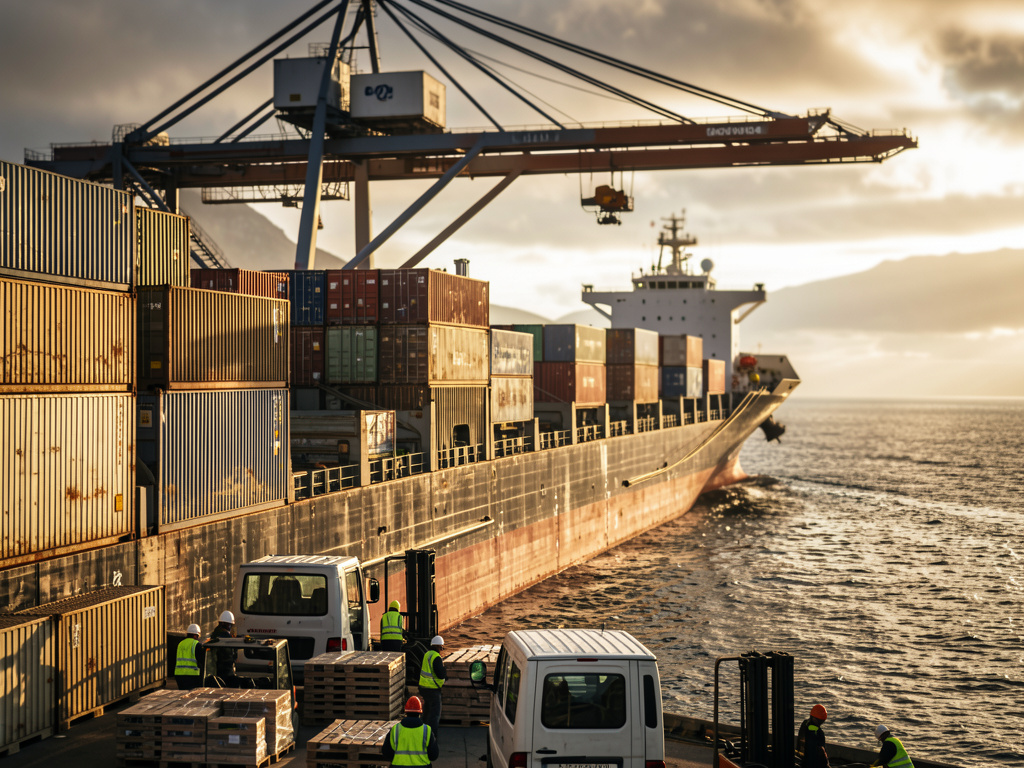
Cargo Delivery from Norway to China
Freight Delivery from Norway to China: Companies, Prices, Timelines, and Export Documentation
Freight delivery from Norway to China is a complex international logistics operation that requires careful preparation of documents, the right choice of transport, and consideration of the specifics of export legislation. There is a significant distance between the countries, and the route may pass through several transit states, seaports, and customs zones. Therefore, the final cost and duration of transportation depend not only on the weight and volume of the shipment but also on its category, the chosen delivery method, packaging requirements, insurance conditions, and the specifics of Chinese imports.
Norway is known for exporting seafood, fish products, equipment, industrial machinery, oil and gas equipment, metals, chemical raw materials, and high-value goods. China, in turn, remains one of the largest global markets and manufacturing centers. Regular shipments between the countries are carried out by sea, air, road, and rail transport, while small batches use consolidated shipments and courier delivery.
To ensure that international transportation proceeds without delays, it is necessary to determine the characteristics of the cargo in advance, prepare commercial documents, select the optimal delivery basis according to Incoterms, and check the requirements of the Chinese side. Special attention should be paid to animal products, food items, pharmaceuticals, electronics, hazardous materials, and products that require mandatory certification.
Main Features of Freight Transportation from Norway to China
Norway is not a member of the European Union; however, it participates in the European Economic Area and is closely linked to European transport infrastructure. This means that Norwegian exports have their own customs procedures, and when delivering to China, it is necessary to consider both the rules of the country of origin and the requirements of the destination country.
In practice, cargo from Norway to China can be sent directly by sea route or through major European logistics hubs. Depending on the type of goods, the sender can use the ports of Oslo, Bergen, Stavanger, Trondheim, and other cities. The container is then directed to one of the Asian ports, such as Shanghai, Ningbo, Shenzhen, Qingdao, Guangzhou, or Tianjin.
The main factors that influence the organization of transportation include:
the type and physical characteristics of the cargo;
total weight and volume;
number of cargo units;
the need for temperature control;
the presence of hazardous or restricted components;
the chosen route;
the method of delivery to the sender and from the Chinese port;
insurance conditions;
importer requirements in China;
the need for certification and labeling.
In international transportation, it is important to distinguish between the actual transit time of the cargo and the total logistics time. The first indicator reflects the time taken to move between points. The second includes acceptance, consolidation, document preparation, export declaration, loading, transit, import clearance, and delivery to the final address.
For example, sea transportation of a container can take about 35–55 days depending on the route; however, considering the preparation of the shipment and customs clearance, the total time will be 45–70 days. Air delivery physically takes a few days, but the complete process with complex documentation can stretch to one or two weeks.
Types of International Delivery from Norway to China
Container Sea Transportation
Sea delivery is the primary option for large shipments, heavy cargo, equipment, raw materials, and goods that do not require urgent delivery. Transportation is carried out in standard 20 or 40-foot containers, while non-standard cargo uses platforms, open-top, and other specialized containers.
Sea transport is characterized by relatively low costs for large volumes. It is particularly advantageous when the sender needs to transport several tons of goods or form a full container load. If the volume of cargo is insufficient for a separate container, LCL consolidated shipping is used. In this case, the shipment is combined with goods from other clients, and payment is made for the actual volume or weight.
The advantages of sea delivery include:
affordable shipping costs for large shipments;
the ability to transport heavy and oversized goods;
availability of different types of containers;
the possibility to organize "door-to-door" delivery;
developed port infrastructure.
Disadvantages include long delivery times, dependence on vessel schedules, potential delays at ports, seasonal congestion, and additional storage fees for containers. Furthermore, sea transportation requires particularly careful packaging, as the cargo is subjected to vibrations, humidity, and temperature fluctuations.
Air Freight
Air delivery from Norway to China is used for urgent, high-value, compact, or perishable goods. Airplanes transport product samples, medical materials, electronics, components, documents, e-commerce goods, and other shipments where speed is critically important.
The main advantage of air freight is the short delivery time. Depending on the route and chosen service, cargo can be delivered within 2–7 business days. However, the cost is calculated based on the greater of two metrics: actual or dimensional weight. Therefore, a light but bulky shipment can end up being significantly more expensive than a heavy compact package.
Before shipping, it is essential to check the airline's restrictions. Some batteries, chemicals, aerosols, liquids, and animal products require special permits, packaging, and labeling. The absence of necessary documents may lead to refusal of transportation or delays at the terminal.
Road Delivery
Road transportation is rarely used as a completely independent route between Norway and China, as the distance is too great and the transit route may pass through many countries. Nevertheless, road transport plays an important role at specific stages.
Trucks deliver goods from the sender's warehouse to the Norwegian port, airport, or European consolidation terminal. On the Chinese side, road transport is used to take the container from the port to the recipient's warehouse. In some cases, combined land routes through European and Asian transport corridors are possible, but their availability depends on current restrictions, transit rules, and the geopolitical situation.
Rail and Multimodal Delivery
Rail transport can serve as a compromise between sea and air transport. It is usually faster than sea delivery and cheaper than air freight; however, the availability of routes, transit sections, and regular services should be verified at the time of application.
A multimodal scheme involves using several types of transport within a single logistics chain. For example, the cargo is picked up by truck in Norway, delivered to a European terminal, then transported by rail or sea to China, after which it is handed over to road transport again. This format allows for cost optimization and direct delivery of the cargo to the recipient's warehouse.
How Long Does Cargo Take from Norway to China
The delivery time for cargo from Norway to China primarily depends on the chosen mode of transport, route, volume, and weight of the shipment, as well as the time required for customs clearance. On average, transportation takes from a few days for air delivery to two months or more for sea transport.
When planning international transportation, it is important to consider not only the transit time but also the pickup of the cargo from the sender, delivery to the airport or seaport, processing at terminals, customs procedures, and transportation to the final recipient in China.
Air Freight – 3 to 10 Days
Air delivery is considered one of the fastest ways to transport goods from Norway to China. It is suitable for urgent shipments, electronics, components, product samples, high-value items, and cargo where delivery speed is crucial.
Depending on the route, the cargo can be dispatched from Oslo Airport or another regional airport with further transportation through transit air hubs. In China, delivery is made to airports in Beijing, Shanghai, Guangzhou, Shenzhen, and other cities.
The estimated time is 3–10 days for standard air freight organization. If additional cargo consolidation, waiting for the next flight, or complex customs clearance is required, delivery may take longer.
When calculating the time, it is important to clarify whether it refers only to the flight between airports or to the transportation from the sender's door to the recipient's door. In the latter case, additional considerations include cargo pickup in Norway and delivery within China.
Sea Freight for Consolidated Cargo (LCL) – 40 to 70 Days
Sea delivery for consolidated cargo is suitable for companies that send small and medium-sized batches of goods and do not require a separate container. In this case, the cargo is combined with shipments from other clients, and the container costs are shared among the participants in the transportation.
Before shipping, goods are delivered to a consolidation warehouse, where they are received, document checks are performed, and if necessary, they are packaged and consolidated into a single batch. After this, the cargo is sent to the seaport and shipped to China.
The average duration of such transportation is 40–70 days. This duration is explained not only by maritime transit but also by the need to wait for the formation of the consolidated batch, undergo port processing, and complete customs procedures.
Delivery times can be affected by the shipping schedule, the number of transshipments, port congestion, and the location of the recipient's warehouse. If the cargo is not sent to a major Chinese port city, additional road or rail transport may be required after arrival.
Full Container Load (FCL) Shipping – 35 to 60 Days
FCL shipping involves using a separate container for a single shipper. This option is suitable for large shipments of products, industrial equipment, furniture, raw materials, trade goods, and regular commercial supplies.
Unlike consolidated shipping, the container does not need to be filled with goods from multiple clients. This allows for reduced time on consolidation and processing at intermediate warehouses.
The estimated delivery time from Norway to China is 35–60 days. The specific duration depends on the port of departure, the chosen maritime route, the shipping schedule, and the destination.
It is important to note that having a separate container does not guarantee a shorter transit time in all cases. If the vessel makes intermediate stops or requires transshipment at another port, the duration may increase.
To calculate the total duration of transportation, it is also necessary to consider the delivery of the container for loading, the preparation of export documents, port operations in Norway, import customs clearance in China, and the delivery of the container to the recipient's warehouse.
Multimodal Transportation – 25 to 50 Days
Multimodal delivery involves using several modes of transport within a single logistics scheme. For example, the cargo may be transported by truck to a terminal, then by rail or sea, and finally by truck to the final recipient.
This method allows for selecting a route based on cost, availability of transport lines, and time requirements. It can be convenient for delivering commercial shipments, equipment, components, and other cargo for which air transport is too expensive, and standard sea delivery takes too long.
The estimated time is 25–50 days; however, it heavily depends on the specific route and the chosen combination of transport modes.
When organizing multimodal transportation, it is important to check the schedule of each segment of the route in advance, the duration of transshipments, and the availability of agreed transit connections. If there are delays between individual stages or the cargo is waiting for dispatch at the terminal, the overall delivery duration increases.
Courier Delivery of Documents and Small Shipments – 2 to 5 Business Days
For documents, small parcels, product samples, and other compact shipments, international courier services can be used.
In most cases, transportation is organized on a "door-to-door" basis: the courier picks up the shipment from the sender in Norway, after which it goes through sorting centers and international transport, and then is delivered to the recipient in China.
The estimated time is 2–5 business days, provided that the selected service covers the relevant route and there are no delays in customs clearance.
For commercial goods, the time may be longer than for documents. This is due to the need to provide a description of the contents, an invoice, information about the value, and other documents required for import.
Express Delivery – 2 to 7 Days
If the cargo needs to be delivered as quickly as possible, express air transport or a specialized urgent service can be considered.
This option is suitable for critically important spare parts, urgent production components, samples for testing, and small batches of goods, the delay of which could lead to financial losses.
The delivery duration usually ranges from 2 to 7 days, but it depends on the availability of direct or convenient connecting flights, the time of transfer of the cargo to the carrier, restrictions on the transport of certain categories of goods, and the speed of customs clearance.
Express delivery is usually more expensive than standard air transport. Additionally, the stated time may only apply to certain cities and may not always include transport from remote areas of Norway or delivery to small towns in China.
What Affects Delivery Times from Norway to China
The duration of international shipping is influenced by several factors.
The city of departure and the city of destination. If the cargo is shipped from Oslo to a major logistics hub in China, organizing the transportation is usually easier than when shipping from a remote region of Norway to a small town in China. In such cases, additional domestic transport needs to be considered.
The nature and parameters of the cargo. Weight, volume, dimensions, packaging, and product category affect the choice of transport. For hazardous goods, chemical products, equipment with batteries, and certain types of industrial products, there may be additional documentation and transportation requirements.
Customs clearance. For export from Norway and import into China, it is necessary to prepare the appropriate documents. Typically, a commercial invoice, packing list, transport documents, and product description are required. Depending on the product, certificates, licenses, or other permits may be needed. Errors in documentation can lead to cargo delays.
Schedule and congestion at transport hubs. Waiting for a flight, missing the established cargo acceptance deadline, port congestion, and processing delays can increase the overall delivery time.
Delivery terms. If the carrier is only responsible for the international segment of the route, the timeframe will not include all stages up to the buyer's warehouse. When delivering "door to door," the entire process is taken into account—from picking up the cargo in Norway to handing it over to the recipient in China.
Which delivery method to choose
If speed is important, air freight or express delivery is usually worth considering. If a large batch of goods is being transported and logistics costs are a priority, sea freight is often considered. For an intermediate option, a multimodal route can be calculated.
The specified timelines are approximate and not guaranteed. The exact timeframe can only be determined after clarifying the route, cargo parameters, and transportation conditions.
To calculate the delivery time more accurately, it is necessary to know three main parameters: where exactly in Norway the cargo is being sent from, which city in China it is headed to, and what the cargo consists of—such as equipment, clothing, electronics, raw materials, or documents. It is also advisable to specify the weight and volume of the batch. This information will help determine the most suitable transportation method and assess delivery times considering additional logistics stages.
Reasons for Delays
Even with properly organized logistics, deviations from the planned schedule can occur. The most common reasons for delays include:
incomplete export documentation;
errors in the invoice or packing list;
discrepancies in product description;
lack of export or import permits;
cargo inspections by customs authorities;
congestion at the seaport;
changes in vessel schedules;
adverse weather conditions;
holiday periods in China;
delays in payment of duties and fees;
incorrect labeling;
the need for additional certification.
The Chinese New Year has a particularly noticeable impact on timelines. During the period before and after the holiday, transport capacities are often overloaded, and many businesses operate on a reduced schedule. Therefore, exporters are advised to book space in advance and allow for extra time.
Major Companies Organizing Cargo Transportation from Norway to China
International Freight Forwarding Companies
For complex international shipments, a freight forwarder is usually engaged. They can select a carrier, book space, arrange cargo pickup, handle documentation, oversee customs procedures, and deliver the goods to the recipient's warehouse.
Some well-known international logistics operators include:
DHL Global Forwarding;
Kuehne+Nagel;
DSV;
DB Schenker;
Maersk Logistics;
CMA CGM Logistics;
CEVA Logistics;
Nippon Express;
Expeditors;
GEODIS.
These companies have a wide agency network, work with sea and air carriers, and offer warehousing services, consolidation, insurance, and door-to-door delivery. Their services are especially in demand for transporting oversized, hazardous, temperature-sensitive, and high-value cargo.
Shipping Lines
Global shipping companies are used for container transportation, including Maersk, MSC, CMA CGM, Hapag-Lloyd, COSCO, and other operators. The specific carrier depends on the port of departure, the final port, available schedules, and the availability of free equipment.
When choosing a shipping line, it is important to clarify:
the loading port and unloading port;
the number of transshipments;
the total transit time;
the availability of direct service;
the base freight rate;
port and terminal fees;
demurrage and detention conditions;
the possibility of delivery to an inland terminal in China.
Courier and Express Services
Small commercial shipments, samples, and documents can be sent via DHL Express, FedEx, UPS, and other express services. This option is convenient for urgent shipments but may not always be cost-effective for heavier weights or regular deliveries.
When selecting a company, it is essential to compare not only the shipping rate but also the list of included services. Sometimes a low base price does not account for cargo pickup, customs clearance, storage, delivery within China, fuel surcharges, and handling of special categories of goods.
How Much Does Shipping from Norway to China Cost
Main Factors Influencing Price
The cost of freight transportation is calculated individually. It is influenced by:
the weight and volume of the shipment;
the number of pallets, boxes, or containers;
actual and volumetric weight;
type of transport;
point of origin and destination;
urgency;
nature of the goods;
the need for temperature control;
packaging requirements;
loading and unloading costs;
customs services;
port fees;
insurance;
delivery to the final address.
For sea transport, the choice between FCL and LCL is significant. A full container is more cost-effective for large shipments, while consolidated cargo is more convenient for smaller volumes. However, LCL may have a longer transit time due to consolidation, sorting, and additional processing at terminals.
For air delivery, the dimensional weight is used. The volumetric weight is usually calculated using the formula:
Volumetric weight = length × width × height in centimeters / carrier factor.
If the volumetric weight exceeds the actual weight, the cost is calculated based on it. Therefore, compact and dense packaging helps reduce transportation costs.
Estimated Price Categories
Without specific parameters, it is impossible to provide an exact price for shipping from Norway to China. As a general guideline, the following categories can be highlighted:
documents and small parcels — from dozens to several hundred euros;
air freight for commercial cargo — from several euros per kilogram and up;
consolidated sea delivery — calculated by cubic meter or weight;
full container — based on freight rates, terminal charges, and additional fees;
door-to-door delivery — includes domestic logistics, clearance, and the final stage in China.
The price of sea freight can vary depending on the season, availability of containers, port congestion, fuel costs, and the situation on the route. Therefore, it is advisable to request a commercial offer just before booking.
How to Arrange Export from Norway to China
Document Preparation
For export shipments, the following documents are usually required:
commercial invoice;
packing list;
export declaration;
transportation bill or bill of lading;
contract or purchase order;
certificate of origin if necessary;
permits and licenses;
quality and compliance certificates;
veterinary, phytosanitary, or sanitary documents;
insurance policy;
technical documentation for equipment;
documents for hazardous cargo, if applicable.
The invoice should include the seller's and buyer's details, a description of the goods, quantity, price, currency of the transaction, delivery terms, country of origin, HS code, and total cost. Information in all documents must match. Any discrepancies may raise questions with customs or the Chinese importer.
Customs Declaration in Norway
The exporter is required to determine whether an export declaration is necessary and submit it in the prescribed manner. In some cases, the customs representative or logistics company handles the documentation under a power of attorney.
Before submitting the declaration, it is essential to check:
the accuracy of the product code;
the presence of export restrictions;
the necessity of a license;
the correctness of customs value determination;
the compliance of the product with the contract terms;
the labeling and packaging requirements.
An incorrect HS code can lead to payment revisions, delays in release, or administrative consequences. If the product falls under controlled categories, its export may require additional permits.
Import Procedures in China
The Chinese recipient must be prepared to accept the cargo and undergo import procedures. Depending on the type of product, registration of the importer, licenses, sanitary documents, certificates of conformity, and special permits may be required.
Chinese customs authorities check:
the product description;
the classification code;
the value;
the country of origin;
compliance with declared characteristics;
the presence of mandatory labeling;
the safety and quality of the product.
Additional requirements apply to food products, fishery products, animal feeds, cosmetics, medical devices, and chemicals. In some cases, the foreign manufacturer must be registered in the relevant Chinese system before shipments begin.
Choosing Incoterms Delivery Conditions
Incoterms conditions allocate responsibilities, risks, and costs between the seller and the buyer. When shipping from Norway to China, FCA, FOB, CIF, CPT, CIP, DAP, and DDP are often considered.
FCA
The seller hands over the cargo to the carrier at an agreed location. This option is convenient for container shipments, as the seller is not required to load the goods directly onto the vessel. The buyer controls the main international logistics.
FOB
The seller is responsible for delivering and loading the goods onto the vessel at the port of departure. Once the cargo is on board, the main risks transfer to the buyer. This condition is more commonly used for sea shipments but is not always ideal for container shipments.
CIF and CIP
The seller pays for transportation to the specified point and insurance at the agreed level. However, the risk may transfer to the buyer before the cargo actually arrives in China. Therefore, it is important for the parties to carefully review the terms of the contract.
DAP
The seller delivers the cargo to an agreed location in China, but import payments and clearance usually remain the buyer's responsibility. This is one of the common delivery options to a warehouse without including Chinese taxes and duties.
DDP
The seller assumes almost all costs and formalities, including import clearance and payments. In practice, DDP can be complicated if the foreign company cannot act as the importer in China. The terms need to be agreed upon with an experienced broker.
Cargo Packaging and Labeling
The quality of packaging directly affects the safety of the goods and the final shipping cost. For sea transport, sturdy boxes, pallets, wooden crates, moisture-resistant materials, and cushioning elements are used. Wooden packaging may require treatment and labeling according to international phytosanitary standards ISPM 15.
Packaging typically includes:
the name and quantity of packages;
gross and net weight;
dimensions;
order number;
sender and recipient information;
destination country;
handling marks;
warnings about fragility or temperature control requirements.
Special signs, instructions, declarations, and packaging standards apply to hazardous goods. Batteries, chemicals, aerosols, and flammable substances cannot be shipped as regular commercial cargo without prior agreement.
Improper packaging can lead to product damage, carrier refusal, additional costs, and delays in customs clearance. Therefore, for expensive or non-standard goods, it is advisable to order professional packaging from a logistics operator.
Insurance for International Shipping
Insurance helps reduce financial risks associated with damage, loss, or theft of cargo. It is especially important to insure expensive equipment, electronics, medical products, fragile items, and shipments transported by multiple modes of transport.
In the insurance contract, it is necessary to check:
which risks are covered;
Is coverage provided for loading and unloading;
Are transshipment operations included;
Are packaging damages covered;
Are there any exclusions;
What is the deductible amount;
What documents are required for compensation payment.
The insured value is usually tied to the price of the goods and the terms of the foreign trade contract. If the cargo has special properties, such as a limited shelf life or temperature sensitivity, this must be indicated in advance.
Practical Recommendations for Reducing Costs and Timeframes
To ensure predictable delivery from Norway to China, several rules should be followed:
Plan shipments in advance, especially before holiday periods.
Compare at least three commercial offers.
Check which fees are included in the rate.
Consider consolidation for small shipments.
Optimize packaging sizes.
Clarify the HS code and product requirements in advance.
Check the possibility of using multiple departure ports.
Allow extra time for customs clearance.
Agree on Incoterms before signing the contract.
Insure expensive shipments.
Use electronic document management.
Verify the reliability of the Chinese importer and their readiness to handle the cargo.
The lowest rate is not always the best option. A cheap rate may involve a large number of transshipments, long transit times, limited service levels, or lack of delivery to the final address. When choosing a carrier, it is important to evaluate the total logistics cost, including warehousing, port, customs, and agency fees.
Shipping goods from Norway to China requires a comprehensive approach. For large and non-urgent shipments, sea transport is most often chosen, while air transport is preferred for compact and expensive goods, and multimodal schemes are used for complex routes. The average sea delivery time is approximately 35–60 days, air transport takes from a few days to two weeks, and the exact cost is determined individually.
To arrange export without unnecessary delays, it is essential to correctly classify the goods, prepare the invoice, packing list, transport documents, declarations, and certificates. The requirements of China for importers, labeling, safety, and product registration are checked separately.
The optimal solution is usually to work with an international freight forwarder who can organize the entire cycle: picking up the goods in Norway, packaging, export clearance, sea or air transport, insurance, import clearance, and delivery to the warehouse in China. Before signing the contract, it is advisable to request a detailed calculation indicating the route, timelines, included services, and all possible additional fees.