

 RU
 UA
 DE
 FR
 ES
 CN
 SA
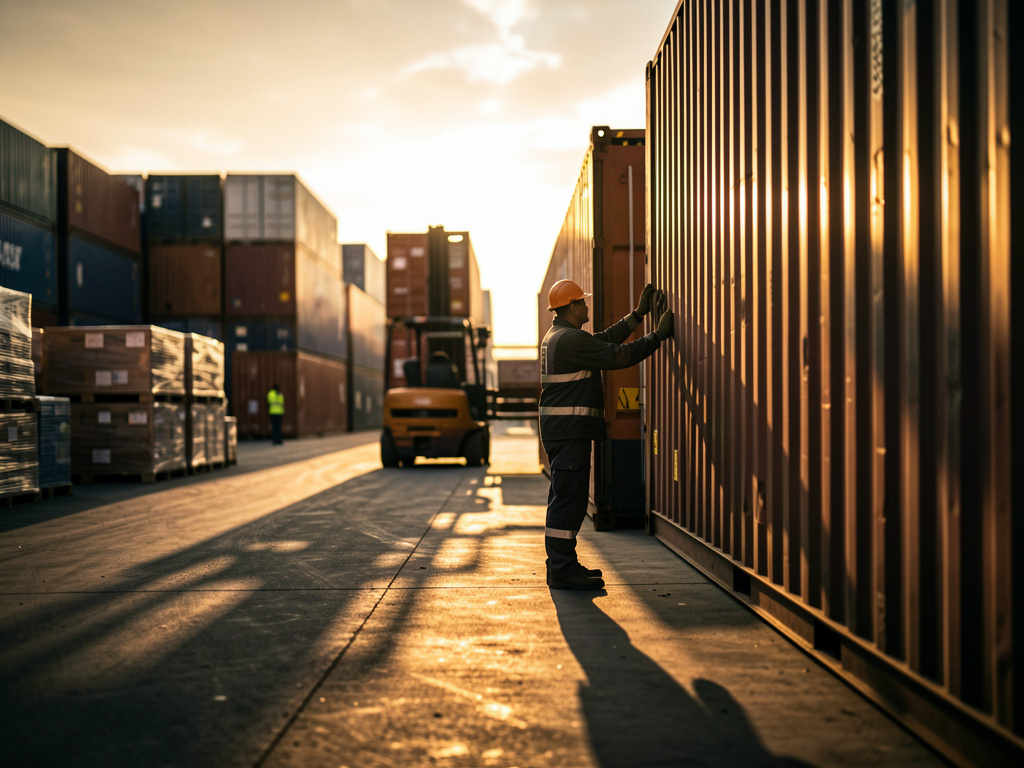
Shipping Goods from China to Hungary
Freight Delivery from China to Hungary: Companies, Prices, Timelines, and Customs Clearance in the EU
Shipping goods from China to Hungary is in high demand among online stores, wholesale suppliers, manufacturing companies, and entrepreneurs operating in Central European markets. Hungary occupies a strategic position in the region: important road, rail, and logistics routes connecting China with Austria, Slovakia, the Czech Republic, Germany, Romania, and other European Union countries pass through its territory.
Organizing transportation along the China–Hungary route requires not only selecting the appropriate mode of transport but also proper document preparation. It is essential to consider the characteristics of the cargo, the volume of the shipment, the HS code, Incoterms delivery conditions, EU customs requirements, labeling rules, and tax payment procedures. Mistakes at any stage can lead to delays, additional costs, fines, or the return of goods to the sender.
This article will detail how freight delivery from China to Hungary is organized, the available transportation methods, potential logistics costs, timelines for different types of transport, the companies that provide international shipping services, and how to navigate EU customs without unnecessary issues.
Main Methods of Freight Delivery from China to Hungary
The choice of transport mode depends on urgency, budget, weight, volume, and the nature of the goods. For the China–Hungary route, maritime, rail, road, and air transport are used. Multimodal logistics is also widely applied, where the cargo is sequentially moved using several modes of transport.
Sea Freight from China to Hungary
Sea transport is considered the most cost-effective for shipping large quantities and heavy goods. Since Hungary has no direct access to the sea, containers are typically sent to the port of Koper in Slovenia, the port of Trieste in Italy, the port of Hamburg in Germany, or other European ports. After unloading, the cargo is delivered to Hungary by road or rail.
Sea logistics is suitable for equipment, furniture, construction materials, industrial products, clothing, electronics, and other goods that do not require urgent delivery. The main advantage of this method is the low cost of transporting one kilogram or cubic meter. The downside is the lengthy duration and dependence on ship schedules, port congestion, weather conditions, and customs procedures.
An approximate route might look like this: supplier's warehouse in China – consolidation warehouse – Chinese seaport – sea transport to Europe – port of Koper or Hamburg – terminal in Hungary – recipient's warehouse in Budapest or another city.
Rail Transport
Rail delivery from China to Hungary occupies an intermediate position between sea and air transport. Trains are usually faster than ships and cheaper than planes. This option is suitable for medium-sized shipments when it is necessary to reduce timelines while maintaining acceptable costs.
Container trains can travel through Kazakhstan, Russia, Belarus, Poland, Slovakia, and other transit countries. The specific route depends on the political situation, infrastructure capacity, carrier requirements, and terminal availability. In some cases, alternative multimodal schemes through ports or southern land routes are used.
Rail delivery is particularly convenient for goods with regular shipments. It allows for planning shipping schedules and using standard containers. However, costs can vary significantly depending on the season, terminal congestion, exchange rates, conditions on transit routes, and additional fees.
Road Transport
Direct road transport from China to Hungary is usually organized as a multimodal service. In the Chinese section, the cargo is delivered by truck to a rail terminal, border crossing, or logistics hub, after which the route continues through Europe.
Road transport is convenient for door-to-door delivery. A truck can pick up the goods from the supplier's warehouse and deliver them directly to the buyer's warehouse in Hungary. This reduces the number of transshipments and allows servicing regions without rail terminals.
The cost of road transport depends on the distance, type of vehicle, load capacity, characteristics of the goods, temperature control requirements, insurance, and transit fees. For large shipments, tarpaulin trucks, refrigerated vehicles, mega trailers, and specialized vehicles may be used.
Air Freight
Aviation transportation is used for urgent, expensive, compact, or lightweight cargo. Airplanes can deliver product samples, production components, medical goods, electronics, documents, high-margin products, and items with a limited shelf life.
The main advantage of air delivery is the minimal transit time. At the same time, the shipping cost can be several times higher than that of sea or rail options. The calculation is usually based on actual or volumetric weight, depending on which figure is greater.
Multimodal Logistics
Multimodal delivery combines several types of transport within a single logistics solution. For example, cargo may travel by truck from the factory to a terminal in China, then by train to Europe, and finally by truck to a warehouse in Hungary.
This format allows for the optimal balance between cost and delivery times. The freight forwarder coordinates the carriers, prepares the documents, monitors transshipments, organizes insurance, and tracking. For the client, this is more convenient than independently entering into separate contracts with multiple transport companies.
How Much Does Delivery from China to Hungary Cost?
The cost of transportation from China to Hungary does not have a single fixed rate. The final price is calculated individually after analyzing the cargo and route. Factors affecting the cost include weight, volume, type of transport, packaging type, delivery conditions, pickup and delivery addresses, customs clearance requirements, and a list of additional services.
Main Factors Affecting Price
When calculating the tariff, the logistics company usually considers:
the weight of the cargo;
volume in cubic meters;
number of packages;
dimensions of each package;
nature of the goods;
presence of batteries, liquids, chemical components;
need for temperature control;
type of container;
pickup address in China;
final address in Hungary;
delivery terms according to Incoterms;
need for consolidation;
cost of export clearance;
insurance;
terminal and port fees;
customs duties;
delivery to the recipient's warehouse.
The ratio of weight to volume is particularly important. A lightweight but bulky cargo may be calculated based on volumetric weight. For example, air carriers use a special formula to convert the volume of packaging into dimensional weight. Therefore, when ordering air delivery, it is important to provide the exact dimensions of all packages in advance.
Estimated Prices by Mode of Transport
Exact tariffs should be requested from the carrier on the order date, as prices fluctuate due to seasonality, demand, fuel costs, currency fluctuations, and the load on transport routes. Below are approximate ranges that can only be used for preliminary assessment:
| Delivery Type | Estimated Time | Approximate Cost Level |
|---|---:|---:|
| Sea Delivery | 35–60 days | from several hundred dollars per m³ for consolidated cargo |
| Rail Transport | 18–35 days | average rate between sea and air |
| Truck Delivery | 20–40 days | depends on the route and type of vehicle |
| Air Delivery | 3–10 days | the highest cost per kg |
| Express Delivery | 2–7 days | maximum price, including "door-to-door" service |
For container transport, the cost may be calculated for the entire container. The price depends on the type of equipment: 20-foot, 40-foot, high cube, refrigerated, or specialized container. In consolidated shipments, payment is made for space, weight, or volume, not the entire container.
Additional Costs
In addition to the base tariff, the budget should include:
pickup of cargo from the factory;
packaging or repackaging;
labeling;
consolidation;
export customs clearance in China;
port fees;
terminal handling;
transshipment;
storage;
delivery within Europe;
import clearance in Hungary;
customs representative services;
customs duties;
import VAT;
document verification;
certification;
insurance;
possible fees for transport delays.
The low price indicated in the promotional offer does not always mean a low final cost. Some rates only include transportation between terminals and do not account for delivery from the supplier, customs, taxes, and the last mile. Therefore, it is important to request a detailed calculation specifying all included and excluded services before signing a contract.
Delivery Times China–Hungary
The shipping time depends on the chosen transport, route, departure city in China, destination in Hungary, and the duration of customs procedures. Transit times are usually indicated in commercial offers, but they do not always include waiting at the warehouse, document preparation, inspections, and delivery to the final address.
Sea Freight Times
Sea shipping from China to Hungary typically takes between 35 to 60 days. This period includes the delivery of cargo to the Chinese port, export procedures, waiting for the vessel, sea transit, processing at the European port, and ground delivery to Hungary.
If the route passes through a congested port, the time may increase. Additional delays occur during seasonal volume increases, holiday periods in China, strikes, stormy weather, changes in vessel schedules, and customs inspections.
Rail Freight Times
The rail route usually takes between 18 to 35 days. The timing is influenced by the capacity of border crossings, gauge changes, the number of transshipments, transit document processing, and the availability of empty container trains.
For regular commercial shipments, rail can be a good alternative to sea transport. It offers shorter delivery times and generally a more stable schedule, although it is impossible to completely eliminate delays.
Road Freight Times
Road transport takes approximately 20 to 40 days. The time is determined by the specific route, the number of border crossings, driver work regulations, road conditions, and the need for transloading.
Delivery directly to a warehouse in Hungary may be faster than transporting to a terminal and then finding local transport independently. However, for complex routes, road transport may turn out to be more expensive than rail or sea.
Air Freight Times
Air transport usually takes between 3 to 10 days. Small shipments with complete documentation and no security restrictions are delivered the fastest. If the goods require additional checks, certification, or customs inspections, the time increases.
Major Freight Companies and Logistics Operators
On the China–Hungary route, international freight forwarding companies, shipping lines, rail operators, air carriers, courier services, and local Hungarian logistics centers operate. When choosing a contractor, it is essential to evaluate not only the size of the company but also its experience specifically in shipments from China to the EU.
International Transport Companies
Large international forwarders typically offer a full range of services: route finding, cargo pickup, consolidation, transportation, insurance, customs clearance, and delivery to the warehouse. Their advantage is a developed network of agents and the ability to organize multimodal transport.
When working with a large operator, it is important to clarify who will actually handle customs clearance, whether the company has a representative in Hungary, what documents are included in the service package, and who is responsible for delays.
Shipping Lines
Shipping carriers organize container shipments from Chinese ports to European ports. However, a standard shipping line does not always provide delivery directly to Hungary. After the container arrives at the port, further transportation by road or rail will need to be organized.
When choosing a sea route, it is essential to consider not only the freight rate but also the fees at the destination port, demurrage costs, container storage, transit processing, and delivery to the final warehouse.
Rail Operators
Rail service operators provide container shipments between China and European terminals. Some companies offer delivery to terminals in Hungary or neighboring countries with subsequent road transport.
Before placing an order, it is necessary to check the route's relevance, schedule, list of accepted cargoes, restrictions on hazardous goods, and the availability of "door-to-door" services.
Courier and Express Services
International courier companies can be used for small shipments. They are convenient for samples, documents, parcels, and small commercial batches. The cost often includes cargo pickup, international transportation, basic tracking, and delivery to the recipient.
However, express services may apply increased rates for non-standard dimensions, commercial goods, batteries, branded products, and complex customs clearance.
How to Check the Reliability of a Carrier
Before handing over the cargo, you should request:
the legal name of the company;
registration details;
transportation contract;
insurance conditions;
list of included services;
compensation rules in case of damage or loss;
sample calculation;
contact details of the European office;
information about the customs representative;
reviews from corporate clients.
It is not advisable to choose a carrier solely based on the lowest price. An overly cheap offer may indicate a lack of insurance, hidden fees, an unofficial clearance scheme, or delivery only to an intermediate terminal.
How to Clear Customs in the EU When Shipping Goods from China to Hungary
Customs clearance in Hungary is carried out according to the rules of the European Union. Imported goods must be correctly classified, declared, and accompanied by documents confirming the value, origin, and characteristics of the products.
Obtaining an EORI Number
A company importing goods into the European Union generally needs to have an EORI number. It is used to identify the participant in foreign economic activity during customs clearance.
If the buyer is registered in Hungary, the EORI is issued through the relevant national authorities. For companies from other EU countries, the number applicable in the country of registration is used. Without a correct identifier, submitting an import declaration may be impossible.
Determining the HS Code
Each product is assigned a code from the EU Combined Nomenclature. This code affects:
the amount of import duty;
the need for licenses;
certification requirements;
the existence of quotas;
anti-dumping measures;
security restrictions;
labeling requirements;
statistical reporting.
You cannot choose the code based solely on the product name. Customs classification takes into account the material, purpose, operating principle, composition, technical characteristics, and method of use. An incorrect code can lead to additional charges, delays in release, and administrative liability.
Documents for Import
Typically, the following documents are required for clearance:
commercial invoice;
packing list;
transportation bill;
contract or order;
payment documents;
product description;
technical documentation;
certificates and declarations of conformity;
documents of origin;
permits for regulated products;
power of attorney for the customs representative;
insurance policy if available;
information about the HS code.
For some categories of goods, additional documents may be required. For example, electrical equipment may fall under CE requirements, products with batteries may be subject to hazardous goods transport regulations, cosmetics may have specific composition and registration requirements, and food products may be subject to sanitary and veterinary control.
Determining Customs Value
Customs value is usually based on the transaction price, but it may include costs for delivery, insurance, packaging, licensing fees, and other components as stipulated by EU rules.
Undervaluing the invoice is a risky practice. Customs authorities may request payment documents, contracts, bank statements, price lists, and information on comparable goods. If the declared value seems inaccurate, it may be adjusted, and the release of the cargo may be delayed.
Payment of Duty and Import VAT
When importing goods into Hungary, import duty and VAT are payable unless an exemption or special regime applies to the specific operation. The duty amount depends on the product code and origin. VAT is calculated based on the customs value, duty, and some related expenses.
For companies registered in Hungary, import VAT can sometimes be accounted for within tax accounting. However, the procedure depends on the organization's status, the regime applied, and the current national rules. Tax issues should ideally be discussed in advance with an accountant or a European tax specialist.
Customs Representative
If the importer lacks experience with EU customs, it is wise to engage a licensed or authorized customs representative. They will check the documents, prepare the declaration, select the product code, and interact with customs authorities.
However, the responsibility for the accuracy of the information may still lie with the importer. Therefore, one cannot fully rely on the intermediary without verifying the product description, value, and classification code.
EU Requirements for Labeling and Certification
Before shipping the product, it is necessary to check whether it is permitted for sale in the European Union. Customs clearance does not always mean that the product can be freely marketed. After import, the product must comply with safety requirements, technical regulations, and labeling rules.
CE Marking
For certain categories of products, CE marking is required. It confirms that the product meets the applicable EU requirements for safety, health protection, and environmental protection. Marking may be mandatory for electronics, equipment, toys, personal protective equipment, medical devices, and some other goods.
The CE mark cannot be applied without supporting documents. The importer must ensure that the manufacturer has the technical documentation, declaration of conformity, and results of necessary tests.
Consumer Information
The labeling must contain information understandable to the consumer in the country of sale. Depending on the product, it includes composition, country of origin, warnings, instructions, importer details, manufacturer, expiration date, storage conditions, and safety usage guidelines.
For selling products in Hungary, information may be required in Hungarian. Using only English instructions does not always comply with local legal requirements.
Importer Responsibility
The importer in the EU is responsible for ensuring that the products comply with legal requirements. If the product is found to be hazardous or lacks mandatory documentation, possible consequences include seizure of the batch, sales prohibition, fines, and product recalls.
Therefore, certification checks should be conducted before payment to the supplier and before the transportation begins, not after the cargo arrives at the European warehouse.
Incoterms Conditions for Delivery from China to Hungary
Incoterms conditions define who pays for transportation, insurance, export and import clearance, as well as when risks transfer. The most commonly used terms for shipments from China are EXW, FOB, CIF, DAP, and DDP.
EXW
Under EXW, the buyer picks up the goods from the seller's premises and assumes almost all costs and risks. This condition can be advantageous for an experienced importer but requires independent organization of export from China.
FOB
Under FOB, the Chinese supplier delivers the goods to the port and completes export formalities. After loading onto the vessel, the main costs and risks transfer to the buyer. This is a common option for sea container shipments.
CIF
Under CIF, the seller pays for sea freight and insurance to the destination port. However, import clearance, duties, VAT, and delivery within Hungary usually remain the buyer's responsibility.
DAP
Under DAP, the carrier delivers the cargo to the agreed address, but import clearance and tax payment are most often performed by the recipient. This is a convenient option if the buyer wants to manage the customs part independently.
DDP
Under DDP, the seller or their logistics partner assumes the maximum responsibilities, including import clearance and taxes. However, it is essential to ensure that the scheme complies with EU legislation and that the actual importer is correctly indicated in the documents. Opaque DDP offers can create tax and legal risks.
Cargo Insurance from China to Hungary
International transportation is associated with risks of damage, loss, moisture, theft, improper loading, and delays. The carrier's liability is often limited by international conventions and contract terms, so standard compensation may not cover the actual value of the goods.
Insurance is arranged based on the cargo value, type of goods, route, packaging, and selected risks. For expensive electronics, equipment, fragile products, and large shipments, insurance coverage is particularly desirable.
In the contract, it is necessary to check:
the insured amount;
the list of covered risks;
exclusions;
the deductible amount;
the claims submission procedure;
notification periods for damage;
packaging requirements;
documents required for receiving compensation.
When receiving goods, it is important to inspect the packaging before signing any documents. If any damage is found, it is necessary to take photographs, note the discrepancies in the carrier's report, and immediately notify the freight forwarder.
How to Organize Delivery from China to Hungary Step by Step
Proper organization of transportation begins before concluding a deal with the supplier. The more accurately the initial data is prepared, the lower the likelihood of unforeseen expenses.
Step 1. Verify the Supplier and Product
It is essential to confirm the legal details of the supplier, product specifications, packaging, batch volume, and the availability of necessary certificates. For complex products, it is advisable to order samples and check their compliance with EU requirements.
Step 2. Prepare Logistics Data
The carrier needs to be provided with:
the factory address;
the warehouse address in Hungary;
product description;
number of packages;
packaging dimensions;
total weight;
volume;
cost;
HS code;
presence of hazardous components;
desired delivery time.
Step 3. Compare Routes
It is advisable to request several options: sea, rail, road, air, and multimodal. You should compare not only the cost but also the total time, risks, list of included services, and customs clearance procedures.
Step 4. Review the Commercial Offer
The calculation should separately indicate transportation, terminal services, delivery to the warehouse, customs support, insurance, duties, VAT, and any possible additional charges.
Step 5. Prepare Documents
Before shipping, it is necessary to check the invoice, packing list, transport documents, certificates, labeling, and product description. Any discrepancies are best corrected before the cargo arrives in the EU.
Step 6. Monitor Transportation
After shipping, you should track the status of the cargo, monitor the passage through terminals, receive notifications of arrival, and timely provide documents to the customs representative.
Step 7. Receipt and Acceptance
After delivery, it is necessary to check the number of packages, the condition of the packaging, and the compliance of the goods with the order. If discrepancies are found, a report should be prepared, and a claim submitted within the established timeframe.
Common Mistakes When Importing from China to Hungary
One of the most common mistakes is calculating the budget based solely on the transportation tariff. In practice, customs duties, terminal handling, storage, and delivery from the European port to the warehouse can make up a significant portion of expenses.
Additionally, entrepreneurs sometimes provide incomplete product descriptions or use incorrect HS codes. This raises questions from customs and may lead to adjustments in payments.
Other frequent issues include:
absence of an EORI number;
incorrect invoice;
discrepancy in weight in documents;
absence of a certificate;
inappropriate labeling;
ignoring battery requirements;
attempting to import branded goods without proof of rights;
using fictitious value;
absence of insurance;
choosing DDP without checking the importer;
inadequate packaging;
uncoordinated Incoterms conditions;
absence of a contract with the carrier;
misunderstanding where customs clearance occurs.
To reduce risks, it is advisable to engage a logistics specialist, customs broker, and, if necessary, a certification expert in advance.
How to Choose the Optimal Delivery Method
If the main priority is the lowest price, sea freight or consolidated containers are usually considered. This option is suitable for large shipments and goods that are not time-sensitive.
If a balance between cost and speed is required, rail delivery or a combined scheme can be chosen. This is convenient for regular shipments where a delay of several weeks affects sales or production.
If the cargo is urgent, compact, and expensive, air delivery is preferred. This is particularly justified in cases of product shortages, the need to quickly obtain samples, or production line stoppages due to a lack of components.
For delivery to a specific warehouse in Hungary, multimodal "door-to-door" solutions are convenient. The freight forwarder takes on the coordination of all segments of the route, and the client receives a single calculation and one responsible contractor.
Shipping goods from China to Hungary involves several interconnected stages: route selection, product preparation, document processing, export from China, international transportation, EU customs clearance, payment of fees, and delivery to the recipient's warehouse.
Sea logistics remains the most cost-effective option for large shipments; however, it requires time and delivery from a European port to Hungary. Rail transport allows for reduced transit times, while air freight is used for urgent and high-value shipments. Road and multimodal schemes provide flexible "door-to-door" delivery.
The cost of shipping from China to Hungary depends on numerous factors, so the final price can only be determined after obtaining accurate information about the cargo. When budgeting, it's important to consider not only the freight forwarder's rate but also duties, import VAT, certification, insurance, terminal services, and delivery within the EU.
To pass customs without delays, it is necessary to obtain an EORI in advance, correctly determine the HS code, prepare an invoice and packing list, check labeling requirements, and ensure the availability of necessary certificates. A reliable carrier or customs representative can help mitigate risks and organize the shipment from China to Hungary in compliance with European legislation.