

 RU
 UA
 DE
 FR
 ES
 CN
 SA
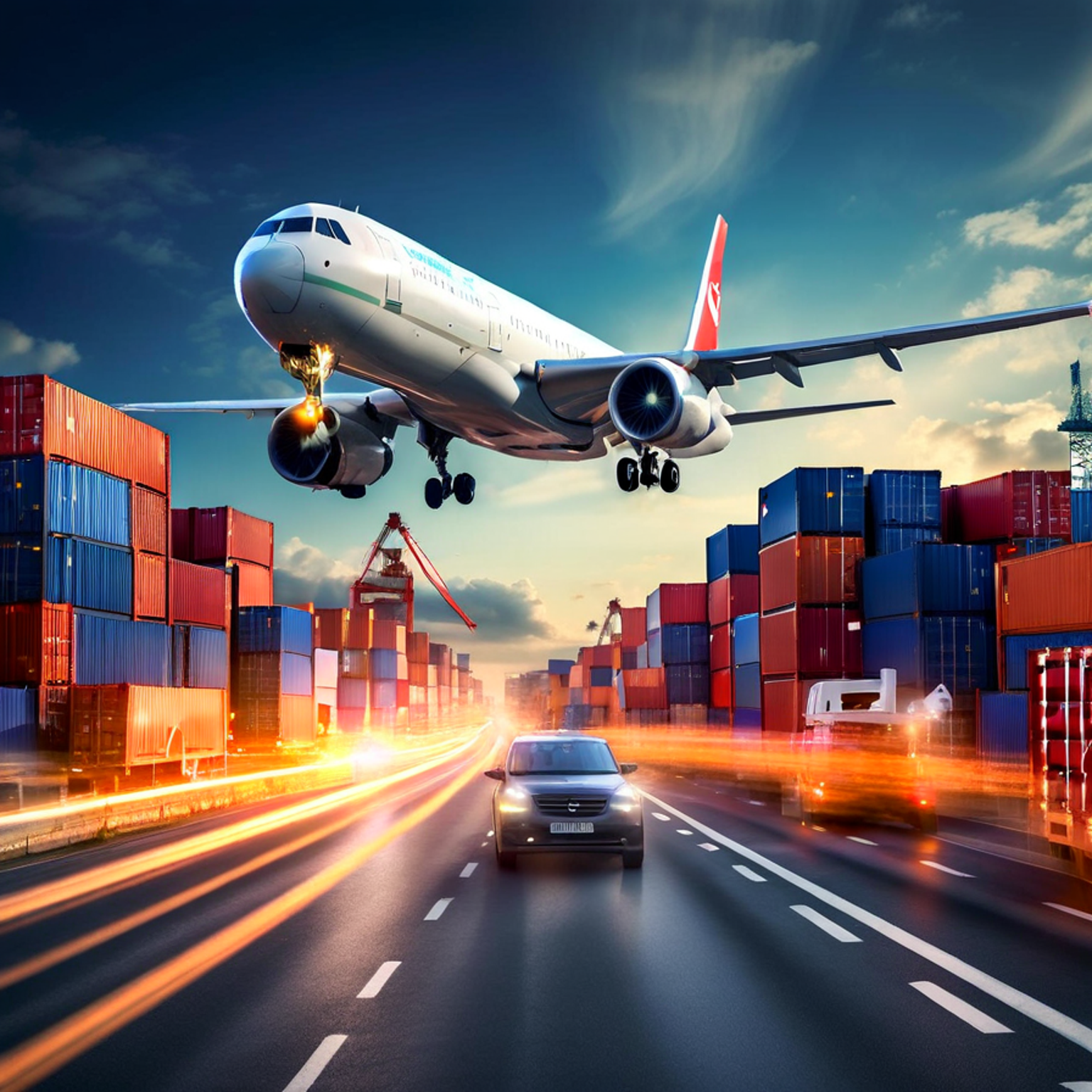
Express Delivery Worldwide
Express Delivery Worldwide: Air, Sea, Road — China, Europe, USA
International express delivery has become an essential part of business, e-commerce, and private shipping today. Companies regularly send orders, equipment, documents, product samples, and commercial shipments between countries and continents. To ensure that the cargo arrives on time and without unnecessary costs, it is crucial to choose the right mode of transport, route, customs clearance format, and logistics support scheme.
Modern express services include air freight, sea freight, road delivery, rail solutions, and multimodal logistics. Each method has its features, advantages, and limitations. Air freight is suitable for urgent and expensive cargo, sea delivery is ideal for large shipments, road transport is convenient for regional routes, and multimodal schemes allow for the integration of several transport modes into a single chain.
Particular importance is placed on routes such as China — Russia, Europe — Russia, USA — Russia, and shipments between other countries. The final delivery times and costs are influenced by distance, product category, volume, weight, seasonality, packaging requirements, customs legislation specifics, and the chosen service format.
What is International Express Delivery
International express delivery is an organized transportation of goods across borders with minimal processing times and maximum control over the shipment's movement. Unlike standard logistics, express services focus on speed, route transparency, and reducing the time between cargo acceptance and delivery to the recipient.
This service is in high demand among online stores, manufacturing companies, distributors, importers, exporters, and private clients. With express delivery, you can send documents, product samples, components, electronics, clothing, medical devices, equipment, spare parts, and other categories of goods.
Organizing transportation usually involves several stages: accepting the request, calculating costs, checking documents, cargo pickup, packaging, consolidation, transportation, customs clearance, delivery to the destination country, and handover to the recipient. It is important for the client to provide accurate information about the cargo in advance: product name, number of packages, weight, dimensions, value, country of origin, and destination of the goods.
How Express Service Differs from Standard Delivery
The main difference in express delivery lies in the priority processing of shipments. Cargo is accepted faster at the warehouse, transport documents are processed more quickly, and shipments are routed along the most efficient paths. Additionally, express operators often offer a "door-to-door" service, meaning the client does not need to organize delivery to the terminal or pick up the cargo after arrival.
In standard transportation, cargo may move along a more economical but longer route. Express services aim to reduce the number of intermediate operations, utilize regular flights, and implement pre-prepared logistics solutions. This is especially important if delays could lead to production downtime, delivery failures, or financial losses.
What Types of Cargo Can Be Transported
In international logistics, the following can be transported:
commercial shipments;
documents and correspondence;
product samples;
equipment and components;
clothing, footwear, and accessories;
household appliances and electronics;
industrial products;
medical goods;
advertising materials;
marketplace goods;
consolidated and oversized cargo.
Some categories of products have special requirements. Hazardous materials, batteries, chemical compositions, food products, medicines, plants, dual-use items, and restricted goods require additional checks. The carrier must determine in advance whether the transportation of such cargo is permitted by the chosen method.
Air Freight: A Fast Method of International Delivery
Air freight is considered one of the fastest solutions for international logistics. Airplanes allow for quick transportation of shipments between countries and continents, making air delivery suitable for urgent, high-value, small-sized, and time-sensitive cargo.
Air freight is actively used on routes such as China — Russia, Europe — Russia, USA — Russia, as well as between countries in Asia, the Middle East, and North America. Exact delivery times depend on the city of departure, destination airport, availability of direct flights, transit connections, customs clearance, and current airline capacity.
Advantages of Air Freight
The main advantages of air delivery include:
high transportation speed;
regular flight schedules;
the ability to deliver to remote regions;
increased cargo security;
convenient tracking;
minimal number of intermediate transfers;
the ability to transport urgent and valuable goods.
Air delivery is often used for spare parts, product samples, medical equipment, electronics, documents, and high-value items. If speed is the top priority, air transport is usually the most rational option.
Factors Affecting Air Delivery Costs
The price of air freight is calculated based on actual or volumetric weight. If the cargo is light but takes up a lot of space, the carrier may use volumetric weight. This is determined based on the dimensions of the packaging and a special calculation coefficient.
Costs are also influenced by:
the country and city of departure;
the destination airport;
total weight and volume;
number of pieces;
type of packaging;
nature of the cargo;
the need for insurance;
pickup and delivery services;
customs clearance;
urgency;
the presence of additional airport fees.
To obtain an accurate calculation, it is necessary to provide the exact dimensions of each piece. Errors in dimensions can lead to changes in the rate after the cargo has been handed over to the carrier.
Air Freight Restrictions
Despite the high speed, air transport has restrictions on weight, size, and characteristics of the goods. Some cargo cannot be transported by plane without special permits. This includes certain types of chemical products, flammable substances, lithium batteries, aerosols, and other hazardous categories.
Additionally, air freight can be more expensive than sea or road delivery. Therefore, before choosing a route, it is essential to compare not only the timelines but also the overall logistics cost. Sometimes it is more advantageous to use a combined scheme: send the urgent part by air and the main volume by sea or road.
Sea Freight: Cost-Effective Transportation of Large Shipments
Sea freight is one of the most sought-after methods for transporting large volumes of goods over long distances. Container shipping allows for the delivery of products between countries with an optimal balance of price and capacity. Sea delivery from China, Southeast Asian countries, Europe, the USA, and other regions is particularly popular.
Sea transport is suitable for goods that do not require urgent delivery. This can include furniture, construction products, industrial equipment, textiles, raw materials, machinery, components, and goods for subsequent resale.
How Sea Delivery is Organized
Sea transportation can be carried out in a full container or in a consolidated cargo format. In FCL (Full Container Load), one client uses the entire container. This option is convenient for large shipments that require separate space and minimal transfers.
In LCL (Less than Container Load), several shippers place their goods in one container. Consolidated shipping allows for the transportation of small batches without the need to pay for the entire container. However, this increases the number of operations at consolidation warehouses, and timelines may be less predictable.
The main stages of sea transportation include:
accepting the application and describing the cargo;
booking a container or space;
delivering the goods to the port;
export clearance;
loading onto the vessel;
sea transit;
arrival at the destination port;
import customs clearance;
unloading or delivering the container;
handing over the cargo to the recipient.
Advantages of Sea Freight
Sea logistics is characterized by high capacity and relatively low cost per unit of goods transported. A large quantity of products can be loaded into a container, making this method advantageous for wholesale supplies and regular imports.
Advantages include:
economical rates;
the ability to transport oversized shipments;
a wide selection of containers;
convenience for regular deliveries;
the ability to deliver non-standard goods;
developed port infrastructure;
combination with road delivery and rail transport.
Sea freight is particularly effective when a business plans shipments in advance and can accommodate a longer transit period.
Disadvantages and Features of Sea Transportation
The main disadvantage of sea delivery is the long timelines. The schedule of vessels, weather conditions, port congestion, terminal queues, document processing, and customs operations all affect the route. Additional time may be required for consolidating group cargo.
Moreover, sea transport rarely delivers goods directly to the final address. After arriving at the port, unloading, customs clearance, and road or rail delivery need to be organized. Therefore, sea freight is often part of a multimodal scheme.
Road Delivery from China, Europe, and the USA
Road delivery involves transporting cargo by road from the sender to the recipient or between terminals. This format is especially convenient for routes within a single continent and for door-to-door delivery. A vehicle can pick up cargo from the supplier's warehouse, deliver it to the terminal, cross the border, and bring it directly to the recipient's warehouse.
Road transport is widely used in European routes, for shipments between CIS countries, for deliveries from border regions of China, and as the final stage of sea, air, or rail transportation.
When Road Delivery is Beneficial
Road transportation is suitable if:
you need to deliver goods directly to an address;
the cargo has a medium or large volume;
flexible route planning is required;
it is important to avoid additional transshipments;
the shipment needs to be delivered between cities without an airport or seaport;
it is necessary to combine an international segment with local delivery.
Road transport allows you to choose the type of vehicle: tent, refrigerated truck, isothermal van, container truck, light truck, or specialized platform.
Delivery from China by Road
Road delivery from China can be used for shipments through land border crossings and as part of combined routes. It is suitable for goods that require faster movement compared to sea transport, but where air delivery costs are too high.
Timelines are affected by border situations, the processing of export and import documents, terminal capacity, seasonality, and the route. For stable operations, it is important to check the requirements for labeling, packaging, invoices, packing lists, and transport documents in advance.
Road Transportation from Europe
European road delivery is in demand for importing equipment, clothing, furniture, components, business goods, and products from European manufacturers. Depending on the country of origin, direct transportation, delivery through a distribution warehouse, or a route with transshipment to another mode of transport may be used.
Special attention is paid to customs clearance, accurate product descriptions, and confirmation of its value. For complex shipments, preliminary declaration and preparation of additional permits may be required.
Road Delivery from the USA
Shipments from the USA are most often multimodal. The cargo is first delivered by road from the supplier to a consolidation warehouse or port, then shipped by sea or air, and after arriving in the destination country, it is again handed over to a road carrier.
For urgent shipments, an air route with road pickup and delivery to the final recipient may be used. For large batches, a sea container with subsequent road delivery to the warehouse is more commonly used.
Multimodal Logistics: Combining Different Modes of Transport
Multimodal logistics involves transporting cargo along a single route using two or more modes of transport. For example, goods from China can be delivered by road to a terminal, then transported by rail or sea to the destination country, and after that sent by road to the client's warehouse.
This approach allows for balancing speed and cost. One mode of transport does not always provide the optimal result. A multimodal scheme allows for selecting the most suitable delivery method for each segment.
Examples of Multimodal Routes
Common options include:
road + air + road;
road + sea + road;
rail + road;
sea + rail + road;
warehouse consolidation + air + courier delivery;
sea container + port handling + truck delivery.
The air segment is used to expedite the route, the sea segment is for reducing costs, and the road segment is for pickup and delivery to the final address. This allows for transporting both small urgent shipments and large batches.
Advantages of Multimodal Schemes
The benefits include:
a flexible combination of timelines and budget;
the ability to deliver cargo from door to door;
the use of different transport corridors;
reduced dependence on a single mode of transport;
the ability to replace a segment of the route when conditions change;
delivery to cities without direct international connections.
Multimodal logistics requires professional management. All stages must be coordinated in terms of timing, documentation, and responsibility. A delay in one segment can affect subsequent operations, so the carrier must oversee the entire route.
What to Pay Attention To
Before launching a multimodal shipment, it is important to determine the transshipment points, storage conditions, insurance procedures, customs clearance schemes, and the responsibilities of the participants in advance. It is also necessary to clarify who is responsible for the cargo at the moment of transfer from one carrier to another.
The more links involved in the route, the higher the coordination requirements. Therefore, for complex shipments, it is advisable to choose an operator that provides unified support and informs the client about the cargo status at each stage.
Express Delivery of International Shipments
Express delivery is used when standard timelines are unacceptable. It is in demand for emergency equipment replacement, sending contractual documents, delivering samples, components, medical devices, and goods necessary for the continuous operation of a business.
The express service may include cargo pickup on the day of request, priority processing at the warehouse, shipment on the nearest flight, expedited customs clearance, and courier delivery to the door.
How Express Delivery Timelines Are Formed
The duration of delivery is influenced by:
the time of application submission;
cargo readiness;
availability of documents;
flight schedules;
time differences between countries;
customs procedures;
product restrictions;
distance to the final address;
weekends and holidays.
The declared timeline is usually calculated from the moment the cargo is actually handed over to the carrier, not from the date of application submission. Therefore, it is important to clarify when the countdown begins.
How to Speed Up International Delivery
To shorten timelines, one should:
prepare the invoice and packing list in advance;
accurately describe the goods;
provide the correct HS code;
provide sender and recipient information;
use sturdy and compact packaging;
not send prohibited or questionable categories without verification;
agree on the customs clearance format in advance;
choose the appropriate airport or terminal;
ensure access to the cargo at the agreed time.
Most delays occur not during the actual movement but at the document preparation, customs clearance, or cargo transfer stages between participants in the chain.
Customs Clearance of International Cargo
Customs clearance is a mandatory part of international transportation. The accuracy of documents affects the speed of goods release, the amount of payments, and the absence of additional inspections.
Key documents may include a commercial invoice, packing list, waybill, contract, certificates, permits, documents of origin, and information about the recipient. The list depends on the type of product, the country of origin, the destination country, and the chosen customs regime.
Why Document Accuracy is Important
Documents must match in:
product name;
number of packages;
gross and net weight;
value;
currency;
country of origin;
manufacturer;
description of purpose;
commodity code.
If the information contradicts itself, the customs authority may request additional confirmations. This increases the clearance time and sometimes leads to additional charges.
How to Reduce the Risk of Delays
For reliable transportation, it is essential to check in advance whether the goods are permitted for import, whether certificates and licenses are required, and if there are any restrictions on value or quantity. It is also important to accurately determine the customs value and avoid using overly general descriptions of the goods.
A professional logistics operator can verify the document package before shipment, prepare the declaration, and advise the client on the requirements of the destination country.
Packaging and Safety of International Cargo
Quality packaging protects the goods from impacts, vibrations, moisture, temperature fluctuations, and pressure changes. During international transportation, the cargo may be transferred multiple times, moved around the warehouse, sorted, and exposed to various conditions.
For small shipments, cardboard boxes, bubble wrap, foam inserts, paper fillers, and moisture-resistant materials are used. For heavy and fragile items, wooden crates, pallets, bracing, reinforced corners, and fasteners are utilized.
Packaging Requirements
The packaging must:
match the weight of the cargo;
withstand stacking;
protect the goods from moisture;
prevent free movement inside the box;
have clear labeling;
ensure ease of loading;
comply with the rules of the chosen transport.
For fragile items, it is advisable to use cushioning materials and apply special markings. When transporting equipment, it is important to secure moving parts and protect surfaces from scratches.
Cargo Marking
The packaging should indicate the number of packages, weight, dimensions, sender and recipient addresses, order number, information about fragility, and other necessary details. The labeling must remain legible throughout the entire route.
Some goods require special markings: "top," "do not tilt," "keep dry," "hazardous cargo," "temperature control." Incorrect labeling can lead to violations of transportation conditions.
Tracking and Insuring Shipments
Modern express services usually provide the ability to track cargo. After arranging transportation, the client receives a tracking number or shipment identifier. This can be used to check the main stages of movement: acceptance, processing, dispatch, arrival, customs clearance, and delivery.
For large batches and expensive goods, insurance is recommended. It helps reduce financial risks in case of damage, loss, or other insured events.
What to Consider When Insuring
When arranging insurance, it is important to:
specify the actual value of the goods;
check the list of insured events;
clarify exclusions;
keep documents regarding the value;
document the condition of the cargo before shipment;
comply with packaging requirements.
Photos of the packaging, contents, and labeling can assist in resolving disputes. For valuable cargo, it is advisable to conduct a packaging inspection before closing the shipment.
How to Choose an International Carrier
The choice of logistics partner directly affects the delivery time, cost, and safety. One should not rely solely on the lowest rate. Sometimes a cheap offer does not include pickup, customs clearance, warehousing operations, delivery to the address, or additional fees.
When selecting a carrier, it is worth evaluating:
experience in the required direction;
availability of regular routes;
own warehousing infrastructure;
door-to-door delivery capability;
quality of customs support;
tracking system;
insurance conditions;
transparency of calculations;
availability of support;
customer reviews;
responsibility for cargo safety.
A reliable operator explains the stages of transportation in advance, lists the necessary documents, and warns about possible restrictions. If the cost is calculated without clarifying the weight, dimensions, and characteristics of the goods, the final amount may change significantly.
Questions to Ask the Carrier
Before signing the contract, it is important to clarify:
What type of transport is optimal for the cargo?
What is considered the transit time?
Is customs clearance included?
Is there door-to-door delivery?
How is dimensional weight calculated?
What additional fees may apply?
Can the shipment be insured?
How can the cargo be tracked?
Who is responsible for delivery at each stage?
What items does the carrier not accept?
Answers to these questions allow for an early assessment of the actual conditions and help avoid unexpected costs.
Cost of International Express Delivery
The shipping price is formed from several components. It is influenced by distance, route, mode of transport, weight, volume, type of goods, number of packages, urgency, need for packaging, warehouse operations, customs fees, and door-to-door delivery.
Air freight usually has a higher rate per kilogram but allows for quick movement of small batches. Sea freight is more economical for large volumes, but requires consideration of port and terminal expenses. Road transport provides flexibility, but its cost depends on distance, type of vehicle, road conditions, and border procedures.
How to Reduce Costs
To optimize the budget, one can:
plan shipments in advance;
consolidate small batches;
use consolidated cargo;
compare air, sea, and road options;
choose a multimodal route;
reduce excess packaging volume;
use palletization;
consolidate shipments at the warehouse;
accurately specify dimensions;
agree on a regular rate.
However, one should not skimp on packaging, documentation, and insurance. Mistakes at these stages can lead to product damage, delays, and additional charges.
Express Delivery for Businesses and Online Stores
For businesses, international logistics is part of customer service and the supply chain. The speed of delivery affects product availability, contract fulfillment, and the company's reputation. Online stores need to ensure stable delivery of orders, returns, samples, and promotional materials.
Express service helps maintain inventory levels, quickly replenish stock, send orders to customers, and deliver products to marketplaces. Air freight, consolidated cargo, road transport, and fulfillment can be utilized for this purpose.
Logistics for Marketplaces
When supplying to marketplaces, it is important to consider requirements for labeling, packaging, barcodes, acceptance deadlines, and delivery formats. Cargo must arrive at the platform's warehouse within the agreed window. Delays can lead to postponed deliveries, fines, or refusal of acceptance.
The optimal scheme depends on volume and urgency. Small batches can be sent by air, while larger ones can be shipped by sea or multimodal methods. Pre-order preparation at the warehouse plays a crucial role: counting, sorting, repackaging, labeling, and pallet formation.
Environmental Sustainability in International Logistics
Modern carriers pay attention to reducing the transport impact on the environment. Sea transport is usually considered the most environmentally friendly for transporting large volumes. Rail solutions also help reduce emissions compared to air and road transport.
To reduce environmental impact, the following can help:
route optimization;
cargo consolidation;
use of returnable packaging;
minimizing empty space;
transition to electronic document flow;
efficient loading planning;
choosing less energy-intensive modes of transport.
For businesses, sustainable logistics becomes not only an image factor but also a way to reduce costs. Proper consolidation and packaging optimization simultaneously reduce transport volume and the amount of materials used.
How to Choose the Optimal Delivery Method
Express delivery worldwide combines different transport solutions. Air freight provides minimal delivery times, sea freight allows for economical transport of large batches, road transport offers flexibility and door-to-door delivery, while multimodal logistics combines the advantages of several transport modes.
To choose the right route, it is necessary to consider:
urgency;
weight and volume;
product characteristics;
shipping cost;
temperature and safety requirements;
customs clearance features;
final address;
possibility of consolidation;
need for insurance;
regularity of shipments.
For urgent and compact shipments, air transport is usually suitable. For large non-urgent batches, sea freight may be the optimal choice. If delivery directly from the supplier's warehouse to the recipient's warehouse is important, road transport should be considered. When it is necessary to balance time and costs, a multimodal scheme often proves to be the most effective.
Reliable international transport is not only the process of moving cargo but also comprehensive management of the entire chain: from picking up the goods and packaging to customs clearance, tracking, and delivery to the recipient. A professionally organized express service helps control timelines, reduce risks, and ensure stable deliveries between China, Europe, the USA, and other countries around the world.