

 RU
 UA
 DE
 FR
 ES
 CN
 SA
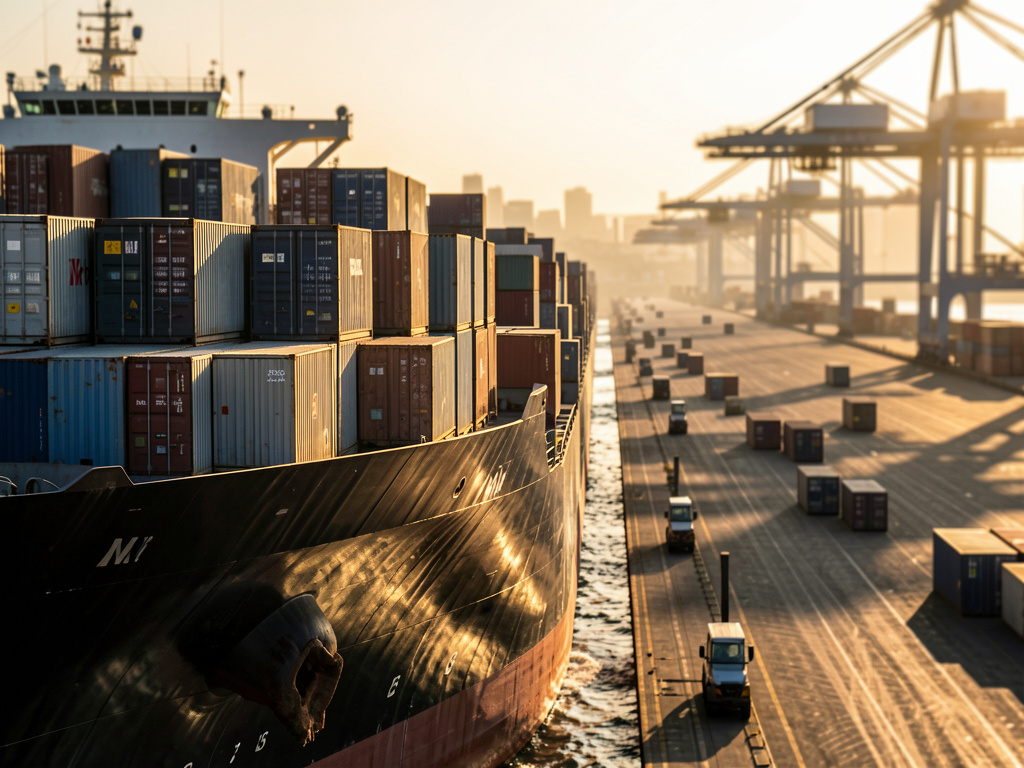
How Port Congestion Affects Shipping Costs and Delivery Times
How Port Congestion Affects Delivery Costs and Timelines
Maritime shipping remains one of the key elements of the global economy. A significant portion of international cargo is transported by sea, ranging from raw materials and industrial equipment to consumer goods, electronics, cars, and food products. Container shipping allows for standardized cargo handling, speeds up transfers between different modes of transport, and reduces the risk of product damage. However, the efficiency of maritime logistics directly depends on the stable operation of ports.
When a port faces excessive cargo volumes, a shortage of berths, equipment, personnel, or storage space, port congestion occurs. This is manifested in the formation of queues of vessels, accumulation of containers at terminals, delays in customs clearance, and disruptions to shipping schedules. As a result, cargo delays become a systemic issue, and participants in international trade incur additional costs.
The consequences of port congestion affect not only carriers and freight forwarders. They impact importers, exporters, manufacturers, retail chains, and end consumers. Delivery times increase, freight costs rise, additional fees for storage and container demurrage appear, and supply planning becomes more complicated. In some cases, disruptions in maritime logistics lead to product shortages and price increases in the domestic market.
What is Port Congestion and Why Does it Occur?
Port congestion is a situation where the volume of incoming cargo and vessels exceeds the actual capacity of port infrastructure. Terminals are unable to timely receive vessels, unload containers, process documentation, and transfer cargo to road or rail carriers. Under normal conditions, the port operates on a schedule, and containers move between the vessel, warehouse, and ground transport with minimal delays. During congestion, each stage of the chain takes longer.
The causes of port congestion can vary. They are often linked to a sudden increase in demand for goods and a rise in import volumes. If companies preemptively build large inventories due to fears of shortages, more containers arrive at the ports simultaneously than the terminal can handle. A similar situation arises before seasonal sales, holidays, or the start of the business season.
Weather conditions have a significant impact. Storms, strong winds, fog, ice conditions, or heavy rains can temporarily halt crane operations and restrict vessel movement. Even a brief pause in operations can trigger a chain reaction: vessels are delayed, subsequent trips arrive on altered schedules, and available berths and equipment quickly run out.
Another factor is strikes, a shortage of dockworkers, technical malfunctions of port cranes, and restrictions from government authorities. Pandemics, health inspections, military conflicts, changes in trade routes, and the closure of certain transport corridors can also sharply increase the load on alternative ports.
Main Signs of a Congested Port
increased queues of vessels waiting to enter the port;
rescheduling of agreed loading and unloading windows;
accumulation of containers at terminal sites;
shortage of available storage space;
limited access to rail and road transport;
increased customs and documentation processing times;
introduction of additional fees and temporary restrictions for shippers.
It is important to understand that port congestion does not always manifest simultaneously across all areas. Sometimes berths operate relatively smoothly, but containers cannot be removed from the terminal due to a shortage of trucks. In another case, vessels are unloaded without significant issues, but cargo is delayed at the temporary storage warehouse. Therefore, when assessing the situation, it is necessary to consider the entire logistics process, not just the time a vessel spends at the berth.
How Port Congestion Increases Delivery Times
The main consequence of port congestion is the disruption of the initial shipping schedule. International delivery typically consists of several interconnected stages: receiving cargo from the sender, transporting it to the port of departure, export clearance, loading onto the vessel, maritime transit, unloading at the destination port, customs clearance, and delivery to the recipient. Delays at any stage can affect the entire route.
During high terminal congestion, a vessel may not receive a free berth immediately upon arrival. It will wait at anchor, sometimes for several hours, and in severe situations, for several days or even longer. During this time, the carrier incurs costs for fuel, vessel maintenance, and crew wages. Additionally, the schedule for subsequent arrivals is disrupted, as the vessel does not manage to leave the port on time.
After unloading, containers may be delayed at the terminal. If the storage areas are full, the operator is forced to rearrange containers to make space for new batches. This additional handling increases the time for cargo release and complicates the search for a specific container. Sometimes, the terminal temporarily restricts the acceptance of new cargo or transfers them to other locations.
A separate issue is the lack of ground transportation. Even if the container has been unloaded, it cannot be delivered to the recipient without a free truck or rail platform. As a result, the cargo remains at the terminal, and the company continues to pay for storage. Meanwhile, the container may be needed for the next voyage, so its delay disrupts the entire transport chain.
Which timelines may increase
Port congestion affects several indicators:
vessel waiting time — the period from arrival at the port to berthing;
duration of cargo operations — unloading and loading take longer due to a lack of equipment;
terminal storage time — the container stays on-site longer before being handed over to the recipient;
customs clearance time — the load on inspectors and information systems increases;
land delivery time — queues for container pickup and a shortage of transport arise;
overall transit time — the period from dispatch to actual receipt of the cargo increases.
Perishable goods, seasonal products, spare parts, and cargo for manufacturing enterprises are particularly sensitive to delays. If components do not arrive on time, production may halt. For food products, delays can lead to a decrease in quality and additional costs for monitoring storage conditions.
Impact of port congestion on freight costs
Freight costs are influenced by many factors: distance, type of vessel, container size, shipping direction, seasonality, fuel prices, equipment availability, and the current balance of supply and demand. Port congestion disrupts this balance and often leads to a sharp increase in rates.
When vessels are idle waiting for a berth, carriers face additional operational costs. They pay for fuel, port services, crew wages, and maintenance. Some of these costs are included in the base ocean freight rate or compensated through special surcharges. As a result, the cost of delivering a container increases even if the distance and route remain unchanged.
Congested ports also reduce the actual availability of vessels and container equipment. A single container may stay longer at the destination port and not return to circulation. This creates a shortage of empty containers in other locations. Carriers are forced to redistribute equipment, send empty containers to the needed regions, or limit booking acceptance. All of this maintains a high level of rates.
What additional fees may arise
In addition to the increase in base freight, cargo owners may encounter additional payments:
port surcharge — compensation for the increased costs incurred by the carrier when operating in a congested port;
container demurrage — a fee for exceeding the established free period;
detention — a charge for the container remaining at the terminal after the end of the grace period;
detention fee — a charge for delaying the return of the container to the carrier;
storage fee — payment for placing cargo on the terminal or warehouse premises;
route change fee — costs incurred when redirecting cargo to another port;
priority processing surcharge — the cost of expedited service, if such an option is available.
The size of expenses depends on the terms of the contract, the type of container, the carrier's policy, and the duration of the delay. For example, a few days of free storage can quickly run out in the event of an emergency situation. After that, charges often increase daily, so a delay of one or two weeks can significantly raise the final cost of delivery.
How Port Congestion Affects International Trade
International trade requires predictable logistics. Companies enter into contracts, plan production, build inventory, and calculate delivery times based on agreed transport schedules. When maritime transport becomes unstable, businesses have to revise their plans and allocate additional reserves of time and money.
Importers may face breaches of obligations to customers. If goods do not arrive by the scheduled date, the seller risks losing the order, paying a penalty, or compensating the buyer for additional expenses. For retail chains, delays mean a lack of products on shelves during peak demand. For industrial companies, it poses a risk of production stoppage due to a shortage of raw materials or components.
Exporters also incur losses. If containers are not accepted by the port or shipments are postponed, manufacturers have to store finished products for longer. This increases the burden on warehouses and can lead to additional costs for packaging, insurance, and domestic transportation. In some cases, a company may miss a favorable shipping window and be forced to send goods via a more expensive route.
Port congestion also affects prices. Increases in freight, storage, ground transportation, and insurance costs are included in the final cost of goods. Companies may attempt to offset these expenses by raising wholesale or retail prices. As a result, issues in maritime logistics are felt not only by supply chain participants but also by end consumers.
Long-Term Consequences for Businesses
Prolonged instability forces companies to change their logistics strategies. They increase safety stock, enter into contracts with multiple carriers, use alternative ports, and consider combined routes. Some businesses relocate production closer to markets or seek suppliers in neighboring regions.
Such changes can enhance supply chain resilience but require investments. New warehouse spaces must be found, partner reliability must be verified, documents must be coordinated, and information systems must be adapted. Therefore, even after the load decreases, the consequences of port congestion can persist for a long time.
The Role of Container Shipping in Congested Ports
Container shipping is considered an efficient way to move large volumes of cargo, as a standard container can be transferred between a ship, train, and truck without unpacking its contents. This speeds up multimodal transport and reduces the likelihood of product damage. However, during port congestion, the advantages of the container system are partially lost.
A container becomes a unit that must go through several sequential operations: acceptance, weighing, documentation, placement on the site, loading onto the ship, unloading, and transfer to the ground carrier. If one stage slows down, the container begins to block terminal resources. In cases of mass accumulation of storage units, a chain reaction effect occurs.
Specialized containers create particular challenges. Refrigerated containers require connection to the power grid and constant temperature monitoring. Hazardous materials must be placed according to safety regulations and compatibility of various substances. Oversized shipments require additional space and special equipment. In a congested port, processing such cargo can take even more time.
How Container Shortages Exacerbate the Problem
Under normal circumstances, a container is quickly handed over to the recipient after unloading, cleaned, returned to the carrier, and sent on a new route. During congestion, it gets delayed at the terminal or with the customer. The turnover of equipment slows down, leading to a shortage of empty containers in export regions.
The equipment shortage results in booking refusals, rescheduling of shipping dates, and rising rates. Shippers may sometimes be forced to use containers of the wrong type, change the loading point, or pay for the delivery of empty equipment from another region. Thus, delays in one port can affect the availability of containers in several countries.
How Companies Can Mitigate Cargo Delay Risks
Completely eliminating the impact of port congestion is impossible; however, businesses can reduce the likelihood of significant losses. To achieve this, it is important to assess the route conditions in advance, choose reliable logistics partners, and not limit oneself to a single delivery scenario. The earlier a company identifies a risk, the more options it has for adjusting its plan.
The first step is regular monitoring of the port situation. It is essential to track terminal congestion, vessel queues, container acceptance restrictions, schedule changes, and carrier notifications. It is useful to analyze not only the destination port but also the port of departure, transit hubs, and land segments of the route.
Practical Measures for Importers and Exporters
Build in time buffers. Avoid planning deliveries with minimal time reserves, especially for seasonal and critically important cargo.
Use multiple routes. An alternative port, rail leg, or another transit hub can reduce dependence on a single direction.
Book equipment in advance. In times of container shortages, early booking increases the likelihood of timely dispatch.
Check free time conditions. It is important to know in advance the duration of free storage and the rules for demurrage and detention charges.
Agree on flexible contract terms. The contract should ideally outline procedures for route changes or delays at the port.
Maintain a safety stock. Additional inventory helps avoid halting sales or production.
Utilize digital monitoring. Tracking systems allow you to see the container's location and forecast deviations from the schedule.
Prepare documents in advance. Errors in invoices, packing lists, and permits can increase delays amid overall congestion.
The quality of communication among all participants in the supply chain is crucial. The forwarder must promptly inform about changes, while the cargo owner must make timely decisions regarding alternative options. Waiting until the container has already arrived at a congested port will limit opportunities for savings.
Alternatives to Sea Transport During Port Congestion
When delays become critical, companies may consider other modes of transport. The choice depends on the nature of the cargo, distance, budget, and required timelines. Air freight is usually the fastest option, but its cost is significantly higher, and the volume and dimensions of accepted cargo are limited.
Rail transport occupies an intermediate position between sea and air transport. It allows for faster movement of large batches in certain directions, especially when a direct rail corridor is available. However, infrastructure capacity, differences in standards, the need for transloading, and political restrictions can reduce the effectiveness of this solution.
Road transport is suitable for regional routes and short-distance deliveries. It provides flexibility and the possibility of "door-to-door" delivery, but it depends on road conditions, border crossing capacities, driver availability, and fuel costs. For long international routes, using trucks may prove too expensive.
Multimodal Logistics as a Way to Optimize
Multimodal transport involves combining several modes of transport within a single logistics scheme. For example, cargo may arrive by sea at a less congested port, then be transported by rail to a distribution terminal, and delivered by truck to the final recipient. This approach helps reduce the load on the problematic node and maintain an acceptable balance between cost and timelines.
When choosing an alternative route, it is essential to consider the total cumulative cost. A cheaper port may be farther from the recipient, resulting in higher ground transportation expenses. It is also necessary to assess handling times, terminal rates, customs requirements, insurance, and the availability of return equipment. Decisions should be made based on the entire chain, not just one ocean freight rate.
How to Forecast Costs and Delivery Times
Accurate forecasting in the context of congested ports requires analyzing several groups of indicators. Information from the vessel schedule alone is insufficient, as the actual timeline may depend on berth waiting times, unloading speeds, the availability of transport, and customs clearance results.
The calculation should include the base rate of sea freight, fuel and port surcharges, terminal expenses, delivery to the port, land leg, insurance, customs payments, and potential storage fees. If the route passes through transit ports, the likelihood of missing the connecting vessel must be considered. Even a slight change in schedule can lead to additional waiting time.
What data needs to be monitored
average waiting time for vessels at the port;
current terminal load;
availability of the required type of containers;
vessel schedules and the reliability of adherence to them;
duration of free storage;
demurrage and detention rates;
capacity of rail and road routes;
changes in customs and sanitary requirements;
likelihood of seasonal increases in cargo volumes.
For critically important shipments, it is useful to create several scenarios: optimistic, baseline, and stress. The baseline scenario considers standard delays, while the stress scenario accounts for possible terminal closures, vessel transfers, or lack of available containers. This approach helps assess financial reserves and determine in advance when to switch to an alternative route.
Port congestion has a complex impact on maritime logistics and international trade. It increases waiting times for vessels, slows down container processing, disrupts land delivery, and creates additional challenges during customs clearance. As a result, delivery times, freight costs, storage expenses, demurrage, detention, and other logistics payments rise.
The problem is not limited to a single terminal. Delays in container availability reduce equipment accessibility, disrupt vessel schedules, and can lead to container shortages on other routes. For businesses, this means the risk of contract breaches, production halts, product shortages, and decreased competitiveness.
Mitigating negative consequences can be achieved through advance planning, monitoring port conditions, diversifying routes, using multiple carriers, and building time buffers. In some cases, switching to a multimodal scheme, rail, or air delivery is justified. The main task for the company is to assess not only the price of sea freight but also the total cost of the entire supply chain.
Sustainable logistics is built on flexibility and readiness for change. The more thoroughly a company analyzes the risks of port congestion and the faster it responds to deviations, the higher the likelihood of maintaining control over timelines, budgets, and the quality of international delivery.