

 RU
 UA
 DE
 FR
 ES
 CN
 SA
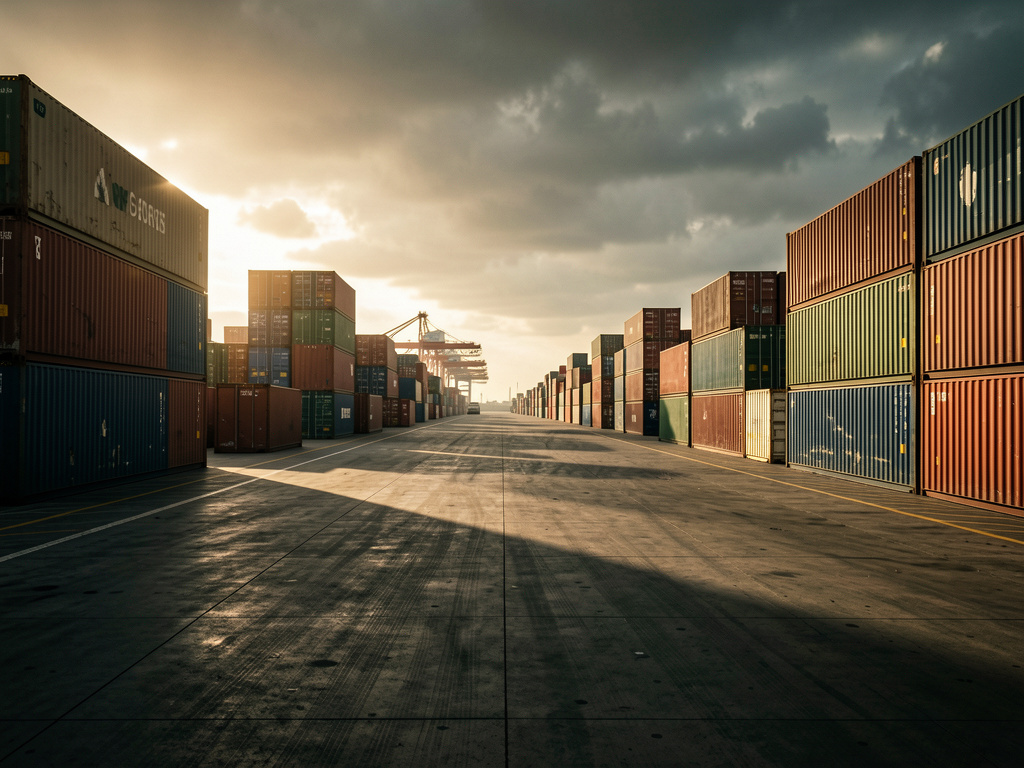
Direct International Shipping and Logistics Without Intermediaries
Logistics Without Intermediaries and Direct International Shipping: How to Organize Deliveries, Reduce Costs, and Increase Transparency
Modern international trade requires companies not only to provide quality products but also to establish an efficient delivery system. The longer the chain of participants, the higher the final shipping cost, the greater the likelihood of delays, and the more difficult it is to control the movement of goods. This is why more and more organizations are transitioning to logistics without intermediaries, signing direct contracts with carriers, and using their own international shipping schemes.
Direct international shipping allows the sender to interact directly with the transportation company, fleet owner, maritime operator, rail carrier, or airline. This approach helps reduce the number of links in the logistics chain, makes cost calculations clearer, and provides up-to-date information about the cargo at every stage of the route.
In this article, we will explore in detail how direct deliveries work, what advantages they offer to businesses, how to organize international shipping without intermediaries, and what tools can help optimize logistics.
What is Logistics Without Intermediaries
Logistics without intermediaries is the organization of transportation where the customer signs a contract directly with the service provider. Depending on the type of delivery, this provider can be a trucking company, rail operator, shipping line, air carrier, or an in-house logistics department that directly coordinates all participants in the process.
In a traditional scheme, there can be several intermediaries between the sender and the carrier: freight forwarder, broker, agent, regional representative, or a company reselling the transportation service. Each participant adds their own commission, and information about the shipment passes through several channels. As a result, the customer does not always understand how the delivery cost is formed, who is actually responsible for the cargo, and at what stage the shipment is.
With direct interaction, the company has the opportunity to choose the carrier, agree on rates, set deadlines, discuss insurance terms, and monitor compliance with agreements independently. This does not mean a complete rejection of freight forwarding services in all cases. Some tasks, such as customs clearance, cargo consolidation, or organizing complex multimodal routes, may require the involvement of specialized professionals. However, the key difference is that the company retains control over the process and understands what services it is paying for.
The Difference Between Direct Deliveries and Standard Intermediary Schemes
In the intermediary model, the customer contacts one contractor who independently selects the service providers. This is convenient if the company lacks experience in international logistics, but this scheme does not always ensure minimal costs and maximum transparency. The customer may not know what portion of the total amount goes to the actual carrier and what remains with the intermediary.
Direct deliveries imply closer interaction between the cargo owner and the transportation company. The parties agree in advance on the route, type of transport, deadlines for the vehicle or container, document processing rules, liability for cargo damage, and payment procedures. The contract is concluded without unnecessary links, and the terms of transportation are fixed directly between the participants.
Why Direct International Shipping is Becoming More Popular
The main reason for the growing interest in direct logistics is the need to reduce costs while simultaneously improving service quality. Companies strive to respond more quickly to market changes, control deliveries, and avoid unpredictable additional charges.
Moreover, modern digital systems allow for self-tracking of transport, document exchange, and route efficiency analysis. What previously required constant involvement from an intermediary can now be handled by an automated platform integrated with warehouse, procurement, and sales management systems.
Advantages of Direct International Shipping
Transitioning to direct international shipping can provide significant economic and operational benefits to businesses. However, these advantages only manifest if the company establishes a clear supply management system in advance and chooses reliable partners.
Reduction of Logistics Costs
Eliminating additional intermediary commissions is one of the most obvious benefits of direct delivery. When working directly, it is possible to negotiate rates with the actual carrier, obtain corporate discounts, and fix prices for a certain period.
Cost savings come not only from eliminating intermediary fees. A direct contract allows for better management of associated expenses: vehicle downtime, transloading, storage, container delivery, additional mileage, and document processing. When all conditions are outlined in the contract, the risk of unexpected charges decreases.
Large companies can utilize tenders and long-term agreements. The carrier receives a guaranteed volume of orders, while the client benefits from better rates and priority service during peak market periods.
Transparency in Delivery
Transparent delivery means that the client can obtain accurate information about each stage of the cargo's journey. With direct operations, it is easier to determine who is responsible for transportation, what documents are processed, where the shipment is located, and why delays have occurred.
Many international carriers provide access to tracking systems that display vehicle coordinates, container status, checkpoint passage times, and estimated arrival dates. This information helps in planning warehouse operations, production, and further shipments to clients.
Transparency is also crucial for financial control. The company can see the tariff structure, compare planned and actual expenses, identify inefficient parts of the route, and objectively assess the contractor's performance.
Reducing Delivery Times
Every additional participant in the logistics chain increases the time for approvals. If an intermediary relays information to the carrier with delays, it changes the timelines for vehicle delivery, document processing, or cargo transfer.
With direct contact, decisions are made more quickly. The sender can promptly change the loading address, agree on a different type of vehicle, provide updated product information, or resolve document issues. This is especially important for urgent cargo, seasonal goods, and just-in-time deliveries.
Higher Level of Responsibility
A direct contract clearly defines the responsibilities of the carrier and the cargo owner. It can specify timelines for vehicle delivery, temperature control requirements, sealing procedures, loading rules, liability for preservation, and compensation for losses.
When many companies are involved in the process, it can be challenging to establish the party at fault. In a direct scheme, the area of responsibility is usually clearer, and disputes are resolved more quickly.
How to Organize Direct Deliveries Without Intermediaries
To ensure that direct international shipments are truly beneficial, it is necessary to prepare the infrastructure, define transportation requirements, and conduct a vetting process for potential contractors. Simply eliminating the intermediary is not enough; some of their functions will need to be taken on.
Defining the Logistics Task
The first step is to describe all parameters of the shipment. It is essential to document:
the country of origin and the destination country;
loading and unloading points;
product characteristics;
weight, volume, and number of cargo units;
temperature control requirements;
packaging specifics;
labeling requirements;
delivery timelines;
acceptable modes of transport;
the need for consolidation or transloading;
customs clearance specifics.
The more accurately the technical specifications are formulated, the more accurately carriers can calculate costs. A lack of information often leads to tariff revisions after the shipment has begun.
Finding and Vetting a Carrier
Potential partners should be evaluated not just on price. It is important to examine the company's operational history, the availability of its own vehicles, experience with international routes, permits, liability insurance, and customer reviews.
It should be clarified whether the carrier operates the routes independently or passes the order to other companies. If one organization is specified in the contract but an unknown subcontractor performs the actual delivery, the transparency of the scheme decreases.
When selecting a carrier, the condition of the fleet, the presence of satellite tracking systems, experience working with specific countries, and the ability to provide documents in the required format are also assessed.
Conclusion of a Direct Transportation Contract
A direct transportation contract should detail all terms of cooperation. It is advisable to include:
the subject of the contract;
the route and timelines;
the procedure for vehicle delivery;
requirements for the cargo compartment;
loading and unloading rules;
cost and the procedure for its modification;
a list of included services;
payment terms;
document requirements;
notification rules for delays;
responsibility of the parties;
insurance conditions;
claims settlement procedure;
force majeure circumstances.
Special attention should be paid to additional costs. The contract should specify who bears the costs for downtime, storage, rescheduling transport, route changes, toll roads, and the preparation of additional documents.
Document Management Organization
International transportation requires a large number of documents: invoice, packing list, bill of lading, certificates, permits, export and import declarations. Incorrectly prepared documents can lead to delays at the border or additional costs.
For effective operation, it is necessary to appoint a responsible employee who controls the document set, deadlines for their submission, and compliance with the actual cargo. It is advisable to use electronic document management and a unified archive where contracts, applications, acts, bills of lading, and delivery confirmations are stored.
Direct Transportation Contracts: What to Consider
A direct contract with the carrier allows for flexible management of conditions but requires careful legal and financial analysis. The more complex the international route, the more detailed the rights and obligations of the parties should be outlined.
Price and Tariff Structure
The contract should separate the base rate and variable costs. For example, fuel surcharge, toll roads, port fees, terminal handling, customs escort, and storage may be accounted for separately.
If the tariff depends on currency exchange rates, fuel prices, or other indicators, a clear revision formula should be established. This will help avoid unilateral price increases and simplify the verification of calculations.
Delivery Times and Performance Monitoring
It is advisable to specify the delivery time not only as a total figure but also by key stages: transport submission, loading, border crossing, arrival at the terminal, unloading, and equipment return. For regular shipments, quality indicators can be used, such as the percentage of on-time deliveries.
It is also important to establish a notification procedure for problems. The carrier must report delays immediately after they occur, not after the established deadline.
Responsibility for Cargo
The contract specifies the rules for cargo transfer, packaging requirements, the procedure for checking the condition of goods, and the process for documenting damages. In case of a defect, an act must be drawn up with photographs, a description of the circumstances, and signatures from the representatives of both parties.
Insurance does not always replace the carrier's liability. Therefore, it is necessary to separately define which risks are covered by insurance, the amount of the deductible, and who submits the documents for compensation.
Logistics and International Route Optimization
Direct transportation becomes most effective when it is integrated into a unified supply chain management system. Even a favorable tariff will not yield the desired results if the cargo is sent in small batches, transport returns empty, or the route is regularly changed without analyzing the reasons.
Choosing the Optimal Route
When developing an international route, not only the distance is evaluated. The condition of the roads, the capacity of border crossings, seasonal restrictions, the presence of toll sections, requirements for transit countries, and the likelihood of delays at terminals are important.
Sometimes a longer route proves to be more cost-effective if it has fewer queues, lower travel costs, and more stable infrastructure operation. For selection, several options can be compared based on total cost, time, and risk level.
Consolidation and Loading Planning
If a company sends small batches, a direct flight may be economically unjustifiable. In this case, it is useful to consolidate cargo in the same direction, plan regular shipping windows, and use the appropriate type of transport.
When fully loaded, it is important to rationally place the cargo inside the truck or container. A well-thought-out scheme allows for increased cargo volume, reduced risk of damage, and fewer trips.
Reducing Empty Mileage
Empty mileage increases the cost of delivery. The carrier includes expenses for returning the transport, and the customer ultimately pays for a less efficient scheme.
Reducing empty mileage can be achieved through backhauls, planning round-trip routes, collaborating with partners, and using digital platforms to find loads. With a long-term contract, special conditions for return shipments can be agreed upon.
Using Digital Tools
To optimize logistics, transportation management systems, electronic requests, GPS monitoring, automatic notifications, and expense analytics are used. Such solutions help control:
the location of transport;
compliance with deadlines;
actual mileage;
downtime;
loading of vehicles;
deviations from the route;
the cost of each delivery;
the performance of individual carriers.
Data can be integrated with ERP, WMS, and CRM systems. This allows for linking logistics with purchasing, warehousing, production, and sales.
International Routes and Their Specifics
Each direction has its own requirements, risks, and document flow specifics. There is no universal scheme for all countries, so the route must be designed considering the specific product group and delivery conditions.
Road Transport
Road transport is suitable for "door-to-door" delivery, especially over medium and relatively short distances. Its advantages include flexibility, the ability to choose loading and unloading points, and no need for intermediate transshipment.
However, road routes depend on traffic conditions, border throughput, driver work regulations, and seasonal restrictions. When planning, it is essential to consider waiting times at control points and possible restrictions for certain types of transport.
Rail Transport
Rail delivery is effective for large shipments, containers, raw materials, and goods that do not require maximum speed. It allows for transporting significant volumes over long distances and reduces dependence on the condition of roads.
Disadvantages include fixed infrastructure, the need to deliver cargo to the station, and possible transshipments on sections with different track widths. Therefore, rail routes are often combined with road delivery for the first and last stages.
Sea Transport
Sea logistics is used for large shipments and international trade between remote regions. The cost of transporting one unit of goods can be low, but the delivery time is usually longer compared to air or road solutions.
When organizing sea delivery, it is important to consider vessel schedules, port fees, container shortages, terminal processing, and waiting times at ports. Direct work with the shipping line or its official representative allows for better control over rates and container status.
Air Transport
Air delivery is suitable for urgent, expensive, small-sized, and perishable goods. Its main advantage is the minimal transportation time.
However, air transport requires strict compliance with safety, packaging, and declaration rules. The cost depends on actual and volumetric weight, destination, cargo class, and additional services.
Customs Clearance for Direct Deliveries
International delivery without intermediaries does not eliminate the requirements of customs legislation. On the contrary, when organizing transportation independently, a company must pay closer attention to product classification, value, origin, and completeness of documents.
Document Preparation
For customs clearance, a foreign trade contract, invoice, packing list, transport waybill, certificate of origin, permits, and product specifications may be required.
Information in all documents must match. Errors in naming, quantity, weight, or value can trigger additional checks and delay the release of goods.
Choosing Delivery Terms
Incoterms define the distribution of costs, risks, and responsibilities between the seller and the buyer. In a direct contract, it is especially important to understand in advance who pays for transport, insurance, export formalities, import payments, and delivery to the final warehouse.
Incorrectly chosen delivery terms can lead to duplicated costs or a situation where the company is not prepared to fulfill its obligations.
Customs Representative
Even when working directly with a carrier, a customs representative can be involved. They are not necessarily an intermediary in the entire logistics chain: their task is to provide professional support for customs procedures.
This specialist helps verify documents, select product codes, calculate payments, and reduce the risk of errors. The key is to specify in the contract the exact scope of their authority and the cost of services.
Logistics Risks Without Intermediaries
The direct scheme has many advantages, but it places part of the organizational burden on the company itself. Before transitioning to this format, it is essential to assess the risks and prepare protective measures.
Lack of Experience
If employees are unfamiliar with international shipping, they may overlook the specifics of documents, transit countries, packaging, or customs control. This increases the likelihood of delays and additional costs.
The solution is to train staff, use standardized checklists, and involve specialists at specific stages where professional expertise is required.
Unreliable Carrier
A low price does not guarantee quality service. A carrier may miss deadlines, lack sufficient transport, or subcontract orders.
Reducing risk can be achieved through preliminary checks, test shipments, requesting recommendations, document analysis, and including penalties for violating key terms in the contract.
Unexpected Expenses
Additional costs arise from downtime, route changes, storage, transloading, and delays at the border. To avoid an unexpected budget increase, it is crucial to establish a procedure for approving all additional services in advance.
Complex Combined Routes
Multimodal delivery involves several types of transport and requires coordination of terminals, operators, and documents. In such cases, completely eliminating intermediaries may not be rational. It is better to use a model where the company independently controls the key contract and costs, while specialized contractors perform specific technical functions.
How to Assess the Effectiveness of Direct Logistics
The transition to direct deliveries should be evaluated not only by the base rate. It is important to consider the total cost and quality of delivery.
Key performance indicators include:
the cost of transporting one unit of product;
the share of logistics costs in turnover;
average delivery time;
percentage of on-time deliveries;
number of damages;
vehicle downtime;
share of empty mileage;
storage costs;
number of claims;
accuracy of cost forecasting;
speed of document processing.
It is useful to compare indicators before and after signing a direct contract. If the rate has decreased, but delays and internal management costs have increased, the overall savings may turn out to be minimal.
Practical Model for Transitioning to Direct Shipments
The transition is best done in stages. First, the company selects one direction or group of goods where the volume of shipments is sufficiently stable. Then, an analysis of current costs, timelines, and issues is conducted.
After that, a list of potential carriers is formed, commercial proposals are requested, and checks are conducted. In the next stage, a test shipment is organized, based on which actual timelines, communication quality, document accuracy, and final costs are assessed.
If the test is successful, the parties enter into a long-term contract, determine the planned volume of shipments, and agree on quality indicators. The process can then be expanded to other directions and digital control tools can be integrated.
This approach reduces the risk of a sudden change in the entire logistics system and allows for identifying shortcomings before scaling the project.
When Logistics Without Intermediaries is Suitable for Business
Direct international shipments are particularly beneficial for companies that:
regularly send cargo to the same destinations;
have stable shipment volumes;
have employees capable of managing documents;
want to reduce commission costs;
need transparent monitoring;
are willing to negotiate with carriers;
aim to enter into long-term contracts;
want to manage delivery quality based on metrics.
For one-time, non-standard, or complex multimodal shipments, an intermediary can still be useful. In such situations, it is important not to automatically exclude them but to assess what specific value they provide and whether certain functions can be replaced by internal resources or digital services.
Logistics without intermediaries and direct international shipments become an effective tool for reducing costs, increasing manageability, and creating a transparent supply system. Direct interaction with the carrier allows for negotiating favorable rates, controlling routes, resolving issues more quickly, and obtaining accurate information about cargo status.
However, successful direct logistics requires preparation. Companies need to carefully select contractors, enter into detailed direct transportation contracts, control documents, consider customs requirements, and regularly analyze performance metrics.
The optimal strategy is not to mechanically eliminate all intermediaries, but to build a managed logistics model. Where a direct contract truly reduces costs and increases transparency, it should be utilized. In complex operations, specialized professionals can be retained, while still allowing the cargo owner to maintain control over costs, terms, and delivery quality.
Well-organized direct shipments help businesses establish sustainable international routes, reduce dependence on unnecessary links, and enhance competitiveness in both domestic and international markets.