

 RU
 UA
 DE
 FR
 ES
 CN
 SA
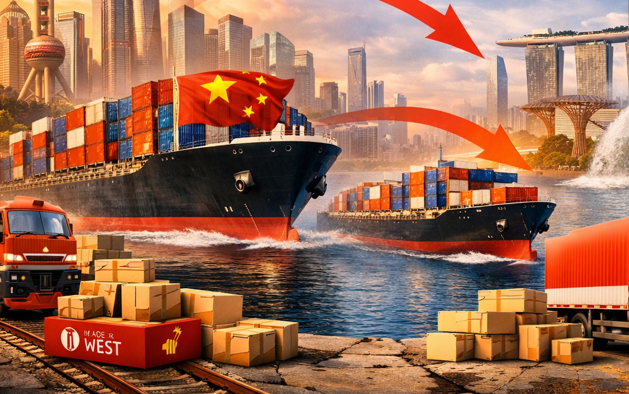
International Freight Shipping from China to Spain
Freight Delivery from China to Spain: International Shipping, Logistics, and Customs Clearance
Freight delivery from China to Spain is a popular route in international logistics, connecting Asian manufacturers with European importers, distributors, and online stores. Spain holds a significant position in the EU's trade system due to its developed port infrastructure, major transport hubs, and convenient access to the markets of Southern and Western Europe.
Organizing transportation along the route from China to Spain requires a comprehensive approach. It is essential to choose the appropriate mode of transport, determine the optimal route, prepare export and import documents, calculate customs duties, insure the goods, and plan the delivery to the final warehouse in advance. A mistake at any stage can lead to delays, additional costs, vehicle downtime, or issues during customs clearance.
This article provides a detailed overview of sea and air freight from China to Spain, multimodal logistics, the specifics of export and import, customs clearance in the EU, cost structure, timelines, and rules for building a sustainable supply chain.
International Shipping China – Spain: Route Features
International freight delivery from China to Spain involves several sequential operations: product procurement, consolidation at the warehouse, export clearance, transportation, transshipment, import clearance, and delivery to the recipient. Depending on the characteristics of the cargo, transportation may be carried out directly or using multiple modes of transport.
China is one of the largest global manufacturing centers. From this country, Spain receives electronics, clothing, footwear, furniture, industrial equipment, auto parts, household appliances, home goods, construction materials, packaging, and products for marketplaces. Each type of cargo has its own requirements for packaging, labeling, documentation, and transportation conditions.
Spain receives Chinese goods through several key logistics routes. The most important ports are Valencia, Barcelona, Algeciras, and Bilbao. The sea terminals in these cities are connected to European road and rail networks. After the container arrives, the cargo can be sent to Madrid, Zaragoza, Seville, Malaga, Lisbon, France, Portugal, or other EU countries.
Main Stages of Cargo Delivery from China to Spain
The entire process of international shipping typically consists of the following stages:
Receiving cargo information. The name of the product, weight, volume, number of packages, value, HS code, storage conditions, and transportation requirements are determined.
Route selection. The logistics specialist calculates what will be more cost-effective: sea freight, air delivery, rail route, or multimodal scheme.
Preparing the goods. The cargo is packed, labeled, photographed, and handed over to the sender's warehouse or a consolidation terminal.
Export clearance in China. Commercial documents and information necessary for exporting the goods are checked.
Loading and dispatch. The container or cargo is handed over to the carrier and sent to the port, airport, or rail terminal.
International transportation. The cargo travels along the chosen route to Spain.
EU import customs. Document verification, product classification, and calculation of mandatory payments are conducted.
Delivery within Spain. After clearance, the cargo is sent to a warehouse, distribution center, store, or final recipient.
Factors Affecting the Cost of Shipping China – Spain
The delivery price depends not only on the distance. The final cost is influenced by:
the mode of transport;
the weight and volume of the shipment;
the type of container;
the port of departure and the port of arrival;
the need for cargo pickup from the factory;
consolidation of multiple shipments;
packaging and palletizing;
insurance;
customs escort;
storage and terminal handling;
door-to-door delivery;
seasonality and congestion of transport routes;
Incoterms delivery conditions.
For an accurate calculation, the carrier needs to be provided with the most complete information about the cargo. If only an approximate weight is given without volume, it is impossible to correctly compare rates for sea, air, and multimodal delivery.
Sea Freight from China to Spain
Sea freight from China to Spain is considered the most rational option for large, heavy, and non-urgent shipments. Container shipping allows for the transportation of significant volumes of products at a lower rate per unit. This is precisely the maritime logistics used for the delivery of equipment, furniture, construction materials, clothing, electronics, and other commercial cargo.
The main advantage of sea transport is its capacity. Depending on the characteristics of the products, standard 20 or 40-foot containers, High Cube containers, refrigerated containers, flat racks, special containers for oversized cargo, and LCL consolidated solutions can be used.
Full and Consolidated Container Shipping
When a container is fully loaded, the FCL format is used. In this case, the container is allocated to a single shipper or one commercial batch. The cargo is loaded at the supplier's warehouse or at a consolidation terminal, after which the container is sealed and sent to the port.
FCL is suitable for large shipments when the volume of goods allows for efficient use of the container. This format reduces the number of transshipments, lowers the risk of damage, and simplifies cargo movement control.
Consolidated shipping is referred to as LCL. Goods from several shippers are placed in one container. This option is convenient for small shipments that do not fill the entire container. The cost is calculated based on volumetric weight or the number of cargo spaces.
LCL may be more cost-effective for small businesses; however, consolidated cargo undergoes additional operations at consolidation warehouses. This increases the number of transshipments and sometimes extends delivery times. For fragile, expensive, or sensitive products, it is essential to assess risks in advance.
Sea Ports in China and Spain
For shipping cargo from China, the ports of Shanghai, Ningbo, Shenzhen, Guangzhou, Qingdao, Xiamen, and Tianjin are often used. The choice depends on the location of the factory, availability of space on the vessel, schedule of the line, and the final cost of delivery.
In Spain, the main arrival points are:
Valencia – a major container port with a developed network of road and rail routes;
Barcelona – convenient for deliveries to Catalonia, northeastern regions of Spain, and neighboring France;
Algeciras – an important transit hub at the intersection of sea routes;
Bilbao – used for deliveries to northern Spain and certain regions of Western Europe.
When choosing a port, it is important to consider not only the distance from the terminal to the warehouse. Processing tariffs, availability of direct service, vessel schedules, likelihood of transshipment, and terminal capacity are also crucial.
Shipping Times from China to Spain
The average sea delivery time can be approximately 30–50 days; however, the actual duration depends on the route and shipping conditions. The total time includes:
delivery of goods from the factory to the port;
waiting for space on the vessel;
export customs clearance;
loading;
sea transit;
possible transshipment;
unloading in Spain;
terminal processing;
import clearance;
delivery to the warehouse.
During peak season, times may increase due to container shortages, port congestion, weather conditions, and changes in vessel schedules. Therefore, it is advisable to allow for a time buffer when planning shipments.
Air Freight from China to Spain
Air freight from China to Spain is used in situations where speed is essential. Air transport is used for product samples, urgent components, expensive electronics, medical goods, documents, small batches, and products with a high value per weight unit.
The main advantage of air freight is the short transit time. Depending on the chosen scheme, delivery can take a few days or about one to two weeks, considering pickup, airport processing, and customs clearance.
When Air Delivery is Beneficial
Air cargo transportation is justified in the following cases:
the goods are needed urgently;
production stoppage would lead to significant losses;
the value of the cargo is high relative to its weight;
the shipment is small;
the product has a limited shelf life;
samples need to be delivered quickly;
sea transport does not meet project deadlines.
Despite the high speed, air freight is usually more expensive than sea freight. The rate can be calculated based on actual or dimensional weight — depending on which measurement is greater. Therefore, a lightweight but bulky item may turn out to be significantly more expensive than the customer expected.
Restrictions for Air Freight
Air transport is regulated by strict safety rules. The following items may be restricted or prohibited for shipment:
lithium batteries;
chemical substances;
aerosols;
flammable materials;
magnets;
liquids;
batteries;
certain types of equipment;
products requiring special temperature conditions.
Additional declarations, safety data sheets, certificates, and approval from the air carrier are required for such items. Incorrect cargo descriptions can lead to refusal of acceptance, delays, or return of the shipment.
Multimodal Shipping from China to Spain
Multimodal logistics involves the use of several modes of transport within a single supply chain. For example, goods are picked up by truck from the factory in China, then shipped by rail or sea, and after arriving in Spain, delivered by truck to the recipient's warehouse.
This format allows for the combination of the advantages of different transport solutions. The sea segment reduces shipping costs, the rail segment helps shorten delivery times, and road transport provides flexibility at the beginning and end of the process.
Options for Multimodal Routes
The following schemes can be used in practice:
road transport within China + sea freight + road transport in Spain;
road segment + rail + road transport;
air route + courier or road transport;
sea freight to a European port + rail route to Spain;
container delivery to a port in Spain + distribution to several warehouses.
The multimodal scheme is especially useful if the factory is far from the main sea port, and the recipient is located inland. The logistics company coordinates all segments of the route and monitors the transfer of cargo between carriers.
Advantages of a Single Logistics Operator
When organizing independently, each segment may be serviced by a separate company. This complicates control, increases the number of contracts, and raises the risk of misaligned timelines. Working through a single operator provides the customer with a unified shipping plan, one coordinator, and a consolidated document package.
The logistics operator can arrange:
pickup of cargo from the supplier;
packaging inspection;
warehouse processing;
consolidation;
export declaration;
transport booking;
tracking;
insurance;
import clearance;
door-to-door delivery;
warehouse storage in Spain.
Export from China and Import to Spain
Export-import operations require coordination of the requirements of two jurisdictions. The sender must properly arrange the export of goods from China, while the recipient must ensure their legal import into the European Union.
The set of documents depends on the type of product, delivery conditions, value of the batch, country of origin, route, and requirements of regulatory authorities.
Documents for Export Shipment
Typically, the following are used:
commercial invoice;
packing list;
foreign trade contract;
transportation bill;
export declaration;
certificate of origin if necessary;
permits and licenses for certain categories of goods;
documents for hazardous cargo;
technical descriptions and specifications.
The invoice must contain accurate information about the seller, buyer, product description, quantity, price, currency, delivery terms, and country of origin. A formal or overly general description may raise questions with customs.
Documents for Importing to Spain
For import clearance in Spain, the following may be required:
importer registration details;
EORI;
commercial invoice;
packing list;
bill of lading or air waybill;
supply contract;
declaration of conformity;
security certificates;
documents of origin;
permits for specific types of products;
information on transportation costs and insurance.
The recipient must ensure in advance that the goods are permitted for import into the EU and comply with European requirements. This is especially important for electronics, children's products, cosmetics, medical devices, food products, chemical products, and equipment.
EU Customs for Deliveries from China to Spain
Customs clearance in Spain is carried out according to the rules of the European Union. Customs authorities assess the goods based on several parameters: classification code, value, origin, purpose, and compliance with legal requirements.
Errors in documentation can lead to adjustments in customs value, delays in release, additional inspections, or the imposition of fines.
HS Code and Product Classification
The customs duty is calculated using the EU commodity nomenclature code. It is determined based on the characteristics of the product, material, purpose, operating principle, and configuration.
You cannot choose a code solely based on the product name. For example, an electronic device, a separate component, an accessory, and a set may be classified differently. The code affects:
the rate of import duty;
the necessity of certificates;
the presence of restrictions;
labeling requirements;
the application of anti-dumping measures;
statistical reporting.
If the product has a complex design or dual purpose, it is advisable to obtain a professional classification opinion in advance.
Customs Value and Payments
The customs value usually includes the price of the goods and expenses related to delivery to a specific location in the EU. Depending on the terms of the transaction, transportation, insurance, packaging, commissions, and other elements may be included.
When importing into Spain, the following may be charged:
import duty;
import VAT;
excise duty for certain categories;
processing fees;
storage and handling fees at the terminal.
The amount of duty depends on the product code, while VAT depends on tax rules and the nature of the product. Before shipping, it is important to calculate not only the transportation cost but also the total cost of import in advance.
Product Requirements for the EU Market
Goods imported into Spain for resale must comply with EU standards. For several categories, the following are required:
CE marking;
declaration of conformity;
technical dossier;
instructions in the language of the country of sale;
information about the manufacturer and importer;
proof of safety;
environmental labeling;
special permits.
The presence of the CE mark does not always mean automatic compliance with all requirements. The importer is responsible for ensuring that the products are safe and meet current European standards.
Incoterms Conditions for Transport from China to Spain
Incoterms conditions define who pays for transportation, insurance, export and import operations, as well as when the risk of damage or loss of the goods transfers.
In practice, the conditions EXW, FOB, CIF, DAP, and DDP are encountered.
Main Delivery Terms
EXW means that the seller provides the goods at their premises. The buyer independently organizes pickup, export clearance, and further transportation. This condition can be inconvenient for the importer if they do not control Chinese export procedures.
FOB implies that the seller delivers the cargo to the port of departure and completes export formalities. After loading onto the vessel, the main expenses and risks transfer to the buyer.
CIF includes the cost of the goods, sea freight, and basic insurance to the port of destination. However, import customs clearance and delivery within Spain usually remain the responsibility of the buyer.
DAP means delivery to an agreed location without payment of import duties and VAT by the seller. The buyer carries out the import clearance.
DDP implies that the seller organizes delivery with payment of import charges. However, applying this condition requires ensuring that the seller or their representative can legally act as the importer in the EU.
The choice of Incoterms should correspond to the actual structure of the transaction. A low price under EXW does not always mean a favorable delivery, as the buyer may incur additional costs for numerous operations.
Packaging, Labeling, and Cargo Insurance
Quality packaging plays a crucial role in international shipping. Cargo may be subjected to vibrations, temperature fluctuations, humidity, overloads, and prolonged storage at terminals.
For sea transport, it is essential to consider the effects of moisture and salty air. For air shipments, it is particularly important to reduce volume and ensure that packaging meets safety requirements.
Types of Packaging
Depending on the product, the following are used:
cardboard boxes;
wooden crates;
pallets;
strapping;
metal frames;
moisture-resistant film;
cushioning materials;
thermal packaging;
special containers.
Wooden packaging used in international trade may be subject to phytosanitary treatment and marking according to ISPM 15 standards. The absence of the required marking can cause delays during inspections.
Labeling of Cargo
It is recommended to indicate the following on each package:
recipient's name;
order number;
number of packages;
weight;
dimensions;
destination country;
handling marks;
special warnings;
barcode or internal item number.
The labeling must match the packing list and the actual contents. Discrepancies can complicate acceptance and may lead to additional inspections.
Insurance for International Cargo
Insurance protects the importer from financial losses due to damage, loss, accidents, natural disasters, and other risks. The amount of the insurance premium depends on the value of the goods, mode of transport, nature of the products, and the chosen coverage.
Basic insurance included in some transport tariffs may have limited liability. For expensive or fragile goods, it is advisable to obtain an extended policy and review coverage exclusions in advance.
Delivery Times and Tracking from China to Spain
The duration of international shipping consists of several periods. It cannot be assessed solely by the duration of the sea passage or flight. It is important to consider the handling of cargo before dispatch and after arrival.
Approximately:
air delivery takes from a few days to two weeks;
sea transport can take about 30–50 days;
consolidated shipments often take longer than full container loads;
multimodal routes depend on the number of transshipments.
Delivery times are affected by holidays in China, weather conditions, seasonal volume increases, delays at terminals, customs inspections, and the workload of transport lines.
Tracking System
The following are used to monitor transportation:
container number;
booking number;
bill of lading;
tracking number;
carrier data;
electronic notifications;
reports from the logistics operator.
Tracking allows you to see key events: cargo acceptance, vessel departure, arrival at port, unloading, customs transfer, and delivery to the warehouse. However, information may be updated with delays, especially during sea transport or when transferring cargo between multiple contractors.
How to Choose a Logistics Company for Delivery from China to Spain
A reliable carrier should not only offer a rate but also organize the entire process considering the specifics of the goods and EU requirements. When choosing a logistics partner, it is advisable to assess their experience on the China to Spain route, availability of warehouses, agent network, and ability to handle customs procedures.
It is important to clarify in advance:
what modes of transport are available;
whether door-to-door delivery is offered;
whether export clearance is included;
who performs import clearance;
whether insurance is provided;
how the rate is calculated;
which expenses are paid separately;
whether cargo consolidation is possible;
whether tracking is provided;
how claims and insurance cases are handled.
Why It’s Important to Compare Total Costs
Some offers may seem attractive due to a low base rate, but additional charges can arise during terminal handling, storage, document delivery, customs clearance, or transport within Spain.
When comparing offers, it is essential to request a detailed calculation. It should separately specify freight, cargo pickup, export declaration, terminal fees, delivery, brokerage services, insurance, and any possible surcharges.
How to Reduce International Shipping Costs
Logistics optimization begins even before placing an order with the supplier. The better the delivery is planned, the lower the likelihood of additional expenses.
You can reduce costs through the following measures:
combine small batches into one shipment;
book containers in advance;
choose the appropriate port;
optimize packaging sizes;
use palletization;
plan purchases outside of peak season;
compare FCL and LCL;
check the HS code;
agree on favorable Incoterms;
reduce the number of transshipments;
organize regular scheduled deliveries.
For online stores and companies with constant imports, it is useful to create a delivery calendar. This allows for an even distribution of orders, preventing shortages and avoiding overpayment for urgent air delivery.
Common Mistakes When Shipping Goods from China to Spain
Beginners in international trade often underestimate the importance of documentation and preliminary calculations. Common mistakes include:
shipping goods without checking EU requirements;
incorrect product description;
incorrect HS code;
lack of certificates;
understating the value in the invoice;
inconsistency of data in documents;
lack of insurance;
choosing inappropriate Incoterms;
insufficient packaging;
ignoring seasonality;
lack of time buffer;
calculating only freight costs without considering customs duties.
A preliminary check of the goods, documents, and route helps avoid most problems. The more complex the product, the earlier a customs broker and certification specialist should be involved.
Shipping goods from China to Spain is a multi-stage international operation, where transportation is just one part of the logistics chain. Successful imports depend on the correct choice of route, preparation of documents, packaging, insurance, compliance with EU requirements, and proper customs clearance.
Sea freight is suitable for large and non-urgent shipments, air delivery is used for fast and expensive goods, while multimodal solutions allow for balancing cost and time. For stable deliveries, it is important to plan volumes in advance, choose appropriate Incoterms, monitor the product classification code, and account for all expenses until the goods arrive at the warehouse.
Professional route organization from China to Spain helps reduce risks, make timelines more predictable, and ensure transparency in deliveries. Before shipping, it is advisable to prepare a technical description of the cargo, commercial documents, information about packaging, and product requirements. Based on this data, the optimal transportation scheme can be selected, and the total delivery cost can be calculated, taking into account logistics, customs, and subsequent delivery within Spain.