

 RU
 UA
 DE
 FR
 ES
 CN
 SA
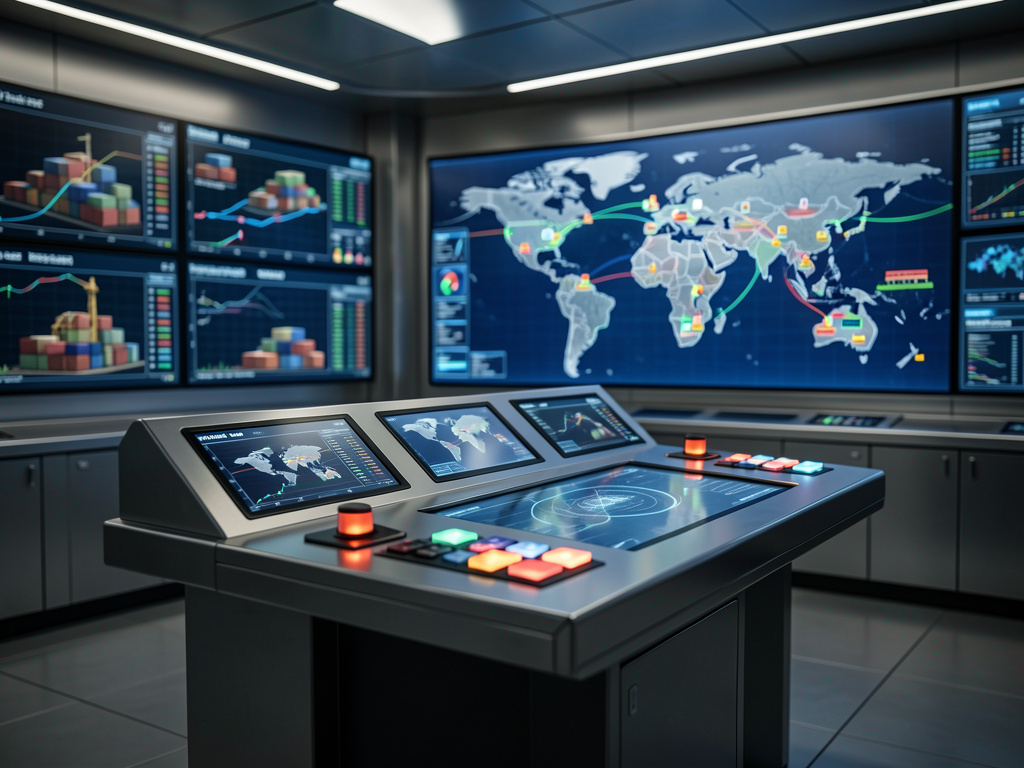
Global Cargo Movement Tracking System
Global Cargo Movement Control System: Digital Management of International Logistics
International logistics has long ceased to be a simple sequence of operations related to loading, transporting, and unloading goods. Today, cargo movement passes through multiple countries, transport hubs, warehouses, customs terminals, and distribution centers. At each stage, companies need to understand where the shipment is, who is responsible for its safety, whether deadlines are being met, and if there are any risks that could affect the final delivery.
This is why the global cargo movement control system has become one of the key tools for businesses. It integrates logistics control, supply monitoring, delivery management, transport tracking, and data analysis. Thanks to digital solutions, the cargo owner, carrier, freight forwarder, and recipient have access to a unified information environment that displays the current status of the shipment.
Modern international tracking allows for the control of goods movement by road, sea, rail, and air transport. The system can receive data from GPS trackers, telematics devices, driver mobile applications, transport platforms, warehouse programs, and customs services. As a result, supply chain participants can see not only the current location of the cargo but also the estimated time of arrival, potential delays, deviations from the route, and other important parameters.
What the Cargo Movement Control System Is
The cargo movement control system is a digital platform or a set of software and hardware solutions designed to monitor the transportation of goods at all stages of the logistics chain. It collects information about the cargo, transport, route, documents, deadlines, temperature, packaging condition, and actions of responsible employees.
The main task of such a system is to create a transparent transportation process. The company must be able to answer several important questions at any moment: where is the cargo, when did it leave the previous point, when will it arrive at the next one, is the route being followed, is there a risk of delay, and who should take action.
Unlike manual control, where data is transmitted via phone, email, or spreadsheets, the digital system automatically updates information. All events are recorded in a single interface, and users gain access to data according to their permissions.
Key Functions of the Logistics Control System
The basic functions include:
registration of cargo and transport units;
route formation;
tracking current location;
control of checkpoints;
monitoring deadlines;
forecasting arrival times;
recording deviations from the route;
notification of delays and emergencies;
storage of transport and accompanying documents;
report generation;
analysis of transportation efficiency;
integration with accounting and warehouse systems.
The logistics control system can be used for a single company or for an international supply network with many suppliers, carriers, and warehouses. Depending on the tasks, the platform is configured for road, sea, rail, or multimodal transport.
How the Digital Platform Works
First, information about the order, cargo, route, vehicle, and planned deadlines is entered into the system. Then, data sources are connected to the transportation: GPS equipment, sensors, carrier APIs, mobile applications, or external logistics services.
As the cargo moves, the platform receives new events. For example, the transport may leave the warehouse, arrive at the terminal, pass customs control, be transferred to another mode of transport, or be delivered to the final recipient. All these actions are displayed in the transportation timeline.
If the system detects a deviation, it sends a notification to the responsible employee. This could be an exceeded waiting time, a route change, loss of connection with the tracker, temperature violations, or delays at the border. Thanks to early problem detection, the company can make decisions faster and reduce potential losses.
Logistics Control at All Stages of International Transportation
International logistics involves many processes that need to be coordinated with each other. It is not enough to know that the cargo has been dispatched. It is important to control preparation, loading, transportation, passing through terminals, customs clearance, transloading, delivery to the warehouse, and handover to the recipient.
Preparing the Cargo and Shipping Documentation
The first stage begins before the actual movement of the goods. Information about the number of packages, weight, volume, product characteristics, packaging, sender, and recipient is entered into the system. For international transportation, invoices, packing lists, transport waybills, certificates, and permits are also recorded.
Digital control allows for verification of data consistency across different documents. This is especially important when cargo crosses the borders of multiple countries. An error in the product description, weight, or code can lead to additional inspections, delays in processing, or financial losses.
At this stage, the system can also determine which transport and route are best suited for a specific shipment. For example, perishable goods will require temperature monitoring, hazardous materials will need special transport conditions, and oversized products will require specialized equipment.
Loading and Dispatch
During loading, the actual quantity of goods is checked against the order data. Employees can use barcodes, QR codes, RFID tags, or mobile terminals. After scanning, the system records which packages were loaded, into which vehicle, and at what time.
This approach reduces the risk of misdelivery, shortages, and shipping to the wrong address. If the cargo consists of multiple batches, the system can track each one separately or consolidate them into a single shipment.
Once the vehicle departs, route monitoring begins. The platform compares actual movement with the planned schedule and shows how well the transportation aligns with established parameters.
Transit, Terminals, and Border Crossings
On an international route, cargo may pass through several logistics hubs. These include ports, airports, railway stations, distribution centers, customs terminals, and temporary storage warehouses.
At each location, it is crucial to record arrival, processing, transloading, and dispatch. If any stage is delayed, it can impact the entire supply chain. The delivery monitoring system helps to promptly identify delays and determine their causes.
Additionally, the digital platform allows visibility into which segment is responsible for the cargo. This is important when transferring goods between carriers, freight forwarders, and warehouse operators.
Final Delivery
In the final stage, the system monitors the arrival of the cargo at the distribution center, transfer to the courier or local carrier, and delivery to the end recipient. An authorized employee can confirm receipt using an electronic signature, photograph, code, or document scanning.
After the transportation is completed, the information is stored in the order history. It can be used for reporting, service quality analysis, and resolving disputes.
Delivery Monitoring and International Tracking
Delivery monitoring involves regularly receiving and analyzing information about cargo movement. International tracking expands this task, as it takes into account the specifics of different countries, carriers, transport systems, and time zones.
What Data Can Be Tracked
Depending on the equipment and integrations, the system can display:
current location of the transport;
speed and direction of movement;
departure and arrival times;
duration of stops;
passing of checkpoints;
deviation from the route;
estimated delivery time;
condition of the cargo;
temperature and humidity;
opening of container doors;
shocks and vibrations;
fuel level;
customs clearance status;
transloading information;
confirmation of receipt.
The more sources connected to the platform, the clearer the picture of the transportation becomes. It is important not only to collect data but to turn it into understandable actions. For example, the system should not only indicate a delay but also specify how many hours the arrival forecast will change and which orders may be affected.
GPS Monitoring and Telematics Devices
For road transport, GPS trackers and telematics terminals are often used. They transmit the vehicle's coordinates via mobile networks or satellite channels. If necessary, the device can record additional parameters: temperature in the cargo area, engine status, door openings, and duration of stops.
In maritime and air logistics, data from shipping and air carriers, port systems, and specialized platforms are utilized. Railway shipments are tracked through operators' information systems, sensors, and control events at stations.
Arrival Time Forecasting
One of the useful features of international tracking is the calculation of the expected arrival time. The system takes into account the current position, remaining distance, traffic conditions, terminal operating hours, border procedures, weather conditions, and historical data.
The forecast may not always be absolutely accurate, but it allows for an early understanding of whether the delivery timeline will change. This gives the company the opportunity to notify the customer, adjust warehouse operations, modify production schedules, or organize an alternative route.
Automatic Notifications
Notifications help avoid manually tracking each shipment. The user receives a message if a significant event occurs: the shipment has left the warehouse, the cargo has arrived at the terminal, transport is delayed, the route has changed, or delivery is completed.
Alerts can be sent via email, SMS, mobile app, messenger, or internal corporate system. Different types of notifications are set for different users.
Delivery Management and Route Optimization
Delivery management includes planning, resource allocation, performance monitoring, and results analysis. In international logistics, it requires consideration of many factors: distance, fuel costs, road capacity, port operations, border restrictions, and requirements for specific categories of goods.
Route Planning
The digital system helps select a route based on specified criteria. The company can choose the fastest, most economical, or most reliable option. Sometimes the lowest cost is more important, while in other cases, meeting a strict deadline takes priority.
For multimodal transport, the platform combines several modes of transport. For example, the cargo may travel by truck to a railway terminal, then continue by train, and finally be transferred back to a truck carrier.
Route Execution Monitoring
After the route is approved, the system compares the plan with actual movement. If the transport leaves the permitted zone, stops longer than the set time, or moves in the wrong direction, responsible parties receive a notification.
Geofences allow for automatic recording of entry and exit from the warehouse, port, terminal, or delivery point. This relieves employees from the need to manually mark each event.
Exception Handling
In logistics, it is impossible to completely eliminate delays, breakdowns, weather risks, or changes at the border. Therefore, not only the standard delivery scheme is important, but also exception management.
The system can classify the problem by severity and suggest further actions. For example, with a minor deviation, it is sufficient to notify the dispatcher, while a prolonged stop may require replacing the transport, redirecting the cargo, or contacting the customer.
Cost Optimization
Data analysis allows for identifying routes with increased costs, frequent downtimes, ineffective use of transport, and recurring delays. The company can compare carriers, assess SLA compliance, and choose the most reliable partners.
As a result, delivery management becomes not only operational but also strategic. The business gains the ability to make decisions based on actual statistics rather than subjective assessments.
Transparency of Shipments for Businesses and Customers
Transparency of shipments means access to reliable information about all important events in the supply chain. It is necessary not only for the logistics department but also for management, sales, procurement, warehouse, finance, and the end customer.
Unified Information Environment
When data is stored in different tables, emails, and messengers, employees may see different versions of the same information. This leads to errors and delays. A unified digital platform creates a common data source where the current delivery status is recorded.
Each user receives only the information they need for their work. The logistician sees the route, the dispatcher sees the transport, the customer sees the order status, and the manager sees summary metrics.
Increasing Customer Trust
Customers want to know when their order will be delivered. This is especially important for expensive goods, industrial equipment, medical products, and regular corporate supplies.
Providing a tracking link or personal account reduces the number of inquiries to customer support. The customer independently obtains information about the location of the cargo and the planned delivery date.
Confirmation of Responsibility
The digital shipping history shows when the cargo was accepted, where it was located, who performed the transfer, and when it was handed over to the recipient. Such data is useful when addressing claims, insurance cases, and conflicts among participants in the supply chain.
Transparency also helps ensure compliance with contractual obligations. If a delivery deadline is set in the contract, the company can confirm the actual time of completion.
Digital Systems in Global Logistics
Digitalization in logistics involves the integration of various programs, devices, and information channels. A standalone tracking system is not always capable of covering the entire process. Therefore, integrations play a crucial role.
Integration with ERP and CRM
Connecting to an ERP system allows for the automatic transfer of information about orders, products, invoices, and customers. CRM integration helps managers see the current delivery status directly in the customer profile.
This reduces manual data entry and decreases the likelihood of errors. After a status change in the monitoring system, the information can be automatically updated in the accounting software.
Connection with Warehouse Systems
Integration with WMS helps synchronize warehouse operations and transportation. Employees can see which cargo is already prepared, which is awaiting loading, and which transport is expected to arrive.
This can reduce vehicle downtime and improve shipping accuracy. When cargo arrives at the warehouse, the system automatically creates a task for receiving or placing the goods.
Carrier and Logistics Operator APIs
International carriers often provide APIs for exchanging statuses and transport events. This eliminates the need to manually check each shipment on the website of a separate operator.
The platform consolidates information from different partners and presents it in a unified format. This is especially convenient for companies that simultaneously use multiple transport and freight forwarding organizations.
Cloud Technologies
Cloud architecture allows access to the system from anywhere in the world. A manager can analyze deliveries from the office, a dispatcher can monitor transport on the road, and a customer can check the order status from a mobile device.
Platform updates are performed centrally, and scaling is possible without installing complex equipment at each workstation.
Cargo Condition Monitoring and Compliance with Transport Conditions
For certain categories of products, it is not enough to track only the transport coordinates. It is necessary to monitor the conditions in which the goods are located.
Temperature Monitoring
Medical products, food items, chemicals, and certain types of raw materials require adherence to specific temperature ranges. Sensors in the body, container, or packaging transmit data to the system in near real-time.
If the temperature exceeds the established limit, the responsible person receives a notification. The system keeps a history of readings, which can be used to confirm compliance with storage conditions.
Access and Tamper Monitoring
Door opening sensors help determine when a container or body was opened. If the opening occurs outside the permitted zone or at an inappropriate time, the system generates an alert event.
This type of monitoring helps reduce the risk of theft, unauthorized access, and product substitution. Combined with video surveillance and seals, it enhances the security of transportation.
Impact and Vibration Recording
Fragile goods can be damaged due to strong vibrations, sudden braking, or impacts. Special sensors register such impacts and transmit the information to the system.
Based on this data, it is possible to determine at which stage the risk of damage occurred and to conduct a quicker inspection of the cargo condition.
Data Security and Protection of Logistics Information
The cargo movement control system processes commercially sensitive information. It may contain details about customers, routes, product costs, suppliers, documents, and transport operations.
Access Control
Users should only have access to the necessary data. For example, a driver sees their own assignment, a dispatcher sees assigned shipments, a manager sees overall statistics, and a customer sees information about their order.
Access control reduces the risk of information leakage and accidental changes to critical parameters.
Action Logging
The system should record who and when changed the route, order status, delivery deadline, or document data. The action log helps investigate errors and monitor compliance with internal regulations.
Backup
Regular backups are essential for restoring information in the event of technical failures. Important data must be stored in accordance with the company's requirements and the legislation applicable to specific countries.
Benefits of Cargo Movement Control Systems
Implementing a digital system provides businesses with a range of practical advantages.
Firstly, it enhances supply chain visibility. The company sees not just isolated fragments but the complete route of the cargo from sender to recipient.
Secondly, it reduces the number of manual operations. Automatic status updates, notifications, and report generation free employees from constantly checking spreadsheets and carrier websites.
Thirdly, it improves adherence to deadlines. Early detection of deviations allows for quicker responses to problems and minimizes the impact of delays.
Fourthly, it enhances customer service quality. The customer receives accurate delivery information and relies less on support services.
Fifthly, it lowers logistics costs. Analyzing routes and downtimes helps optimize the use of transport, warehouses, and personnel.
Sixthly, it reduces the risk of loss or damage to cargo. Monitoring location, temperature, tampering, and transport conditions provides additional protection for goods.
How to Choose a Platform for Global Shipment Monitoring
When selecting a digital solution, it is important to consider not only the external interface but also the real tasks of the company.
Geography of Operations
The platform should support the countries where the business operates, the transport systems used, time zones, and local transportation specifics.
Supported Modes of Transport
If the company uses multimodal logistics, the system should work with road, sea, rail, and air transport.
Integration Capabilities
It is important to check in advance for the availability of APIs, ready-made modules, and compatibility with ERP, CRM, WMS, TMS, and accounting systems.
Scalability
The solution should maintain stability as the number of orders, users, warehouses, and transport partners grows. Ideally, new routes should be able to be added without a complete overhaul of the platform.
Reports and Analytics
The availability of reports on timelines, delays, costs, carriers, and execution quality helps make informed management decisions.
Mobile Access
For employees working outside the office, a mobile app, responsive interface, and the ability to receive notifications on smartphones are essential.
Steps for Implementing a Logistics Control System
Implementation is best done in stages. First, the company describes existing processes and identifies which problems need to be addressed. Then, a list of key performance indicators is formed: delivery time, percentage of delays, downtime, forecast accuracy, and number of incidents.
After that, data sources are selected, and integration with transport, warehouse, and accounting systems is carried out. In the pilot phase, one route, several carriers, or a limited number of warehouses can be connected.
Next, employees are trained to work with the platform, notification processing rules are established, and areas of responsibility are assigned. It is important to determine in advance who responds to delays, who contacts the carrier, and who informs the client.
After launch, the system is regularly evaluated. Data quality, the number of false alarms, interface usability, and economic impact are analyzed. Adjustments are made as necessary.
Future Prospects for International Tracking
The future of global logistics is tied to deeper utilization of artificial intelligence, automation, and the Internet of Things. Algorithms will be able to predict delays more accurately, identify potential transport breakdowns, and select optimal route options.
The Internet of Things will allow more sensors to be connected to containers, pallets, and individual packages. Blockchain can be used to create a secure event history and verify product origin. Robotic warehouses and autonomous transport solutions will transmit data directly into a unified digital environment.
An important direction is the development of predictive analytics. The system will not only display the current status of transportation but also provide advance warnings about potential risks. For example, it could determine the likelihood of delays at specific border crossings or forecast a shortage of transport during certain periods.
A global cargo movement control system is a vital part of modern international logistics. It integrates transport tracking, supply monitoring, delivery management, cargo condition control, and transportation efficiency analysis.
Digital platforms provide transparency in shipments, reduce the number of errors, help meet deadlines, and increase customer trust. Through integration with ERP, CRM, WMS, TMS, and carrier systems, the company gains a unified view of the movement of goods.
Global tracking becomes especially valuable in the context of complex multimodal routes, a large number of participants, and high delivery speed requirements. The sooner a business implements digital logistics control, the faster it can optimize costs, reduce risks, and improve service quality.
For effective operation, it is important to choose a scalable system that supports different modes of transport, international routes, automatic notifications, deadline forecasting, and data protection. As a result, supply chain management transforms from a set of disparate operations into a transparent, controlled, and analytical process.