

 RU
 UA
 DE
 FR
 ES
 CN
 SA
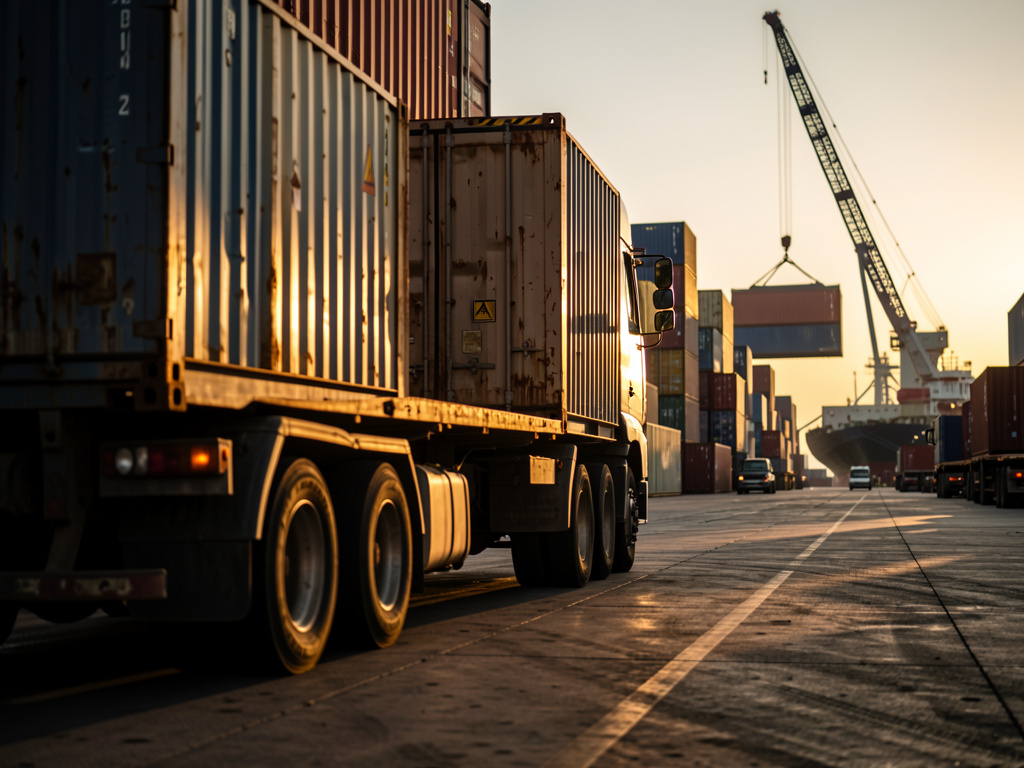
International Shipping Worldwide
International Shipping: How Cargo Delivery Works Worldwide
International shipping is a complex set of logistics operations that facilitate the movement of goods between countries and continents. This system includes cargo preparation, route and transport selection, export-import documentation processing, customs clearance, insurance, warehousing, and delivery to the final recipient. Modern global logistics connects manufacturers, suppliers, carriers, freight forwarders, terminals, customs authorities, and buyers into a single network.
Today, international cargo delivery is in demand across almost all business sectors. Companies source raw materials from abroad, produce goods at multiple locations, sell products in foreign markets, and utilize distribution centers in different countries. Therefore, the efficiency of foreign economic activity directly depends on how well international shipping is organized.
The main task of logistics is to deliver the cargo to the right place, within agreed timelines, with minimal risks and optimal costs. It is important to consider the characteristics of the goods, the requirements of the destination country, seasonality, import and export restrictions, the specifics of global routes, and the availability of international transport.
What International Cargo Delivery Includes
International delivery is not just the transportation of goods from one country to another. It represents a sequence of interconnected stages, each of which affects the timing, cost, and safety of the shipment. Mistakes at any stage can lead to delays, additional expenses, cargo damage, or issues during customs clearance.
Main Stages of International Shipping
Before shipping, a specialist analyzes the characteristics of the cargo: name, weight, volume, dimensions, packaging, value, storage conditions, and any special requirements. Separate rules and types of transport apply for perishable, hazardous, fragile, or temperature-sensitive goods.
Next, the optimal route is determined. It can be direct or multimodal, meaning it includes several modes of transport. For example, a container may be shipped by sea to a port, then transported by rail to another region, and the final leg completed by truck.
After selecting the route, a carrier is chosen, and the cost of the service is calculated. The estimate may include freight, terminal fees, loading and unloading operations, customs clearance, warehousing services, insurance, and door-to-door delivery.
Special attention is given to documentation. Typically, a commercial invoice, packing list, bill of lading, contract, certificates of origin and compliance, permits, licenses, and declarations are required. The set of documents depends on the type of product and the legislation of the countries of origin, transit, and destination.
Why Comprehensive Organization is Important
If international shipping is organized without a single coordinator, participants in the process may act inconsistently. This increases the likelihood of errors in documentation, delays at terminals, and missed deadlines. A freight forwarder or logistics operator integrates all stages into a single chain and monitors the movement of cargo.
A comprehensive approach allows for the early assessment of risks, selection of backup routes, coordination of transport delivery times, and preparation of documents before the cargo arrives at the border. For businesses, this means more predictable costs and stable deliveries.
Global Logistics and World Routes
Global logistics encompasses all processes related to the international movement of goods, information, and financial flows. It operates through the interaction of transport companies, ports, airports, rail hubs, warehousing complexes, customs services, and digital platforms.
World routes are formed considering the geography of production and consumption, the state of infrastructure, political situations, trade agreements, and the capacity of transport corridors. Some routes specialize in the transportation of industrial goods, while others focus on the supply of raw materials, food, electronics, or equipment.
Key Elements of the International Logistics Network
The logistics network consists of several levels. At the first level are suppliers and manufacturers. Next are consolidation warehouses, transport terminals, seaports, airports, railway stations, and highways. The chain is completed by distribution centers, wholesale companies, retail stores, and end consumers.
Hubs are of great importance—key points through which significant volumes of cargo pass. In such centers, consolidation of shipments, sorting, transloading, temporary storage, and formation of further shipments take place.
Modern logistics increasingly relies on digital solutions. Transportation management systems help track vehicle locations, manage documents, calculate timelines, and analyze costs. Sensors can monitor temperature, humidity, impacts, and container openings.
Risk Management in Global Shipping
International routes are influenced by weather conditions, port congestion, changes in legislation, currency fluctuations, trade restrictions, and other factors. Therefore, a professional operator considers several delivery options in advance.
To mitigate risks, insurance, reserving transportation capacities, verifying counterparties, controlling packaging, and pre-verifying documents are employed. It is also important to account for potential delays at borders and to build in a time buffer.
Export and Import: Features of International Trade
Export refers to the shipment of goods from one country to another, while import refers to bringing products into a country. Both processes are regulated by national legislation, international agreements, and customs regulations.
Organizing export-import shipments requires precise identification of the transaction participants, payment terms, responsibilities of the parties, and the moment of risk transfer. These provisions are documented in the foreign trade contract.
Documents for Export and Import
The main documents include:
foreign trade contract;
commercial invoice;
packing list;
transportation bill;
certificate of origin;
quality and compliance certificates;
permits and licenses;
customs declaration;
insurance documents;
technical description of the goods.
The invoice specifies the seller and buyer, product description, quantity, price, currency of the transaction, and total cost. The packing list contains information about the locations, weight, volume, and contents of each package.
For certain categories of goods, veterinary, phytosanitary, sanitary, and other permits may be required. If the products are classified as hazardous materials, additional international standards for labeling, packaging, and transportation must be followed.
Customs Clearance
The customs authority checks the goods, their value, foreign economic activity code, origin, and completeness of documents. Based on this data, duties, taxes, and fees are calculated.
An incorrect code or undervalued goods can lead to cargo delays, additional inspections, charges, and administrative consequences. Therefore, it is advisable to classify the goods before shipment.
The freight forwarder can prepare documents, submit the declaration, organize interaction with the customs representative, and monitor the release of the cargo. This is especially important for companies that are just starting to work with foreign markets.
International Transport: Choosing the Right Delivery Method
International transport is selected based on distance, urgency, characteristics of the goods, and budget. In practice, road, sea, air, rail, and multimodal transport are used.
There is no universal mode of transport that is equally suitable for all types of cargo. Fast delivery may be more expensive, while economical options may take longer. Therefore, decisions are made after comparing all parameters.
International Road Transport
Road transport is convenient for "door-to-door" delivery. It allows for route organization without intermediate transshipment, especially if the sender and recipient are in neighboring countries or regions with developed road networks.
Trucks transport palletized goods, equipment, building materials, food products, household appliances, and other types of products. Refrigerated trucks are used for temperature-sensitive cargo, while special platforms and low-bed trailers are used for oversized shipments.
The advantages of road transport include route flexibility, the ability to deliver directly to the client's warehouse, and convenience for handling small batches. Limitations may include queues at borders, road conditions, seasonal bans, and weight restrictions.
Rail Delivery
Rail transport is suitable for large shipments and long-distance routes. It typically provides more stable timelines than road transport and allows for the movement of significant cargo volumes.
The railway is used for transporting containers, metals, raw materials, equipment, and general cargo. It is particularly effective on routes with developed international railway corridors.
Container Shipping as the Foundation of Global Logistics
Container shipping has become one of the main tools of international trade. A standard container can be transferred from a ship to a train or truck without unpacking the goods. This speeds up processing and reduces the risk of damage.
Containers come in various types and sizes. The most common are standard 20-foot and 40-foot models. High Cube containers are used for tall cargo, refrigerated containers for temperature-sensitive goods, and tank containers for liquids.
Full and Consolidated Container Shipments
In a full container load (FCL), the entire volume is used by one shipper. This format is suitable for large shipments when there is enough cargo to fill the container.
Consolidated shipping (LCL) is used when the shipment is small. In this case, goods from several clients are combined in one container. The cost is calculated based on the volume or weight of the cargo.
Consolidated shipping helps reduce costs, but it usually requires additional time for consolidation and deconsolidation. When choosing this option, it is important to consider packaging requirements and cargo compatibility.
Advantages of Container Shipping
Containers protect goods from precipitation, contamination, and mechanical impacts. Additionally, the standardized format simplifies loading planning, transloading between transport modes, and cost calculation.
Container shipping is particularly in demand for international trade between distant countries. It is used for the delivery of equipment, furniture, raw materials, consumer goods, components, and mass-produced products.
Aerial Freight Transport
Aerial delivery is the fastest way to move goods over long distances. It is used for urgent, expensive, compact, and time-sensitive cargo.
Airplanes transport documents, product samples, electronics, medical devices, spare parts, jewelry, pharmaceuticals, and perishable goods.
Features of Air Transport
The cost of air delivery depends not only on the actual weight but also on the volumetric weight. If the cargo takes up a lot of space with a small mass, the carrier calculates the rate using a special formula.
Strict packaging and content requirements are established for air transport. Some goods are prohibited from being transported or require prior approval. These include batteries, aerosols, flammable substances, chemicals, and certain types of equipment.
The advantage of air transport is the short transit time. However, the total delivery duration includes cargo pickup, consolidation, documentation, inspection, airport processing, and delivery after arrival.
International Sea Freight
Sea transport is used to move large volumes of cargo between continents. It is considered one of the most economical delivery methods when there are no strict time requirements.
Sea transport is used for containers, vehicles, industrial equipment, raw materials, construction materials, agricultural products, and consumer goods.
Advantages and Limitations of Sea Shipping
The main advantage of sea transport is the low cost per unit of cargo. Additionally, vessels have a high carrying capacity and allow for the shipment of large quantities.
Disadvantages include long transit times, dependence on vessel schedules, port delays, and the need to transport cargo to and from the port. When planning a route, it is important to consider terminal fees, freight forwarding services, and potential storage costs.
Sea transport can be direct or involve transshipment at an intermediate port. A direct route is usually faster but is not always available for specific destinations.
Multimodal Transport and Door-to-Door Delivery
Multimodal transport involves using multiple modes of transport within a single logistics chain. For example, a truck picks up the cargo, then it travels by rail, is shipped by sea, and is again transferred to a truck.
This format allows for combining the strengths of different delivery methods. Trucks provide flexibility, rail offers stability, sea transport is economical, and air transport is fast.
How Multimodal Delivery is Organized
First, the final route and transfer points are determined. Then schedules, documents, packaging types, and responsibilities of participants are agreed upon. It is important that each subsequent carrier receives the cargo in a timely manner and in proper condition.
In door-to-door delivery, the client interacts with a single operator. This operator is responsible for picking up the goods from the shipper, transporting them across borders, customs clearance, transloading, and delivering them to the recipient.
The main advantage of this approach is convenience and unified coordination. The client does not have to independently search for carriers in different countries and coordinate the work of terminals.
Cost of International Shipping
The delivery price is calculated individually. It is influenced by the route, mode of transport, cargo characteristics, urgency, type of packaging, delivery conditions, and a set of additional services.
Key Components of the Tariff
The cost may include:
transport tariff;
freight;
fuel and seasonal surcharges;
terminal fees;
loading and unloading;
warehouse storage;
customs clearance;
insurance;
delivery to the address;
preparation of permit documents;
packaging and labeling services.
For container shipments, the size of the container, direction, port of departure and destination, presence of transshipments, and conditions of the shipping line are taken into account. For road delivery, distance, type of body, weight, dimensions, and border crossing specifics are important.
How to Optimize Costs
Costs can be reduced by consolidating small batches, making the right choice of packaging, pre-booking transport, and using combined routes. It is also useful to compare not only the base tariff but also the total cost of logistics.
A cheap offer is not always advantageous. If it does not account for storage, port handling, or delivery to the warehouse, the final amount may significantly increase.
Packaging, Labeling, and Cargo Insurance
Reliable packaging protects products during loading, transport, transshipment, and storage. International cargo may change modes of transport several times, so the packaging must withstand vibrations, temperature fluctuations, humidity, and pressure.
For heavy goods, wooden crates, pallets, bracing, and reinforced fastenings are used. Fragile items are protected with foam materials, air cushions, shock-absorbing pads, and dividers.
Labeling must include information about the recipient, sender, number of packages, weight, dimensions, and handling instructions. Special signs are used for certain cargo: "Fragile," "This Side Up," "Keep Dry," "Hazardous Cargo."
Insurance allows for compensation of financial losses in case of damage, loss, or destruction of products. The terms of the policy depend on the type of cargo, route, method of transport, and set of insurance risks.
How to Choose a Logistics Company
A reliable logistics partner should have experience with international routes, a clear pricing system, and the ability to monitor transport at all stages.
When choosing a company, pay attention to the following parameters:
geographic coverage;
presence of partners in the countries of departure and destination;
experience in export and import clearance;
own or contracted transport;
ability to deliver consolidated cargo;
availability of warehouses and terminals;
insurance conditions;
tracking system;
claims handling process;
transparency of the contract and tariff.
It is important to clarify in advance who is responsible for customs clearance, what documents the client provides, where the cargo transfer takes place, and what additional costs may arise.
A professional operator does not just offer transport but develops a logistics scheme for a specific task. They take into account the characteristics of the goods, deadlines, budget, and legal requirements.
International shipping is a complex system that combines export, import, transport, warehouse processing, customs clearance, and risk management. Successful delivery of cargo worldwide depends on the correct choice of route, mode of transport, packaging, documentation, and logistics partner.
Road transport is suitable for flexible "door-to-door" delivery, sea transport for large shipments and intercontinental routes, air transport for urgent cargo, and rail transport for stable movement of significant volumes. Container and multimodal solutions allow for the combination of several modes of transport and the creation of an efficient global logistics chain.
Well-organized international delivery helps companies reduce costs, meet deadlines, expand foreign markets, and maintain supply stability. For this, it is necessary to plan the route in advance, check documents, insure cargo, and consider the legal specifics of each country.