

 RU
 UA
 DE
 FR
 ES
 CN
 SA
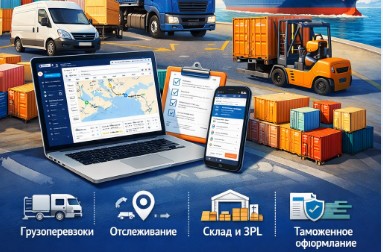
The Role of Digital Platforms
The Role of Digital Platforms in Accelerating Global Trade
The digital transformation of international trade has changed the way companies organize shipments, process orders, and interact with logistics operators. While exports and imports once relied heavily on phone calls, spreadsheets, paper invoices, and manual oversight, businesses today increasingly utilize specialized software solutions. These systems integrate data on products, orders, warehouses, carriers, customs procedures, and delivery into a single digital environment.
Platforms for managing international trade logistics, solutions for speeding up order delivery in e-commerce, automation of international shipments, and comprehensive digital supply chain management systems are particularly in demand. They enable online stores, manufacturers, marketplaces, and logistics companies to process orders more quickly, select suitable routes, and reduce the likelihood of errors. As a result, cross-border trade accelerates, supply chain transparency increases, and customers receive more accurate information about delivery times.
A modern digital platform for global trade serves as a connecting link between the seller, warehouse, carrier, customs representative, and end customer. It helps synchronize processes, automate repetitive operations, and respond promptly to changes. This is especially important in the context of growing e-commerce, an increasing number of international shipments, and the constant complexity of transportation requirements.
What a Digital Platform for Global Trade Is
A digital platform in international logistics is a software infrastructure that connects supply chain participants and facilitates data exchange among them. Depending on its purpose, it may include modules for order management, inventory control, transportation, customs clearance, payments, returns, and customer service. This way, the company receives not just a set of disparate tools, but a cohesive system for managing international operations.
At the core of such a platform is a centralized database. It can store information about products, dimensions and weight of packaging, shipping and receiving addresses, documents, carrier tariffs, delivery statuses, and restrictions for specific routes. When an order is placed, the system automatically uses the necessary data, reducing the number of manual actions and minimizing the risk of errors.
For international trade, the platform's ability to work with various countries, currencies, languages, and document formats is crucial. When shipping a product, it is necessary to consider customs value, commodity code, country of origin, labeling requirements, and specific carrier characteristics. Automation allows for pre-checking information and alerting the operator about potential discrepancies.
Main Components of a Digital Supply Chain Management System
A full-fledged digital supply chain management system typically consists of several interconnected blocks. The first component is order management. It receives data from the online store, marketplace, CRM, or ERP system, verifies it, and forwards it for further processing. The second block is related to the warehouse: the system determines the location of the product, reserves the required quantity, and generates a picking task.
The next element is the transportation module. It compares available delivery methods, considers costs, timelines, weight and dimension restrictions, and then helps select the optimal carrier. If multiple logistics operators are connected, the system can automatically distribute shipments among them.
A separate important component is the document management module. It generates transport invoices, commercial invoices, packing lists, declarations, and other documents. This is especially useful for companies that process a large number of international orders daily.
The platform may also include an analytics dashboard. With it, businesses can track average delivery times, the share of delays, logistics costs, return rates, and the efficiency of individual carriers. Based on this data, routes can be adjusted, cooperation terms changed, and customer service quality improved.
How a Digital Platform Differs from a Standard Logistics Program
A standard logistics program often addresses a specific task: printing labels, managing a warehouse, or calculating tariffs. A digital platform for international trade operates on a broader scale. It connects multiple processes and facilitates information exchange between different systems and organizations.
The key advantage is the integration approach. The online store can automatically transmit orders to the logistics system, the warehouse can notify about the readiness of the shipment, the courier service can return information about the package's movement, and the customer can receive notifications through their personal account or email.
This architecture makes international trade more manageable. The company has a single source of up-to-date data, and employees can see the order status without needing to check multiple services. This reduces the time spent on inquiries, increases the accuracy of forecasts, and helps make management decisions more quickly.
How Digitalization Accelerates E-Commerce
The growth of e-commerce has become one of the main reasons for the development of digital logistics solutions. Online shoppers expect not only a wide range of products and convenient payment options but also clear delivery information. They want to see available shipping methods, exact costs, estimated delivery dates, and the current status of their shipments. If international delivery is too long or opaque, the likelihood of cart abandonment significantly increases.
That is why speeding up delivery in e-commerce has become an important focus for online stores. Acceleration of delivery is achieved not only through faster carriers. Automatic order processing, optimal distribution of goods across warehouses, pre-preparation of documents, and intelligent route selection play a significant role.
A digital platform can process an order immediately after payment. It checks product availability, determines the shipping warehouse, selects the delivery method, creates transport documents, and sends the picking task. The employee only needs to manually monitor exceptions and non-standard situations.
Automatic Carrier and Route Selection
In international trade, the same order can be shipped in several ways. This can include express courier, standard postal service, air delivery, combined transport, or consolidation of multiple shipments. Each option has its own timelines, rates, restrictions, and geographical features.
The digital platform compares available options based on specified parameters. For example, the seller can prioritize minimum cost, maximum speed, reliability, or adherence to a specific service level. The system analyzes the order characteristics and suggests the most suitable option.
Automation is especially beneficial when dealing with a large assortment of products. For some products, temperature conditions are important, while for others, weight, cost, or composition restrictions matter. If the rules are set in advance, the platform can independently exclude unsuitable delivery channels and prevent errors before handing the shipment over to the carrier.
Electronic Statuses and Notifications for Customers
International delivery often takes several days or weeks, so it is important for the customer to understand where their order is. The integrated system collects statuses from different carriers and converts them into a unified format. The buyer can see the stages: order accepted, product picked, shipment handed over to the carrier, package sorted, arrived in the destination country, handed over to the courier.
Unified tracking reduces the burden on customer support. The customer does not have to visit the websites of several logistics companies and decipher different status formats. All data is displayed in one interface, and automatic notifications inform about important changes.
Additionally, the system can proactively notify about delays, route changes, or the need to provide additional documents. Such communication increases trust in the seller and makes the international purchasing process more predictable.
Automation of International Delivery and Cross-Border Trade
Automation of international delivery encompasses a wide range of operations related to the movement of goods between countries. This includes not only printing shipping labels but also verifying addresses, calculating costs, preparing customs documents, transmitting data to the carrier, monitoring delivery, and processing returns.
For companies operating in multiple markets, automation becomes a necessary condition for scaling. As order volumes increase, manual processing quickly leads to delays, incorrect document completion, and rising operational costs. A digital system allows for maintaining manageability even with a significant increase in the number of shipments.
Automatic Preparation of Customs Documents
Customs clearance is one of the most complex stages of international logistics. Errors in product description, value, country of origin, or classification code can lead to cargo delays, additional requests, and financial losses. Digital platforms help mitigate these risks by utilizing pre-configured directories and rules.
When placing an order, the system can automatically populate product characteristics in the commercial invoice and other documents. If additional information is required for a specific country, the platform notifies the operator. Some solutions include automatic checks for data completeness before passing information to the carrier.
It is important to note that such automation does not eliminate the need to comply with legislation. It merely helps to systematize data and reduce the number of technical errors. The responsibility for the accuracy of the information still rests with the seller and other participants in foreign economic activity.
Calculation of duties, taxes, and total shipping costs
The buyer should understand in advance how much the international order will cost. In addition to the price of the goods and shipping, there may be import duties, taxes, processing fees, and other charges. If these expenses come as a surprise, the customer may refuse to accept the package or leave negative feedback.
A modern platform can estimate the total cost of the order considering the destination country, product category, its value, weight, and chosen shipping method. This helps the seller create transparent offers and reduces the risk of unpleasant surprises for the buyer.
For businesses, such calculations are also important when comparing markets. The company can assess how profitable it is to sell a particular product in a specific country, what logistics schemes to use, and where to best locate a warehouse.
Platforms for integrating courier services and uniting logistics operators
Platforms for integrating courier services are designed to connect multiple courier and transportation services through a single software interface. Instead of separate integration with each carrier, the company uses a centralized interaction layer. This speeds up the onboarding of new services and simplifies delivery management.
This model is particularly in demand among online stores, marketplaces, fulfillment operators, and international trading companies. Each carrier may have its own APIs, data formats, shipment creation rules, and statuses. The platform normalizes this information and presents it in a unified format.
Advantages of integrating with multiple carriers
The first advantage is flexibility. If one operator temporarily restricts operations on a specific route, the system can automatically switch shipments to another partner. This helps maintain service stability even when external conditions change.
The second advantage is the ability to compare rates and delivery times. The company is not obligated to use one carrier for all orders. It can choose different options depending on the country, product category, urgency, and shipping cost.
The third advantage is reduced reliance on manual labor. After setting up the integration, orders, labels, tracking numbers, and statuses are processed automatically. Employees receive a unified interface for monitoring shipments rather than a set of separate dashboards.
Managing exceptions and problematic deliveries
Even the most advanced system cannot completely eliminate delays, losses, damages, or returns. However, a digital platform helps to promptly identify problematic shipments. It can determine if a package has not changed status for an extended period, has returned to the warehouse, or requires additional actions.
For each type of problem, a response scenario can be configured. For example, in the case of a delay, the system sends a notification to the customer and creates a task for the operator. If the address is deemed incorrect, the order is sent for manual verification. In the case of a return, the process for resending or refunding is initiated.
This approach allows for a shift from passive waiting to proactive management. The company does not just record the problem after the customer’s inquiry but identifies it in advance and takes necessary measures.
The impact of digital platforms on international supply chains
Global supply chains involve manufacturers, raw material suppliers, warehouses, transportation companies, customs services, distributors, and sellers. The more participants involved in the process, the more challenging it is to ensure coordinated actions. Digital tools help to connect these links and make the movement of goods more transparent.
The digital supply chain management system allows tracking not only the final delivery but also earlier stages. The company can see inventory levels at different warehouses, expected deliveries, production tasks, and the status of movement between distribution centers. This helps in planning stock and avoiding shortages.
Synchronization of Warehouses and Distribution Centers
To expedite international shipping, it is crucial to accurately determine the storage location of goods. If products are located far from the main group of buyers, the delivery time and cost increase. The digital system analyzes the geography of orders and helps distribute inventory among warehouses.
With multiple warehouses, the platform can automatically select the shipping point. It takes into account distance, inventory levels, warehouse load, product restrictions, and expected delivery times. This mechanism reduces the number of long-distance shipments and increases order fulfillment speed.
Additionally, data synchronization helps avoid selling out-of-stock items. Information about reservations, order picking, and movement is updated between the online store, warehouse, and sales channels. This is especially important when working with marketplaces and a large volume of orders.
Demand Forecasting and Inventory Management
Order history, seasonality, promotional campaigns, and customer behavior data allow for forecasting future demand. The platform can identify which products are purchased more frequently in specific countries, when order volumes increase, and which items need to be placed closer to customers in advance.
Accurate forecasts help reduce excess inventory and lower the likelihood of shortages. This directly impacts delivery speed: the product is already in the required region and does not require lengthy international transport after the order is placed.
For businesses, inventory management is also linked to working capital. The more efficiently a company plans purchases and storage, the less money is tied up in unsold products.
Analytics, Artificial Intelligence, and Logistics Transparency
One of the key advantages of digital platforms is the accumulation of large volumes of data. The system records every operation: order creation, carrier selection, transfer to the warehouse, sorting, customs clearance, and customer receipt. This information can be used not only for current control but also for strategic analysis.
Analytics allows understanding which routes are the most profitable, where delays occur most frequently, which carriers perform best, and which products are returned most often. Based on this data, the company can optimize its logistics model.
Key Performance Indicators
Key metrics include average delivery time, percentage of shipments delivered on time, logistics cost per order, damage rate, number of returns, and successful delivery rate on the first attempt. It is also important to track order processing time and the period between order creation and handover to the carrier.
Comparing metrics across countries, warehouses, products, and logistics partners helps identify weaknesses. For example, delays may not be related to the carrier as a whole but to a specific route or stage of customs clearance.
Metrics should be analyzed comprehensively. The lowest delivery cost does not always mean the best result if it is accompanied by a high number of delays and support inquiries. It is important to consider total expenses and the impact of logistics on customer loyalty.
Use of Artificial Intelligence
Artificial intelligence can be used for predicting timelines, detecting anomalies, assessing delay risks, and selecting optimal routes. Algorithms analyze past data and find patterns that are difficult to detect through manual processing.
For instance, the system may determine that delays on a specific route occur more frequently during certain periods or when a particular consolidation method is chosen. Based on this, it will suggest an alternative route or alert the operator about increased risk.
At the same time, automated recommendations should remain controllable. For critical decisions, it is essential to maintain the ability for manual verification and consider current regulatory requirements.
Data Security and Compliance
The digitization of international trade increases the volume of data that passes through information systems. This includes information about customers, addresses, payments, products, commercial terms, and cargo movement. Therefore, issues of information security become just as important as the speed of order processing.
The platform must utilize secure data transmission channels, access rights segregation, backup, and user activity logging. A warehouse employee does not necessarily need access to financial data, and a support operator does not need access to integration settings. The separation of powers reduces the risk of unauthorized changes.
Protection of Personal and Commercial Information
Special attention must be paid to the personal data of customers. The company should understand where and how addresses, phone numbers, email addresses, and order histories are stored. When working with international clients, it is important to consider the legal requirements of the countries where the business operates.
Commercial information also requires protection. Carrier rates, contract terms, sales volumes, and supplier data can hold significant value for the business. Access to this information should only be granted to authorized personnel.
Regular security checks, software updates, and staff training help reduce the likelihood of incidents. Even a perfect technical system will not be reliable if employees use weak passwords or share access with third parties.
Compliance with Customs and Trade Regulations
International trade is regulated by a large number of norms. Restrictions may apply to specific categories of goods, shipment values, countries of origin, labeling requirements, and documentation. A digital platform helps automate checks, but its rules must be regularly updated.
Companies need to monitor changes in legislation and timely adjust their directories. Outdated data can lead to incorrect duty calculations, improper document processing, or cargo delays.
Challenges of Implementing Digital Logistics Platforms
Despite the obvious advantages, transitioning to a digital platform can be challenging. In practice, companies face issues such as incompatibility with legacy systems, lack of quality data, employee resistance, and difficulties integrating with foreign carriers.
The first problem often encountered is the fragmentation of information. Customer data may be in a CRM, inventory in a warehouse program, orders in an online store, and documents in spreadsheets. Before implementation, it is necessary to identify data sources and standardize them.
The second problem is integration with partners. Not all courier services have modern APIs, and some work with non-standard formats. In such cases, intermediate solutions, manual scripts, or integrator services may be required.
Changing Business Processes
Automation is effective only when the company is ready to rethink existing processes. If the digital system merely replicates an inefficient manual scheme, the expected results will not be achieved. Therefore, it is important to describe current operations, identify bottlenecks, and determine which steps can be simplified before implementation.
Employees need to be trained on new tools and the benefits of the changes explained. If staff do not understand the logic of the system, they may create workarounds, resulting in incomplete or contradictory data.
The optimal approach is phased implementation. Initially, order processing and document printing can be automated, followed by tracking, analytics, returns management, and demand forecasting. This format allows for gradual assessment of the effects and adjustments to settings.
Cost and Return on Investment of the Project
Expenses include software licensing, integration, business rule setup, training, and technical support. However, evaluating the project solely based on initial costs is incorrect. It is necessary to consider the reduction of manual labor, decrease in errors, lower support costs, and increase in repeat purchases.
The economic effect can also arise from more accurate carrier selection, reduced failed deliveries, and inventory optimization. To assess return on investment, key performance indicators should be defined in advance: order processing time, logistics costs, percentage of delays, and customer satisfaction levels.
The Future of Global Trade Logistics Platforms
In the coming years, digital platforms will become even more complex and intelligent. Their development is linked to cloud technologies, artificial intelligence, warehouse robotics, electronic documents, and expanded inter-system data exchange.
One of the main directions will be predictive logistics. The system will not only show the current status of shipments but also predict the likelihood of delays, changes in route costs, or the need for inventory replenishment. This will enable companies to make decisions before problems arise.
The further standardization of data will play an important role. The more carriers, marketplaces, banks, and government systems can exchange information in a unified format, the faster and cheaper international trade will become.
Sustainability and Eco-Friendliness of International Shipping
Buyers and regulators are increasingly paying attention to the impact of logistics on the environment. A digital platform can calculate the carbon footprint of shipments, compare routes, and choose options with a lower environmental impact.
Optimizing vehicle loading, reducing empty trips, consolidating shipments, and selecting more efficient routes help to simultaneously reduce costs and emissions. In the future, environmental performance may become one of the criteria for choosing a carrier.
A Unified Digital Ecosystem for Business
The future of international trade is linked to the integration of e-commerce, warehousing operations, transportation, payments, insurance, and customs clearance into a single ecosystem. Sellers will be able to manage a large number of processes from one interface, while customers will receive complete information about their orders at every stage.
This ecosystem will make entering new markets more accessible for small and medium-sized businesses. Companies will not have to create complex international infrastructure on their own: the necessary tools will be provided as ready-made services and plug-in modules.
Digital platforms play a crucial role in accelerating global trade. They connect supply chain participants, automate international shipping, simplify interactions with courier services, and enhance the transparency of cross-border operations. Thanks to them, online stores and manufacturers can process orders faster, calculate shipping costs more accurately, and provide customers with up-to-date information on shipment tracking.
The use of global platforms for international trade, solutions for speeding up the delivery of e-commerce goods, automating international transportation, digital supply chain management systems, and courier service integration platforms allows businesses to scale without a proportional increase in operational costs. Automation reduces the number of manual errors, speeds up document flow, improves inventory management, and helps choose optimal logistics scenarios.
At the same time, digital transformation requires a comprehensive approach. It is important to consider data security, customs legislation requirements, the quality of integrations, and employees' readiness for change. The greatest effect is achieved by companies that view the platform not as a standalone program, but as the foundation of a unified international business infrastructure.
In the context of growing e-commerce and increasing competition, speed, predictability, and transparency of delivery are becoming crucial success factors. Therefore, digital logistics systems will continue to evolve, helping companies operate more effectively in the global market and shaping a more flexible, technological, and sustainable model of global trade.