

 RU
 UA
 DE
 FR
 ES
 CN
 SA
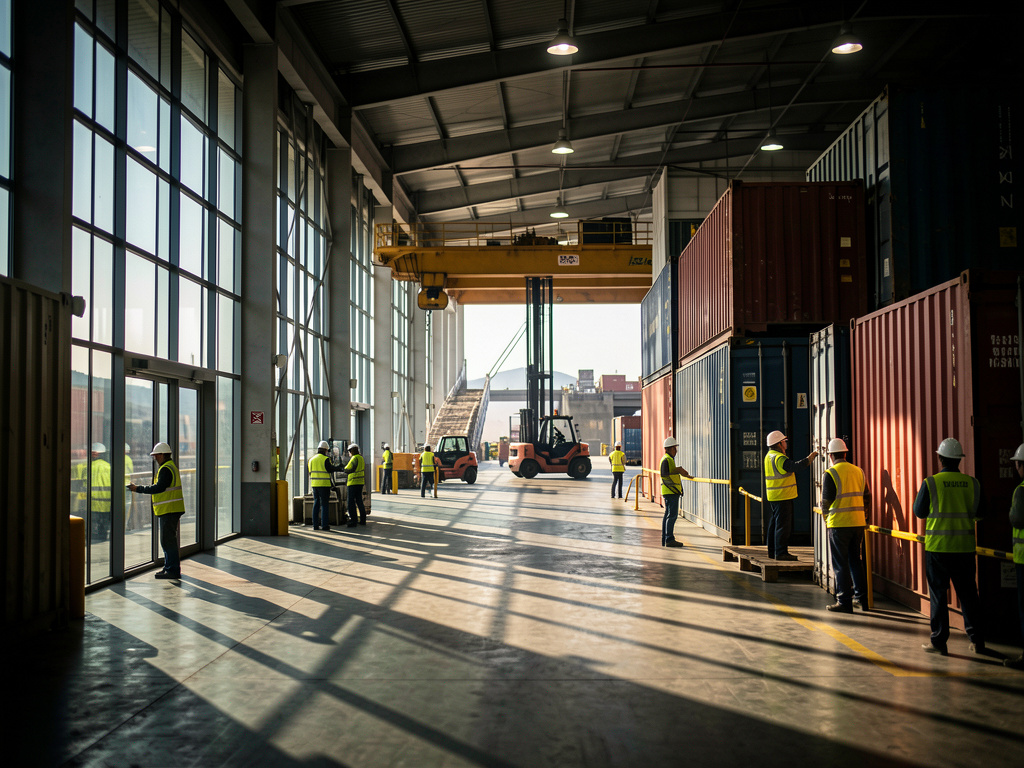
Tajikistan — Shipping to China and Southeast Asia
Tajikistan — Delivery to China and Southeast Asian Countries
Tajikistan holds an important position in Central Asia and is gradually becoming a significant link in international trade routes between China, the CIS countries, and Southeast Asian states. Commercial cargo, online orders, documents, product samples, equipment, and personal shipments pass through Tajik cities. The routes Tajikistan — China, Tajikistan — Southeast Asia, as well as the delivery of transit cargo through international logistics centers, are particularly relevant for businesses and private clients.
Organizing shipments requires careful attention to packaging, choosing a carrier, customs clearance, preparing labels, and tracking the parcel's movement. Depending on the characteristics of the cargo, courier services like DHL, FedEx, and UPS, specialized transport and logistics companies, air or road transport, cargo consolidation, and warehousing logistics can be utilized.
When it comes to international delivery, it is essential to determine the destination country, type of shipment, weight, dimensions, value of the goods, purpose of the shipment, and any restrictions in advance. This information affects the tariff, transportation time, list of documents, and customs clearance procedures. Errors in describing the contents or incorrectly filled invoices can lead to delays, additional costs, and return of the shipment.
International Delivery from Tajikistan to China and Asia
International delivery from Tajikistan can be carried out in several ways. In practice, air transport, road delivery, multimodal routes, and courier dispatch of documents or small parcels are most commonly used. There is no universal option: the optimal scheme depends on urgency, budget, weight, volume, and product characteristics.
China is one of the main destinations for Tajik businesses. A wide range of goods including textiles, industrial equipment, electronics, spare parts, construction materials, raw materials, consumer goods, and commercial samples are actively exchanged between the two countries. In the opposite direction, documents, locally produced goods, fabric samples, agricultural products, and personal parcels are sent.
Southeast Asian countries are also of interest for e-commerce and international business. Delivery is possible to Vietnam, Thailand, Malaysia, Singapore, Indonesia, the Philippines, Cambodia, and other states in the region. Depending on the country, requirements for labeling, language of documents, certification, and customs value may vary.
Parcel and Document Delivery from Tajikistan
For small shipments, express delivery is usually chosen. It is suitable for contracts, certificates, business correspondence, product samples, small components, and online orders. A courier picks up the parcel from the sender's address, delivers it to a sorting center, after which it is sent to the destination country.
The main advantages of express delivery include:
short transportation times;
door-to-door delivery;
online tracking;
clear documentation process;
confirmation of delivery;
consultations on customs requirements.
However, the cost of express services may be higher than that of standard transportation. In addition to actual weight, dimensional weight is sometimes used. It is calculated according to the formula set by the carrier, so a large lightweight box may be charged more than a heavy compact cargo.
Commercial and Consolidated Cargo
For the delivery of goods, equipment, and product batches, consolidated logistics is advantageous. In this case, the cargo from several clients is combined into one transport shipment. This option helps reduce transportation costs, especially if the volume of cargo is insufficient for a separate truck or container.
The consolidated cargo undergoes consolidation at the warehouse, where it is checked, labeled, and prepared for further transportation. If necessary, repackaging, palletizing, photographing contents, and preparing export documents are carried out. Upon arrival at the destination, the cargo is distributed among the recipients.
For regular deliveries, it is important to sign a contract with a logistics operator, agree on a shipping schedule, and determine the responsible party for customs clearance. This helps minimize delays and make international delivery more predictable.
DHL, FedEx, and UPS: Choosing a Courier Service
DHL, FedEx, and UPS are among the largest international courier operators. They provide delivery services for documents, parcels, and commercial shipments to many countries around the world. When choosing a carrier, it is important to consider not only the advertised delivery time but also the actual route availability from Tajikistan, product requirements, customs clearance costs, and delivery specifics to a particular city.
DHL for International Shipments
DHL is often chosen for urgent delivery of documents, small parcels, and business shipments. The company offers tracking, courier pickup, door-to-door delivery, and additional services for businesses. Contract rates, regular pickups, and integration with e-commerce systems may be available for corporate clients.
Before shipping via DHL, it is essential to check whether the specific branch accepts the chosen type of cargo. Some goods require prior approval or additional permits. Special attention is given to batteries, electronics, cosmetics, pharmaceuticals, and liquid products.
FedEx for Deliveries to China and Asian Countries
FedEx is used for urgent international delivery of documents, samples, and commercial cargo. The service is convenient for companies that require fixed delivery times, proof of delivery, and enhanced tracking. Shipments to China and Southeast Asian countries may require a precise product description, HS code, commercial invoice, and recipient information.
FedEx pays attention to the compliance of the actual contents with the accompanying documents. If the declaration contains a too general description, such as "samples" or "goods," customs may request additional information. It is better to specify the name, material, purpose, quantity, and value of each item.
UPS and Alternative Logistics Solutions
UPS also offers international express delivery, tracking, and customs clearance. The service can be convenient for business correspondence, samples, and small batches of goods. In some cases, it may be more advantageous to use a logistics company that consolidates shipments and offers road, air, or multimodal transportation instead of direct courier shipping.
When comparing DHL, FedEx, and UPS, it is important to evaluate:
the total cost including fees;
delivery time;
availability of cargo pickup in Tajikistan;
weight and size limits;
transportation rules for specific goods;
customs clearance procedures;
tracking quality;
liability for damage or loss.
International Logistics between Tajikistan, China, and Southeast Asia
International logistics encompasses not only the transportation itself. It is a complex of operations from receiving the order to delivering the cargo: route calculation, packaging, labeling, consolidation, document preparation, customs clearance, warehousing, and delivery control.
For routes from Tajikistan to China, road transport through land border crossings is often used. This is suitable for cargo that does not require urgent air delivery. The advantage of road transport is the ability to deliver large batches directly from the sender's warehouse to the recipient's warehouse.
Air logistics is used for urgent, valuable, and compact cargo. This method reduces transit time but usually costs more. It is particularly relevant for documents, electronic components, medical devices, product samples, and high-value goods per unit weight.
Multimodal Transport
Multimodal delivery combines several modes of transport. For example, cargo may be transported by truck to a logistics terminal, then by air or rail to an international hub, and afterward again by truck to the final recipient. This scheme allows for adapting the route to fit the budget and timelines.
In multimodal transport, coordination among participants is especially important. An error during the transfer of cargo can lead to delays, reprocessing, or loss of documents. Therefore, it is necessary to determine in advance who is responsible for each segment, where the transfer takes place, and how the shipment status is updated.
Warehousing and Consolidation
Logistics warehouses perform sorting, temporary storage, packaging, labeling, order fulfillment, and document preparation. Fulfillment services may be provided for online stores, including product storage, order processing, packaging, and shipping to the end customer.
Consolidation helps to combine several small shipments. This reduces transportation costs but increases the requirements for internal labeling. Each box must have an order number, recipient details, weight, and information about the contents.
International Shipping Labels
The shipping label is one of the main elements of logistics documentation. It helps the carrier correctly identify the cargo, direct it along the right route, and deliver it to the recipient. An incomplete or unreadable label can cause delays, manual sorting, and additional costs.
The shipping label usually includes:
the full name or company name of the recipient;
the exact address;
city, region, and postal code;
destination country;
phone number and email;
tracking number;
barcode or QR code;
weight and number of packages;
special handling instructions.
The address must be written in Latin letters if required by the carrier's rules and the destination country. For China and Southeast Asian countries, it is advisable to provide the address in international format, including building number, street, district, city, postal code, and the local recipient's contact number.
Box Labeling Requirements
The label must be affixed to a flat surface of the box and protected from moisture. It should not be placed on folds, seams, corners, or over damaged packaging. Old stickers and barcodes must be removed to prevent the sorting system from reading outdated information.
If the cargo consists of multiple packages, each box is assigned a separate number. For example: “Package 1 of 4”, “Package 2 of 4”. This labeling helps verify the completeness of the shipment and quickly identify any missing packages.
For fragile items, additional markings are used: “Fragile”, “Handle with care”, “This side up”. However, such markings do not replace proper internal packaging. Even if the box has a caution symbol, the cargo must be protected with cushioning materials.
Contents Description
The description on the label and in the documents must be specific. Instead of the word “parts”, it is better to write “aluminum fasteners for industrial equipment”. For clothing, the type of item, material, quantity, and purpose should be specified. For electronics, it is advisable to describe the device, model, and whether it has a battery.
A precise description helps expedite customs clearance and reduce the risk of additional inquiries. It is not allowed to indicate an inaccurate value or replace a commercial item with the term “gift” if the shipment is actually intended for sale.
Customs Documents for Shipping from Tajikistan
Customs documents confirm the origin, value, destination, and contents of the shipment. The list of documents depends on the type of cargo, destination country, status of the sender and recipient, as well as the chosen route.
For most international shipments, the following may be required:
commercial invoice;
packing list;
bill of lading;
export declaration;
contract or order;
certificate of origin;
permits and licenses;
compliance certificates;
documents for hazardous or regulated goods.
Commercial Invoice
The invoice contains information about the seller, buyer, product description, quantity, price, currency, delivery terms, and total value. The document must correspond to the actual contents of the box. If there are multiple items in the shipment, it is advisable to list them on separate lines.
The invoice may also include the HS code, country of origin, net and gross weight, number of packages, and purpose of the shipment. For samples, it can be indicated that they are not intended for sale, but the value must still be reflected for customs purposes.
Packing List
The packing list shows how the goods are distributed among the boxes. It specifies the number of packages, dimensions, weight, item list, and internal package numbering. This document is especially important for consolidated and commercial cargo.
The packing list must match the actual contents. If the box contains different goods or a different quantity of items, customs may suspend processing until the circumstances are clarified.
Bill of Lading
The shipping invoice is issued by the carrier or the sender depending on the type of transportation. It contains information about the sender, recipient, route, weight, number of packages, and delivery conditions. Once issued, the cargo receives a unique number that can be used to track its movement.
Certificates and Permits
Some categories of products require confirmation of safety or compliance with technical requirements. This may apply to food products, cosmetics, medicines, medical devices, chemicals, equipment, radio technology, and children's goods.
Before shipping, it is essential to check the requirements of the destination country. Having a certificate in Tajikistan does not always mean that the document will be recognized in China or another Asian country. Sometimes the recipient may need local registration, an import license, or permission from the relevant authority.
Tracking International Shipments
Tracking allows you to monitor the package's journey from the moment it is handed over to the carrier until it is delivered to the recipient. After the shipment is processed, the client receives a tracking number — a unique track number. It can be entered on the official website of DHL, FedEx, UPS, or another logistics operator.
Status updates may be displayed in English or the language of the carrier's country. The most common designations include:
Shipment information received — shipment data received;
Picked up — cargo picked up from the sender;
In transit — shipment is on its way;
Arrived at facility — arrived at the sorting center;
Customs clearance — undergoing customs clearance;
Clearance delay — delay at customs;
Out for delivery — handed over to the courier for delivery;
Delivered — delivered to the recipient.
Why Status May Not Update
Sometimes the movement information does not change for several days. This does not always indicate a lost shipment. Possible reasons include weekends, transportation between countries, data transfer delays, customs checks, carrier changes, or lack of scanning at an intermediate warehouse.
If the status does not update for a long time, it is necessary to verify the tracking number and contact the carrier's support service. For commercial cargo, it is advisable to reach out to the sender, recipient, and customs representative, as a request for additional documents may be directed to the recipient.
Delivery Control for Businesses
Companies are recommended to maintain a registry of shipments indicating the order number, tracking code, shipping date, cost, recipient, and current status. This helps respond quickly to customers and monitor delivery timelines.
Online stores can use automated notifications via email, SMS, or through a personal account. Integration with the tracking system allows informing the buyer about each key stage of transportation.
Prohibited and Restricted Goods
Before international shipping, it is necessary to check whether a specific item is allowed for transport. Restrictions are imposed not only by the carrier but also by customs, sanitary, aviation, and other government authorities.
Prohibited or strictly regulated categories often include:
weapons and ammunition;
narcotic and psychotropic substances;
explosives and flammable materials;
toxic chemical compounds;
counterfeit documents and goods;
live animals without permits;
plants, seeds, and soil;
perishable goods;
precious metals and stones;
cash in certain formats;
batteries and devices with lithium batteries;
medications and medical products;
alcohol and tobacco products.
The list may vary depending on the country. For example, the rules for shipping batteries by air are usually stricter than those for regular goods. Lithium batteries may require special packaging, labeling, declaration, and capacity restrictions.
Goods with Restrictions
Not all goods are completely prohibited. Some can be transported only with a license, certificate, permit, or prior approval. These may include cosmetics, food additives, medical equipment, radio transmission devices, agricultural products, and chemical agents.
It is not allowed to hide prohibited items inside other products or provide false descriptions. Such actions may lead to confiscation, fines, return of cargo, and legal liability.
How to Check Shipping Possibility
Before submitting a request, you should provide the carrier with an accurate description of the goods, a photograph of the packaging, composition, technical specifications, and information about batteries or liquids. The specialist will be able to determine if a special procedure is required.
If the goods are intended for regular import into China or Southeast Asian countries, it is advisable to consult a customs broker in advance. This will allow you to verify the classification code, certification requirements, and the possibility of legal import.
Packaging Goods for Transport to China and Asia
Reliable packaging protects the goods from impacts, vibrations, moisture, temperature fluctuations, and pressure changes. An international package may be reloaded several times, go through sorting lines, and be transferred between different modes of transport.
For regular goods, sturdy five-layer boxes, paper fillers, bubble wrap, foam inserts, and protective corners are used. Any empty spaces inside the box should be filled to prevent items from moving during transport.
Fragile items are recommended to be wrapped separately, separated by dividers, and placed in a double box. Glass, ceramics, and equipment with sensitive components need additional securing.
Packaging Electronics and Batteries
Electronic devices should be protected from static electricity and mechanical damage. If there is a battery inside, you need to inform the carrier. Batteries may have special requirements for placement, contacts, labeling, and documentation.
Do not send damaged, swollen, or leaking batteries. They can pose a fire hazard, especially during air transport.
Moisture Protection
For routes with multiple climate zones, it is advisable to use moisture-resistant bags, airtight inserts, and silica gel. Documents are better placed in a separate plastic envelope inside the box.
After packaging, it is necessary to check the strength of the seams and seal the box with quality packing tape. If the cargo is heavy, it is recommended to use reinforced tape and palletization.
Cost and Delivery Times from Tajikistan
The cost of international delivery is calculated individually. It is influenced by:
actual and dimensional weight;
package dimensions;
destination country and city;
urgency;
type of transport;
type of goods;
insurance cost;
pickup and door-to-door delivery services;
customs duties;
warehouse handling;
additional documents.
Express delivery with DHL, FedEx, or UPS is usually more expensive but provides a shorter timeframe and enhanced tracking. Road or consolidated transport may be more economical for heavy and bulky cargo, but its timelines depend on the route, borders, transshipments, and customs clearance.
It is important to distinguish between transport time and total delivery time. The transit time may take several days, but it is added to the time for document preparation, warehouse processing, customs clearance, and delivery within the destination city.
How to Reduce Costs
To optimize expenses, you can:
reduce package sizes;
combine small shipments;
prepare documents in advance;
choose standard rather than express delivery;
compare several logistics operators;
enter into a corporate contract;
use a consolidation warehouse;
forego unnecessary additional services.
It is not permissible to artificially lower the value of goods to reduce payments. This can lead to inspections, fines, and delays in shipment.
Insurance for International Cargo
Insurance protects the sender and recipient from financial losses due to loss, damage, or destruction of cargo. It is especially important to insure expensive electronics, equipment, components, commercial shipments, and fragile products.
Before obtaining a policy, you should review the list of insured risks and exclusions. Some companies do not cover damages due to inadequate packaging, natural wear and tear, incorrect product descriptions, or the shipment of prohibited items.
To confirm the value, invoices, sales contracts, payment documents, and photographs of the goods may be required. If the cargo is damaged, it is necessary to keep the packaging, take photos, and timely file a claim with the carrier or insurer.
How to Properly Organize Shipping from Tajikistan
The process of international delivery can be divided into several stages:
Determine the goods, weight, dimensions, and destination country.
Check if the cargo is permitted for transport.
Choose DHL, FedEx, UPS, or a freight forwarding company.
Calculate the cost based on actual and dimensional weight.
Prepare the packaging and shipping label.
Prepare the invoice, packing list, and other documents.
Hand over the cargo to the courier or to the warehouse.
Receive the tracking number.
Monitor customs clearance.
Ensure delivery and obtain proof of receipt.
For regular commercial shipments, it is advisable to develop a standard shipping procedure in advance: invoice templates, labeling rules, packaging instructions, a list of verified carriers, and a course of action in case of delays.
DHL, FedEx, and UPS are suitable for urgent documents, small packages, and commercial samples. For larger shipments, it is more cost-effective to use consolidated, road, air, or multimodal transport. The final cost depends on weight, dimensions, destination, urgency, type of goods, and additional logistics services.
A precise description of the contents, a correct invoice, proper labeling, and constant tracking help avoid most problems. For complex or regular shipments, it is recommended to collaborate with a professional logistics operator and customs broker. This approach makes international shipping from Tajikistan faster, safer, and more predictable.