

 RU
 UA
 DE
 FR
 ES
 CN
 SA
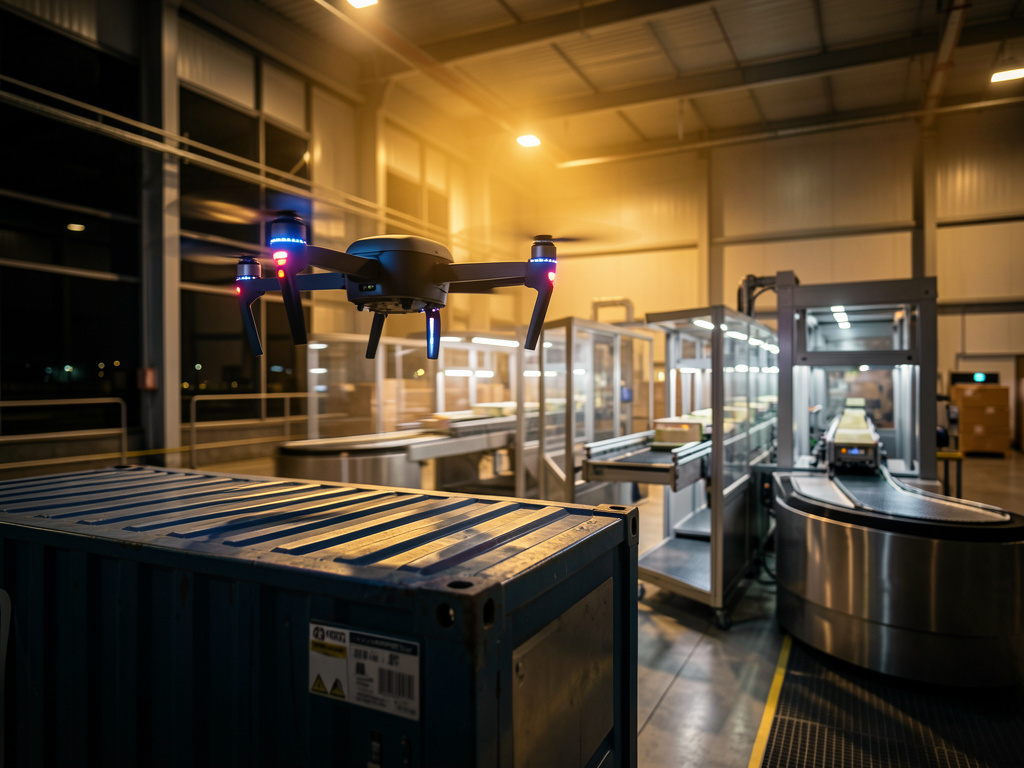
International Express Delivery: Technologies and Routes
The Development of International Express Delivery: Technologies, Routes, and the Future of Global Logistics
International express delivery has become one of the key elements of the modern global economy. Companies send documents, product samples, components, goods for online stores, and urgent cargo between countries and continents, expecting high speed, accuracy, and complete transparency in transportation. While it used to take weeks to deliver a package across the ocean, today’s developed infrastructure allows for transportation within a few days, and in certain directions, one can take advantage of the overnight international delivery service.
The growth of e-commerce, the expansion of international business, and increasing customer demands are driving the development of the industry. The service of international express delivery is gradually transforming from a specialized service for large companies into a sought-after tool for entrepreneurs, private clients, and online stores. Global courier networks, warehouse automation, digital tracking, and optimization of air routes play a significant role in this process.
What is International Express Delivery and How Does It Work
International express delivery is a set of logistics services aimed at the fastest possible movement of shipments between countries. Unlike standard postal services, express services offer reduced delivery times, priority processing, control at every stage, and courier delivery to the recipient's door.
The foundation of such a system is a combination of road, air, and warehouse transportation. The shipment is picked up from the client, delivered to a local sorting center, and then sent to an international hub. After passing export and import controls, the package is sent to the regional distribution center of the destination country. In the final stage, the courier delivers the cargo to the recipient at the specified address.
Main Stages of International Express Transportation
The process typically includes several sequential operations:
Application submission. The client specifies the addresses of the sender and recipient, the parameters of the cargo, its value, and purpose.
Pickup of the shipment. The courier arrives at the office, warehouse, or home of the sender.
Packaging and document verification. Specialists assess the compliance of the cargo with transportation rules.
Sorting. The package receives a barcode and is directed into the appropriate logistics flow.
International transportation. Air transport is most often used for urgent shipments.
Customs clearance. Documents, product codes, value, and importability are checked.
Domestic delivery. The cargo is handed over to the regional center and courier.
Delivery to the recipient. The client receives a notification, and the fact of delivery is recorded in the system.
At all stages, digital control systems are used. This allows the sender to track the movement of the cargo almost in real time.
Difference Between Express Delivery and Standard Shipping
The main difference lies in the delivery times and priority processing. Standard international delivery can take from several weeks to several months, especially when budget rates and combined routes are used. Expedited parcel delivery implies reduced transportation time and stricter organization of operations.
Express services also typically offer:
courier pickup and door-to-door delivery;
fixed or estimated delivery times;
enhanced tracking;
notifications about shipment status;
assistance with documentation;
insurance options;
additional services for businesses;
multiple rates depending on urgency.
Thus, international express delivery is not just fast transportation, but a comprehensive system that integrates transport, customs, warehouse processing, and digital services.
The Development of Express Delivery Between Continents
The development of express delivery between continents is directly linked to the globalization of trade. The more actively companies operate in foreign markets, the greater the need for reliable logistics. Manufacturers need to move components quickly, online stores need to send orders to customers, and service organizations need to deliver equipment and spare parts.
Just a few decades ago, intercontinental shipments relied on a limited number of routes, manual handling, and complex paperwork. Today, the industry utilizes major air hubs, automated sorting lines, electronic customs declarations, and intelligent planning systems.
Why Aviation Became the Foundation of Global Express Logistics
Aviation transport provides greater range and high-speed delivery. For shipments between Europe, Asia, North America, the Middle East, and other regions, airplanes allow for reducing transit times from weeks to just a few days.
Modern logistics operators create their own or partner air networks. Planes arrive at large sorting centers, where cargo is automatically distributed to various destinations. Hub airports, located in convenient geographical points, play a crucial role. Thousands of shipments pass through them, allowing for optimized aircraft loading and reduced layovers.
However, express delivery between continents does not always mean a direct flight. A package may pass through one or several transit hubs. The efficiency of a route is determined not only by distance but also by flight schedules, customs regulations, airport congestion, and the capabilities of ground infrastructure.
The Impact of E-Commerce
One of the main factors driving industry growth has been international e-commerce. Buyers have become accustomed to ordering products from different countries and want to receive them as quickly as possible. For online stores, quality logistics has become part of customer service and a competitive advantage.
The following categories of shipments are particularly in demand:
clothing and footwear;
electronics and accessories;
cosmetics;
documents;
product samples;
small components;
medical devices;
gifts and personal items;
marketplace goods.
International sellers are increasingly using distributed warehouses. Some products are pre-positioned closer to potential buyers, while urgent stock is moved between countries using express carriers. This approach reduces delivery times and helps manage inventory.
The Importance of Urgent Deliveries for Business
For companies, the speed of logistics directly affects revenue and reputation. If a production line halts due to the absence of a small part, the cost of downtime can significantly exceed the price of express shipping. Therefore, global courier express services are in high demand in industries such as manufacturing, healthcare, telecommunications, the automotive sector, and others.
Urgent delivery allows for:
quickly replacing faulty components;
sending commercial documents;
delivering prototypes and samples;
fulfilling warranty obligations;
supporting international exhibitions;
accelerating the launch of new projects;
reducing inventory levels;
providing customer service support.
Fast Shipping Worldwide: Features of Quick Delivery Across the Globe
The term fast shipping worldwide refers to international express delivery with a broad geographical reach. For the customer, this means the ability to send a package to another country and receive a clear forecast regarding timing, cost, and routing.
However, global delivery is not the same in all directions. Each country has its own customs requirements, import restrictions, address system peculiarities, and levels of courier infrastructure development.
Factors Affecting Speed
The actual delivery time is influenced by:
the distance between the sender and recipient;
the availability of direct flights;
the accuracy of accompanying documents;
the category and value of the goods;
the need for licensing;
customs clearance;
holidays and weekends;
weather conditions;
airport situations;
the quality of address data;
last-mile considerations.
Even the fastest rate cannot guarantee minimal delivery times if there is an error in the declaration or a required document is missing. Therefore, proper cargo preparation is just as important as choosing the right carrier.
What Shipments Can Be Delivered by Express Method
Most carriers accept documents, samples, commercial goods, and small packages. However, there are restrictions. It is prohibited to send banned substances, weapons, explosives, certain types of batteries, hazardous chemicals, and other categories regulated by national legislation.
Some goods require special conditions:
medications — permits;
food products — confirmation of composition and expiration date;
electronics — compliance with lithium battery transport regulations;
cosmetics — information about components;
jewelry — insurance and additional control;
branded goods — proof of legal origin.
Before shipping, it is important to check the requirements of the destination country in advance. Incorrect classification of goods can lead to delays, additional costs, or return of the package.
Delivery Times and Rates
Express carriers typically offer several options:
next business day delivery;
delivery within one to two days;
priority delivery within a few days;
economical international express;
delivery of heavy and oversized cargo.
The price is calculated based on actual and dimensional weight. Dimensional weight is especially important for light but large boxes. In addition to the carrier's rate, fuel surcharges, customs fees, broker services, insurance, and delivery to remote areas may also be considered.
Overnight International Delivery
Overnight international delivery — one of the fastest types of international logistics. It usually means delivering the shipment to the recipient on the next business day or as quickly as possible after pickup. This service is not available for all countries and destinations, as it requires a developed transportation network and precise schedule coordination.
Next-day delivery is most commonly used for documents, samples, small commercial shipments, and urgent components. The time of cargo acceptance is crucial: if the package is handed over after the established cut-off, it may be sent on the next flight, which will increase the delivery time by one day.
How Next-Day Delivery is Organized
To carry out urgent transportation, the carrier must synchronize several processes:
pick up the cargo at the scheduled time;
quickly deliver it to the sorting center;
conduct checks and prepare export documents;
load the shipment onto the nearest flight;
process the cargo in the destination country;
complete import procedures;
hand over the shipment to a local courier;
deliver it to the recipient by the end of the business day.
Any delay at one of the stages can affect the final delivery time. Therefore, such shipments are accepted under strict time rules, and documents are checked particularly carefully.
When Overnight Delivery is Especially in Demand
This service is used in situations where delays pose significant risks:
urgent submission of documents;
participation in international negotiations;
delivery of parts for equipment repair;
sending medical samples;
replacement of goods under warranty;
delivery of products to an exhibition;
prompt fulfillment of an important client's order;
transfer of signed contracts.
Despite the high cost, next-day delivery can be economically advantageous. It helps avoid downtime, penalties, deal disruptions, or loss of clients.
Service Limitations
Overnight international delivery is only available under certain conditions. The destination must be served by regular flights, the cargo must meet the carrier's requirements, and the documents must be prepared without errors. For remote regions, island territories, and countries with complex customs procedures, delivery times may be extended.
Additionally, it is important to consider time zones. Pickup, processing, and delivery times are calculated according to local operational rules, so the sender should clarify the specific timeframe for the address rather than relying solely on the service name.
DHL Express and FedEx Express: The Role of Major International Carriers
In global express logistics, major international brands hold a special place, with DHL Express and FedEx Express frequently mentioned. They have established extensive networks that include their own fleets, sorting centers, courier divisions, and digital platforms.
Large operators serve a wide range of countries and offer solutions for private clients, small businesses, corporations, online stores, and international manufacturing companies.
DHL Express Capabilities
DHL Express is known for its developed international network and a wide range of express services. The company offers document and goods delivery, online tracking, tools for corporate clients, and assistance in preparing export documentation.
Special attention is given to:
the speed of international transportation;
shipment tracking;
electronic documentation;
door-to-door delivery;
integration with online stores;
customs support;
returns management.
For businesses, APIs and software solutions are crucial, allowing for automatic cost calculations, printing invoices, tracking shipments, and notifying customers about order statuses.
FedEx Express Capabilities
FedEx Express has a large international network of air and ground transportation. The company offers urgent delivery of documents, parcels, and commercial cargo, as well as specialized solutions for various industries.
Among the sought-after features are:
international express rates;
time-sensitive delivery;
digital tracking;
customs clearance;
corporate accounts;
integration with order management systems;
transportation of cargo of various weights and sizes.
FedEx actively develops routing and automation technologies to enhance the accuracy of delivery time predictions.
How to Choose Between Major Operators
The choice between DHL Express, FedEx Express, or another carrier depends not only on brand recognition. It is important to compare:
the availability of routes between specific cities;
actual delivery time;
pickup time;
rate cost;
rules for specific types of cargo;
customs clearance conditions;
insurance options;
delivery quality in the recipient's region;
availability of support;
ease of integration with business systems.
The optimal carrier may vary depending on the destination. One operator may be more advantageous on one route, while its competitor or regional partner may be better on another.
Expedited Package Delivery: Packaging, Documents, and Customs
For expedited package delivery to truly be fast, it is essential to properly prepare the shipment. The logistics company is responsible for transportation, but some risks arise even before handing the cargo to the courier.
Packaging Requirements
The packaging must protect the contents from impacts, vibrations, temperature fluctuations, and pressure. Most shipments use sturdy cardboard boxes, internal fillers, and reliable adhesive tape.
It is recommended to:
choose a box that fits the size of the item;
eliminate free movement of items;
use protective inserts;
separate fragile elements;
seal the packaging tightly;
remove old shipping labels;
apply clear labeling;
not exceed the allowable weight.
For fragile items, it is advisable to use double packaging. For liquids, airtight containers and additional leak protection are necessary. Electronics should be secured inside the box and protected from static electricity if required by the manufacturer.
Documents for International Shipping
The list of documents depends on the nature of the cargo and the destination country. Typically, the following are required:
shipping invoice;
commercial or pro forma invoice;
detailed description of contents;
quantity of items;
value;
country of origin;
product code;
sender and recipient information;
purpose of shipment.
The description of a "gift," "samples," or "parts" is often not precise enough. It is better to specify the exact name, material, purpose, and quantity. This helps customs authorities to identify the goods more quickly.
Customs Clearance
The customs checks the legality of the cargo movement, its value, compliance with documents, and the possibility of import. If the information is incomplete, the shipment may be delayed for additional information requests.
The speed of clearance is influenced by:
the accuracy of the invoice;
the correct product code;
the presence of permits;
the accurate value;
the description of the purpose;
compliance with limits;
the absence of prohibited contents.
Some carriers offer customs broker services. However, the responsibility for the accuracy of the data usually remains with the sender. Therefore, it is important to verify all information before handing over the package.
Global Courier Express and Last Mile
Global courier express includes not only international flights but also delivery on the first and last segments of the route. It is the last mile that often defines the recipient's impression of the entire service. Even if the package quickly crossed the continent, the absence of a courier, an incorrect address, or an inconvenient delivery time can create problems.
The Importance of the Last Mile
The last mile encompasses:
the arrival of the cargo at the local terminal;
sorting by districts;
transfer to the courier;
route planning;
time coordination;
door-to-door delivery;
obtaining a signature or electronic confirmation.
In large cities, couriers use navigation systems, mobile applications, and routing algorithms. This allows for combining multiple deliveries into one route and reducing empty mileage.
Delivery to Remote Regions
In remote areas, express delivery may take longer due to lower population density, difficult transportation access, and limited schedules. Special fees or delivery to the nearest service point may apply for certain addresses.
Before processing a shipment, it is advisable to check:
whether the address is a direct delivery zone;
whether additional payment is required;
whether delivery is possible on weekends;
whether the recipient's phone number needs to be provided;
whether the address can be changed after shipment;
whether door-to-door delivery is available.
The more accurate the address information, the lower the likelihood of a failed delivery attempt.
Digital Notifications
Modern courier systems send notifications via email, SMS, or through mobile applications. The recipient can see the status of the shipment, the planned date, and the possible delivery window.
Additional features include:
changing the date;
choosing a pickup point;
redirecting the package;
electronic signature;
identity verification;
delivery confirmation;
contact with the courier.
Such tools make international delivery more transparent and reduce the number of repeat attempts.
Technologies Transforming International Express Logistics
Fast logistics is evolving thanks to digital technologies. Automation helps process large volumes of shipments, reduce errors, and predict timelines more accurately.
Automated Sorting
Large hubs use conveyors, scanners, cameras, and barcode recognition systems. The equipment determines the direction of the package, its dimensions, and weight, and then automatically directs the cargo to the appropriate flow.
This allows for:
accelerating processing;
reducing manual labor;
lowering the risk of mis-sorting;
increasing throughput;
more efficient use of warehouse space.
Artificial Intelligence and Analytics
Algorithms analyze transportation flows, weather conditions, airport congestion, and delivery history. Based on this data, the system can suggest an alternative route, warn of potential delays, or redistribute resources.
Artificial intelligence is used for:
predicting timelines;
calculating vehicle load;
optimizing courier routes;
detecting suspicious activities;
automatically classifying goods;
customer service through chatbots.
The Internet of Things and Transport Condition Monitoring
Sensors help track location, temperature, humidity, light levels, and mechanical impacts. This is especially important when transporting medical supplies, biological samples, food products, and sensitive electronics.
If parameters exceed established limits, the system can send notifications to responsible staff. This allows issues to be detected before the cargo is received.
Electronic Document Management
The transition from paper documents to electronic declarations reduces processing times and minimizes errors. Businesses can transmit cargo data in advance, while carriers can automatically generate the necessary documents.
In the future, more operations will be performed even before the actual arrival of the package at the border. This will speed up customs procedures and make international logistics more predictable.
Sustainability and Eco-Friendliness in Fast Logistics
Express delivery is associated with intensive use of aviation, vehicles, warehouses, and packaging materials. Therefore, large logistics companies are looking for ways to reduce their environmental impact.
Main areas of ecological modernization include:
the use of electric vehicles;
the transition to alternative fuels;
optimization of air routes;
reducing empty runs;
using recyclable packaging;
constructing energy-efficient terminals;
consolidating shipments;
implementing digital documents.
Balancing Speed and Eco-Friendliness
The fastest delivery often requires air transport and separate transportation operations. A more eco-friendly option may involve consolidating cargo or combining modes of transport, which increases delivery time.
As a result, customers are increasingly offered several options:
the fastest service;
standard express;
economical route;
delivery with a reduced carbon footprint.
This choice allows the company to consider not only cost and speed but also environmental goals.
Eco-Friendly Packaging
Great attention is paid to reducing the amount of packaging material. An excessively large box increases dimensional weight and fuel consumption, so the right packaging size is beneficial both financially and environmentally.
Materials used include:
recycled cardboard;
paper fillers;
biodegradable materials;
reusable containers;
packaging without excess plastic.
In the future, environmental requirements will increasingly influence tariffs, standards, and the choice of logistics partners.
How Businesses Can Organize International Express Delivery
For a company, international express delivery should be part of an overall logistics strategy. It is not enough to simply choose a well-known carrier; it is essential to define cargo categories, shipping frequency, destinations, budget, and customer requirements.
Main Steps
Identify key destinations.
Segment shipments by weight, value, and urgency.
Study restrictions of destination countries.
Prepare document templates.
Select several tariffs.
Set up the packaging process.
Enable tracking.
Integrate the service with CRM or online store.
Develop a returns procedure.
Monitor actual timelines and costs.
If shipments are made regularly, it is beneficial to establish a corporate contract. This can include individual tariffs, dedicated support, a convenient payment system, and additional analytical tools.
Integration with Online Stores
For e-commerce, it is important for customers to see the cost and delivery times even before placing an order. Integration with the carrier's API allows for automatic tariff calculation, creation of invoices, and data transmission to the delivery system.
Useful features include:
cost calculation by address;
automatic label printing;
customer notifications;
status synchronization;
returns management;
pickup point selection;
report generation.
Transparency in delivery reduces the number of support inquiries and increases customer trust.
Performance Monitoring
Businesses should regularly analyze:
average delivery time;
percentage of on-time deliveries;
number of damages;
number of returns;
customs delays;
cost of a single shipment;
percentage of unsuccessful deliveries;
quality of carrier services.
Based on this data, packaging can be changed, rates adjusted, alternative routes selected, and customer service improved.
Prospects for the Development of International Express Delivery
In the coming years, the market will continue to evolve under the influence of e-commerce, automation, robotics, and increasing speed requirements. Customers will expect not only fast shipping but also precise timeframes, flexible delivery management, and complete information about the route.
Likely development directions include:
expansion of next-day delivery;
active use of autonomous transport;
warehouse robotics;
implementation of unmanned devices in certain areas;
development of pickup points;
personalized routes;
more accurate time calculations;
digital customs clearance;
eco-friendly modes of transport;
new formats for international returns.
The Role of Drones and Autonomous Systems
Drones and autonomous robots can be used for the last mile, especially in areas with heavy road traffic or challenging transport accessibility. However, widespread implementation requires addressing issues of safety, regulation, insurance, and data protection.
Smart Logistics Networks
The future of logistics will be built as a unified digital ecosystem where carriers, sellers, warehouses, customs authorities, and recipients exchange data almost in real-time. This will allow for early identification of problems, automatic route adjustments, and reduction of delays.
Delivery Personalization
Customers will be able to choose not only the speed but also service parameters:
specific day;
time interval;
pickup point;
insurance level;
packaging option;
carbon profile;
method of delivery confirmation.
Fast logistics will gradually shift from universal rates to flexible solutions tailored to individual customers or businesses.
The development of express delivery between continents has resulted from the interaction of aviation infrastructure, digital technologies, international trade, and rising customer expectations. Today, international express delivery allows for the rapid movement of documents, goods, and commercial cargo between countries, while services like fast shipping worldwide and overnight international delivery make global markets more accessible.
DHL Express, FedEx Express, and other international operators continue to invest in sorting centers, air networks, automation, and eco-friendly solutions. The overall speed depends not only on the chosen rate but also on proper packaging, document accuracy, customs requirements, and the quality of the last mile.
For businesses, international express delivery becomes a competitive tool that allows for shorter delivery times, customer support, and quick responses to changes in demand. In the future, the industry will evolve towards greater automation, transparency, sustainability, and personalization. International express delivery is already an important part of the global economy, and its significance will only increase in the coming years.