

 RU
 UA
 DE
 FR
 ES
 CN
 SA
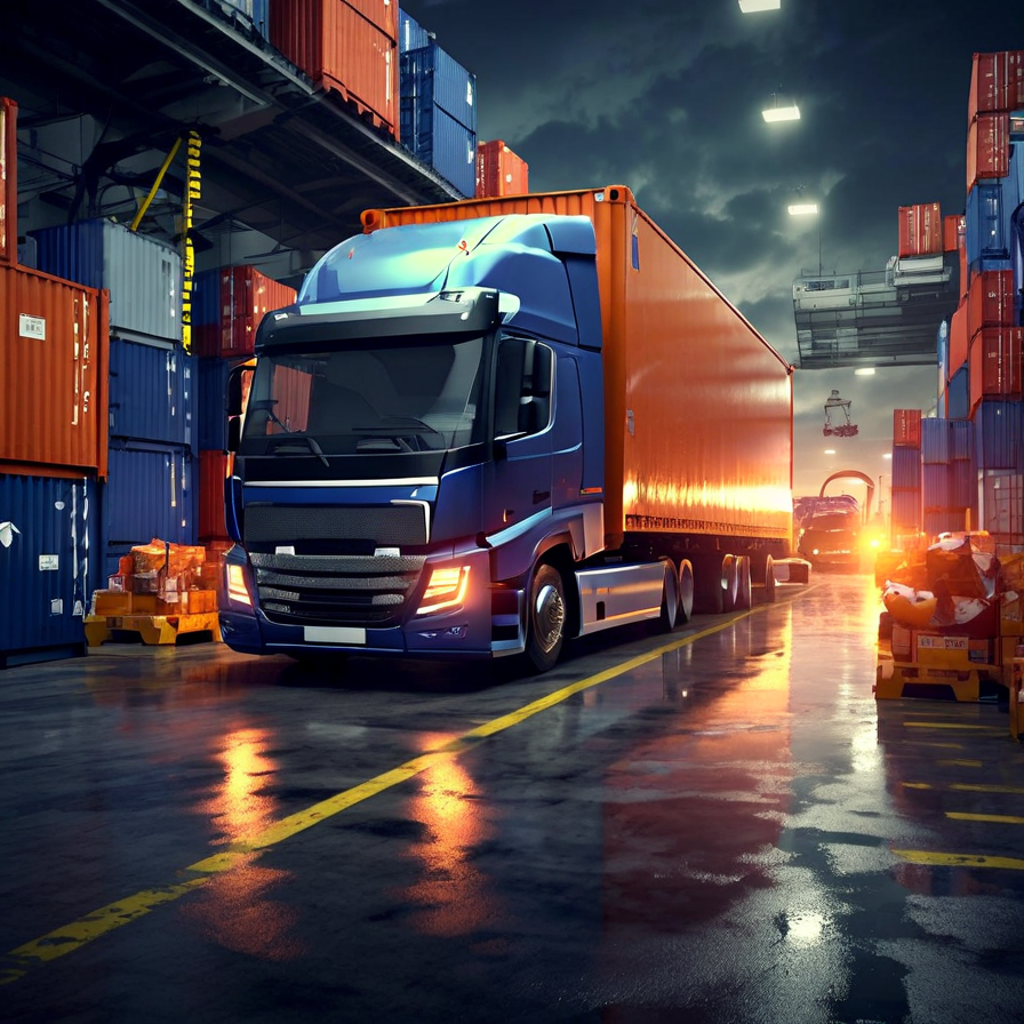
The Impact of Automation on International Shipping
The Impact of Automation on the Speed of International Parcel Delivery
International parcel delivery has long been a complex, multi-step process involving the sender, carrier, warehouse operators, customs authorities, sorting centers, and courier companies. Each operation required data exchange, manual document processing, and coordination among multiple organizations. Even a small error in the address, invoice, or accompanying declaration could lead to delays of several days.
Today, the situation is rapidly changing thanks to the implementation of digital platforms, robotic complexes, artificial intelligence, and automated transportation management systems. Automation in international delivery allows for faster processing of parcels, reduces errors, enables real-time tracking of shipments, and optimizes logistics routes. As a result, transit times are shortened, courier service efficiency is increased, and customer service quality is improved.
Automation technologies are applied at all stages of the shipment's journey: from order placement and label printing to sorting, customs control, transportation, and "door-to-door" delivery. In this context, systems capable of independently analyzing large volumes of information, predicting delays, and selecting the most efficient route for parcel movement become particularly important.
What Automation in International Logistics Entails
Automation in international logistics involves the implementation of software and hardware solutions that perform part of the operations without constant human involvement. Such solutions include warehouse management systems, transportation logistics platforms, automated sorting lines, electronic document management, artificial intelligence algorithms, picking robots, and shipment tracking tools.
The main goal of automation is not only to speed up individual operations but also to integrate all delivery participants into a unified information environment. When data about the sender, recipient, parcel contents, route, and transportation status is automatically exchanged between systems, the company can make faster decisions and promptly resolve emerging issues.
For example, after an order is placed, the automated system can immediately verify the address's accuracy, determine restrictions for a specific country, generate transportation documents, and select the optimal shipping method. The information is then transmitted to the warehouse or sorting center, where the parcel receives a digital identifier. Scanners and cameras track its movement, and the software platform updates the status in the monitoring system.
This approach is especially important for international shipments, as they involve multiple territories, regulatory requirements, and transportation links. An automated logistics system helps reduce reliance on manual labor, decrease inconsistencies, and make the delivery process more predictable.
Key Elements of an Automated Delivery System
A modern automated parcel processing system typically includes several interconnected components:
order management platform;
warehouse management system;
transportation management system;
automated sorting complexes;
electronic document management;
integration tools with customs services;
GPS and IoT monitoring;
artificial intelligence algorithms;
customer service with automated notifications.
Each element is responsible for a specific part of the process, but maximum effectiveness is achieved only when they work together. For example, data about a delay at the border can automatically be sent to the transportation system. It will recalculate the estimated delivery time, suggest an alternative route, and send a notification to the customer.
Why Automation is Especially Important for International Shipments
Domestic delivery is usually governed by unified rules and operates within a single infrastructure. International logistics is more complex: a parcel may pass through several countries, cross different customs zones, and be transferred between companies using various information systems.
Automation helps synchronize these processes. It ensures a unified data format, reduces the likelihood of information loss, and allows for quicker identification of discrepancies. As a result, international carriers can process a larger volume of parcels without a proportional increase in staff.
How Automated Processing Accelerates International Delivery
The speed of international delivery depends not only on the time the package spends in transit. A significant portion of delays occurs during acceptance, sorting, document preparation, waiting for loading, customs clearance, and the transfer of shipments between logistics operators.
The automated shipment processing system reduces the duration of these operations through continuous operation, high scanning speed, and instant data transfer. Machines and software systems can process thousands of shipments per hour, maintaining stable performance even during peak seasonal loads.
Once the package arrives at the logistics center, the system reads the barcode, QR code, or RFID tag. It then automatically determines its dimensions, weight, destination, priority, and method of further transportation. Based on this data, the shipment is directed to the appropriate sorting line or storage area.
Manual processing is often accompanied by queues, data re-entry, and sorting errors. The automated process reduces the number of intermediate operations and allows for faster transfer of the package to the next stage.
Accelerating the acceptance and registration of packages
In the first stage, it is important to quickly record the shipment in the information system. If an employee manually enters information about each package, processing can take a significant amount of time. Moreover, errors in the shipment number or address can disrupt the subsequent route.
Automatic scanners read identifiers in mere seconds. Cameras recognize text on the label, and software matches the received information with the order. If a problem is detected, the system immediately alerts the operator to the need for verification.
Automatic registration allows for:
reducing the time for package acceptance;
eliminating the re-entry of some data;
faster formation of transport batches;
quickly updating the shipment status;
reducing the risk of package loss at an early stage.
Optimizing sorting
Sorting is one of the most important processes in international logistics. Packages must be distributed by countries, cities, routes, types of transport, and delivery times. With manual sorting, the likelihood of errors increases along with the volume of shipments.
Automatic conveyors use a set of rules and digital identifiers. The system can take into account the final destination, selected tariff, dimensions, content restrictions, and delivery priority. After analysis, the package is directed to the appropriate container or transport line.
The implementation of robotic sorting complexes reduces the time shipments spend in the warehouse. This is especially noticeable during sales, holidays, and high demand periods when traditional processes can lead to long queues.
Reducing waiting time between stages
Even if each operation is performed quickly, delivery can slow down due to downtime between stages. A package may wait for transport, available space on the sorting line, document confirmation, or transfer from one operator to another.
Digital systems track equipment loading, transport availability, and document readiness. They can automatically plan the processing sequence and pre-form shipment batches. This helps reduce downtime and ensure a more even flow of packages.
The role of artificial intelligence in optimizing delivery
Artificial intelligence is becoming one of the main tools for increasing the efficiency of international logistics. Unlike conventional algorithms, AI can analyze large volumes of historical and current data, identify patterns, and generate forecasts.
The AI delivery optimization system can take into account weather conditions, road congestion, border situations, flight schedules, warehouse operations, seasonal demand fluctuations, and the likelihood of delays on specific routes. Based on these factors, the system suggests the most suitable transportation option.
Artificial intelligence does not eliminate all risks but allows for proactive responses. If the algorithm predicts a flight delay, it can select another flight or reroute some packages through an alternative transit hub. In the event of a warehouse overload, the system changes the processing order and directs resources to the most congested area.
Forecasting delivery times
Traditional delivery time calculations often rely on average values. However, actual time depends on many variables. AI uses data from previous shipments to calculate a more accurate forecast for a specific route.
The system can analyze:
average customs clearance time;
the frequency of delays for a specific carrier;
the load on international hubs;
seasonal changes;
the specifics of the chosen delivery method;
statistics for a specific category of goods;
the likelihood of document re-checking.
As a result, the client receives not a formal range, but a more realistic forecast. If conditions change, the timeframe is automatically recalculated.
Choosing the Optimal Route
The delivery route can be optimized based on cost, speed, reliability, and available transportation infrastructure. AI compares different options and determines which one best meets the specified parameters.
For example, for an urgent package, the system will select a more expensive but faster air route. For a budget shipment, it may suggest a combined scheme using ground and sea transport. Weight, size, type of goods, and destination country regulations are taken into account.
Preventing Logistics Errors
AI is also used to identify suspicious or incorrect data. Algorithms can detect unusual route changes, discrepancies between declared and actual weight, duplicate invoices, or the likelihood of an incorrect address.
Early detection of issues allows for corrections before the package leaves the warehouse or crosses the border. This directly impacts the reduction of transit time and decreases costs for returns or reshipments.
Automation of Customs Clearance and Its Impact on Transit Time
Customs procedures often become one of the main sources of delays for international shipments. A package can be held up due to incomplete product descriptions, errors in classification codes, missing invoices, or discrepancies in value.
Electronic document processing helps reduce the number of manual operations and verify data in advance. Information about the goods, sender, and recipient is transmitted in digital format, and the system automatically identifies potential errors before the declaration is submitted.
Customs processing automation includes electronic submission of documents, automatic classification of goods, checking restrictions, and data exchange between the carrier and government information systems.
Electronic Documents
Digital invoices, shipping documents, and declarations are transmitted faster than paper documents. The system can automatically generate the necessary forms based on order data. This reduces the likelihood of discrepancies between the commercial invoice, label, and declaration.
Electronic document flow also simplifies storage and information retrieval. If necessary, an employee can quickly access the required document without wasting time searching through a paper archive.
Automatic Data Verification
Before transmitting information to the customs system, the software checks mandatory fields, address format, product description, category code, and declared value. If a discrepancy is found, the sender receives a notification before the package is handed over to the carrier.
This verification is especially important for companies that ship a large number of orders daily. Even a small percentage of errors in mass processing can lead to significant delays and financial losses.
Intelligent Product Classification
Algorithms can assist in determining the product category based on descriptions, characteristics, and previous declarations. This does not eliminate the need for specialist oversight but significantly speeds up document preparation.
The more accurately the information is documented, the lower the risk of additional checks. As a result, the time a package spends at the border is reduced, and the predictability of international delivery is increased.
Robotics in Warehouses and Sorting Centers
Warehouse infrastructure directly affects delivery speed. If packages take a long time to be accepted, stored, or assembled, further transportation cannot compensate for the lost time.
Automated warehouses use automatic transport carts, conveyors, manipulators, vertical storage systems, and intelligent terminals. They help speed up the acceptance, distribution, packaging, and transfer of shipments.
Robots can operate around the clock, independent of shift schedules and human fatigue. Meanwhile, employees oversee complex operations, equipment maintenance, and handling of non-standard shipments.
Automatic Measurement and Weighing
Modern complexes can simultaneously determine the weight, dimensions, and shape of a package. This information is used to select the appropriate container, calculate tariffs, and determine the method of transportation.
Automatic measurement reduces the risk of calculation errors and helps to use vehicle space more efficiently. If the system detects that shipments can be arranged more rationally, it adjusts the packaging or batching scheme.
Robotic Order Fulfillment
In e-commerce warehouses, robots deliver goods to workstations, move containers, and sort orders by destination. This speeds up the fulfillment process and reduces the distance employees have to walk manually.
In international shipping, such solutions allow for faster formation of export batches and timely handover to carriers according to schedule. This decreases the likelihood that a completed package will miss the nearest transport flight.
Optimal Use of Warehouse Space
Intelligent storage systems determine where to place a package based on its size, destination, and shipping time. Shipments that need to be dispatched soon are placed in quick-access zones.
This reduces search and movement time within the warehouse. Additionally, the system helps avoid overloading specific areas and evenly distributes work among operators and equipment.
Real-Time Shipment Tracking
Customers expect not only fast delivery but also transparency. It is important for them to understand where their package is, when it will be handed over to the next carrier, and whether there are any issues with the route.
Modern monitoring systems combine data from scanning, GPS trackers, IoT sensors, and carrier information platforms. This creates a detailed history of the shipment's movement.
The international package tracking system can show not only standard statuses but also predict future events. For example, it can inform that a package has arrived at a transit hub, is awaiting customs clearance, or has been redirected to another route.
Location Monitoring
GPS and other positioning technologies are primarily applied to vehicles and containers. The company can see where a truck, air container, or cargo batch is located.
If the transport deviates from its route or is delayed, the system records the event and relays the information to the responsible specialist. This helps to respond more quickly to emergencies.
Cargo Condition Sensors
For certain categories of goods, temperature, humidity, vibration, and light levels are crucial. IoT sensors collect this data during transport and transmit it to the information system.
If conditions exceed acceptable limits, the operator receives a notification. This allows for action to be taken before the goods are damaged or the customer files a complaint.
Automated Notifications
After each significant event, the system can send notifications to the customer: about package acceptance, sorting completion, handover to the carrier, arrival in the destination country, and readiness for delivery.
This approach reduces the burden on customer support. Customers do not need to contact the operator for every question, as current information is available in their personal account or mobile app.
How Automation Reduces Transit Time for Packages
The reduction in transit time is achieved not through a single technology but through comprehensive improvements across the entire chain. Automation speeds up processing in the warehouse, reduces waiting times, increases routing accuracy, and simplifies interaction among transport participants.
If each stage becomes faster by even a few minutes, the overall result can be significant. In international shipping, consistency and the absence of delays are especially important. A package may spend relatively little time in a vehicle but can wait hours or days for processing at intermediate centers.
Reduction of Manual Operations
The fewer operations performed manually, the lower the likelihood of delays. Employees do not need to transfer the same information multiple times, search for documents in different systems, or manually verify the shipment status.
Automated data transfer speeds up decision-making and reduces the workload on staff. Workers can focus on non-standard situations that require analysis and professional expertise.
Synchronization of Transport Participants
An international package can transition from the seller to the freight forwarder, air carrier, customs representative, national operator, and courier service. If each participant operates in an isolated system, information is transmitted slowly.
Integration platforms allow for the synchronization of statuses and documents. The next participant receives information in advance and can prepare for the package's arrival. This reduces downtime at borders, terminals, and warehouses.
Managing Peak Loads
During periods of high demand, the volume of orders increases sharply. Automated systems can redistribute resources, expand the number of work lines, and change sorting rules.
Some processes operate around the clock, allowing the company to process the accumulated flow more quickly. This helps maintain stable delivery times even during seasonal peaks.
Improving the Efficiency of International Courier Services
Enhancing the global efficiency of courier services is one of the main outcomes of automation. Companies gain the ability to handle more shipments with the same resources, plan operations more accurately, and control quality at every stage.
Automation helps optimize courier loads, distribute orders by areas, and select the sequence of address visits. Algorithms take into account distance, traffic conditions, time intervals, and customer priorities.
Optimizing Courier Routes
The system can create a route that allows the courier to travel the shortest distance while completing the maximum number of deliveries. If a traffic jam occurs, the route is automatically recalculated.
This is especially important for international shipments during the final stage when the package has already arrived in the destination country. Even if international transit was quick, inefficient courier service can delay delivery.
Electronic Delivery Confirmation
Courier mobile applications allow for recording the transfer of the package, obtaining an electronic signature, photographing the drop-off location, and noting the reason for a failed delivery attempt.
The information is immediately sent to the system. The client sees the current status, and the company receives proof of service completion. This speeds up order closure and reduces the number of disputes.
Automatic Load Distribution
The system analyzes the number of shipments, addresses, and courier availability. It then distributes tasks based on current load and geographical location.
This mechanism helps avoid situations where some employees are overloaded while others do not fully utilize their working time. Even distribution increases productivity and helps meet deadlines.
Benefits of Automation for Businesses and Customers
Automated international delivery provides advantages to all participants in the logistics chain. Companies reduce operational costs, customers receive faster and more predictable service, and carriers can scale their operations.
The main benefits include:
reduction in package processing time;
decrease in the number of errors;
reduction in labor costs;
increased warehouse throughput;
improved route control;
faster customs clearance;
more accurate deadline forecasting;
reduction in returns;
increased delivery transparency;
enhanced customer experience.
Economic Impact
Automation requires significant initial investments in equipment, software, and staff training. However, in the long run, it allows for a reduction in operational costs.
The company spends less on reprocessing, correcting errors, locating lost shipments, and compensations for delays. Additionally, increased productivity allows servicing more customers without a proportional expansion of staff and warehouse space.
Improving Service Quality
Customers evaluate not only speed but also reliability of delivery. If the system accurately shows the status and proactively informs about potential delays, trust in the carrier increases.
Automation also allows for offering flexible delivery options: choosing time slots, pickup points, courier routes, or methods of receipt. Service personalization becomes an important competitive advantage.
Scaling International Operations
When entering new markets, the company faces differences in regulations, languages, address formats, and document requirements. A digital platform helps quickly set up new routes and integrate local partners.
This accelerates the expansion of delivery geography and allows the business to process international orders within a unified system.
Limitations and Risks of Logistics Automation
Despite the obvious advantages, automation does not automatically solve all problems. Implementing technologies is associated with financial, technical, personnel, and informational risks.
One of the main obstacles is the high initial costs. A robotic warehouse, sorting line, and intelligent software platform require significant investments. For small companies, full automation may be out of reach, so they have to rely on cloud services or phased implementation.
Dependence on Digital Infrastructure
If the software system fails, part of the operations may come to a halt. A database crash, network issues, or equipment malfunctions can disrupt the processing of thousands of shipments.
Therefore, companies need backup servers, disaster recovery plans, regular maintenance, and information security monitoring.
Cyber Threats
Logistics systems handle personal data, addresses, payment information, and commercial documents. A leak of such information can lead to financial and reputational losses.
Encryption, multi-factor authentication, access control, user activity audits, and continuous updates of security mechanisms are essential.
Lack of Qualified Specialists
Automated systems require engineers, analysts, developers, and information security specialists. If a company lacks such personnel, maintaining the system becomes challenging.
At the same time, warehouse and courier staff must undergo training. Implementing technology should not be limited to purchasing equipment—it's important to prepare employees for new processes.
Non-Standard Situations
Not all packages can be processed in the same way. Complex dimensions, damaged packaging, unreadable labels, or special content requirements necessitate human involvement.
Therefore, a hybrid model is considered the most effective, where automated solutions handle standard operations, while specialists manage exceptions and quality control.
Prospects for the Development of Smart Logistics
The future of international delivery is linked to the development of the concept of smart logistics. Its foundation lies in the integration of artificial intelligence, the Internet of Things, robotics, cloud platforms, digital twins, and automated transport.
Intelligent logistics will not only record events but also predict them independently. The system will be able to determine in advance where congestion will occur, which route will be the most reliable, and which shipments require special monitoring.
Digital Twins of Logistics Processes
A digital twin is a virtual model of a warehouse, transport network, or entire supply chain. Such a model can be used to test changes without risking real operations.
The company will be able to assess how the opening of a new hub, changes in scheduling, increased order flow, or the implementation of an additional sorting line will impact operations. This will help make decisions based on calculations rather than assumptions.
Autonomous Transport
Driverless vehicles, autonomous robots, and drones can change delivery in specific areas. They are most likely to be used for moving goods between warehouse zones, delivering to hard-to-reach areas, and performing repetitive routes.
However, the widespread adoption of autonomous transport depends on legislation, infrastructure, and safety requirements.
Predictive Management
Future systems will not just react to delays but will prevent them. Based on data about weather, demand, traffic, and hub operations, algorithms will be able to proactively adjust resource allocation and transport schemes.
This approach will further reduce transit times for international packages and enhance delivery reliability.
How Companies Can Implement Automation in International Delivery
Implementing automation should be a gradual process. Attempting to replace all processes with a complex platform at once can lead to high costs, staff resistance, and technical failures.
In the first stage, it is necessary to audit the current logistics chain. The company should identify where the biggest delays occur: during order intake, sorting, document processing, customs interaction, or last-mile delivery.
Then, processes that yield the maximum effect from automation are selected. Typically, electronic document management, shipment scanning, tracking systems, and automatic address verification are implemented first.
Pilot Project
Before a large-scale launch, it is advisable to test the technology in one warehouse, route, or group of clients. A pilot project allows for assessing real performance, identifying technical issues, and gathering employee feedback.
It is important to define performance indicators in advance: average processing time, error rate, number of delays, cost per operation, and customer satisfaction level.
System Integration
The new platform must interact with the online store, CRM, warehouse system, transport operators, and customs services. Without integration, employees will have to manually transfer data, and some of the benefits of automation will be lost.
Particular attention should be paid to a unified data format and status synchronization.
Staff Training
Employees must understand how the system works, which operations are performed automatically, and in which cases manual verification is required. Training reduces resistance to change and helps identify malfunctions more quickly.
Continuous Performance Evaluation
After launch, it is necessary to regularly analyze performance indicators. Automation is not a one-time project: algorithms, routes, and processing rules must be adjusted based on new data and market changes.
Automation has a comprehensive impact on the speed of international parcel delivery. It accelerates the acceptance and sorting of shipments, reduces waiting time, optimizes transport routes, simplifies customs clearance, and enhances the efficiency of courier services.
Artificial intelligence, robotic warehouse complexes, electronic document management, monitoring systems, and smart logistics technologies are of particular importance. Their combined use allows for reduced transit times, fewer errors, and makes international delivery more predictable.
At the same time, automation requires careful planning, investment in infrastructure, and staff training. Companies must consider issues of cybersecurity, backup, and handling non-standard situations.
In the future, international logistics will become increasingly intelligent. Next-generation systems will be able to predict delays, automatically select routes, allocate resources, and adapt to changes in real-time. This will create conditions for further enhancing the global efficiency of courier services and forming a faster, more transparent, and reliable parcel delivery system.