

 RU
 UA
 DE
 FR
 ES
 CN
 SA
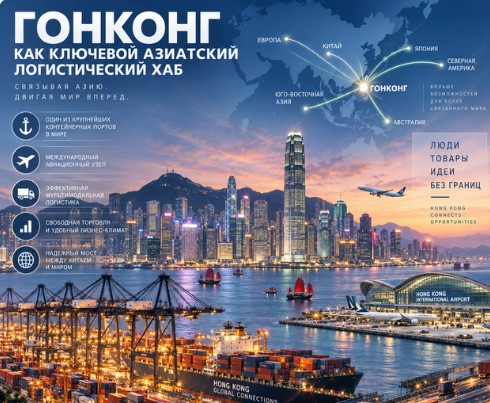
Hong Kong as a Key Asian Logistics Hub
Hong Kong as a Key Asian Logistics Hub: Delivery, Export, and International Shipping
For decades, Hong Kong has maintained its status as one of the most important transport and logistics centers in Asia. Its unique geographical location, developed infrastructure, proximity to mainland China, and convenient trade routes have made this region a vital link in the international supply chain. Commercial cargo, electronics, clothing, components, documents, goods for online stores, and personal shipments travel through Hong Kong to various countries around the world.
Modern delivery from Hong Kong includes several options: postal shipments, courier services, air freight, sea logistics, warehousing, and comprehensive support for export operations. This means you can send a package from Hong Kong to almost any point in the world, choosing the right balance between cost, speed, and service level.
A special role is played by Hong Kong Post international — the international postal service of Hong Kong. It is in demand by both private clients and companies that regularly send small packages, documents, product samples, and orders from online stores. Tracking Hong Kong Post is used to monitor the movement of shipments, allowing you to track the status of your package using a unique identification number.
Why Hong Kong is Considered a Leading Logistics Center in Asia
Hong Kong is a special administrative region of China; however, its trade and transport system has significant autonomy. For a long time, the region has developed as an international port, financial center, and platform for foreign trade. Today, it combines sea terminals, an international airport, warehousing complexes, postal sorting centers, freight forwarding companies, and digital platforms for supply chain management.
The main advantage of Hong Kong is its location at the intersection of the largest trade routes in East and Southeast Asia. From the city, it is convenient to organize the transportation of goods to China, South Korea, Japan, Singapore, Vietnam, India, European countries, North America, and Australia. The developed transport network allows for quick combinations of road, sea, air, and rail logistics.
Geographical Location and Access to Markets
Hong Kong is located in southern China, near one of the largest manufacturing regions in the world — the Pearl River Delta. Nearby are Shenzhen, Dongguan, Guangzhou, and other industrial cities. Here, electronics, household appliances, textiles, accessories, equipment, home goods, and many other products are manufactured.
The proximity to manufacturing sites reduces the delivery time of goods to warehouses, ports, or airports. For businesses, this means the ability to form export batches more quickly, consolidate orders from different suppliers, and send them to overseas clients. This is why Asian logistics often builds around Hong Kong as an intermediary point.
Port, Airport, and Warehousing Infrastructure
The Hong Kong seaport handles container and consolidated cargo arriving from various regions of Asia. Sea freight is suitable for large shipments, equipment, raw materials, furniture, and other goods where speed is not the main factor.
The Hong Kong International Airport plays a key role in air freight. Urgent commercial cargo, expensive electronics, medical products, product samples, and small high-value shipments are sent through it. Air delivery from Hong Kong is usually faster than sea freight; however, it requires a higher budget.
The warehousing infrastructure is equally important. Warehouses perform receiving, counting, condition checking, repackaging, labeling, order consolidation, and document preparation. Such services are particularly in demand by e-commerce companies that ship products to customers worldwide.
Delivery from Hong Kong: Main Shipping Options
The choice of delivery method depends on the type of cargo, its weight, dimensions, value, urgency, and destination country. For private shipments, postal and courier services are more commonly used. For commercial shipments, air, sea, and multimodal transport are applied.
When planning delivery from Hong Kong, it is essential to determine in advance whether tracking is required, if insurance is needed, whether door-to-door delivery is acceptable, and who will handle customs clearance. It is also important to consider the restrictions of the destination country: some goods are prohibited from being shipped, while certain categories require special permits and certificates.
Postal Delivery via Hong Kong Post International
Hong Kong Post international — one of the most well-known methods for sending small cargo and documents from Hong Kong abroad. International mail serves a wide range of destinations and offers different types of shipments: regular letters, registered mail, small packages, international parcels, and express deliveries.
Postal delivery is in demand due to its affordable price and relatively simple registration procedure. The sender needs to prepare the packaging, provide the exact recipient's address, fill out a customs declaration for goods, and choose the appropriate rate. The declaration usually includes the contents, quantity, value, and purpose of the shipment.
For inexpensive goods and small orders, mail can be more cost-effective than courier companies. However, international delivery times depend on the route, season, sorting center workload, customs control, and the operation of the national postal service in the destination country.
Courier Delivery and Express Shipping
If a shipment needs to be delivered quickly, international courier operators are used. They offer door-to-door delivery, electronic documentation, enhanced tracking, customs clearance support, and additional insurance options.
Courier delivery from Hong Kong is suitable for urgent documents, product samples, contracts, small commercial batches, and goods whose value justifies a higher rate. Typically, the courier company organizes the pickup of the shipment, sorting, air transport, import clearance, and handover of the parcel to a local courier.
When choosing a courier service, it is important to check whether customs clearance is included in the price. Sometimes, the recipient may incur additional duties, taxes, processing fees, or broker service charges.
Air Freight, Sea Logistics, and Consolidated Cargo
Air delivery from Hong Kong is used for time-sensitive goods. This option significantly reduces transportation time compared to sea routes. The main limitations are weight, volume, packaging requirements, and regulations for transporting hazardous or sensitive cargo.
Sea delivery is used for container shipments and oversized cargo. Its advantages include lower costs per unit and the ability to transport significant volumes. The downside is longer delivery times and more complex route organization.
For small batches, consolidated shipping is used. In this case, goods from different senders are combined into one transport module. The client pays only for the actual volume or weight occupied, making this method potentially more economical than a fully loaded container.
Shipping Hong Kong worldwide: international delivery from Hong Kong to various countries
The term shipping Hong Kong worldwide refers to organizing shipments from Hong Kong to almost anywhere in the world. International logistics includes not only the physical movement of cargo but also the preparation of accompanying documents, checking restrictions, calculating rates, customs processing, and delivery monitoring at every stage.
There is no universal route for all countries. Each destination takes into account distance, availability of direct flights, customs requirements, local taxes, restrictions on specific goods, and the peculiarities of national carriers' operations.
Delivery to Europe
When sending goods from Hong Kong to European countries, it is especially important to properly prepare commercial documents. For commercial shipments, an invoice, packing list, certificate of origin, product description, and proof of value may be required.
Small parcels are often sent via mail or courier services. Larger shipments are delivered by air or sea transport. Upon arrival in the destination country, the goods undergo import control before being sent to the recipient or a local warehouse.
It is essential to consider potential VAT, customs duties, and processing fees in advance. Incorrectly stated value or overly general product descriptions can lead to shipment delays.
Delivery to the USA and Canada
The North American route is one of the most sought-after for Hong Kong exports. Electronics, accessories, clothing, components, souvenir products, and goods for online trading are sent here.
For fast delivery, air freight and international courier services are used. Sea routes are suitable for large shipments when the priority is to reduce transportation costs. When processing, it is necessary to consider the requirements of American and Canadian customs, including labeling rules, product composition descriptions, and proof of origin.
Delivery to Asian Countries
Asian destinations are characterized by a high frequency of shipments and a variety of transportation solutions. It is convenient to send cargo from Hong Kong to Japan, South Korea, Singapore, Malaysia, Thailand, Vietnam, Indonesia, and India.
For short and medium distances, air freight and regional courier networks are often used. Large businesses may utilize multimodal schemes that combine road transport, rail, sea, and air.
Asian Logistics and Export Operations through Hong Kong
Asian logistics represents a complex system that connects manufacturers, trading companies, warehouses, carriers, customs representatives, marketplaces, and end customers. Hong Kong serves as a link between manufacturing centers in Asia and international markets.
For exporters, it is important not just to send goods but to establish a sustainable supply chain. This chain must consider manufacturing times, order consolidation, packaging, warehousing, transportation, insurance, customs, and delivery to the final customer.
Consolidation of Goods from Different Suppliers
One of the most useful services is consolidation. A supplier or logistics operator receives products from several factories, checks the batches, and combines them into a single shipment. This reduces the number of transport documents and can lower overall costs.
Consolidation is especially convenient for entrepreneurs who order small batches from different manufacturers. Instead of separate shipments, a single cargo is formed, which is delivered to a common warehouse or directly to the destination country.
Packaging, Labeling, and Documentation Preparation
Quality packaging protects goods from damage during handling, vibration, temperature fluctuations, and long-term storage. For fragile products, cushioning materials, reinforced boxes, pallets, and moisture-resistant elements are used.
Labeling must comply with the requirements of the carrier and the destination country. The packaging may include information about the recipient, sender, weight, number of packages, handling instructions, and special product characteristics.
The main documents include the commercial invoice, packing list, waybill, export declaration, and any permits required for specific goods.
Shipping a Package from Hong Kong: How to Prepare and Send
A package from Hong Kong can be sent by an individual, an online store, a manufacturer, or a logistics agent. Before shipping, it is important to check the carrier's rules and ensure that the chosen product is allowed for international shipping.
The procedure typically consists of several steps: preparing the contents, packaging, weighing, measuring dimensions, filling in address details, completing the declaration, selecting a rate, paying, and handing over the shipment to the carrier.
What Information is Needed for Shipping
Accurate information about the sender and recipient is required for shipping. The address should include the name, street, house and apartment number, locality, region, postal code, country, and contact phone number if required by the carrier.
The description of the contents should be specific. Phrases like “goods,” “gift,” or “samples” may not be informative enough. It is better to specify the exact name: “cotton t-shirt,” “ceramic mug,” “mobile accessory,” “printed documents,” and so on.
The value of the goods should be stated accurately. An excessively low price may raise questions from customs authorities, while an inflated one may lead to unnecessary taxes and fees.
What Cannot or Should Not Be Shipped
Restrictions depend on the rules of Hong Kong Post, the chosen carrier, and the legislation of the destination country. Typically, special attention is required for batteries, lithium batteries, liquids, aerosols, medicines, food products, plants, alcohol, tobacco products, jewelry, cash, and branded goods.
Some categories are only allowed under specific conditions: proper packaging, availability of certificates, quantity limitations, or use of a certain type of transport. It is advisable to obtain official advice from the carrier before shipping.
Tracking Hong Kong Post: Tracking International Packages
Tracking Hong Kong Post is a service for monitoring the movement of shipments sent via Hong Kong Post. After processing, a unique tracking number is assigned to the package. It usually consists of letters and numbers and is used to check the current status of the shipment.
Tracking helps to understand whether the package has been accepted, sorted, left Hong Kong, arrived in the destination country, and handed over to the local postal service.
How to Properly Track a Shipment
To check the status, you need to visit the official Hong Kong Post website or use an international tracking service. Enter the tracking number in the designated field without extra spaces or symbols. After that, the system will display the available information about the shipment's movement.
At certain stages, the data may update with a delay. This is especially common for international shipments when the package is between export and import sorting centers. The absence of new records for several days does not always indicate a problem.
After arriving in the destination country, the shipment often starts to appear in the local postal system as well. Therefore, if there are no updates for an extended period, it is advisable to check the tracking number on the national operator's website.
Main Shipment Statuses
The status of acceptance indicates that the package has been registered in the postal system. Sorting indicates processing at the logistics center. Export processing means preparation for export from Hong Kong.
The status of shipment from the country shows that the package has left Hong Kong or has been handed over to an international carrier. After arriving in the destination country, records may appear regarding customs clearance, transfer to local mail, and delivery to a courier.
If the shipment is delayed at customs, the recipient may receive a request for documentation or payment of assessed fees.
Customs Clearance for International Shipments
Customs plays a crucial role in international transport between Asia — Europe, Asia — America, and other routes. Any package with a commercial content may be inspected in the destination country. Customs officials evaluate the contents, value, document compliance, and adherence to prohibitions.
To expedite clearance, it is essential to prepare a correct description of the goods in advance, indicate the actual value, select the appropriate classification code, and attach the required documents.
Duties, Taxes, and Additional Fees
Depending on the legislation of the recipient country, import duties, value-added tax, excise, brokerage fees, and storage charges may apply. The amount of fees depends on the category of goods, their value, country of origin, and applicable limits.
The recipient should clarify in advance whether these expenses are included in the shipping cost. In some services, delivery is made with all fees paid by the sender, while in others, taxes are charged directly to the recipient.
Reasons for Customs Delays
Delays may occur due to incomplete descriptions of contents, discrepancies between declared and actual value, lack of certification, incorrect address, suspicion of a commercial shipment, or the presence of prohibited items.
To reduce the risk of delays, it is advisable to use quality documents, avoid vague wording, and check the import requirements of the destination country in advance.
How to Choose the Optimal Method for International Shipping
When selecting a delivery method from Hong Kong, it is necessary to compare not only the base rate but also the complete set of expenses. The final cost may include cargo pickup, packaging, warehouse processing, document preparation, fuel surcharge, customs services, insurance, and delivery within the destination country.
If Minimum Cost is Important
For inexpensive and small items, international mail or consolidated sea freight is usually suitable. This option takes more time but helps reduce costs. It is convenient for products that do not have strict delivery deadlines.
If Speed is Important
For urgent documents, samples, expensive goods, and commercial orders, it is better to choose air or courier services. It is essential to check the weight, size, and content restrictions.
If Sending a Large Batch
For containerized cargo and regular exports, it is advisable to contact a freight forwarder. A specialist can help choose the route, organize consolidation, prepare documents, and calculate the shipping cost considering all stages.
Shipping to Hong Kong: How to Choose the Route, Carrier, and Suitable Shipping Format
Hong Kong remains one of the most important logistics centers in Asia and the global market. Its advantageous location, developed port infrastructure, international airport, and close ties with mainland China make the city a convenient destination for both small commercial shipments and large batches of equipment, electronics, industrial products, clothing, components, and goods for online stores. Shipping to Hong Kong can be done by air, sea, road transport as part of a multimodal scheme, or express services, with the choice of a specific option directly depending on the weight, volume, value, and urgency of the cargo.
For a small package, it usually doesn't make sense to order a full freight shipment. Documents, product samples, small batches of goods, and urgent commercial shipments are more conveniently handled by international courier operators. DHL Express, FedEx, and UPS offer door-to-door delivery, assist with the preparation of shipping documents, and organize customs procedures. This option is especially convenient for businesses when speed is important and there is a need to know exactly where the shipment is at every stage of the journey.
If we are talking about several boxes, pallets, or a shipment weighing several dozen kilograms, the options expand. You can use air freight services, LCL (Less than Container Load) shipping, or a full FCL (Full Container Load) container. For larger volumes, sea freight becomes significantly more cost-effective than express and air shipping, although it requires more time. International freight forwarders like DHL Global Forwarding, Kuehne+Nagel, DSV, and other large logistics operators can organize transportation from the sender's warehouse to the recipient's warehouse in Hong Kong, including cargo pickup, consolidation, transportation, customs clearance, and last-mile delivery.
The cost of shipping cannot be determined solely by weight. Carriers take into account actual and dimensional weight, package dimensions, the nature of the goods, the point of origin, the method of delivery, delivery terms, the need for insurance, customs support, and additional services. For example, a lightweight but bulky box in air freight may be calculated based not on actual weight but on dimensional weight. Therefore, before calculating the rate, it is necessary to know the length, width, and height of each package.
For shippers from Germany, France, Italy, the Netherlands, and other European countries, the standard options usually look like this: express for small urgent shipments, air freight for valuable and relatively light cargo, LCL for shipments that do not occupy a full container, and FCL for large commercial deliveries. Even faster road and combined routes are possible from China to Hong Kong, as Hong Kong is directly connected to mainland China.
When planning a budget, it is important to consider not only the carrier's rate but also additional expenses. Depending on the route, these may include fuel surcharges, remote area fees, document processing, customs clearance, warehousing operations, loading and unloading, delivery to the final address, insurance, storage, and possible charges for non-standard cargo. This is why the preliminary price calculated based only on the base rate can sometimes differ significantly from the final amount on the invoice.
Modern delivery to Hong Kong is increasingly based on the "door-to-door" principle. The client does not have to deliver the cargo to the airport or port, find a customs broker, or organize pickup. The forwarder combines all operations into a single logistics chain. This is especially convenient for companies that regularly supply products to Hong Kong and want to make transportation costs predictable.
Express Delivery: When Speed is More Important than the Lowest Price
Express shipping remains the most straightforward way to send a small cargo to Hong Kong. This option is suitable for documents, samples, spare parts, small batches of products, online orders, and goods that need to be received within a few working days. The main advantage is not only speed but also simplicity: the sender hands over the package to the carrier, who organizes international transportation, sorting, customs processing, and delivery to the recipient.
Among the most well-known operators are DHL Express, FedEx, and UPS. These companies have global networks and their own or partner air transport capacities, allowing them to offer express services almost between all major business centers in the world. For shipments to Hong Kong, the urgent delivery time from Europe often ranges from about two to five working days, although the specific timeframe depends on the city of origin, the time of handover to the carrier, the chosen service, and the customs situation.
DHL Express is traditionally focused on international urgent shipments. In Hong Kong, the company offers various packaging options and tariff solutions, with published rates for 2026 showing a significant range of costs depending on the destination zone and weight. For small shipments, prices may start from a few hundred Hong Kong dollars, while heavier packages or remote destinations can be significantly more expensive. The final amount is also influenced by fuel surcharges and additional services.
FedEx offers International Priority, International Economy, and freight options for heavier shipments. For heavy cargo, FedEx International Economy Freight typically targets around three to seven business days to major global markets, while European destinations usually fall within a range of about five to seven business days. This format can no longer be compared to a standard courier package: it refers to a professional freight service designed for shipments starting from dozens of kilograms.
UPS also provides international express delivery and freight solutions. Its pricing system takes into account the zone, weight, dimensions, type of service, and additional fees. In 2026, the company updated its rates and additional charges, so it is especially important to check the current rate right before placing an order for commercial shipments. This is significant for businesses: even a small change in fuel or special surcharges for regular shipments can add up to a substantial amount over the month.
For reference, express shipping from Europe to Hong Kong weighing about one kilogram may cost around 50–120 euros, while a five-kilogram shipment is approximately 100–220 euros. For ten kilograms, the range often falls around 160–350 euros. These are not fixed rates but practical guidelines: the specific price may be lower with a corporate contract or higher for urgent delivery, non-standard sizes, and additional services.
Express delivery has an important feature: the carrier may calculate the cost based on dimensional weight. If the box is large and contains a lightweight product, the chargeable weight will be determined not only by the scale readings. Therefore, compact and dense packaging helps reduce shipping costs. For commercial shippers, this is one of the simplest ways to optimize the budget.
Another factor is customs clearance. It is essential to accurately specify the product description, quantity, value, country of origin, and the corresponding commodity code in the documents. Phrases like "samples" or "parts" without detailed descriptions may lead to additional questions from customs. The more precise the documents, the lower the likelihood of delays.
Express shipping should be chosen when the cost of downtime or delays exceeds the difference between expensive and cheap logistics. If a company urgently needs electronic components for production, original product samples for an exhibition, or an important spare part, the extra cost for a few days of savings may be entirely justified. However, if the cargo is not time-sensitive, air or sea transport almost always provides a lower cost per weight unit.
Air Freight: Balancing Speed and Cost
Air freight occupies an intermediate position between express and sea shipping. It is suitable for commercial shipments that are too large or expensive for standard courier delivery but need to arrive in Hong Kong significantly faster than by sea container. Air transport is particularly in demand for electronics, medical products, expensive equipment, samples, components, seasonal goods, and high-value products per kilogram.
The main advantage of air transport is the short transit time. The flight itself between Europe and Hong Kong takes significantly less than a day; however, the total transport time includes cargo pickup, delivery to the terminal, export clearance, consolidation, waiting for departure, air transport, import procedures, and subsequent delivery. Therefore, for standard air freight, it is reasonable to allow about three to seven business days, and for complex routes or remote departure points, longer.
The largest organizers of air freight include DHL Global Forwarding, Kuehne+Nagel, DSV, DB Schenker, and other international forwarders. They differ from courier companies primarily in their operational model. A forwarder can select an airline, book cargo space, consolidate multiple shipments, arrange delivery to and from the airport, handle documentation, and find the optimal option based on the budget.
The price of air transport is usually calculated per kilogram based on the so-called chargeable weight. This is determined by comparing actual weight and dimensional weight. For a large lightweight box, the volume may be more significant than the mass. This is why two shipments of the same weight sometimes receive completely different commercial offers.
As a rough estimate for Europe and Hong Kong, you can consider approximately 5–12 euros per kilogram for large consolidated shipments under favorable market conditions. For smaller batches, the rate may be higher—around 8–18 euros per kilogram. Express air solutions and non-standard cargo can cost significantly more. Moreover, the transportation tariff is just one part of the budget.
For example, a shipment weighing 100 kilograms may have a base cost of around 800–1500 euros depending on the route and conditions. Additional costs may include cargo pickup, terminal fees, export clearance, import clearance, delivery within Hong Kong, and other services. For a company sending cargo for the first time, it is most reasonable to request not only the "per kilogram" rate but a complete door-to-door calculation.
For large businesses, air freight is appealing due to the ability to organize regular deliveries on a fixed schedule. In 2026, DHL Global Forwarding expanded its controlled air capacities between Asia and Europe, reflecting a general trend: freight operators are trying to reduce dependence on one-off available spaces in the market and ensure a more stable schedule.
Air delivery is also convenient for multimodal schemes. For instance, cargo can first travel by road to a European air hub, then by plane to Asia, after which it is handed over to a local operator for delivery to the final address in Hong Kong. Such a route can sometimes be more cost-effective than direct pickup from a small European city.
Special attention is required for goods with batteries, chemical components, liquids, magnetic materials, and other potentially hazardous characteristics. They are subject to specific packaging, labeling, and documentation requirements. If such product features are not communicated to the carrier in advance, the cargo may be delayed even before departure.
Air freight is particularly justified when the product has a high value, and transportation costs represent a small fraction of its price. For cheap and heavy goods, sea freight remains much more rational. Therefore, effective logistics begins not with choosing a well-known company but with analyzing how much each day of waiting costs and how sensitive the product is to deadlines.
Sea Freight: The Most Cost-Effective Option for Large Shipments
Sea transport remains the backbone of international freight and one of the most economical ways to deliver large volumes of goods to Hong Kong. It is especially effective for transporting equipment, furniture, textiles, raw materials, packaging, construction materials, electronics in large batches, and virtually any cargo that does not require delivery within a few days.
The main formats are FCL and LCL. FCL means transporting a separate container, such as a twenty-foot or forty-foot container. LCL is used when there is not enough cargo to fill an entire container: the cargo is placed together with shipments from other clients. For small and medium-sized businesses, LCL often becomes the optimal solution, as there is no need to pay for unfilled container space.
International sea freight to Hong Kong is organized by Maersk, MSC, CMA CGM, Hapag-Lloyd, COSCO, and other major lines. Freight forwarders additionally offer their own consolidation and delivery solutions from warehouse to warehouse. The choice between a direct contract with a shipping line and working through a freight forwarder depends on the volume, frequency of shipments, and service requirements.
The duration of sea freight significantly depends on the point of origin. From neighboring Asian ports, cargo can arrive in Hong Kong within a few days. From Europe, the journey takes considerably longer. For a full door-to-door delivery from a European country to Hong Kong, it is reasonable to allow approximately 30–50 days, although some routes may take less or more time. Transit times are affected by transshipment, port operations, customs, weather conditions, vessel schedules, and route changes.
In 2026, the sea freight market remains sensitive to geopolitical events and the state of global transport corridors. Some services between Asia and Europe gradually returned to routes through the Suez Canal, while other shipments continued to use longer routes. This directly impacts transit times, container availability, and freight costs.
The price of a container fluctuates significantly more than the cost of a standard courier package. As a rough budget for transportation from Europe to Hong Kong, you can consider several thousand dollars or euros for a twenty-foot container and a higher amount for a forty-foot container. However, the final cost can vary greatly depending on the port, season, type of container, included services, fuel, and seasonal surcharges.
An important metric for LCL is the price per cubic meter. For consolidated cargo from Europe to Hong Kong, the typical market range can be approximately 80–250 euros per cubic meter just for the basic freight; however, door-to-door transportation, after adding terminal, documentation, and local expenses, will be significantly more expensive. Therefore, it is essential to compare two offers only when the service composition is the same.
For FCL, the situation is different. With a large volume of goods, the cost of transporting one unit of product becomes minimal. A container can hold a substantial batch, and the transportation cost per box or unit of goods turns out to be much lower than with air freight.
Sea logistics requires particularly careful document preparation. It is necessary to determine the delivery terms in advance, allocate responsibilities between the seller and the buyer, prepare a commercial invoice, packing list, transport documents, and product information. An error in the documents can lead to container delays and additional storage costs.
For regular businesses, sea delivery becomes an efficient part of the supply chain. If a company can forecast demand weeks or months in advance, it gains the ability to plan shipments ahead, consolidate batches, choose the optimal container size, and reduce average logistics costs. This is why, for large shipments to Hong Kong, sea transport usually remains the primary transportation solution.
Key Companies and Their Capabilities for Delivery to Hong Kong
The choice of carrier depends not so much on brand recognition as on the nature of the specific cargo. International companies have different strengths: some are particularly convenient for express shipments, others specialize in air and sea, and others offer strong infrastructure for large corporate clients.
DHL Express is one of the most convenient options for urgent international shipments. The company focuses on documents, parcels, small commercial batches, and door-to-door express delivery. Various packaging and service options are available for Hong Kong. In 2026, DHL's rates in Hong Kong were adjusted, and starting from early 2027, the company also announced another average rate increase of 4.9 percent, so commercial calculations need to be updated regularly.
DHL Global Forwarding operates with a different category of cargo. This includes air, sea, and multimodal transportation. The company can organize LCL, FCL, air freight, consolidation, and delivery throughout the supply chain. For businesses sending pallets and large batches to Hong Kong, this format is significantly more practical than standard express services.
FedEx combines express delivery with professional freight solutions. For heavy shipments, the company offers International Economy Freight and other options. For European routes, the Economy Freight timeframe usually spans several business days after processing the shipment; however, the final time depends on the specific country and route. FedEx also publishes rate tables where charges for cargo starting from several dozen kilograms are calculated based on the destination zone.
UPS offers a similar structure: international express delivery, freight solutions, and additional services. When calculating costs, it is important to consider not only the base rate but also the fuel surcharge, remote area fees, customs services, and possible additional charges. In 2026, UPS updated its pricing policy and individual fees several times, so old calculations quickly become outdated.
Kuehne+Nagel is particularly interesting for companies that need a professional freight forwarder. The company works with air and sea cargo and also offers multimodal solutions. For complex international supply chains, this can be more advantageous than coordinating several contractors independently.
DSV is also a large international operator with capabilities in road, air, and sea logistics. Its strength lies in organizing comprehensive deliveries, where one operator is responsible for several stages of the route. This is convenient for companies that want to minimize the number of participants in the transport chain.
DB Schenker is traditionally focused on corporate logistics and international freight transportation. The company can be used for regular deliveries of industrial products, equipment, and consolidated cargo. For large volumes, the public rate is less important than an individual commercial offer.
Maersk is primarily known as a sea carrier; however, its logistics infrastructure allows for organizing a broader range of services. For routes between Asia and Europe, the company published separate seasonal surcharges in 2026, indicating how dynamically the price of container transportation can change.
MSC, CMA CGM, Hapag-Lloyd, and COSCO are also key players in the container market. For large FCL shipments, the choice between them is often determined not only by price but also by vessel schedules, equipment availability, departure port, the possibility of direct service, and container release conditions.
When choosing a carrier, it's best to request several quotes at the same time. In an ideal comparison, the conditions should match: the same weight, volume, shipping address, delivery address, type of cargo, delivery terms, and required service level. Only then can you understand whether one quote is truly cheaper than another.
For private shippers or small businesses, DHL, FedEx, or UPS are often more convenient. For pallets, a few cubic meters, and regular commercial shipments, it makes more sense to consider freight forwarders. For containers, it's advisable to compare offers from major shipping lines and freight forwarding companies. This approach helps avoid overpaying for services that are simply not needed for a specific shipment.
Delivery Times and Prices: How Much Does Shipping to Hong Kong Cost and What Affects the Final Budget
The main question when planning a shipment usually sounds simple: how much will it cost to ship to Hong Kong and when will the cargo arrive at the recipient's location? However, there is no universal figure. The price depends on the destination, weight, volume, nature of the goods, chosen transport, and service package. Therefore, it is more accurate to talk about ranges.
For a small package weighing about one kilogram sent from Europe via express service, you can expect a cost of approximately 50–120 euros. For five kilograms, the range may be around 100–220 euros, and for ten kilograms, it’s about 160–350 euros. These are approximate values for budget planning, not fixed prices. With a corporate contract, the price may be lower, while urgent services or non-standard packaging can increase costs.
Air freight for large shipments is usually calculated based on the chargeable weight. For a shipment of about 100 kilograms, the estimated budget for the main freight can be around 800–1500 euros, and for several hundred kilograms, the rate per kilogram often decreases. However, you need to add terminal charges and ground transportation. As a result, the final door-to-door price will be higher than the rate you might see in a promotional offer per kilogram.
Consolidated sea shipping (LCL) is advantageous for volumes of about one cubic meter and above, although smaller shipments can also be sent. For the Europe-Hong Kong route, a rough estimate for the main sea freight may be in the range of about 80–250 euros per cubic meter. However, the final cost depends on port charges, consolidation, documentation, delivery to the terminal, and subsequent delivery within Hong Kong.
If FCL is used, the cost is calculated based on the container. For a twenty-foot container on a long international route, it is reasonable to consider a budget starting from several thousand dollars or euros, and for a forty-foot container, it’s higher. During certain periods, rates may increase due to equipment shortages, high demand, seasonal surcharges, or route changes.
Delivery times should also be considered in ranges. Express shipping takes about two to five working days from major European centers. Air freight takes about three to seven working days with a well-organized chain. LCL and FCL from Europe are estimated at about four to seven weeks, taking into account port and ground operations. From neighboring Asian countries, the times can be significantly shorter.
The final cost is influenced by the distance between the sender's warehouse and the airport or port. If the goods are far from a major transport hub, the cost of the road leg can significantly alter the final calculation. Therefore, sometimes an offer from a neighboring city turns out to be cheaper, even if the base rate from the international carrier is higher.
The volume of packaging plays a significant role. Two shipments of 100 kilograms can cost very differently if one occupies one cubic meter and the other four. This factor is especially pronounced in air freight. For sea transport, on the contrary, volume is often a natural unit of calculation, so large lightweight cargoes can be more economically shipped by sea.
Another factor is seasonality. Before major holidays, during mass sales, and periods of high export demand, available capacities become more expensive. In sea freight, peak season surcharges may apply, and in air freight, the cost of scarce cargo space increases.
One must not forget about customs duties. The transportation tariff does not equal the total cost of import. Depending on the country of origin and destination of the goods, there may be duties, taxes, fees for processing, and broker services. For European companies sending goods to Hong Kong, the conditions will differ from shipping from the USA, China, or another Asian country.
The most reliable way to calculate the budget is to request a door-to-door quote and separately ask the carrier to detail what it includes. A good commercial offer should show transportation, fuel and other mandatory surcharges, processing, terminal expenses, delivery to the address, and possible exclusions. This way, comparing different carriers becomes transparent.
As a result, the optimal scheme is determined not by the lowest figure in the tariff but by the total cost and time. For documents and urgent samples, express shipping is more advantageous. For expensive shipments, air freight is preferable. For several cubic meters, LCL is suitable. For a full commercial shipment, FCL is ideal. And for stable regular volumes, the best solution is an individual contract with an international freight forwarder, allowing for pre-agreed tariffs and schedules.
Well-organized delivery to Hong Kong is not just a choice between air and sea. It involves calculating the entire logistics chain: packaging, pickup, export processing, international transport, customs procedures, terminal handling, and the last mile. The more accurate the initial data, the lower the likelihood of additional costs and delays. That’s why it’s essential to determine the weight and dimensions of each box, the value of the goods, their purpose, features, and time requirements even before shipping.
Hong Kong remains one of the most convenient international logistics hubs in Asia, so there are several competitive shipping options for most categories of cargo. Express companies allow for the delivery of small shipments within just a few working days, air operators provide a good balance of speed and cost, while shipping lines offer the lowest transportation prices for large volumes. The right scheme allows for reducing costs, controlling timelines, and making international deliveries to Hong Kong a stable part of the business.
Advantages of Working with a Logistics Operator in Hong Kong
A professional logistics operator can take on a large portion of tasks: cargo acceptance, quantity verification, photo documentation, storage, repackaging, labeling, consolidation, export document processing, and transfer to the carrier.
This is especially important for companies that do not have their own representative in Hong Kong. A local partner understands the nuances of the regional infrastructure, interacts with carriers, and can quickly resolve issues related to warehousing or export procedures.
Reducing Errors and Logistics Risks
Errors in the address, documents, packaging, or classification of goods can lead to additional costs and delays. The logistics operator checks the shipment before handing it over to the carrier and helps avoid the most common problems.
Cost and Time Control
An experienced specialist can compare several delivery options and suggest a route considering the budget and required timeframe. For regular shipments, corporate tariffs can be established, and automated data exchange can be implemented.
Hong Kong remains one of the most significant logistics centers in Asia due to its convenient location, developed port and aviation capabilities, proximity to China's manufacturing regions, and a wide range of international services. Deliveries from Hong Kong can be made via mail, courier service, air, sea, or multimodal schemes.
Hong Kong Post international is suitable for sending documents, small packages, and cost-effective parcels. Tracking Hong Kong Post is used to monitor the movement, allowing for tracking the main stages of delivery. Large businesses can take advantage of warehousing, consolidation, container shipping, and comprehensive export support.
For shipping Hong Kong worldwide to be effective, it is necessary to choose the right transportation method, prepare accurate documents, check the destination country’s restrictions, and anticipate possible customs duties in advance. Well-organized Asian logistics helps reduce timelines, control costs, and establish stable international deliveries.