

 RU
 UA
 DE
 FR
 ES
 CN
 SA
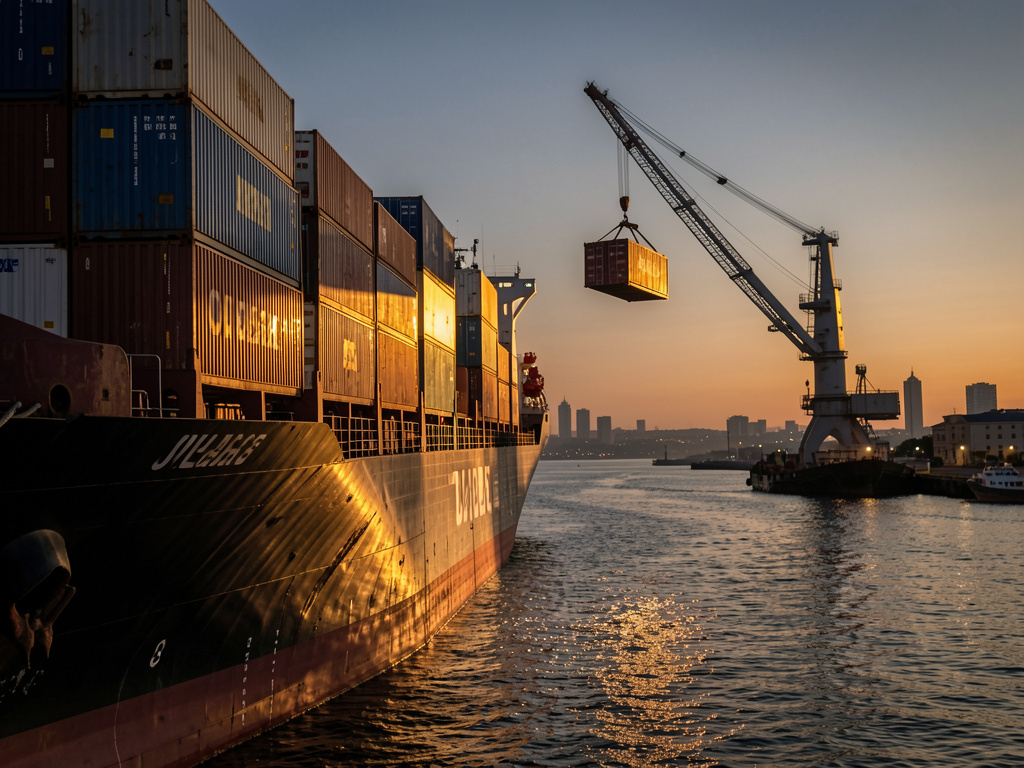
Cargo Delivery from China to Ukraine
Freight Delivery from China to Ukraine: Companies, Prices, Timelines, and Customs Clearance
China remains one of Ukraine's key trading partners. Electronics, equipment, textiles, footwear, furniture, auto parts, household goods, construction materials, and business products are regularly imported from the Middle Kingdom. However, international freight delivery from China to Ukraine requires careful selection of the route, carrier, and customs clearance scheme. Errors in documentation, incorrectly calculated weight, or poorly chosen transportation methods can lead to delays, additional costs, and border issues.
How Freight Delivery from China to Ukraine is Organized
The delivery of goods from China consists of several sequential stages. First, the cargo is purchased from the supplier and prepared for shipment. Then, the logistics company picks it up from the factory warehouse, checks the quantity and packaging, consolidates it with other batches, or forms a separate shipment. After that, the goods are sent to the port, airport, or road terminal.
In the next stage, the cargo crosses the border, undergoes customs clearance, and is delivered to Ukraine. Depending on the chosen transportation scheme, it may arrive at a temporary storage warehouse, a transport and logistics hub, or directly at the recipient's address.
The main factors influencing the organization of delivery include:
product characteristics;
volume and actual weight;
need for special packaging;
country and city of departure in China;
destination city in Ukraine;
urgency of transportation;
availability of permits;
commodity code according to UKT VED;
Incoterms delivery conditions;
customs clearance method;
need for insurance.
For small batches, consolidated shipments are usually used. In this case, the goods occupy only part of a container or truck, and the cost is calculated proportionally to the volume or weight. For larger batches, it is more cost-effective to use a separate container, vehicle, or direct transportation.
It is important to determine in advance who is responsible for export clearance in China, payment of international freight, insurance, customs clearance, and delivery within Ukraine. These responsibilities are specified in the contract and delivery terms. For example, under DDP terms, the carrier can take on a significant portion of the logistics and customs procedures. However, the final scheme depends on the type of goods and the capabilities of the chosen company.
Main Types of Delivery from China to Ukraine
Sea Delivery from China to Ukraine
Sea logistics is considered one of the most economical ways to transport large batches. The cargo is shipped from Chinese ports and then delivered to a European port by sea, after which it is transported to Ukraine by road or rail.
Depending on the current international situation, port infrastructure, and restrictions, the route may pass through the ports of Turkey, Romania, Poland, Germany, and other European countries. After the container arrives at the intermediate port, it is transferred to road transport or rail for subsequent delivery to Ukraine.
Advantages of sea transportation include:
low cost for large volumes;
ability to ship standard type containers;
ideal option for heavy and oversized cargo;
ability to transport a wide range of goods;
relatively stable costs for large batches.
The downside of sea delivery is the lengthy timeframe. On average, transportation can take from 40 to 70 days, but the final time depends on the port of departure, chosen route, transshipments, queues, weather conditions, and customs processing.
Sea transportation is particularly advantageous for furniture, industrial equipment, construction materials, large household appliances, packaging, and goods that do not require urgent delivery.
Road Delivery from China to Ukraine
Road logistics is used for direct or combined transportation. The cargo is delivered from China through transit countries to Ukraine. Depending on the route, transport may pass through Central Asian countries, the Caucasus, Turkey, and European states.
Road transport is often chosen for consolidated shipments, regular supplies, and goods where speed is more important than the lowest price. A vehicle can pick up the goods directly from the supplier's warehouse and deliver them to the recipient's warehouse or terminal.
Advantages of road delivery include:
ability to transport "door to door";
fewer transshipments compared to multimodal schemes;
convenient route tracking;
flexible loading planning;
the ability to deliver to regions without port infrastructure.
The typical duration for road transport is usually between 20 to 40 days. It is influenced by distance, season, congestion at border crossings, the situation on transit routes, and the need for additional transshipments.
Road delivery is suitable for clothing, footwear, electronics, components, small batches of equipment, and goods for marketplaces.
Rail Delivery
Rail routes can be used as a standalone or combined option. The train departs from China through transit countries to a European logistics hub, after which the cargo is delivered to Ukraine by road.
Rail transport is faster than sea and often cheaper than air freight. It is suitable for container shipments, equipment, raw materials, components, and goods with a regular delivery schedule.
The average duration can be approximately 25–45 days. However, the route depends on the availability of rail corridors, transshipment of containers on different track gauges, terminal operations, and the capacity of transit sections.
Air Delivery from China to Ukraine
Air freight is the fastest delivery method but also the most expensive. Direct routes may not be available, so intermediate airports in Europe, the Middle East, or other regions are often used.
Air delivery is in demand for transporting:
urgent components;
product samples;
expensive electronics;
medical goods;
documents;
small batches with high value;
goods with a limited shelf life.
The estimated duration is from 5 to 15 days, not accounting for possible delays at customs and domestic delivery. The cost is calculated based on actual or volumetric weight — depending on which is greater.
Cost of Delivery from China to Ukraine
The exact price for delivery from China to Ukraine is calculated individually. There is no universal rate for all cargo, as the cost depends on many parameters.
The price is influenced by:
cargo volume in cubic meters;
gross and volumetric weight;
product category;
departure city in China;
destination city in Ukraine;
transport method;
need for consolidation;
type of packaging;
number of transshipments;
seasonality;
insurance;
customs duties;
delivery within Ukraine.
For an approximate calculation, the following models are used:
Consolidated Cargo: the price is set per kilogram, cubic meter, or pallet. This option is advantageous for small volumes.
Container Shipping: the cost is calculated for the entire container. The price depends on the type of container, route, port, and additional fees.
Road Transport: the rate is formed per truck, pallet space, kilogram, or cubic meter.
Air Delivery: the calculation is based on the rate per kilogram, considering volumetric weight.
In addition to international freight, there may be costs for:
pickup of cargo from the Chinese supplier;
receipt and inspection of goods;
export clearance;
warehouse handling;
consolidation;
labeling;
additional packaging;
insurance;
brokerage services;
storage at the terminal;
delivery to the final address;
import duties;
VAT;
certification.
Therefore, when comparing offers, it is essential to clarify what is included in the quoted price. A low rate may sometimes not cover customs clearance, delivery from the port or terminal, port fees, and additional services.
To obtain an accurate quote, the carrier usually needs to provide:
product name;
number of packages;
dimensions of each package;
total weight;
volume;
supplier address in China;
delivery city in Ukraine;
invoice or preliminary cost;
information about the presence of batteries, liquids, magnets, and other special components.
Delivery Times for Cargo from China to Ukraine
The delivery time depends not only on the chosen mode of transport. Significant factors include document processing, the speed of order preparation at the factory, terminal congestion, weather conditions, seasonal peaks, and customs procedures.
Estimated delivery times:
air delivery — 5–15 days;
road transport — 20–40 days;
rail delivery — 25–45 days;
sea transport with subsequent delivery — 40–70 days;
consolidated multimodal delivery — 30–60 days.
Sometimes additional time is added to the estimated delivery period for:
checking the goods at the warehouse;
forming a consolidated shipment;
waiting for the container;
reloading;
preparing the export declaration;
transiting through countries;
customs clearance in Ukraine;
delivery to the recipient's warehouse.
If the goods are needed by a specific date, it is advisable to allow for extra time. This is especially important before holidays, sales periods, or the start of the school or construction season. During these times, demand for transport increases, warehouse loads rise, and rates may go up.
A reliable logistics company should provide several route options in advance: economical, standard, and expedited. This allows for a comparison of price and speed, as well as the selection of the optimal shipping method.
Major Companies Involved in Freight Transportation from China
The China-Ukraine delivery market features various categories of participants. These include international freight forwarders, shipping and airline companies, road carriers, brokers, warehouse operators, and specialized services for small businesses.
International Logistics Operators
Large freight forwarding companies organize transportation based on the "one-stop shop" principle. They can pick up the cargo in China, handle export documentation, transport it through a transit country, conduct import clearance, and deliver the goods to the client in Ukraine.
The advantages of such operators include:
a developed partner network;
the ability to organize multimodal transport;
own warehouses and terminals;
corporate rates;
experience with large shipments;
cargo tracking;
comprehensive support.
Courier and Express Services
Express carriers are suitable for small shipments, samples, and documents. They provide door-to-door delivery and usually handle a significant portion of the procedures themselves.
However, the cost of such services can be high, especially with increased weight and volume. Before shipping, it is essential to clarify restrictions on product categories, declaration rules, and any potential additional charges.
Specialized Cargo Companies
Cargo operators often work with goods for online stores, entrepreneurs, and marketplaces. They offer consolidation, purchasing from suppliers, inspection, repackaging, labeling, and delivery to Ukraine.
When choosing such a carrier, it is important to carefully review the contract. It is crucial to understand who the importer is, how the cargo is processed, what documents are issued to the client, and whether customs clearance is included in the cost.
How to Choose a Reliable Company
Before signing a contract, it is advisable to check:
legal details;
experience in the China-Ukraine direction;
the existence of a contract;
insurance conditions;
compensation procedures in case of damage;
timelines for document provision;
tracking capabilities;
client reviews;
tariff structure;
list of prohibited goods.
Do not rely solely on the lowest price. The reliability of the route, transparency of processing, and the carrier's accountability often matter more than a small difference in rates.
What Documents Are Needed for Customs in Ukraine
Customs clearance for imports requires the preparation of a set of documents. The list may vary depending on the type of goods, country of origin, delivery terms, and specifics of the transaction.
Typically, the following are required:
Invoice
A commercial invoice contains information about the seller and buyer, a description of the goods, quantity, value, currency of the transaction, and delivery terms. This document is used to determine the customs value.
The product description should be clear and specific. It is not enough to state "goods" or "accessories." It is advisable to specify the purpose, material, model, brand, characteristics, and quantity.
Packing List
The packing list contains information about the number of cargo units, gross and net weight, package dimensions, labeling, and batch composition. It is necessary for checking the cargo upon receipt, reloading, and customs inspection.
Foreign Economic Contract
The contract confirms the terms of the transaction between the buyer and the supplier. It specifies the subject of the agreement, cost, payment terms, delivery deadlines, liability of the parties, and Incoterms conditions.
Transport Documents
Depending on the mode of transport, the following documents are used:
bill of lading for sea transport;
CMR for road transport;
railway waybill;
air waybill;
transit documents;
forwarder confirmations.
Payment Documents
Bank documents confirming payment for goods may be required: payment order, bank statement, transfer confirmation, or other documents.
Certificate of Origin
This document confirms the country of production of the goods. For certain categories of products, such a document is necessary for applying trade conditions or confirming origin.
Permits
For certain types of goods, the following are required:
certificates of conformity;
declarations of conformity;
sanitary and epidemiological documents;
veterinary documents;
phytosanitary certificates;
safety documents;
import permits;
licenses.
Special attention should be paid to electronics, children's products, medical products, cosmetics, food, chemicals, batteries, and equipment with radio modules.
Customs Duties When Importing from China
When importing goods into Ukraine, import duties, VAT, and other mandatory payments may be charged. The amount depends on the product code according to the UKT VED, customs value, and current legislation.
Customs Value
The customs value usually includes the cost of the goods, and in some cases, also expenses for delivery, insurance, loading, unloading, and other costs up to the place of import.
If the customs value is incorrectly stated or not supported by documents, customs authorities may have questions. This can lead to requests for additional documents, adjustments to the value, or delays in release.
Import Duty
The duty rate depends on the product category. For certain goods, it may be zero, while for others, it is calculated based on a percentage rate or a fixed amount.
The UKT VED code should be selected not by simplified name but based on technical characteristics, material, purpose, and method of use of the goods.
VAT
VAT is charged on the customs value, taking into account the import duty and other components provided by law. Special rules may apply to certain categories, so it is advisable to entrust the calculation to a customs broker.
How Customs Clearance Works
The process usually includes the following stages:
Preparation of commercial and transport documents.
Determination of the product code.
Calculation of customs value.
Preparation of the import declaration.
Transfer of documents to the customs broker or declarant.
Payment of accrued duties.
Possible document verification or physical inspection.
Obtaining release permission.
Delivery of goods to the client's warehouse.
If the cargo is officially cleared, the documents must match the actual contents of the batch. It is not allowed to state a lower value, change the product description, or conceal the commercial purpose of the goods. Such actions can lead to fines, cargo detention, and additional inspections.
How to Reduce Shipping Costs from China
Costs can be reduced through proper preparation and planning. The most effective measures include:
Consolidation of Cargo
If supplies come from several factories, the goods can be collected at one warehouse in China. After consolidation, the batch is shipped in one transport. This reduces costs for international freight and handling.
Packaging Optimization
Excessive packaging increases volume and, consequently, shipping costs. However, savings should not compromise product protection. Reliable boxes, cushioning materials, and palletizing are necessary for fragile products.
Choosing the Right Transport
For large shipments, sea or rail transport is usually more cost-effective. For small urgent deliveries, road or air transport may be more convenient. It's important to compare not only the rates but also the total cost considering timelines, transshipments, and customs.
Supply Planning
Regular shipments allow for personalized rates and reserving transport. If you book transportation at the last minute, the price may be higher.
Proper Document Preparation
Errors in the invoice, packing list, or product description can lead to delays and additional costs. Checking documents before shipping helps avoid downtime at the terminal.
Cargo Insurance from China
International transport is associated with risks: damage to packaging, loss of part of the shipment, water damage, theft, accidents, or delays. Insurance allows for compensation of losses within the terms of the policy.
Before arranging insurance, it's important to clarify:
what risks are covered;
whether the policy applies to the entire route;
whether transshipments are considered;
how the value of the goods is confirmed;
what the claims submission process is;
whether a deductible is established;
what cases are excluded from coverage.
It is especially recommended to insure expensive electronics, equipment, glass, fragile items, high-margin goods, and large container shipments.
Common Mistakes When Shipping from China
The most common problems arise from insufficient preparation:
choosing a carrier solely based on the lowest price;
lack of a written contract;
incorrect product description;
incorrect HS code;
absence of certificates;
understating the value in the invoice;
lack of supplier verification;
ignoring dimensional weight;
improper packaging;
lack of insurance;
uncoordinated delivery terms;
absence of a financial reserve for additional expenses.
To avoid risks, it is necessary to gather documents in advance, check the requirements for specific products, and obtain a detailed quote from the carrier. The contract should specify the route, timelines, costs, responsibilities of the parties, compensation procedures, and a list of included services.
Shipping goods from China to Ukraine can be done via sea, road, rail, air, or multimodal transport. Sea logistics is advantageous for large and heavy shipments, road transport provides flexible door-to-door delivery, rail combines speed and moderate cost, while air transport is suitable for urgent and expensive goods.
The cost of shipping from China to Ukraine is determined by volume, weight, product characteristics, route, delivery method, customs fees, and additional services. Average timelines can range from a few days for air shipments to two months or more for economical sea routes.
For successful import, it is necessary to prepare an invoice, packing list, contract, transport documents, proof of payment, origin documents, and permits. Before shipping, the HS code should be determined, customs fees calculated, and it should be ensured that the goods are allowed for import.
The optimal solution is to compare several logistics schemes in advance and obtain a detailed commercial offer from the carrier. It should separately specify the cost of international transport, services in China, delivery within Ukraine, customs clearance, insurance, and any potential additional expenses.